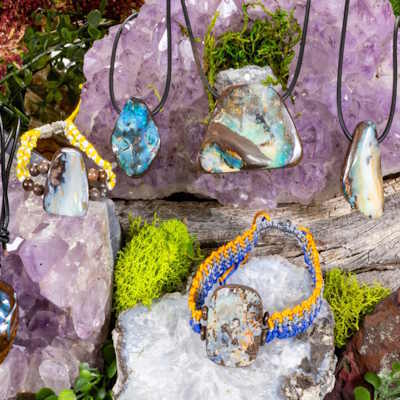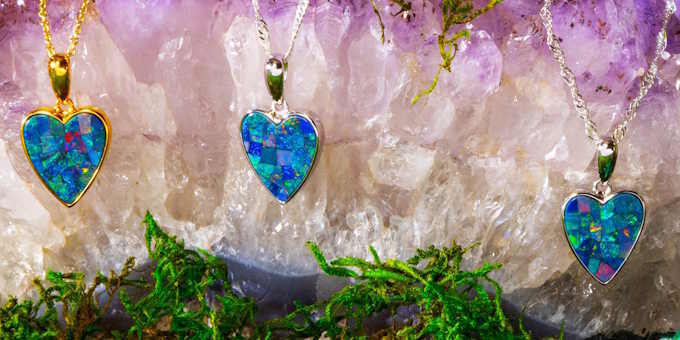
Understanding opal potch: value, origin, and ethical sourcing
Posted by AOD on 21st Apr 2026
Understanding opal potch: value, origin, and ethical sourcing

TL;DR:
- Opal potch is a natural, uncolored form of opal serving as the foundation of precious opals.
- Authentic potch can be identified by its dense, waxy luster, natural irregularities, and verified Australian origin.
- Ethical sourcing and provenance documentation increase its value, making it a meaningful addition to collections.
Not every opal blazes with kaleidoscopic fire. Some carry their beauty quietly, in subtle depth and geological honesty, and opal potch is perhaps the finest example of this understated grace. Potch is the form of opal that lacks the signature play-of-color collectors prize, yet it forms the very foundation upon which precious opal is built. Many enthusiasts pass over it without a second glance, unaware of its structural importance, its role in ethical sourcing conversations, and its quietly growing presence in contemporary jewelry design. This guide will walk you through what opal potch truly is, how to identify genuine material, why ethical sourcing matters, and how potch fits into a thoughtful collection.
Table of Contents
- What is opal potch?
- How to identify genuine opal potch
- Ethical sourcing of Australian opal potch
- Uses and value of opal potch in jewelry
- Why opal potch deserves a place in every collection
- Discover genuine Australian opal potch with confidence
- Frequently asked questions
Key Takeaways
| Point | Details |
|---|---|
| Potch definition | Opal potch is opal that lacks play-of-color but is vital for both jewelry design and authenticity. |
| Authenticity assurance | Request certificates and choose reputable sources to ensure your opal potch’s authenticity. |
| Ethical sourcing | Australian opal potch is mined responsibly and preferred for its stability and transparency. |
| Jewelry uses | Potch is essential in doublets, triplets, and as a featured stone in modern jewelry. |
What is opal potch?
Now that we’ve set the stage for why opal potch deserves a closer look, let’s define exactly what it is and why it matters.
Opal potch is a form of opal that shares the same fundamental chemical composition as precious opal, hydrated silicon dioxide, but without the internal diffraction of light that produces play-of-color. Where precious opal dazzles with shifting greens, blues, and reds, potch appears in muted, solid tones. It is the quiet sibling in the opal family, steady and unassuming, yet geologically inseparable from the stones collectors treasure most.
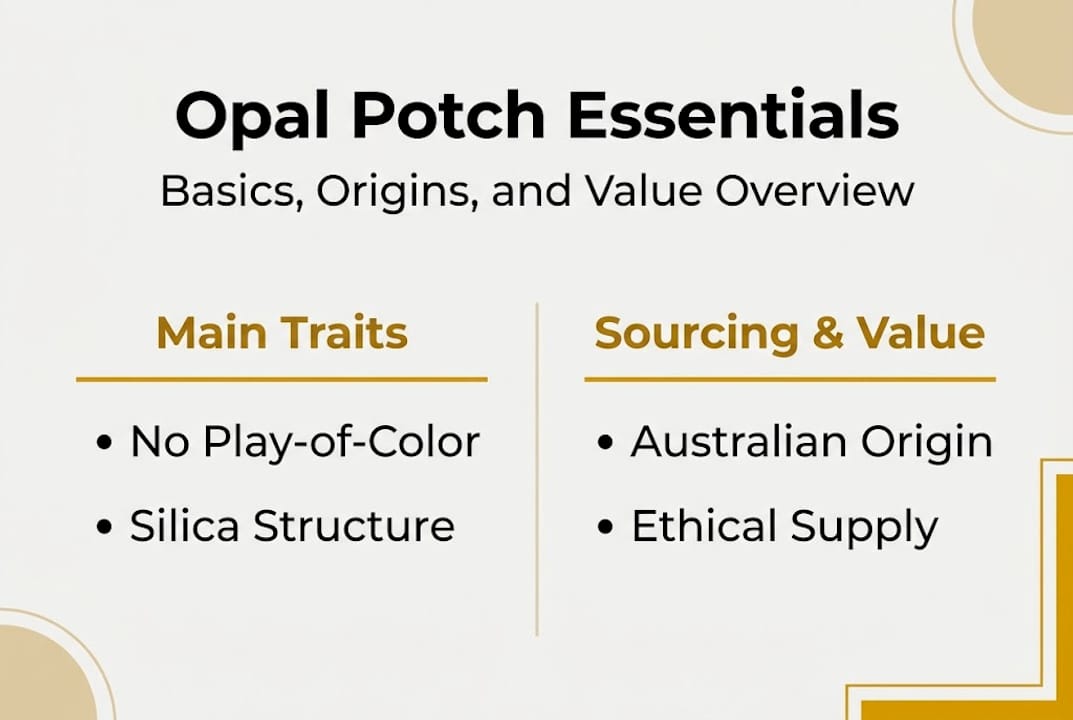
At the molecular level, both precious opal and potch are built from tiny spheres of silica particles arranged in layers. In precious opal, these spheres align with extraordinary regularity, bending and scattering light into the spectral display that makes the gem so coveted. In potch, the silica arrangement is irregular or disordered, so light passes through without that mesmerizing diffraction. The result is a stone that may appear gray, black, white, or brown, depending on the trace minerals and conditions present during formation.
Potch is not a lesser material. It is, in many ways, the canvas upon which nature paints its most luminous work. Precious opal seams frequently form directly on or within potch layers, making potch the natural host and protector of the gem above it.
Key distinctions between potch and precious opal:
- Play-of-color: Precious opal displays it; potch does not
- Silica arrangement: Ordered in precious opal, disordered in potch
- Color appearance: Potch is typically gray, black, white, or brown
- Formation relationship: Potch often surrounds or underlies precious opal seams
- Primary use: Potch serves as backing or matrix in composite stones
In the jewelry trade, potch plays a vital structural role. It is commonly used as the base layer in doublets and triplets, composite stones where a thin slice of precious opal is bonded to a backing material. When that backing is natural potch rather than glass or synthetic resin, the stone retains far greater authenticity and stability. For collectors buying Australian opals, understanding this distinction is essential.
| Feature | Precious opal | Opal potch |
|---|---|---|
| Play-of-color | Yes | No |
| Silica structure | Ordered | Disordered |
| Common colors | Multicolor | Gray, black, white, brown |
| Jewelry role | Feature stone | Backing, matrix |
| Collector appeal | High (color) | Growing (authenticity) |
As those choosing Australian opals for their collections will discover, Australian potch is ethically sourced via regulated small-scale mining, making it a stable, natural choice preferred over treated alternatives, provided you verify origin with proper certificates.
How to identify genuine opal potch
Understanding the basics of potch is just the first step. Next, let’s discuss how to be sure you’re buying the real thing.
Genuine opal potch has a distinctive appearance that separates it from imitations and treated stones. Learning to read these physical signals is one of the most valuable skills a collector can develop. Authentic potch carries a waxy to vitreous luster and a characteristic density that synthetic resins and glass simply cannot replicate. When you hold a piece of genuine potch, it feels cool and substantial, not lightweight or plasticky.
Physical traits of genuine opal potch:
- Color: Typically solid gray, black, white, or brown with no color play
- Luster: Waxy to vitreous, never glassy or overly shiny
- Surface: May show natural flow lines or tiny inclusions from formation
- Weight: Noticeably denser than glass or resin imitations
- Texture: Smooth but not perfectly uniform under magnification
Magnification is your greatest ally. Under a loupe or gemological microscope, genuine potch will show the natural, organic irregularities of earth-formed material. Synthetic stones often reveal too-perfect uniformity, tiny bubbles, or swirl patterns from casting. Treated stones may show surface coatings, color concentrations near edges, or an unnatural sheen that shifts under different light angles.
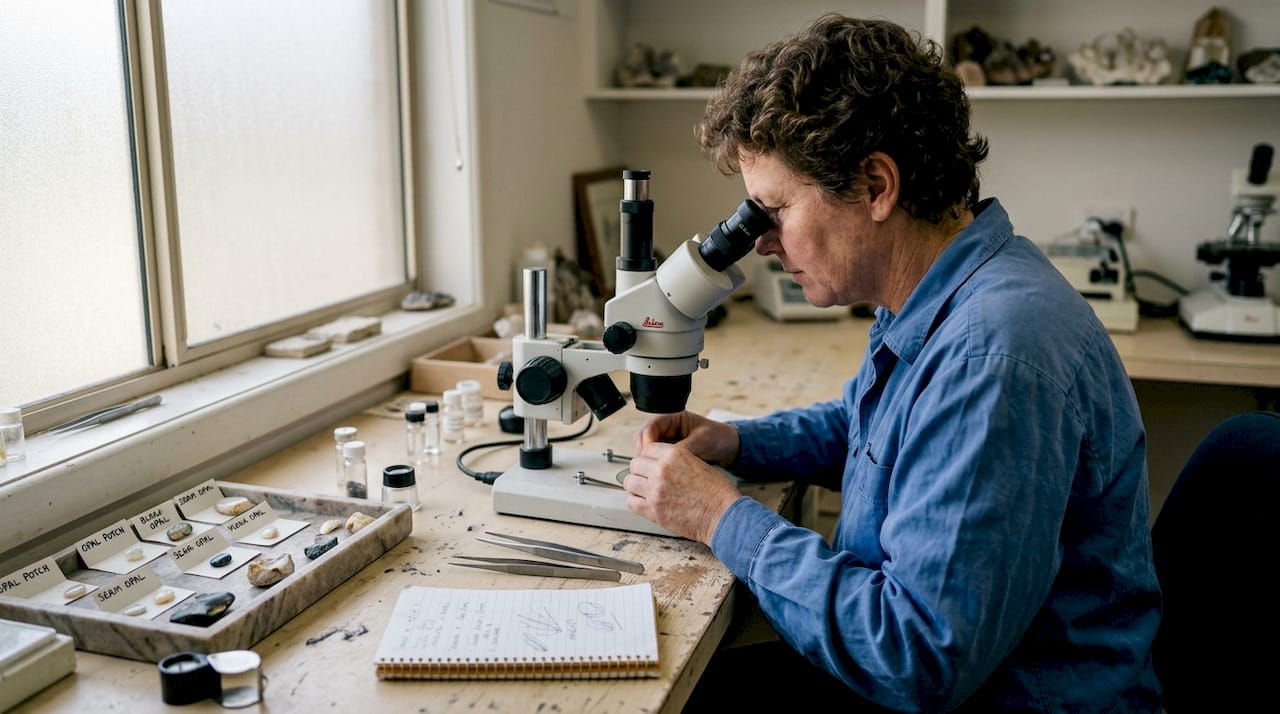
Common imitations include dyed chalcedony, colored glass, and resin composites. Some sellers also pass off potch-backed doublets as solid opal, so always ask whether a stone is solid, a doublet, or a triplet before purchasing.
Pro Tip: When examining a suspected potch piece, look at the stone’s edge under magnification. A genuine solid potch stone will show consistent material throughout. A doublet or triplet will reveal a visible join line where layers meet.
To authenticate Australian opals with confidence, always request documentation. Reputable suppliers provide certificates of origin that trace the stone back to its mining region, whether that is Lightning Ridge, Coober Pedy, or Queensland. These certificates are not merely paperwork. They are the story of the stone’s journey from the earth to your hands. As a firm rule, verify with certificates for genuine origin before any purchase.
Understanding opal provenance and ethical value also helps collectors recognize when a seller’s story simply does not add up. If provenance documentation is unavailable or vague, treat that as a significant red flag.
Ethical sourcing of Australian opal potch
After learning how to identify authentic opal potch, it’s vital to consider where and how that opal has been sourced.
Australia is the world’s dominant opal producer, and the country’s mining regulations set a global standard for responsible gemstone extraction. Most Australian potch comes from small-scale, family-run operations working within a framework of strict environmental and labor protections. These miners hold licensed claims, follow land rehabilitation requirements, and operate within communities where opal mining is both a livelihood and a heritage.
“Australian potch is ethically sourced via regulated small-scale mining; stable, natural; preferred over treated alternatives.” — Australian Opal Direct
This stands in sharp contrast to some overseas opal markets, where supply chains can be opaque, labor conditions unverified, and stones treated or misrepresented without consequence. For collectors who care about the story behind their gemstones, ethical opal sourcing is not a luxury consideration. It is the foundation of a meaningful collection.
Comparison: Ethically sourced Australian potch vs. treated or synthetic alternatives
| Factor | Australian potch | Treated or synthetic alternatives |
|---|---|---|
| Origin transparency | High, documented | Often unclear |
| Environmental oversight | Regulated by Australian law | Variable or absent |
| Labor standards | Protected by national labor law | Unverified in many regions |
| Stone stability | Natural, long-term stable | May degrade over time |
| Collector value | Appreciates with provenance | Limited resale narrative |
| Certificate availability | Standard practice | Rare or unreliable |
For collectors building a meaningful collection, confirming opal supply chain ethics is straightforward when you know what to ask. Request mining region documentation, ask whether the supplier has direct relationships with miners, and look for transparency about how stones move from the ground to the market. Suppliers who cannot answer these questions clearly are worth approaching with caution.
Ethical credentials also contribute directly to long-term value. A stone with documented Australian provenance carries a narrative that synthetic or treated alternatives simply cannot offer, and that narrative resonates with the growing community of collectors who see gemstones as both art and responsibility.
Uses and value of opal potch in jewelry
With a firm grasp of ethical sourcing, let’s explore how opal potch finds its way into jewelry pieces and collections.
Potch’s most established role in jewelry is structural. Opal potch is valued for its stability and is often used as backing in doublets or triplets, where it provides a natural, color-neutral base that enhances the precious opal layer above it. Unlike glass or resin backings, natural potch is chemically compatible with the precious opal it supports, reducing the risk of separation or moisture-related damage over time.
How potch is used in jewelry, step by step:
- Doublet construction: A thin slice of precious opal is bonded to a flat potch backing, creating a more affordable composite that still carries genuine opal material
- Triplet construction: A precious opal slice sits between a potch base and a clear quartz or glass dome, offering durability and magnification of color
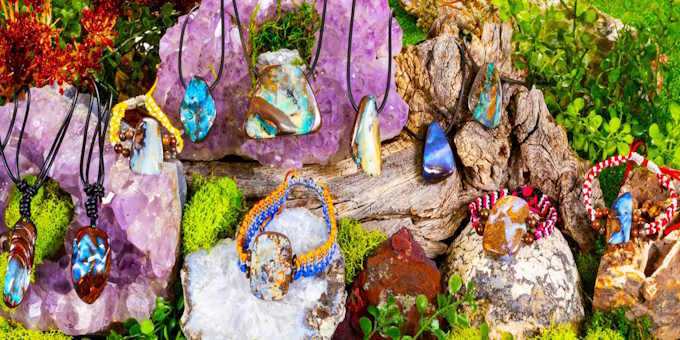
- Matrix settings: Potch with natural inclusions or patterns is set as a feature stone in its own right, prized for its organic texture
- Artistic inlay: Contemporary designers use potch as a contrasting element alongside precious opal, creating visual tension between color and restraint
- Collector specimens: Raw potch pieces, particularly black potch from Lightning Ridge, are collected as geological specimens for their formation stories
Pro Tip: When caring for opal jewelry that contains potch backing, avoid prolonged water exposure and harsh chemicals. While potch is stable, the adhesive layers in doublets and triplets can be sensitive to moisture over time.
The market for potch as a standalone collector’s stone is growing, particularly among enthusiasts who appreciate the geological narrative of a piece over its visual spectacle alone. Black potch from Lightning Ridge, for example, commands attention not for color but for the depth and mystery of its appearance. Jewelry designers are increasingly drawn to this quality, using potch to ground compositions that might otherwise feel purely decorative.
For collectors, the value of potch lies in its authenticity, its connection to the broader opal story, and its role as a foundation material that makes precious opal possible.
Why opal potch deserves a place in every collection
Having looked at the uses for opal potch, let’s consider why it often gets overlooked and why that might be a mistake.
The gemstone market has long rewarded spectacle. Collectors are drawn to fire, to color, to the dramatic play-of-color that makes precious opal so captivating. Potch, by contrast, offers none of that visual drama, and so it tends to be dismissed as a byproduct rather than recognized as a material with its own integrity.
We think that perspective misses something important. Potch is not what’s left over after the beautiful opal is extracted. It is the geological context that made that beauty possible. Collectors who invest in Australian opals with a long view understand that authenticity and provenance are the true drivers of lasting value, and potch, with its documented origins and natural stability, embodies both.
There is also a quiet counter-movement happening in the collector community. As synthetic and treated stones flood global markets, discerning buyers are actively seeking material that is unambiguously natural. Potch fits that need perfectly. It cannot be convincingly faked with the same ease as color-play stones, and its origins are traceable in ways that treated alternatives rarely are. Collectors who embrace potch gain access to a gemstone that is honest, sustainable, and deeply connected to Australia’s mining heritage. That is not a consolation prize. That is a distinction.
Discover genuine Australian opal potch with confidence
Empowered with this knowledge, you may be ready to add opal potch to your collection.
At Australian Opal Direct, every piece in our collection is sourced directly from Australian miners, with provenance documentation available so you know exactly where your stone was born. We believe that the story of a gemstone is as important as its appearance, and opal potch carries a story worth telling.

Whether you are seeking potch-backed doublets, raw specimens, or ethically sourced opal jewelry that reflects your values as a collector, the Australian Opal Direct collection offers a curated range of genuine Australian opals. We work directly with miners from Lightning Ridge, Coober Pedy, and Queensland, cutting out middlemen to bring you authentic material at honest prices. Explore our collection and discover the quiet power of opal potch for yourself.
Frequently asked questions
Is opal potch valuable for collectors?
Opal potch has growing collector value, especially when it is ethically sourced, geologically stable, and accompanied by verified documentation of its Australian origin.
Can opal potch be used in jewelry design?
Yes, potch is widely used as natural backing in doublets and triplets, and it is increasingly chosen by contemporary designers as a feature material for its organic depth and structural stability.
How do I verify the authenticity of opal potch?
Always request certificates of origin and purchase from suppliers with direct miner relationships. Reputable sellers will verify with certificates that trace the stone back to its specific Australian mining region.
Why choose Australian opal potch over treated or synthetic alternatives?
Australian potch is natural and ethically mined under regulated conditions, offering long-term stability and transparent provenance that treated or synthetic stones simply cannot match.
Recommended
- Opal Provenance: Ensuring Authenticity and Ethical Value - Australian Opal Direct
- Value Factors of Opal: What Drives Worth - Australian Opal Direct
- What Makes Black Opal Rare: Origins and Value Revealed - Australian Opal Direct
- Why Invest in Opals: Rarity, Value, and Ethical Appeal - Australian Opal Direct