How to Distinguish Opal Origins for Authentic Jewelry
Posted by AOD on 23rd Jan 2026
How to Distinguish Opal Origins for Authentic Jewelry
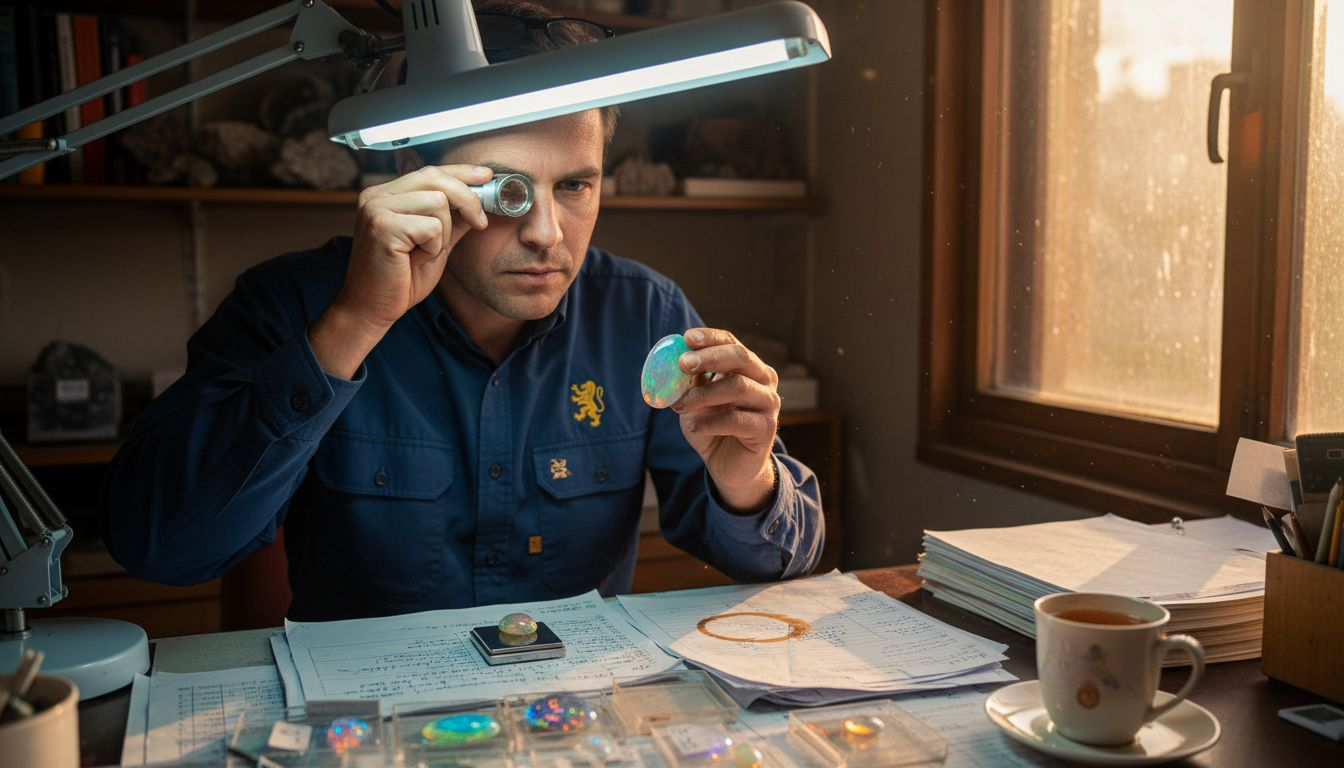
Identifying an opal’s true origin and quality goes beyond surface beauty. For collectors who prize ethically sourced Australian opals, the real art lies in understanding how play-of-color, pattern, and matrix reveal authenticity. With color, brightness, and saturation accounting for over 80 percent of an opal’s value, a trained eye and careful examination under proper lighting can make all the difference in building a genuinely world-class collection.
Table of Contents
- Step 1: Prepare To Examine Opal Characteristics
- Step 2: Identify Unique Color Patterns And Brilliance
- Step 3: Analyze Formation Clues And Matrix Types
- Step 4: Use Provenance Markers And Regional Documentation
- Step 5: Verify Authenticity With Expert Testing
Quick Summary
| Key Insight | Explanation |
|---|---|
| 1. Understand opal characteristics. | Recognize the traits of genuine opals, including play-of-color, type, and transparency, to differentiate them from imitations. |
| 2. Observe color patterns and brilliance. | Different opals have unique color patterns and brilliance that indicate their authenticity; learn to identify these variations for proper valuation. |
| 3. Analyze formation clues and matrices. | Evaluate the opal’s matrix and formation to understand its origin and authenticity, as each region produces distinctive characteristics. |
| 4. Use provenance documentation. | Request provenance documentation to verify the opal’s origin and ensure authenticity, as reputable sellers provide such records clearly. |
| 5. Confirm authenticity with expert testing. | Always seek professional gemological testing to validate the opal against its claims, ensuring it is natural and untreated. |
Step 1: Prepare to examine opal characteristics
Before you can confidently distinguish an authentic opal from an imitation, you need to understand what you’re actually looking at. This step sets the foundation for your examination by familiarizing you with the key characteristics that define genuine opals and how to observe them properly.
Start by recognizing that precious opals display a phenomenon called play-of-color, which is caused by the unique internal structure of tiny silica spheres arranged within the stone. This iridescent effect is what separates precious opals from common opals and synthetics. When you examine an opal, you’re essentially checking for the presence of this optical property along with several other defining traits. Begin in controlled lighting conditions, ideally with a neutral background, because color, brightness, and saturation account for over 80 percent of an opal’s value. Without proper lighting, you’ll miss crucial details that distinguish a quality piece from a lower-grade stone.
Next, prepare yourself to assess multiple characteristics simultaneously. You’ll need to evaluate the opal’s type (such as black, white, or crystal), the intensity and coverage of its play-of-color across the surface, and its transparency level. Additionally, examine the stone for clarity issues like inclusions or matrix material embedded within it. Understanding opal opacity and how it affects visual appearance will help you recognize whether you’re looking at a transparent, translucent, or opaque specimen. Check the stone for the absence of extra pigment or coatings that might artificially enhance its appearance, and perform a basic hardness test to rule out plastic imitations. These preliminary observations take only minutes but provide the essential baseline needed before moving into deeper authentication methods.
Expert tip Keep a jeweler’s loupe and a simple hardness testing kit nearby during your examination, and always evaluate opals under both natural daylight and artificial light to observe how the play-of-color shifts from different angles.
Step 2: Identify unique color patterns and brilliance
Now that you’ve prepared your examination space and understand the foundational characteristics of genuine opals, it’s time to focus on what truly sets one opal apart from another. Color patterns and brilliance are where opals reveal their individual personalities, and learning to recognize these distinctive features is essential for authenticating stones and understanding their true value.
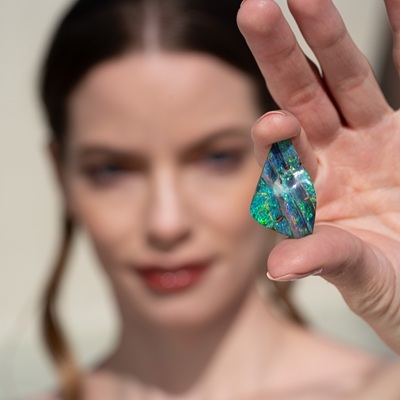
Begin by observing how color flashes move across the stone’s surface as you rotate it under your lighting setup. You’ll notice that different opals display color in distinctly different ways, and these patterns have names that collectors use to grade and categorize stones. Pinfire patterns show tiny, scattered flashes of color that resemble pinpricks across the surface, while harlequin patterns display large, geometric patches of color in a checkerboard arrangement. Flash patterns present broad bands of color that sweep across the stone, and rolling flash patterns show color that seems to undulate and flow as you move the opal. Understanding opal patterns and how they form helps you recognize whether you’re looking at a natural stone with authentic play-of-color or a synthetic imitation attempting to replicate these effects. The pattern type directly influences an opal’s uniqueness and market value, with certain patterns commanding premium prices among collectors who appreciate their rarity.
The brilliance and intensity of these color flashes matter just as much as the patterns themselves. Examine how vivid and saturated the colors appear against the body tone of the stone. Natural opals typically show color that seems to originate from within the stone rather than sitting on its surface, and the brightness should remain consistent even when you tilt the opal slightly. Synthetic opals often display unnaturally uniform color patterns or colors that appear artificial because they lack the depth and variation found in genuine stones. Pay attention to how the play-of-color responds to different light sources. Authentic opals will display subtly different color combinations under natural daylight versus artificial tungsten or LED light, a characteristic that’s difficult for manufacturers to replicate convincingly. Spend time rotating your opal slowly through a full 360 degrees under both light types to observe these nuances.
Expert tip Photograph your opal under multiple lighting conditions and compare the images side by side to identify color consistency patterns that may indicate synthetic treatment or reveal the stone’s authentic natural characteristics.
Here’s a summary comparing natural opals and synthetic or imitation opals based on key identification factors:
| Identification Factor | Natural Opal Traits | Synthetic/Imitation Traits |
|---|---|---|
| Play-of-color | Multi-hued, complex, changes | Uniform, lacks depth or variation |
| Matrix Appearance | Irregular, region-specific | Even, manufactured, unnatural |
| Body Tone Consistency | Subtle shifts, depth | Flat or stark, little nuance |
| Color Pattern | Unique, named variations | Repetitive, artificial textures |
| Fluorescence Under UV | Typically weak or variable | May glow strongly or evenly |
| Transparency | Varies naturally | May appear glassy or static |
Step 3: Analyze formation clues and matrix types
Opals don’t form in isolation. They develop within host rocks and accumulate distinctive characteristics that reveal where they originated and how they formed underground. By examining these formation clues and understanding the matrix types, you’ll gain critical insights into an opal’s authenticity and geographic origin.
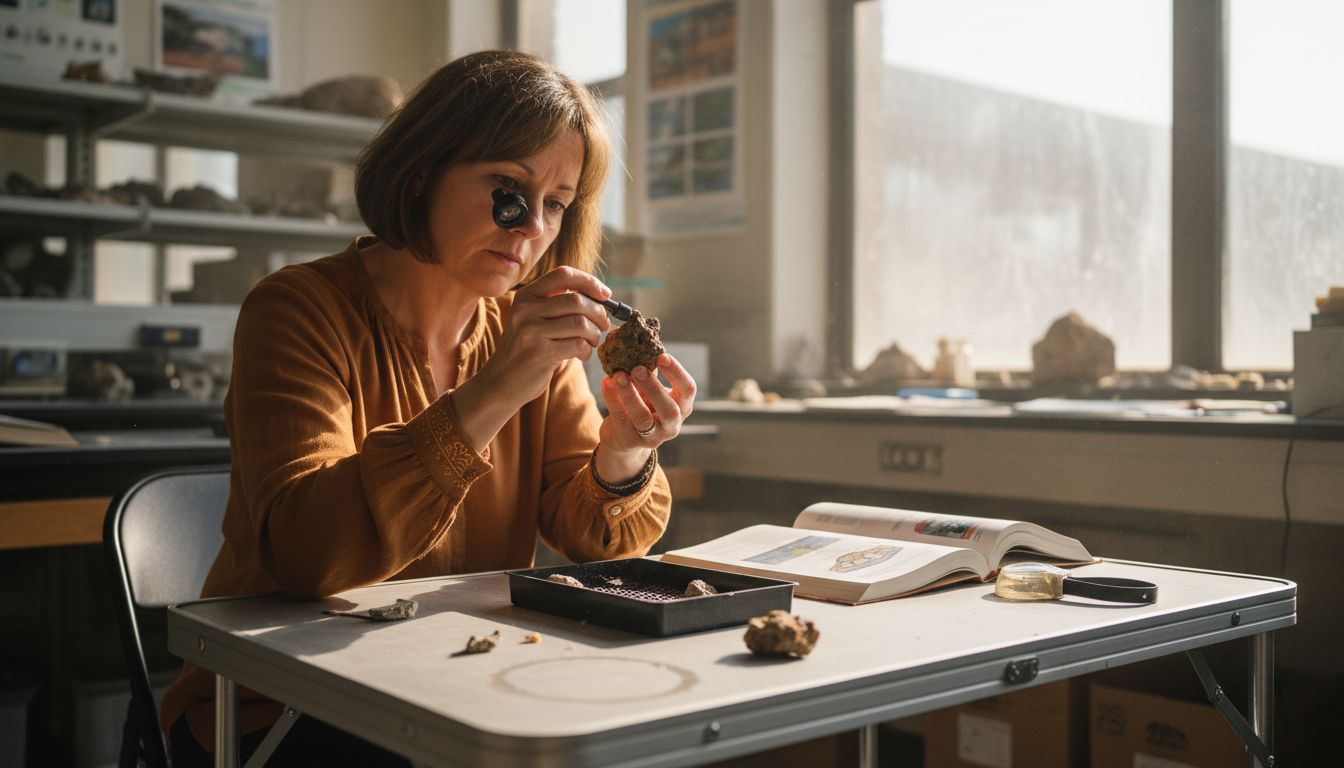
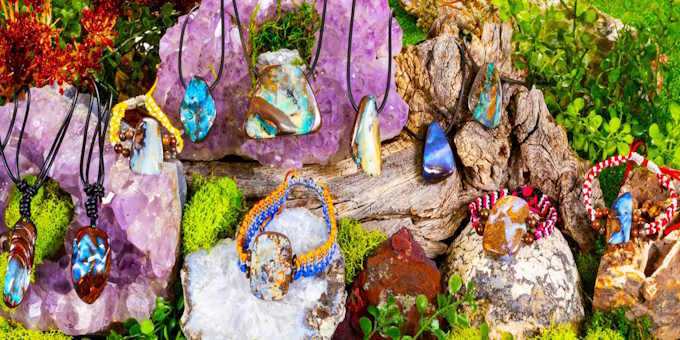
Start by looking closely at what’s embedded within and around your opal. The matrix is the host rock material that remains part of the stone, and it varies dramatically depending on where the opal formed. Boulder opals from Queensland, for example, typically contain ironstone matrix that creates contrast with the opal’s play-of-color, while opals from Coober Pedy often have a lighter, more chalky matrix appearance. These regional characteristics are like fingerprints. Opals that formed from silica-rich groundwater filling voids in decayed wood or rocks display specific internal structures of silica spheres that cause the play-of-color you observe. Natural opals show evidence of having filled gaps and cavities organically over thousands of years, which means the matrix integration looks authentic and unforced. Synthetic opals, by contrast, often have suspiciously uniform matrix distribution or a manufactured appearance that lacks the organic irregularity of naturally formed stones. Examine how the opal integrates with its surrounding rock. Does it appear to have settled into a natural cavity, or does the junction between opal and matrix look unnaturally clean?
Next, consider the formation environment itself. Opals exist in two primary microstructure types: amorphous opal-A and microcrystalline opal-CT, each revealing different geological conditions during formation. The presence of specific mineral inclusions and the water content within the opal also tell stories about its origin. Water content is particularly telling because different source regions produce opals with characteristic hydration levels that affect durability and appearance over time. When you’re evaluating an opal from a claimed source like Lightning Ridge in New South Wales or Coober Pedy in South Australia, the matrix type and formation clues should align with what you know about those regions. Opals claiming Australian origins but displaying matrix types inconsistent with known Australian deposits warrant skepticism. Take time to research the specific characteristics of opals from the region where your stone supposedly originated, then compare what you observe against those benchmarks.
Expert tip Request detailed provenance documentation from your seller that includes information about the matrix type, formation location, and any geological analysis performed on the stone, as this transparency directly correlates with authenticity and trustworthiness.
The table below outlines common opal mining regions in Australia and their distinguishing features:
| Region | Typical Matrix Type | Play-of-color Style | Notable Characteristics |
|---|---|---|---|
| Lightning Ridge | Dark or black potch | Vivid, rolling flash | Black opals, intense colors |
| Coober Pedy | White to light sandstone | Pinfire, broad flash | White/light opals, bright fire |
| Queensland | Ironstone (boulder) | Veins, multi-pattern | Boulder opals, earthy back |
| Andamooka | Porous sandstone | Soft flash, pastel | Matrix opals, treatable base |
Step 4: Use provenance markers and regional documentation
Authenticity goes beyond what you can observe with your eyes. The documentation and provenance markers surrounding an opal tell the complete story of its origin and journey from mine to market. Learning to evaluate these markers and understand regional documentation transforms you from a casual observer into a truly informed collector.
Begin by understanding what provenance markers actually are. These are trace elements and mineral inclusions within the opal itself that act like geographic signatures. Different mining regions produce opals with distinctly different elemental compositions because the host rocks and groundwater vary from location to location. An opal from Lightning Ridge in New South Wales contains trace elements and mineral characteristics that differ from one mined in Coober Pedy or Queensland. Professional gemological laboratories use advanced analysis to identify these markers and determine geographic origin with remarkable accuracy. When you’re considering a purchase, ask your seller if the opal has been professionally tested for provenance. A legitimate Australian opal seller will have documentation showing that the stone has been analyzed by reputable laboratories that specialize in gemological authentication. This documentation should specify which Australian region the opal originated from, which demonstrates both transparency and confidence in the product’s authenticity.
Next, examine the regional documentation and certificates of origin that should accompany any serious opal purchase. Legitimate sellers maintain mining records and certificates that trace each stone’s journey from extraction through to sale. These documents serve multiple purposes. They confirm the opal is genuinely from the claimed region, they establish the chain of custody, and they protect your investment by providing proof of authenticity that you can reference if you ever decide to sell or insure the piece. Look for documentation that includes specific details such as the mining location, extraction date, and results from any gemological testing performed. Be skeptical of sellers who cannot provide this information or who offer vague explanations about origin. Authentic Australian opal retailers like those sourcing directly from miners will proudly share this documentation because it validates their commitment to ethical sourcing and genuine products. If a seller is unwilling or unable to provide provenance documentation, consider it a significant red flag regardless of how beautiful the opal appears.
Expert tip Request a gemological report from an independent laboratory before making a significant opal purchase, and cross reference the laboratory’s findings against the seller’s claims about origin and authenticity.
Step 5: Verify authenticity with expert testing
Your visual examination and documentation review have brought you far, but professional expert testing provides the definitive confirmation you need to make a confident purchase decision. This step involves understanding what tests are available, why they matter, and how to interpret the results you receive.
Specialized gemological laboratories employ a combination of techniques that work together to verify whether an opal is genuinely natural, treated, synthetic, or an imitation. Microscopic examination allows experts to observe the internal structure of the stone and identify characteristics that reveal its true nature. Spectroscopy analyzes how the opal absorbs and reflects light at different wavelengths, creating a unique signature that distinguishes natural opals from synthetic versions manufactured in laboratories. Chemical analysis identifies trace elements and their concentrations, which ties directly back to the geographic origin markers you learned about in the previous step. Magnification techniques under controlled lighting expose details about the opal’s internal structure, showing whether the silica sphere arrangement appears naturally formed or unnaturally uniform. The International Gemological Institute and other reputable laboratories combine these testing methods to provide comprehensive certification that documents the stone’s authenticity, origin, treatments (if any), and overall quality grade. When you receive a certified report from a recognized laboratory, you’re getting scientific documentation that protects your investment and provides peace of mind.
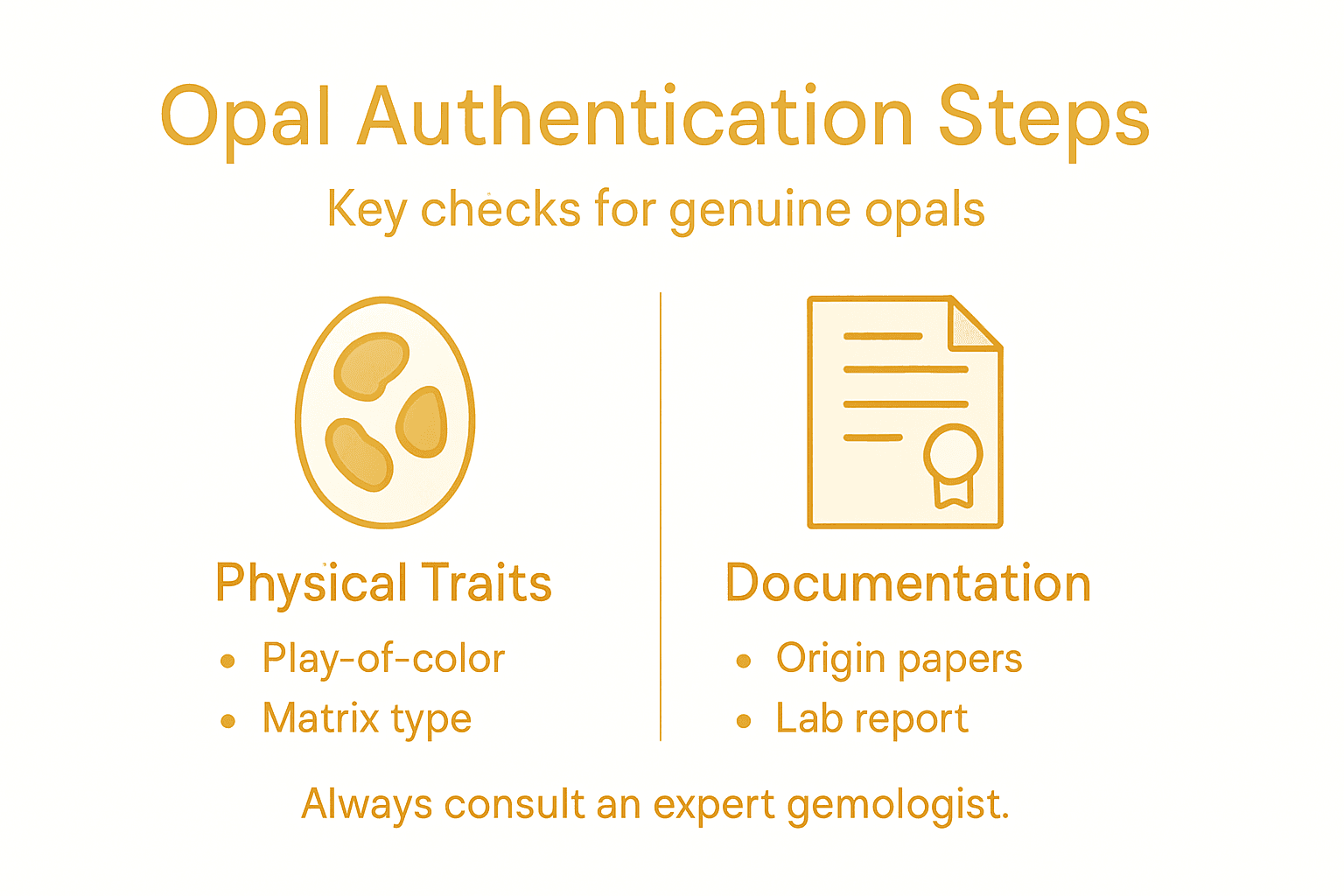
Before purchasing an expensive opal, ask your seller whether they’ve submitted the stone for professional testing and whether they can provide the laboratory report. Legitimate Australian opal retailers understand that serious collectors and luxury jewelry buyers expect this level of verification. The cost of professional testing typically ranges from $50 to $200 depending on the stone’s size and the comprehensiveness of the analysis, which is minimal insurance for a piece that may cost thousands of dollars. Request reports from established laboratories with international recognition rather than obscure local operations. When you receive the testing report, review it carefully for details about the opal’s composition, any treatments detected, and the confirmed geographic origin. A report that identifies your opal as genuine, untreated, and from a specific Australian mining region validates everything you’ve observed through your own examination and strengthens your confidence in the purchase’s authenticity.
Expert tip Always request that the opal be tested by a laboratory that is independent from the seller, ensuring the testing results are impartial and not influenced by commercial incentives to approve questionable stones.
Discover Authentic Australian Opals with Confidence
Understanding the subtle clues that reveal an opal’s true origin is essential for any collector or jewelry lover seeking genuine beauty and value. If distinguishing play-of-color patterns, matrix types, and provenance markers feels challenging, you are not alone. Many jewelry buyers struggle to verify authenticity and want assurance that their precious opal comes from iconic Australian regions like Lightning Ridge or Coober Pedy.
At Australian Opal Direct, we specialize in ethically sourced, earth-mined opals backed by direct miner relationships. Our curated collections showcase natural opals with documented provenance and expert certification to eliminate uncertainty. Whether you seek a striking ring or a custom-designed pendant, every piece tells a story of nature’s craftsmanship and genuine Australian heritage. Experience:
- Verified origins with detailed documentation
- Unique color patterns and natural matrix integration
- Competitive pricing by cutting out middlemen
Explore our authentic opal jewelry selection to find the perfect piece that combines beauty, rarity, and trust.

Start your journey today and own an opal that reflects true Australian energy and history. Secure your investment with confidence by visiting Australian Opal Direct. Dive deeper into our collections and learn more about the distinct qualities identified in our opal opacity guide and opal pattern page.
Frequently Asked Questions
How can I identify authentic opal origins for jewelry?
To identify authentic opal origins, start by analyzing the opal’s physical characteristics, such as play-of-color and matrix type. Then, request provenance documentation from the seller that details the stone’s geological origin.
What should I look for in opal documentation to ensure authenticity?
Look for certificates that include the opal’s mining location, extraction date, and results from any gemological testing. This documentation confirms the opal’s origin and helps protect your investment.
How do different opal patterns affect their value and authenticity?
Different opal patterns, such as harlequin or pinfire, can significantly affect both their uniqueness and market value. Familiarize yourself with these patterns to better assess an opal’s authenticity and worth.
What testing methods are used to verify opal authenticity?
Testing methods for verifying opal authenticity include microscopic examination, spectroscopy, and chemical analysis. These tests help determine whether the opal is natural or synthetic, which is essential for assessing value and authenticity.
How do I perform a basic examination of an opal before purchasing?
Begin by evaluating the opal in controlled lighting to observe play-of-color, patterns, and any inclusions. Consider using a jeweler’s loupe for further inspection and perform a simple hardness test to check for potential imitations.
Why is it important to understand the matrix types in opals?
Understanding matrix types helps you recognize the origin and authenticity of the opal. Different mining regions produce opals with unique matrix characteristics, allowing you to identify inconsistencies that suggest a stone may not be genuine.
Recommended
- Opal Stone 101: History, Symbolism, and Uses - Australian Opal Direct
- Opal Jewelry Selection Guide: Choose Your Perfect Gem - Australian Opal Direct
- Rôle De L’Authenticité En Joaillerie : Guide Complet - Australian Opal Direct
- Opal Provenance: Ensuring Authenticity and Ethical Value - Australian Opal Direct