Genuine Australian opals: authenticity guide for collectors
Posted by AOD on 15th Apr 2026
Genuine Australian opals: authenticity guide for collectors
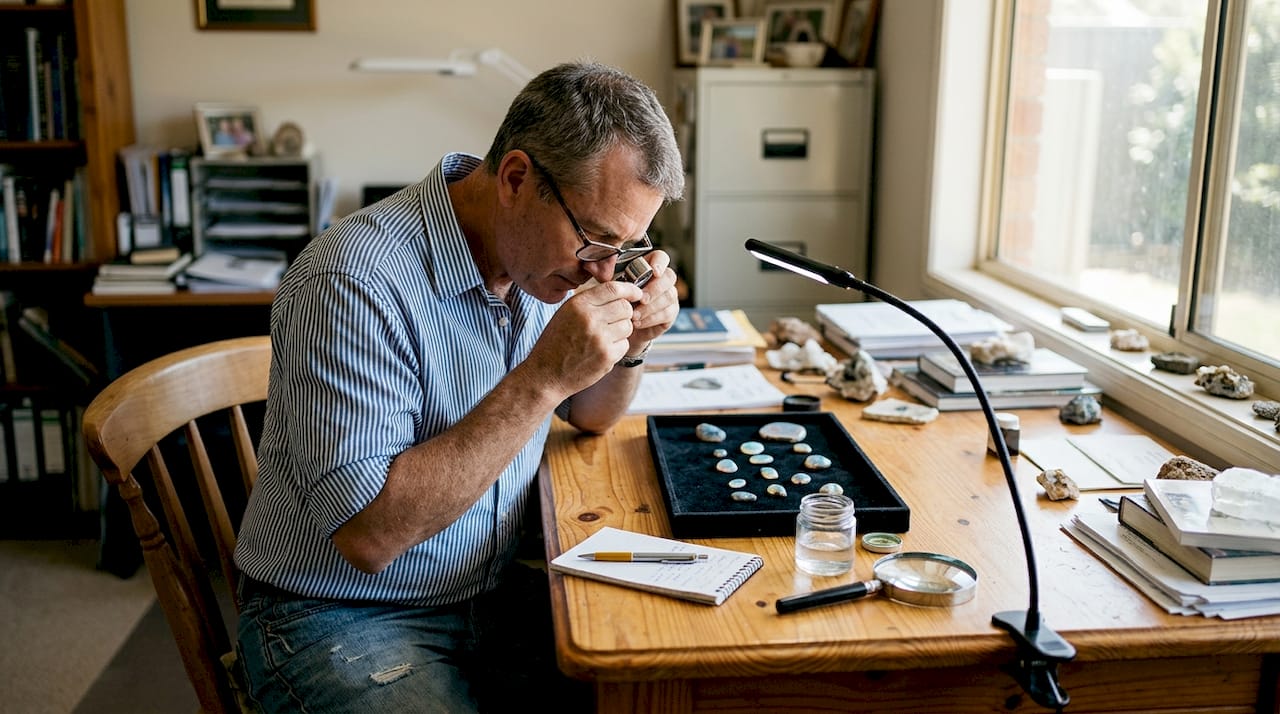
TL;DR:
- Authentic Australian opals feature unique, irregular play-of-color caused by natural silica structures.
- Verification involves examining the stone from multiple angles, using a loupe and UV light.
- Ethical sourcing and provenance are crucial for genuine value and transparency in collecting.
Australia produces 95% of the world’s opals, yet sophisticated fakes and assembled composites flood the market more than ever before. Even seasoned collectors, drawn by the kaleidoscopic brilliance of a stone’s play-of-color, can find themselves second-guessing a purchase. The stakes are real: a genuine Lightning Ridge black opal can command thousands of dollars, while a convincing synthetic or doublet might sell for a fraction of that price. For anyone who treasures the rarity, provenance, and emotional resonance of authentic Australian opals, knowing how to verify what you hold in your hands is not optional. It is essential.
Table of Contents
- Why opal authenticity matters for collectors and enthusiasts
- How to identify genuine Australian opals: Play-of-color and structure
- Opal grading explained: Rarity, value, and what to look for
- Ethical sourcing and provenance: Ensuring your opal’s backstory is as genuine as the gem
- Practical steps: Authenticating opal jewelry before you buy
- Our expert perspective: What most collectors miss about opal authenticity
- Discover authentic Australian opals with confidence
- Frequently asked questions
Key Takeaways
| Point | Details |
|---|---|
| Authenticity determines value | True collector’s value and rarity depend on verifying that your opal is natural and untreated. |
| Visual cues reveal authenticity | Play-of-color randomness and pattern details can help you spot genuine Australian opals. |
| Grading and provenance matter | Official grading and transparent sourcing add both confidence and ethical value to your jewelry. |
| Professional evaluation protects investment | High-value or rare opals should always be authenticated by a recognized gemological lab. |
Why opal authenticity matters for collectors and enthusiasts
The opal market carries a weight that goes beyond dollars and carats. When you invest in a genuine Australian opal, you are acquiring a piece of geological history, a fragment of ancient seabed transformed over millions of years into something that holds fire and light within its depths. Discovering that a prized stone is synthetic or assembled does not just sting financially. It severs that emotional connection entirely.
Financially, the gap between authentic and imitation stones is enormous. A natural black opal from Lightning Ridge can sell for $10,000 or more per carat, while a glass-backed triplet might retail for under $50. Collectors who skip verification risk paying premium prices for stones that carry none of the rarity or resale value they expect.
Ethically, the picture matters just as much. Australian opals are ethically sourced under strict government regulations, giving buyers confidence that their gem was mined responsibly and traceably. Understanding Australian sourcing and ethics reveals how this regulatory framework distinguishes genuine Australian stones from opals originating in less regulated markets.
Common misconceptions also cloud the issue. Many buyers assume that any stone labeled “opal” is natural and whole. In reality, the market includes:
- Natural opals: Solid, earth-mined stones with no assembly or treatment
- Doublets: A thin slice of real opal glued to a dark backing to enhance color
- Triplets: A doublet with an additional clear dome on top, often glass or quartz
- Synthetics: Laboratory-grown opals with no natural origin whatsoever
- Simulants: Non-opal materials like Slocum stone or plastic designed to mimic opal’s appearance
Practicing ethical opal sourcing means demanding transparency at every step, from mine to setting. The story behind the stone, its opal provenance and value, is part of what makes it worth owning.
“A genuine opal carries within it the record of its formation, its mine, and the hands that shaped it. That story cannot be replicated in a laboratory.”
How to identify genuine Australian opals: Play-of-color and structure
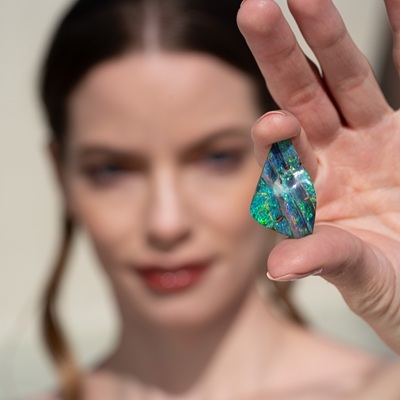
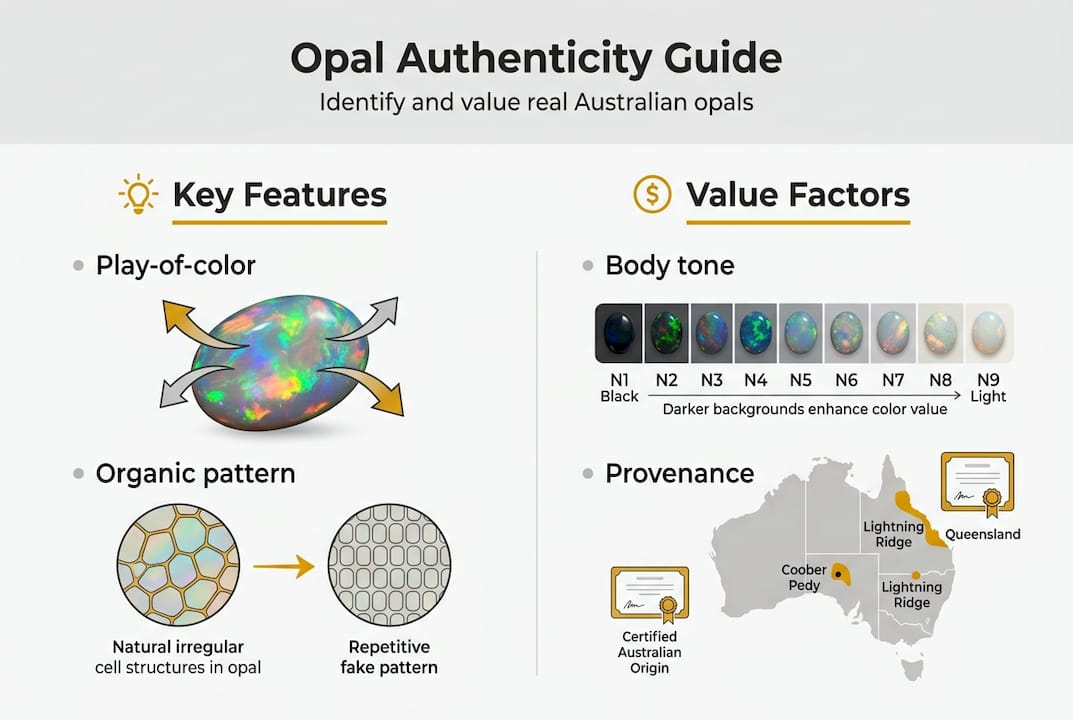
The most immediate and captivating feature of any authentic opal is its play-of-color, the shifting, dancing spectrum of hues that seems to live inside the stone. This phenomenon occurs because silica spheres diffract light through a process called Bragg diffraction, bending wavelengths into visible color. In natural opals, this internal architecture is beautifully irregular, producing patterns that are never perfectly repeated.
Synthetics, by contrast, are grown under controlled laboratory conditions that create uniform columnar structures. Under a 10x loupe (a small magnifying lens used by gemologists), these columns appear as a regular grid or the telltale “lizard-skin” pattern. Natural opals show random, organic arrangements of color and inclusions. If the pattern looks too perfect, trust your instincts.
The IGS opal buying guide recommends several practical checks:
| Feature | Natural opal | Synthetic or assembled |
|---|---|---|
| Color pattern | Irregular, organic | Uniform columns or grid |
| UV fluorescence | Minimal or none | Often green fluorescence |
| Side view | Solid, no seams | Visible layers or glue lines |
| Inclusions | Natural sand, matrix | None or artificial bubbles |
| Back surface | Rough or potch | Flat, polished, or plastic |
Viewing the stone from the side and back is especially revealing. Doublets and triplets show a distinct horizontal seam where the thin opal slice meets its backing. Tilt the stone slowly under a light source and watch for that telltale line.
Pro Tip: Always examine an opal under both natural daylight and artificial light. Play-of-color in genuine stones shifts and intensifies differently under each source, while synthetics tend to look flat or overly uniform under incandescent light.
For anyone learning to authenticate Australian opals, the side-view check and loupe inspection are the two most accessible starting points before seeking professional verification. Understanding opal origins and authenticity deepens this practice considerably.
Opal grading explained: Rarity, value, and what to look for
Once you can identify a genuine opal, understanding its grade reveals the full picture of its worth. The IGS opal grading system ranks stones from extra fine down to below commercial, based on a combination of factors that interact to determine rarity and desirability.
Body tone is the foundation of grading. Opals are rated on a scale from N1 (jet black) to N9 (crystal clear). Black opals, rated N1 through N4, are the most valuable because their dark body tone creates the highest contrast for play-of-color, making every flash of red, green, and violet appear more vivid and dramatic.
| Body tone | Category | Value range |
|---|---|---|
| N1 to N4 | Black opal | Highest value |
| N5 to N6 | Dark opal | Mid-high value |
| N7 to N8 | White/light opal | Moderate value |
| N9 | Crystal opal | Variable, often high |
Beyond body tone, several other qualities shape a stone’s grade:
- Brightness: How intensely the colors flash, rated from B1 (brilliant) to B7 (dull)
- Pattern coverage: How much of the stone’s face shows play-of-color
- Clarity: Presence of cracks, inclusions, or cloudiness
- Cut and shape: Symmetry, dome height, and polish quality
Understanding opal certification and grading helps collectors make sense of price differences that might otherwise seem arbitrary. A stone graded extra fine with full-face red-on-black pattern and B1 brightness is extraordinarily rare, and its price reflects that scarcity.
When choosing opal jewelry, matching the grade to your purpose matters. A collector seeking a long-term investment should prioritize body tone and brightness above all else. Someone buying a gift might find a beautifully cut white opal with vivid blue-green play-of-color equally captivating, and often more accessible in price. Exploring opal color meanings adds another layer of intention to any purchase.
Ethical sourcing and provenance: Ensuring your opal’s backstory is as genuine as the gem
A stone’s authenticity does not begin and end with its physical structure. The story of where it came from, who mined it, and how it traveled to your hands carries equal weight for serious collectors. Australian opals from Lightning Ridge and Coober Pedy are ethically sourced under government regulations that set standards for worker safety, environmental impact, and traceability.
This regulatory framework is a meaningful advantage over opal-producing regions where oversight is minimal. Ethiopian or Mexican opals, while beautiful in their own right, do not carry the same level of documented provenance or regulatory assurance. For collectors focused on resale confidence and long-term value, Australian origin matters enormously.
Here is how to verify your opal’s provenance before committing to a purchase:
- Request documentation: Ask for a certificate of origin, mine name, or region of extraction
- Check for lab certification: GIA or IGS certificates confirm species, origin, and any treatments
- Research the seller: Reputable dealers maintain direct relationships with Australian miners and can trace each stone’s journey
- Look for ethical branding: Retailers who emphasize Australian sourcing and ethics typically invest in supply chain transparency
- Ask about treatments: Smoke treatment and sugar-acid treatment can darken white opals artificially; honest sellers disclose these
Pro Tip: A seller who cannot tell you which Australian region a stone came from should raise a flag. Lightning Ridge, Coober Pedy, and Queensland each produce distinct opal types with recognizable characteristics. A knowledgeable dealer will speak about this naturally.
Following a thorough guide to ethical opal sourcing protects both your investment and the integrity of the broader opal market. Understanding opal provenance is not bureaucratic box-ticking. It is the foundation of confident collecting.
Practical steps: Authenticating opal jewelry before you buy
Whether you are browsing an online gallery or holding a stone at a gem fair, a consistent authentication routine protects every purchase. Professional lab identification using GIA or Raman spectroscopy is the gold standard for high-value pieces, but most collectors can perform meaningful checks themselves before that step.
Follow this sequence for any opal purchase:
- Inspect play-of-color in multiple light sources: Move the stone under daylight, LED, and incandescent light to observe how colors shift and whether they appear organic or mechanical
- Check the side and back: Tilt the stone slowly and look for any horizontal seam indicating a doublet or triplet assembly
- Use a 10x loupe: Examine the internal structure for uniform columns (synthetic) versus random, organic patterns (natural)
- Perform a UV test: Under a shortwave UV lamp, synthetics often fluoresce green while natural Australian opals show little to no fluorescence
- Request documentation: For any stone above $500, ask for a written description of origin, treatments, and species
- Seek lab certification for high-value pieces: For rare or expensive stones, commission a GIA or independent gemological report before finalizing the purchase
For those navigating online purchases, the tips for buying opal online cover additional considerations specific to remote transactions, including video requests and return policies. Revisiting the full process of authenticating Australian opals periodically sharpens your eye and builds the kind of confidence that protects every acquisition.
Our expert perspective: What most collectors miss about opal authenticity
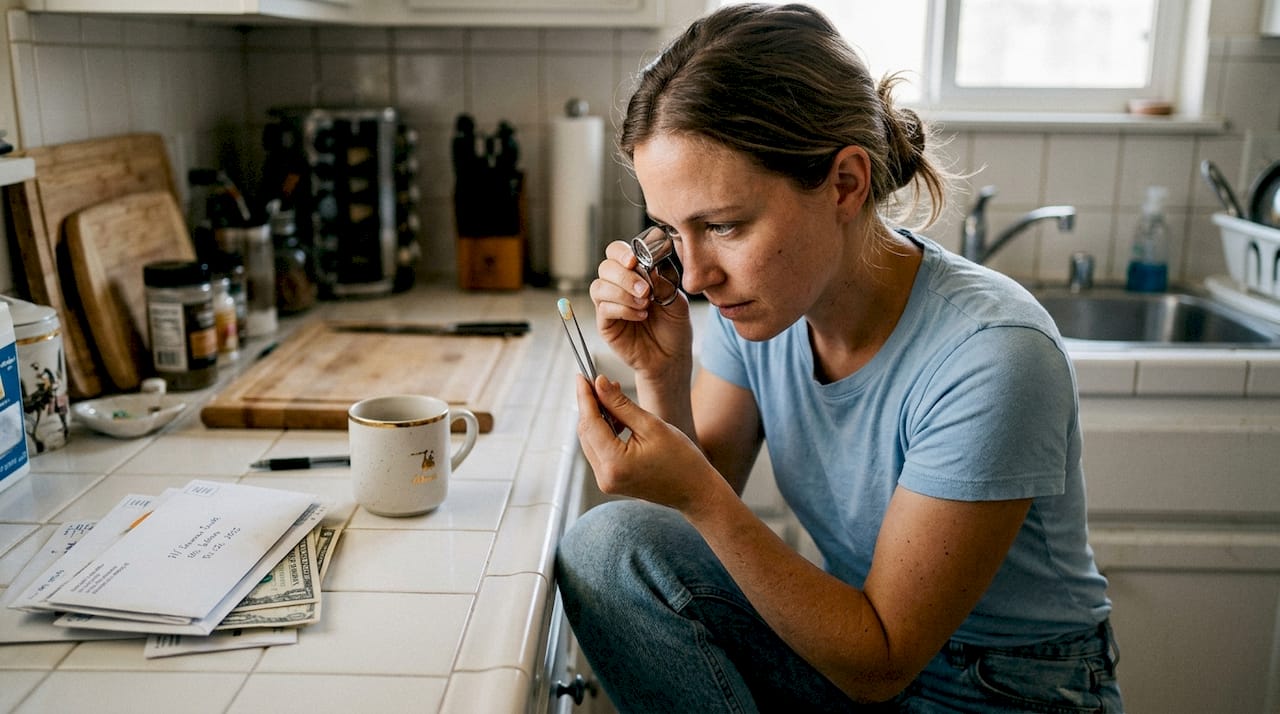
After years of working with Australian opals, one pattern stands out clearly: even experienced collectors underestimate the subtlety of assembled stones. A well-made triplet, with its clear dome and thin opal slice, can display play-of-color so vivid and convincing that it outshines many natural stones at first glance. The very quality that makes it attractive is what makes it deceptive.
Emotional attachment compounds the risk. When a collector falls in love with a stone’s particular fire, the instinct is to believe rather than verify. That emotional pull is entirely understandable. Opals earn it. But it is precisely in those moments of fascination that rigorous inspection matters most.
The most overlooked check remains the side-view examination. Most buyers look at the face of a stone and nothing else. Turning it on its side takes three seconds and reveals assembly that no amount of face-on admiration would expose.
For any piece above a modest price point, professional lab testing is not a luxury. It is the only way to confirm what the eye cannot. Understanding the full depth of play-of-color in Australian opals makes that testing process more meaningful, because you arrive knowing exactly what you are looking for.
Discover authentic Australian opals with confidence
Knowing how to read a stone’s color, structure, grade, and provenance transforms the experience of collecting from guesswork into genuine connoisseurship. That knowledge deserves a source worthy of it.

At Australian Opal Direct, every stone is earth-mined, ethically sourced, and traceable to its Australian origin. Our direct relationships with miners across Lightning Ridge, Coober Pedy, and Queensland mean that when you purchase a piece, its story is as authentic as its fire. From rare black opals to luminous crystal pendants, each piece comes with full documentation and our commitment to transparency. Ready to collect with confidence? Learn about ethical sourcing or explore our curated collection and find the opal that speaks to you.
Frequently asked questions
What is play-of-color and why is it important for opal authenticity?
Play-of-color is the shifting rainbow effect seen in real opals, produced when silica spheres diffract light through Bragg diffraction. Its randomness and organic depth are key markers of a genuine stone, since synthetics replicate this effect with tell-tale uniformity.
How do I tell the difference between a natural and synthetic opal?
Natural opals display irregular color patterns and organic inclusions, while synthetics show uniform columns, grid-like structures, or green fluorescence under UV light. A 10x loupe and a UV lamp together make this distinction clear.
What makes black opals from Australia so valuable?
Black opals are rated N1 to N4 on the body tone scale and sit at the top of the official grading system. Their dark body tone creates maximum contrast for play-of-color, producing the most vivid and rare displays of any opal type.
Why is ethical sourcing important when buying opals?
Ethical sourcing confirms that your opal was mined under Australian government regulations, supporting fair labor and environmental standards while providing the verifiable provenance that underpins long-term collectible value.
Recommended
- How to Authenticate Australian Opals for Genuine Value - Australian Opal Direct
- How to Distinguish Opal Origins for Authentic Jewelry - Australian Opal Direct
- Expert Guide to Buying Australian Opals for Collectors - Australian Opal Direct
- How to Spot Rare Opals: Expert Guide for Authentic Finds - Australian Opal Direct