Meaning of Opal Certification: Ensuring Authenticity
Posted by AOD on 24th Dec 2025
Meaning of Opal Certification: Ensuring Authenticity

Many gemstone collectors and luxury buyers rely on trustworthy certification, yet over fifty percent of American opal purchases occur without verified documentation. This gap exposes investors to fraud and uncertainty in the global market. Whether you are acquiring ethically sourced Australian opals for your collection or seeking rock-solid provenance for resale, clarity about certification details can protect your investment and ensure genuine authenticity.
Table of Contents
- What Opal Certification Really Means
- Types of Opal Certification and Grading
- What Certification Documents Should Show
- Risks of Unverified or Fake Opals
- How to Verify Authentic Australian Opals
Key Takeaways
| Point | Details |
|---|---|
| Opal Certification Ensures Authenticity | Certification verifies an opal’s quality and characteristics, providing buyers with confidence in their purchase. |
| Request Comprehensive Documentation | Always obtain detailed certification reports that include specific attributes, treatment history, and origin information. |
| Beware of Unverified Opals | Purchasing unverified stones can lead to significant financial risks and potential ethical concerns. |
| Follow Verification Techniques for Australian Opals | Verify authenticity through professional certification and detailed inspection methods to ensure genuine quality. |
What Opal Certification Really Means
Opal certification represents a professional, systematic process that verifies a gemstone’s authenticity, quality, and characteristics through rigorous scientific examination. Gemological associations utilize advanced analysis techniques to assess multiple critical factors about each individual stone, providing buyers with comprehensive documentation of its natural origins and inherent properties.
The certification process involves detailed evaluation of specific attributes that determine an opal’s genuine value. Professional gemologists meticulously examine characteristics including play-of-color, body tone, clarity, origin, and potential treatments. These standardized assessments create an impartial verification mechanism that protects consumers from misrepresentation and ensures transparency in gemstone transactions.
Certification reports typically include precise measurements, detailed color descriptions, origin verification, and potential enhancement disclosures. These documents serve as critical reference points for collectors, investors, and jewelry enthusiasts seeking absolute confidence in their gemstone purchases. By providing scientific documentation, certification transforms an ordinary stone into a verified, trustworthy asset with clearly defined characteristics and provenance.
Pro Buyer Tip: Always request the original certification document when purchasing opals and verify the credentials of the certifying gemological organization to ensure maximum authenticity and value.
Types of Opal Certification and Grading
Opal certification encompasses multiple sophisticated grading systems designed to comprehensively evaluate a gemstone’s unique characteristics. Professional gemological organizations utilize standardized assessment techniques that systematically analyze critical factors including color intensity, body tone, transparency, and origin, creating a nuanced framework for understanding each stone’s intrinsic value.
The grading process typically involves several key classification methods. Opals are evaluated using the N1–N9 body tone scale, which ranges from black to white backgrounds. Stones are also categorized into commercial, good, fine, and extra fine grades based on their visual properties. Professional certifications will detail specific attributes such as play-of-color, pattern complexity, transparency levels, and potential treatments, providing buyers with a comprehensive understanding of the gemstone’s quality and authenticity.
Certification Types typically include:
- Origin Certification: Verifying the geographical source of the opal
- Authenticity Verification: Confirming whether the stone is natural, synthetic, or treated
- Structural Analysis: Identifying solid, doublet, or triplet opal compositions
- Comprehensive Grading: Detailed assessment of color, clarity, and structural characteristics
Pro Buyer Tip: Request a complete certification report that specifies not just the grade, but also provides detailed documentation about the opal’s origin, treatment history, and specific gemological characteristics to ensure complete transparency in your purchase.
Here’s a summary of major opal certification types and their primary benefits:
| Certification Type | Main Purpose | Who Benefits Most |
|---|---|---|
| Origin Verification | Confirms geographic source | Collectors, investors |
| Authenticity Confirmation | Distinguishes natural from synthetic or treated | All buyers |
| Structural Analysis | Identifies stone’s physical makeup | Jewelers, appraisers |
| Comprehensive Grading | Details color, clarity, and overall quality | Serious collectors, insurers |
What Certification Documents Should Show
A comprehensive opal certification document serves as the definitive fingerprint of a gemstone, providing buyers with critical information about its characteristics and authenticity. Reputable gemmological laboratories follow internationally harmonized guidelines to create detailed reports that transparently communicate every essential aspect of the stone’s composition and quality.

The most robust certification documents typically include several key components that provide a complete profile of the opal. Professional reports comprehensively detail the gemstone’s species, variety, country of origin, precise measurements, weight, shape, color characteristics, and treatment history. These documents should unambiguously state whether the opal is natural or laboratory-grown, and include high-resolution photographs that capture the stone’s unique visual properties.
Critical Document Components include:
- Precise weight measurements (in carats)
- Exact dimensional specifications
- Color grade and intensity assessment
- Origin verification
- Structural composition details
- Treatment disclosure
- Authenticity confirmation
- Photographic documentation
- Unique report identification number
Pro Buyer Tip: Always cross-reference the certification document’s unique identification number with the issuing laboratory to validate its authenticity and ensure you are receiving a genuine, professionally assessed gemstone report.
Risks of Unverified or Fake Opals
Unverified opals represent a significant financial and ethical risk for collectors and jewelry enthusiasts, potentially exposing buyers to sophisticated fraudulent practices in the gemstone market. Unverified stones can create substantial marketplace challenges, including misrepresentation of origin, undisclosed treatments, and synthetic substitutions, which can dramatically undermine a buyer’s investment and trust.
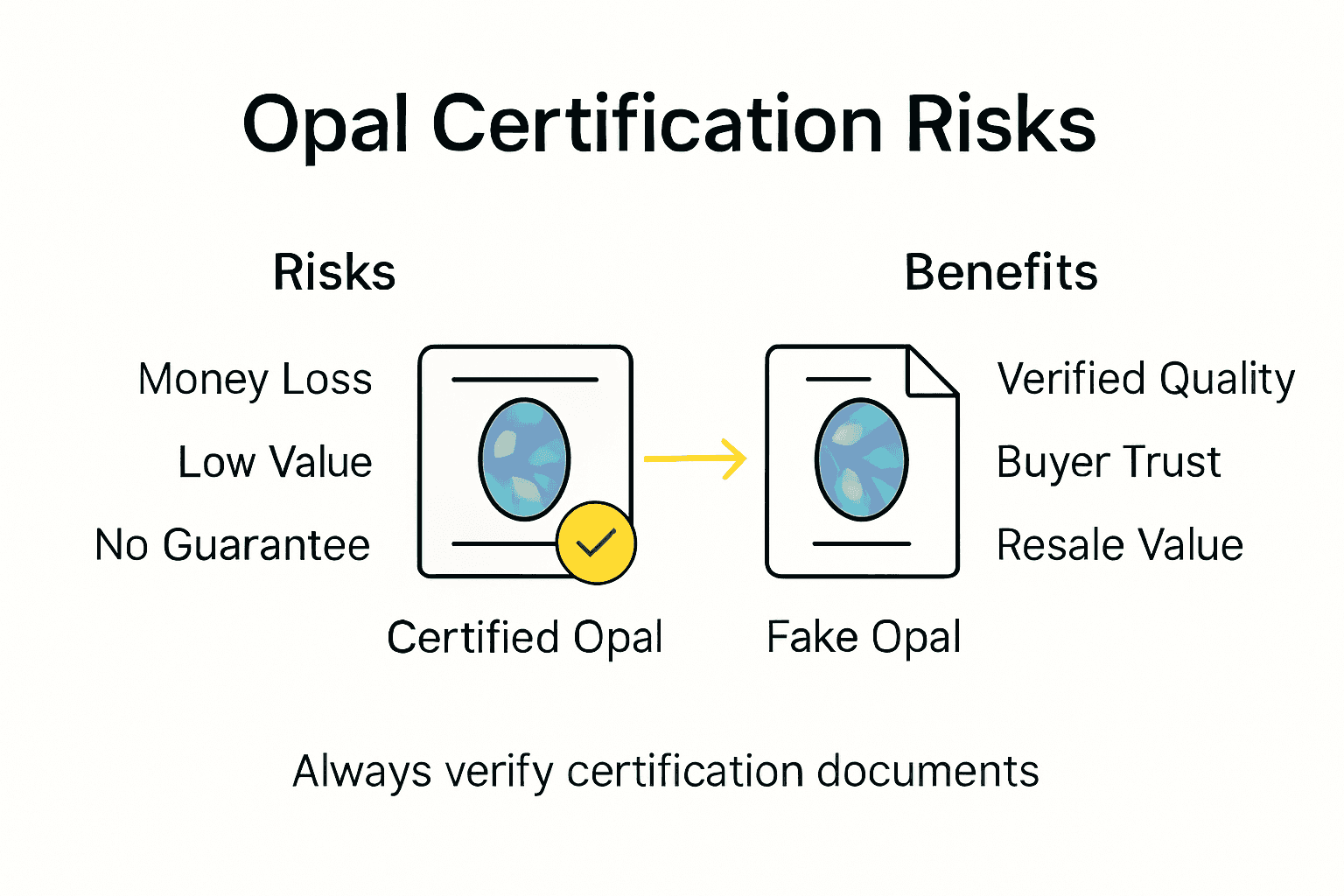
The potential dangers of purchasing unverified opals extend far beyond simple monetary loss. Fake or misrepresented stones can compromise entire collections, reduce resale value, and potentially introduce stones with questionable ethical sourcing. Sophisticated fraudsters may employ advanced techniques to create convincing imitations, including synthetic color treatments, artificial play-of-color enhancements, and fabricated origin stories that make distinguishing genuine stones extremely challenging.
Primary Risks of Unverified Opals include:
- Financial devaluation
- Complete loss of investment
- Potential legal complications
- Damage to collector’s reputation
- Contribution to unethical mining practices
- Inability to accurately assess stone quality
- Compromised insurance and appraisal values
- Potential legal disputes with sellers
Pro Buyer Tip: Always request comprehensive documentation, multiple professional certifications, and conduct independent verification before making any significant opal purchase to protect yourself from potential fraud and ensure the authenticity of your investment.
Compare key risks of buying opals with or without professional certification:
| Transaction Type | Financial Risk | Confidence Level | Resale/Insurance Value |
|---|---|---|---|
| With Certification | Low, protected asset | High transparency | Fully supported |
| Without Certification | High, possible losses | Limited or unknown | Rarely guaranteed |
How to Verify Authentic Australian Opals
Verifying the authenticity of an Australian opal requires a systematic and meticulous approach that combines visual examination, professional certification, and expert consultation. Professionals recommend a comprehensive verification process that involves multiple critical steps to ensure the stone’s genuine Australian origin, ranging from detailed documentation review to sophisticated physical inspections.
The verification process involves examining several key characteristics unique to Australian opals. Authentic stones from renowned regions like Lightning Ridge and Coober Pedy display distinctive visual qualities, including complex play-of-color, specific body tone variations, and natural structural irregularities that cannot be perfectly replicated in synthetic or treated stones. Expert gemologists look for nuanced details such as natural inclusion patterns, color distribution, and microscopic structural features that distinguish genuine Australian opals from imitations.
Key Verification Techniques:
- Obtain official certification from recognized gemmological institutions
- Verify documented origin with specific Australian opal fields
- Conduct visual inspection under professional lighting
- Examine play-of-color and body tone characteristics
- Check for natural structural irregularities
- Request advanced spectroscopic analysis if needed
- Compare against known Australian opal reference standards
- Consult multiple independent gemological experts
Pro Buyer Tip: Always request a comprehensive certification report from multiple professional sources, and if possible, obtain an independent secondary verification to ensure absolute confidence in your Australian opal’s authenticity and quality.
Guarantee Your Investment with Certified Authentic Australian Opals
Understanding the true meaning of opal certification is crucial for protecting yourself from financial risks and ensuring the authenticity of your gemstone purchase. The article highlights key challenges buyers face such as verifying origin, confirming natural status, and avoiding unverified or fake opals. When quality and transparency matter, you deserve more than just promises—you need scientifically validated certification that proves your opal’s genuine Australian heritage and superior craftsmanship.
At Australian Opal Direct, we specialize in ethically sourced, earth-mined opals from renowned Australian regions like Lightning Ridge and Coober Pedy. Every piece in our collection is backed by detailed certification documents that reveal origin, treatment history, and gemological characteristics. This commitment ensures you receive only authentic, premium-quality opals, whether you choose from our curated rings, pendants, earrings, bracelets, or request a custom-designed piece.
Take control of your gemstone journey today by exploring our exclusive certified opals and discover the irreplaceable energy and history captured in each stone.
Secure your investment with confidence. Explore the full collection at Australian Opal Direct and request your certified opal now. Experience true authenticity with every gem you wear or collect.
Frequently Asked Questions
What does opal certification mean?
Opal certification is a professional process verifying a gemstone’s authenticity, quality, and characteristics through scientific examination by gemologists.
Why is opal certification important?
Opal certification protects consumers from misrepresentation, ensures transparency in gemstone transactions, and provides comprehensive documentation that enhances the trustworthiness and value of the opal.
What should a certification document include?
A proper opal certification document should include precise measurements, color grades, origin verification, treatment disclosures, and high-resolution photographs, among other essential details about the gemstone.
How can I verify the authenticity of an opal?
To verify an opal’s authenticity, request certification from recognized gemological institutions, examine its visual characteristics and structure, and consult multiple experts to ensure accuracy and confidence in your purchase.
Recommended
- What Is Opal Certification? Complete Guide for Buyers - Australian Opal Direct
- Opal Stone 101: History, Symbolism, and Uses - Australian Opal Direct
- Opal Provenance: Ensuring Authenticity and Ethical Value - Australian Opal Direct
- Opal Provenance: Ensuring Authenticity and Ethical Value - Australian Opal Direct