What is nature's light opal? A collector's guide
Posted by AOD on 16th May 2026
What is nature’s light opal? A collector’s guide
TL;DR:
- Light opals are defined by their body tone grades N7–N9, featuring white or near-white backgrounds. Their play-of-color results from diffraction caused by microscopic silica spheres, with sphere size influencing color hues. Proper care, including gentle cleaning and protective settings, is essential to preserve their beauty and structural integrity.
Few misunderstandings cost gemstone collectors more than confusing opal body tone with play-of-color. These are two entirely separate qualities, yet even experienced buyers routinely conflate them when evaluating what is nature’s light opal and deciding whether a stone is worth acquiring. The result: overlooked treasures and misguided purchases. This guide untangles the science, explains the grading system used across Australian gem markets, examines the physical properties that make light opals both beautiful and demanding to own, and gives you the practical tools to select, authenticate, and care for these luminous stones with confidence.
Table of Contents
- Understanding nature’s light opal: definition and scientific basis
- Grading and categorizing light opals in Australian gem markets
- Physical properties and care considerations for light opal jewelry
- Selecting and collecting nature’s light opals: tips for enthusiasts and collectors
- A collector’s perspective: why nature’s light opal is a gem of subtle elegance and enduring allure
- Explore AustralianOpalDirect’s curated collection of light opal jewelry
- Frequently asked questions
Key Takeaways
| Point | Details |
|---|---|
| Definition by body tone | Nature’s light opal is officially graded with a light body tone between N7 and N9 on the Australian Opal Association scale. |
| Unique light play | Its distinct, delicate play-of-color arises from microscopic silica spheres that diffract light inside the gem. |
| Care requirements | Due to moderate hardness, light opals need gentle wear and protection to avoid damage and preserve their sparkle. |
| Authenticity tips | Accurate grading focuses on front-facing body tone and reputable authentication to ensure genuine Australian origin. |
| Collector value | Light opals offer elegant, subtle beauty that complements premium design and expert craftsmanship for lasting allure. |
Understanding nature’s light opal: definition and scientific basis
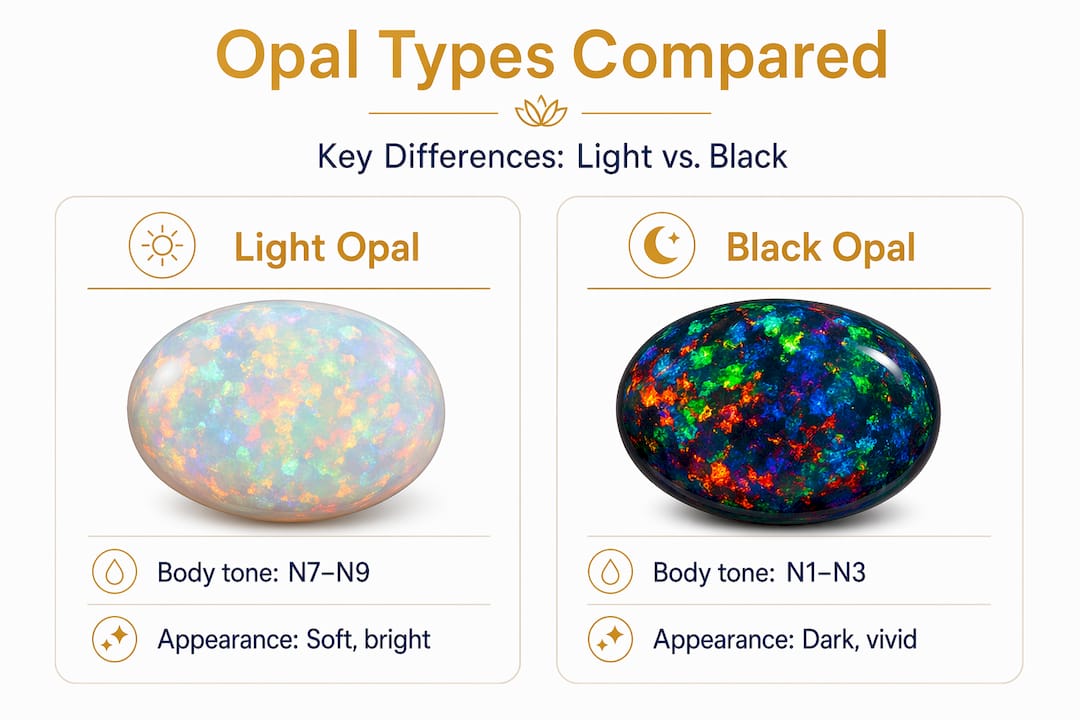
Nature’s light opal is defined by its body tone, specifically the background color of the stone itself, not the colors you see dancing across its surface. According to the opal body tone guide used across the industry, light opal corresponds to grades N7–N9 on the Australian Opal Association’s nine-point N1–N9 body tone scale. N1 represents the deepest black, and N9 is pure white. Light opals occupy the brightest end of that spectrum.
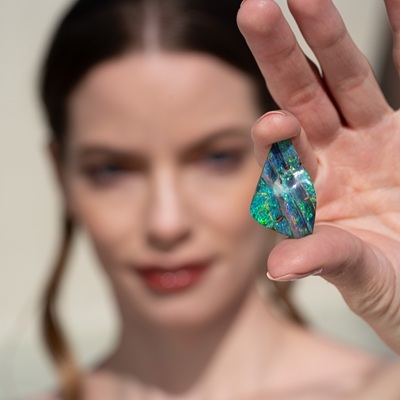
Body tone is the canvas. Play-of-color is the painting on it. Conflating the two leads collectors to reject perfectly extraordinary light opals because their colors appear “softer,” when in reality the stone’s microstructural brilliance is working exactly as nature intended on a lighter background.
The science behind that brilliance is genuinely astonishing. The play-of-color in opal is produced by diffraction of white light through an internal arrangement of microscopic silica spheres stacked in an orderly, three-dimensional grid. When light enters the stone, these spheres bend it, splitting white light into its spectral components. The specific colors that appear depend on sphere size:
- Smaller silica spheres (roughly 150–200 nanometers) diffract shorter wavelengths, producing blues and violets.
- Mid-range spheres produce greens, the most common color in light opals.
- Larger spheres (around 250–350 nanometers) diffract longer wavelengths, yielding reds, oranges, and golds — the rarest and most prized play-of-color in any opal, including light opal.
The uniformity of sphere size and the regularity of their arrangement govern how sharp and vivid the resulting colors appear. Even within a light-bodied stone, exceptional sphere alignment can produce a play-of-color that shifts dramatically as the stone rotates through light, a quality collectors call “rolling fire.”
Grading and categorizing light opals in Australian gem markets
The Australian Opal Association’s body tone scale is the accepted standard across Australian gem markets, and understanding it protects you from overpaying for mediocre stones or undervaluing rare ones. The scale runs from N1 (jet black) through N4–N6 (dark and semi-dark tones) to N7, N8, and N9, which define the light opal range. Most white Coober Pedy opals fall in the N8 to N9 range, while some Queensland boulder opals can display a lighter ironstone background that edges toward N7.
One critical rule governs accurate grading: grading must be based on the stone’s front-facing body tone only, not the stone’s back surface and not a photograph. Photography introduces light-source bias, color temperature shifts, and reflective distortion that can shift an apparent N8 toward N6 under certain studio lighting. Viewing the stone’s reverse can also mislead, since many light opals have a denser or darker back that bears no relationship to how the gem presents face-up in a setting.
| Body tone grade | Category | Typical appearance | Typical origin |
|---|---|---|---|
| N1–N3 | Black opal | Deep charcoal to jet black background | Lightning Ridge, NSW |
| N4–N6 | Dark/semi-dark opal | Gray to mid-tone background | Lightning Ridge, Mintabie |
| N7 | Light opal (darker end) | Light gray, near-white background | Various Australian fields |
| N8–N9 | Light/white opal | White to milky white background | Coober Pedy, SA |
For collectors, body tone grade directly influences authenticating Australian opals and pricing. Black opals at N1 command significant premiums because the dark background creates high contrast that intensifies play-of-color. Light opals earn their value differently: through the purity and complexity of the color pattern itself, and through the quality of the play-of-color relative to the lighter ground. A light opal with vivid reds and oranges flickering across a white body tone is extraordinarily rare and commands respect in any reputable auction room.
Pro Tip: Always request a body tone grading card comparison image showing the stone face-up beside the N-scale when purchasing remotely. Reputable sellers will provide this without hesitation, and the body tone grading scale gives you the reference to interpret what you see.
Physical properties and care considerations for light opal jewelry
Nature’s light opal gemstone is hydrated amorphous silica, containing between 6% and 10% water by weight. This hydration is not incidental; it is integral to the stone’s internal structure and directly affects how it looks and behaves over time. Opal hardness is approximately 5.5–6 on the Mohs scale, which places it firmly below sapphire, ruby, and even quartz in scratch resistance. For a collector, that number has practical consequences every single day.
What does 5.5–6 on the Mohs scale mean in practice? A household steel file rates around 6.5. So does a typical pocketknife blade. Granite countertop surfaces contain quartz particles that rate 7. Simply sliding a light opal ring across a kitchen counter can leave micro-abrasions that dull the surface over time.
Beyond hardness, the stone’s hydrated silica structure makes it sensitive to rapid dehydration and temperature extremes. Crazing, the network of fine surface cracks that can appear on improperly stored opals, results from moisture loss disturbing the silica sphere network. Once crazing appears, it is essentially irreversible and severely diminishes both beauty and value.
Recommended care practices for light opal jewelry:
- Storage: Keep light opals away from direct sunlight and heat sources. A sealed pouch or box lined with a slightly damp cloth prevents dehydration in dry climates.
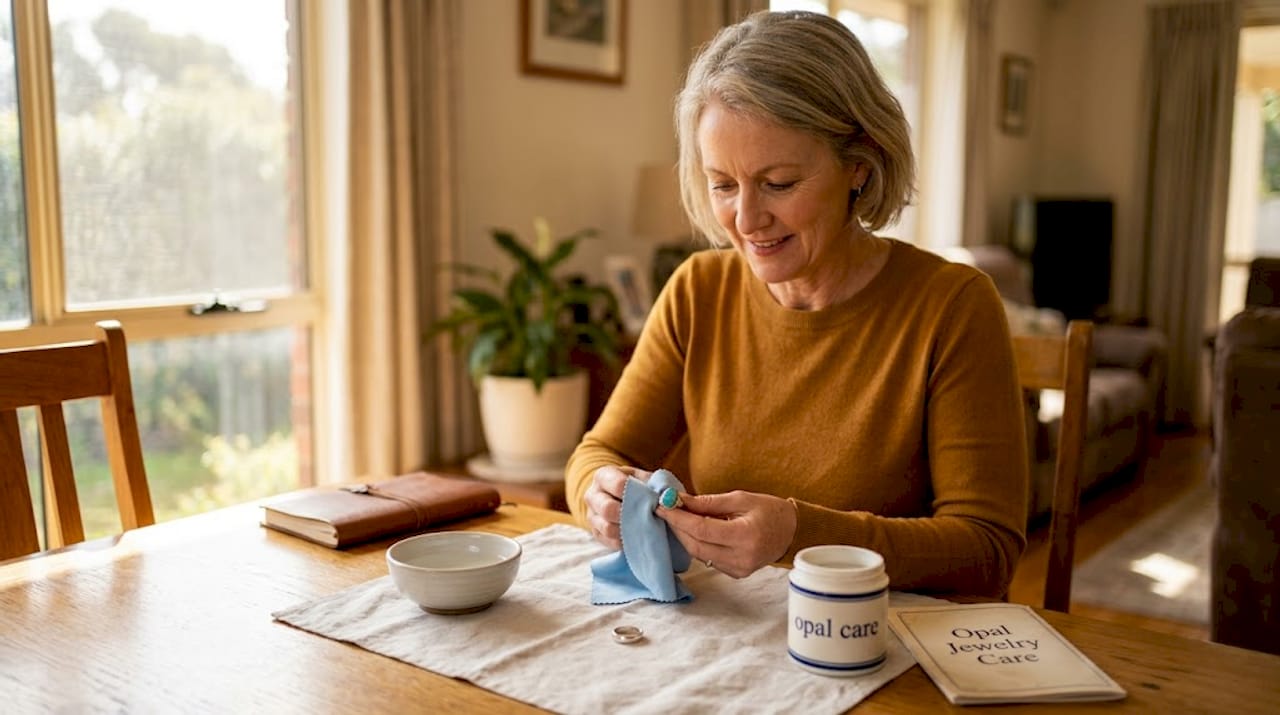
- Cleaning: Use only a soft, damp cloth. Avoid ultrasonic cleaners, steam cleaners, and chemical jewelry solutions, all of which can strip moisture or damage the stone surface.
- Setting selection: Bezel settings offer the most mechanical protection, wrapping the opal’s girdle in metal and shielding it from lateral impacts. Claw settings expose more of the stone but are acceptable when the opal is set deep enough to avoid edge contact.
- Daily wear precautions: Remove light opal rings before gardening, cooking, exercising, or any task involving repeated hand contact with hard surfaces.
Pro Tip: If you live in a low-humidity region, store your light opal pieces in a sealed container with a small, damp piece of cotton wool placed nearby but not touching the stone. This prevents the gradual moisture loss that leads to crazing without creating excess condensation.
Following a dedicated opal jewelry care routine and caring for opal jewelry properly will preserve both the play-of-color and the structural integrity of the stone for generations.
Selecting and collecting nature’s light opals: tips for enthusiasts and collectors
The nature’s light opal values most prized by serious collectors are not simply about brightness or size. They center on the quality, pattern, and breadth of the play-of-color displayed across that luminous white or near-white background. As Geoscience Australia notes, a lighter body background softens the contrast between background and color play, giving light opals their characteristic ethereal quality compared to the dramatic intensity of black opals.
Selecting a high-quality light opal: key steps
- Assess the play-of-color first. Look for color coverage across the entire face of the stone, not just a concentrated flash in one corner.
- Rotate the stone under a single directional light source. Rolling fire that shifts through the spectrum as the stone moves signals excellent sphere alignment.
- Check body tone grade using a face-up assessment, not photography or the stone’s reverse.
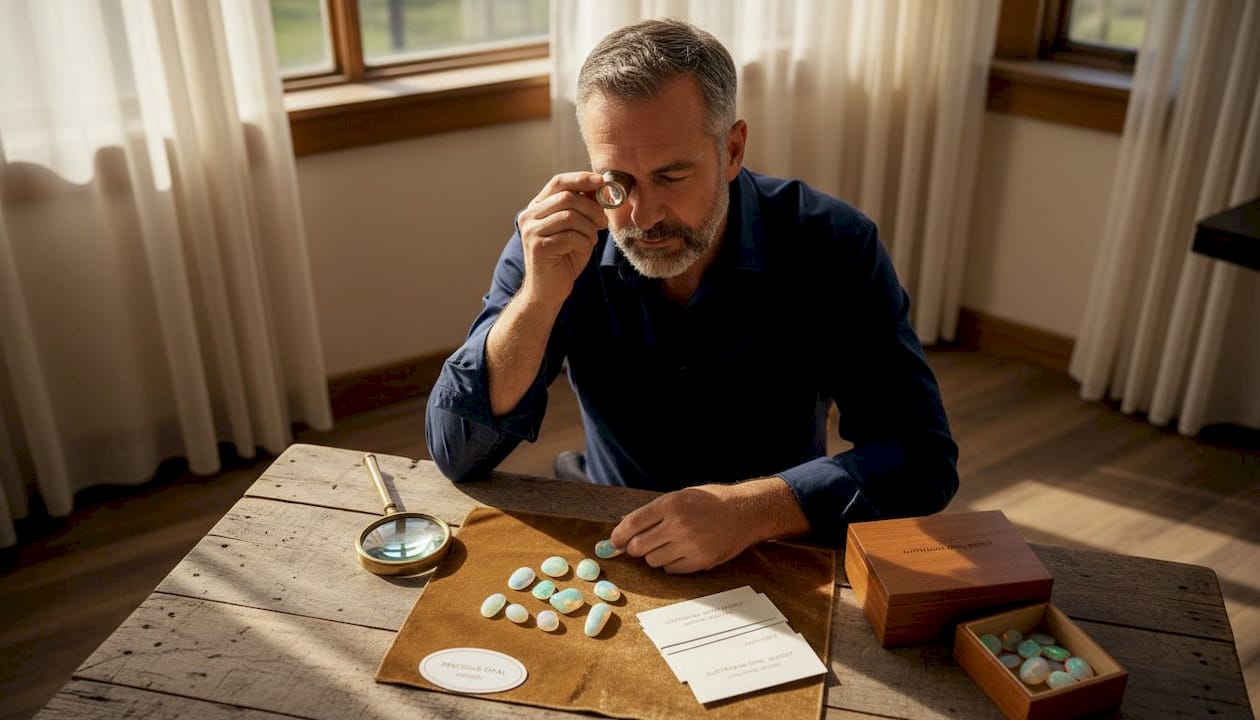
- Examine surface integrity under magnification. Any existing crazing, chips along the girdle, or sand inclusions will affect durability.
- Confirm origin documentation. Authentic Australian light opals, particularly those from Coober Pedy, will have provenance that a reputable seller can trace directly to the mining source.
Consulting an expert guide to buying Australian opals before any significant purchase protects you from synthetic look-alikes and doublets presented as solid stones.
Nature’s light opal vs other opals: a practical comparison
| Feature | Nature’s light opal | Black opal | Boulder opal |
|---|---|---|---|
| Body tone | N7–N9 (white to light gray) | N1–N3 (dark to black) | Variable; ironstone backing |
| Play-of-color visibility | Softer, ethereal | High contrast, vivid | High contrast, natural matrix |
| Rarity | Common in Australian fields | Rarest and most valuable | Rare; unique to Queensland |
| Durability in settings | 5.5–6 Mohs; moderate care needed | 5.5–6 Mohs; similar care | Backed by ironstone; more durable |
| Price range | Accessible to premium | Premium to extraordinary | Mid-range to high |
Knowing how to distinguish opal origins is equally important. Ethiopian opals, for example, are hydrophane, meaning they can absorb water and change body tone temporarily when wet, a behavior not typical of Australian light opals. Mexican fire opals lack play-of-color entirely. The consistency, body tone stability, and characteristic color patterns of Australian light opals are qualities the opal jewelry selection guide covers in detail for those making their first significant purchase.
A collector’s perspective: why nature’s light opal is a gem of subtle elegance and enduring allure
There is a quiet bias in the opal market that undervalues light opals simply because they are more abundant than black opals. This is a misconception that costs uninformed collectors opportunities they will later regret. Rarity in gemology is never a single variable. While black opal body tone is less common than light opal body tone, a light opal displaying a complete spectral roll — reds through oranges, greens, and blues cascading across a white field — with spheres distributed in a rare, broad-size pattern is genuinely uncommon and justifies pricing that many buyers underestimate.
The advantages of Australian opals relative to synthetic alternatives become especially apparent in light opals, where the delicacy of the play-of-color reveals the full complexity that only millions of years of silica deposition can produce. Synthetic opals display a predictable, repeating “lizard skin” pattern under magnification. Natural light opals show irregular, flowing color patterns that no two stones replicate.
The role of setting design in light opal collecting is also underappreciated. A master goldsmith who understands opal’s fragility will design a bezel that holds the stone protectively while angling the face toward ambient light to maximize play-of-color visibility. The difference between a light opal displayed in an expert setting versus an ill-fitting mount can be extraordinary, sometimes making the same stone appear twice as vibrant. Collecting light opals, then, is not only about the stone itself but about the partnership between the gem and the craft surrounding it. That marriage of natural wonder and human artistry is, ultimately, what makes nature’s light opal so enduringly compelling.
Explore AustralianOpalDirect’s curated collection of light opal jewelry
Understanding the science, grading, and care behind nature’s light opal is the first step. Finding a piece that embodies all those qualities in a thoughtfully crafted setting is the reward.

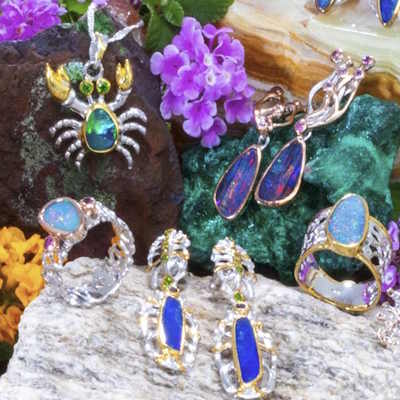
The AustralianOpalDirect collection brings together ethically sourced Australian light opals, each traced directly from mining regions including Coober Pedy and Lightning Ridge, and set by craftspeople who understand the gem’s demands. Whether you are seeking your first light opal pendant or expanding a serious collection, the expert buying guide available on the site pairs seamlessly with the opal jewelry care tips to help you make informed, confident decisions. Every piece arrives with provenance documentation, complimentary insurance, and a 90-day warranty, because a gem this rare deserves that level of commitment.
Frequently asked questions
What distinguishes nature’s light opal from other types of opal?
Nature’s light opal is defined by its body tone grades N7–N9 on the Australian Opal Association’s scale, giving it a white to near-white background, while its play-of-color is produced by microscopic silica spheres that diffract light into distinct spectral hues.
How can I identify authentic Australian light opals when purchasing?
Authentic Australian light opals should be assessed by their front-facing body tone using the Australian Opal Association’s scale, since grading by photos or the stone’s back introduces significant error; reputable sellers will provide provenance documentation traceable to specific Australian mining regions.
What special care do light opal jewelry pieces need?
Light opals require gentle handling due to their Mohs hardness of 5.5–6; avoid impacts, rapid temperature changes, ultrasonic cleaners, and prolonged dryness to preserve their internal structure and play-of-color over time.
Why do light opals appear softer or less vibrant than black opals?
Because lighter body backgrounds reduce contrast against the play-of-color, light opals display a more ethereal, diffused color quality rather than the high-contrast vivid flashes characteristic of black opals, a distinction that reflects aesthetic difference rather than any deficiency in the stone.
Are light opals suitable for everyday jewelry wear?
Light opals can be worn regularly when set with appropriate protection, such as bezel settings, and handled carefully to avoid scratches and impacts; with proper care habits they can remain beautiful and structurally sound for decades.
Recommended
- Key features of opal investment pieces: a collector’s guide - Australian Opal Direct
- Why opal transparency is highly valued by collectors - Australian Opal Direct
- 7 Exquisite Examples of Rare Opals for Collectors - Australian Opal Direct
- Opal Fluorescence: Revealing Hidden Beauty in Light - Australian Opal Direct