Opal body tone guide: N1-N9 scale for collectors
Posted by AOD on 15th Apr 2026
Opal body tone guide: N1-N9 scale for collectors
TL;DR:
- Body tone determines an opal’s visual impact and market value, from black to crystal.
- Standardized N scale grading helps evaluate and compare opals accurately by tone.
- Darker tones, especially black opals, are more scarce, valuable, and collectable.
Body tone is one of the most quietly powerful forces shaping an opal’s beauty, yet it remains one of the least understood criteria among collectors. While play-of-color draws the eye first, it is the underlying tone, the darkness or lightness of the opal’s base, that determines how brilliantly those colors perform. Whether you are building a serious collection or selecting a piece for a loved one, understanding body tone transforms the way you see every opal you encounter. This guide walks through the definition, grading standards, market impact, and practical selection strategies for opal body tone, giving you the knowledge to collect with genuine confidence.
Table of Contents
- Understanding opal body tone: The foundation
- Grading opal body tone: Methods and standards
- How body tone impacts value, rarity, and energy
- Practical application: Selecting and displaying opal by body tone
- Why most collectors underestimate opal body tone
- Discover Australian opals matched by body tone
- Frequently asked questions
Key Takeaways
| Point | Details |
|---|---|
| Body tone defines opal beauty | The base color darkness or lightness directly shapes opal’s appearance and collector appeal. |
| Grading matters for value | Understanding and verifying body tone grading helps purchasers invest smartly and spot rare gems. |
| Dark tones bring higher prices | Black opals with the darkest tones typically command the greatest market value among Australian stones. |
| Tone impacts jewelry design | Designers use body tone to craft pieces that stand out or blend seamlessly with wearer’s style. |
| Collector knowledge beats hype | True experts focus on tone as a core value driver, far beyond headline color or pattern. |
Understanding opal body tone: The foundation
Body tone refers to the inherent darkness or lightness of an opal’s base material, independent of its play-of-color. Think of it as the canvas upon which nature paints its most spectacular light shows. A darker canvas makes colors pop with dramatic intensity, while a lighter base allows a softer, more ethereal glow to emerge. As body tone determines the lightness or darkness of opal’s base color, it directly affects overall appearance and value in ways that even experienced buyers sometimes overlook.
Australian opals are classified into four primary body tone categories:
- Black opal: The darkest base, ranging from deep charcoal to jet black. Found predominantly at Lightning Ridge, these are the most coveted stones in the world.
- Semi-black opal: A mid-dark tone that still provides excellent contrast for play-of-color, often offering remarkable value relative to true black opals.
- White opal: A pale, milky base most commonly sourced from Coober Pedy. Colors appear softer and more pastel against this lighter ground.
- Crystal opal: Transparent to semi-transparent with no dominant body color. Light passes through freely, creating an inner luminosity unlike any other variety.
Body tone is not simply an aesthetic preference. It is a formal grading criterion recognized by gemological institutions and Australian opal dealers alike. Collectors who understand opal terminology for collectors quickly realize that tone sits at the intersection of geology, optics, and market valuation.
Why tone matters for play-of-color:
The silica sphere structure within an opal diffracts light into spectral colors. Against a dark body tone, those diffracted colors appear vivid and saturated, like stained glass lit from behind. Against a white or crystal base, the same colors may appear washed or translucent. This optical relationship is why two opals with identical play-of-color patterns can differ dramatically in visual impact and price.
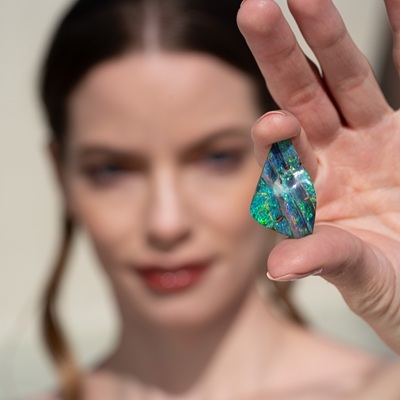
Pro Tip: When viewing an opal, hold it against a black background and then a white one. The shift in color intensity you observe is a direct demonstration of how body tone amplifies or softens the stone’s brilliance.
Grading opal body tone: Methods and standards
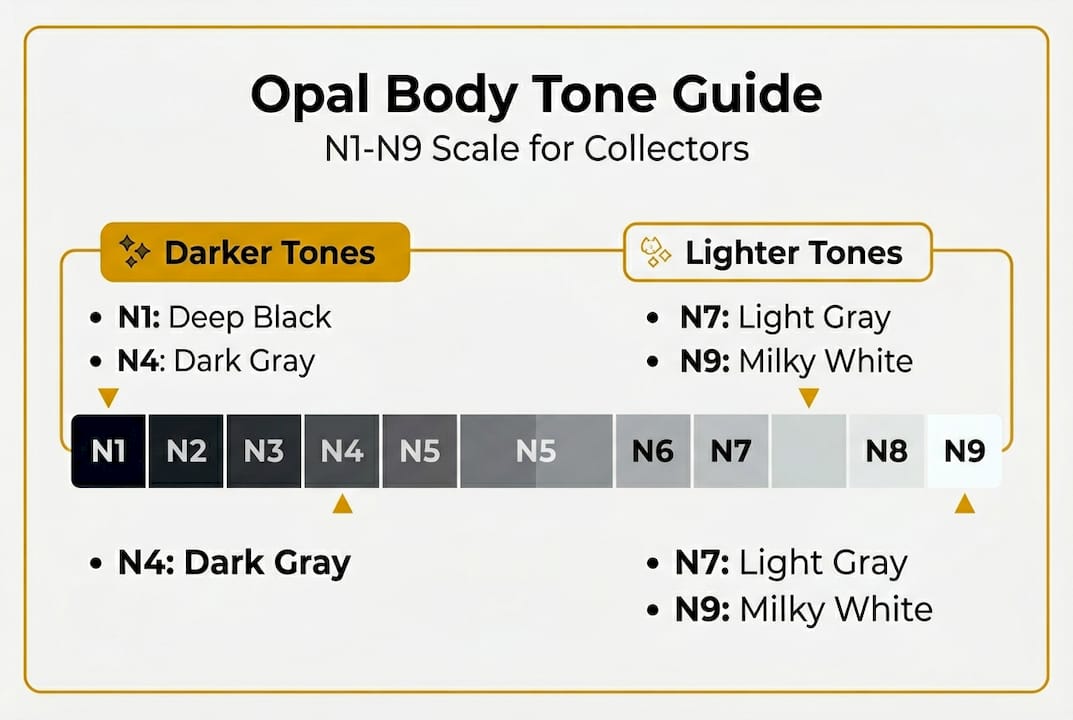
Precision matters when evaluating opals for a collection or investment. The Australian opal industry uses a standardized numerical scale to remove ambiguity from tone assessment. Australian opal grading uses a standardized scale from N1 (darkest) to N9 (lightest) to classify body tone, providing a universal language for buyers, sellers, and gemologists worldwide.
“Body tone is the single most important factor in determining an opal’s category and, by extension, its baseline market value. Without a standardized scale, comparison between stones becomes subjective and unreliable.” — Australian Opal Industry grading consensus
Here is how the scale breaks down in practice:
- N1 to N4 represent black and semi-black opals. These stones carry the darkest bases and, as a result, the most dramatic color display. N1 is the rarest and most prized designation.
- N5 to N6 cover the transitional range, sometimes called dark base or semi-crystal. These stones offer a balance between contrast and transparency.
- N7 to N9 encompass white and light crystal opals. These are more abundant, more accessible in price, and prized for their delicate, pastel color play.
Graders assess tone by viewing the opal face-up under diffused natural or fluorescent light, then comparing the base color against standardized tone chips. The value factors for opal extend beyond tone alone, but tone establishes the foundational category before any other criterion is applied.
| Body tone category | N scale range | Typical origin | Color play character |
|---|---|---|---|
| Black opal | N1 to N4 | Lightning Ridge | Vivid, saturated, high contrast |
| Semi-black opal | N4 to N5 | Lightning Ridge, QLD | Rich, bold, excellent contrast |
| White opal | N6 to N9 | Coober Pedy | Soft, pastel, diffused |
| Crystal opal | N6 to N9 | Various regions | Luminous, transparent, inner glow |
Understanding opal opacity alongside tone gives collectors a complete picture of how light interacts with each stone. Opacity and tone work together: a stone can be dark in tone but highly translucent, producing a uniquely deep, glowing effect that commands premium prices.
How body tone impacts value, rarity, and energy
The relationship between body tone and market value is not subtle. Black opals with dark body tone are among the rarest and most valuable, commanding higher prices in the Australian market, with exceptional specimens reaching tens of thousands of dollars per carat. The scarcity of N1 to N4 stones from Lightning Ridge makes them genuine collector-grade investments.
Key value and rarity considerations tied to body tone include:
- Supply scarcity: True black opals represent a tiny fraction of total opal production. Most Lightning Ridge output falls in the N4 to N6 range, making N1 to N3 stones genuinely exceptional.
- Color saturation premium: Darker tones amplify the perceived brightness of play-of-color, which directly elevates grading scores for brilliance and pattern, adding multiple value layers.
- Market demand: Collectors and luxury buyers consistently favor dark-toned stones. Auction records for Australian opals are dominated by black opal specimens.
- Retail accessibility: White and crystal opals at N7 to N9 offer extraordinary beauty at more accessible price points, making them ideal entry pieces for new collectors.
Beyond market economics, body tone carries deep energetic significance for those drawn to opal’s metaphysical properties. The significance of opal in jewelry spans centuries of cultural reverence, and many practitioners associate darker-toned opals with grounding energy, protection, and amplified intuition. Lighter-toned opals are linked to clarity, emotional openness, and creative inspiration.
Pro Tip: If you are acquiring an opal for both aesthetic and energetic purposes, consider how the tone aligns with your intention. A deep N2 black opal carries a very different energetic signature than a luminous N8 crystal opal, and both are extraordinary in their own right.
For collectors focused on long-term value, opal transparency for collectors is another dimension worth studying alongside tone. The interplay between tone and transparency can create stones that transcend standard grading categories entirely.
Practical application: Selecting and displaying opal by body tone
Knowing the theory of body tone is one thing. Applying it when you are standing before a selection of stones, or browsing a curated online collection, is where real collector skill develops. Body tone is a decisive factor in jewelry design, display choices, and market appeal, shaping every decision from setting style to lighting environment.
Here is how to use body tone knowledge practically:
- For dramatic jewelry pieces: Choose N1 to N4 black or semi-black opals. Set them in yellow gold or blackened silver to enhance the dark base and make colors ignite against the metal.
- For everyday wearable jewelry: White and crystal opals in the N7 to N9 range offer durability in wearability perception and pair beautifully with white gold or platinum settings.
- For display collections: Dark-toned opals photograph exceptionally well under directional lighting. Light-toned stones benefit from diffused, natural light that reveals their subtle color shifts.
- For custom carvings: Semi-black and black opals provide the best contrast for carved forms, as the dark base defines the carved edges and makes sculptural details visually sharp.
When it comes to opal carving in jewelry, body tone becomes even more critical. Carvers select stones where the tone is consistent throughout the material, ensuring the finished piece maintains visual cohesion from every angle.
Maintenance considerations also vary by tone. Lighter opals can show surface marks more visibly, while darker stones may conceal minor wear more gracefully. Both require the same fundamental care: avoid harsh chemicals, protect from impact, and store away from extreme temperature changes.
Pro Tip: When photographing your collection for insurance or marketing opal jewelry, shoot dark-toned opals against a black velvet background and light-toned opals against neutral gray. This approach captures the truest representation of each stone’s character.
Why most collectors underestimate opal body tone
Here is an uncomfortable truth the industry rarely discusses openly: most opal buyers focus almost entirely on play-of-color and largely ignore body tone until they have already made a purchasing decision. This is understandable. Color is immediate, visceral, and emotionally compelling. Tone, by contrast, requires a trained eye and a willingness to look beneath the surface display.
But serious collectors who have spent years acquiring Australian opals consistently say the same thing: tone is the variable that separates a good stone from a transformative one. The role of opals in luxury jewelry is built on this foundation. When a black opal from Lightning Ridge commands extraordinary prices, it is not purely because of its color pattern. It is because the dark body tone elevates every other quality the stone possesses.
The metaphysical community has understood this intuitively for centuries. Tone shapes the energy a stone radiates, not just the light it reflects. Collectors who learn to read body tone are not simply better buyers. They develop a deeper, more intimate relationship with each stone they acquire.
Discover Australian opals matched by body tone
Understanding body tone is the first step. Finding the perfect stone that speaks to your aesthetic and energetic vision is the next.

At Australian Opal Direct, every piece in our collection is carefully selected with body tone as a primary criterion, from luminous N8 crystal opals to rare N2 black opals sourced directly from Lightning Ridge miners. Our team of specialists can guide you toward stones that match your personal style, collection goals, and energy intentions. Explore Australian opals for collectors and discover a curated world where tone, brilliance, and craftsmanship converge. Free shipping, complimentary insurance, and a 90-day warranty ensure your investment is protected from the moment you choose your stone.
Frequently asked questions
How is opal body tone graded in Australia?
Australian grading standards use a scale from N1 (darkest) to N9 (lightest) to classify body tone, giving buyers and sellers a shared, objective framework for comparison.
Why is body tone important for opal value?
Black opals are the most valuable precisely because their dark body tone amplifies play-of-color brilliance, creating a visual intensity that lighter-toned stones simply cannot replicate at the same level.
Can I visually identify body tone on an opal?
Yes, opal’s base color is the primary indicator of tone and can be observed face-up under neutral light, though professional grading against standardized tone chips provides the most accurate classification.
How does opal body tone influence jewelry design?
Body tone shapes design choices at every level, with darker tones favored for bold, statement pieces and lighter tones chosen for delicate, understated designs that let subtle color play take center stage.
Are lighter opals less durable than darker ones?
Durability is governed by internal silica structure and water content rather than tone alone, though opal structure affects maintenance requirements that collectors should factor into long-term care planning.
Recommended
- Master must-know opal terminology for confident collecting - Australian Opal Direct
- Meaning of Opal Colors: Complete Guide for Collectors - Australian Opal Direct
- Why opal transparency is highly valued by collectors - Australian Opal Direct
- Grading opal quality: expert guide for collectors 2026 - Australian Opal Direct