Grading opal quality: expert guide for collectors 2026
Posted by AOD on 11th Mar 2026
Grading opal quality: expert guide for collectors 2026

Most collectors think opal grading follows the same rules as diamonds or rubies. That’s a costly mistake. Unlike traditional gemstones, opals demand unique evaluation criteria that consider play-of-color, body tone, and pattern dynamics. This guide reveals the expert framework jewelry aficionados need to assess opal quality confidently and make informed purchasing decisions that build valuable collections.
Table of Contents
- Understanding Opal Grading Basics: Color, Pattern, And Clarity
- Proper Opal Evaluation Techniques And Environment
- Advanced Grading Factors: Cut, Clarity Defects, And Durability Concerns
- Practical Tips For Collectors To Grade Opal Quality Confidently
- Explore Quality Opals For Your Collection
- Frequently Asked Questions
Key takeaways
| Point | Details | |-------|---------|| | Primary grading factors | Color, pattern, and clarity are the three core elements that determine opal quality and value. | | Proper evaluation setup | Use controlled lighting on dark backgrounds to reveal true play-of-color and avoid misrepresenting the stone’s characteristics. | | Body tone classification | Opal body tone ranges from N1 (black) to N9 (white), with darker tones commanding premium prices. | | Cut and clarity impact | Cut quality involves symmetry, polish, and thickness, while clarity defects like crazing or pits reduce value significantly. | | Durability concerns | Cracking from environmental stress affects opal value, requiring proper storage conditions to maintain integrity. |
Understanding opal grading basics: color, pattern, and clarity
Color dominates opal evaluation more than any other factor. The number of colors, clarity, and brightness visible in the stone’s play-of-color directly determines its market value. You’ll need to assess both the base body tone and the spectral colors that dance across the surface when light hits the gem.
Body tone classification uses a scale from N1 to N9. Black opals with N1 or N2 ratings showcase the darkest backgrounds, making their color play explosively vibrant. Crystal opals fall into the N5 to N6 range with transparent to semi-transparent bodies. White opals occupy N7 to N9, displaying lighter backgrounds that mute color intensity compared to their darker counterparts.
Pattern variety adds another dimension to value factors of opal grading. Pinfire patterns feature tiny color specks scattered across the surface. Harlequin patterns display angular, mosaic-like color patches highly prized by collectors. Broadflash patterns show sweeping bands of color that shift dramatically with viewing angle. Each opal pattern guide category carries different rarity and desirability factors.
Clarity assessment focuses on identifying imperfections that compromise structural integrity or visual appeal:
- Crazing: fine surface cracks that create spider web patterns
- Pitting: small depressions or holes on the surface
- Matrix inclusions: host rock material embedded within the opal
- Potch areas: common opal sections without play-of-color
- Sand spots: tiny particles trapped during formation
Brightness measures how intensely colors flash when you rotate the stone. Brilliant opals produce vivid, saturated colors that catch your eye immediately. Subdued opals show muted or washed-out colors that lack visual punch. The most valuable specimens combine bright, saturated colors with rare patterns on dark body tones.

Pro Tip: Always evaluate color distribution across the entire stone, not just the most vibrant section. Uniform color play throughout the gem indicates superior quality compared to isolated color patches.
Proper opal evaluation techniques and environment
Your evaluation environment dramatically affects what you observe in an opal. Controlled lighting on dark backgrounds reveals the true character of the stone by maximizing contrast between the body tone and play-of-color. Natural indirect light or daylight-equivalent bulbs work best for accurate assessment.
Direct sunlight creates misleading impressions. Harsh overhead lights introduce glare that obscures subtle color variations. Fluorescent lighting can distort color perception entirely. You need consistent, diffused illumination that doesn’t create hot spots or shadows on the gem’s surface.
Follow this evaluation sequence for thorough assessment:
- Place the opal on a black velvet cloth or dark background to eliminate reflections
- Position a consistent light source at a 45-degree angle above the stone
- Rotate the opal slowly through 360 degrees, observing color changes from all angles
- Tilt the stone forward and backward to check play-of-color in multiple planes
- Use a jeweler’s loupe to inspect surface quality and internal characteristics
- Compare the stone against your opal opacity guide reference points
Transparency classification matters for proper grading. Transparent opals allow light to pass through completely, revealing internal color play. Translucent specimens permit partial light transmission with diffused clarity. Opaque opals block light entirely, showing only surface play-of-color. Semi-transparent varieties fall between these categories.
Some opals display opal fluorescence in gemstones under ultraviolet light, though this factor plays a minor role in valuation compared to visible light characteristics. Testing fluorescence helps authenticate certain opal types but shouldn’t override your primary assessment criteria.
Pro Tip: Photograph the opal under your standardized lighting conditions to create a reference point. This documentation helps you compare multiple stones objectively and remember specific characteristics when making purchase decisions later.
The way you display opal jewelry techniques for evaluation mirrors how collectors will showcase their pieces. Consider both the gem’s appearance under controlled conditions and how it performs in varied real-world lighting situations.
Advanced grading factors: cut, clarity defects, and durability concerns
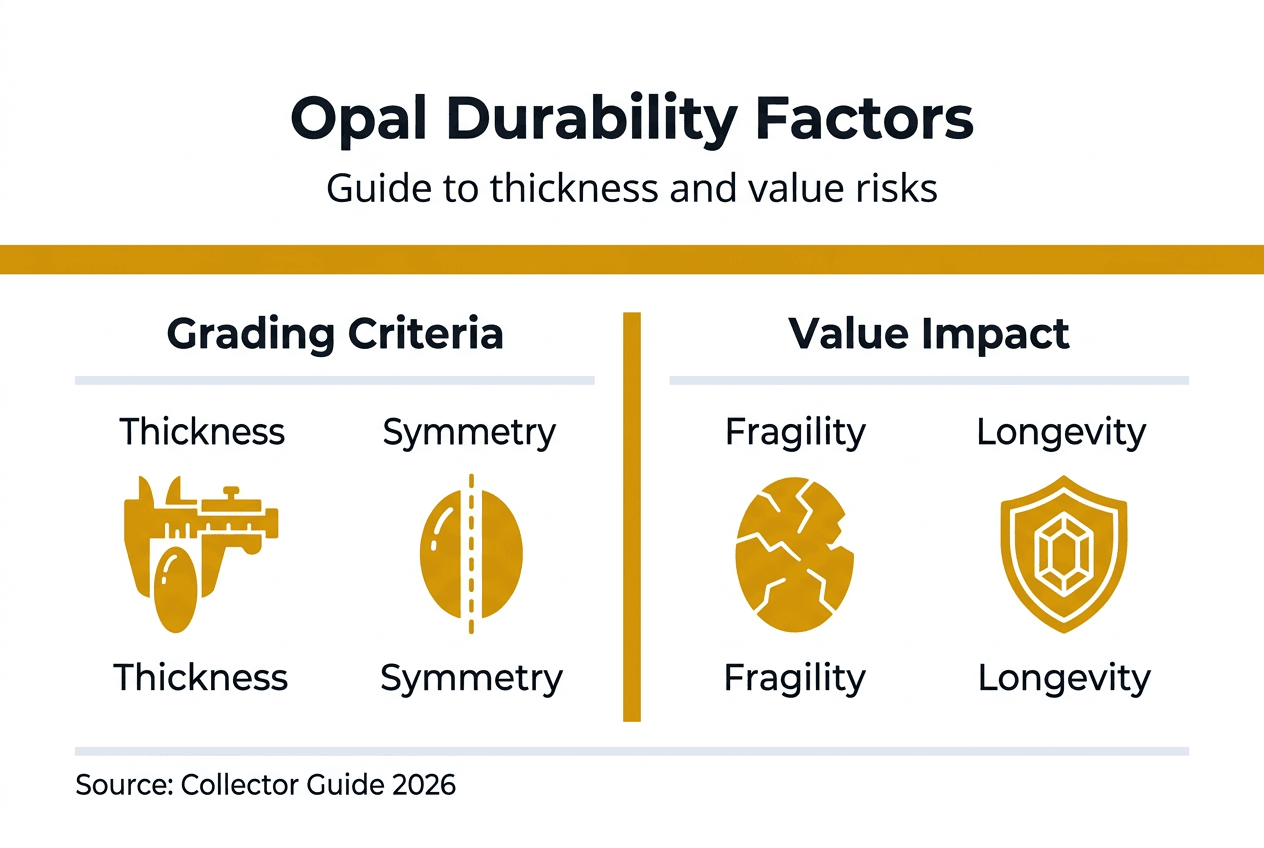
Cut quality balances symmetry, polish, thickness, and shape optimization. Skilled cutters orient the stone to maximize color display while maintaining structural integrity. A well-cut opal presents its best color face-up and maintains sufficient thickness to resist breakage during setting and wear.
Thickness directly impacts durability and value. Stones thinner than 2mm become fragile and difficult to set securely. Extremely thick cuts may hide the best color play within the stone rather than displaying it on the surface. The ideal thickness depends on opal type: black opals can work at 3-4mm, while crystal opals often need 5-6mm to show depth.
Clarity defects require systematic identification:
| Defect Type | Visual Characteristics | Value Impact |
|---|---|---|
| Crazing | Fine surface cracks forming networks | Severe: reduces value 50-80% |
| Deep crazing | Cracks penetrating into stone body | Critical: may render stone worthless |
| Pitting | Surface depressions or holes | Moderate: reduces value 20-40% |
| Matrix inclusions | Brown or gray host rock visible | Minor to moderate: 10-30% reduction |
| Sand spots | Tiny particles within the opal | Minor: 5-15% reduction if numerous |
| Color zoning | Uneven color distribution | Variable: depends on pattern appeal |
Cracking affects opal value more severely than any other defect. Cracks from drying shrinkage appear as whitish lines that interrupt color play. Super-heated water stress creates different crack patterns that may not show immediately but develop over time. You must examine potential purchases under magnification to catch early-stage cracking before it becomes obvious.
Environmental factors accelerate deterioration. Rapid temperature changes cause expansion and contraction that stresses the opal’s silica structure. Low humidity environments extract water from the stone, leading to shrinkage cracks. Extended exposure to heat sources like direct sunlight or jewelry lights compounds these risks.
Storage conditions influence long-term durability significantly. Keep opals in stable environments with 40-60% relative humidity. Avoid storing them in safety deposit boxes or other extremely dry locations. Periodic gentle cleaning with distilled water and soft cloths maintains surface quality without introducing stress.
Symmetry and polish quality separate professional cuts from amateur work. Look for even outlines without bumps or flat spots that suggest poor planning. The dome should flow smoothly from edge to edge. Polish should create a glassy surface that enhances light return rather than diffusing it with micro-scratches.
Calibration matters when purchasing opals for setting. Standard sizes like 8x6mm ovals or 7mm rounds fit readily available mountings. Custom sizes require specialized settings that increase overall jewelry costs. Weigh the appeal of a unique stone against practical setting considerations based on your collection goals.
The relationship between why opals crack risks prevention and proper care cannot be overstated. Understanding vulnerability factors helps you select stable specimens and maintain them properly. Ask sellers about the stone’s history, including how long it has been out of the ground and what storage conditions it experienced.
Practical tips for collectors to grade opal quality confidently
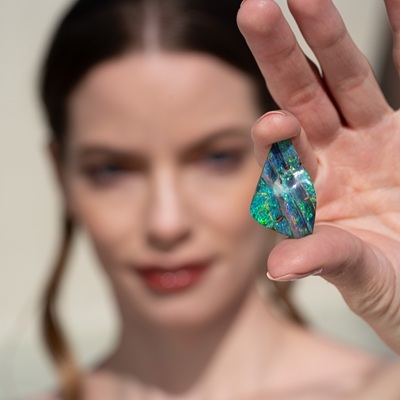
Evaluating precious opal requires refined observation skills developed through experience. Start by examining numerous specimens to calibrate your eye for quality differences. Handle stones personally whenever possible rather than relying solely on photographs, which rarely capture the dynamic nature of play-of-color accurately.
Use magnification systematically to reveal characteristics invisible to the naked eye:
- 10x loupe for general surface inspection and clarity assessment
- 20-30x magnification for detailed crack detection
- Darkfield illumination to highlight subtle internal features
- Fiber optic lighting to examine specific areas without heat
- UV light to check for treatments or synthetic materials
Body tone classification guides your collection strategy. If you prefer dramatic color contrast, focus on N1 to N3 black opals that command premium prices but deliver maximum visual impact. Crystal opals in the N4 to N6 range offer transparency with vibrant color at moderate prices. White opals provide entry points for new collectors building experience before investing in rarer varieties.
Provenance verification protects against treated or synthetic stones entering your collection. Request documentation of origin, especially for rare Lightning Ridge black opals or premium Coober Pedy crystals. Reputable dealers provide mining location details and can explain the stone’s journey from ground to market.
The opal gemstone selection process guide emphasizes comparing multiple specimens before committing to purchase. Never buy the first attractive stone you encounter. View at least three to five comparable pieces to understand the range of quality and pricing for your target category.
Establish personal quality thresholds based on your collection goals. Some collectors prize pattern rarity above all else, accepting lower brightness for exceptional harlequin or ribbon patterns. Others demand maximum color saturation regardless of pattern type. Define your priorities clearly before shopping to avoid impulse purchases that don’t align with your collection strategy.
Pro Tip: Build relationships with specialized opal dealers who understand collector needs. These experts can alert you to exceptional stones before they reach the general market and provide guidance on emerging quality trends in the opal world.
Post-purchase care preserves the value in opals keys collectors worked hard to acquire. Store pieces individually in padded containers to prevent surface scratching. Maintain stable environmental conditions year-round. Inspect your collection quarterly for early signs of crazing or other deterioration that requires professional attention.
Document each acquisition thoroughly with photographs under standardized lighting, measurements, weight, and quality observations. This record helps you track collection growth, identify patterns in your preferences, and provides essential information for insurance or eventual resale.
Explore quality opals for your collection
Now that you understand the intricate factors that define opal quality, you’re equipped to select pieces that truly belong in a serious collection. Australian Opal Direct specializes in ethically sourced, earth-mined opals from legendary Australian fields.

Every piece in our curated collection comes directly from miners at Lightning Ridge, Coober Pedy, and Queensland. This direct relationship eliminates middlemen, ensuring you receive expertly graded opals at fair prices. Our selection includes black opals with intense N1 body tones, crystal opals displaying mesmerizing transparency, and rare pattern varieties that serious collectors seek.
Each gemstone includes detailed quality documentation and photography under controlled lighting conditions. Free shipping, complimentary insurance, and 90-day warranties demonstrate our commitment to collector satisfaction. Our team provides personalized guidance to help you select pieces that align with your collection strategy and quality standards.
Frequently asked questions
How do I distinguish black opal from other types?
Black opal features a dark body tone classified as N1 or N2 on the standard scale, creating intense contrast that amplifies play-of-color brilliance. This differs dramatically from white opals (N7-N9) with pale backgrounds or crystal opals (N4-N6) with transparent bodies. The dark background acts like a theater curtain, making spectral colors pop with exceptional vibrancy that lighter-toned opals cannot match.
Why do opals crack, and how can I prevent it?
Cracking results from drying shrinkage or thermal stress depending on environmental exposure. Maintain stable humidity between 40-60% and avoid temperature extremes to minimize risk. Store opals away from heating vents, direct sunlight, and extremely dry locations like safety deposit boxes. The proper storage conditions you provide directly determine long-term structural integrity.
How does opal body tone affect value?
Darker body tones like N1 black enhance color intensity dramatically, commanding prices 3-10 times higher than white opals with similar color play. The dark background creates maximum contrast that makes colors appear more saturated and brilliant. Understanding body tone helps you distinguish opal origins and identify which varieties align with your aesthetic preferences and investment goals.
What lighting conditions reveal opal quality most accurately?
Indirect natural daylight or daylight-equivalent LED bulbs provide the most accurate color representation without introducing glare or hot spots. Evaluate opals on dark backgrounds to maximize contrast and rotate them slowly through multiple angles to observe full color range. Avoid fluorescent lighting that distorts color perception and direct sunlight that creates misleading brilliance.
Should I prioritize pattern rarity or color intensity when collecting?
This depends entirely on your personal collection strategy and aesthetic preferences. Rare patterns like harlequin or ribbon command premiums among pattern-focused collectors even with moderate color intensity. Color-focused collectors prize brilliant, saturated hues regardless of pattern commonality. Define your priorities clearly before purchasing to build a cohesive collection that reflects your specific values and appreciation criteria.
Recommended
- Expert Guide to Buying Australian Opals for Collectors - Australian Opal Direct
- How Opals Are Valued – What Every Collector Needs - Australian Opal Direct
- Buying Australian Opals Step by Step: Expert Guide for Collectors - Australian Opal Direct
- How to Spot Rare Opals: Expert Guide for Authentic Finds - Australian Opal Direct