Caring for opal jewelry: preserve gemstones in 5 steps
Posted by AOD on 24th Mar 2026
Caring for opal jewelry: preserve gemstones in 5 steps
You’ve invested in a stunning opal ring or pendant, only to watch its vibrant fire fade after a few months of wear. Maybe you cleaned it with the wrong solution, stored it near a heating vent, or wore it during a workout. These common mistakes cost collectors thousands in repairs and lost value every year. Opals demand specialized care because of their unique structure and sensitivity to environmental factors. This guide walks you through the exact steps to protect your investment, restore damaged pieces, and maintain that mesmerizing play of color for decades.
Table of Contents
- Key takeaways
- Understanding opal jewelry and its unique vulnerabilities
- Preparing to care for your opal jewelry: materials and storage
- Step-by-step guide to cleaning and maintaining your opal jewelry
- Troubleshooting common issues and restoring damaged opal jewelry
- Explore premium opal jewelry and expert care resources
- Frequently asked questions about caring for opal jewelry
Key Takeaways
| Point | Details |
|---|---|
| Gentle cleaning and handling | Opals are fragile and require mild soap, lukewarm water, and a soft cloth to avoid scratches, impacts, and chemical damage. |
| Hydrophane care | Hydrophane opals absorb water and can appear cloudy or lose fire when wet, so dry thoroughly after washing and limit moisture exposure. |
| Proper storage | Store opal jewelry in padded, climate controlled containers to prevent cracking and color loss. |
| Regular inspections | Regularly inspect stones and settings for cracks and loose prongs to catch damage before it worsens. |
Understanding opal jewelry and its unique vulnerabilities
Opals occupy a delicate position in the gemstone hierarchy. With a Mohs hardness rating between 5.5 and 6.5, they’re softer than quartz at 7 and dramatically less durable than sapphires at 9. This lower rating means everyday activities that wouldn’t scratch a diamond can permanently damage an opal. The gemstone’s internal structure consists of silica spheres arranged in a grid pattern, creating that signature play of color but also introducing structural weaknesses.
Hydrophane opals present additional challenges. These varieties, often sourced from Ethiopia, contain microscopic pores that absorb water like a sponge. When wet, they appear cloudy or milky, losing their characteristic fire entirely. The good news? This change is temporary if you handle it correctly. Non-hydrophane Australian opals from Lightning Ridge or Coober Pedy maintain stable appearances regardless of water exposure, making them more forgiving for daily wear.
The porous nature of opals makes them vulnerable to more than just physical impacts:
- Chemical exposure from perfumes, lotions, and cleaning products can penetrate the stone and cause permanent discoloration
- Rapid temperature changes create internal stress that leads to crazing (fine surface cracks)
- Prolonged direct sunlight dehydrates the silica structure, causing the stone to crack or lose color intensity
- Ultrasonic cleaners generate vibrations that can shatter the delicate internal grid
Understanding these vulnerabilities helps you make informed decisions about when to wear your pieces and how to handle them. A ring worn during gardening faces soil abrasion and impact risks. A pendant stored in a sunny jewelry box slowly loses moisture and brilliance. Recognizing opal origins and authenticity also matters because treatment methods and stability vary by source location.
Pro Tip: Before purchasing opal jewelry, ask whether the stone is hydrophane or non-hydrophane. This single detail determines your entire care routine and helps you avoid panic when a hydrophane opal temporarily clouds after hand washing.
Preparing to care for your opal jewelry: materials and storage
Successful opal maintenance starts before you ever touch the stone. Gathering the right materials and establishing proper storage prevents 90% of common damage scenarios. Your cleaning kit should include only gentle, opal-safe items. Mild dish soap without degreasers or fragrances works perfectly. Lukewarm water at room temperature avoids thermal shock. Soft microfiber cloths prevent scratching during drying. Skip the jewelry cleaning solutions marketed for diamonds and gold, they often contain ammonia or alcohol that damages opals.
What to avoid entirely:
- Ultrasonic cleaners that use vibration to remove dirt
- Steam cleaners that expose stones to high heat and moisture
- Harsh chemicals including bleach, acetone, or commercial jewelry cleaners
- Abrasive materials like paper towels, regular cloths, or brushes with stiff bristles
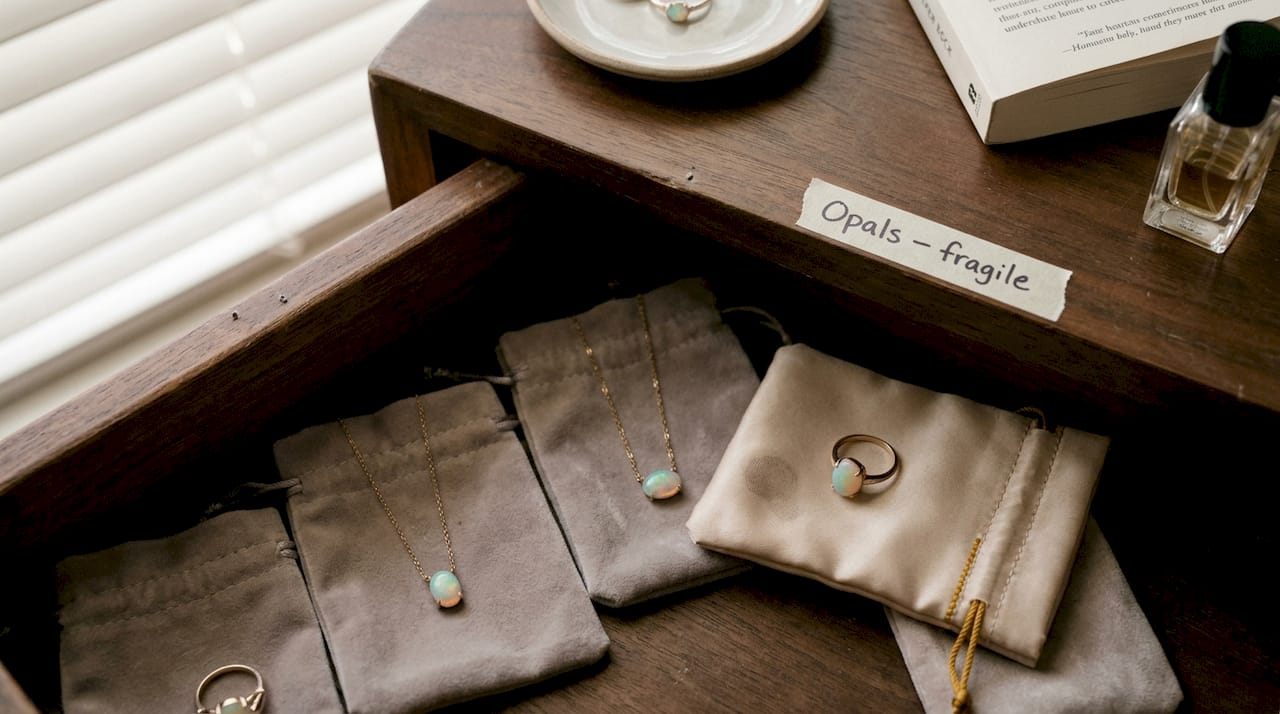
Storage conditions matter as much as cleaning methods. Opals contain 3 to 21% water content depending on their origin. Storing them in excessively dry environments causes dehydration, leading to cracks and color loss. Conversely, humid conditions encourage mold growth on settings and chains. The ideal storage solution balances protection with climate control.
| Storage factor | Recommended condition | Why it matters |
|---|---|---|
| Container | Padded fabric-lined box | Prevents scratches from contact with other jewelry |
| Temperature | 65-75°F (18-24°C) | Avoids thermal stress and dehydration |
| Light exposure | Complete darkness | Prevents UV damage and color fading |
| Humidity | 40-60% relative humidity | Maintains internal moisture balance |
| Separation | Individual compartments | Eliminates impact damage from shifting pieces |
Hydrophane opals demand extra attention after any water exposure. If your Ethiopian opal gets wet and turns cloudy, resist the urge to speed up drying with heat. Slow air-drying over 24 to 72 hours allows the stone to release absorbed moisture gradually, restoring its fire without cracking. Place the piece in a room-temperature environment with moderate airflow, never near heaters, hair dryers, or direct sunlight.
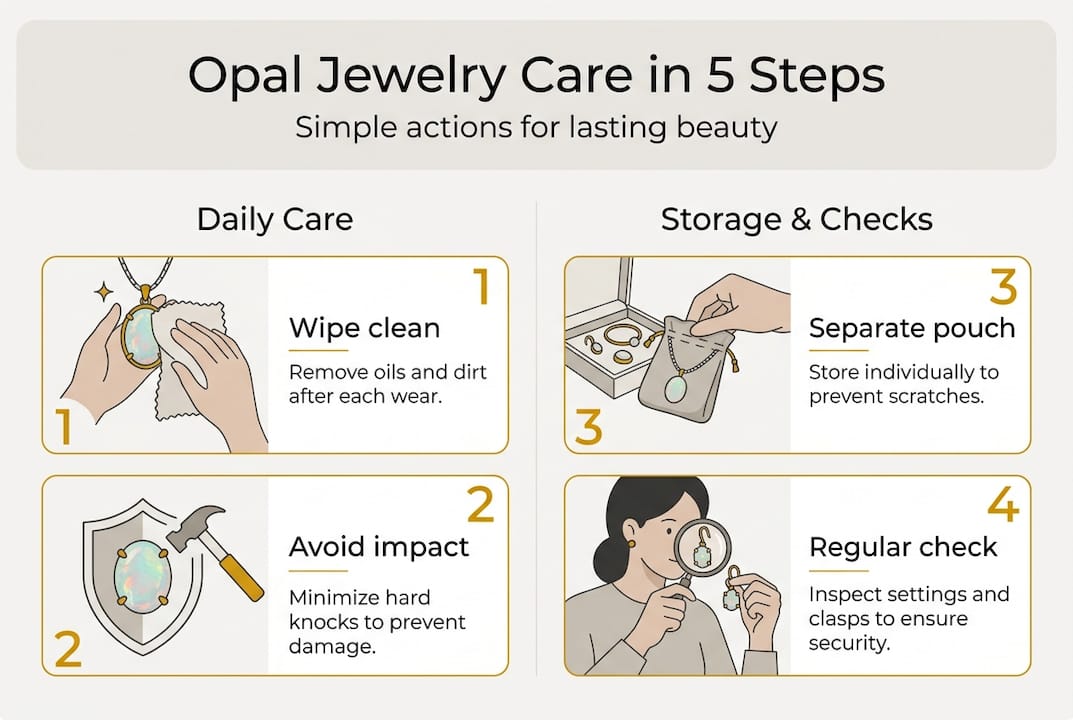
Pro Tip: Store opals separately from harder gemstones like diamonds or sapphires. Even casual contact inside a jewelry box can scratch an opal’s surface. Use individual pouches or compartments, and consider dedicated opal jewelry display and storage solutions designed specifically for delicate gemstones.
Step-by-step guide to cleaning and maintaining your opal jewelry
Regular maintenance keeps opals looking spectacular without risking damage. Follow this proven sequence every four to six weeks, or immediately after exposure to potential contaminants.
-
Remove jewelry before any activity involving water, chemicals, or physical impact. This includes showering, swimming, cleaning, exercising, or applying cosmetics. Opals should be the last thing you put on and the first thing you remove.
-
Inspect the piece under good lighting before cleaning. Look for loose settings, tiny chips along edges, or surface cracks. If you spot damage, skip home cleaning and consult a professional jeweler immediately. Cleaning a compromised stone can worsen existing problems.
-
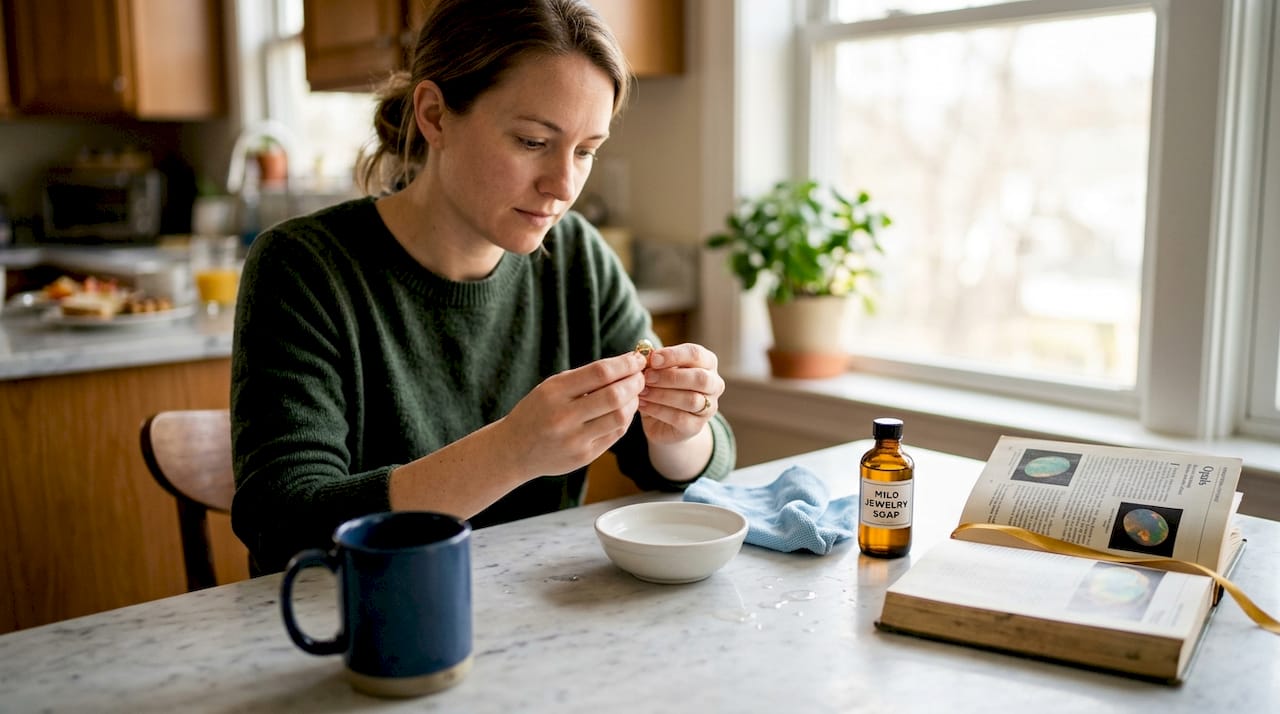
Prepare your cleaning solution by mixing three drops of mild dish soap in a small bowl of lukewarm water. The water should feel neutral to your skin, neither warm nor cool. Temperature extremes stress the stone’s structure.
-
Dip a soft microfiber cloth into the solution and gently wipe the opal’s surface. Use light circular motions, never scrubbing or applying pressure. For intricate settings, use a soft-bristled baby toothbrush to reach crevices, but keep bristles away from the stone itself.
-
Rinse briefly under lukewarm running water, holding the piece securely. For hydrophane opals, minimize water contact and rinse for no more than 5 seconds. Pat dry immediately with a clean microfiber cloth, then air-dry completely before storing.
-
Polish metal settings separately using appropriate metal cleaners, keeping chemicals away from the opal. Gold and silver settings can be cleaned with their respective polishing cloths after the opal is protected or removed.
Between cleanings, wipe opals with a dry microfiber cloth after each wear to remove skin oils and residue. This simple habit prevents buildup that dulls the stone’s surface. Store pieces immediately after cleaning and drying, never leaving them on bathroom counters where humidity and temperature fluctuate.
Pro Tip: Mark your calendar for quarterly deep inspections beyond routine cleaning. Use a jeweler’s loupe or magnifying glass to examine the stone’s surface and setting integrity. Early detection of wear patterns or loose prongs prevents catastrophic loss. Professional jewelers offer free inspections that catch issues invisible to the naked eye, making annual checkups worthwhile for valuable pieces.
Protective practices extend your opal’s lifespan dramatically. Remove rings before typing, cooking, or handling tools. Take off pendants before applying perfume or hairspray. Consider reserving opal pieces for special occasions rather than daily wear if your lifestyle involves frequent hand washing or physical activity. The lower durability compared to harder gemstones means opals thrive with mindful wear patterns.
Troubleshooting common issues and restoring damaged opal jewelry
Even with perfect care, opals can develop problems over time. Recognizing issues early and responding appropriately determines whether a piece can be saved or suffers permanent damage.
Cloudiness ranks as the most common complaint. For hydrophane opals, this usually indicates water absorption. Place the piece in a dry, room-temperature environment and wait 48 to 72 hours. The stone should gradually regain clarity and fire as it releases moisture. If cloudiness persists beyond a week, the stone may have absorbed contaminants requiring professional cleaning. Non-hydrophane opals that turn cloudy signal more serious problems like internal fracturing or chemical damage.
Crazing appears as a network of fine cracks across the stone’s surface. This irreversible condition results from dehydration, thermal shock, or internal stress. While you can’t remove crazing, you can prevent it from worsening:
- Store affected pieces in slightly humid conditions (50-60% relative humidity)
- Apply a thin layer of mineral oil to the surface, which temporarily improves appearance
- Avoid further temperature extremes or impacts
- Consider professional re-cutting if the stone has sufficient thickness
Loss of fire or color intensity indicates dehydration or UV damage. Gradually rehydrate the stone by storing it with a damp (not wet) cloth in a sealed container for several days. Never submerge dehydrated opals in water, the rapid moisture intake can cause cracking. If color doesn’t improve, the damage may be permanent.
Surface scratches from daily wear accumulate over time. Light scratches can be professionally polished away, but this removes material and should be done sparingly. Deep scratches may require re-cutting, which changes the stone’s dimensions and can affect setting fit.
| Issue | DIY approach | Professional restoration | Prevention |
|---|---|---|---|
| Cloudiness (hydrophane) | Air-dry 48-72 hours | Chemical analysis if persistent | Minimize water contact |
| Crazing | Mineral oil application | Re-cutting if thickness allows | Control humidity and temperature |
| Color loss | Gradual rehydration | Impossible to restore | Avoid sunlight and heat |
| Surface scratches | None recommended | Professional polishing | Remove before physical activities |
| Loose settings | None, seek help immediately | Prong tightening or re-setting | Annual professional inspections |
Know when to stop and seek expert help. Attempting DIY fixes on valuable or sentimental pieces often causes more harm than good. Consult a professional jeweler specializing in opals if you notice loose stones, deep cracks, persistent cloudiness, or significant color changes. Many issues caught early cost $50 to $150 to repair, while delayed intervention can result in total stone loss.
Preventative measures beat restoration every time. Annual professional maintenance includes ultrasonic inspection of settings, prong tightening, and expert assessment of stone condition. This service typically costs $30 to $75 and catches problems before they become visible. For collectors with multiple pieces or high-value stones, consider restoring vintage opal jewelry through specialists who understand period-specific settings and historical opal characteristics.
Explore premium opal jewelry and expert care resources
Maintaining your current collection becomes easier when you understand quality standards and access expert guidance. Australian Opal Direct offers authenticated pieces from Lightning Ridge, Coober Pedy, and Queensland, each with detailed provenance and care instructions specific to the stone’s characteristics. The premium opal jewelry collection features both hydrophane and non-hydrophane varieties, clearly labeled so you know exactly what care routine each piece requires.

Beyond products, the resource library addresses common collector questions about authentication, styling, and long-term preservation. Whether you’re building a collection or maintaining heirloom pieces, opal jewelry tips for collectors covers advanced topics like investment value, rarity indicators, and market trends. Practical guides on styling opal earrings help you enjoy your pieces while minimizing wear risks.
Frequently asked questions about caring for opal jewelry
How often should I clean my opal jewelry?
Clean opals monthly with mild soap and lukewarm water if worn regularly. Wipe with a dry microfiber cloth after each wear to remove oils and prevent buildup. Pieces worn infrequently need cleaning only before and after use.
Can all opals be cleaned the same way?
No, hydrophane opals require minimal water contact and extended drying time, while non-hydrophane varieties tolerate brief rinsing. Always identify your opal type before cleaning and adjust techniques accordingly. When uncertain, consult the jeweler who sold the piece.
What are signs that my opal jewelry needs professional repair?
Loose settings, visible cracks, persistent cloudiness beyond 72 hours, significant color changes, or stones that rattle in their settings all require immediate professional attention. Deep scratches covering more than 25% of the surface also warrant expert evaluation.
Is it safe to wear opal rings daily?
Opals rank softer than most gemstones, making daily ring wear risky for active lifestyles. Reserve opal rings for special occasions or choose protective settings like bezels. Pendants and earrings face fewer impact risks and suit everyday wear better.
Should I insure my opal jewelry and how?
Yes, quality opals warrant insurance due to their value and fragility. Obtain a professional appraisal documenting the stone’s characteristics, origin, and value. Add pieces to your homeowner’s policy or purchase specialized jewelry insurance. Learn more about opal insurance coverage requirements and claim processes.
Recommended
- Restoring Vintage Opal Jewelry: Step-by-Step Luxury Guide - Australian Opal Direct
- How to Display Opal Jewelry for Luxury Appeal - Australian Opal Direct
- Master the Opal Jewelry Design Process Step by Step - Australian Opal Direct
- Opal Insurance Coverage: Protecting Valuable Gemstones - Australian Opal Direct