Restoring Vintage Opal Jewelry: Step-by-Step Luxury Guide
Posted by AOD on 24th Dec 2025
Restoring Vintage Opal Jewelry: Step-by-Step Luxury Guide
Most American collectors know the thrill of discovering a vintage Australian opal, yet restoring these treasures can reveal hidden challenges. Opals captivate with their vivid color play, but their softer surface makes them vulnerable to damage. With more than 90 percent of the world’s opal supply coming from Australia, authenticity and ethical restoration are paramount for serious enthusiasts. Uncover practical steps and expert guidance to ensure your vintage opal jewelry regains its original brilliance while honoring responsible sourcing.
Table of Contents
- Step 1: Assess Vintage Opal Jewelry Condition
- Step 2: Clean and Prepare Opal Jewelry Safely
- Step 3: Repair Settings and Mounts with Care
- Step 4: Restore Opal’s Luster and Surface
- Step 5: Verify Authenticity and Quality of Restoration
Quick Summary
| Key Point | Explanation |
|---|---|
| 1. Examine Opal Jewelry Carefully | Perform a thorough visual inspection to identify scratches, cracks, and ensure structural integrity of your piece. |
| 2. Use Gentle Cleaning Techniques | Employ mild soap and a soft brush to clean opals safely, avoiding harsh chemicals that can damage them. |
| 3. Consult Experts for Repairs | Seek professional help when repairing settings or restoring opals to prevent potential damage during the process. |
| 4. Restore Opal Surface with Care | Use delicate methods for polishing to maintain the opal’s unique optical properties and luster. |
| 5. Verify Authenticity Post-Restoration | Confirm restoration quality and authenticity by examining optical properties and consulting a professional gemologist. |
Step 1: Assess Vintage Opal Jewelry Condition
Examining your vintage opal jewelry requires careful observation and understanding of the gemstone’s unique characteristics. When assessing condition, you’ll want to focus on identifying potential damage and structural integrity that could impact the piece’s value and wearability.
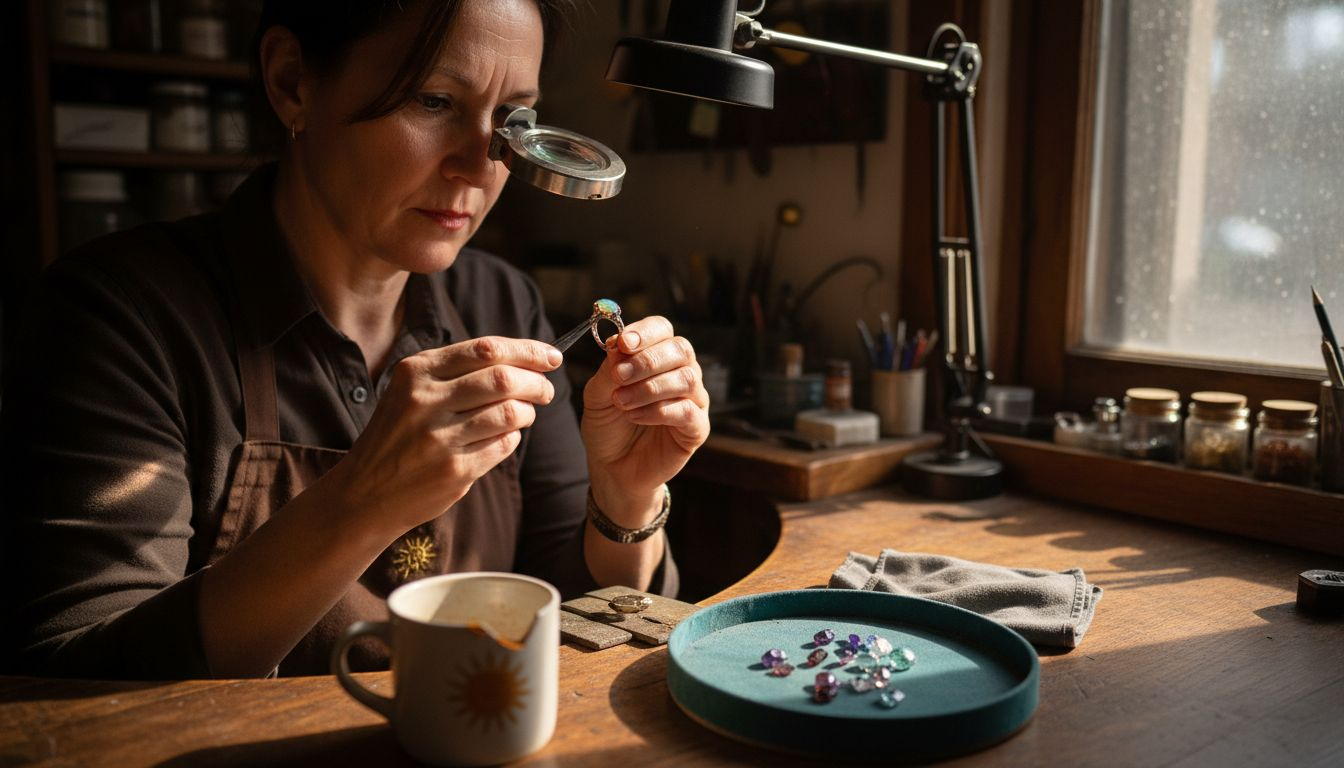
Start by conducting a thorough visual inspection under good lighting. Check the opal for signs of damage by looking closely at surface texture, color play, and potential structural weaknesses. Opals have a relatively soft Mohs hardness rating of 5.5 to 6.5, which means they are particularly susceptible to scratches from everyday dust and household items. Look for fine surface scratches, microscopic cracks, or areas where the stone’s brilliant color might have dulled.
Pay special attention to the setting and mounting of your vintage opal piece. A secure setting is crucial because loose mountings can accelerate potential damage. Inspect how firmly the opal is seated within its metal framework, checking for any movement or gaps that might indicate potential future issues. Gently but carefully test the stone’s stability by applying minimal pressure and observing any slight movements.
Pro tip: Use a jeweler’s loupe or magnifying glass with at least 10x magnification to conduct a more precise examination, allowing you to detect subtle imperfections invisible to the naked eye.
Here’s a quick-reference table of common opal jewelry issues and their potential effects:
| Issue Detected | Typical Cause | Impact on Value |
|---|---|---|
| Fine surface scratches | Everyday wear, dust | Slight reduction |
| Microscopic cracks | Improper storage or impact | Significant decrease |
| Dull color play | Residue or aging | Noticeable reduction |
| Loose mounting | Worn settings or prongs | Major risk, lower value |
Step 2: Clean and Prepare Opal Jewelry Safely
Cleaning vintage opal jewelry requires a delicate touch and specialized techniques to preserve its unique beauty and structural integrity. Your goal is to restore the gemstone’s brilliance while preventing potential damage during the cleaning process.
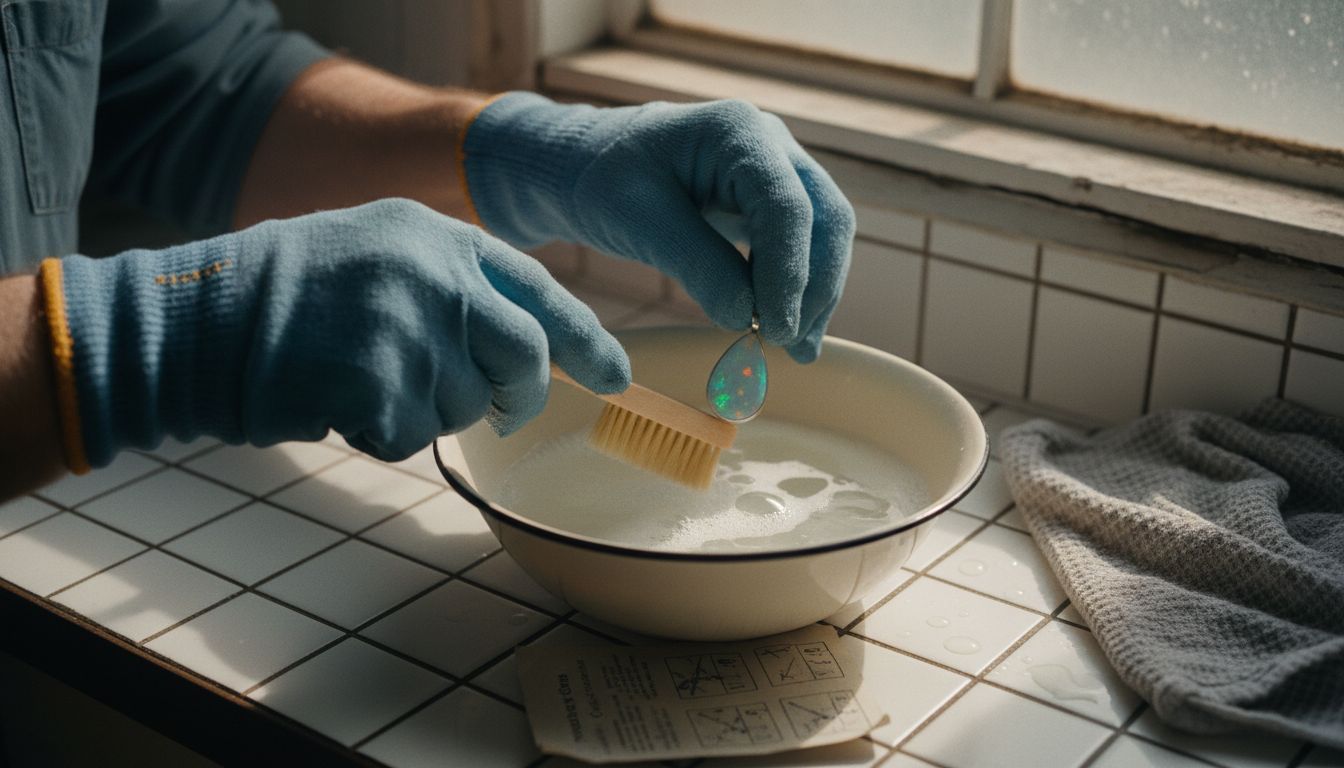
Gentle cleaning methods are crucial for maintaining the delicate nature of opal jewelry. Start by preparing a mild cleaning solution using warm water and a small amount of gentle soap. Use a soft brush with extremely soft bristles to carefully remove surface dust and debris. For doublet or triplet opals, avoid complete submersion in water and instead use a slightly damp cloth to wipe the surface. Pay special attention to the setting and avoid applying excessive pressure that could loosen the stone.
Avoid using harsh chemical cleaners or mechanical cleaning devices. Ultrasonic and steam cleaning systems can cause irreparable damage to opals, potentially compromising their structural integrity. When cleaning, focus on using non toxic cleaning solutions specifically designed for delicate gemstones. Carefully pat the jewelry dry with a soft lint free cloth, ensuring no moisture remains in the setting or around the stone.
Pro tip: Always store your cleaned opal jewelry in a soft padded environment away from direct sunlight and extreme temperatures to prevent potential cracking or color fading.
For easy comparison, here is a table summarizing safe vs. unsafe cleaning methods for vintage opal jewelry:
| Cleaning Method | Safe for Opals? | Comments |
|---|---|---|
| Mild soapy water & brush | Yes | Use soft bristles, minimal water |
| Ultrasonic cleaner | No | May cause cracks or detach stones |
| Steam cleaning | No | High heat can damage opals |
| Damp cloth wipe | Yes (for doublets) | Avoid submerging glued opals |
Step 3: Repair Settings and Mounts with Care
Repairing vintage opal jewelry requires exceptional precision and understanding of the gemstone’s unique fragility. Your primary goal is to restore the mounting and setting without compromising the delicate opal’s structural integrity.
When addressing setting repairs, understanding the opal’s inherent vulnerability is crucial. Opals have an extremely low hardness rating and are sensitive to mechanical stress, which means every adjustment must be performed with microscopic precision. Carefully examine the prong settings and metal framework, looking for signs of wear or loose connections that might compromise the stone’s stability. Use specialized jeweler’s tools designed for delicate gemstones, avoiding any techniques that could exert unexpected pressure on the opal.
Consult a professional jeweler who specializes in vintage and rare gemstone restoration. Experienced professionals understand the nuanced challenges of repairing opals and can prevent potential damage during the restoration process. They will have the necessary expertise to realign prongs, reinforce settings, and address any structural weaknesses without risking the opal’s unique color play or structural composition.
Pro tip: Always request a detailed assessment and written repair plan before allowing any work to be done on your vintage opal jewelry to ensure complete transparency and minimize potential risks.
Step 4: Restore Opal’s Luster and Surface
Restoring the surface of vintage opal jewelry requires exceptional care and precision to preserve the gemstone’s unique optical properties and delicate structure. Your goal is to revive the stone’s natural brilliance without causing additional damage.

Gentle restoration techniques are critical for maintaining an opal’s distinctive shine and surface quality. Begin by carefully examining the surface for superficial scratches or areas of diminished luster. Use a soft microfiber cloth dampened with warm water and a minuscule amount of mild soap to gently remove surface dust and light oxidation. Avoid applying excessive pressure or using abrasive materials that could further damage the delicate opal surface. Pay close attention to the stone’s unique color play and iridescent qualities during the cleaning process.
For more significant surface imperfections, consulting a professional jeweler specializing in opal restoration is recommended. Professional jewelers can employ advanced techniques to carefully repolish the surface and restore the opal’s natural luminosity. They possess specialized tools and expertise to address deeper scratches or wear without compromising the stone’s structural integrity or unique optical characteristics.
Pro tip: Always test any cleaning solution on a small inconspicuous area first and allow the opal to air dry naturally to prevent potential moisture damage.
Step 5: Verify Authenticity and Quality of Restoration
Authenticity verification represents the critical final stage in your vintage opal jewelry restoration process. Your objective is to confirm that the restoration has maintained the gemstone’s original characteristics and structural integrity.
Assessing an opal’s genuine nature requires careful examination of its unique optical properties. Focus on the stone’s play-of-color characteristic, which should display natural variations rather than repetitive or artificial patterns. Inspect the opal under different lighting conditions to evaluate its color spectrum and iridescent qualities. Pay special attention to the stone’s surface texture, ensuring that restoration techniques have not compromised its natural luminosity or introduced artificial smoothness.
Consulting a professional gemologist provides the most reliable method for verifying restoration quality and authenticity. These experts can perform detailed microscopic assessments that go beyond visual inspection. They will examine the opal’s internal structure, verify its origin, and confirm that restoration techniques have preserved its fundamental characteristics. Look for certification documents that detail the opal’s specific properties, including its geographic origin, color composition, and any treatments performed during the restoration process.
Pro tip: Request comprehensive documentation from your restoration specialist that includes before and after photographs, detailed restoration notes, and a professional assessment of the opal’s condition and authenticity.
Bring Your Vintage Opal Jewelry Back to Life with Australian Opal Direct
Restoring vintage opal jewelry demands attention to delicate details like setting repairs, gentle cleaning, and authenticity verification. These are challenges every opal owner faces when trying to preserve the gem’s unique play-of-color and history. If you seek trusted, ethically sourced opals with expert craftsmanship, Australian Opal Direct offers a curated selection of genuine Australian opals from renowned regions such as Lightning Ridge and Coober Pedy. Our gold and silver jewelry, including custom designs, reflect the rare beauty and legacy that your vintage pieces embody.

Experience the luxury of owning opals that come direct from miners with full authenticity guarantees. Explore our collections and learn how professional care and premium quality can elevate the restoration and future enjoyment of your treasured opal jewelry. Visit Australian Opal Direct, discover detailed product storytelling, and take advantage of our custom options and 90-day warranties today.
Start your journey to timeless opal brilliance now by visiting Australian Opal Direct.
Frequently Asked Questions
How can I assess the condition of my vintage opal jewelry before restoration?
To assess the condition of your vintage opal jewelry, conduct a thorough visual inspection under good lighting. Look for signs of damage like scratches, cracks, or dull color, and check the stability of the setting to ensure it’s secure.
What is the best method to clean vintage opal jewelry safely?
Use a mild cleaning solution made of warm water and a small amount of gentle soap to clean vintage opal jewelry. Apply a soft brush with very soft bristles to remove dust and debris, making sure to avoid harsh chemicals or ultrasonic cleaners that could cause damage.
How do I repair loose settings on my vintage opal jewelry?
To repair loose settings, first examine the prong settings for any signs of wear or looseness. Consult a professional jeweler with experience in vintage jewelry to ensure repairs are done with care to avoid damaging the opal.
What techniques can I use to restore the luster of opal jewelry?
Restoring the luster of opal jewelry involves gently cleaning the surface with a damp microfiber cloth mixed with mild soap. If deeper imperfections exist, seek a professional jeweler to ensure the opal’s natural shine is preserved during any polishing process.
How can I verify the authenticity and quality of the restoration on my opal jewelry?
To verify authenticity, examine the opal under different lighting conditions and check for its unique play of color. Request a comprehensive assessment from a professional gemologist, including documentation of the opal’s condition and any treatments performed during restoration.
What should I do after restoring my vintage opal jewelry to ensure its longevity?
After restoration, store your vintage opal jewelry in a soft padded environment, away from direct sunlight and extreme temperatures. Regularly inspect the piece for any signs of wear or damage to maintain its beauty and value.
Recommended
- Comment entretenir bijoux argent opale pour préserver leur éclat - Australian Opal Direct
- Opal Vintage: Alles Wissenswerte Für Sammler - Australian Opal Direct
- Comment entretenir bijoux argent opale pour un éclat durable - Australian Opal Direct
- Guide entretien bijoux opale : préserver éclat et beauté - Australian Opal Direct