Opalized Fossils: The Collector's Complete Buying Guide
Posted by AOD on 9th Aug 2026
Opalized Fossils: The Collector’s Complete Buying Guide
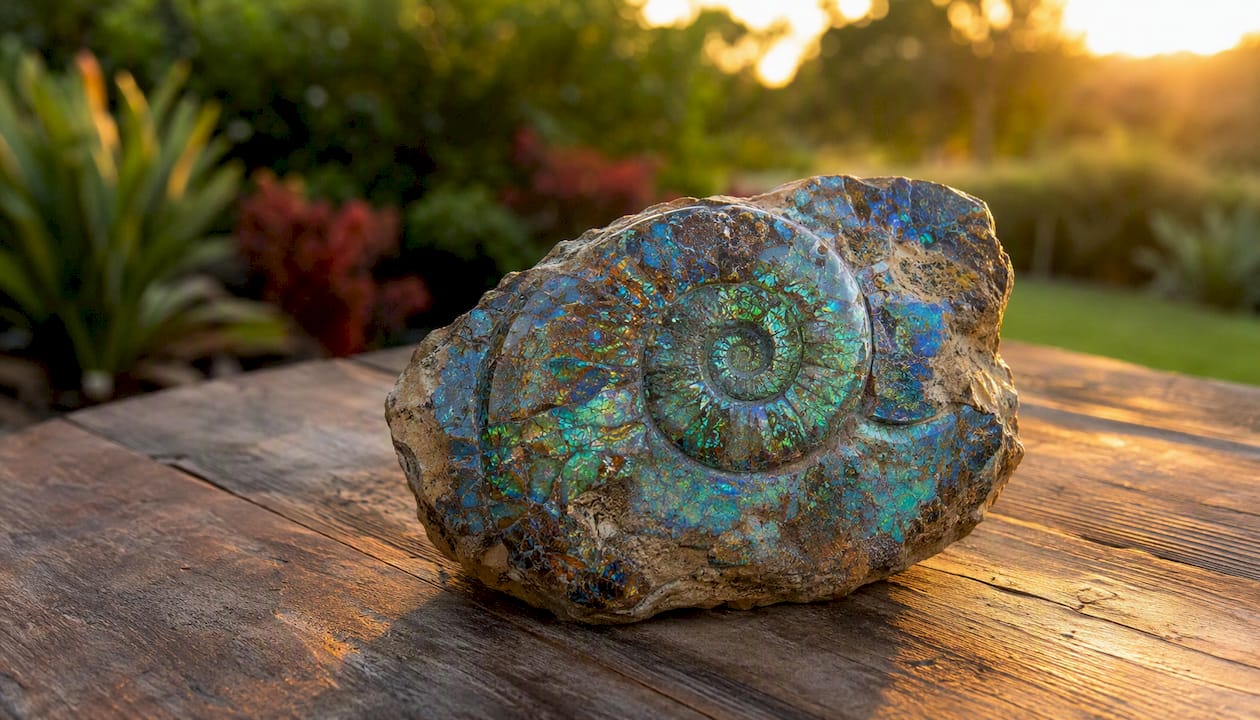
Opalized fossils are genuine geological specimens, ancient organisms whose original material has been replaced by or cast in opal, and yes, you can buy them from specialist dealers who ship worldwide, including to the U.S. These are not reproductions or curiosities. They are among the rarest collectibles on earth, formed over millions of years in the sedimentary basins of the Australian outback.
Before you read further, three things every buyer should know:
- Verify provenance first. A reputable seller can name the specific Australian field (Lightning Ridge, Coober Pedy, Andamooka) and ideally the miner. Vague locality claims are a red flag.
- Ask for documentation. Condition reports, photos of the specimen in matrix, and any available gemological notes protect you and anchor the specimen’s value.
- Plan for fragility and insurance. Opalized fossils travel as gemstones, not rocks. Insured, padded shipping is non-negotiable, and so is proper storage once the piece arrives.
The sections below cover formation science, Australian source localities, specimen types, rarity and pricing, authentication, care, and a practical guide to buying safely from the U.S.
Key Takeaways
Opalized fossils are finite, irreplaceable specimens formed over geological timescales, and authenticated, miner-direct provenance is the single most important factor separating a sound purchase from a costly mistake.
| Point | Details |
|---|---|
| Provenance is non-negotiable | Always verify the specific Australian field, miner name, and documentation chain before purchasing. |
| Play-of-color drives value | Precious opal replacements are rare; most specimens are potch, so color quality determines price tier. |
| Request condition documentation | Ask for condition reports, high-res photos in matrix, and any gemological notes before committing. |
| Budget for total landed cost | Add shipping, insurance (1–2% of declared value), and any customs considerations to the purchase price. |
| Australianopaldirect offers miner-direct sourcing | Curated listings include documented provenance, insured U.S. shipping, and a 90-day condition warranty. |
Table of Contents
- What are opalized fossils and how do they form?
- Where are opalized fossils found, and why does Australia dominate?
- What types of opalized fossils will you find on the market?
- How rare are opalized fossils, and what drives their price?
- What should you check before buying an opalized fossil?
- How should you care for opalized fossils?
- How long does opalization take, and why does that matter?
- What do trusted vendors guarantee when selling opalized fossils?
- Where can U.S. buyers find reputable dealers and auction platforms?
- Pricing ranges and total cost for U.S. buyers
- A note on sourcing and what we look for
- Australianopaldirect: curated opalized fossils with documented provenance
- Authoritative sources and further reading
What are opalized fossils and how do they form?
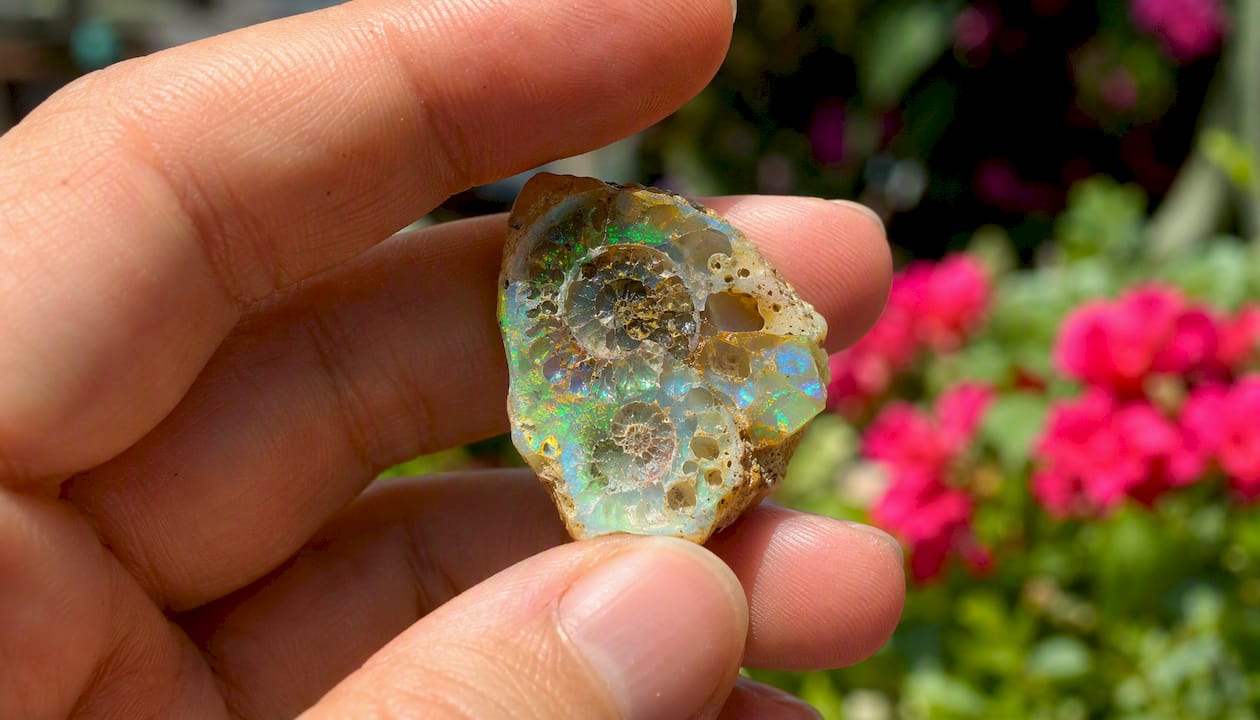
An opalized fossil is what remains when silica-rich groundwater infiltrates the space once occupied by an ancient organism, either replacing the original material molecule by molecule or filling the void left after organic decay. Gemmologists recognize two distinct formation modes, and understanding them changes how you evaluate a specimen.
Pseudomorphs form when opal replaces the original mineral or organic structure while preserving its external and sometimes internal architecture. The result can be extraordinary: a shell or bone that retains its original shape, surface texture, and even fine anatomical detail, now rendered in glowing silica. Casts, by contrast, form when the organic material decays entirely, leaving a mold in the surrounding sediment. Silica-bearing groundwater later fills that mold, producing a faithful replica of the original organism’s exterior without necessarily preserving internal structure.
Microscopic analysis of Lightning Ridge specimens has shown that opal often filled cavities left by degraded organic material, and in some plant tissues, fine cellular structures such as tracheids are still visible within the opal. Bone internal architecture has also been preserved in this way. The implication for collectors is significant: a pseudomorph with intact internal detail carries both scientific and aesthetic value that a simple cast does not.
The fossils themselves are predominantly Cretaceous in age, formed when a vast inland sea covered much of what is now central Australia. The opal, however, is younger. Research on Lightning Ridge specimens supports a Neogene age for the opal deposition event, meaning silica-rich groundwater percolated through these ancient remains tens of millions of years after the organisms died. That two-stage timeline is part of what makes these specimens so geologically improbable and so captivating.
Where are opalized fossils found, and why does Australia dominate?
Australia’s Great Artesian Basin is the world’s primary source of opalized fossils, and no other region comes close in terms of volume, variety, or gem quality. The geological recipe is specific: ancient marine sediments rich in organic material, overlying silica-bearing groundwater systems, and the right chemistry to precipitate opal rather than other silica minerals. Australia’s opal fields sit at the intersection of all three.
Key Australian localities
| Locality | Typical finds | Relative abundance |
|---|---|---|
| Lightning Ridge, NSW | Vertebrate bones, teeth, plant material, invertebrates | High variety; vertebrate finds are uncommon to rare |
| Coober Pedy, SA | Mollusks, belemnites, wood, occasional bone | Most abundant commercial source |
| Andamooka, SA | Shells, belemnites, occasional vertebrate fragments | Moderate; less commercially active than Coober Pedy |
| White Cliffs, NSW | Belemnites, shells, plant material | Moderate; historically significant finds |
Lightning Ridge stands apart for its vertebrate material in organic dinosaur baby clothes Australia. Opal-filled fossils from this field contributed to the identification of a new dinosaur species, and some bones display brilliantly colored precious opal rather than the common opal (potch) found in most specimens. Coober Pedy and Andamooka yield more abundant invertebrate material, making them the primary sources for the opalized shells and belemnites that collectors encounter most often.
Importing opalized fossils to the U.S.
Australian opalized fossils are legally exported as gemstones and mineral specimens, not as protected cultural artifacts, provided they are accompanied by appropriate documentation from the seller. For U.S. buyers, the practical steps are straightforward:
- Request a commercial invoice that describes the specimen accurately (species, locality, dimensions, declared value).
- Confirm the seller uses a tracked, insured courier service (FedEx International, DHL Express, or equivalent) with declared value matching the purchase price.
- U.S. Customs and Border Protection classifies most mineral specimens under HTS codes for natural stones; duties are generally low, but confirm the applicable code with your broker or the seller for high-value pieces.
- Expect 5–10 business days for standard international shipping from Australia, plus 1–3 business days for customs clearance.
- Insure the shipment for full replacement value. Carriers’ standard liability limits rarely cover the actual value of a significant specimen.
What types of opalized fossils will you find on the market?
The range of opalized specimens available to collectors spans from common invertebrate fragments to museum-caliber vertebrate skeletons. Knowing which category a specimen falls into shapes both your authentication approach and your budget.
| Specimen type | Common examples | Rarity | Opal quality notes |
|---|---|---|---|
| Plant material / wood | Opalized wood, leaf impressions, tracheids | Common | Usually potch; cellular detail occasionally visible |
| Mollusks | Opalized shells, gastropods, bivalves | Common to uncommon | Mostly potch; precious opal replacements exist but are rare |
| Belemnites | Opalized belemnite guards | Common | Often potch; some show translucent or gem-quality opal |
| Vertebrate teeth | Dinosaur, fish, and marine reptile teeth | Uncommon | Variable; some show play-of-color in dentine or enamel |
| Vertebrate bones | Partial limb bones, ribs, vertebrae | Rare | Occasionally gem-quality opal in cancellous bone |
| Exceptional skeletons | Plesiosaurs, ichthyosaurs, dinosaurs | Very rare | Museum-grade; seldom available commercially |
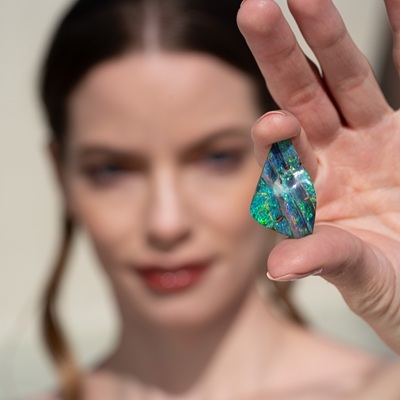
Most opalized fossils on the market are composed of common opal (potch), which lacks the play-of-color that defines precious opal. Precious opal replacements are a genuine rarity, and when they occur in a scientifically significant specimen, the combination of gem quality and paleontological importance can push prices dramatically higher.
Collectors should also consider scientific value when evaluating a purchase. Specimens that retain articulated anatomy, original surface texture, or identifiable species-level features may be of interest to researchers. The South Australian Museum’s opal fossils gallery holds a 6-meter Addyman Plesiosaur and other specimens from Coober Pedy and Andamooka, illustrating how the most complete finds tend to remain in public institutions rather than entering the commercial market. If a seller is offering an exceptionally complete vertebrate skeleton, that rarity warrants extra scrutiny of provenance and documentation.
How rare are opalized fossils, and what drives their price?
Supply is finite and cannot be replenished. The geological conditions that produce opalized fossils are specific to a handful of Australian localities, and those fields have been mined for over a century. Research literature and museum reports indicate that exceptionally complete opalized vertebrate skeletons appear only sporadically over decades of mining. Even common specimens require the right sedimentary environment, the right groundwater chemistry, and the right timing across millions of years. That irreplaceability is the foundation of every price conversation.
Within that finite supply, the following factors determine where a specific specimen lands on the price spectrum:
- Play-of-color. Precious opal with vivid, shifting color commands a premium over potch. A belemnite guard in brilliant red-on-black opal is worth multiples of an identical specimen in grey potch.
- Specimen size and weight. Larger specimens are rarer and more visually commanding. Size alone does not guarantee value, but it amplifies every other positive factor.
- Completeness. A complete shell with intact aperture and surface detail is worth more than a fragment, even if the fragment shows better color. Articulated vertebrate material is priced accordingly.
- Anatomical detail. Specimens that preserve fine surface texture, cellular structure, or identifiable diagnostic features carry a scientific-importance premium.
- Species and scientific significance. A tooth from a known dinosaur species identified from Lightning Ridge is categorically different from an unidentified fish vertebra.
- Provenance and miner origin. A documented miner-direct chain of custody adds verifiable authenticity and supports resale value. Specimens with no provenance are priced lower by informed buyers for good reason.
- Treatments and repairs. Stabilization, resin infill, or glued joins must be disclosed. Undisclosed repairs reduce value and raise authenticity questions.
- Market demand and auction results. Exceptional specimens sold at major natural history auctions set reference prices. Tracking recent results gives buyers a benchmark.
Pro Tip: Ask sellers for comparable past sale examples or recent auction results for similar specimens. A seller who can point to documented comparables is demonstrating both market knowledge and transparency.
What should you check before buying an opalized fossil?
Authentication is not optional. A Smithsonian-reported case found that a gemologist identified an insect entombed in opal rather than amber, illustrating how even experienced observers can misidentify opal specimens without close examination. For fossils, the stakes are higher because locality, species, and condition all affect value materially.
Authentication checklist
- Documented miner or field source (locality name, state, and ideally the specific claim or miner)
- Photos of the specimen in matrix or in situ, not just isolated glamour shots
- Gemological note or lab report for high-value pieces showing opal type (precious vs. potch) and any treatments
- Clear species identification or honest acknowledgment of uncertainty
- Condition report noting any repairs, stabilization, or missing sections
Commercial trust signals to require
- A written returns policy with a reasonable window (30 days minimum for significant purchases).
- Shipping insurance for the full declared value, not just carrier liability limits.
- High-resolution photographs from multiple angles, including the base and any matrix.
- Video or, for exceptional specimens, CT scan references where available.
- A direct contact for provenance questions, ideally a miner name or field reference.
Red flags that should stop a purchase
- Vague locality (“Australia” with no field name)
- No returns policy or insurance offered
- Photos that crop out matrix context or show only the most photogenic angle
- Inconsistent weight or size claims across listing platforms
- Seller pressure to decide quickly or pay outside a secure platform
When in doubt, cross-reference the specimen’s described locality and species against published museum records or peer-reviewed papers. Reputable sellers welcome that scrutiny. For deeper verification guidance, authenticating Australian opals follows the same principles that apply to opalized fossil specimens.
How should you care for opalized fossils?
Gemologists are unambiguous on this point: opalized fossils require the same conservation mindset as precious opals. Storage and handling choices directly affect play-of-color and long-term structural integrity. The opal matrix is sensitive to dehydration, thermal shock, and impact in ways that ordinary rocks are not.
What to do:
- Store in stable humidity, away from heating vents, air conditioning units, and direct sunlight.
- Use padded, acid-free mounts for display specimens. Museum-grade foam or custom-cut trays protect both the specimen and any matrix.
- Clean only when necessary, using distilled water and a soft natural-bristle brush. Allow the specimen to dry slowly at room temperature.
- Ship insured, with the specimen wrapped in acid-free tissue, cushioned in foam, and double-boxed.
- Acclimate the specimen gradually if moving between significantly different climates.
What to avoid
Heat is the most common cause of opal crazing (surface cracking). Keep opalized fossils away from display lighting that generates significant heat, windowsills with afternoon sun, and any environment where temperature fluctuates rapidly. Ultrasonic cleaners, which are standard in jewelry workshops, can fracture the silica structure of an opalized fossil. Household chemicals, including glass cleaners and alcohol-based solutions, can dull surface luster and penetrate micro-fractures. Aggressive polishing without professional oversight removes surface material that may carry scientific information.
For ongoing care once a specimen is incorporated into jewelry, the same principles apply. Caring for opal jewelry covers the daily routine in detail.
Pro Tip: If you plan to convert a specimen into a jewelry piece, have a gem conservator assess the stone before any cutting or setting work begins. Document the pre-conversion condition in writing and insure the piece at its pre-conversion value.
How long does opalization take, and why does that matter?
Opalization is not a fast process by any measure a human can intuitively grasp. The fossils themselves formed during the Cretaceous period, roughly 100 million years ago, when the Great Artesian Basin was a shallow inland sea teeming with marine life. The opal that now fills those ancient remains is younger. Research on Lightning Ridge specimens supports a Neogene age for the opal deposition event, placing the silica precipitation somewhere in the range of tens of millions of years after the original organisms died.
That two-stage timeline has a direct consequence for collectors: supply cannot be replenished on any human timescale. The geological conditions that produced these specimens, the specific sedimentary chemistry, the groundwater silica concentrations, the burial depth and pressure, existed once and produced a finite inventory. Mining extracts from that inventory permanently. Every authenticated opalized fossil on the market today represents a one-time geological event that will not recur.
This is why experts treat ethically sourced, authenticated opalized fossils as limited-edition assets. Specimens in museum collections, like the Addyman Plesiosaur at the South Australian Museum, illustrate the endpoint: the most scientifically important finds are retained for public research and display, removing them from the commercial market permanently. Collectors who acquire documented specimens with clear provenance are, in a real sense, stewarding objects that cannot be replaced.
What do trusted vendors guarantee when selling opalized fossils?
The difference between a reputable dealer and a problematic one is almost entirely a matter of documentation and accountability. A trustworthy vendor in the opalized fossil market provides the following without being asked:
- Miner-direct sourcing. The specimen’s chain of custody traces back to the specific Australian field and, ideally, the individual miner or claim.
- Documented provenance. A written record of locality, approximate extraction date, and any intermediate ownership.
- Condition report. An honest assessment of repairs, stabilization, potch versus precious opal content, and any missing sections.
- High-resolution imagery. Multiple angles, including matrix context and any areas of repair or fragility.
- Returns and insured shipping. A clear policy with a meaningful window and full-value shipping insurance.
- Optional certification or gemological notes. For high-value specimens, a third-party gemological assessment of opal type and treatments adds an independent layer of verification.
Verifying miner relationships takes one direct step: ask the seller to provide the miner’s name, the claim number, or a field reference, and then ask whether you can contact the miner directly for provenance confirmation. Reputable dealers with genuine miner relationships welcome this request. Those who deflect or offer only vague assurances are signaling a gap in their supply chain.
On the question of dealer versus auction: established dealers are the better choice for documented, curated pieces where provenance is paramount. Auction platforms can surface rare or exceptional specimens, but the documentation standards vary widely, and bidders carry more due-diligence responsibility. For a first purchase or a high-value acquisition, a dealer who offers returns, insured shipping, and direct provenance contact is the lower-risk path. Understanding why gemstone origins matter is foundational to evaluating any vendor’s claims.
The market for opalized fossils is genuinely global, and the most reputable sources are Australian-based dealers with direct field relationships. Miner-direct sourcing is not a marketing phrase in this context. It is the mechanism that makes provenance documentation possible in the first place.
Where can U.S. buyers find reputable dealers and auction platforms?
The U.S. market for opalized fossils is served primarily through three channels: Australian specialist dealers who ship internationally, natural history auction houses, and domestic gem and fossil shows.
Australian specialist dealers with direct miner relationships and documented provenance are the most reliable source for authenticated specimens. These dealers typically maintain curated inventories, offer condition reports, and ship internationally with full insurance. Australianopaldirect sources directly from Lightning Ridge, Coober Pedy, and Queensland miners, offering documented provenance and insured international shipping to U.S. buyers. The ethical sourcing guide explains the supply chain in detail.
Natural history auction houses operating in the U.S. periodically offer opalized fossils, particularly exceptional vertebrate specimens. Major houses conduct pre-sale research and provide condition reports, but buyers should request full provenance documentation before bidding.
Gem and fossil shows, including the Tucson Gem and Mineral Show held each February, bring Australian dealers and collectors to the U.S. market in person. Buying in person allows direct examination of specimens and face-to-face provenance conversations, but the same documentation standards apply. Never purchase a significant specimen at a show without a written condition report and a clear returns policy.
For U.S. buyers new to the market, starting with a specialist dealer who offers returns and insured shipping is the lowest-risk entry point. Build familiarity with specimen types and pricing before moving to auction platforms, where due diligence rests almost entirely with the buyer.
Pricing ranges and total cost for U.S. buyers
Opalized fossil prices span an extraordinary range, from under $50 for a small potch shell fragment to six figures for an exceptional vertebrate specimen with precious opal and documented scientific significance. Understanding where a specimen sits in that range requires evaluating the price drivers covered earlier alongside the total landed cost for a U.S. buyer.
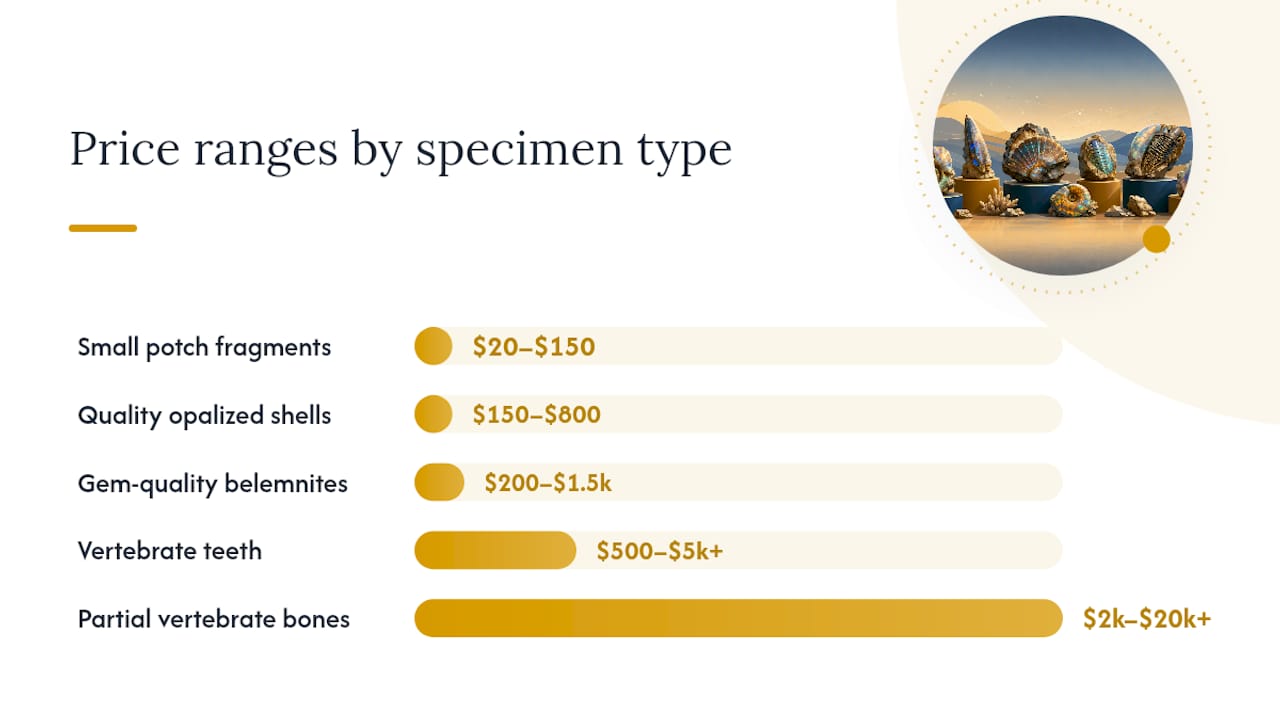
Typical price ranges by specimen type:
- Small potch shells or belemnite fragments: $20–$150
- Quality opalized shells with visible form and moderate color: $150–$800
- Opalized belemnites with translucent or gem-quality opal: $200–$1,500
- Vertebrate teeth with play-of-color: $500–$5,000+
- Partial vertebrate bones with precious opal: $2,000–$20,000+
- Exceptional or scientifically significant specimens: $20,000 and above
These figures reflect the commercial market for authenticated, documented specimens. Undocumented or unprovenanced material trades at a discount, which is a reason to be cautious rather than a reason to buy.
Total cost considerations for U.S. buyers:
Beyond the purchase price, budget for the following:
- International shipping: $40–$120 for standard insured courier from Australia, depending on weight and declared value.
- Shipping insurance: Typically 1–2% of declared value for full-coverage policies. For a $2,000 specimen, that is $20–$40 added to shipping cost.
- U.S. Customs duties: Most mineral specimens enter under low or zero duty rates, but confirm the applicable HTS code with the seller or a customs broker for pieces above $800 (the de minimis threshold for formal entry).
- Display or storage materials: Acid-free foam, padded mounts, and display cases add $20–$200 depending on specimen size.
- Insurance for your collection: Homeowner’s policies often exclude or undervalue gemstone specimens. A scheduled personal property rider or a dedicated collectibles policy from a specialist insurer is worth considering for any specimen above $1,000.
The total landed cost for a mid-range authenticated opalized shell with good color, shipped and insured from Australia to the U.S., typically runs $300–$1,200 all-in. Plan that full number, not just the sticker price.
A note on sourcing and what we look for
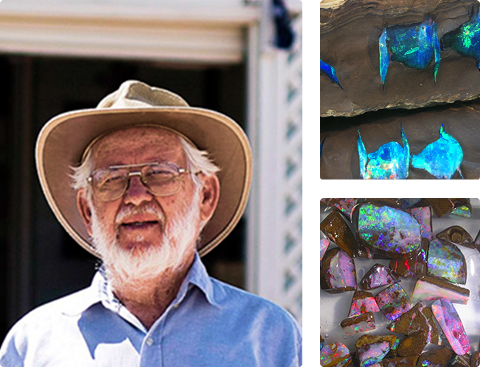
Every opalized fossil tells a story that began hundreds of millions of years ago, and the way that story is documented matters as much as the specimen itself. My perspective, shaped by years of working directly with Australian miners and curating authenticated opal collections, is that provenance is not a bureaucratic formality. It is the thread that connects a collector to the specific place, the specific miner, and the specific geological moment that produced the piece in their hands.
At Australianopaldirect, we maintain direct relationships with miners across Lightning Ridge, Coober Pedy, and Queensland. Every specimen we offer comes with documented field origin, and we welcome provenance questions from collectors at any stage of their search. If you are evaluating a specific specimen or need guidance on what documentation to request from any seller, our team is available to help. The goal is always the same: to connect collectors with pieces they can hold with confidence, knowing exactly where they came from and what they are.
Australianopaldirect: curated opalized fossils with documented provenance
Australianopaldirect offers something the broader market rarely delivers consistently: opalized fossil specimens sourced directly from Australian miners, paired with documented provenance, condition reports, and insured international shipping to U.S. buyers. Where most listings leave provenance vague, every piece in the curated collection carries a traceable field origin.
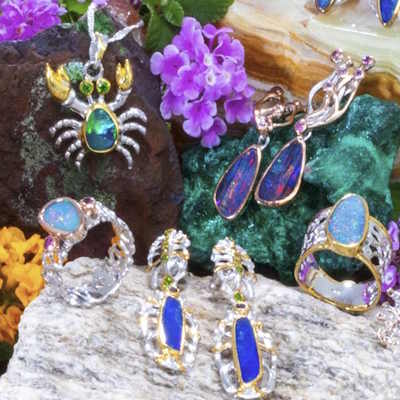
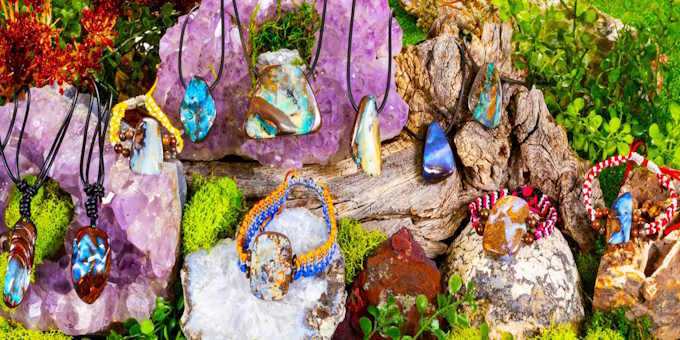
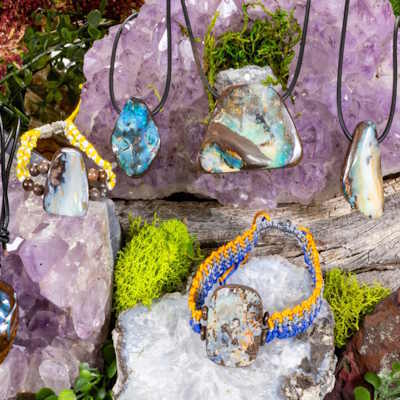
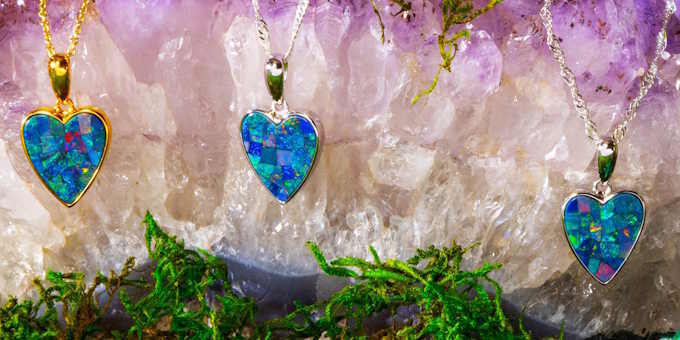
The collection includes opalized shells, belemnites, and vertebrate material at a range of price points, alongside custom jewelry conversions for collectors who want to wear their specimen rather than display it. All purchases ship with full insurance, and the 90-day warranty covers condition as described. Returns are accepted for pieces that do not match their documentation.
Browse the current opalized fossil listings or contact a specialist directly for provenance questions, authentication guidance, or help sourcing a specific specimen type.
Authoritative sources and further reading
For collectors and researchers who want to go deeper, the following sources represent the strongest available material on opalized fossils across science, provenance, and practical buying:
- South Australian Museum, Opal Fossils Gallery — the definitive public collection for understanding museum-grade specimens, including the Addyman Plesiosaur. Consult this for visual benchmarks of exceptional finds and scientific context.
- MDPI Minerals: “Timing of Opalization at Lightning Ridge, Australia” — the peer-reviewed source for formation science, Neogene opal deposition evidence, and microscopic analysis of cellular preservation. Essential reading for anyone interested in the geology behind the specimens.
- ResearchGate: “The Opalised Fossils of Australia: Mineralogical and Paleontological Treasures from the Australian Outback” — covers locality-by-locality specimen types and the mineralogical science connecting opal formation to paleontological preservation.
- National Geographic: “Opal-Filled Fossils Reveal New Dinosaur Species in Australia” — accessible science journalism on the vertebrate fossil significance of Lightning Ridge material and the role opalized fossils play in ongoing paleontological research.
- Gemmological Association (Gem-A): “Opalized Fossils: Pseudomorphs” — the gemologist’s perspective on formation modes, care requirements, and the distinction between pseudomorphs and casts. Recommended for buyers evaluating specimen quality and care protocols.
- Smithsonian Magazine: “Gemologist Identifies Insect Entombed in Opal Rather Than Amber” — a compelling case study in identification complexity, useful for understanding why specialist verification matters even for experienced collectors.
Recommended
- Opal Varieties: A Complete Guide for Collectors - Australian Opal Direct
- Key features of opal investment pieces: a collector’s guide - Australian Opal Direct
- Choosing the Perfect Opal: A Collector’s Guide to Value - Australian Opal Direct
- Build a Gemstone Collection: The Expert Guide to Australian Opals - Australian Opal Direct