3 Provenance Musts for Collectors Buying Miner Direct Opals
Posted by AOD on 16th Sep 2026
3 Provenance Musts for Collectors Buying Miner Direct Opals
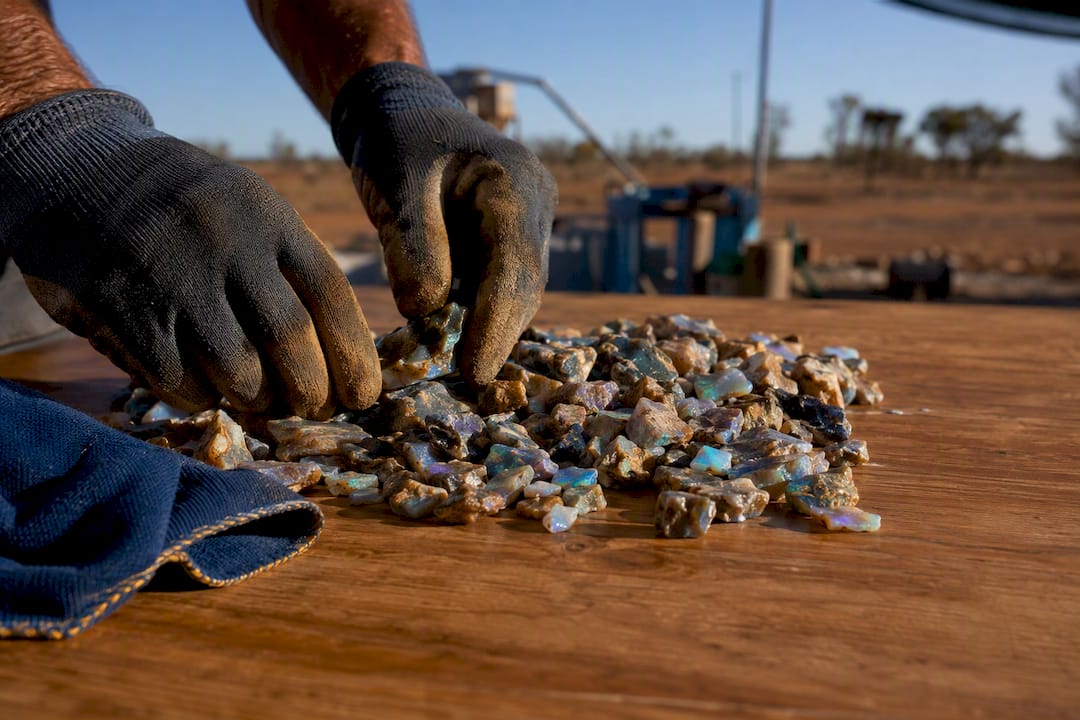
Yes, you can buy authentic, ethically sourced opals miner direct, but only when the seller supplies written provenance, honest treatment disclosure, and neutral lighting imagery or lab verification. Before you pay, demand three things in writing: the exact field or mine the stone came from, whether it is solid or an assembled doublet or triplet, and any treatments applied, from smoking to sugar-acid darkening to resin impregnation. Ask for a neutral lighting 360° video before you commit any money. Anything short of that is a gamble dressed up in beautiful color play.
TL;DR:
- Buyers must verify written provenance, treatment disclosure, and neutral lighting videos before purchasing miner-direct opals to avoid risky gambles.
- Provenance should specify the exact field or claim, and the seller must disclose if the stone is solid, a doublet, or a triplet, along with any treatments.
- High-quality photos are insufficient; request 360° videos under diffuse lighting and side-profile images to assess construction and detect joins or backing layers.
- Pricing generally correlates with body tone, brightness, color pattern, and construction, with Lightning Ridge black opals commanding higher prices than Queensland boulder or Coober Pedy opals.
- The buying process includes a detailed invoice with origin, treatment, and media documentation, plus optional insurance, warranty, and return policies for protection.
Table of Contents
- What “Miner Direct” Means and Why Provenance Matters
- The Checklist: Exact Questions to Put in Writing Before You Buy
- How to Evaluate Photos, Videos, and the Physical Stone
- Pricing Drivers and How to Assess Value
- How Australian Opal Direct Sources and Protects Buyers
- Ready to Buy Miner Direct? Here’s What Happens Next
- Where to Verify Lab Reports and Grading Terms
- FAQ
What “Miner Direct” Means and Why Provenance Matters
The phrase gets thrown around loosely, so it earns a clear definition. A true miner-direct opal is stock that traces back to a specific claim or field, sold with documentation that names where the rough was pulled from the ground, rather than passed through three or four hands before it reaches a jewelry case. The seller might be the miner, a cutter working with a small number of named claims, or a dealer with a documented direct-buying relationship at the field. What separates it from ordinary retail opal is the paper trail, not the marketing copy.
Buying this way carries genuine advantages for collectors:
- Traceable origin. You know whether your stone came from Lightning Ridge, Coober Pedy, or a Queensland boulder field, rather than an unnamed “Australian” source.
- Fewer markups. Cutting out layers of wholesalers often means better pricing for comparable quality.
- Access to unusual material. Miners and small cutters frequently hold back rare patterns and colors that never reach mass retail channels.
- Ethical alignment. Buyers who care about supporting small-scale mining operations rather than anonymous supply chains get a direct line to that impact.
None of this replaces due diligence. Miner direct sourcing narrows the gap between ground and buyer, but it does not automatically confirm a stone is solid, untreated, or accurately represented. That verification step is still yours to demand.
The Checklist: Exact Questions to Put in Writing Before You Buy
A miner-direct relationship means little if the seller won’t commit the details to paper. Trade handbooks covering opal sourcing consistently flag hesitation to document provenance as one of the clearest warning signs a buyer can encounter. Before any money changes hands, get written answers to these three questions:
- Where exactly was this mined? A named field or claim, not a vague “Australian opal” label. Lightning Ridge, Coober Pedy, and specific Queensland boulder fields each carry distinct value profiles, and a seller who can’t or won’t specify is asking you to buy blind.
- Is this solid, doublet, or triplet? Assembled stones aren’t inherently dishonest products, but selling one without disclosure is. You need the construction type stated plainly.
- Has this stone been treated? Smoking, dyeing, sugar-acid treatment, and resin impregnation all alter an opal’s appearance and value. Each must be disclosed, not discovered later.
Insist that the field name, treatment status, and seller contact details all appear on the actual invoice, not just in a chat message that disappears into the ether. An invoice with this information is a legal record; a text exchange is not.
Pro Tip: If a seller answers your provenance questions verbally but resists putting the same words on the invoice, treat that gap as the loudest red flag in the transaction.
Watch for evasive answers, pressure to close the sale quickly, or a refusal to discuss where a stone was found. Reputable sellers, by contrast, offer clear return windows, stated warranty terms, and answer provenance questions without friction. For a deeper look at construction types and how they affect long-term value, see this breakdown of doublet and triplet opal differences.
How to Evaluate Photos, Videos, and the Physical Stone
A handful of glamour shots under studio lighting tells you almost nothing useful. Opal’s color play shifts dramatically depending on light angle and moisture, which means a single flattering photo can hide flaws that become obvious the moment the stone moves. Ask specifically for a 360° video shot under neutral, diffuse lighting, along with side-profile images that show the stone’s edge and back.
That side view matters more than most buyers realize. Trade guides on opal inspection point out that joins, glue lines, and backing layers in assembled stones are visible in profile and during rotation, even when they’re invisible from a straight-on shot. Look for:
- A flat, uniformly straight line running through the stone’s body (a sign of a doublet or triplet join).
- A visible dark or black backing layer beneath a thin colored cap.
- Inconsistent color play that appears painted-on rather than emerging from within the stone.
- Any mention of Ethiopian or hydrophane material without a written stability disclosure.
On that last point: hydrophane opals absorb moisture and can change color, clarity, or even crack as they dry out. Buyers purchasing hydrophane material deserve that status in writing, along with basic care guidance, before they ever wear or display the stone.
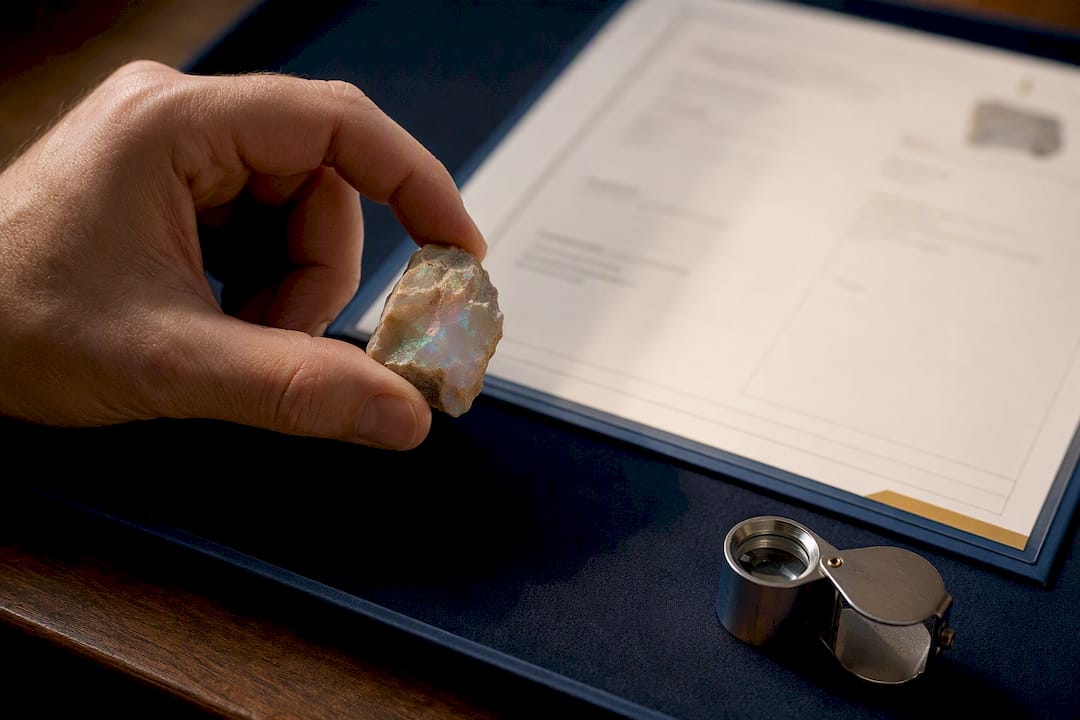
For higher-value purchases, request an independent lab identification report. A GIA Colored Stone Identification Report, or a comparable assessment, states plainly whether a stone is natural, treated, or laboratory-grown, and it notes any detectable treatments. That single document is often the most defensible proof a collector can hold. For a practical walkthrough of spotting inconsistencies yourself, this guide on identifying real opal versus fakes covers the visual tells in more depth.
Pricing Drivers and How to Assess Value
Opal pricing looks mysterious until you understand what actually moves the number. The International Gem Society’s grading framework centers on body tone, notated N1 through N9, running from jet black through to white and light. Darker body tones generally command higher prices when brightness and pattern are comparable, because the dark background makes color play appear more vivid.
Beyond body tone, value hinges on:
- Brightness — how vivid the color flashes appear.
- Color count — stones showing red, the rarest and most valuable hue, sit above those limited to green or blue.
- Pattern — harlequin and rolling flash patterns typically outprice pinfire.
- Face area and stability — larger stable stones without crazing risk command a premium.
- Construction — solid stones outvalue doublets and triplets of similar face-up appearance.
Field of origin shapes expectations too. Lightning Ridge remains the benchmark source for black opal and typically commands the highest prices for a given brightness level. Queensland boulder opal delivers a dark, striking effect at a comparatively lower price point because the ironstone backing is natural rather than assembled. Coober Pedy produces high volumes of crystal and light opal, which tends to sit at more accessible price points. Miner-direct sourcing often strips out one or two layers of markup compared to standard retail, but a price that looks dramatically below market for the stated quality deserves extra scrutiny. It may signal an undisclosed treatment or assembled construction rather than a genuine bargain.
How Australian Opal Direct Sources and Protects Buyers
The seller works with miners across those Australian opal fields and structures each sale around the same documentation standard this guide describes. Every stone ships with an invoice naming the field of origin, a full treatment disclosure, and a photo and video package shot under neutral lighting so buyers see the opal as it actually behaves, not as a single flattering angle makes it appear.
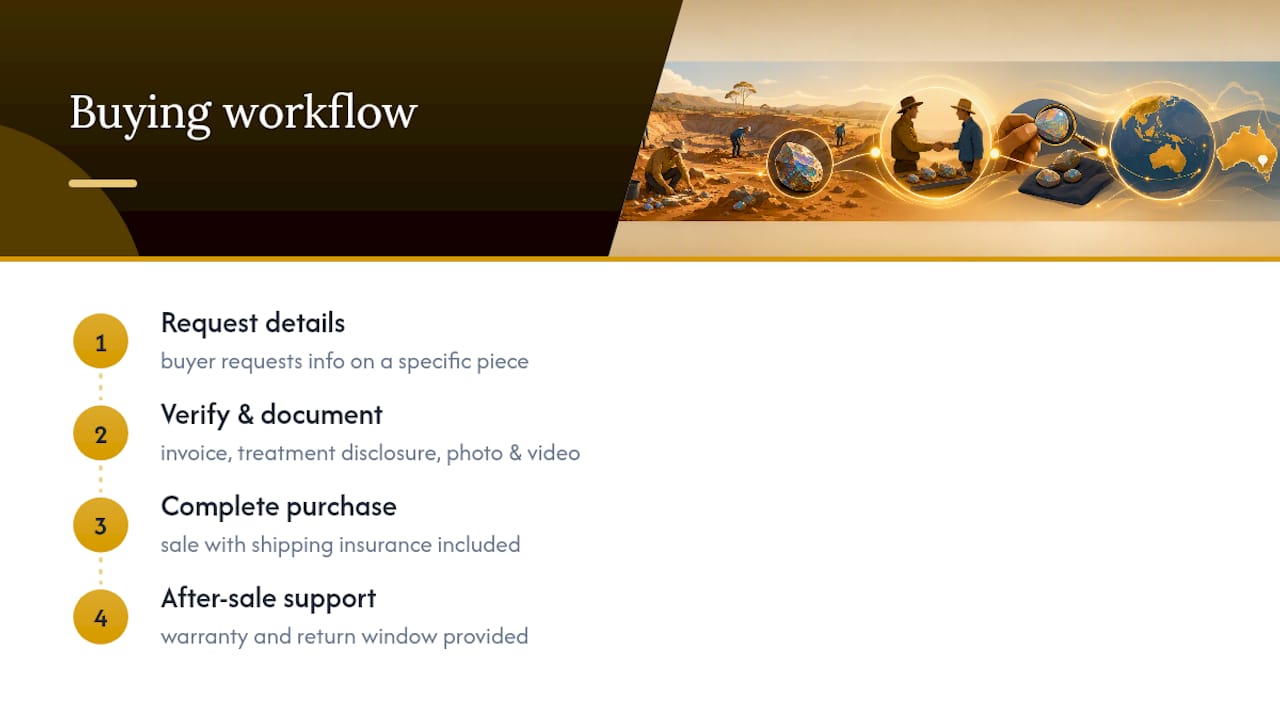
The buying workflow follows a simple arc: a buyer requests details on a specific piece, Australianopaldirect verifies and supplies provenance and construction information in writing, the purchase proceeds with shipping insurance included, and a warranty and return window back the sale afterward. That sequence exists because trust in this market is earned one documented transaction at a time, not assumed. Buyers considering a Lightning Ridge black opal, in particular, can review field-specific value expectations in this collector’s guide to Lightning Ridge opal before requesting a quote.
Ready to Buy Miner Direct? Here’s What Happens Next
This retailer provides a named field of origin on the invoice, a treatment disclosure in writing, and a neutral lighting video before purchase. That’s the exact standard this guide has laid out, applied to every piece in the current collection rather than left to a case-by-case negotiation.
Purchases often include shipping insurance and may come with a warranty and return policy to protect buyers if a stone doesn’t match its documentation or expectations. If you’re weighing a specific piece, browse the current Australian Opal Direct collection, and request the provenance wording and 360° video for any stone that catches your eye before you commit. Collectors after something specific, whether a particular field, body tone, or a custom-designed setting, can also reach out directly for a tailored search rather than settling for whatever happens to be in stock.
Where to Verify Lab Reports and Grading Terms
For independent confirmation beyond a seller’s word, GIA publishes guidance on what a Colored Stone Identification Report actually states about natural origin and detectable treatments. The International Gem Society maintains a widely used opal buying and grading reference covering body tone notation and quality tiers. Trade handbooks focused on opal sourcing offer further detail on hydrophane risk and assembled-stone disclosure standards worth reading before a high-value purchase.
FAQ
Is Australian Opal Direct Legit?
This seller sources stock through direct-miner relationships and documents each sale with field-of-origin invoicing, treatment disclosure, and neutral lighting photo and video packages, often backed by shipping insurance and a warranty.
How Much Do Opal Miners Get Paid?
Earnings vary enormously by field, claim productivity, and market conditions, since opal mining is largely small-scale and speculative rather than salaried; a single strong parcel can support a miner for months, while long stretches can pass with little return.
Can You Go Mining for Your Own Opals in Australia?
Yes, several fields including Coober Pedy and Lightning Ridge offer fossicking areas and permits for visitors and hobbyists, though claims actively worked by licensed miners remain off-limits without permission.
What Happened to Les From Opal Hunters in Real Life?
Les Fletcher appeared as a miner on the television series Outback Opal Hunters, documenting his mining operations in Australia’s opal fields alongside the show’s other featured miners.
How Do I Know if My Opal Is Solid or a Doublet?
Check the stone’s side profile and back for a visible join line or dark backing layer, since a solid opal shows continuous color and structure through its entire depth with no assembled seam. A detailed guide to triplet construction explains the visual differences in more depth.








