Doublet vs Triplet Opal: What Buyers Need to Know
Posted by AOD on 11th Jul 2026
Doublet vs Triplet Opal: What Buyers Need to Know
TL;DR:
- Doublet and triplet opals are layered stones that enhance the color and durability of Australian opals. Doublets consist of a natural opal slice bonded to a dark backing, while triplets add a transparent dome of quartz or glass for magnification and protection. Proper inspection and care are essential, as triplets offer increased resilience but both types remain vulnerable to moisture damage.
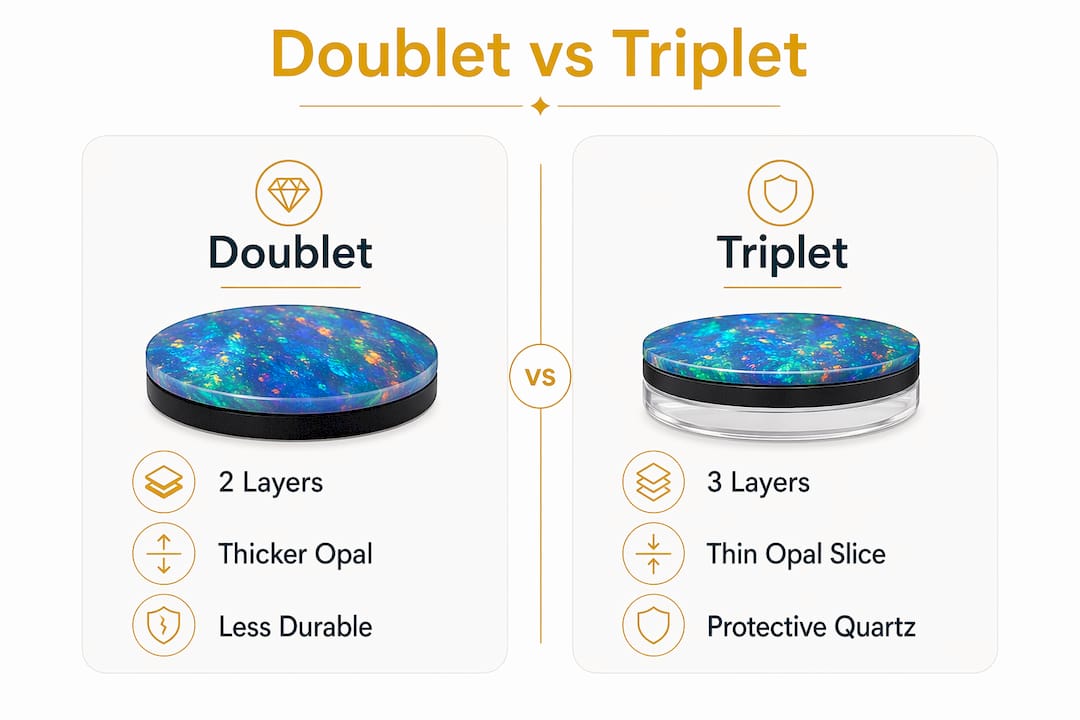
Doublet and triplet opals are layered composite stones, each engineered to amplify the mesmerizing play-of-color that makes Australian opals so captivating. A doublet opal consists of two layers: a thin natural opal slice bonded to a dark backing. A triplet opal adds a third element, a transparent dome of quartz or glass, placed over the opal slice to magnify color and shield the stone. Knowing the difference between these two types is not a minor detail. It shapes how you care for the stone, what you pay, and how long it lasts. Australianopaldirect offers detailed guidance on both types for collectors and buyers at every level.
What is the difference between doublet vs triplet opal construction?
The physical architecture of each stone tells the whole story. Understanding the layers helps you recognize what you are buying before it ever reaches your finger or wrist.
A doublet opal is built from two bonded layers:
- The opal layer: A thin slice of natural opal, cut from earth-mined material sourced from regions like Lightning Ridge or Coober Pedy
- The dark backing: A base of onyx, ironstone, or black glass, chosen specifically to contrast with the opal and deepen its perceived color
- The bond: An adhesive joins the two layers, creating a stone that resembles a solid black opal at first glance
Opal doublets are composed of a thin opal slice glued to a dark backing, which enhances the color and makes the stone resemble a solid black opal but with two distinct layers. That dark contrast is not decorative. It is structural, pulling the opal’s iridescent fire forward in a way that a pale or translucent backing never could.
A triplet opal shares the same two-layer foundation but adds a critical third component:
- The opal layer: An even thinner slice of natural opal than typically used in a doublet
- The dark backing: Same function as in a doublet, deepening color contrast
- The transparent dome: A cap of clear quartz or glass, curved and polished, placed over the opal slice
Triplet opals have three layers: a thin opal slice, dark backing, and a transparent quartz or glass dome that protects and magnifies the stone’s play-of-color. That dome acts like a lens, intensifying the kaleidoscopic shimmer beneath it. The opal slice in a triplet is generally thinner than in a doublet, which is why the dome’s magnifying effect becomes so important to the stone’s visual impact.
How do you visually identify and distinguish doublet and triplet opals?
Telling these two apart requires attention to detail, but the signs are clear once you know what to look for.
- Inspect the side profile. Hold the stone at eye level and look at its edge. A doublet shows one horizontal join line between the opal and its backing. A triplet reveals three distinct layers, including the transparent dome sitting visibly above the opal slice.
- Examine the surface luster. The top of a triplet has a glassy, dome-like luster that is distinctly different from the waxy or resinous surface of a natural opal or doublet. That glassy quality can cause slight reflection or distortion at the dome’s boundary when viewed closely.
- Check for color uniformity. Triplets tend to display a more uniform, consistent color across the stone due to the manufacturing process. Doublets often show more natural variation in their play-of-color.
- Use a loupe. Visual inspection with a loupe can reveal glue lines and layered construction, the key indicators that distinguish doublets and triplets from solid opals. A 10x jeweler’s loupe is the standard tool for this task.
- Look for the join line. A doublet shows a clear horizontal join between the opal and dark backing when viewed from the side. A triplet shows three distinct layers, including the protective transparent cap.
Identification becomes harder when stones are set in jewelry, since metal bezels often conceal the side profile. In those cases, distinguishing opal origins requires examining the surface luster and color consistency from above.
Pro Tip: Look for what gemologists call a “lizard skin” texture on the surface of a triplet dome. This subtle, fine-grained pattern appears on some quartz caps under magnification and is a reliable indicator that you are looking at a triplet rather than a doublet or solid opal.

What are the durability and care differences between doublet and triplet opals?
Durability is where the two types diverge most sharply, and where buyers often make costly assumptions.
Doublets carry a real vulnerability at their glue line. Prolonged exposure to water can cause lifting and fogging between layers. Doublets should never be soaked or cleaned with harsh chemicals. That adhesive bond, while strong under normal conditions, weakens when moisture works its way between the layers over time.
Triplets offer meaningful protection through their dome layer. The transparent dome provides enhanced durability by shielding the fragile opal slice from impact, making triplets more resistant to everyday wear than doublets. That said, the dome does not make triplets waterproof. The adhesive layers beneath it remain susceptible to moisture damage.
Care guidelines for both types:
- Avoid soaking. Never submerge doublets or triplets in water, even briefly. Remove them before washing hands, swimming, or showering.
- Skip ultrasonic cleaners. Vibration from ultrasonic devices can weaken adhesive bonds and crack the opal slice.
- No harsh chemicals. Bleach, acetone, and commercial jewelry cleaners can dissolve adhesives and cloud the dome or backing.
- Clean gently. Use a soft, slightly damp cloth. Dry immediately and thoroughly.
- Store carefully. Keep stones away from direct sunlight and extreme heat, which can dry out and contract adhesive layers.
Prolonged moisture exposure to doublets or triplets can cause a foggy gray appearance or condensation inside the layers, signaling water infiltration. Once that fogging appears, it is very difficult to reverse without professional intervention.
Pro Tip: If you notice a milky or grayish haze developing inside your stone, take it to a jeweler immediately. Early intervention can sometimes save the stone before the adhesive bond fails completely.
How does value and pricing compare for doublet and triplet opals?
Price reflects the quantity of natural opal present, the quality of craftsmanship, and the stone’s visual impact. Both types sit below solid opals in value, but they serve buyers who want the opal aesthetic at a more accessible price point.
Doublets usually contain a thicker slice of opal than triplets and are typically priced higher because of the greater quantity of natural opal present. More opal means more of the stone’s value comes from the earth itself rather than from construction.
| Feature | Doublet opal | Triplet opal |
|---|---|---|
| Number of layers | Two | Three |
| Opal slice thickness | Thicker | Thinner |
| Natural opal content | Higher | Lower |
| Typical price point | Moderate | More affordable |
| Durability | Moderate | Higher (due to dome) |
| Visual effect | Natural luster | Magnified, glassy brilliance |
Triplets are more labor-intensive to produce but contain less natural opal, which shapes their pricing structure. That combination makes triplets an appealing entry point for buyers who want vivid color without a high price. Doublets occupy a middle ground, offering more natural opal content than a triplet while remaining far more accessible than a solid stone from Lightning Ridge or Queensland. For buyers using the opal gemstone selection process, understanding this pricing logic is the first step toward a purchase that matches both budget and expectation.
Who should buy a doublet opal, and who should choose a triplet?
The right choice depends on how you plan to wear the stone, how much care you are willing to commit to, and what you value most in an opal.
Doublets suit buyers who:
- Want a more natural appearance and surface luster
- Prioritize a higher proportion of real opal in their stone
- Are comfortable with careful, attentive maintenance
- Are building a collection and want stones with stronger investment character
Triplets suit buyers who:
- Want vivid, magnified color at a lower price
- Need a stone that handles everyday wear with more resilience
- Are new to opals and want an affordable introduction to the gemstone’s beauty
- Prefer a bold, glassy visual effect over a natural, understated luster
Triplet opals contain real natural opal layers but are composite stones, not a single solid piece. They are not synthetic or imitation. That distinction matters for buyers who worry that a layered stone is somehow less authentic. Both doublets and triplets carry genuine opal within them. The difference lies in how much opal is present and how it is protected. Australianopaldirect’s guide on how to pick opal jewelry walks buyers through these considerations in practical detail.
Key Takeaways
Doublet and triplet opals both contain genuine natural opal, but their layer count, opal thickness, durability, and price differ in ways that directly affect which type suits your needs.
| Point | Details |
|---|---|
| Layer count defines the type | Doublets have two layers; triplets add a transparent dome as a third layer. |
| Doublets carry more opal | A thicker opal slice makes doublets pricier and more natural in appearance. |
| Triplets offer more protection | The dome layer shields the opal from impact, making triplets better for active wear. |
| Both need moisture protection | Soaking either type risks fogging and adhesive failure between layers. |
| Inspection tools matter | A 10x jeweler’s loupe reveals glue lines and dome edges that identify each type. |
What I have learned from years of watching buyers choose between these two
The most common mistake I see is buyers assuming triplets are inferior simply because they cost less. That assumption misses the point entirely. A well-crafted triplet with a vivid play-of-color can outshine a poorly cut doublet in any room. The dome magnifies what is already there. If the opal slice beneath it is alive with color, the triplet will be breathtaking.
What I tell new buyers is this: start with your lifestyle, not your budget. If you forget to remove your jewelry before washing dishes, a triplet’s dome gives you a meaningful margin of safety. If you are meticulous about care and want a stone that feels closer to a solid opal in character, a doublet rewards that attention.
Seasoned collectors often gravitate toward doublets for their more natural surface quality. The waxy luster of a doublet reads differently under light than the glassy brilliance of a triplet dome. Neither is wrong. They are simply different expressions of the same underlying wonder.
The one thing I would never skip is a loupe inspection before buying. Glue lines, dome edges, and layer thickness tell you everything a seller’s description might leave out. Knowledge is the most beautiful thing you can bring to an opal purchase.
— Renee
Authentic Australian opals, explained and available at Australianopaldirect
Choosing between a doublet and a triplet is easier when you have a trusted source behind you.

Australianopaldirect specializes in genuine, ethically sourced Australian opals from Lightning Ridge, Coober Pedy, and Queensland. Every piece in the collection comes with transparent information about its construction, origin, and care requirements. Whether you are drawn to the natural luster of a doublet or the vivid brilliance of a triplet, the team at Australianopaldirect provides the detail you need to buy with confidence. Visit australianopaldirect.com to browse the full collection and connect with experts who understand these stones from the ground up.
FAQ
What is a triplet opal made of?
A triplet opal is made of three layers: a thin natural opal slice, a dark backing material such as onyx or black glass, and a transparent quartz or glass dome on top. The dome magnifies the opal’s play-of-color and protects the fragile slice beneath it.
What is the doublet opal meaning in gemstone terms?
A doublet opal is a composite stone consisting of a thin natural opal slice bonded to a dark backing, constructed to enhance the opal’s color and create the appearance of a richer, deeper stone. It contains genuine opal but is not a single solid piece.
Can you tell a doublet from a triplet without a loupe?
You can often distinguish them by examining the surface luster. A triplet has a distinctly glassy, dome-like surface, while a doublet shows a more natural, waxy finish. For certainty, a 10x jeweler’s loupe reveals the layer count and glue lines clearly.
Are triplet opals real opals?
Triplet opals contain real natural opal as one of their layers and are not synthetic or imitation stones. Their layered construction is a deliberate feature that influences their appearance, durability, and price rather than a sign of inauthenticity.
Which lasts longer, a doublet or a triplet opal?
Triplets generally offer greater resistance to impact because the transparent dome protects the opal slice. However, both types are vulnerable to moisture damage at their adhesive layers, so neither should be soaked or exposed to harsh chemicals.