Opal investment guide: maximize value and returns
Posted by AOD on 11th May 2026
Opal investment guide: maximize value and returns
TL;DR:
- Subtle differences in body tone, play-of-color, and pattern determine whether an opal is a modest keepsake or a valuable asset. Understanding these factors, along with origin and structural integrity, is essential for building an investment-grade opal portfolio. Scarcity, color brightness, and authentic provenance ultimately drive long-term value and market performance.
Subtle differences between two opals can separate a modest keepsake from a generational asset worth many times its purchase price. That gap is not random. It is built from a precise combination of body tone, play-of-color intensity, pattern rarity, structural integrity, and geographic origin, factors that interact in ways that defy simple rules. For collectors and investors who want to build a portfolio of genuinely investable stones, understanding these variables is not optional. It is the foundation upon which every smart acquisition rests. This guide breaks down exactly what separates remarkable from remarkable, and how to apply that knowledge with confidence.
Table of Contents
- Understand the key value drivers in opal investment
- How opal types and origins affect investment potential
- Solid, treated, or composite? What every investor must verify
- Benchmarking price and resale: Navigating non-linear value
- The biggest opal investment myth—and the smarter way forward
- Invest confidently with curated Australian opals
- Frequently asked questions
Key Takeaways
| Point | Details |
|---|---|
| Focus on quality indicators | Body tone, play-of-color brightness, and pattern are top criteria for investment-worthy opals. |
| Australian origin matters | Black and boulder opals from Australia typically lead in investment performance and market demand. |
| Verify authenticity always | Solid, untreated opals outperform composites in long-term value—authentication is crucial. |
| Pricing is non-linear | Opal investment value can leap with small quality jumps, so use structured benchmarking tools. |
| Small gems can excel | A small, vivid opal may outclass a bigger dull one—brilliance often trumps sheer size. |
Understand the key value drivers in opal investment
Now that you’ve seen the challenge of choosing a truly valuable opal, let’s break down what actually determines investment-grade status.
Every opal tells a story written in silica particles, the microscopic spheres stacked in precise grids that diffract light into the spectral fire we call play-of-color. But not every story commands the same price. The opal quality grading factors that define investment potential revolve around four interlocking pillars: body tone, play-of-color, pattern, and structural integrity.
Body tone refers to the darkness of the stone’s background, measured on the industry-standard N1 to N9 scale, where N1 is the deepest black and N9 is pure white. Darker body tones create a dramatic backdrop that amplifies color contrast, making every flash of red, violet, or green appear more vivid and more desirable. You can explore the full opal body tone guide to map exactly where a stone falls on that spectrum before you invest.
Play-of-color is the spectral phenomenon itself: colors dancing and flickering as the stone moves in light. For investment purposes, the criteria that matter most are:
- Brightness and intensity: Stones rated “brilliant” or “bright” on gemological scales consistently command higher prices than “subdued” or “dull” equivalents of the same carat weight.
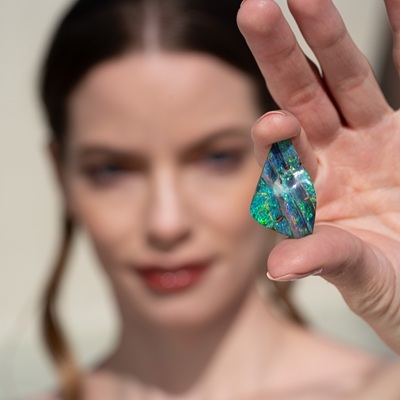
- Color range: Red and violet play-of-color is rarest and most prized, followed by orange, then green and blue. A stone that flashes red against an N1 body tone is a fundamentally different asset from one showing only blue.
- Pattern: Harlequin (a mosaic of equal-sized color patches), rolling flash, and flagstone patterns are the rarest and most sought-after formations. Pinfire patterns, while attractive, are generally considered less investable.
- Distribution: Color that covers the entire face of the stone, not concentrated in isolated pockets, signals superior cut and superior rough.
A practical framework for choosing investable Australian opal is to focus on body tone (darker is generally more valuable), play-of-color brightness and intensity, pattern desirability and distribution, and overall quality and structure. Collectors who understand how to identify gemstone quality know that a five-carat opal with vivid harlequin pattern and N1 body tone can comfortably outperform a twenty-carat stone with muted pinfire and an N7 tone. Price scaling in opals is decidedly non-linear, and that non-linearity is where sophisticated investors find opportunity.
Beyond color and pattern, cut quality, surface clarity (freedom from cracks or crazing), and whether the stone is a solid natural opal or a composite structure all carry significant weight. The expert opal buying guide offers a thorough walkthrough of these physical attributes, including how to assess potch (common opal without play-of-color) distribution and how sand inclusions affect long-term durability.
Statistic callout: In specialized gem auctions, top-grade black opals from Lightning Ridge have sold at per-carat prices exceeding those of comparable-quality diamonds, underscoring the extraordinary value density that the best Australian stones can achieve.
How opal types and origins affect investment potential
Once you grasp core value drivers, it’s essential to understand why type and source set certain opals apart for collectors and investors.
Not all opals occupy the same tier of the investment landscape. Type and geographic origin shape an opal’s reputation, scarcity, and long-term value trajectory in ways that body tone alone cannot capture. Choosing Australian opals over alternatives from other regions is not mere preference. It is a decision backed by geology, market history, and proven scarcity.
Here is how the major opal types compare across the key investment criteria:
| Opal type | Typical body tone | Investment grade | Primary source | Relative scarcity |
|---|---|---|---|---|
| Black opal | N1 to N4 | Very high | Lightning Ridge, NSW | Extremely scarce |
| Boulder opal | N1 to N5 | High | Queensland | Scarce |
| Crystal opal | N4 to N7 | Moderate to high | Coober Pedy, Lightning Ridge | Moderate |
| White/light opal | N7 to N9 | Low to moderate | Coober Pedy, Mintabie | Readily available |
| Fire opal | N5 to N8 | Variable | Mexico | Moderate |
Australia produces roughly 95 percent of the world’s gem-quality opals, and within that extraordinary output, black and boulder opals represent the rarest and most coveted categories. The investment case around scarcity is compelling: Lightning Ridge’s black opal fields are finite, mining output fluctuates, and fine-grade material only becomes harder to source with each passing year. Understanding jewelry as an investment teaches a fundamental principle: scarcity combined with enduring desire is a powerful value engine, and Australian black opal exemplifies exactly that combination.
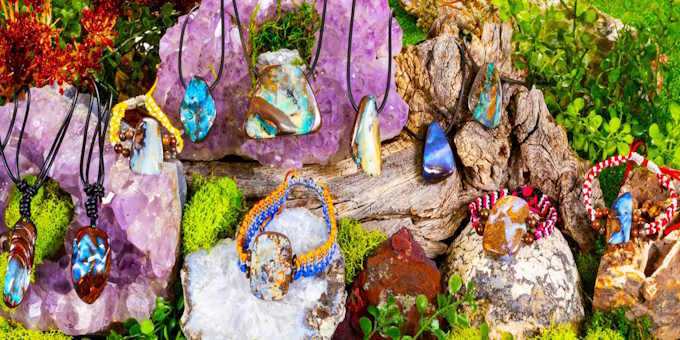
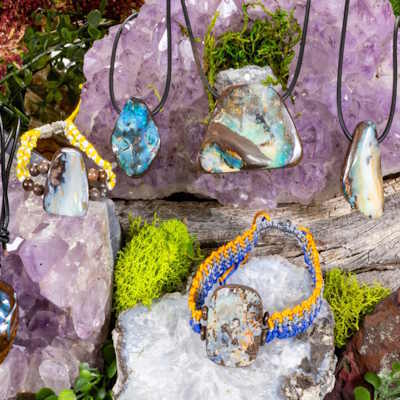
Boulder opals, formed when silica solution fills natural cracks in ironstone host rock found in Queensland, offer a different kind of rarity. Because the ironstone matrix is part of the finished stone, each boulder opal is structurally unique and virtually impossible to replicate. Their durability (the backing matrix provides natural protection) makes them particularly appealing for wearable investment pieces.
The Australian opal investment guide outlines how value scales non-linearly based on body tone and contrast, play-of-color and pattern, and stability and origin. Stones from non-Australian sources, including Ethiopian opals, can show breathtaking color, but they carry different hydrophane properties (they absorb water) that introduce stability risks not typically associated with Australian material.
Key investment considerations by opal type:
- Black opal: Prioritize stones with documented Lightning Ridge provenance and N1 to N2 body tone.
- Boulder opal: Seek broad, uninterrupted color coverage across the ironstone face.
- Crystal opal: Transparency is a feature here. Look for stones where play-of-color appears to glow from within.
- White opal: Best suited for jewelry enjoyment rather than serious investment portfolios.
Pro Tip: Always request origin documentation, stability test results, and ideally a gemological lab report before committing to any high-value opal acquisition. A reputable seller will provide this information without hesitation.
Solid, treated, or composite? What every investor must verify
After narrowing down your options, the next big pitfall is ensuring the opal’s integrity. Here’s how to avoid costly mistakes.
Structural authenticity is where many opal investments quietly go wrong. The market contains beautiful composite stones that can fool the eye at a glance but carry a fraction of the investment value of a natural solid opal.
“Composite opals (doublets and triplets) and enhanced stones can materially reduce investment value versus comparable natural solid opals, so investors should verify solid versus composite and treatment status during every purchase.” Opal Buying Guide
Here is how the three main structural categories compare:
| Structure | Description | Investment value | Resale potential |
|---|---|---|---|
| Natural solid | Single unaltered stone | Highest | Strong |
| Doublet | Thin opal slice bonded to dark backing | Low | Limited |
| Triplet | Thin opal slice with backing and clear cap | Lowest | Very limited |
The process of authenticating a stone before purchase should follow a clear sequence:
- Examine the stone’s profile edge. Under magnification, a doublet or triplet will reveal a visible seam where the opal layer meets the backing or cap material.
- Check for a glass or plastic dome. Triplets have a clear quartz or glass crown that magnifies the opal layer beneath. The curvature looks perfectly uniform, unlike the organic variation of a natural solid.
- Assess the back of the stone. Natural solids show potch or natural opal on the reverse. Doublets typically show a dark resin or black potch backing that feels slightly different in texture and weight.
- Request laboratory certification. A report from a recognized gemological laboratory (GIA, Gübelin, or Australian Gemmological Laboratory) confirms solid status and discloses any treatments.
- Ask direct disclosure questions. A reputable specialist dealer will openly declare composite or treatment status. Evasive answers are a clear warning sign.
Understanding the ethical dimensions of gemstone selection adds another layer of assurance. Ethically sourced, properly disclosed opals maintain cleaner provenance chains, which increasingly matters to serious collectors and resale buyers alike.
The guide to authenticating opals walks through these steps in precise detail, while the key features of investment opals resource helps collectors understand the specific characteristics that distinguish a true portfolio-grade stone from a decorative one.
Pro Tip: Insist on written disclosure of treatment status and composite construction with every significant opal purchase. This documentation protects your investment and makes future resale straightforward and credible.
Benchmarking price and resale: Navigating non-linear value
With authentication complete, it’s time to decode pricing and understand how experts valuate, compare, and project opal investment returns.
Two opals of identical carat weight can sit at opposite ends of the market spectrum. A ten-carat Lightning Ridge black opal with rolling flash pattern and N2 body tone might list for fifty times the per-carat price of a ten-carat white opal from Coober Pedy. This is not arbitrary. It reflects the compounding effect of multiple premium attributes converging in a single stone.
| Valuation factor | Impact on price |
|---|---|
| Body tone (N1 vs N5) | Up to 10x price difference per carat |
| Play-of-color brightness (brilliant vs dull) | 5x to 15x multiplier |
| Pattern (harlequin vs pinfire) | 3x to 8x premium |
| Origin (Lightning Ridge black vs white opal) | Significant premium for Lightning Ridge |
| Solid vs composite | Composite may reduce value by 70 to 90 percent |
For benchmarking and resale estimation, structured valuation tools offer far more objectivity than dealer price lists alone. The OzOpals opal pricing tool uses a cross-referenced gemological approach to improve consistency and reduce the subjectivity that often inflates or deflates asking prices in the secondary market.
Collectors and investors should also monitor major auction results from houses that specialize in Australian gemstones. Auction data provides real-world transaction evidence, not aspirational pricing, and gives a sharper picture of where the market actually clears. The resource on expert jewelry quality tips reinforces this discipline: always cross-reference multiple sources before finalizing any major acquisition price.
Key benchmarking factors that cause the sharpest pricing jumps in opal valuation:
- A shift from N3 to N1 body tone on a stone with consistent play-of-color
- Play-of-color shifting from predominantly green or blue to red or violet
- A pattern reclassified from rolling flash to true harlequin
- Confirmation of Lightning Ridge or Queensland boulder provenance
- A gemological laboratory report confirming no treatments
The luxury jewelry investment tips resource explores these pricing dynamics in depth, including how to build a diversified collection that balances accessible entry points with aspirational top-tier acquisitions.
Statistic callout: Brightness and rarity attributes in opals can account for more than 80 percent of total value, making carat weight one of the least predictive single indicators of price in this gem category.
The biggest opal investment myth—and the smarter way forward
Armed with the right framework, let’s step back and examine why typical assumptions about opal investment can lead even experienced buyers astray.
The most persistent myth in opal investment is that size equals value. It sounds logical: bigger stones should be worth more. In most gem categories, carat weight is a primary price driver. But opals defy that convention in ways that surprise even seasoned collectors.
The reality is that a five-carat black opal with full-face harlequin pattern, N1 body tone, and brilliant red play-of-color is a profoundly rarer object than a thirty-carat white opal with subdued blue pinfire. The five-carat stone tells a more complex story. Nature spent millions of years arranging silica spheres into near-perfect grids at that specific depth in Lightning Ridge’s ancient seabed. The probability of that configuration occurring at the scale and quality visible in a fine harlequin pattern is extraordinarily low. That improbability is what markets ultimately price.
We have watched collectors, dazzled by the physical presence of large pale stones, commit serious capital to material that subsequently stagnated in value. The lesson is uncomfortable but consistent: without superior play-of-color and a dark body tone, size is weight, not value.
The smarter approach is to weight your acquisition criteria in the following order: first, brightness and spectral range of play-of-color; second, body tone on the N1 to N4 range; third, pattern quality and distribution; fourth, solid natural structure with documented provenance; and fifth, carat size. When a stone scores high on the first four criteria, its size becomes a welcome bonus rather than the primary justification for its price.
The resources on rarity and value in opals make the case clearly: scarcity of attributes, not scarcity of mass, is what drives long-term appreciation. The investors who internalize this distinction consistently outperform those who chase impressive-looking but fundamentally uninvestable material.
Authenticity and structured valuation are the twin disciplines that protect capital in this market. An opal without verified provenance and a clear quality assessment is a speculative bet, however beautiful it appears. Demand documentation. Cross-reference pricing tools. Consult gemological expertise. These are not bureaucratic steps. They are the habits of collectors who build portfolios that genuinely appreciate over time.
Invest confidently with curated Australian opals
With a clear-eyed view of what really matters, you’re ready to make informed investment decisions. Here’s how to take the next step with confidence.
Selecting a trustworthy source is as important as mastering the quality framework. Specialist retailers who maintain direct-miner relationships, provide full provenance documentation, and offer independent grading bring a level of transparency that general jewelry markets rarely match.

At Australian Opal Direct, every stone is ethically sourced from Lightning Ridge, Coober Pedy, and Queensland, backed by authentic provenance and curated by specialists who understand investment-grade standards. The collection spans investment-caliber black and boulder opals to stunning crystal pieces, each accompanied by the documentation serious collectors require. Before any major acquisition, exploring the dedicated resource on investing in opal jewelry will sharpen your understanding of how each quality criterion translates into long-term portfolio performance.
Frequently asked questions
What is the most important factor for opal investment value?
Play-of-color brightness and body tone are the most important factors, consistently outweighing carat size in determining an opal’s market value and investment potential.
How can I tell if an opal is solid or composite?
Check for visible seam lines along the stone’s profile edge, request a gemological lab report, and require written disclosure from the dealer. Composite opals have a distinctly layered structure and typically carry significantly lower investment value than natural solids.
Are Australian opals a better investment than opals from other regions?
Yes, Australian opal origin is directly linked to investment performance, with Lightning Ridge black opals and Queensland boulder opals commanding the strongest collector demand and the most reliable long-term appreciation history.
How do I use opal price guides and benchmarking tools?
Compare your stone’s body tone, play-of-color, pattern, and origin against published standards, then cross-reference against the OzOpals structured tool and recent auction records to arrive at a grounded, objective valuation.
Can small opals still be high-value investments?
Absolutely. Small vivid opals with exceptional play-of-color intensity and rare harlequin or flagstone patterns regularly outperform larger but dull stones because brightness and pattern rarity are the primary value multipliers in this gem category.
Recommended
- Expert luxury jewelry investment tips: Sourcing Australian opals - Australian Opal Direct
- Value Factors of Opal: What Drives Worth - Australian Opal Direct
- Key features of opal investment pieces: a collector’s guide - Australian Opal Direct
- Complete Guide to Investing in Australian Opals - Australian Opal Direct