Expert luxury jewelry investment tips: Sourcing Australian opals
Posted by AOD on 15th Apr 2026
Expert luxury jewelry investment tips: Sourcing Australian opals

TL;DR:
- Australian black opals from Lightning Ridge meet strict gemological and provenance criteria for investment.
- Ethical sourcing and documented provenance significantly enhance long-term value and investor confidence.
- Opals offer modest long-term returns, diversification benefits, and cultural appeal in luxury portfolios.
Discerning where to place capital in the luxury jewelry market is never straightforward, particularly when ethical values and long-term returns must align. Australian black opals, especially those from Lightning Ridge, have emerged as a compelling answer to that challenge. Investment-grade black opals from Lightning Ridge are prized for their rarity, dark body tone, and historical appreciation, making them a rare convergence of beauty and financial merit. This guide walks you through the criteria, provenance standards, performance data, and portfolio strategy you need to invest in Australian opals with genuine confidence.
Table of Contents
- Identify investment-grade opal criteria
- Assess ethical sourcing and provenance
- Evaluate historical appreciation and potential returns
- Position opals for portfolio diversification
- A contrarian perspective on luxury jewelry investment
- Discover authentic opal investment options
- Frequently asked questions
Key Takeaways
| Point | Details |
|---|---|
| Opal quality factors | Select investment-grade opals using color, body tone, provenance, and ethical mining standards. |
| Ethical sourcing value | Australian government standards and documentation enhance opal investment appeal and resale. |
| Strong long-term returns | Australian black opals have appreciated significantly, offering robust, non-correlated portfolio diversification. |
| Portfolio strategy | Integrate opals as both aesthetic and ESG-compliant assets for unique market identity. |
Identify investment-grade opal criteria
Not every opal that catches the eye qualifies as an investment-grade gem. The distinction lies in a precise set of gemological characteristics that separate stones commanding collector premiums from those that simply look attractive in a display case.
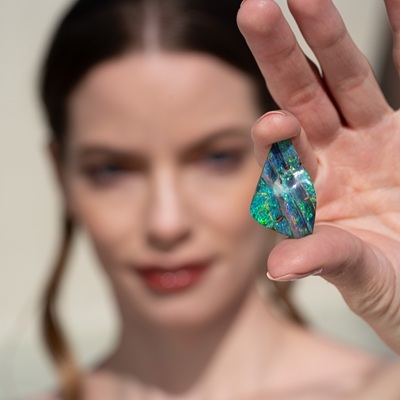
Color intensity and play-of-color are the first markers to examine. Play-of-color refers to the optical phenomenon produced by the diffraction of light through microscopic silica particle arrays within the stone. The most prized specimens display vivid, full-spectrum color shift, with red and violet hues appearing across the widest range of viewing angles. A stone that only flashes blue or green in a narrow light window ranks considerably lower on the investment scale.
Body tone is equally decisive. The Gemological Institute of America and Australian grading bodies use an N1 to N9 scale, where N1 represents the darkest black body tone and N9 the clearest white. Investment-grade material sits firmly at N1 and N2. The dark background acts like a velvet canvas, allowing the play-of-color to radiate with maximum contrast and brilliance. Top-grade N1-N2 black opals fetch between $7,500 and $30,000 or more per carat, a figure that underscores just how exclusive this tier truly is.
Key investment-grade criteria to evaluate before purchase:
- Provenance: Documented origin from Lightning Ridge, Coober Pedy, or Queensland fields
- Body tone: N1 or N2 on the Australian standard scale
- Play-of-color: Broad spectral range with dominant red or violet hues
- Stability: No crazing (surface cracking), no doublet or triplet construction
- Carat weight: Stones above 2 carats carry exponentially higher premiums
- Certification: Independent gemological report from a recognized laboratory
Lightning Ridge provenance is not merely a geographic label. It signals a specific geological environment, a specific community of miners, and a specific history of production that the global collector market recognizes and rewards. When authenticating Australian opals, provenance documentation should be treated as non-negotiable, not optional.
Pro Tip: Request a gemological certificate that specifies body tone grade, play-of-color description, and origin confirmation. Stones without this documentation are significantly harder to resell at premium prices, regardless of how beautiful they appear.
Understanding these markers positions you to evaluate any stone with the same rigor a seasoned collector applies. The principles behind selecting opal jewelry for investment are rooted in these same criteria, applied consistently across every acquisition.
Assess ethical sourcing and provenance
Understanding criteria is crucial, but ethical sourcing and provenance can make or break long-term investment value. In a market where ESG considerations are reshaping how high-net-worth individuals allocate capital, the story behind a gemstone carries real financial weight.
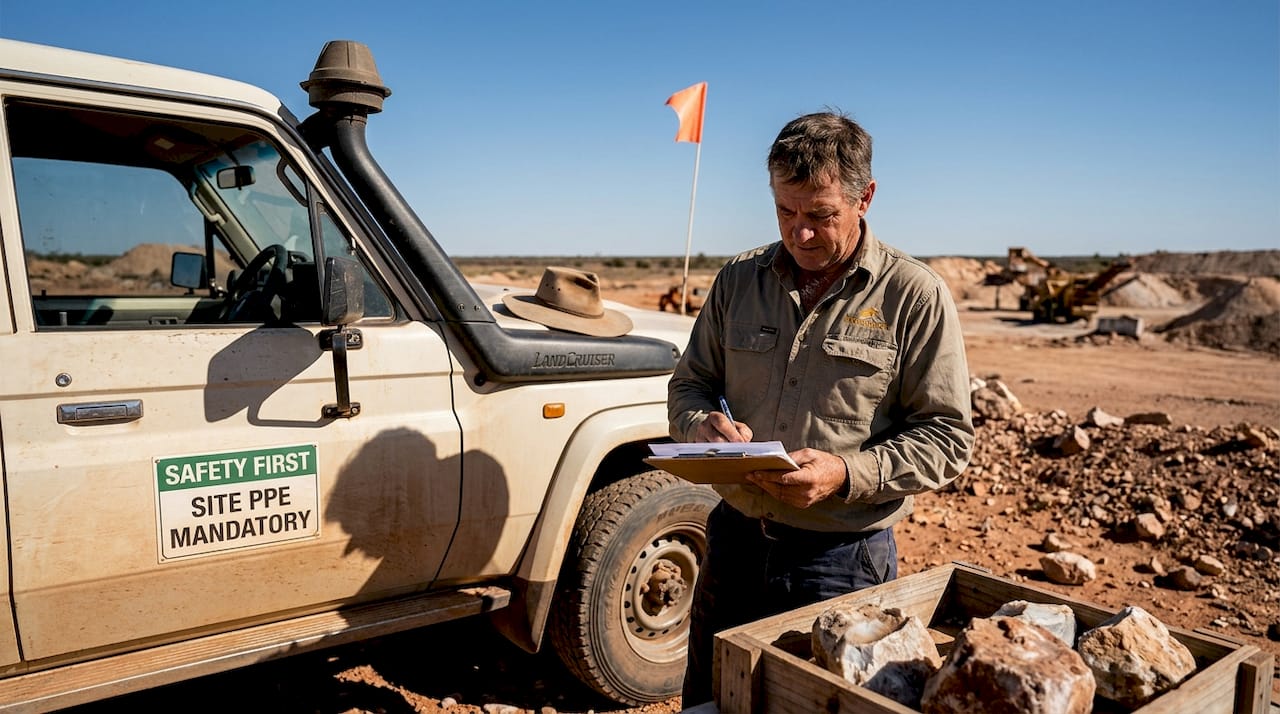
Australia maintains some of the world’s most rigorous mining regulations. Small-scale opal mining operations are subject to environmental impact assessments, rehabilitation requirements, and strict land-use controls. The result is a supply chain that is both traceable and ecologically responsible. As sustainable mining standards confirm, Australian regulations ensure small-scale, low-impact mining with full traceability, and buyers are advised to demand provenance documents and avoid Ethiopian opals due to stability risks.
What complete provenance documentation should include:
- Mine of origin (specific field and license number)
- Date of extraction and initial sale
- Chain of custody records from miner to dealer
- Independent gemological certification
- Photographs of the rough stone prior to cutting
The contrast between Australian and Ethiopian opals is worth examining closely. Ethiopian opals, while visually striking, are hydrophane stones, meaning they absorb water and can shift color or crack when exposed to moisture or humidity changes. This physical instability creates real risk for long-term storage and insurance valuation. Australian opals, formed over millions of years in stable sedimentary environments, do not share this vulnerability.
| Feature | Australian opals | Ethiopian opals |
|---|---|---|
| Stability | High, non-hydrophane | Variable, hydrophane |
| Provenance traceability | Legally mandated | Inconsistent |
| ESG compliance | Strong regulatory framework | Limited oversight |
| Resale premium | Recognized globally | Market skepticism exists |
| Investment track record | Decades of data | Shorter, less stable history |
“Ethical sourcing is not a marketing footnote. For serious investors, it is a due-diligence requirement that directly affects resale value and buyer confidence in secondary markets.”
Exploring the opals supply chain ethics in detail reveals how Australian miners and dealers have built a framework that supports both environmental responsibility and investment confidence. Understanding opal provenance and ethical value is the foundation upon which any serious acquisition strategy must rest.
Evaluate historical appreciation and potential returns
With provenance established, let’s explore the performance metrics that help quantify opal investment benefits. Numbers ground the conversation and allow for honest comparison with competing luxury asset classes.
High-quality opals appreciated 22% since 2023, with one illustrative ROI scenario showing an initial investment of $21,425 growing to $41,384 over 15 years, representing a 93.2% total return at approximately 4.5% annualized. That figure may appear modest against equities in bull markets, but it tells a different story when viewed through the lens of portfolio stability and non-correlation.
| Asset class | Approx. annualized return | Liquidity | Australian cultural value |
|---|---|---|---|
| Investment-grade opals | 4.5% (15-year horizon) | Moderate | Very high |
| Pink diamonds | Up to 28% (historical peak) | Moderate to high | Low |
| Gold | 6-8% (long-term average) | Very high | Neutral |
| Blue-chip equities | 7-10% (long-term average) | Very high | None |
Key performance considerations for opal investors:
- Non-correlation: Opals do not move in sync with equity or bond markets, providing genuine diversification
- Scarcity premium: Lightning Ridge production is finite and declining, which supports long-term price appreciation
- Aesthetic dividend: Unlike financial instruments, opals can be worn and enjoyed while appreciating in value
- Insurance and storage: Costs are lower than comparable fine art or rare wine collections
Pink diamonds historically show higher annual returns, but that peak performance is tied to a narrow window of market conditions and a supply that has largely been exhausted since the Argyle mine closure in 2020. Opals, by contrast, offer a living market with active production, ongoing collector demand, and a cultural resonance that transcends pure financial metrics.
The advantages of Australian opals as an investment class extend beyond raw return figures. Their uniqueness in the global gemstone market means that no synthetic or foreign alternative can replicate their provenance story, which is itself a form of scarcity that protects value over time.
Position opals for portfolio diversification
Now you know the numbers; it’s time to understand how Australian opals fit into a wider investment strategy for luxury jewelry portfolios. For high-net-worth individuals in Australia, the question is not whether opals belong in a portfolio, but how to integrate them intelligently.
“For HNWI in Australia, opals offer portfolio diversification as non-correlated assets with aesthetic appeal; ethical Australian sourcing aligns with ESG preferences and enhances resale.”
Opals occupy a unique position as ESG-aligned luxury assets with Australian provenance, combining financial merit with cultural identity. That combination is increasingly rare in a global luxury market where generic brand names dominate and provenance stories are manufactured rather than earned.
Strategic tips for integrating opals into a luxury jewelry portfolio:
- Allocate 5-15% of luxury asset holdings to gemstones, with opals forming the Australian-specific component
- Prioritize N1-N2 black opals from Lightning Ridge for maximum appreciation potential
- Diversify across stone types: Boulder opals from Queensland and crystal opals from Coober Pedy offer different price points and aesthetic profiles
- Document everything: Maintain a personal provenance file for each stone, including certificates, purchase records, and insurance appraisals
- Review holdings every three years to assess market conditions and potential resale timing
For context on how European luxury markets approach rare gemstone retail, the curated model seen at established luxury jewelers illustrates how provenance and brand story command premium positioning globally. Australian opals, when sourced and documented correctly, occupy that same tier.
Pro Tip: Consider pairing opals with an ethical opal sourcing guide to build a collection that satisfies both financial advisors and personal values. Stones with strong ESG credentials are increasingly sought after by family offices and philanthropic investors who view their collections as legacy assets.
Exploring opal birthstones and their ethical value also reveals how cultural significance amplifies collector demand, particularly among buyers who want their investments to carry personal meaning alongside financial returns.
A contrarian perspective on luxury jewelry investment
Conventional wisdom in luxury investment circles tends to favor diamonds, branded watches, and blue-chip art. These assets are liquid, recognized globally, and easy to explain at a board meeting. But easy to explain is not the same as exceptional.
The past decade has shown that the most memorable collections, and often the most rewarding ones, are built around stones with a genuine story. Australian opals carry that story in their geology, their geography, and their cultural history. They are not interchangeable. No two stones are alike, and that irreplaceability is precisely what drives collector premiums over time.
The pitfall most investors overlook is documentation. A stunning stone with no paper trail is worth a fraction of an equally beautiful stone with full provenance records. This is where poorly sourced Ethiopian opals or undocumented parcels quietly erode portfolio value. Distinguishing opal origins is not a detail to delegate; it is the core skill that separates informed collectors from expensive mistakes. Invest in the story as much as the stone, and the returns tend to follow.
Discover authentic opal investment options
For those ready to act, here’s where to source authentic investment-grade opals in Australia. Building a portfolio around ethically sourced, documented Australian opals requires a trusted partner who understands both the gemological and investment dimensions of each stone.

Australian Opal Direct offers a curated selection of investment-grade opals sourced directly from Lightning Ridge, Coober Pedy, and Queensland miners. Each piece comes with provenance documentation, independent certification, and the assurance of direct-miner relationships that eliminate unnecessary intermediaries. Whether you are building a new collection or adding a signature piece to an existing portfolio, the team at Australian Opal Direct provides the expertise and transparency that serious investors require. Explore the collection and take the first step toward owning a piece of Australia’s rarest natural legacy.
Frequently asked questions
What makes an Australian opal investment-grade?
Investment-grade Australian black opals possess intense play-of-color, a dark N1-N2 body tone, documented Lightning Ridge provenance, and independent gemological certification. These characteristics together define rarity, which is the primary driver of long-term value.
How do Australian opals compare with pink diamonds for investment?
Pink diamonds have historically shown annual returns near 28% but lack Australian cultural identity and are now extremely scarce following the Argyle mine closure. Opals offer strong, steady appreciation with a unique provenance story, though liquidity is more moderate.
Why is ethical sourcing important for opals?
Australian mining regulations mandate traceability and minimal environmental impact, which directly boosts resale value and appeals to ESG-focused buyers who are increasingly dominant in the high-net-worth collector market.
Are there risks to investing in opals?
Key risks include unstable opal origins such as Ethiopian hydrophane stones, incomplete provenance documentation, and lower liquidity compared to equities or branded luxury goods. Mitigating these risks requires rigorous due diligence before every acquisition.
Recommended
- Expert Guide to Buying Australian Opals for Collectors - Australian Opal Direct
- 7 Key Advantages of Australian Opals for Jewelry Lovers - Australian Opal Direct
- How to Authenticate Australian Opals for Genuine Value - Australian Opal Direct
- Buying Australian Opals Step by Step: Expert Guide for Collectors - Australian Opal Direct