Lightning Ridge Opal: The Collector's Buying Guide
Posted by AOD on 12th Aug 2026
Lightning Ridge Opal: The Collector’s Buying Guide
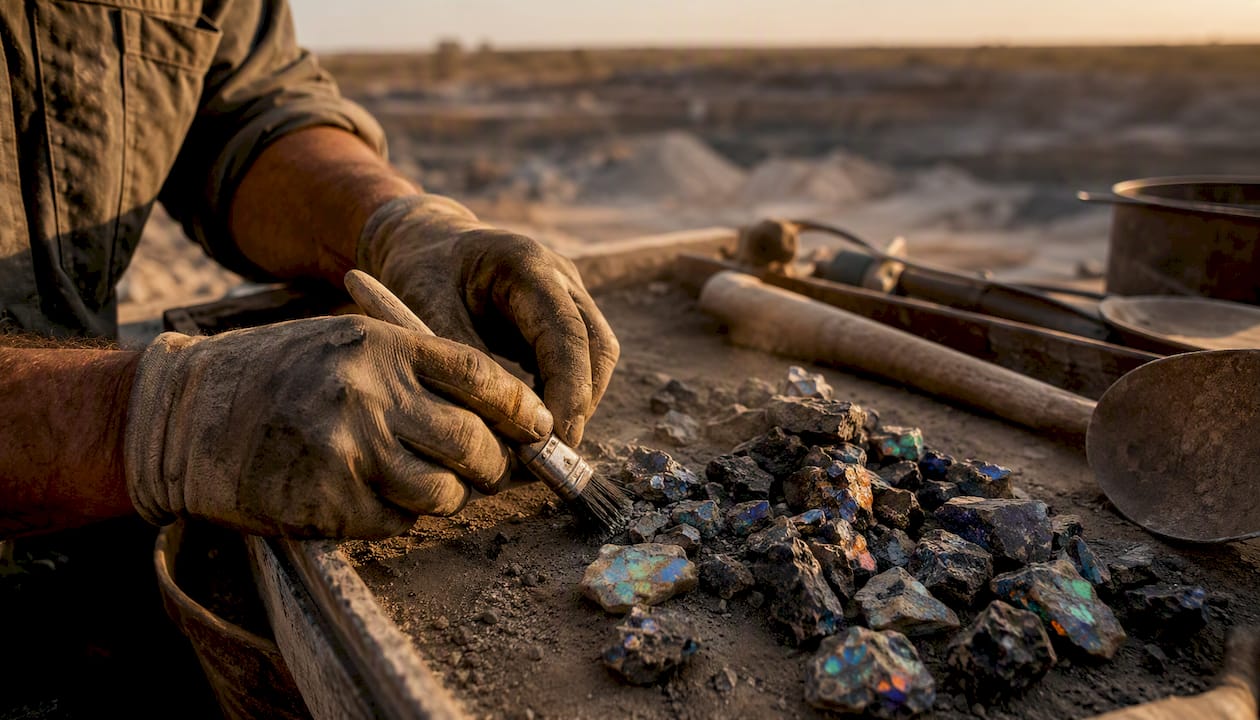
Lightning Ridge opal is the source of the world’s finest black opal — rare, solid, and prized for an intensity of color that no other gemstone on earth quite replicates. For U.S. collectors and buyers, the verdict is clear: a solid, natural Lightning Ridge black opal, sourced from a reputable seller with documented provenance and certification, is both a collectible treasure and an investment-grade acquisition worth pursuing now.
Before you go further, keep these priorities at the front of your mind:
- Solid vs. assembled: Always confirm the stone is a solid opal, not a doublet or triplet. Assembled stones do not hold the same long-term value.
- Body tone: The darker the body tone (rated N1–N4 on the industry scale), the more vivid the play-of-color and the higher the value.
- Brightness: Assessed on a 1–5 scale; brightness is the single most powerful value driver after body tone.
- Certification: Request origin provenance documentation and, where available, a lab report confirming the stone’s identity and natural status.
Key Takeaways
Authentic Lightning Ridge black opal, sourced with documented provenance and independent certification, is the most defensible purchase in the colored gemstone market for collectors and buyers who prioritize long-term value.
| Point | Details |
|---|---|
| Solid over assembled | Always confirm solid natural opal; doublets and triplets do not hold investment value. |
| Body tone drives value | N1–N4 body tone is the foundation of black opal’s premium price and intense play-of-color. |
| Provenance matters | Documented miner relationships and origin paperwork improve authenticity confidence and resale liquidity. |
| U.S. buying costs | Budget for stone price, insured international shipping, potential import duties, and state sales tax. |
| Australianopaldirect | Offers solid Lightning Ridge black opal with direct miner provenance, grading documentation, 90-day warranty, and insured U.S. shipping. |
Table of Contents
- What makes Lightning Ridge opal so geologically extraordinary?
- Why does Lightning Ridge black opal command such extraordinary prices?
- How do you identify and authenticate a Lightning Ridge opal?
- What U.S. buyers need to know before purchasing
- How durable is opal, and when should you not wear it?
- Can you visit Lightning Ridge and fossick for opal?
- How to spot a reputable seller of Lightning Ridge opal
- What gemologists and field reports say about Lightning Ridge black opal
- A specialist’s perspective on sourcing Lightning Ridge opal
- Australianopaldirect brings authenticated Lightning Ridge opal to U.S. buyers
- Useful sources and further reading
What makes Lightning Ridge opal so geologically extraordinary?
Lightning Ridge sits in the Walgett Shire of outback New South Wales, Australia, and the opals found there owe their character to a very specific set of ancient conditions. During the Early Cretaceous period, silica-rich groundwater percolated through argillite (a fine-grained claystone), filling voids left by decaying organic matter. Opal occurs mainly in these argillite layers between roughly 6 and 25 meters below the surface. The presence of organic carbon in those host rocks is what darkens the opal’s body tone, producing the signature near-black to dark gray base that makes spectral color appear to glow from within.
Radiocarbon dating of organic carbon in Lightning Ridge samples suggests formation timing younger than earlier geological models assumed, with dates ranging between approximately 1,000 and 7,000 years before present for the carbon component. The opal silica itself formed over a much longer geological span, but this biogenic carbon evidence, documented by Dowell and colleagues, helps explain why body tone varies so dramatically even within the same mining field.
The main types you will encounter from Lightning Ridge:
- Black opal: Body tone N1–N4, the darkest and most valuable category. The dark base makes play-of-color appear almost luminous.
- Semi-black (dark) opal: Body tone N5–N6. Still highly desirable and often more accessible in price than true black.
- Crystal opal: Transparent to semi-transparent body with vivid play-of-color; lacks the dark base but can be spectacular in its own right.
- White (milky) opal: Light body tone, N8–N9. Less rare from Lightning Ridge than from Coober Pedy, but still produced in the region.
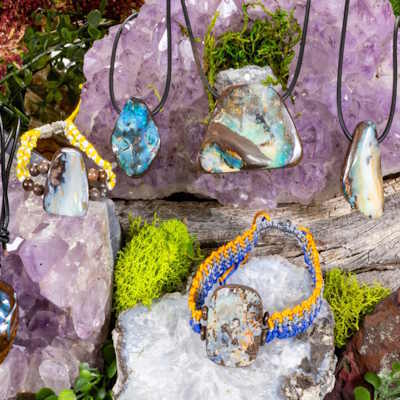
- Boulder opal: Opal in ironstone matrix; less common from Lightning Ridge than from Queensland, but occasionally found in outlying fields.
- Opalized fossils: Among the most extraordinary finds — shells, bones, and plant material replaced by precious opal silica, unique to Australian deposits.
The outlying fields around Lightning Ridge, including Grawin and Glengarry, tend to produce crystal and semi-black material alongside true black opal. The town fields closer to Lightning Ridge itself historically yield the darkest, most prized specimens.
Pro Tip: When browsing listings, look for the body tone grade stated explicitly (N1–N4 for black). A seller who cannot or will not state the body tone number is a seller worth questioning.
Why does Lightning Ridge black opal command such extraordinary prices?
The answer begins with body tone. Gemologists emphasize that a very dark body tone is the primary reason black opal shows intense spectral color. When light enters a dark-bodied stone, the play-of-color has nowhere to “wash out” — every flash of red, violet, and green reads against near-black, the way a neon sign blazes brighter at night than at noon. This optical amplification is what separates a $500 crystal opal from a $5,000 black opal of the same carat weight.
Pattern type adds another layer of value. The most sought-after patterns include:
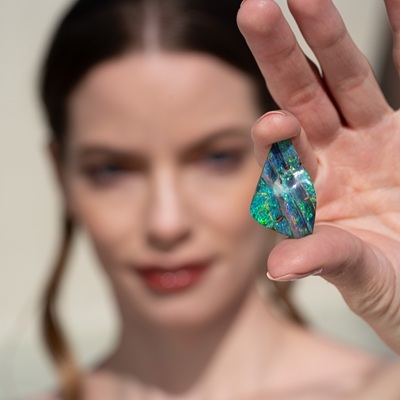
- Harlequin: A mosaic of broad, angular color patches — the rarest and most collectible pattern, commanding significant premiums.
- Broad flash: Large sweeping color shifts visible across the stone’s face; dramatic and highly prized.
- Rolling flash: Color that moves as the stone rotates, creating a living quality.
- Pinfire: Tiny, densely packed color points; beautiful but less valuable than broad patterns.
- Ribbon / flagstone: Parallel bands of color, striking in larger stones.
New South Wales declared black opal its official gemstone emblem in 2008, a recognition that underscores Lightning Ridge’s cultural and commercial significance. Industry reporting notes that exceptional top-grade stones can command very high prices per carat. For U.S. buyers, that translates to a wide market spanning entry-level pieces in the low hundreds of dollars per carat for lower-grade material, mid-range stones in the $500–$3,000 per carat range for solid black opal with good brightness and pattern, and top-tier collector specimens that reach well beyond that ceiling.
Lightning Ridge supplies the majority of the world’s high-quality black opal. That supply concentration, combined with the sporadic nature of high-grade finds (controlled by local geological structures called “blows”), keeps prices firm and makes provenance documentation genuinely meaningful rather than a marketing formality.
How do you identify and authenticate a Lightning Ridge opal?
Authentication starts with one foundational question: is this stone solid, natural opal? Gemology authorities consistently recommend prioritizing solid natural stones for long-term value, and caution that doublets and triplets do not hold the same investment value. A doublet is a thin slice of natural opal glued to a dark backing; a triplet adds a clear dome on top. Both can look stunning in photographs and both are worth a fraction of a comparable solid stone.
Immediate checklist for any listing:
- Solid vs. assembled: Ask directly. Request a side-view photo. A doublet will show a visible glue line between the opal layer and its backing when viewed from the side or under a loupe.
- Body tone: The stone should be graded N1–N4 for true black opal. Ask for the stated grade.
- Play-of-color: Vivid, directional color visible from multiple angles. Flat or single-direction color suggests lower brightness.
- Transparency: Black opal is opaque to semi-translucent. A stone that is fully transparent is a crystal opal, not black opal.
- Weight and curvature: Doublets often feel lighter than solid stones of the same apparent size. Triplets have a characteristic domed top that looks almost too perfect.
For online listings, inspect photos carefully:
-
Backlighting reveals whether a stone is assembled (the backing will glow differently from the opal layer).
-
Request top-and-side photos, not just face-up glamour shots.
-
High-resolution macro images should show surface texture and any inclusions.
-
Scale reference (mm dimensions and carat weight) must be stated — a stone that looks large in a photo may be under 1 carat.
-
Look for glue lines at the girdle or base.
-
Check for a flat, unnaturally perfect base (common in doublets).
-
A flash test with a penlight at different angles reveals the true brightness grade.
Red flags to walk away from:
- Price that seems dramatically low for the claimed grade and carat weight.
- Vague or absent provenance (“Australian opal” with no field or region specified).
- No return policy or warranty stated in writing.
- Photos that show only the face of the stone, hiding the back and edges.
- Certificates that name only the seller, not an independent gemological lab.
Pro Tip: Request a short video of the stone rotating under light before purchasing online. A 15-second clip reveals play-of-color, brightness, and pattern in a way that no photograph can replicate. Also ask for the seller’s cutting and finishing notes — a reputable cutter documents the stone’s original rough weight and any treatments applied.
For a deeper authentication walkthrough, the guide on authenticating Australian opals covers step-by-step checks you can apply to any listing.
What U.S. buyers need to know before purchasing
Buying a Lightning Ridge opal from Australia to the United States involves more than choosing the right stone. Here is what to ask and what to budget for.
Essential questions for any seller:
- Is this a solid, natural opal? (Not a doublet, triplet, or synthetic.)
- What is the body tone grade (N1–N9) and brightness grade (1–5)?
- What is the pattern type and approximate face dimensions in millimeters?
- Does the stone have any treatments, fracture fills, or enhancements?
- What provenance documentation is available (field of origin, miner relationship)?
- What lab reports or certificates accompany the stone?
Typical cost components for U.S. buyers:
- Stone price: The primary cost, ranging from a few hundred dollars for entry-level material to many thousands for top-grade collector pieces.
- International shipping: Reputable sellers use insured courier services (FedEx International Priority or DHL Express are standard). Expect $30–$80 for standard insured parcels; higher declared values may require additional insurance premiums.
- Import duties: The U.S. Harmonized Tariff Schedule generally classifies loose precious and semi-precious stones at a low or zero duty rate, but finished jewelry carries a different classification. Confirm the HTS code with your seller before ordering.
- State sales tax: Varies by state; some states exempt gemstones and jewelry, others do not. Check your state’s rules.
- Insurance: For stones valued above $1,000, standalone jewelry insurance (through providers like Jewelers Mutual) is worth arranging upon receipt.
Certification and lab reports:
The GIA (Gemological Institute of America) issues colored stone identification reports that can confirm natural opal, body tone, and origin. An independent GIA report is the gold standard for high-value purchases. For mid-range stones, a detailed seller grading document stating body tone, brightness, pattern, and solid/assembled status is the minimum acceptable documentation.
Returns and warranties:
A 90-day warranty should cover manufacturing defects in set stones and any material misrepresentation of the stone’s grade or type. It should not cover accidental damage from wear. Get the policy in writing before purchasing, and confirm whether return shipping costs are covered.
| What to evaluate | What to look for |
|---|---|
| Solid vs. assembled | Side-view photo confirming no glue line; seller’s written statement |
| Body tone | N1–N4 for black opal; stated grade, not just “dark” |
| Brightness | Grade 4–5 for premium; grade 3 for mid-range |
| Typical price per carat | Entry: low hundreds; mid: $500–$3,000; top: $3,000+ |
| Certification | GIA report or detailed seller grading document with provenance |
| Size and weight | Stated in carats and mm face dimensions |
Pro Tip: Buying loose rough opal or “opal rubs” (partially shaped but unpolished stones) can offer value, but requires lapidary skills to finish. Unless you have cutting experience or access to a lapidary, stick to polished cabochons or finished jewelry for your first purchases.
How durable is opal, and when should you not wear it?
Opal ranks 5.5–6.5 on the Mohs hardness scale, which places it well below diamonds, sapphires, and even quartz.
Practical care routine:
- Store opal jewelry separately from harder stones to prevent scratching.
- Clean with a soft, damp cloth only. Avoid ultrasonic cleaners, steam cleaners, and harsh chemical solutions.
- Keep opal away from prolonged direct sunlight and extreme heat, which can cause crazing (a network of fine surface cracks).
- Avoid sudden temperature changes — moving from a cold environment to a hot one stresses the stone’s internal structure.
- For loose stones, store in a slightly humid environment (a sealed bag with a damp cloth nearby) if you live in a very dry climate.
When not to wear opal:
- Heavy manual work, gardening, or any activity involving impact or abrasion.
- Sports, gym workouts, or outdoor activities where the ring or pendant could strike a hard surface.
- Environments with extreme temperature swings (outdoor kitchens, foundries, very cold outdoor conditions).
- When applying perfume, hairspray, or cleaning products — chemicals can dull the surface and affect the play-of-color over time.
For a complete step-by-step care routine, the opal jewelry care guide covers everything from daily habits to long-term storage.
Can you visit Lightning Ridge and fossick for opal?
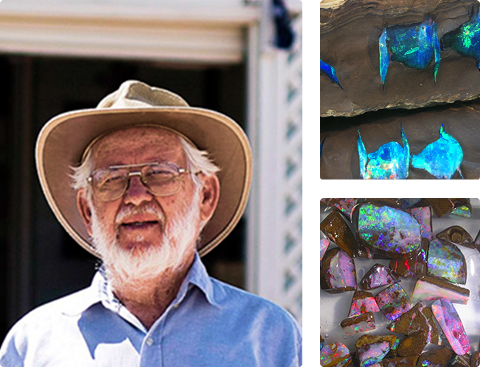
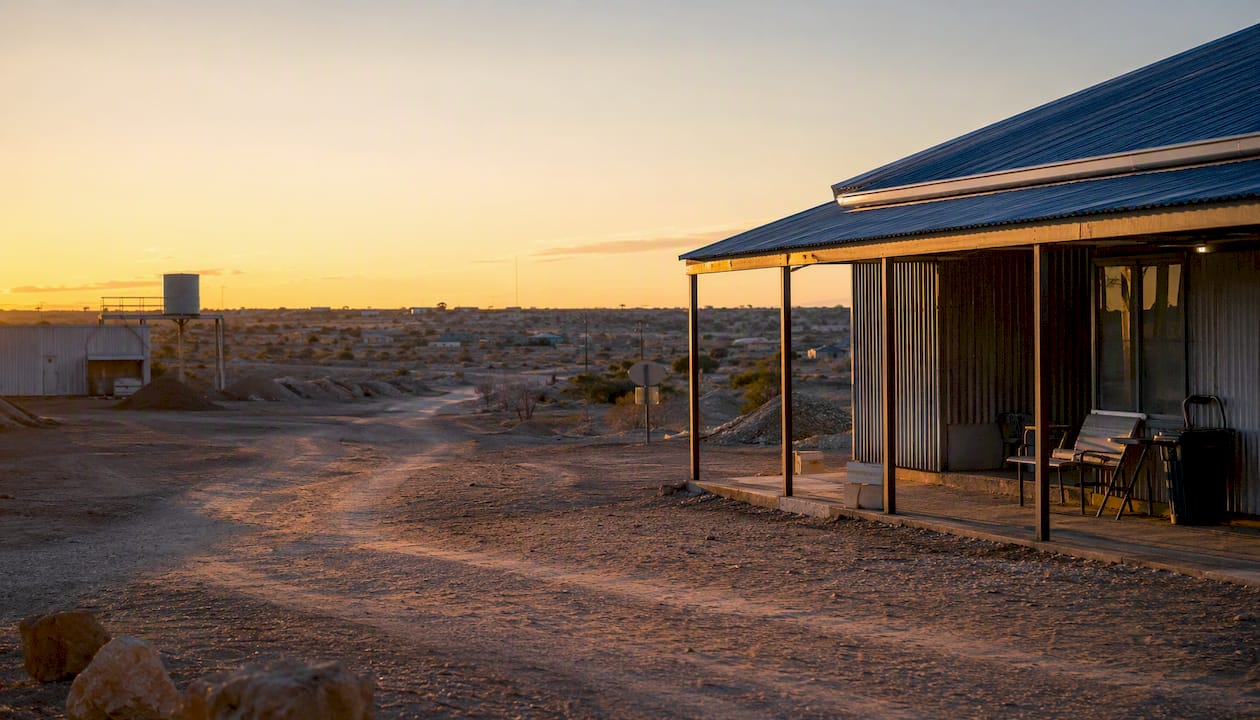
Lightning Ridge is a working mining town about 770 kilometers northwest of Sydney, and it welcomes visitors with a warmth that reflects its community’s deep pride in the stone that built it. The town’s identity is inseparable from black opal, and that makes it one of the most authentic gemstone destinations in the world.
Mining methods and why they matter:
Modern Lightning Ridge mining uses underground shaft methods to follow opal seams, with blowers (large vacuum-like machines) extracting clay-rich material from depth. Washing plants, often built from converted concrete mixers, separate opal-bearing “dirt” from waste. Open-pit mining occurs where economics justify the earth-moving cost, but underground methods remain dominant because the seams are narrow and irregular. Local geological structures called “blows” (breccia pipes) control where seams occur, making high-grade finds inherently sporadic and supply genuinely unpredictable.
Visiting and fossicking:
- Guided fossicking tours operate from the town and allow visitors to search through mullock heaps (waste material from mining) for opal chips and small specimens.
- The Lightning Ridge Opal Festival draws collectors, miners, and enthusiasts from across Australia and internationally.
- The Australian Opal Centre, a world-class museum and research facility in Lightning Ridge, offers exhibits on opal geology, mining history, and the cultural significance of the stone to Aboriginal communities.
- Visit NSW lists Lightning Ridge as a premier outback destination with accommodation, tours, and local opal shops where you can buy directly from miners.
Safety and legal notes: Fossicking on active mining leases without permission is illegal. Visitors should join guided tours or fossick only on designated public areas. Permits may be required for independent fossicking; check with the NSW Department of Regional NSW before visiting.
How to spot a reputable seller of Lightning Ridge opal
The opal market has no shortage of assembled stones sold as solid, or vague “Australian opal” claims with no field provenance. A tight checklist protects you.
Seller credentials to verify:
- Documented relationships with Lightning Ridge miners or cutting houses, stated explicitly on the website or in correspondence.
- Detailed product pages that state body tone grade, brightness grade, pattern type, dimensions (mm), and carat weight for every stone.
- High-resolution photos from multiple angles, including the back and sides of the stone.
- Video available on request (or already provided in the listing).
- A clear, written return policy and warranty with specific terms — not just “satisfaction guaranteed.”
Documentary proof to request:
- Origin provenance: the field or mining area (Lightning Ridge, Grawin, Glengarry) stated in writing.
- Lab report or seller grading document confirming solid/natural status, body tone, and brightness.
- Invoice trail or sourcing statement connecting the stone to a miner or cutting house.
Payment safeguards:
- Use credit card or PayPal for purchases, which offer buyer protection on international transactions.
- For stones above $2,000, consider requesting an escrow arrangement or a staged payment with photos at each stage.
- Never wire transfer to an unknown seller without independent verification of their business credentials.
Your quick checklist when contacting a seller:
- Is this stone solid, natural opal? (Written confirmation.)
- What is the body tone grade (N1–N9)?
- What is the brightness grade (1–5)?
- What is the pattern type and face dimensions in mm?
- What provenance documentation is available?
- What is the return/warranty policy in writing?
- Can you provide a video and side-view photo?
The guide on distinguishing opal origins offers additional context on provenance claims and what legitimate documentation looks like.
What gemologists and field reports say about Lightning Ridge black opal
The scientific and gemological record on Lightning Ridge is unusually rich for a single mining locality, and it consistently supports the premium status collectors assign to this material.
Dowell and colleagues’ study of opal nobbies from Lightning Ridge used radiocarbon and stable isotope analysis to confirm a biogenic component to the carbon that darkens body tone. Their radiocarbon dates for organic carbon in samples range between approximately 1,000 and 7,000 years before present, suggesting the carbon incorporation is geologically recent relative to the silica framework. This finding has practical implications: it means the dark body tone in Lightning Ridge black opal is not a surface treatment or coating but a structural feature of the stone’s formation environment.
The GIA’s gemological perspective reinforces this. Gemologists emphasize that body tone and transparency are distinct properties, and that a very dark body tone is the primary reason black opal shows intense spectral color. Their guidance consistently recommends solid natural stones for collectors prioritizing long-term value, noting that doublets and triplets do not hold the same investment value over time.
The Australian Museum’s factsheet on black opal provides visual standards — including harlequin pattern examples and cabochon specimens — that buyers can use to calibrate their expectations against real high-grade material. New South Wales’ 2008 declaration of black opal as the state’s gemstone emblem reflects an institutional recognition of Lightning Ridge’s singular importance.
Key authoritative conclusions:
- Lightning Ridge is the world’s primary source of fine black opal, a status supported by GIA field reporting and industry documentation.
- The dark body tone is geological and structural, not applied, confirmed by isotopic analysis.
- Solid natural stones are the only category recommended for investment-grade collecting.
- Provenance documentation from miner relationships materially improves resale confidence.
A specialist’s perspective on sourcing Lightning Ridge opal
There is a version of the opal market that operates at arm’s length from the mines — stones passing through multiple intermediaries, provenance thinning with each transaction, grading language becoming looser the further you get from the source. The version worth buying into is the opposite: a direct line from the miner’s hands to yours.
What strikes me most about the Lightning Ridge trade is how much the stone’s value depends on the integrity of the chain behind it. A harlequin black opal with a GIA report and a documented miner relationship is not just more valuable on paper — it is more valuable in practice, because a future buyer can verify what you paid for. That verifiability is what separates a collectible from a gamble.
The collectors I most respect approach Lightning Ridge opal the way serious wine buyers approach a great vintage: they want to know the vineyard, the year, and the hands that made it. The stone’s play-of-color is the experience, but the provenance is the confidence. When both are present, you are holding something genuinely irreplaceable.
Australianopaldirect brings authenticated Lightning Ridge opal to U.S. buyers
Australianopaldirect sources solid, natural Lightning Ridge black opal directly from miners and cutting houses in the field, which means the provenance chain is short, documented, and verifiable. For U.S. buyers, that translates to finished jewelry and loose stones that arrive with grading notes (body tone, brightness, pattern), origin documentation, and a 90-day warranty covering material misrepresentation.
Every order ships internationally with full insurance and signature-on-delivery confirmation. High-resolution photos and video are available on request before you commit to a purchase. The collection spans solid Lightning Ridge black opal rings, pendants, earrings, and loose cabochons, alongside custom jewelry design for collectors who want a specific stone set to their specification. To see current authenticated listings and request grading details for any stone, visit Australianopaldirect and start a conversation with the team.
Useful sources and further reading
The following authoritative sources informed this guide and are worth consulting for deeper research:
-
Dowell, D. et al., “Origin and timing of formation of precious black opal nobbies at Lightning Ridge” — The most detailed academic study of Lightning Ridge opal formation, covering radiocarbon dating of organic carbon and isotopic evidence for biogenic body tone. Best for: geology and formation science.
-
GIA (Gemological Institute of America) — colored stone identification and field reports — The industry standard for gemological grading methodology, body tone and brightness scales, and guidance on solid vs. assembled stones. Best for: grading standards and authentication methodology.
-
Australian Museum — Black Opal factsheet — Museum-quality visual standards for harlequin pattern, cabochon examples, and the 2008 NSW gemstone emblem declaration. Best for: visual calibration and cultural context.
-
Jewellery World — “Lightning Ridge: The Beating Heart of Australia’s Opal Industry” — Industry feature covering the Lightning Ridge value chain, miner-to-seller relationships, and market pricing context including top-grade per-carat benchmarks. Best for: market context and provenance chain understanding.
-
Australianopaldirect blog — Key facts every collector should know — A collector-focused checklist covering grading, authentication, and buying priorities specific to Lightning Ridge material. Best for: quick reference before purchasing.
Recommended
- 7 Key Facts Every Collector Should Know: Lightning Ridge Opals List - Australian Opal Direct
- What Is Lightning Ridge Opal? Complete Overview - Australian Opal Direct
- Rarity of Lightning Ridge Opals: What Sets Them Apart - Australian Opal Direct
- 7 Exquisite Examples of Rare Opals for Collectors - Australian Opal Direct