Rarity of Lightning Ridge Opals: What Sets Them Apart
Posted by AOD on 24th Jan 2026
Rarity of Lightning Ridge Opals: What Sets Them Apart
For collectors who demand more than brilliance alone, Lightning Ridge opals offer a story of rarity and character found nowhere else. These gemstones from New South Wales, Australia, are revered for their deep body tones and extraordinary color play, with flashes of red, green, and blue surfacing against rich black backgrounds. This combination, forged by unique geological conditions, makes authentic Lightning Ridge opals especially sought after by those who value both ethical sourcing and the true meaning of scarcity in luxury gems.
Table of Contents
- Defining Lightning Ridge Opals And Rarity
- Types And Variations In Lightning Ridge Opals
- Key Characteristics And Color Play
- Mining Challenges And Scarcity Factors
- Ethical Sourcing And Authenticity Insights
- Collecting, Investment, And Market Value
Key Takeaways
| Point | Details |
|---|---|
| Rarity of Lightning Ridge Opals | Lightning Ridge opals are among the rarest gemstones worldwide, with their unique geological formation making them irreplaceable. |
| Mining Difficulties | Extracting these opals is challenging due to irregular claystone deposits and the need for artisanal mining, impacting supply and pricing. |
| Collector Value | High-quality Lightning Ridge opals appreciate in value over time, serving as both luxury items and investment assets. |
| Ethical Sourcing Importance | Understanding the origins and ethical sourcing of Lightning Ridge opals is crucial for maintaining authenticity and preserving local communities. |
Defining Lightning Ridge Opals and Rarity
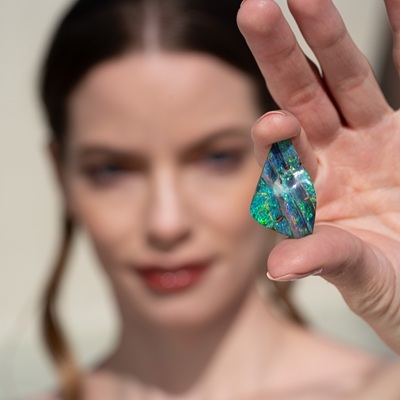
Lightning Ridge opals are not your standard precious gemstones. They represent one of the rarest and most prized forms of opal on the planet, distinguished by their dark body tone paired with extraordinary color play that can include vivid flashes of red, green, blue, and orange against deep black or charcoal backgrounds. This combination is what separates Lightning Ridge black opals from other opal varieties. The dark foundation amplifies the intensity of the color display, making even subtle play of color appear dramatic and luminous. What makes them genuinely rare is not just their visual appeal, but the specific geological conditions required for their formation.
Lightning Ridge, located in New South Wales, Australia, became the world capital for black opal production following initial discoveries in the late 19th century. The region’s geology is remarkably specific: these opals form only within claystone lenses less than 30 meters deep, surrounded by particular sedimentary units that exist nowhere else with the same combination of conditions. This geographic limitation is absolute. You cannot find true Lightning Ridge black opals forming anywhere else on Earth. Other regions like Coober Pedy and Queensland produce different opal types, but the concentration of high quality black opals has remained locked to this single location for millions of years. The geological boundaries that created these conditions are fixed, which means the supply is literally finite.
When collectors discuss rarity in the context of opals distinguished by their value and rarity characteristics, they’re often referring to factors like body tone, color saturation, pattern, and size. Lightning Ridge opals excel across all these metrics simultaneously, which is extraordinarily uncommon. A gem might have brilliant color but poor body tone, or rich black coloring but minimal color play. Finding a specimen that combines deep saturation, vivid hues, clean body tone, and compelling patterns becomes exponentially rarer as you move toward larger sizes. This convergence of qualities is what pushes prices into the thousands or tens of thousands of dollars per carat for premium specimens.
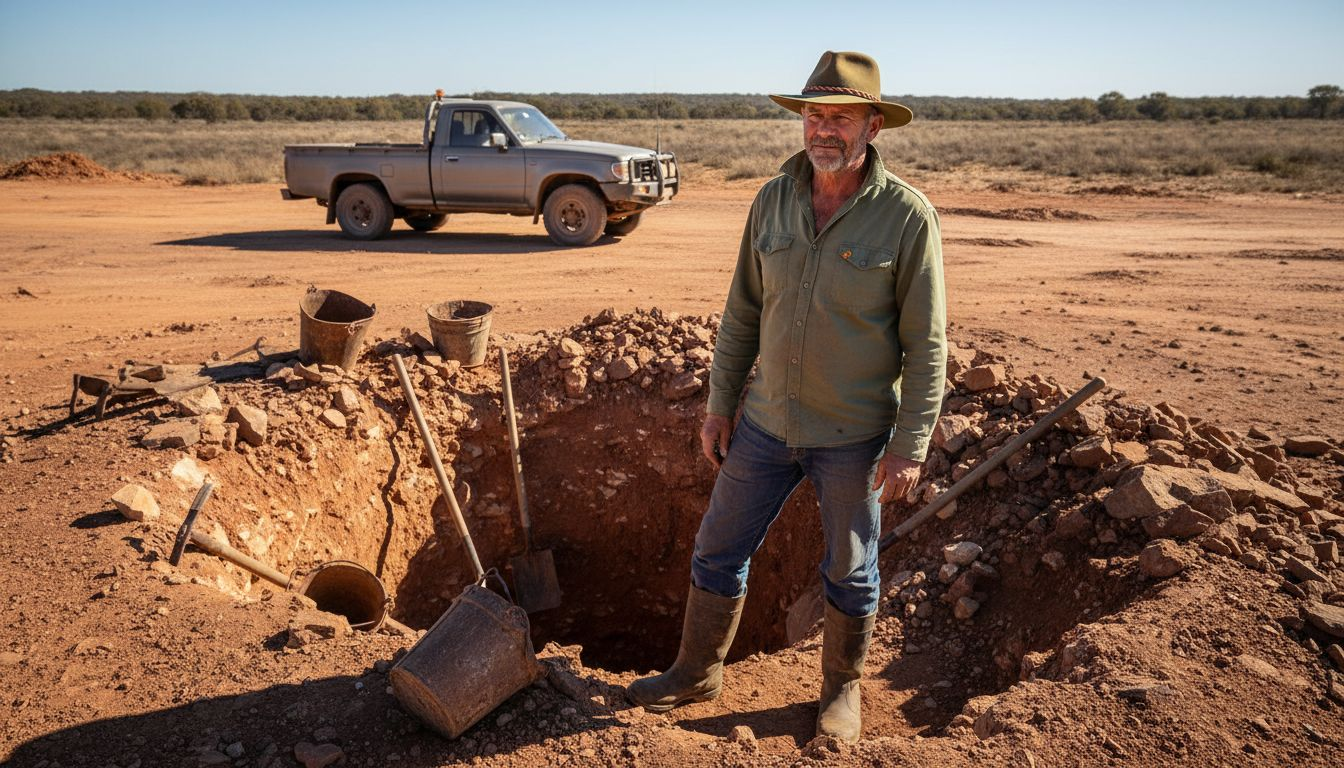
The rarity extends into the mining reality as well. Extracting Lightning Ridge opals involves underground work in hot, confined conditions, with no guarantee of finding marketable stones. A miner might excavate tons of claystone to recover just ounces of rough opal, and much of that rough will be unsuitable for jewelry. The combination of geological scarcity, mining difficulty, and the technical skill required to cut and polish these delicate stones means that true, high-quality Lightning Ridge opals reaching the retail market represent an exceptionally small percentage of all opals in existence.
The following table compares Lightning Ridge opals with other notable Australian opal sources:
| Source Location | Typical Body Tone | Color Play Quality | Rarity Level |
|---|---|---|---|
| Lightning Ridge | Deep black/charcoal | Vivid, saturated flashes | Extremely rare |
| Coober Pedy | Pale/white | Soft pastels, less contrast | More common |
| Queensland | Brown/gray | Moderate brightness | Relatively rare |
Pro tip: When evaluating Lightning Ridge opals for your collection, prioritize body tone and color play intensity over size. A smaller stone with pure black body tone and vivid, multi-colored flashes offers far greater rarity and value than a larger pale-bodied opal with muted colors.
Types and Variations in Lightning Ridge Opals
Lightning Ridge opals come in several distinct varieties, each with its own characteristics that affect both appearance and value. The most famous is black opal, which features a dark body tone ranging from deep charcoal to jet black. This dark foundation is what makes Lightning Ridge opals so visually striking. Against this dark background, even modest color play becomes dramatically visible, creating that signature intensity collectors crave. Beyond black opals, Lightning Ridge also produces honey-colored and translucent variations that are less common but equally compelling. These lighter-bodied stones display color play differently than black opals. The colors appear less vivid against pale backgrounds, but when the light hits them just right, the optical effects can be breathtaking. Some collectors prefer these rarer varieties precisely because they stand out from the typical black opal aesthetic.
The real complexity emerges when you examine the pattern types and optical effects within each body tone category. Lightning Ridge opals display distinctive play of color patterns that gemologists use to classify them. Harlequin patterns show geometric, mosaic-like color blocks that are extraordinarily rare and highly prized by serious collectors. Pinfire creates tiny scattered dots of color that sparkle like fire across the stone’s surface. Ribbon patterns display broad bands of color flowing across the opal, while broad flash shows large expanses of solid color that shift as you tilt the stone. Each pattern type influences visual appeal and rarity. A pinfire opal with brilliant color play commands different prices than a ribbon pattern with the same body tone, simply because the pattern itself affects how collectors perceive the stone’s character and beauty.
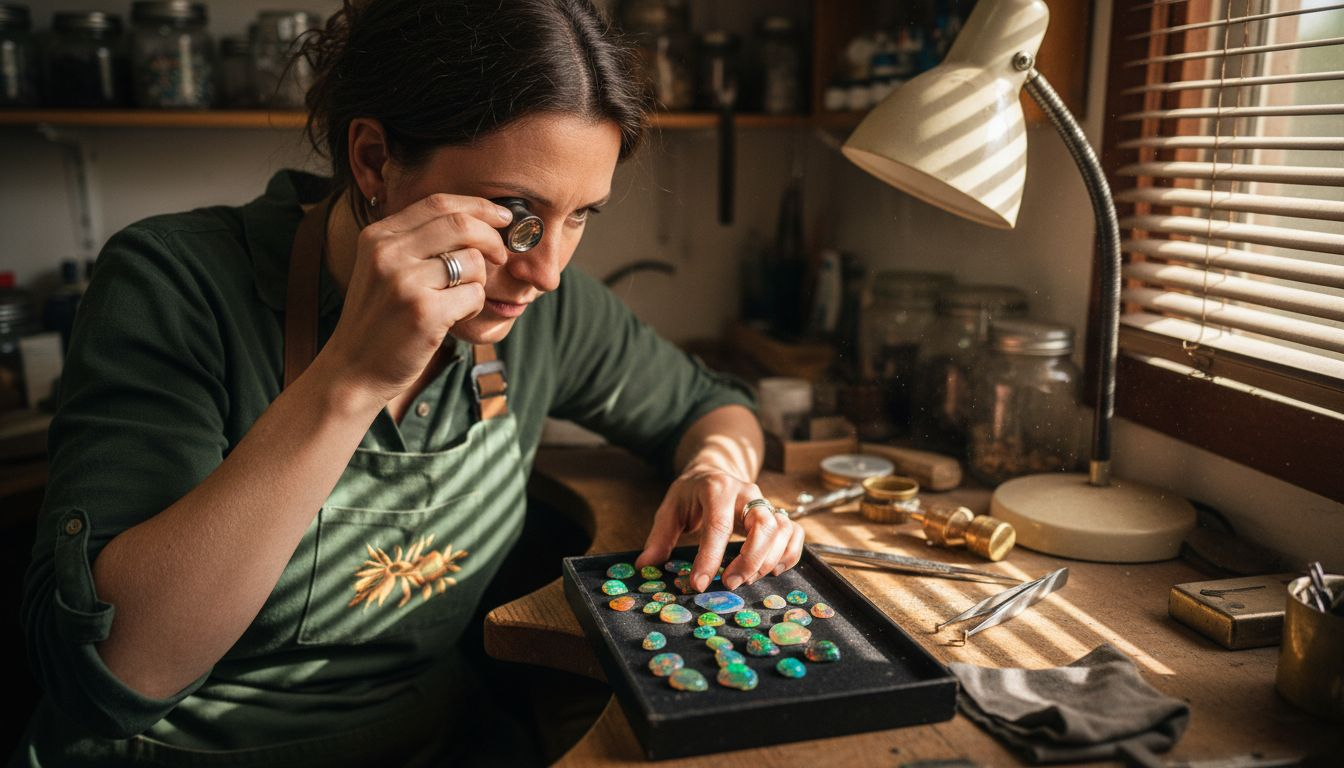
When you’re exploring different types of Australian opals, you’ll notice Lightning Ridge stones occupy a premium position within the broader opal market. The body tone, color saturation, pattern type, and pattern coverage work together to determine a stone’s classification and value. A black opal with harlequin patterns and vibrant color play across 80 percent of its surface represents peak rarity. Conversely, a black opal with pinfire patterns covering only 20 percent of the surface offers a different aesthetic entirely. Neither is objectively better, but collectors often specialize in particular pattern preferences. Some seek bold, dramatic harlequin displays. Others prefer the subtle sparkle of pinfire. Understanding these variations helps you develop a focused collection aligned with your personal taste rather than chasing generic rarity.
The size factor adds another dimension to Lightning Ridge variations. Larger stones are exponentially rarer than smaller ones, but only if the quality criteria remain consistent. A high-quality black opal of three carats is substantially rarer and more valuable than three one-carat stones with similar characteristics. This is why Lightning Ridge opals often retain their value better than many other gemstones as they age. The supply of truly exceptional stones in larger sizes is genuinely limited, and demand from serious collectors remains constant.
Here’s a quick reference to major Lightning Ridge opal pattern types and their collector appeal:
| Pattern Type | Description | Rarity Level | Collector Appeal |
|---|---|---|---|
| Harlequin | Geometric mosaic of color blocks | Exceptionally rare | Highly coveted by collectors |
| Pinfire | Tiny, scattered color dots | Uncommon | Popular for subtle sparkle |
| Ribbon | Broad, flowing color bands | Rare | Preferred for bold aesthetics |
| Broad Flash | Large, shifting color areas | Common | Appreciated for dramatic effect |
Pro tip: Choose Lightning Ridge opals based on body tone and pattern type first, then evaluate color play within those parameters. A smaller black opal with harlequin patterns will always outrank a larger honey-colored pinfire opal in both rarity and collector desirability.
Key Characteristics and Color Play
The magic of Lightning Ridge opals comes down to science meeting beauty. At the microscopic level, these stones contain silica spheres arranged in precise, orderly patterns that act like tiny prisms. When light enters the opal, these spheres bend and diffract the light into individual wavelengths, splitting white light into the full spectrum of color. This is why you see those brilliant flashes of red, orange, yellow, green, blue, and violet. The size and spacing of these silica spheres determine which colors appear. Smaller, tightly packed spheres produce blue and violet hues. Larger spheres create reds and oranges. Most Lightning Ridge opals contain a mix of sphere sizes, which is why you often see that kaleidoscopic rainbow effect where multiple colors dance across the surface as you move the stone. This play of color is not paint or coating. It is pure optical phenomenon created by the stone’s internal structure.
What sets Lightning Ridge opals apart from other opal sources is the intensity and purity of their color play combined with their body tone. The darkness of the background is crucial here. Picture a black opal under light: the dark body tone creates maximum contrast, making even small flashes of color appear electric and vivid. A fiery red appears almost glowing against deep black, while the same red against a pale honey background looks muted by comparison. This is why black opals command premium prices. The body tone acts as a canvas that amplifies the color display. You might see brilliant blues that shift to deep greens as you tilt the stone, then flash to purple as the angle changes again. The depth of hue is remarkable. These are not pastel colors. They are saturated, intense, living colors that seem to move within the stone.
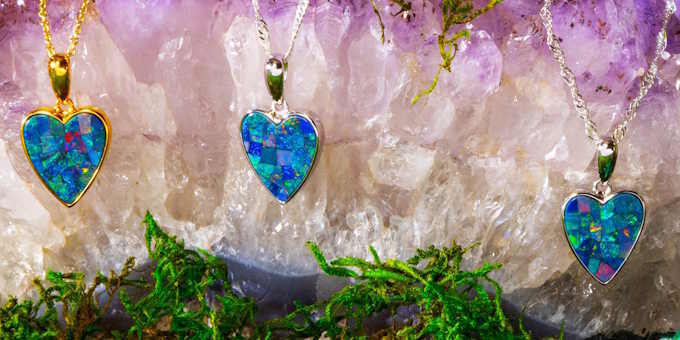
The patterns further elevate this visual experience. Broad flash creates large expanses of solid color that shift dramatically as you move the stone, almost like watching liquid color flow across the surface. Harlequin patterns display geometric mosaics of color that fit together like stained glass, each color block remaining distinct and pure. Rolling flash shows waves of color that ripple and flow, creating movement and depth. These patterns are not random. They reflect the actual arrangement of silica spheres in the opal’s matrix. A true harlequin pattern takes specific geological conditions to form, which is why they are so exceptionally rare. When you hold a Lightning Ridge opal with harlequin patterning and deep black body tone, you are holding millions of years of specific mineral precipitation captured in a gemstone.
The combination of these characteristics is what collectors actually crave. A stone with brilliant color play but muddy body tone disappoints. A black opal with minimal color play feels lifeless. A stone with average color and average pattern generates mild interest. But when all three elements converge, when the color play is vivid, the body tone is clean and dark, and the pattern is distinctive, you have something truly special. This convergence is rare enough that it justifies the significant investment serious collectors make in premium Lightning Ridge opals.
Pro tip: View Lightning Ridge opals under natural daylight or full spectrum lighting, not under typical retail fluorescent lights, which distort color perception and make all opals look more green than they actually are. The true character of an opal only reveals itself in proper lighting conditions.
Mining Challenges and Scarcity Factors
Understanding why Lightning Ridge opals remain so rare requires looking beneath the surface, literally. The geology that creates these remarkable gemstones also makes them extraordinarily difficult to extract. Opal-bearing claystone lenses at Lightning Ridge are typically shallow, discontinuous, and less than 30 meters deep, scattered irregularly through surrounding rock layers. Imagine trying to find and mine thin veins of precious material that shift in depth and location as you dig. A miner might work a productive section one week, only to hit barren rock the next. The unpredictability means significant investment with no guarantee of return. Unlike deep, consistent ore bodies in other mining operations, Lightning Ridge’s geology forces miners to work with fragmentary deposits spread across the landscape. This irregular distribution is not a minor inconvenience. It is a fundamental constraint that keeps production limited and unpredictable.
The physical challenges compound this geological difficulty. Lightning Ridge sits on relatively flat terrain with fragile sedimentary layers, which means underground mining operations must be conducted carefully to avoid collapse. Miners cannot simply blast through rock as they might in hard rock mining. They must work methodically, shoring up tunnels and managing the stability of these delicate clay and sedimentary formations. This requires skill, patience, and safety investment. Many Lightning Ridge operations remain small scale by necessity. A single miner or small family operation might work claims that larger industrial operations would find uneconomical. These artisanal miners extract opals one handful at a time, processing tons of raw material to recover just ounces of rough opal suitable for cutting. The labor intensity is staggering compared to other gemstone mining operations. A team might spend weeks extracting a few stones that may or may not be of gem quality. This reality explains why Lightning Ridge opals command such high prices. The effort invested in recovering even a single premium stone is substantial.
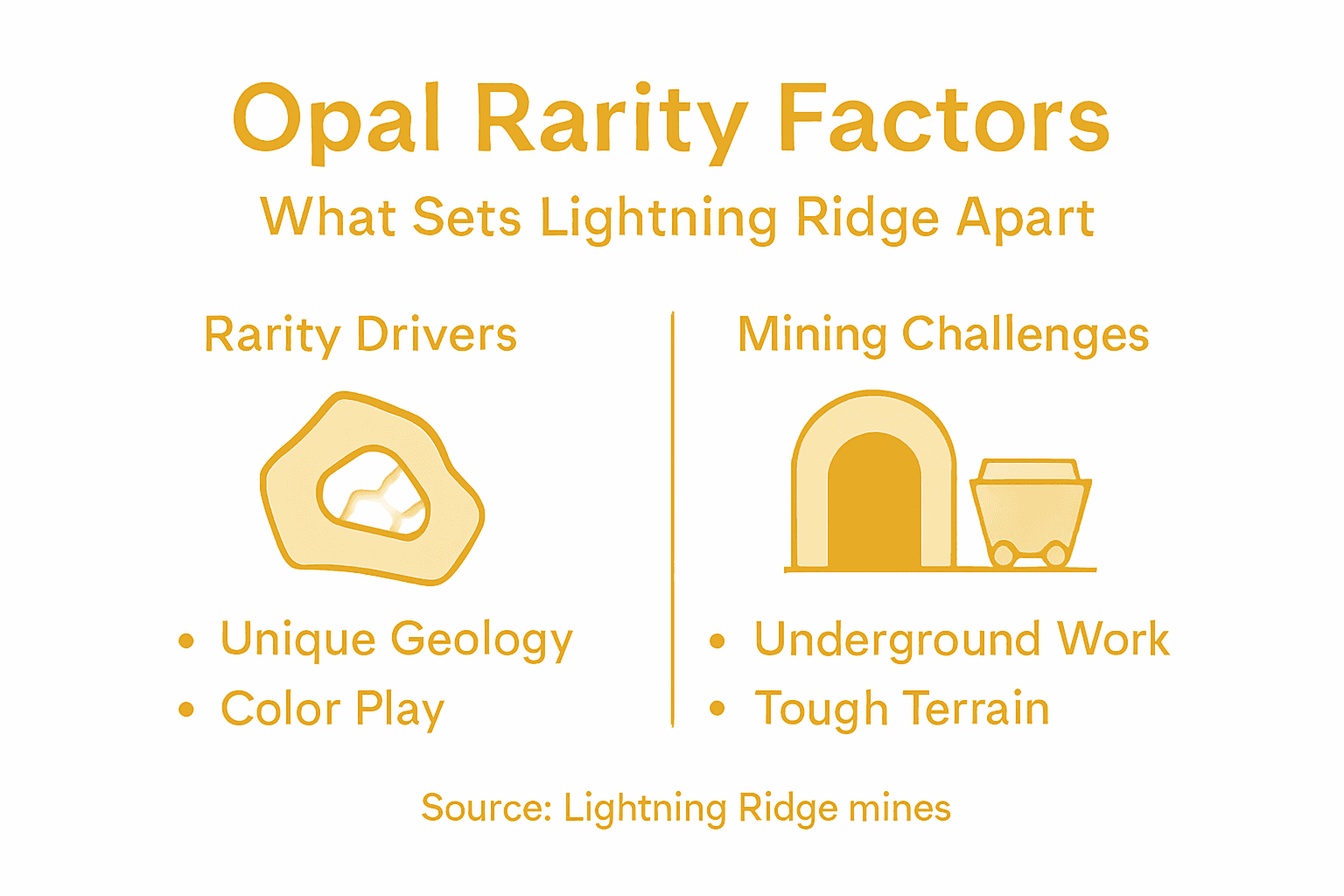
Beyond the mining mechanics, market volatility affects scarcity perception. Global demand for opals fluctuates, which influences how many miners actively work their claims. During high demand periods, more mining operations become profitable and active. During downturns, miners abandon marginal claims. This creates boom and bust cycles that impact the supply of rough material reaching cutters and dealers. Additionally, the concentration of production in a single geographic location, combined with the complexity of extraction, means that any disruption to the region’s mining activity cascades through the entire supply chain. A few major mining families control significant portions of Lightning Ridge’s opal production, so individual decisions to expand or contract operations directly affect global supply.
The net result is that true, high-quality Lightning Ridge black opals reaching the retail market represent an exceptionally constrained supply meeting steady or growing collector demand. This fundamental imbalance between scarcity and desire is what sustains premium pricing and makes these stones legitimate investment pieces. Unlike many gemstones where increased demand can spur increased mining, Lightning Ridge’s geology cannot be overcome through additional effort or capital investment. The opals are where they are, and extracting them remains as challenging today as it was a century ago.
Pro tip: When purchasing Lightning Ridge opals, ask dealers about the source and mining origin if possible. Stones from established mining families or known productive areas carry more confidence in authenticity and quality than stones with unclear provenance.
Ethical Sourcing and Authenticity Insights
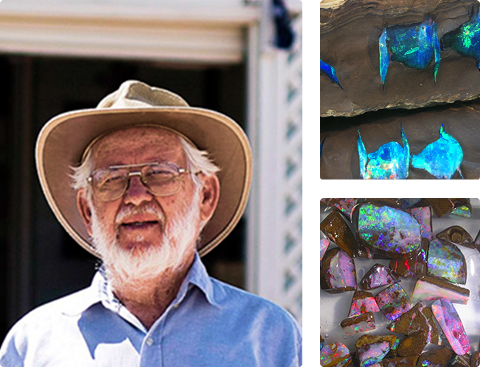
When you purchase a Lightning Ridge opal, you are not just acquiring a beautiful gemstone. You are entering into a relationship with the people and land that produced it. Ethical sourcing means knowing where your stone came from and understanding the conditions under which it was extracted and processed. For Lightning Ridge opals, this transparency matters more than many collectors realize. The small scale of most mining operations means that individual miners and families have direct impact on local communities and ecosystems. Responsible dealers maintain relationships with miners they know personally, understanding their practices and ensuring fair compensation for their work. This direct connection is fundamentally different from large industrial operations where supply chains become so complex that transparency becomes nearly impossible. When you buy from a dealer committed to ethical sourcing, you support mining families who depend on opal extraction for their livelihoods and who have invested generations in understanding Lightning Ridge’s geology.
Authenticity verification protects your investment in multiple ways. Rigorous gemological testing confirms that a stone is genuine black opal and not synthetic material, glass, or composite stones. This involves microscopic examination, specific gravity testing, and refractive index measurement. Origin tracing attempts to confirm that a stone actually came from Lightning Ridge rather than another opal source. This matters because Lightning Ridge black opals command premium prices precisely because of their origin. A beautiful black opal from Coober Pedy or another source, while valuable, is fundamentally different from a true Lightning Ridge stone. Legitimate dealers understand these distinctions and can explain the testing methods used to verify authenticity. They maintain documentation of origin when possible and will honestly acknowledge when origin cannot be definitively confirmed. This honesty is itself a sign of integrity. A dealer claiming every stone is definitely Lightning Ridge with no uncertainty is probably not being truthful.
The broader context includes environmental stewardship and prevention of illicit mining practices. Ethical dealers work with miners who follow sustainable extraction practices, avoid environmental degradation, and comply with local regulations. Lightning Ridge’s geology is fragile, and irresponsible mining can cause long-term damage to the region. Dealers who prioritize ethics ensure that the stones they acquire come from operations that respect both the land and local communities. This also means avoiding stones from illicit or unregulated mining operations that prioritize short-term extraction over responsible practices. Industry standards, though still developing in the opal sector, increasingly emphasize these principles. When you choose opals from dealers committed to these standards, you contribute to market pressures that encourage responsible mining across the entire industry.
The investment value of Lightning Ridge opals is intimately connected to their authenticity and ethical provenance. A stone with verified origin and clear ethical sourcing holds its value far better than one with uncertain background. Collectors recognize that premium prices reflect not just the stone’s beauty, but also the legitimacy and integrity of its provenance. As the market matures, this distinction will become even more important.
Pro tip: Ask your dealer for specific information about stone origin, mining source if known, and any testing performed for authenticity. Reputable dealers welcome these questions and provide detailed documentation. If a dealer resists transparency or cannot answer these questions, that is a red flag regardless of the stone’s appearance.
Collecting, Investment, and Market Value
Lightning Ridge black opals occupy a unique position in the gemstone market. They are simultaneously luxury jewelry pieces and legitimate investment assets. The market value of Lightning Ridge opals has experienced steady appreciation over decades, driven by their rarity, exceptional quality, and status as the world’s most coveted opal variety. This appreciation reflects real scarcity meeting sustained global demand. Unlike speculative markets prone to bubbles, Lightning Ridge opal prices are grounded in fundamental factors: limited geographic supply, mining difficulty, and the convergence of quality characteristics required for premium stones. A high-quality black opal purchased ten years ago for five thousand dollars might realistically be valued at eight to twelve thousand dollars today, depending on its specific characteristics. This track record makes Lightning Ridge opals attractive to serious collectors who view their acquisitions as long-term holdings rather than short-term trades.
Market value determination depends on specific characteristics that experienced collectors understand intuitively. Body tone, clarity, pattern brilliance, and provenance form the foundation of pricing. A deep black opal with harlequin patterns and vivid color play covering eighty percent of the surface commands exponentially higher prices than a lighter-toned stone with minimal color coverage. Size matters, but only proportionally to quality. A three-carat premium specimen costs far more than three one-carat stones of equal quality, because larger high-quality stones are rarer. The pattern type itself influences value independent of size. Harlequin and rolling flash patterns consistently command premiums over pinfire or broad flash at equivalent quality levels, simply because they are rarer and more visually dramatic. Provenance adds another layer. A stone with documented Lightning Ridge origin and ethical sourcing history retains value better than one with uncertain background, because collectors pay premiums for authenticity and the story embedded in the stone.
For collectors building holdings, understanding market dynamics matters as much as understanding individual stones. The luxury gemstone market values rarity above all else, and Lightning Ridge black opals satisfy this criterion absolutely. When you own a high-quality Lightning Ridge opal, you own something that cannot be easily replicated or increased in quantity. This scarcity premium persists even during economic downturns, because wealthy collectors continue acquiring exceptional pieces. The market for premium Lightning Ridge opals operates somewhat independently from general economic conditions. While demand for lower-quality opals might soften during recessions, premium specimens maintain strong collector interest. This resilience makes Lightning Ridge opals particularly attractive for portfolio diversification. They provide exposure to luxury assets without the volatility of stocks or bonds.
Building a meaningful collection requires patience and education. Rather than acquiring numerous mid-quality stones, serious collectors focus on fewer, exceptional pieces. A single harlequin pattern black opal of five carats with deep body tone and vivid color play represents better investment than ten smaller stones of average quality. This strategy concentrates your capital in rarity rather than dispersing it across common variations. The long-term appreciation potential and collectibility of truly exceptional stones justify their premium prices.
Pro tip: Purchase Lightning Ridge opals for their intrinsic beauty and rarity first, with investment appreciation as a secondary benefit. Stones acquired with this mindset tend to outperform those bought purely for speculation, because you will hold them through market cycles and genuinely enjoy them.
Discover the True Rarity of Lightning Ridge Opals with Australian Opal Direct
Lightning Ridge opals are renowned for their deep black body tone and vibrant color play that demands attention. As the article reveals, their rarity is not just in their breathtaking patterns like harlequin and pinfire but in the very geology and mining challenges that limit their supply. If you are seeking a genuine Lightning Ridge black opal that embodies this unique rarity and optical brilliance, you deserve assurance in authenticity, ethical sourcing, and expert craftsmanship.
At Australian Opal Direct, we specialize in delivering hand-selected, earth-mined opals directly from trusted Australian miners. Our curated collections emphasize rarity and quality backed by transparent sourcing and a commitment to ethical practices. Whether you desire custom-designed jewelry or a stunning loose opal, our premium selection invites connoisseurs and collectors alike to own a piece of this irreplaceable natural wonder.
Explore our exquisite range and experience the intense color play and rare patterns of true Lightning Ridge opals.

Start your collection today with confidence at Australian Opal Direct. Discover why our customers trust us for authentic Australian opals and enjoy benefits such as free shipping, 90-day warranties, and personalized service that honors the stories these extraordinary gems carry. Visit our site now to find your perfect Lightning Ridge treasure and embrace a lifetime of beauty and value.
Frequently Asked Questions
What makes Lightning Ridge opals rare?
Lightning Ridge opals are rare due to their unique geological formation conditions, which occur only in specific claystone lenses surrounded by particular sedimentary units. This results in a limited supply that cannot be replicated elsewhere in the world.
How do body tone and color play affect the value of Lightning Ridge opals?
The body tone and color play are critical factors that influence the value of Lightning Ridge opals. A deeper black body tone amplifies color saturation, making vivid flashes more striking. High-quality stones with deep black tones and intense color play command significantly higher prices.
What are the different types of patterns found in Lightning Ridge opals?
Lightning Ridge opals showcase several distinct pattern types, including Harlequin, Pinfire, Ribbon, and Broad Flash. Each pattern affects visual appeal and rarity, with Harlequin patterns being especially prized for their geometric color displays.
Why is mining Lightning Ridge opals so challenging?
Mining Lightning Ridge opals is challenging due to the irregular and shallow nature of opal-bearing claystone lenses, which are less than 30 meters deep. This unpredictability requires miners to work carefully in confined conditions with no guarantee of finding marketable stones.