How to Tell Real Opal: Spot Fakes with Confidence
Posted by AOD on 9th Jul 2026
How to Tell Real Opal: Spot Fakes with Confidence
TL;DR:
- A genuine opal is a natural hydrated silica gemstone with dynamic, irregular play-of-color that synthetic stones cannot replicate. Visual clues like organic color shifts, surface texture, internal inclusions, and a continuous side profile help identify real opals, while layered constructions indicate assembled stones. Lab reports confirm authenticity for high-value pieces, but at-home tests using magnification, UV light, and inspection of the side profile provide reliable identification for most buyers.
A genuine opal is defined as a naturally formed hydrated silica gemstone displaying an organic, shifting play-of-color that no synthetic or imitation stone can perfectly replicate. Knowing how to tell real opal from a fake protects you from overpaying and preserves the profound joy of owning something the earth spent millions of years creating. Imitations range from lab-grown synthetics to assembled doublets and triplets, and each type requires a different eye to catch. Gemological labs like GIA and AGL confirm authenticity for high-value pieces, but most collectors can learn to identify genuine opals at home with a loupe, good lighting, and the right knowledge.
How to tell real opal by its visual and tactile features
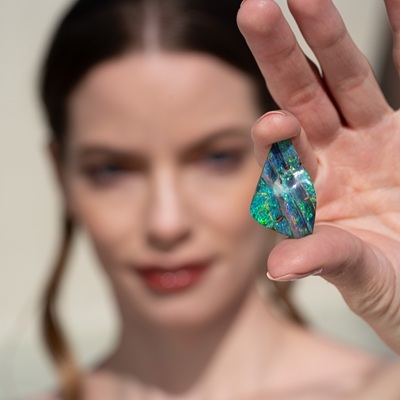
The most accessible way to identify an opal is to study its play-of-color. A genuine opal’s color shifts organically, appearing differently depending on the angle, the light source, and even the distance from your eye. No two patches of color are the same size or shape. That organic irregularity is nature’s signature, and it is the first thing to look for.
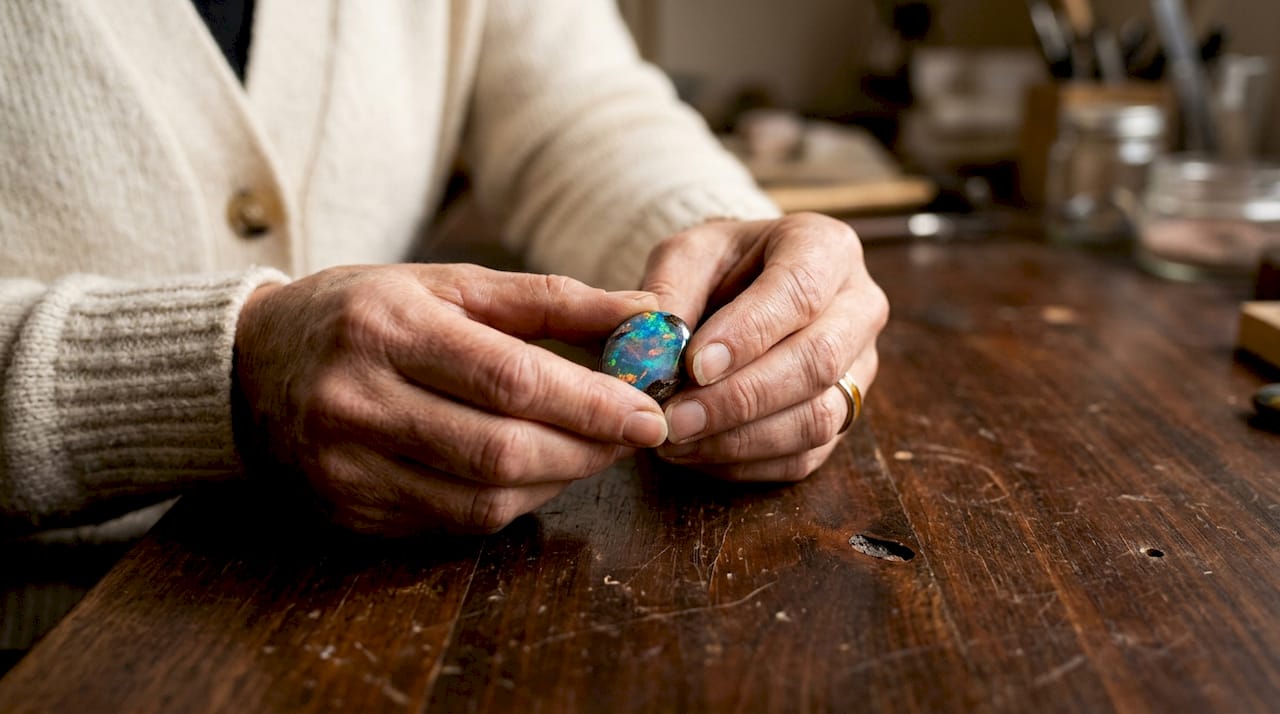
Real opal also has a distinctive surface feel and appearance. Run a fingertip across a polished stone. Genuine opal feels cool and slightly waxy, never plasticky or overly glassy. Glass imitations feel warmer faster because glass conducts heat differently than silica-based minerals. A real opal also feels heavier than most glass fakes of the same size, because its density is closer to that of quartz.
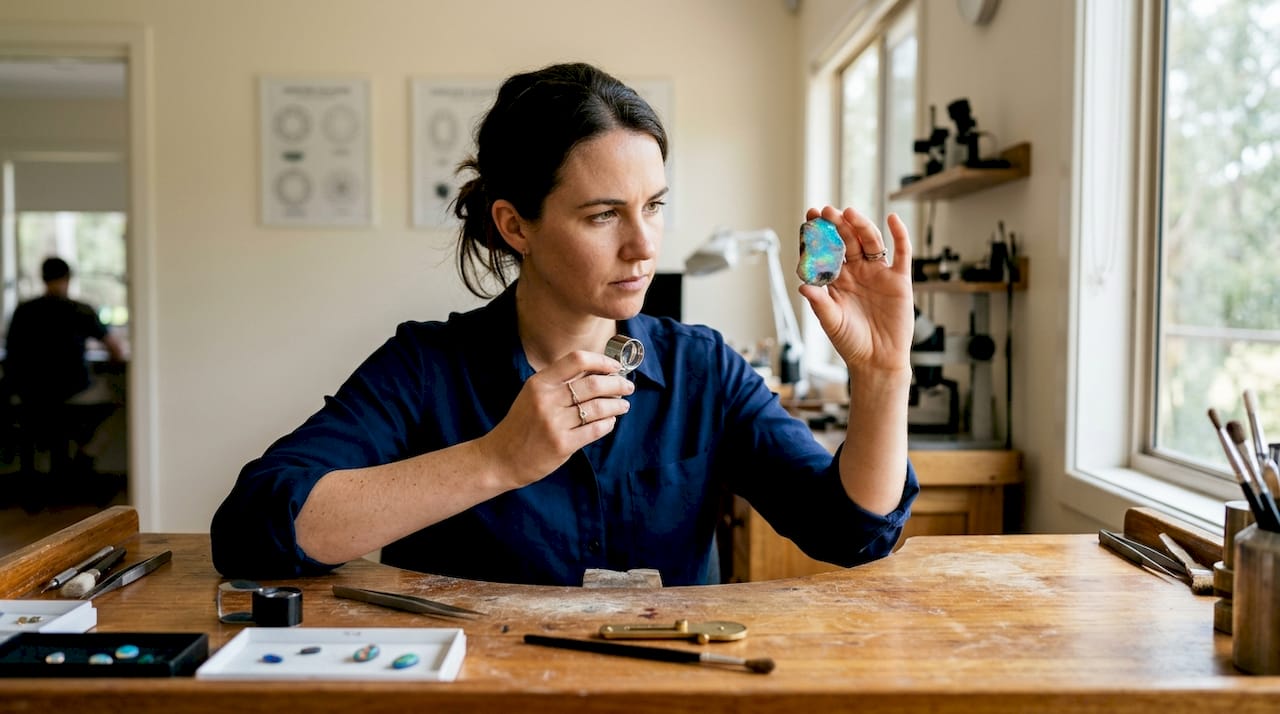
Under a 10x jeweler’s loupe, natural opal reveals inclusions, potch (the colorless or gray base material), and sometimes traces of host rock. These are not flaws. They are proof of geological formation. A stone that looks perfectly clean and uniform under magnification is almost certainly synthetic or glass.
The side profile of a stone tells a critical story for anyone evaluating real opal rings vs fake ones. A solid natural opal has a continuous, uninterrupted body from top to bottom. Any flat, perfectly straight horizontal seam running through the stone’s profile signals a doublet or triplet construction, not a solid gem.
- Play-of-color: Irregular, directional, and patchy in genuine stones. Uniform and synchronized in fakes.
- Surface texture: Waxy and cool to the touch. Plastic or glass fakes feel warmer and smoother.
- Inclusions: Natural potch, host rock, or minor inclusions confirm earth formation.
- Side profile: No seam line in solid opals. A flat horizontal seam means assembled construction.
- Weight: Real opal feels denser than glass imitations of equivalent size.
Pro Tip: Hold the stone under a single directional light source and slowly rotate it. A genuine opal’s color will shift, fade, and reappear in different zones. A fake’s color will flash uniformly across the entire surface at once.
How do you distinguish natural opal from lab-grown synthetic opal?
Lab-grown opals are chemically identical to natural ones. Both are hydrated silica. That shared chemistry makes them harder to separate than glass fakes, but the structural differences are clear once you know where to look.
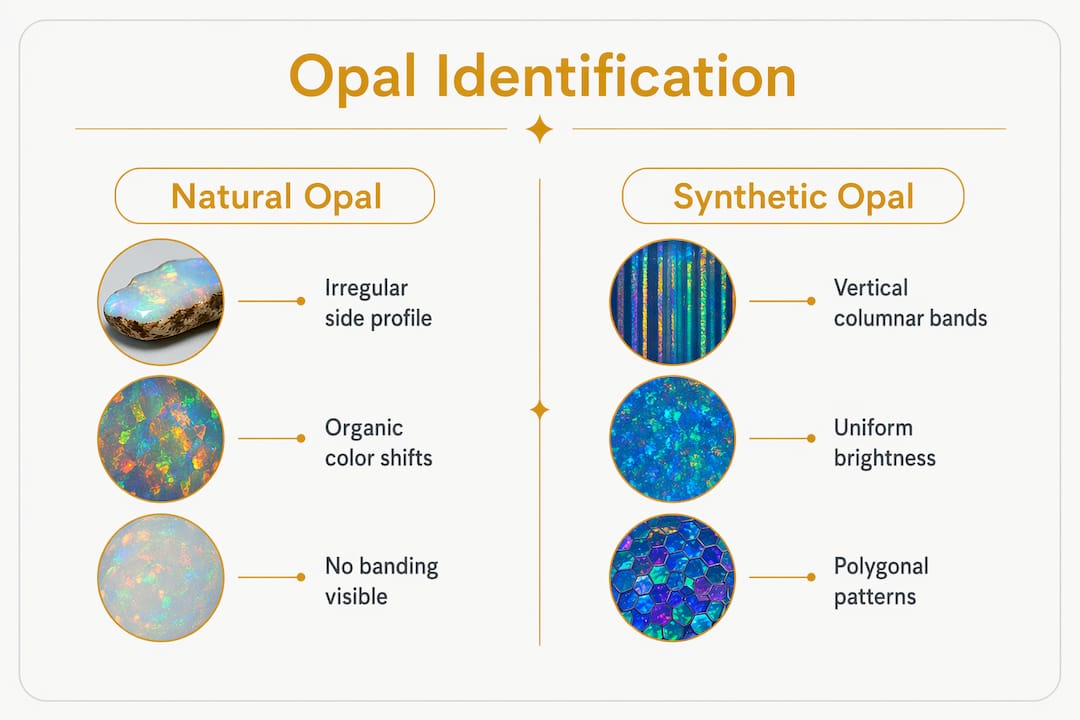
Synthetic opals show vertical columnar growth bands when viewed from the side. These bands form because silica spheres settle in ordered columns during laboratory growth. Natural opals form in irregular underground pockets over millions of years, producing chaotic internal structures with no such columns. Tilt a suspect stone sideways under a light and look for those vertical striations. Their presence is a definitive indicator of synthetic origin.
Magnification reveals even more. Under 10x magnification, synthetic opals display a repeating polygonal pattern that gemologists call “lizard skin” or “chicken wire.” The cells are uniform in size and arranged in a geometric grid. Natural opals show irregular, jagged patches of color that vary dramatically in size and shape. That variation is the hallmark of genuine formation.
Color behavior under rotation is another reliable test. Synthetic opals’ brightness is too uniform, and large color flashes appear synchronized across the stone. Natural opal’s play-of-color is directional and patchy. One zone may blaze red while another stays dark. That uneven, living quality is what makes authentic opal so captivating and so difficult to fake.
| Feature | Natural opal | Synthetic opal |
|---|---|---|
| Side profile | Irregular, no banding | Vertical columnar bands |
| Magnified pattern | Irregular, jagged patches | Uniform “lizard skin” grid |
| Color behavior | Directional, patchy, uneven | Synchronized, uniformly bright |
| Inclusions | Potch, host rock present | Typically clean, no inclusions |
| UV fluorescence | Soft glow in most Australian whites | Minimal or absent |
For definitive identification, Raman spectroscopy performed by a gemological lab separates natural from synthetic with certainty. That test is worth pursuing for any stone with significant value.
Pro Tip: A macro camera on a modern smartphone can substitute for a loupe in a pinch. Zoom in on the surface and look for the geometric grid pattern. If the color patches look like a honeycomb, the stone is almost certainly synthetic.
How do you identify assembled opals like doublets and triplets?
Assembled opals are not outright fakes. They contain real opal material. The problem arises when sellers present them as solid stones without disclosure, because the price difference is substantial.
A doublet consists of a thin slice of genuine opal glued to a dark backing material, often ironstone or black potch. The dark backing intensifies the color, making the stone appear richer than it would on its own. A triplet adds a clear dome of glass or quartz on top of the opal slice, protecting the thin layer and magnifying the color further. Both constructions are legitimate products when sold honestly.
The price gap is significant. A doublet costs 40%–70% less than a comparable solid opal. A triplet costs 60%–90% less. If a stone’s price seems remarkably low for its apparent color and size, assembled construction is the most likely explanation.
Detection follows a clear process:
- View the side profile. Solid opals lack the perfectly flat, straight horizontal seam that runs through doublets and triplets. That seam is the glue line between layers.
- Examine the backing. Doublets often show a flat, uniformly dark or black base when viewed from below. Solid opals have a more varied, natural underside.
- Look for the glue line under magnification. A 10x loupe reveals the adhesive layer between the opal slice and its backing, especially near the girdle of the stone.
- Check for a dome effect. Triplets have a pronounced curved cap that sits visibly above the opal layer. The cap magnifies the color, which can look almost too vivid compared to solid stones.
- Submerge in water briefly. Water makes the glue line in doublets and triplets more visible by increasing contrast between layers.
For any piece priced above $3,000, formal lab reports from GIA, AGL, or GRS confirm whether a stone is solid, assembled, or treated. That documentation protects your investment and removes all ambiguity. Australianopaldirect provides full disclosure on every piece it sells, which is the standard every reputable seller should meet.
What at-home tests help verify opal authenticity?
Practical tests at home can reinforce or challenge your initial visual assessment before you commit to a purchase or seek professional evaluation.
- Side profile inspection. No equipment needed. Simply tilt the stone sideways under a light. A seam line means assembled construction. No seam means solid. This single check resolves the majority of doublet and triplet questions.
- UV light test. Most natural Australian white opals show a soft fluorescent glow under a UV lamp. Many synthetic opals fluoresce minimally or not at all. UV light also illuminates glue lines in assembled stones, making them glow differently from the opal layer above.
- Water absorption test. This test applies only to hydrophane opals, primarily Ethiopian stones. Real hydrophane opals absorb water and become translucent when submerged. Synthetics and glass imitations do not change. Australian opals are generally not hydrophane, so this test does not apply to Lightning Ridge or Coober Pedy stones.
- Loupe or macro camera inspection. A 10x jeweler’s loupe reveals the “lizard skin” pattern in synthetics, glue lines in assembled stones, and natural inclusions in genuine opals. A smartphone macro lens works as a field substitute.
- Temperature and weight feel. Real opal stays cool longer than glass and feels denser. This is a supporting clue, not a definitive test on its own.
Avoid any test that involves scratching, heating, or applying chemicals. These methods damage the stone and are unnecessary when visual and UV tests provide sufficient evidence. Seek a professional opal authentication guide when a stone’s value justifies the cost of a lab report.
Pro Tip: Combine the side profile check, UV test, and loupe inspection together. Each test alone can mislead. All three pointing in the same direction gives you a confident answer.
Key Takeaways
Genuine opal identification relies on recognizing natural irregularities in play-of-color, internal structure, and side profile that synthetic, assembled, and imitation stones cannot replicate.
| Point | Details |
|---|---|
| Play-of-color is the first test | Genuine opal shows irregular, directional color shifts; fakes flash uniformly across the whole surface. |
| Side profile reveals assembly | A flat horizontal seam in the profile means doublet or triplet construction, not a solid stone. |
| Magnification exposes synthetics | The “lizard skin” grid pattern under 10x magnification confirms synthetic origin every time. |
| Price signals assembled stones | Doublets cost 40%–70% less than solid opals; triplets cost 60%–90% less. |
| Lab reports protect high-value buys | Seek GIA, AGL, or GRS certification for any opal piece priced above $3,000. |
Why learning to read an opal is one of the best skills a collector can build
I have spent years studying opals, and the single most common mistake I see buyers make is trusting color alone. A vivid, kaleidoscopic stone catches the eye and the heart before the mind has a chance to ask questions. That emotional pull is exactly what unscrupulous sellers count on.
The truth is that learning to identify a genuine opal is not difficult. It requires patience, a loupe, and the willingness to look at a stone from every angle, not just the face-up view that jewelers display. The side profile check takes ten seconds. The UV test takes thirty. Together, they eliminate the vast majority of fakes and assembled stones before you spend a dollar.
Lab-grown opals deserve honest acknowledgment here. They are real silica. They are beautiful. They are not fraudulent products when labeled correctly. My concern is with the sellers who omit that label and charge solid-opal prices for synthetic material. A buyer who knows the “lizard skin” pattern cannot be fooled by that omission.
The value of authentic opal is inseparable from its origin. A stone formed over millions of years in the Australian outback carries something a laboratory cannot manufacture: geological time, organic chaos, and the particular beauty that comes from imperfection. Learning to recognize that imperfection is not just a protective skill. It is a way of deepening your appreciation for what makes opal extraordinary.
For high-value stones, always pursue a lab report. The cost is modest relative to the peace of mind it provides. For everyday purchases, the at-home methods covered here are genuinely sufficient when applied carefully and in combination.
— Renee
Genuine Australian opals, sourced with full transparency
Knowing how to identify a real opal is only half the equation. The other half is buying from a source that makes that knowledge unnecessary to protect yourself.
Australianopaldirect sources every stone directly from miners in Lightning Ridge, Coober Pedy, and Queensland, cutting out the intermediaries who introduce ambiguity about origin and construction. Every piece in the collection is a solid, earth-mined opal with full disclosure on type, origin, and characteristics. Collectors who want to go deeper will find expert guidance on buying opal rings online and a curated selection of certified pieces that speak for themselves. When the stone is genuine and the seller is transparent, the only thing left to do is fall in love with the color.
FAQ
What does fake opal look like compared to real?
Fake opal typically shows uniform, synchronized color flashes across the entire surface, with no directional variation. Real opal displays irregular, patchy color that shifts differently depending on the viewing angle.
How do you test opal authenticity under UV light?
Hold the stone under a UV lamp in a darkened room. Most natural Australian white opals emit a soft fluorescent glow, while many synthetic opals show little or no fluorescence. UV light also reveals glue lines in doublet and triplet constructions.
How can you tell if blue opal is real?
Apply the same tests used for any opal: check the side profile for seam lines, examine the surface under magnification for the “lizard skin” synthetic pattern, and assess whether the color shifts organically with angle. Blue color alone does not confirm authenticity.
Is a doublet opal considered fake?
A doublet is not fake. It contains a genuine slice of opal bonded to a backing material. The issue arises only when a seller presents a doublet as a solid opal without disclosure, which misrepresents both the construction and the value.
When should you get a professional opal report?
Seek a formal lab report from GIA, AGL, or GRS for any opal piece priced above $3,000, or for rare patterns like black opal from Lightning Ridge. Professional certification confirms identity, origin, and treatment status with certainty.
Recommended
- How to Distinguish Opal Origins for Authentic Jewelry - Australian Opal Direct
- How to Authenticate Australian Opals for Genuine Value - Australian Opal Direct
- How to Spot Rare Opals: Expert Guide for Authentic Finds - Australian Opal Direct
- How to Identify Real Opal: Complete Collector’s Guide - Australian Opal Direct