The ultimate guide to gifting rare opals: collector's secrets
Posted by AOD on 15th Apr 2026
The ultimate guide to gifting rare opals: collector’s secrets

Gifting a rare opal is one of the most profound gestures a connoisseur can make. Unlike a diamond or sapphire, an opal carries a living fire inside it, a kaleidoscopic brilliance that shifts with every angle of light. Yet that very beauty creates a collector’s dilemma: how do you choose a stone that is genuinely rare, ethically sourced, and worthy of the occasion? The risks are real. Markets are flooded with synthetic composites, misrepresented origins, and unstable stones that lose their luster within years. This guide walks you through every step, from understanding what makes an opal truly rare, to verifying its authenticity, customizing its presentation, and avoiding the pitfalls that even experienced collectors sometimes miss.
Table of Contents
- Understanding rare opal value for gifting
- Ethical sourcing: Ensuring provenance and responsibility
- How to verify authenticity: Certificates and inspection tips
- Choosing, customizing, and presenting the opal gift
- Collectors’ mistakes: Pitfalls and expert tips
- What most miss about gifting rare opals: A collector’s perspective
- Discover authentic Australian opals for your next gift
- Frequently asked questions
Key Takeaways
| Point | Details |
|---|---|
| Select Australian black opals | Prioritize ethically sourced Lightning Ridge or Coober Pedy opals for top rarity and value. |
| Always verify authenticity | Request certificates from reputable labs, confirming origin, treatments, and quality factors. |
| Ethics and provenance matter | Collectors highly value a documented, responsible sourcing journey over raw carat size alone. |
| Presentation adds meaning | Include a provenance card, care directions, and a personal note to make your opal gift unforgettable. |
Understanding rare opal value for gifting
Not all opals are created equal, and for a gift to carry lasting meaning, you need to understand what separates a collector-grade stone from a decorative trinket. Rarity in opals is defined by a precise set of attributes, each one contributing to the gem’s market value and emotional resonance.
The most important factor is body tone, rated on a scale from N1 (jet black) to N9 (crystal clear). Black opals rated N1 to N4 are the most prized because their dark background makes the play-of-color, the optical phenomenon caused by diffracted light through silica spheres, appear vivid and intense. Lightning Ridge black opals are the recognized collector standard worldwide, commanding prices that reflect their scarcity and brilliance.
Key quality factors to evaluate:
- Brightness: A stone rated B1 (brilliant) outshines a B5 (dull) in every setting
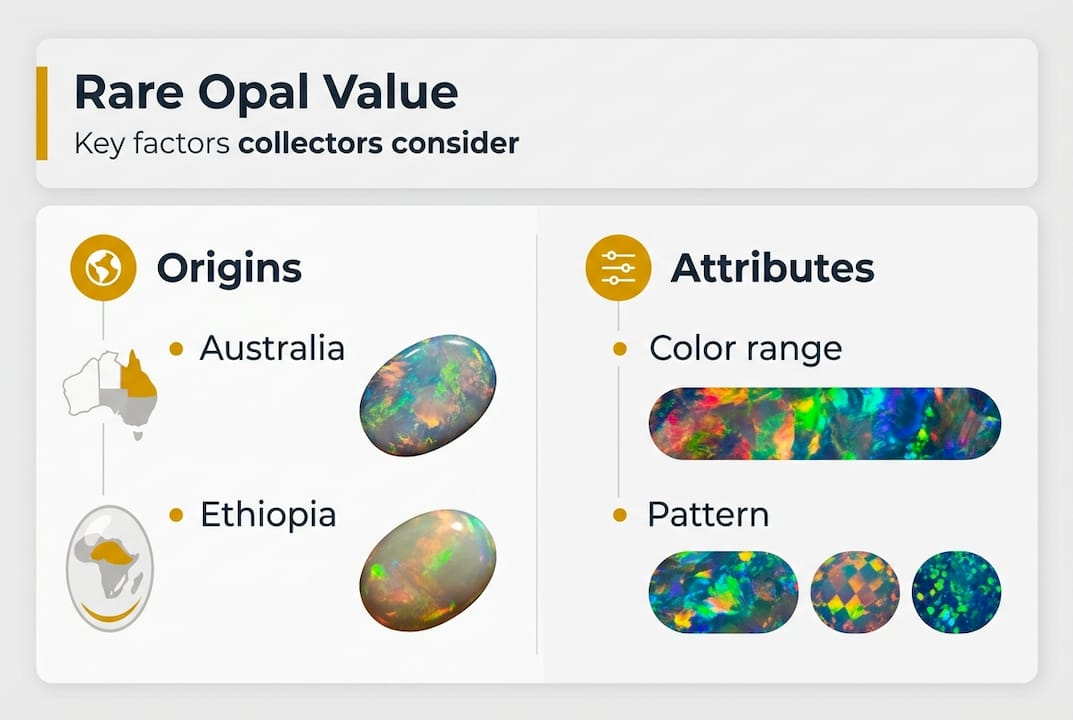
- Pattern: Harlequin (large, mosaic-like color patches) and rolling flash are the rarest; pinfire (tiny, scattered dots) is more common
- Color range: Red and orange coloration is rarest; blue and green are more abundant
- Stability: Avoid stones with visible crazing (fine surface cracks) or internal fractures
- Carat weight: Larger solid opals above 5 carats with strong play-of-color are exponentially rarer
For choosing Australian opals, the origin alone adds provenance value that collectors deeply appreciate. White opals from Coober Pedy and boulder opals from Queensland each occupy distinct niches in the collector market.
| Opal type | Body tone | Typical price range (per carat) | Collector demand |
|---|---|---|---|
| Lightning Ridge black | N1-N4 | $500-$15,000+ | Very high |
| Boulder opal | N3-N6 | $100-$3,000 | High |
| White/crystal opal | N7-N9 | $10-$300 | Moderate |
The IGS opal guide notes that key quality factors include brightness, pattern, color range, minimal inclusions, and size. Consulting a collector opal guide before purchasing ensures you speak the language of rarity fluently.
Pro Tip: Always view an opal under incandescent, fluorescent, and natural daylight before purchasing. A stone that only performs under one light source is far less valuable than one that dances in all three.
Ethical sourcing: Ensuring provenance and responsibility
With value established, the next step is to ensure your opal’s story and source are as impeccable as its appearance. For today’s discerning collector, ethical sourcing is not a bonus feature. It is a baseline requirement.
Australian opal mining operates under strict government regulation, covering worker safety, land rehabilitation, and environmental standards. Ethical sourcing from regulated Australian mines ensures labor standards and environmental rehabilitation that simply cannot be guaranteed in less regulated markets. When you gift an Australian opal, you are gifting a stone with a clean conscience attached.
The contrast with Ethiopian opals is worth understanding clearly. Ethiopian hydrophane opals, while visually striking, absorb water and can crack or lose color when exposed to moisture or temperature changes. Australian opals are superior for ethics and provenance versus Ethiopian hydrophane opals, which often come from supply chains with limited transparency.
| Feature | Australian opal | Ethiopian opal |
|---|---|---|
| Stability | High (non-hydrophane) | Lower (absorbs water) |
| Provenance transparency | Regulated, traceable | Often unclear |
| Mining ethics | Government regulated | Variable |
| Collector preference | Strongly preferred | Niche market |
Reputable Australian opal sources and certification indicators:
- Lightning Ridge, New South Wales (black opals)
- Coober Pedy, South Australia (white and crystal opals)
- Quilpie and Winton, Queensland (boulder opals)
- Certificates naming the specific mine or region
- Dealers with direct-miner relationships and traceable supply chains
Understanding opal supply chain ethics is increasingly important as collectors grow more sophisticated. Reading about ethical opal sourcing and opal provenance before you buy will sharpen your ability to ask the right questions.
“A gemstone’s beauty is only as deep as the integrity of its journey from earth to hand.”
How to verify authenticity: Certificates and inspection tips
After sourcing an ethically mined Australian opal, you must ensure its authenticity before gifting. A certificate of authenticity is your first line of defense, but not all certificates carry equal weight.
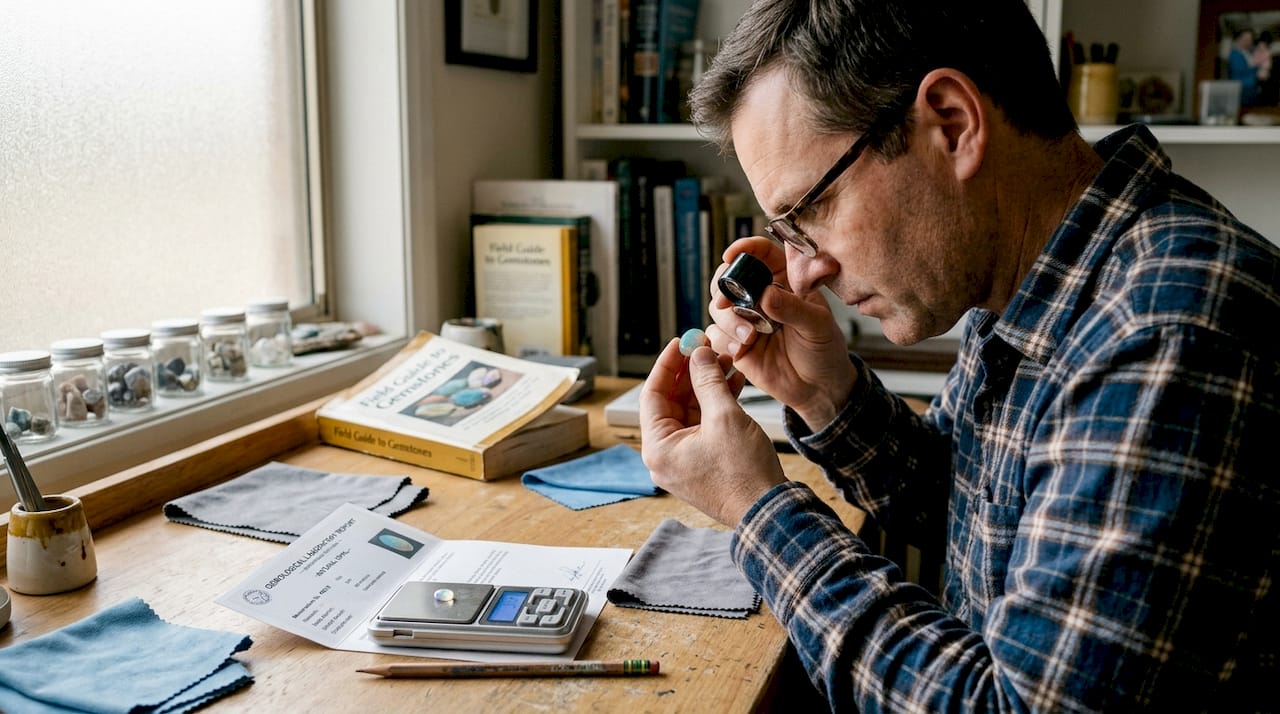
A credible certificate should include: the opal’s origin (specific mine or region), carat weight, body tone rating, play-of-color description, any treatments applied, and the issuing laboratory’s name and accreditation. Reputable gemological labs include the Gemological Institute of America (GIA), Symmetry Gemmological, and the Gemmological Association of Australia. Always obtain certificates of authenticity with full details and use reputable labs such as GIA to validate your purchase.
Step-by-step inspection process:
- Examine the stone under a loupe (10x magnification) for crazing, cracks, or potch lines
- Rotate the opal under incandescent light to assess the full play-of-color
- Check the back of the stone: a solid opal shows natural ironstone or potch, not a glued layer
- Request high-resolution video from multiple angles if purchasing online
- Confirm the stone is not a doublet (thin opal slice glued to dark backing) or triplet (opal slice sandwiched under a dome cap)
Less than 10% of global opals are Lightning Ridge black opals, making verification essential before any significant purchase. Buy from dealers offering high-resolution images and videos, clear return policies, and no misleading terminology.
Reviewing an opal authentication guide and understanding opal certification meaning will help you read certificates with confidence. External resources like opal certificates explain exactly what each field on a certificate means.
Pro Tip: Ask the seller to photograph the opal next to a ruler and a color reference card. This simple step reveals true size, color accuracy, and whether the images have been digitally enhanced.
Choosing, customizing, and presenting the opal gift
Armed with authenticity, it’s time to make your gift personal and memorable. The right opal for a gift is not necessarily the most expensive stone. It is the one that resonates most deeply with the recipient’s personality and the occasion’s meaning.
Matching opal type to recipient:
- Bold, dramatic personalities: Lightning Ridge black opal with rolling flash or harlequin pattern
- Understated elegance: White crystal opal from Coober Pedy with soft pastel play-of-color
- Nature lovers: Queensland boulder opal with ironstone matrix still visible
- Milestone occasions (anniversaries, significant birthdays): Large solid black opal above 3 carats
For gifting, select stable solid opals with personal meaning and avoid doublets or triplets unless the recipient specifically requests them. Solid opals are more durable, more valuable, and far more appreciated by anyone who understands gemstones.
Customization ideas that elevate the gift:
- Commission a custom gold or silver setting that reflects the recipient’s style
- Add a personal engraving on the band or pendant bail
- Include a handwritten story card describing the opal’s mine origin and the miner’s journey
- Pair the opal with a matching care kit (soft cloth, storage pouch, care instructions)
- Present the certificate inside a quality display box alongside the jewelry
For deeper inspiration on opals for gifting, exploring curated collections designed around gifting occasions can reveal options you might not have considered. The opal gift-buying tips from the IGS also offer useful guidance on setting styles and metal pairings.
Pro Tip: Always include a personal note or provenance story for collectors. A stone with a named origin, a known miner, and a clear journey from earth to hand is worth far more emotionally than a stone of identical quality with no story attached.
Collectors’ mistakes: Pitfalls and expert tips
Even with all steps followed, some gifting pitfalls can undermine even the best intentions. Here’s how to avoid them.
Common mistakes collectors make when gifting opals:
- Ignoring visible inclusions or crazing because the color is spectacular
- Purchasing unverified Ethiopian opals based on price alone
- Skipping the certificate of authenticity to save time or money
- Storing the opal in a dry environment, which can cause cracking over time
- Buying based on a seller’s emotional storytelling without independent verification
- Overlooking the difference between a solid opal and a composite stone
Crazing, cracks, and unstable opal sources sharply reduce value, often rendering a visually impressive stone nearly worthless on the secondary market. A stone that cracks within two years of gifting is not a gift. It is a disappointment.
Expert collectors also warn against treating rare opals as liquid investments. The secondary market for opals is far less standardized than for diamonds or colored sapphires, and resale values depend heavily on provenance documentation and condition.
“Rare opals are best understood as heirlooms first and investments second. The collector who gifts with that mindset will never disappoint.”
Red flags to watch for include sellers using terms like “museum quality” without independent certification, vague origin descriptions such as “Australian-style” rather than a named mine, and prices that seem too low for the claimed rarity. Reviewing the collector mistakes guide will sharpen your ability to recognize these warning signs before they cost you.
What most miss about gifting rare opals: A collector’s perspective
Most people approach gifting a rare opal the same way they approach buying any luxury item: they focus on price, size, and visual impact. Those are not wrong priorities, but they miss the deeper layer that separates a merely expensive gift from one that becomes a cherished keepsake for generations.
The collectors who give the most meaningful opal gifts are not necessarily those with the largest budgets. They are the ones who invest time in the stone’s story. A Lightning Ridge black opal with a named miner, a documented extraction date, and a certificate from a recognized lab carries a narrative weight that no price tag can replicate. When you present that stone alongside its story, you are not just giving a gemstone. You are giving a piece of the earth’s history.
Certified, ethically sourced opals are far more appreciated by knowledgeable recipients than flashy stones with murky histories. Gifts that include clear origin documentation and thoughtful care guidance invite long-term appreciation and emotional connection. Consulting expert collector tips before finalizing your choice ensures that every detail, from body tone to presentation box, reflects the reverence this extraordinary gemstone deserves.
Discover authentic Australian opals for your next gift
Ready to transform your next gift into a legacy keepsake? At Australian Opal Direct, every stone in our collection is ethically sourced from Australia’s most celebrated mining regions, including Lightning Ridge, Coober Pedy, and Queensland. We work directly with miners to bring you authenticated, certified opals with full provenance documentation, so you never have to wonder about a stone’s story.
Browse our curated selection of certified Australian Opals and discover pieces accompanied by certificates of authenticity, detailed origin notes, and care guidance. Whether you are seeking a rare black opal for a milestone occasion or a luminous boulder opal for a discerning collector, our collection is built for those who understand that the finest gifts carry both beauty and integrity.
Frequently asked questions
What makes an opal rare and valuable for collectors?
Rarity and value depend on body tone (N1-N4), brightness, rare patterns like harlequin, red coloration, minimal flaws, and origin. Lightning Ridge black opals are the recognized collector standard, commanding the highest prices in the market.
Why is ethical sourcing and verification so important for rare opals?
Ethical sourcing from regulated Australian mines ensures labor standards and environmental rehabilitation, while verification through certificates and reputable labs protects both the buyer and the long-term value of the stone.
How can I be sure the opal I’m gifting is genuine?
Request a certificate of authenticity from a reputable gemological lab and review details like origin, weight, and any treatments. Always obtain certificates of authenticity with full details before completing any purchase.
Is it better to give a solid opal or a doublet/triplet?
Solid opals are the most stable and valued choice for gifting. Select stable solid opals with personal meaning, and avoid doublets or triplets unless the recipient has specifically requested them.
What should I include when presenting an opal as a gift?
Present the opal with its certificate of authenticity, care instructions, and a personal note sharing its origin story. Including the stone’s provenance details elevates the gift from beautiful to truly unforgettable.
Recommended
- How to Spot Rare Opals: Expert Guide for Authentic Finds - Australian Opal Direct
- Indicators of Opal Rarity: Key Signs for Collectors - Australian Opal Direct
- Luxury gemstone gifting: authenticity, opal value, tips - Australian Opal Direct
- 7 Exquisite Examples of Rare Opals for Collectors - Australian Opal Direct