What Is Play-of-Light in Gemstones: A Collector's Guide
Posted by AOD on 3rd Jul 2026
What Is Play-of-Light in Gemstones: A Collector’s Guide
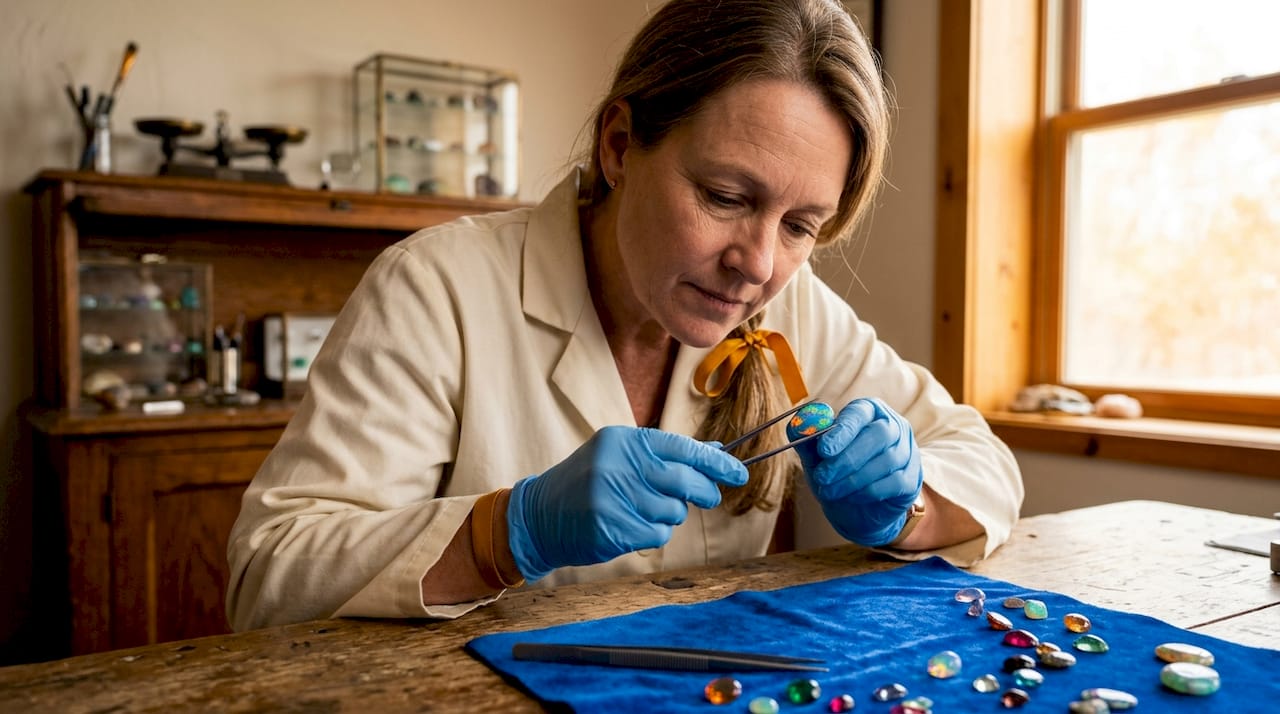
TL;DR:
- Play-of-color is an optical effect in gemstones caused by internal Bragg diffraction within a silica sphere lattice, creating shifting spectral colors. It is most characteristic of precious opal, with color depending on silica sphere size and internal structure, and is distinct from other effects like fire or luster. Recognizing genuine play-of-color requires viewing the stone from multiple angles under varied lighting conditions.
Play-of-light in gemstones is defined as an optical phenomenon where shifting spectral colors appear to dance across a stone’s surface as the viewing angle or light source changes. The industry standard term for this effect is play-of-color, recognized by gemologists worldwide, though “play-of-light” describes the same visual experience. This phenomenon occurs because of Bragg diffraction inside the stone, where microscopic silica spheres arranged in a three-dimensional lattice split white light into its spectral components. Precious opal is the most celebrated example, but the science behind it connects to a broader world of optical phenomena gemstones collectors prize above almost everything else.
What causes play-of-light in gemstones?
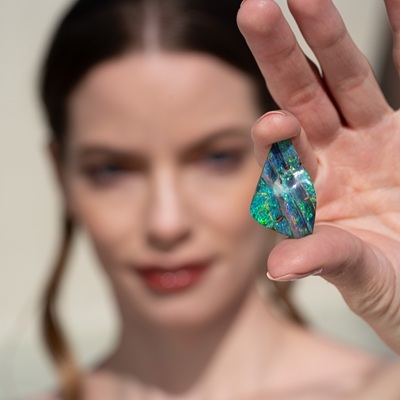
The mechanism behind play-of-color is precise and elegant. Inside a precious opal, uniform silica spheres arrange themselves in a repeating three-dimensional grid during the stone’s formation over millions of years. When light enters the opal, it encounters this lattice and undergoes Bragg diffraction, a process where light waves reflect off the layers of spheres and interfere with each other. That interference separates white light into its component spectral colors, producing the vivid reds, greens, blues, and violets that collectors find so captivating.
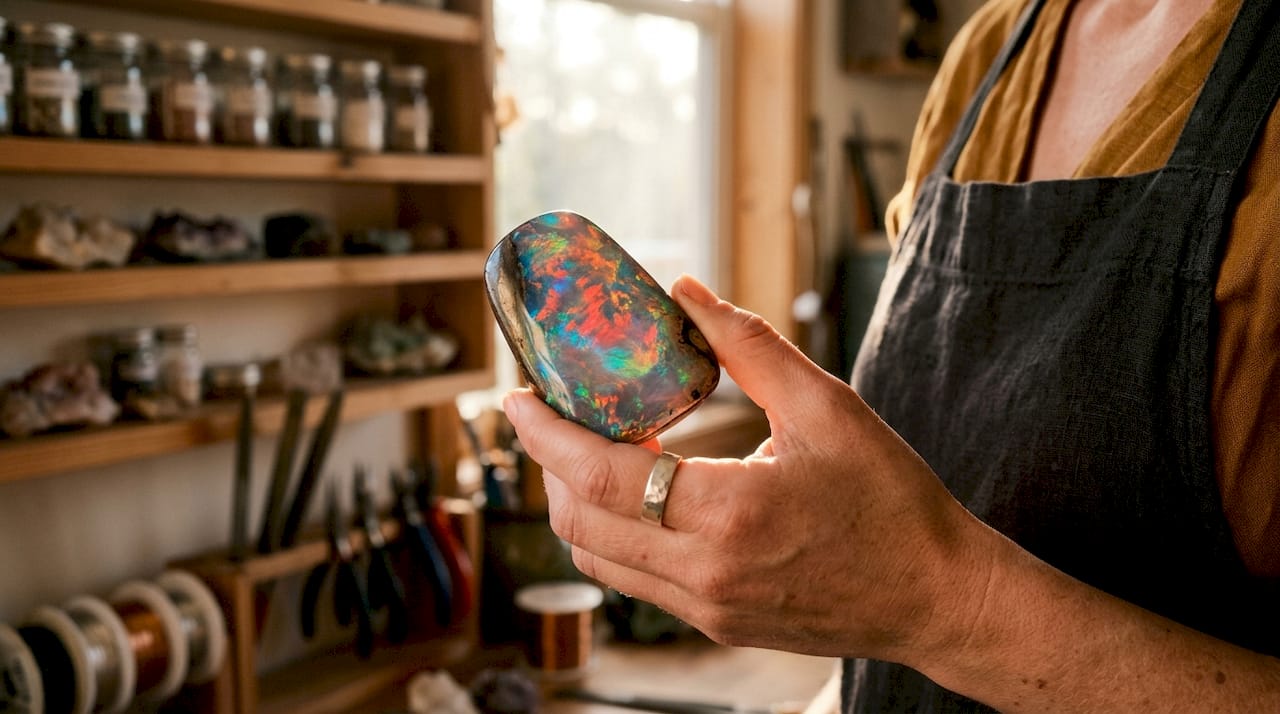
The color you see depends directly on the size of those silica spheres. Spheres with diameters in the 150–200 nanometer range produce blue and violet hues. Spheres in the 250–300 nanometer range produce red and orange hues, which are the rarest and most valuable colors in the opal world. This is why a Lightning Ridge black opal blazing with red fire commands prices that can exceed those of fine diamonds per carat.
The shifting quality of play-of-color comes from the geometry of diffraction itself. As you tilt the stone or move it under a light source, the angle at which light strikes the silica lattice changes, and different wavelengths satisfy the Bragg diffraction conditions. The colors literally shift before your eyes, which is why play-of-color is orientation-dependent and why gemologists evaluate a stone from multiple angles before assigning a quality grade.
- Silica sphere diameter controls the color range produced
- Lattice uniformity determines the sharpness and brightness of colors
- Viewing angle changes which wavelengths diffract toward the observer
- Sphere arrangement depth affects how much of the stone appears to glow
Pro Tip: Hold a suspected play-of-color opal under a single incandescent bulb and rotate it slowly through 180 degrees. Genuine internal diffraction produces colors that shift smoothly and appear to come from within the stone, not from its surface.
How does play-of-light differ from other optical phenomena?
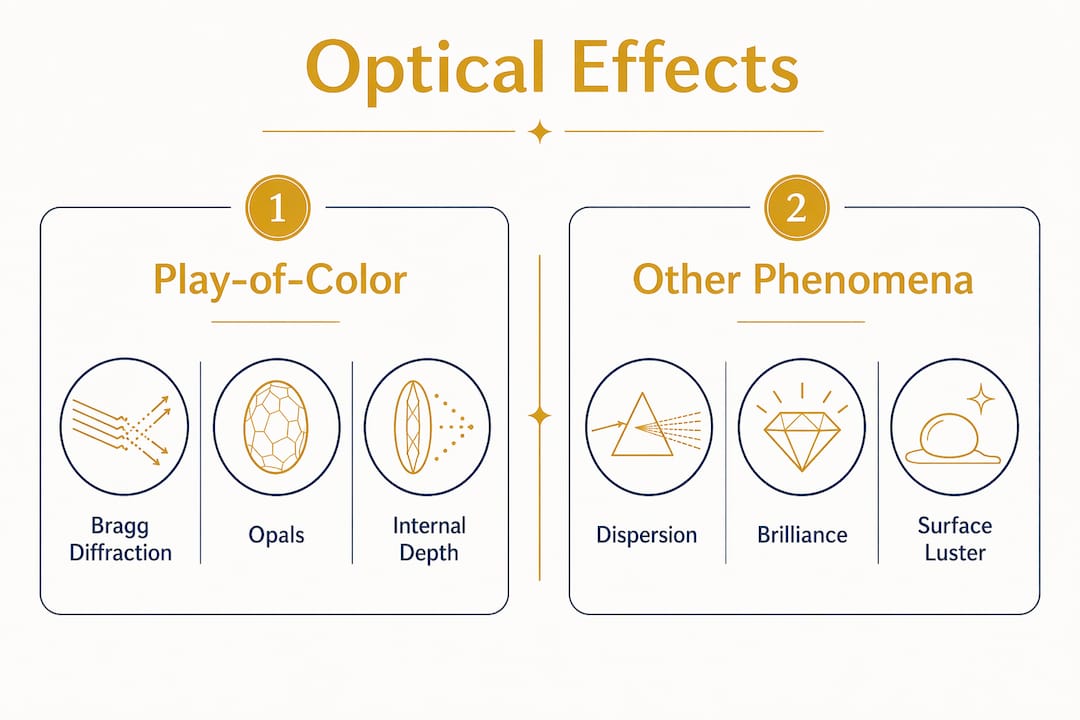
Collectors frequently confuse play-of-color with fire, brilliance, luster, and iridescence. These are related but distinct optical phenomena gemstones display through different physical mechanisms. Understanding the differences protects you from misvaluing stones and sharpens your eye considerably.
Fire, or dispersion, is the effect seen in diamonds when white light splits into rainbow flashes as it passes through facets cut at precise angles. Fire depends entirely on the gem’s cut geometry and the stone’s refractive index. Play-of-color in opal requires no cutting at all. It is a product of the stone’s internal crystal structure, present whether the opal is polished into a cabochon or left as a rough specimen. That distinction matters enormously for valuation.
Brilliance relates to white light reflection, the total amount of light a gem returns to the eye after entering and bouncing off internal facets. Scintillation describes the sparkle pattern that changes as the stone moves. Neither brilliance nor scintillation involves wavelength separation at the structural level. They are surface and facet effects, not internal diffraction effects.
Surface luster is perhaps the most common source of confusion. Luster describes how light reflects off a gem’s outer surface, producing effects described as vitreous, resinous, or adamantine. Play-of-color, by contrast, originates deep inside the stone. A gem with high luster can look spectacular, but that shine disappears when you view it from a steep angle. True play-of-color persists and shifts as you move, because the light is interacting with the internal structure, not the surface.
| Optical effect | Physical mechanism | Gem examples |
|---|---|---|
| Play-of-color | Internal Bragg diffraction via silica lattice | Precious opal |
| Fire (dispersion) | Light splitting through facets by refractive index | Diamond, zircon |
| Brilliance | White light reflection from internal facets | Diamond, sapphire |
| Luster | Light reflection off gem surface | Pearl, quartz |
| Iridescence | Thin-film interference at surface or near-surface layers | Moonstone, pearl |
Pro Tip: To separate luster from play-of-color, view the stone under diffuse lighting (like an overcast sky). Surface luster diminishes significantly. Genuine internal play-of-color remains vivid and shifting regardless of lighting type.
Which gemstones display play-of-light beyond opals?
Precious opal holds the title for true internal play-of-color, but several other gemstones display related optical phenomena that collectors should recognize and appreciate on their own terms. Each effect arises from a different internal structure, and each carries its own valuation logic.
- Precious opal: The only gemstone with true play-of-color caused by Bragg diffraction through a silica sphere lattice. Stones from Lightning Ridge, Coober Pedy, and Queensland each display distinct color patterns shaped by their specific geological formation conditions.
- Rainbow moonstone: Displays adularescence, a blue to white glow that appears to float beneath the surface. This effect comes from thin alternating layers of feldspar minerals that scatter light. The effect is beautiful but does not shift through the full spectral range the way opal does.
- Labradorite: Shows labradorescence, a metallic iridescence in blues, golds, and greens caused by light interference between twinned crystal layers. The colors are bold but limited to the stone’s specific lamellar structure.
- Cat’s eye chrysoberyl: Exhibits chatoyancy, a single band of reflected light that moves across the stone’s surface as it rotates. This effect comes from parallel needle-like inclusions, not a diffraction lattice.
- Pearls: Display orient, a soft iridescence caused by light interference through the thin aragonite platelets of nacre. The effect is subtle and surface-oriented rather than deeply internal.
The key distinction for collectors is depth. Opal’s play-of-color appears to emanate from within the stone, giving it a three-dimensional quality that other optical effects rarely match. That perceived depth is a direct consequence of the three-dimensional diffraction lattice inside the gem, which creates a fundamentally different visual experience from the two-dimensional surface effects in most other stones.
How to evaluate play-of-light quality in gemstone collecting
Evaluating play-of-color requires a structured approach. Gemologists and experienced collectors assess several criteria simultaneously, and understanding each one helps you make confident decisions whether you are buying, appraising, or simply deepening your appreciation.
-
Color range and vibrancy. A stone displaying the full spectral range, red through violet, commands the highest prices. Red and orange play-of-color are the rarest because they require the largest silica spheres. A stone showing only blue or green is still beautiful but sits lower on the value scale.
-
Coverage across the stone’s face. Play-of-color that covers the entire visible face of a stone is more desirable than color concentrated in one corner or band. Full-face coverage indicates a more uniform silica lattice throughout the gem.
-
Multi-angle visibility. Directional play-of-color, visible from only one angle, is less prized than color that plays across multiple viewing positions. Rotate the stone through at least 180 degrees to assess how the color behaves. A stone that goes dark from certain angles loses significant value.
-
Pattern character. Patterns like harlequin (a mosaic of angular color patches), rolling flash (broad sweeping color waves), and pinfire (tiny points of color) each carry different collector appeal. Harlequin is the rarest and most sought after.
-
Background body tone. In black opals from Lightning Ridge, a dark body tone makes play-of-color appear more vivid by contrast. Crystal opals with a transparent body show color from both the front and back, creating a different but equally prized effect.
Distinguishing genuine play-of-color from surface reflections or simulants requires viewing under varied lighting. Common opal lacks an ordered silica structure and shows no play-of-color at all. Synthetic and imitation opals often show color that is too uniform or too regular, lacking the organic variation of natural stone. The opal quality checklist published by Australianopaldirect walks through these criteria in practical detail for buyers at every experience level.
Pro Tip: Evaluate play-of-color under three different light sources: incandescent, LED, and natural daylight. A genuine high-quality opal shifts color beautifully under all three. Stones that only perform under one type of lighting may have limited color range or structural inconsistencies.
Caring for an opal preserves its optical properties over time. Opals contain water within their silica structure, and extreme dryness can cause crazing, a network of fine cracks that disrupts the lattice and kills the play-of-color. Store opals away from heat sources and consider occasional light oiling for doublets and triplets. Solid natural opals are more stable but still benefit from careful handling.
Key Takeaways
Play-of-color in precious opal is a three-dimensional internal diffraction effect caused by Bragg diffraction through a silica sphere lattice, making it fundamentally different from fire, brilliance, or luster in other gemstones.
| Point | Details |
|---|---|
| Scientific cause | Bragg diffraction through uniform silica spheres creates shifting spectral colors inside precious opal. |
| Sphere size controls color | Smaller spheres (150–200nm) produce blue hues; larger spheres (250–300nm) produce rare red and orange hues. |
| Distinct from fire and luster | Fire depends on facet geometry; luster is a surface effect; play-of-color originates deep within the stone’s lattice. |
| Multi-angle visibility adds value | Stones showing vivid color across multiple viewing angles are significantly more valuable than directional stones. |
| Evaluation requires varied lighting | Assessing play-of-color under incandescent, LED, and natural daylight reveals the true quality and range of the effect. |
Why the science of play-of-color changed how I look at every opal
I spent years admiring opals the way most collectors do: drawn to the colors, trusting my gut, buying what moved me. Then I spent time genuinely understanding the Bragg diffraction mechanism, and it changed everything. Knowing that the red flash in a Lightning Ridge black opal exists because silica spheres formed at exactly the right diameter over millions of years makes that color feel less like luck and more like a geological miracle.
The most common misconception I encounter among collectors is the assumption that all opals show play-of-color. They do not. Common opal lacks the ordered silica structure that makes diffraction possible, and no amount of polishing or cutting will create that effect if the internal lattice is absent. Buyers who do not know this distinction routinely overpay for common opal or underpay for precious opal they cannot recognize.
The other thing I have learned is that play-of-color is genuinely alive in a way that diamond fire is not. Diamond fire is beautiful, but it is engineered. A cutter produces it by following mathematical angles. Opal’s play-of-color is the product of pure geological chance, which is why no two stones are identical. That irreproducibility is what makes a great opal genuinely irreplaceable. Once you understand that, you stop comparing opals to diamonds and start appreciating them as something categorically different.
My advice to any collector is to learn the science first, then let the beauty hit you. You will never look at a stone the same way again.
— Renee
Australianopaldirect: where play-of-color comes alive
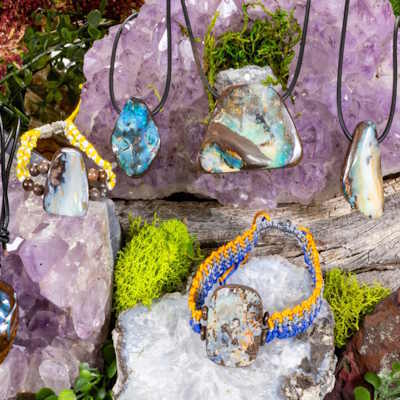
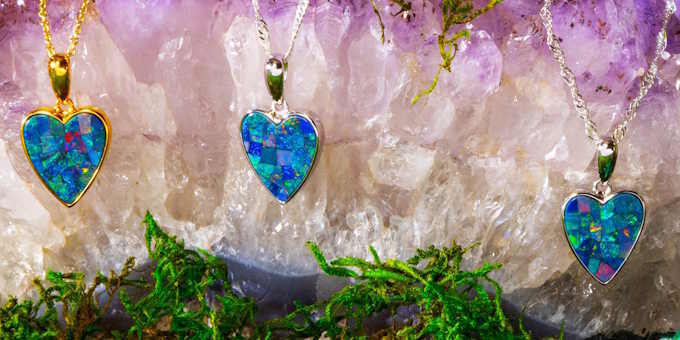
Australianopaldirect sources genuine earth-mined opals directly from Australia’s most celebrated mining regions, including Lightning Ridge, Coober Pedy, and Queensland. Every stone in the collection is selected for the quality and character of its play-of-color, from vivid rolling flash patterns to the rare harlequin mosaic that collectors spend years searching for.
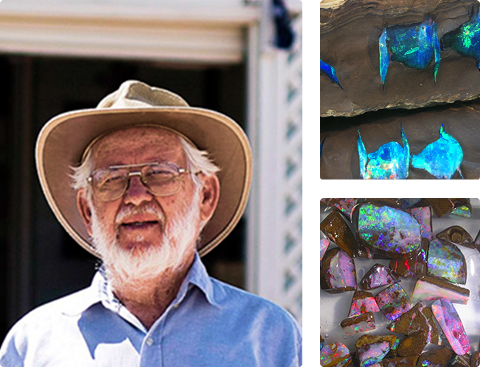
Each piece comes with direct-miner provenance, so you know exactly where your stone formed and how it was brought to the surface. The opal color science behind each gem is documented, giving collectors the context to appreciate what they are holding. Browse the full collection at Australianopaldirect and find a stone whose play-of-color speaks to you. Free shipping, complimentary insurance, and a 90-day warranty come standard on every purchase.
FAQ
What is play-of-light in gemstones?
Play-of-light, known in gemology as play-of-color, is an optical phenomenon where shifting spectral colors appear inside a gemstone as the viewing angle or light source changes. It is caused by Bragg diffraction through a microscopic internal lattice of silica spheres, and it is most fully expressed in precious opal.
Is play-of-color the same as fire in diamonds?
No. Fire is dispersion, the splitting of white light into spectral colors as it passes through a faceted gem’s geometry. Play-of-color in opal is caused by internal Bragg diffraction through a silica lattice and requires no faceting at all.
Why do some opals show red and others only blue?
The color produced depends on the diameter of the silica spheres inside the stone. Spheres in the 150–200 nanometer range diffract blue and violet light. Spheres in the 250–300 nanometer range diffract red and orange light, which is why red play-of-color is the rarest and most valuable.
How can I tell if an opal’s color is genuine play-of-color or just surface reflection?
View the stone under diffuse lighting and rotate it slowly. Genuine play-of-color originates inside the stone and shifts smoothly through multiple colors as the angle changes. Surface reflections are static and disappear when the light source moves. You can also verify opal authenticity by checking provenance documentation from a reputable source.
Do all opals display play-of-color?
No. Only precious opal, which contains an ordered three-dimensional silica sphere lattice, displays play-of-color. Common opal, also called potch opal, lacks this internal structure and shows no shifting colors regardless of how it is cut or polished.
Recommended
- What is nature’s light opal? A collector’s guide - Australian Opal Direct
- Explaining Gemstone Diversity: A Collector’s Guide - Australian Opal Direct
- Defining Gemstone Connoisseurship: A Collector’s Guide - Australian Opal Direct
- Luxury gemstone standards explained: Expert guide for collectors - Australian Opal Direct