Opal Quality Checklist: A Gem Collector's Guide
Posted by AOD on 12th Jun 2026
Opal Quality Checklist: A Gem Collector’s Guide
TL;DR:
- Evaluate opals by starting with vivid play-of-color, assessing its intensity, spectral range, and pattern for maximum value.
- Inspect the stone’s side profile to confirm solid construction, and consider body tone, clarity, cut, and origin to determine overall quality and durability.
An opal quality checklist is a step-by-step evaluation framework that helps jewelry enthusiasts and gem collectors assess the value and authenticity of opals before purchase. Play-of-color is the primary quality screen before any other factor is considered, according to GIA. Secondary criteria include body tone, clarity, cut, carat weight, origin, and treatment status. Whether you are acquiring a Lightning Ridge black opal or a Coober Pedy crystal, applying a structured opal quality assessment protects your investment and sharpens your eye for what truly makes these stones extraordinary.
1. The opal quality checklist: start with play-of-color
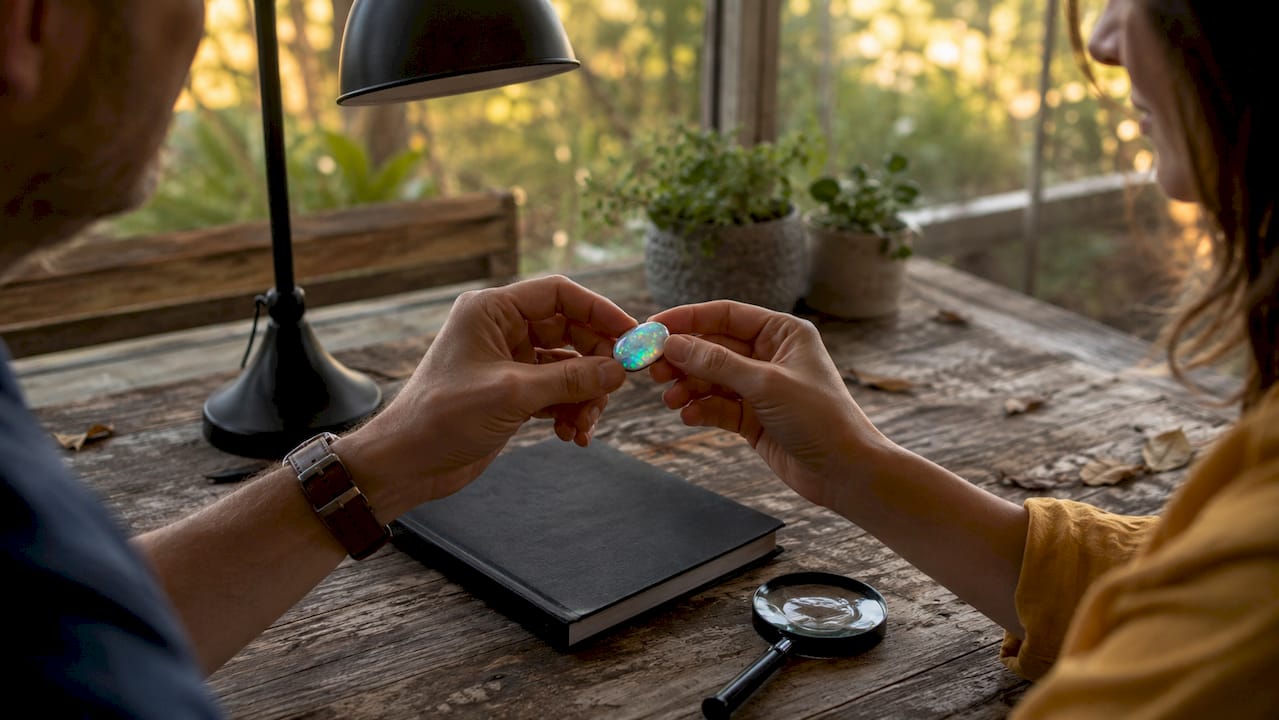
Play-of-color is the kaleidoscopic brilliance that separates precious opal from every other gemstone on earth. GIA identifies play-of-color as the single most important factor in opal grading criteria, evaluated before tone, clarity, or cut. This means your checklist must open here, not at carat weight or origin.
When examining play-of-color, assess three qualities in sequence: vividness (how intense and saturated the colors appear), spectral range (how many distinct colors flash across the stone), and pattern (the visual arrangement of those color zones). Broad, rolling patterns like “rolling flash” or “harlequin” command the highest premiums. Pinfire patterns, where tiny dots of color scatter across the surface, are beautiful but generally less valuable than large, sweeping color fields.
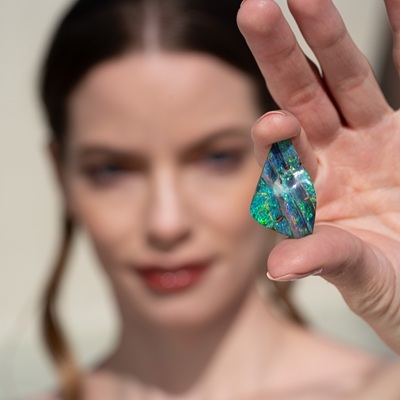
Opal color performance is directional and dynamic, meaning the stone’s brilliance shifts dramatically with viewing angle. Tilt the stone slowly in every direction and watch whether color appears from multiple orientations or only from one narrow angle. An opal that fires from all directions is worth significantly more than one that shows color only face-up.
- Test under natural daylight near a window for the truest color read
- Test under a neutral LED or incandescent light to check consistency
- Avoid fluorescent lighting, which flattens color and misleads assessment
- Rotate and tilt the stone through at least 180 degrees of movement
Pro Tip: If you cannot inspect the stone in person, request a slow-motion video filmed under both natural and artificial light. A reputable seller will always provide this without hesitation.
2. Assessing body tone: the backdrop that shapes brilliance
Body tone is the base color of the opal, the canvas against which play-of-color performs. The Australian opal grading system uses a body tone scale running from N1 (jet black) through N9 (colorless or white). Darker body tones in the N1 to N4 range make play-of-color appear more vivid and saturated, which is why black opals from Lightning Ridge are among the most prized gems in the world.
Understanding the four primary opal types by tone helps you calibrate your expectations:
- Black opal (N1 to N4): The rarest and most valuable Australian type, sourced predominantly from Lightning Ridge, New South Wales. The dark body creates extraordinary contrast for spectral color.
- Dark opal (N4 to N6): A transitional tone that still enhances color play significantly, often more accessible in price than true black opals.
- White or light opal (N7 to N9): The most common type, mined extensively at Coober Pedy. Color play is present but appears softer against the pale background.
- Crystal opal: Transparent to semi-transparent body with no dominant tone, allowing light to pass through and illuminate color from within.
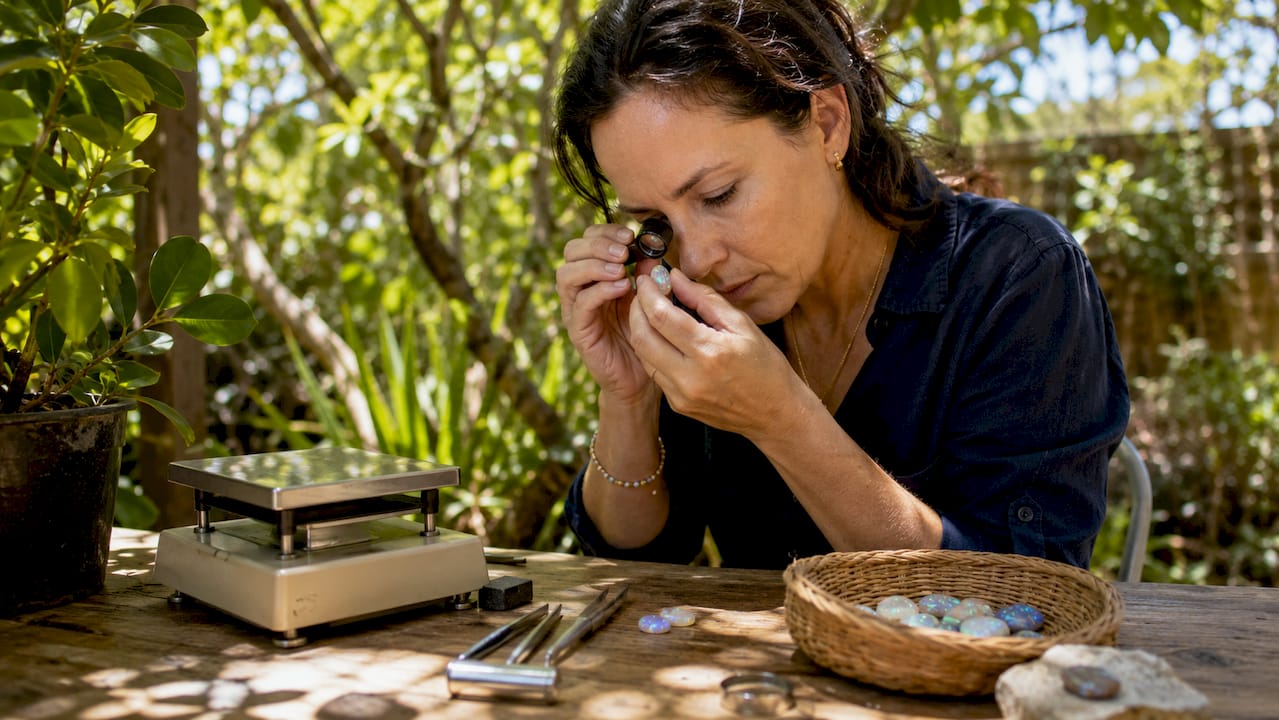
Clarity is assessed alongside body tone. Cracks, crazing, chips, and inclusions all reduce value and compromise durability. Crazing, the network of fine surface fractures that can develop when an opal dries out or experiences thermal shock, is particularly damaging. Inspect the surface under a 10x loupe in good light, looking for any web-like lines, pits, or cloudy patches. An opal with visible crazing should be avoided entirely, regardless of how striking its color play appears.
3. Cut quality and how it affects color presentation
Cut is the human contribution to an opal’s beauty, and a well-executed cut amplifies everything nature provided. GIA recommends a symmetrical, well-rounded domed cabochon as the optimal form for most opals, because the curved dome focuses and reflects light across the color layer most effectively. A flat or uneven top scatters light poorly and diminishes the visual impact of even exceptional play-of-color.
When evaluating cut, look for a smooth, polished surface free of scratches or flat spots. The dome should rise evenly from all sides without lopsided elevation. The girdle, the edge where the top meets the base, should be consistent in thickness. An asymmetrical or poorly centered stone signals rushed craftsmanship and will sit awkwardly in a setting, increasing the risk of chipping.
Freeform cuts are acceptable and sometimes desirable for natural, organic shapes that preserve the maximum color-bearing material. What matters is that the cutter made deliberate choices to honor the stone’s color layer rather than simply maximizing carat yield at the expense of beauty.
4. Carat weight as a value factor
Carat weight affects opal value but ranks well below play-of-color and body tone in the hierarchy of opal grading criteria. A 2-carat black opal with vivid rolling flash is worth many times more than a 10-carat white opal with weak, patchy color. Size matters most when all other quality factors are equal between two stones.
For collectors, carat weight becomes significant at the upper end of the scale. Large, high-quality solid opals above 5 carats are genuinely rare, and the price per carat increases non-linearly as size grows. A 10-carat Lightning Ridge black opal with strong color is not simply five times the value of a 2-carat equivalent. It can be ten to twenty times more valuable because stones of that size and quality are extraordinarily scarce.
5. Origin and what it means for quality and care
Origin is a meaningful opal value factor because different mining regions produce stones with distinct characteristics, durability profiles, and market reputations. Australian opals are generally more valuable than Ethiopian opals, partly due to their geological stability and the long-established reputation of fields like Lightning Ridge, Coober Pedy, and Queensland’s boulder opal country.
Ethiopian opals are hydrophane, meaning they absorb water. This property can temporarily alter their appearance and, with repeated cycles of wetting and drying, may cause crazing over time. They require more careful handling and should not be submerged or exposed to prolonged moisture. Knowing the origin of your stone before purchase lets you make informed decisions about setting style, care routines, and long-term durability. You can explore how to distinguish opal origins in detail to sharpen this skill before buying.
6. Solid, doublet, or triplet: identifying stone construction
Stone construction is one of the most consequential items on any opal quality checklist, yet it is frequently misunderstood by new collectors. Solid opal is the most valuable form; doublets and triplets are assembled constructions that must be disclosed by any ethical seller. The price difference between a solid opal and a doublet of similar appearance can be dramatic.
| Construction type | Description | Value and durability |
|---|---|---|
| Solid opal | Single, natural opal stone with no added layers | Highest value; most durable for everyday wear |
| Doublet | Thin opal slice bonded to a dark backing material | Lower cost; moisture can weaken adhesive over time |
| Triplet | Thin opal slice between a dark base and a clear dome cap | Most affordable; most vulnerable to water and heat |
Inspect the side profile of any opal to detect layering. A solid opal shows consistent material from top to base. A doublet or triplet reveals a visible seam or color change where the layers meet. This side-view inspection is non-negotiable. Surface-only examination is routinely misleading because a well-made doublet can look identical to a solid stone when viewed face-up.
Pro Tip: Always ask the seller for written disclosure of stone construction before completing any purchase. A reputable dealer will confirm this in writing without being asked twice.
7. Common mistakes to avoid when evaluating opals
Even experienced collectors make errors when assessing opal quality. These are the most frequent and costly:
- Relying on photographs alone. Static images cannot capture the dynamic, directional nature of play-of-color. A stone that photographs brilliantly may show weak color in hand, and vice versa. Always request video.
- Checking only one angle. An opal that fires from a single face-up position may go dark when tilted. True quality shows color across multiple viewing angles.
- Confusing doublets for solids. Without a side-profile inspection, assembled stones are easily mistaken for solid opals, especially in closed-back settings that deliberately conceal the base.
- Ignoring moisture sensitivity. Doublets and triplets require special handling: avoid water submersion and sudden temperature changes that can weaken adhesives and cause irreversible damage.
- Skipping a durability check. Opal rates 5.5 to 6.5 on the Mohs hardness scale, making it softer than sapphire or ruby. Setting style matters enormously. Bezel settings protect the stone far better than prong settings for everyday wear.
- Purchasing without documentation. For significant acquisitions, request a gemological certificate or independent appraisal. GIA and other recognized labs provide reports that confirm origin, treatment status, and quality characteristics. The opal gemstone selection process outlined by Australianopaldirect walks through this documentation step in practical detail.
Key takeaways
A thorough opal quality assessment begins with play-of-color, moves through body tone, clarity, cut, carat weight, origin, and construction type, and concludes with verification of treatment status and seller disclosure.
| Point | Details |
|---|---|
| Play-of-color comes first | Assess vividness, spectral range, and pattern before any other quality factor. |
| Darker body tone increases value | N1 to N4 black opals produce the most vivid color contrast and command the highest prices. |
| Side-profile inspection is mandatory | Always view the stone from the side to detect doublet or triplet construction before buying. |
| Origin affects durability | Ethiopian hydrophane opals require special care; Australian opals are generally more stable. |
| Documentation protects buyers | Request written seller disclosure and, for significant purchases, a gemological certificate. |
What I’ve learned from years of watching collectors buy opals
The single most common regret I hear from opal buyers is that they moved too fast. They saw a photograph, fell in love with the color, and clicked purchase without asking for a video, a side-profile image, or a construction disclosure. The stone arrived and the color was either weaker than expected or the “solid” opal turned out to be a doublet in a closed-back setting.
My honest advice is this: treat the checklist as a sequence, not a suggestion. Start with play-of-color because GIA is right that nothing else matters if the color is weak. Then work through body tone, clarity, cut, and construction in that order. Each step either confirms your interest or gives you a reason to pause.
The buyers who consistently acquire exceptional stones are not necessarily the most knowledgeable. They are the most patient. They ask for videos. They request side-profile images. They ask sellers directly whether the stone is solid, doublet, or triplet, and they expect a written answer. When a seller hesitates on any of those requests, that hesitation is itself information.
One more thing worth saying plainly: do not let the beauty of an opal override your judgment. These stones are genuinely extraordinary, and their colors can inspire an almost irrational desire to own them immediately. That emotional response is part of what makes opals so special. It is also exactly the condition in which careful buyers make their worst decisions. Use the checklist. Let it slow you down just enough to buy with confidence rather than regret.
— Renee
Discover authentic Australian opals at Australianopaldirect

Australianopaldirect sources its stones directly from miners at Lightning Ridge, Coober Pedy, and Queensland, which means every opal in the collection arrives with full provenance and construction disclosure already in place. The selection spans solid opal earrings, rings, and necklaces, each piece accompanied by the kind of transparency that makes applying your opal quality checklist straightforward rather than stressful. For collectors who want the confidence of knowing exactly what they are buying, Australianopaldirect’s direct-miner relationships and 90-day warranty make it a natural starting point. You can also find beautifully crafted opal-set designs, such as this dainty cluster gemstone ring from Melt’m Jewelry, to see how quality stones translate into finished jewelry.
FAQ
What is the most important factor in opal quality?
Play-of-color is the primary quality factor in opal grading, according to GIA. It is assessed before body tone, clarity, cut, or carat weight.
How do I tell a solid opal from a doublet or triplet?
Inspect the stone from the side rather than face-up. A solid opal shows consistent material throughout, while doublets and triplets reveal a visible seam or layer change where the components are bonded together.
Does opal origin affect value?
Yes. Australian opals from Lightning Ridge, Coober Pedy, and Queensland are generally more valuable and durable than Ethiopian opals, which are hydrophane and absorb moisture, requiring more careful handling.
What lighting should I use to evaluate opal play-of-color?
Test the stone under natural daylight and a neutral LED or incandescent light source. Fluorescent lighting flattens color and produces misleading impressions of a stone’s true brilliance.
What is crazing and why does it matter?
Crazing is a network of fine surface fractures that develops when an opal dries out or experiences thermal shock. It seriously reduces both the durability and the value of the stone and cannot be repaired.
Recommended
- Grading opal quality: expert guide for collectors 2026 - Australian Opal Direct
- Opal Gemstone Selection Process: A Step-by-Step Guide - Australian Opal Direct
- Key features of opal investment pieces: a collector’s guide - Australian Opal Direct
- Opal Jewelry Selection Guide: Choose Your Perfect Gem - Australian Opal Direct