Defining Gemstone Connoisseurship: A Collector's Guide
Posted by AOD on 25th Jun 2026
Defining Gemstone Connoisseurship: A Collector’s Guide

TL;DR:
- Gemstone connoisseurship combines scientific analysis, geological knowledge, and aesthetic intuition to evaluate rare stones beyond lab reports. It considers provenance, treatment, and visual appeal, shaping long-term collection value. Developing expertise requires personal inspection, understanding treatment disclosure, and building trusted relationships over time.
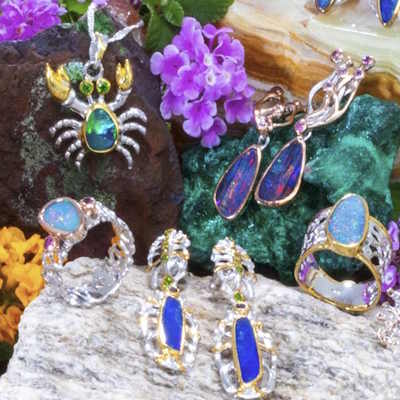
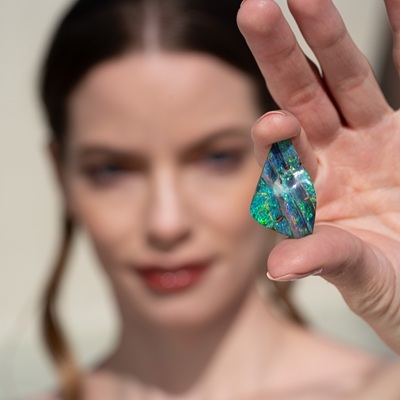
Gemstone connoisseurship is defined as the practiced synthesis of scientific analysis, geological knowledge, and refined aesthetic intuition applied to the evaluation of rare and valuable stones. The term “connoisseurship” itself predates modern gemology, rooted in the art world’s tradition of expert attribution and qualitative judgment. In the gemstone world, defining gemstone connoisseurship means going far beyond a laboratory certificate. It means reading a stone the way a musician reads a score: technically fluent, but also deeply feeling. Provenance, treatment history, optical character, and the ineffable quality of a stone’s visual presence all factor into the connoisseur’s assessment. Australianopaldirect, which sources earth-mined opals directly from Lightning Ridge, Coober Pedy, and Queensland, operates precisely within this tradition, where the story behind each stone matters as much as its grading report.
What distinguishes gemstone connoisseurship from basic gemology?
Gemology is the science of identifying and grading gemstones using standardized laboratory methods. Connoisseurship is what happens when that science meets a trained eye and a cultivated sense of beauty. The two disciplines are not opposed; they are sequential. Gemology provides the foundation. Connoisseurship builds the structure above it.
A gemologist uses refractometers, spectroscopes, and microscopes to confirm species, detect treatments, and measure physical properties. A connoisseur uses all of that, and then asks a different set of questions. Does this ruby’s color sing under incandescent light? Does this sapphire’s origin add cultural weight to its value? Is the play-of-color in this opal a fleeting shimmer or a deep, rolling fire that commands the room?
Colored stones mark the domain where gemology evolves into connoisseurship, precisely because no universal grading alphabet exists for colored stones. A diamond’s quality can be reduced to four letters and a number. A Paraíba tourmaline’s electric neon blue cannot. That gap is where connoisseurship lives.
Key distinctions include:
- Treatment assessment: Connoisseurs evaluate not just whether a stone was treated, but whether that treatment was disclosed, how it affects long-term stability, and what premium an untreated equivalent would command.
- Origin and provenance: A Kashmir sapphire and a Sri Lankan sapphire may share identical lab grades, yet the Kashmir stone carries a geographic mystique that drives its price far higher.
- Collector intention: Connoisseurs distinguish between stones acquired for personal joy, for collection building, and for investment, and they evaluate accordingly.
- Aesthetic salience: Visual appeal under real-world lighting conditions, not just lab conditions, shapes a connoisseur’s final judgment.
Pro Tip: When reviewing a grading report, treat it as a starting point, not a verdict. The report tells you what the stone is. Your eye tells you whether it is worth owning.
What are the core criteria for gemstone quality assessment?
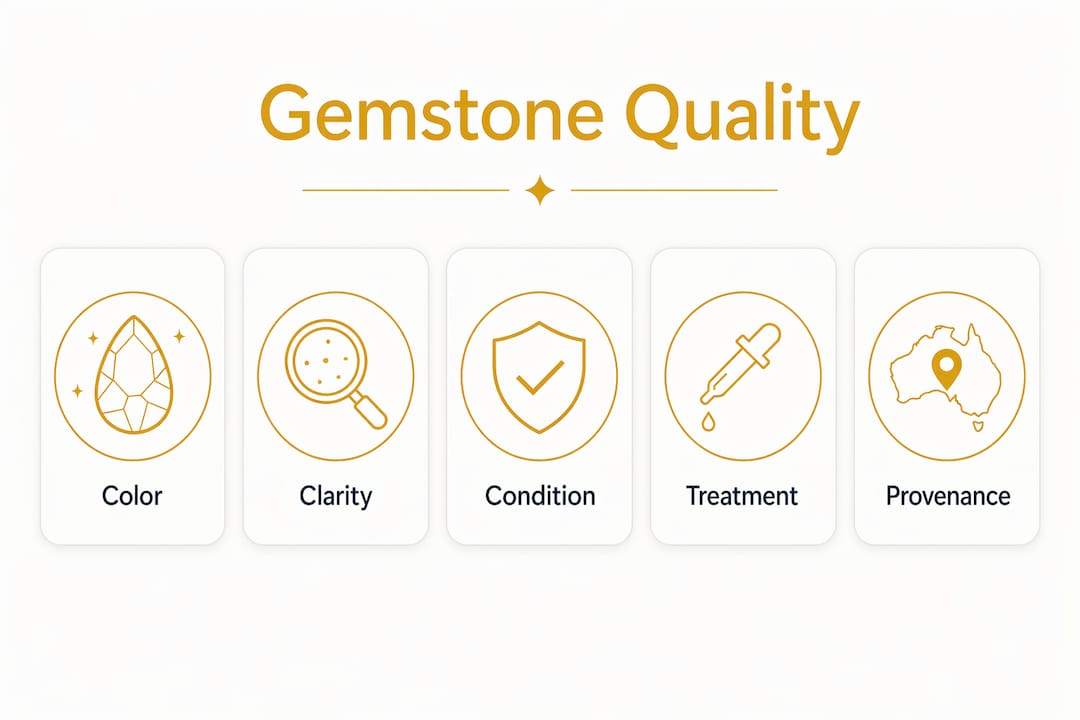
Gemstone evaluation at the connoisseur level operates across three interlocking dimensions: color, clarity, and condition. Each dimension contains layers that standard grading reports only partially capture.
Color: hue, tone, and saturation
Color is the single most powerful driver of value in colored gemstones. Connoisseurs assess hue (the stone’s position on the color wheel), tone (lightness to darkness), and saturation (the intensity and purity of the color). A ruby with a slightly purplish hue is worth considerably less than a pure red stone of identical weight. Honest color evaluation requires viewing a stone under multiple light sources: daylight, incandescent, and fluorescent. Color that collapses under one light source signals a stone of limited connoisseur appeal.
Clarity and character
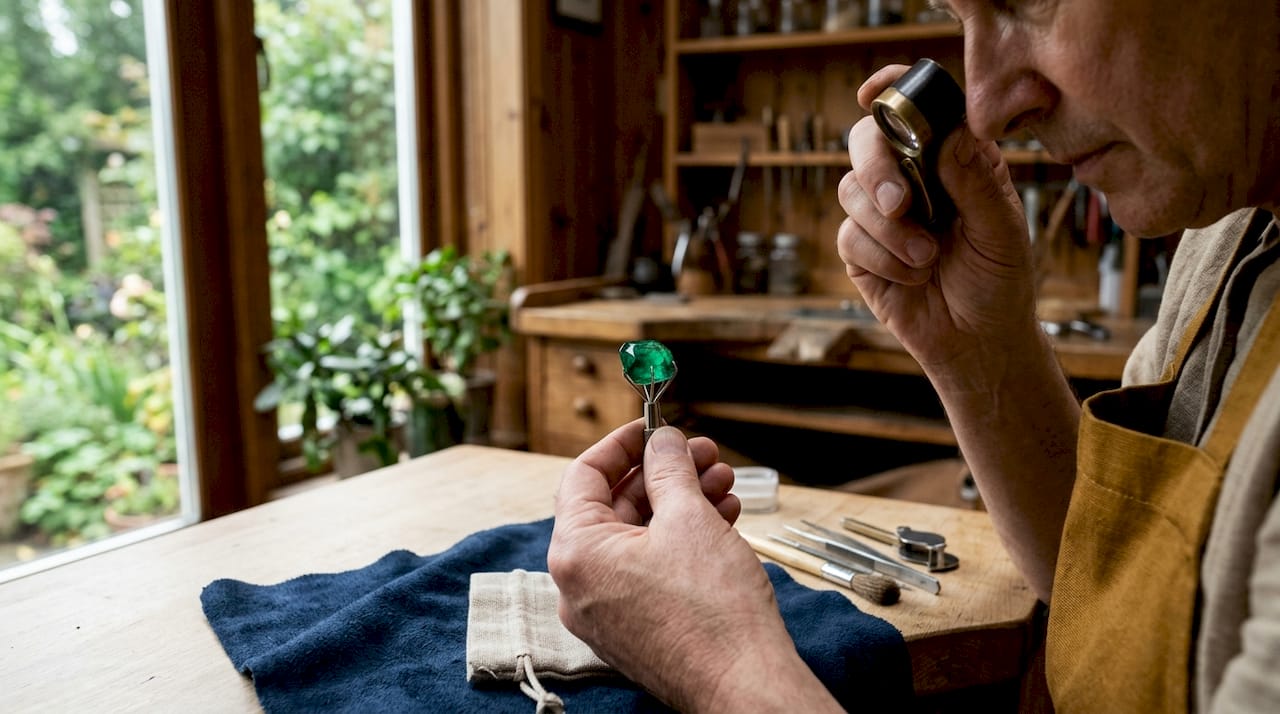
Clarity expectations differ by stone species. Emeralds are accepted with inclusions that would disqualify a diamond. Aquamarines are expected to be eye-clean. Connoisseurs understand these species-specific norms and apply them accordingly. Some inclusions, called “jardin” in emeralds or “silk” in sapphires, actually confirm natural origin and add character rather than diminish value.
Laboratory reports and treatment disclosure
Gemmological Profiles from labs like Gübelin verify authenticity, confirm geographic origin, and document treatment history. These reports are indispensable for high-value acquisitions. They do not, however, capture beauty. A stone can carry a flawless report and still lack the visual magnetism that makes a connoisseur reach for their wallet.
Unheated or untreated stones command premiums of 50% or more over treated equivalents. That premium reflects genuine rarity. Nature produces far fewer stones with exceptional color in their natural state than the market supplies after heat treatment.
The table below summarizes how connoisseurs weight each evaluation factor:
| Evaluation factor | What it reveals | Connoisseur priority |
|---|---|---|
| Hue, tone, saturation | Color quality and species conformity | Very high |
| Treatment disclosure | Rarity and long-term value stability | Very high |
| Geographic origin | Provenance premium and cultural weight | High |
| Clarity and inclusions | Natural character vs. eye-clean standard | Medium to high |
| Laboratory certification | Authentication and market credibility | High |
Pro Tip: Always examine a stone loose before purchase. Loose stone inspection reveals inclusions, chips, and color distribution that metal settings routinely conceal.
How does connoisseurship shape gemstone collecting strategies?
Serious collectors use connoisseurship as a filter, not just an evaluation tool. The filter shapes which stones enter a collection, which dealers earn trust, and which market trends get ignored.
Modern precious stone value centers on inherent rarity and beauty rather than traditional category. Specimens like Paraíba tourmaline, alexandrite, and top-quality Australian black opal from Lightning Ridge can outperform conventional “precious” stones in both aesthetic impact and long-term value. Connoisseurs who recognized this shift early built collections that traditional buyers overlooked.
Provenance and supplier relationships are the connective tissue of serious collecting. A stone with a documented chain of custody, from mine to cutter to dealer, carries a different weight than one with an opaque history. Australianopaldirect’s direct-miner relationships exemplify this principle: knowing exactly which region a stone came from, and who handled it, is not a luxury detail. It is a core value driver. Collectors who prioritize opal provenance and authenticity protect both their investment and their integrity as collectors.
Key principles for connoisseur-level collecting include:
- Prioritize rarity over size. A 2-carat unheated Burmese ruby outperforms a 5-carat heated stone of similar color in long-term value and collector prestige.
- Build supplier networks deliberately. Trusted dealers who disclose treatments honestly are worth more than any single stone they sell.
- Align collection goals with personal aesthetics. A collection built purely on investment logic rarely sustains the collector’s passion over decades.
- Track ethical sourcing. Contemporary markets increasingly reward traceability. Stones with documented ethical origins command growing premiums.
“Collectors must emphasize intention, provenance verification, and network curation beyond mere capital for successful high-level gemstone acquisition.” — The Fine Gems
The gemstone origins question is not academic. It shapes insurance valuations, resale narratives, and the emotional resonance a stone carries for its owner.
What are the most common pitfalls for aspiring gemstone connoisseurs?
Developing gemstone expertise takes years. The errors made along the way are predictable, and knowing them in advance shortens the learning curve considerably.
-
Trusting reports over personal inspection. Laboratory certificates confirm what a stone is. They do not confirm whether it is beautiful, well-cut, or visually alive. Always handle the stone before committing.
-
Ignoring treatment disclosure. Undisclosed heat treatment is the most common form of misrepresentation in the colored stone market. Ask every seller directly. A dealer who hesitates or deflects is telling you something important.
-
Evaluating mounted stones. Metal settings hide chips, mask color distribution, and obscure clarity. Serious collectors require loose stones for accurate assessment before any purchase decision.
-
Overweighting carat size. Weight is the most visible metric and the most misleading one. A smaller stone with exceptional color, natural origin, and no treatment will outperform a larger, treated stone in every connoisseur metric.
-
Neglecting lighting conditions. A stone that blazes under a dealer’s halogen spotlight may look flat in natural daylight. Test every stone under at least three different light sources before forming a judgment.
True connoisseurship balances what psychologist Daniel Kahneman described as fast intuitive judgment and slow skeptical verification. Experts who rely on instinct alone get deceived. Those who rely only on lab data miss the beauty that makes a stone worth owning. The combined approach is the only one that works consistently.
Pro Tip: Cultivate patience as a core skill. The finest stones rarely appear on demand. Build relationships with trusted dealers, attend gem shows, and let your eye develop over years rather than months. The gemstone collecting tips that matter most are the ones that compound over time.
Key Takeaways
Gemstone connoisseurship requires combining laboratory verification with trained aesthetic judgment, provenance awareness, and treatment transparency to evaluate stones with genuine authority.
| Point | Details |
|---|---|
| Connoisseurship exceeds gemology | Lab reports confirm identity; connoisseurship judges beauty, rarity, and provenance together. |
| Unheated stones command premiums | Untreated stones carry premiums of 50% or more, reflecting genuine natural rarity. |
| Loose stone inspection is non-negotiable | Settings conceal flaws; always examine stones loose before any purchase commitment. |
| Color requires multiple light sources | Evaluate hue, tone, and saturation under daylight, incandescent, and fluorescent light. |
| Provenance shapes long-term value | Documented origin and ethical sourcing increasingly drive collector premiums and resale value. |
What I’ve learned about connoisseurship that most guides won’t tell you
By Renee
The most common mistake I see among developing collectors is treating connoisseurship as a destination rather than a practice. People assume that once they can read a Gübelin report fluently, they have arrived. They haven’t. The report is the floor, not the ceiling.
What genuinely separates a connoisseur from an informed buyer is the willingness to sit with uncertainty. A stone can check every technical box and still feel wrong. Learning to trust that feeling, while simultaneously subjecting it to rigorous scrutiny, is the actual work. It takes years, and it never fully stops.
The other thing most guides understate is the role of community. The gemstone world rewards those who build real relationships with miners, cutters, and dealers who share their values. I’ve learned more from one hour with a trusted Lightning Ridge miner than from a shelf of gemological textbooks. The knowledge that lives in those relationships is irreplaceable. Seek it out deliberately, and protect it when you find it.
— Renee
Rare Australian opals, curated for serious collectors
Australianopaldirect brings together ethically sourced opals from Lightning Ridge, Coober Pedy, and Queensland, each selected with the kind of attention this article describes. Every stone comes with documented provenance and honest treatment disclosure, because that transparency is the foundation of real collector value.

Whether you are building a first collection or adding a statement piece to an established one, the team at Australianopaldirect offers direct access to stones that meet connoisseur standards. Custom jewelry options, complimentary insurance, and direct-miner relationships mean you are not just buying a gemstone. You are acquiring a piece of Australian geological history, with the paperwork to prove it.
FAQ
What is gemstone connoisseurship, exactly?
Gemstone connoisseurship combines expert geological knowledge, treatment awareness, and refined aesthetic judgment to evaluate rare stones beyond what laboratory reports alone can capture. It is a practiced skill that develops over years of handling, studying, and comparing stones.
How does connoisseurship differ from a standard gemstone appraisal?
An appraisal assigns a market value based on measurable criteria. Connoisseurship evaluates qualitative factors like color character, provenance weight, and visual presence that appraisals do not formally measure.
Why do unheated stones cost so much more?
Unheated stones command premiums of 50% or more because they represent nature’s rarest output. Heat treatment is widespread in the colored stone trade, so stones that achieve exceptional color without it are genuinely scarce.
What role does provenance play in gemstone value?
Provenance documents a stone’s origin and chain of custody, which affects both its cultural prestige and its market value. A Kashmir sapphire or a Lightning Ridge black opal with verified origin commands a premium that an identical stone with unknown history cannot match.
Should collectors always buy loose stones?
Serious collectors should always inspect stones loose before purchase. Settings can hide chips, mask color zoning, and obscure clarity characteristics that directly affect a stone’s true value and beauty.
Recommended
- Explaining Gemstone Diversity: A Collector’s Guide - Australian Opal Direct
- Build a Gemstone Collection: The Expert Guide to Australian Opals - Australian Opal Direct
- Top gemstone collecting tips for ethical and smart choices - Australian Opal Direct
- Luxury gemstone standards explained: Expert guide for collectors - Australian Opal Direct