Explaining Gemstone Diversity: A Collector's Guide
Posted by AOD on 22nd May 2026
Explaining Gemstone Diversity: A Collector’s Guide
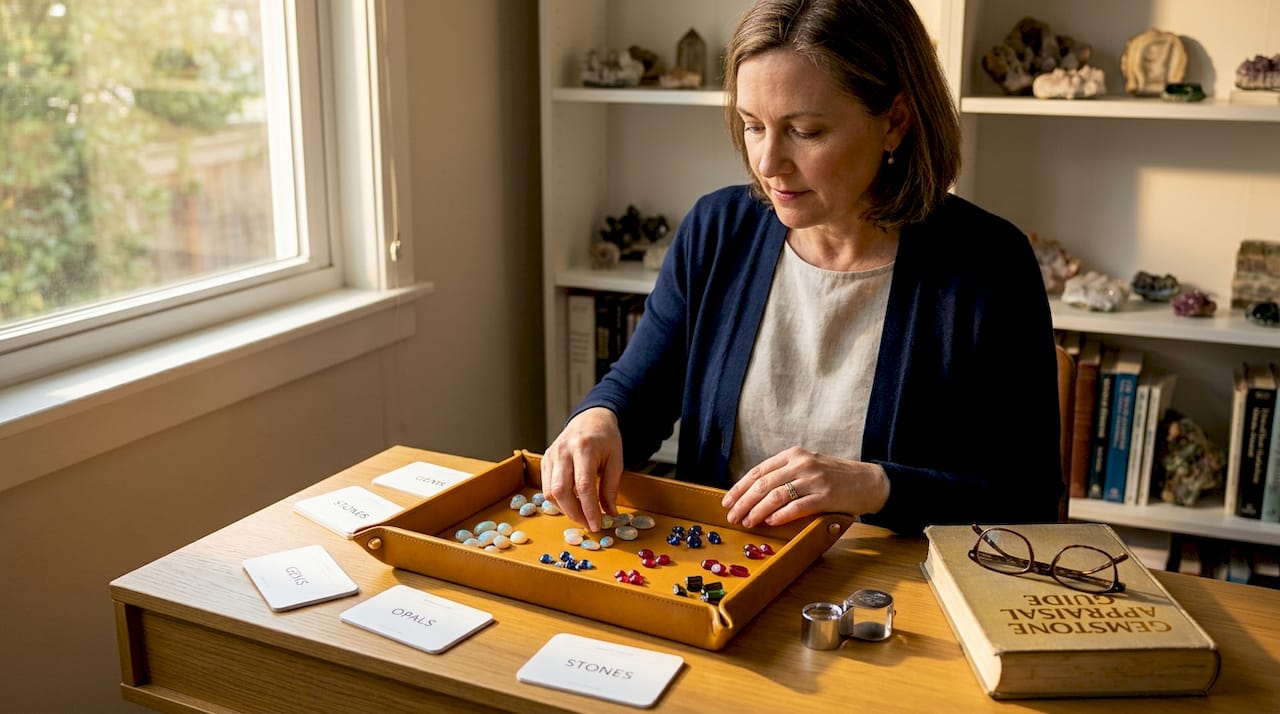
TL;DR:
- The traditional “precious” versus semi-precious gemstone labels are arbitrary and unreliable indicators of rarity or value. Gemstone diversity is better understood through mineral species, optical phenomena, formation processes, and treatments, which reveal deeper complexity and authenticity. Recognizing origin, cultural meaning, and microstructural effects enhances appreciation and ethical sourcing of gemstones.
The label “precious” once seemed like a tidy way to sort the gem world. Four stones in, four stones out. But explaining gemstone diversity honestly means acknowledging that this division was always more marketing than mineralogy. A fine alexandrite changes color from emerald green to raspberry red within a single day. A black opal from Lightning Ridge contains more spectral fire than most diamonds. The true richness of gemstones runs far deeper than any simple tier system captures, spanning mineral chemistry, optical physics, geological origin, cultural history, and human intervention. This guide untangles all of it.
Table of Contents
- Key Takeaways
- Explaining gemstone diversity through classification
- How optical phenomena shape gemstone variety
- Geological formation and physical properties
- Treatments, origin, and lab-grown gems
- Color, culture, and collector categories
- My take on teaching gemstone diversity
- Discover Australian opals at Australianopaldirect
- FAQ
Key Takeaways
| Point | Details |
|---|---|
| “Precious” is not a quality standard | The precious vs. semi-precious divide is historical and arbitrary, not a reliable guide to rarity or value. |
| Optical phenomena create unique variety | Effects like play-of-color, asterism, and adularescence arise from microstructure, not chemistry alone. |
| Formation shapes character | Whether a gem forms through magma, metamorphism, or hydrothermal fluids directly determines its physical traits. |
| Treatments change classification | Heat, irradiation, and filling alter appearance and must be disclosed for accurate gemstone education. |
| Color and culture add classification layers | Birthstones, Navaratna traditions, and collector categories reflect how meaning shapes perceived gemstone value. |
Explaining gemstone diversity through classification
The precious vs. semi-precious label lacks real value as a market predictor. Historically, only diamond, ruby, sapphire, and emerald earned the “precious” title, while amethyst, garnet, tourmaline, and hundreds of others were lumped into “semi-precious.” Yet a top-quality alexandrite or Paraíba tourmaline commands prices that dwarf many rubies. The labels have endured through tradition, not gemological logic.
Mineralogical classification gives a far more reliable framework. Gemologists think in terms of species, groups, and varieties. The beryl group alone produces emerald (green), aquamarine (blue-green), morganite (peachy pink), heliodor (golden yellow), and red beryl, all from the same base mineral formula but colored by trace elements. Understanding this structure is the foundation of any serious gemstone classification guide.
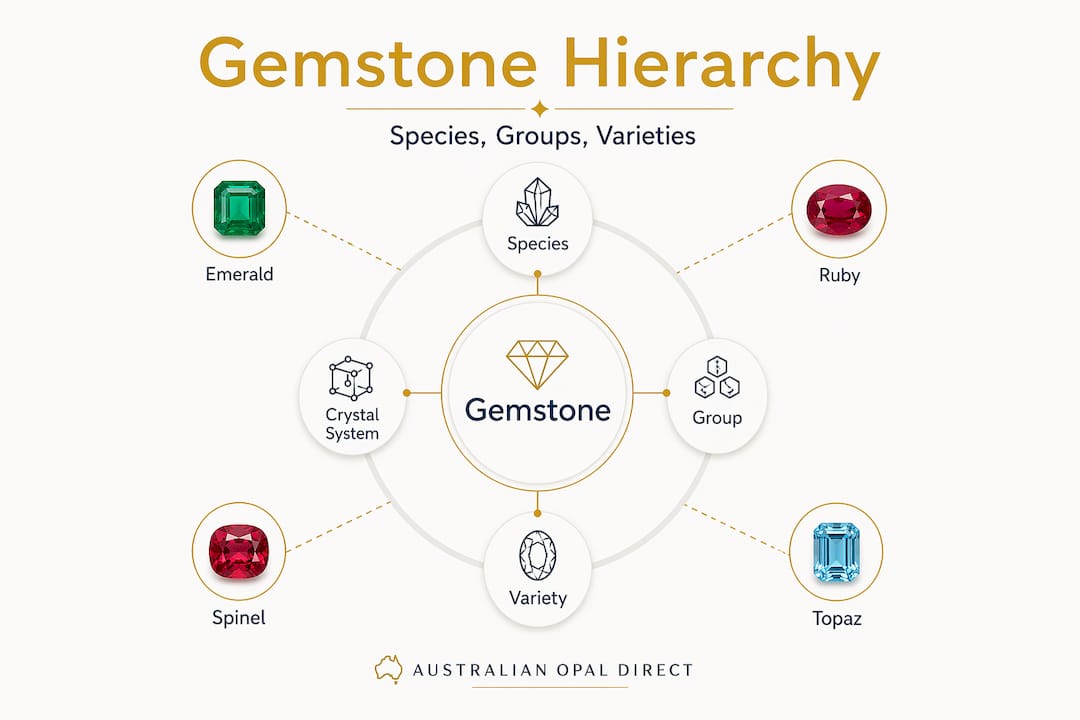
Crystal system is another layer that matters. Gems that crystallize in the cubic system, like diamond and spinel, are optically isotropic. They transmit light the same way in all directions. Gems in non-cubic systems, like tourmaline and tanzanite, are anisotropic, meaning their optical properties shift depending on viewing angle. This directly influences color saturation, brilliance, and cutting strategies.
Common gemstone groups and their key traits
| Gemstone group | Key varieties | Hardness (Mohs) | Notable characteristic |
|---|---|---|---|
| Beryl | Emerald, aquamarine, morganite | 7.5–8 | Color from trace elements |
| Corundum | Ruby, sapphire | 9 | Extreme hardness, pleochroism |
| Garnet | Tsavorite, spessartine, demantoid | 6.5–7.5 | Wide color range, no treatments typically needed |
| Quartz | Amethyst, citrine, rose quartz | 7 | Abundant, many color varieties |
| Feldspar | Moonstone, labradorite, sunstone | 6–6.5 | Adularescence and labradorescence |
| Opal | Black, white, crystal, boulder | 5.5–6.5 | Play-of-color from silica spheres |
How optical phenomena shape gemstone variety
Optical phenomena in gems arise from microscopic internal structures that scatter, diffract, or interfere with light in ways ordinary refraction cannot replicate. Two stones from the same mineral species can look dramatically different based solely on these microstructural differences. This is one of the most compelling chapters in understanding gemstone colors and their underlying causes.
The most widely recognized phenomena include:
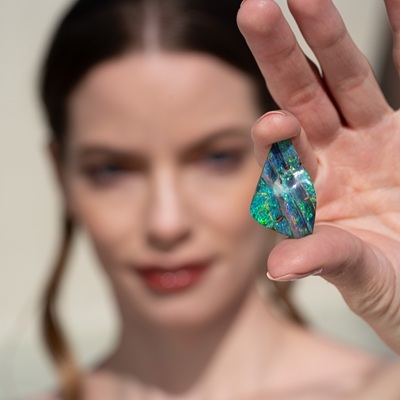
- Play-of-color: Spectral flashes produced by the diffraction of light through a three-dimensional grid of silica spheres, the defining feature of precious opal, particularly the celebrated black opals of Lightning Ridge.
- Asterism: A six-rayed or four-rayed star effect caused by intersecting needle-like inclusions of rutile, most famously seen in star sapphires and star rubies.
- Chatoyancy: The “cat’s eye” effect produced by parallel fibrous inclusions that concentrate a band of reflected light. Chrysoberyl cat’s eye is the gold standard.
- Adularescence: A soft, billowing glow that appears to float just below the surface, characteristic of moonstone from the feldspar family.
- Pleochroism: The ability to show different colors when viewed along different crystal axes. Tanzanite appears blue, violet, or burgundy depending on orientation.
- Color-change: The rarest of all phenomena. Alexandrite shifts from green in daylight to red under incandescent light, driven by chromium’s absorption properties.
Phenomena are diagnostic of internal microstructure. Two stones with different optical effects can belong to the same mineral species while looking nothing alike. That complexity is central to exploring mineral diversity with any real depth.
Pro Tip: When evaluating a phenomenal gem, move it under multiple light sources. Natural daylight, incandescent light, and LED will reveal entirely different behaviors. Imitation phenomena, produced by glass or synthetic materials, tend to appear static and uniform rather than dynamic and shifting.
Geological formation and physical properties
Gemstone formation processes divide broadly into three categories: magmatic, metamorphic, and hydrothermal. Each process leaves a distinct fingerprint on the resulting gem’s physical traits, inclusion patterns, and even geographic origin.
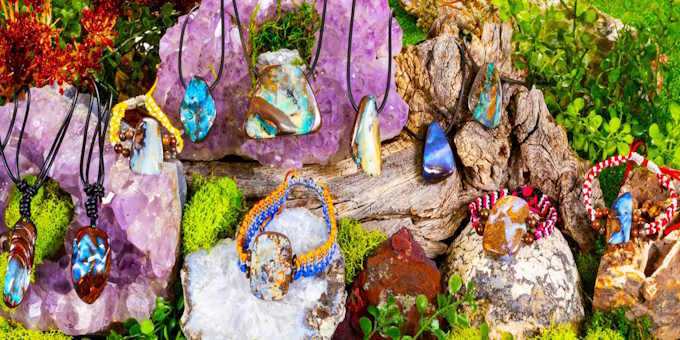
Diamonds crystallize deep in the earth under intense heat and pressure, carried to the surface by kimberlite pipes. Rubies and garnets form through metamorphism, where existing rocks recrystallize under heat and pressure over millions of years. Emeralds grow hydrothermally, precipitating from superheated fluids moving through fractures in the crust. Boulder opals form when silica-rich groundwater percolates through ironstone host rock in Queensland, depositing microscopic spheres in cavities over extraordinarily long periods.
Hardness, durability, and gemstone care
| Gemstone | Mohs hardness | Formation type | Care consideration |
|---|---|---|---|
| Diamond | 10 | Magmatic (kimberlite) | Very durable, but cleavage planes exist |
| Ruby / Sapphire | 9 | Metamorphic | Durable; heat sensitivity varies with treatment |
| Emerald | 7.5–8 | Hydrothermal | Fracture-prone despite high hardness |
| Tourmaline | 7–7.5 | Pegmatitic | Pleochroic; avoid ultrasonic cleaning |
| Opal | 5.5–6.5 | Sedimentary / hydrothermal | Sensitive to heat, dry air, and sudden impact |
| Turquoise | 5–6 | Hydrothermal (secondary) | Porous; avoid chemicals and prolonged moisture |
Mohs hardness alone does not equal durability. Emerald has hardness comparable to spinel yet is far more fragile in practice due to characteristic inclusions and cleavage planes. An emerald ring worn daily faces risks that a spinel of lower hardness might not. This distinction matters enormously for collectors choosing gems for wearable jewelry versus display pieces.
Organic gemstones like pearls, coral, and amber originate from biological processes rather than mineral crystallization, and they carry unique sensitivities. Amber is resin, not stone. Pearls are composed of aragonite layered by mollusks. Both are more chemically vulnerable than mineral gems and react poorly to acids, perfumes, and prolonged heat exposure.
Pro Tip: Never clean opals, pearls, or amber in ultrasonic cleaners or steam. These methods are fine for diamonds and most sapphires, but they can crack, dull, or destroy organic and hydrous gems within seconds.
Treatments, origin, and lab-grown gems
Human intervention is now inseparable from gemstone diversity education. Most colored gemstones on the market have been treated in some way, and understanding the spectrum of treatment types is non-negotiable for any serious collector.
Common treatments include:
- Heat treatment: Used extensively on rubies, sapphires, and tanzanite to improve color and clarity. Widely accepted and permanent when done correctly.
- Fracture filling: Glass or resin injected into emerald fractures to improve apparent clarity. Less stable and requires disclosure.
- Irradiation: Alters color in blue topaz, some diamonds, and certain tourmalines. Usually stable but must be disclosed.
- Bleaching and coating: Used on pearls and some opals to enhance surface appearance. Reduces long-term durability.
The GIA discloses treatment status transparently on laboratory reports, particularly for colored diamonds, where irradiation and HPHT processing can create vivid blues and pinks that would otherwise exist only in nature’s rarest offerings. A natural untreated Burmese ruby of fine color commands a premium that a treated stone of similar appearance simply cannot match. Origin, in this context, is not sentiment. It is value.
Lab-created phenomenal gems replicate optical effects with precision but do not command the same prices as their natural counterparts, primarily because rarity itself is part of what collectors are purchasing. A lab-grown alexandrite shows genuine color-change, but it lacks the geological narrative that makes the natural stone meaningful to collectors. Clear disclosure of treatments and synthetic origins is not optional. It is the ethical foundation of accurate gemstone diversity education.
Color, culture, and collector categories
Color is the most immediate language a gemstone speaks, and the classification systems built around it range from purely scientific to deeply cultural. A gemstone types explained framework that ignores color vocabulary is incomplete.
Single-color gems like a vivid Burmese ruby or a Kashmir sapphire achieve their most prized status at the peak of one pure hue. Multicolor gems like watermelon tourmaline, which transitions from pink to green across a single crystal, or ametrine, which fuses amethyst and citrine in zones of purple and gold, represent a different kind of wonder entirely. Fancy color diamonds span a spectrum from pale yellow through cognac, vivid pink, and rare violet, each shade carrying its own market category and pricing logic.
Cultural frameworks add another classification layer that no purely mineralogical system captures:
- Birthstones: A Western tradition linking each calendar month to one or more gems, creating durable demand for stones like peridot, opal, and turquoise regardless of broader market trends.
- Navaratna: A Hindu tradition prescribing nine sacred gems (including diamond, ruby, emerald, sapphire, pearl, coral, hessonite, cat’s eye chrysoberyl, and yellow sapphire) arranged to represent celestial bodies, producing one of the oldest symbolic gem classifications in human history.
- Investment gems: A market-driven category recognizing stones with stable or appreciating value due to rarity and consistent demand. Alexandrite, Paraíba tourmaline, jadeite, and natural unheated rubies lead this group.
- Collector gems: Rare or unusual stones prized for their unique gemstone overview potential rather than fashion demand. Grandidierite, benitoite, painite, and musgravite fall here.
- New classics: Gems that have gained collector traction in recent decades but lack the centuries-long jewelry tradition of rubies or sapphires. Spinel and tanzanite are the clearest examples.
My take on teaching gemstone diversity
Over years of working with collectors and enthusiasts, I’ve found that the most damaging habit in gemstone education is starting with a label and working backward. People hear “sapphire” and assume they understand the stone. They don’t. Not yet.
What I’ve learned is that you have to teach in layers. Species first. Then variety, because two sapphires from different origins can look and behave like completely different gems. Then phenomena, because optical effects are not decoration; they are evidence of internal microstructure. Then formation and origin, because a Kashmiri sapphire and a Thai sapphire are not interchangeable despite sharing a species name. Then treatments, because a stone’s treatment history shapes every aspect of its value story.
The pitfall I see most often is collectors equating phenomena with quality. A stone with a visible cat’s eye or color-change is not automatically exceptional. Gem phenomena do not replace the four Cs. Color, clarity, cut, and treatment status operate independently and carry their own weight. A poorly colored star ruby with a sharp asterism is not superior to a clean, vivid, non-phenomenal ruby with no treatments. They are different, not ranked.
My advice for anyone building a collection or deepening their knowledge: resist the shortcut of labels. Sit with a stone’s full story, from the ground it grew in to the light it catches in your hand. That is where genuine appreciation lives.
— Renee
Discover Australian opals at Australianopaldirect
Understanding gemstone diversity changes the way you see every stone you consider buying. Nowhere does that clarity matter more than with opals, where play-of-color and optical phenomena create a gem unlike anything else in the mineral world.

Australianopaldirect sources directly from Australian miners in Lightning Ridge, Coober Pedy, and Queensland, offering black opals, crystal opals, and boulder opals with full provenance and ethical sourcing credentials. Each piece carries the geological narrative that makes a gem truly extraordinary. Whether you are building a collection or searching for a statement piece, explore the full range of premium opal jewelry and find a stone whose light feels made for you. Contact the team for personalized guidance on selecting pieces that reflect everything you have learned about what makes a gemstone truly rare.
FAQ
What defines a gemstone scientifically?
A gemstone is typically defined as a mineral, rock, or organic material that is desirable for its beauty, durable enough for use in jewelry or collection, and rare enough to hold value. Organic materials like pearls and amber qualify despite not being minerals.
How does play-of-color differ from other optical phenomena?
Play-of-color is unique to precious opal, produced by the diffraction of light through uniformly sized silica spheres arranged in a three-dimensional grid. Other phenomena like asterism or adularescence arise from different microstructures, such as rutile needles or feldspar layers.
Are treated gemstones worth less than untreated ones?
Not always, but treatment status strongly affects value for certain gems. Natural, untreated rubies, sapphires, and emeralds of fine quality command premiums over treated equivalents. Disclosure of treatment status through GIA or equivalent laboratory reports is the standard benchmark for accurate valuation.
What is the difference between a gemstone species and variety?
A species is the base mineral classification, such as beryl or corundum. A variety is a specific form of that species distinguished by color or optical effect, such as emerald (green beryl) or ruby (red corundum). Viewing variety as the primary classification unit explains why two stones of the same species can differ so dramatically in appearance and price.
Why do collectors value gemstone origin so highly?
Origin affects trace element chemistry, inclusion type, color character, and historical prestige. A Burmese ruby carries chromium-driven fluorescence that Thai or African rubies often lack. Kashmir sapphires show a velvety blue produced by light-scattering inclusions unique to that deposit. Origin is, in many cases, a shorthand for a specific combination of qualities that cannot be replicated elsewhere.
Recommended
- Build a Gemstone Collection: The Expert Guide to Australian Opals - Australian Opal Direct
- Luxury gemstone standards explained: Expert guide for collectors - Australian Opal Direct
- Curated opal collection examples for discerning collectors - Australian Opal Direct
- Master opal collector terminology: 5 essential terms - Australian Opal Direct