Top gemstone collecting tips for ethical and smart choices
Posted by AOD on 9th May 2026
Top gemstone collecting tips for ethical and smart choices

TL;DR:
- In 2026, Australian opal collectors prioritize authenticity, ethical sourcing, provenance, and investment potential. They source stones through reputable channels like direct miners, verified online stores, and auctions, with thorough documentation. Building a sustainable collection requires careful evaluation, trend awareness, and a focus on provenance to ensure long-term value and integrity.
The search for a genuinely extraordinary gemstone has never been more rewarding, or more demanding. In 2026, collectors who seek ethically sourced Australian opals must navigate a market shaped by new transparency standards, digital verification tools, and a growing appreciation for provenance. The kaleidoscopic brilliance that dances within a Lightning Ridge black opal or the soft, rolling fire of a Coober Pedy crystal opal now carries deeper meaning than its visual splendor alone. Today’s discerning collector balances gemological knowledge, ethical conviction, and investment instinct to build a collection that truly endures.
Table of Contents
- Key criteria for gemstone collecting in 2026
- Top places and platforms for sourcing quality opals
- How to verify authenticity and provenance
- Smart collecting strategies for 2026 trends
- A collector’s perspective: Avoiding pitfalls and old myths
- Expert-curated Australian opals for your collection
- Frequently asked questions
Key Takeaways
| Point | Details |
|---|---|
| Verify authenticity | Always check for certificates and provenance before buying gemstones or opals. |
| Choose ethical sources | Select sellers with transparent, ethical sourcing standards and fair labor practices. |
| Stay informed on trends | Follow market and sustainability trends to make smart collecting decisions in 2026. |
| Diversify your collection | Balance personal taste with high-demand qualities like unique color or origin. |
Key criteria for gemstone collecting in 2026
Every serious collector in 2026 starts with a clear framework before a single stone is examined or purchased. The days of buying on impulse or beauty alone are behind us. Modern collecting demands that you evaluate a gemstone against several overlapping criteria, each one protecting both your investment and your integrity.
Authenticity sits at the foundation. For Australian opals specifically, this means confirming that a stone is genuinely earth-mined, natural, and untreated, or that any treatments are fully disclosed. Synthetic and imitation opals have grown more sophisticated, and even experienced eyes can be deceived without proper documentation.
Ethical sourcing has moved from a niche consideration to a primary one. As ethical opal sourcing becomes a rising priority when collecting opals, buyers are asking harder questions about labor conditions, environmental impact, and community benefit. Responsible mining practices in regions like Queensland and Lightning Ridge are no longer assumed. They must be demonstrated.
Provenance and traceability tell the story behind the stone. A clear, documented chain of custody from mine to market adds both narrative richness and tangible value. Collectors who understand premium opal trends 2026 know that provenance is fast becoming a key driver of desirability and resale value.

Investment potential rounds out the framework. Factors that support long-term appreciation include rarity of origin, quality of play-of-color (the optical phenomenon created by the diffraction of light through silica spheres), carat weight, and the reputation of the issuing gemologist or laboratory.
Key criteria checklist for 2026:
- Confirmation of natural, untreated status or full disclosure of any enhancement
- Documented ethical sourcing from regulated Australian mining operations
- Clear provenance with mine-of-origin records
- Third-party gemological certification from a recognized authority
- Alignment with 2026 trends: sustainability, traceability, and digital buying
“A gemstone without a story is just a stone. The narrative of origin, the hands that shaped it, and the earth that held it for millions of years are inseparable from its worth.”
Pro Tip: Ask every seller for written documentation of ethical sourcing before making any offer. Verbal assurances, however convincing, are not sufficient for a serious collection.
With a framework of 2026’s essential criteria, let’s look at practical tips for sourcing gemstones smartly.
Top places and platforms for sourcing quality opals
Knowing what to look for is only half the equation. Knowing where to look is equally critical. The sourcing landscape in 2026 spans a rich spectrum, from remote Australian mine sites to sophisticated online platforms, and each carries its own advantages and risks.
Reliable options for sourcing quality Australian opals include:
- Direct-from-miner retailers that maintain documented relationships with Lightning Ridge, Coober Pedy, and Queensland operations
- Specialist online stores with verifiable certification policies, transparent return procedures, and detailed product storytelling
- Auction houses with gemological specialists on staff and pre-sale authentication protocols
- Gem fairs and mineral shows where you can physically inspect stones and speak directly with miners or cutters
- Custom jewelers who source responsibly and can provide full paperwork for each stone used in bespoke pieces
Selecting reputable online retailers is crucial in 2026 for gemstone buyers, particularly as the market expands and less scrupulous vendors adapt to digital channels. The convenience of online buying is undeniable, but it requires elevated vigilance.
When assessing any platform, consult a thorough guide to buying opals to benchmark what responsible sellers should offer. Equally, reviewing jewelry investment tips can help you frame each purchase as both an aesthetic and financial decision.
Comparison of key sourcing platforms
| Platform type | Provenance transparency | Certification access | Price range | Best for |
|---|---|---|---|---|
| Direct-miner retailer | High | Usually included | Mid to premium | Authenticated, story-driven pieces |
| Specialist online store | High | Included or on request | Variable | Convenience and variety |
| Auction house | Moderate | Pre-sale assessment | Variable | Rare and investment-grade stones |
| Gem fair / mineral show | Moderate | Varies by vendor | Low to high | Hands-on inspection, negotiation |
| General marketplace | Low | Rarely included | Low to mid | Risk is high, not recommended |
Pro Tip: Before committing to any online platform, test their customer service by asking a detailed question about a specific stone’s origin. How they respond reveals far more than their listed policies.
Once you know what to look for, the next step is learning how to assess gemstone authenticity and value.
How to verify authenticity and provenance
Authentication is both a science and a practiced art. For Australian opals, the process involves several deliberate steps, each one designed to confirm that what you are acquiring is genuinely what it claims to be. Certificate and provenance checks are essential to avoid fakes, and no serious collector should skip them.
Steps to verify opal authenticity:
- Request the gemological certificate. Certificates from recognized laboratories should specify opal type (precious, fire, or common), origin (Australian vs. other), any treatments, and the stone’s key optical characteristics including body tone and play-of-color pattern.
- Examine provenance documentation. A credible provenance report traces the stone from the specific mine region through processing and cutting to the current seller. The more detail, the better.
- Cross-check the seller’s credentials. Verify that the vendor holds memberships in recognized gemological or jewelry trade associations.
- Use UV light inspection. Natural Australian opals often display distinctive fluorescence patterns under ultraviolet light. Synthetic or doublet opals (stones assembled from thin layers) typically behave differently.
- Assess play-of-color under varied lighting. A genuine precious opal shifts and morphs its color display as you rotate it, a phenomenon synthetic imitations rarely replicate convincingly.
- Consult an independent appraiser. For significant purchases, an independent gemologist offers a second opinion that has no commercial stake in the transaction.
A reliable opal authentication guide walks through these steps in clinical detail, while understanding provenance and opal value reveals how documentation directly influences both resale price and long-term desirability.
Common certificate types for opals
| Certificate type | What it covers | Typical issuer |
|---|---|---|
| Origin certificate | Mine location, region verification | Gemological labs, mining cooperatives |
| Gemological grading report | Species, variety, optical qualities, treatments | GIA, Gemmological Association of Australia |
| Ethical sourcing certificate | Labor, environmental, and compliance standards | Third-party auditors, mining associations |
| Valuation certificate | Monetary appraisal for insurance | Licensed appraisers and jewelers |
Red flags to watch for include sellers who refuse to provide written documentation, stones priced significantly below market rate without explanation, inconsistent color patterns that don’t shift naturally under light, and certificates issued by unknown or unverifiable organizations.
Pro Tip: If a seller describes an opal as “natural” but cannot name its mine of origin, treat that claim with healthy skepticism. Genuine Australian opals almost always have a regional story attached to them.
Knowing how to vet your opals opens the door to making smart investments and curating for long-term value. Let’s explore collecting strategies.
Smart collecting strategies for 2026 trends
Building a collection that endures requires more than assembling beautiful stones. It demands a thoughtful approach to trends, personal aesthetic, ethics, and market awareness. The collector who thrives in 2026 is the one who plans with purpose rather than collecting reactively.
Statistic spotlight: Opals with strong provenance and ethical sourcing are in the highest demand for collectors in 2026, reflecting a broader market shift toward transparency and accountability in luxury goods.
Strategies for building a future-proof collection:
- Focus on rarity, not just beauty. A black opal from Lightning Ridge with a rolling flash pattern and exceptional body tone represents a category of rarity that transcends trend cycles. Rare stones with exceptional provenance appreciate more reliably than fashionable but common choices.
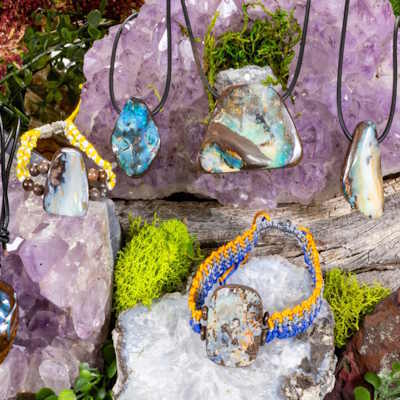
- Diversify by opal type. A well-rounded collection might include Lightning Ridge black opals for their dramatic play-of-color, Coober Pedy crystal opals for their ethereal translucency, and Queensland boulder opals for their rich, earthy character where iron ore matrix forms a natural canvas for the stone’s fire.
- Follow the 2026 color story. Deep blues, rolling greens, and vivid red-orange flashes (considered among the rarest and most prized of spectral displays) are attracting strong collector interest. Unique color patterns that feel almost alive as light moves across them are commanding premium prices.
- Prioritize cut quality. The way an opal is shaped and polished dramatically affects its play-of-color. Oval and freeform cuts that preserve the stone’s natural outline allow the full optical potential to express itself.
- Document everything as you collect. Each acquisition should come with its own file: certificate, provenance report, photographs, and purchase receipt. This practice protects both value and story.
Following trends thoughtfully means understanding the opal selection process well enough to distinguish between a stone that is fashionable today and one that is genuinely exceptional. The former fades; the latter grows richer with time.
Pro Tip: Balance trend awareness with personal vision. The most memorable collections are those that reflect a collector’s individual taste filtered through rigorous standards, not ones assembled purely to mirror market movements.
Finally, let’s take a critical look at the pitfalls and misconceptions in gemstone collecting today.
A collector’s perspective: Avoiding pitfalls and old myths
There is a persistent myth in the gemstone world that price is a reliable proxy for quality. It is not, and this particular misconception has led countless collectors toward disappointment. As the market for luxury gemstones grows more sophisticated, so too do the strategies of those who exploit it. One of the biggest misconceptions is that a high price always means genuine value, a belief that sophisticated marketing exploits with remarkable effectiveness.
The truth is more nuanced. Price reflects many variables: the seller’s overhead, their brand positioning, the current fashionability of a stone’s style, and, yes, sometimes genuine quality. But it is entirely possible to pay a premium price for an opal with dubious provenance, undisclosed treatments, or a play-of-color that photograph well but disappoint in person.
Trend-chasing without due diligence is another trap that claims otherwise careful collectors. The allure of acquiring whatever is currently celebrated in collector circles can override the disciplined thinking that builds truly enduring collections. Genuine expertise in pricing opal jewelry lies not in knowing what sells today, but in understanding why certain stones and certain origins command lasting respect.
The real expert advantage combines three things with equal weight. First, rigorous skepticism, the kind that asks hard questions before admiring a stone. Second, paperwork discipline, treating documentation not as bureaucratic inconvenience but as a fundamental part of what you are acquiring. Third, genuine aesthetic appreciation, the ability to recognize the particular fire and soul that separates a specimen of enduring beauty from one that merely ticks current boxes.
The collectors who build truly remarkable opal collections are those who treat each acquisition as both a conversation with the earth and a deliberate act of cultural stewardship. They don’t simply own opals. They preserve, document, and champion them.
Expert-curated Australian opals for your collection
For collectors who are ready to apply these principles to their next acquisition, the quality of your source matters as much as the quality of the stone itself.

Australian Opal Direct brings together direct-miner relationships, verified ethical sourcing, and expert gemological knowledge to offer a collection where every piece carries its full story. From Lightning Ridge black opals to luminous Coober Pedy crystals, each stone arrives with the documentation and provenance that informed collectors expect. Free shipping, complimentary insurance, and a 90-day warranty reflect a commitment to the collecting experience that goes well beyond the transaction. Whether you are deepening an existing collection or making a first significant acquisition, the curated range offers a trustworthy starting point for everything these tips have prepared you to pursue.
Frequently asked questions
What makes a gemstone ethically sourced in 2026?
An ethically sourced gemstone is verified for legal mining, fair labor, and minimal environmental impact. Ethical sourcing standards now require documented proof across the entire supply chain, not just a seller’s assurance.
How can I tell if an opal is authentic?
Check for third-party certificates, clear provenance documentation, and UV light behavior consistent with a natural stone. A detailed opal authentication process provides the step-by-step verification framework that serious collectors rely on.
Which gemstone trends should collectors watch for in 2026?
Collectors should focus on ethically sourced stones with robust provenance and exceptional play-of-color, especially Australian opals. Stones with traceable origins are commanding the strongest collector interest and the most reliable long-term appreciation.
Do higher-priced gemstones always mean better value?
No, price alone does not guarantee authenticity, provenance, or enduring collector value. Understanding how to assess authentic opal pricing helps you distinguish between genuine quality and clever marketing.
Is buying Australian opals online safe in 2026?
Yes, when you purchase from trusted stores with visible certificates and documented provenance. Reputable online retailers in 2026 offer the transparency, insurance, and expert support that make digital collecting both convenient and secure.
Recommended
- Ethical opal sourcing: your guide to authentic Australian gems - Australian Opal Direct
- Expert luxury jewelry investment tips: Sourcing Australian opals - Australian Opal Direct
- 7 Best Opal Jewelry Tips Every Collector Should Know - Australian Opal Direct
- Ethical Jewelry Practices Explained: Guide for Australian Buyers - Australian Opal Direct