Ethical Jewelry Practices Explained: Guide for Australian Buyers
Posted by AOD on 15th Apr 2026
Ethical Jewelry Practices Explained: Guide for Australian Buyers
TL;DR:
- Ethical jewelry involves fair labor, environmental responsibility, and supply chain traceability.
- Australian opals benefit from strict regulations, direct miner relationships, and transparent sourcing.
- Consumer choices drive industry change by favoring certified, responsibly sourced jewelry options.
The idea that ethical jewelry is impossible to trace is one of the most persistent myths in the gemstone world. In reality, the Kimberley Process has reduced conflict diamonds to less than 1% of global supply since 2003, a remarkable shift that signals just how far the industry has come. For Australian buyers drawn to the kaleidoscopic brilliance of opals and the quiet luxury of responsibly made pieces, understanding what ethical sourcing truly means has never been more important. This guide walks through the certifications, the local landscape, and the practical steps you can take to make purchases that reflect your values.
Table of Contents
- What makes jewelry ethical?
- How ethical sourcing works in Australia
- Recognizing ethical Australian opals and jewelry
- Consumer choices and the impact on the jewelry industry
- Why ethical jewelry is more than a trend: What most brands won’t tell you
- Ready to experience ethical Australian jewelry?
- Frequently asked questions
Key Takeaways
| Point | Details |
|---|---|
| Certifications matter | Look for industry-recognized marks like RJC, Fairtrade Gold, and the Kimberley Process for true ethical assurance. |
| Australian opal standards | Local regulations and transparent sourcing make Australian opals a leader in ethical jewelry. |
| Consumers drive change | Your purchasing decisions power the shift toward fair wages, environmental protection, and traceable gems. |
| Spot authentic ethics | Check provenance and artisan credentials to ensure jewelry meets genuine ethical criteria. |
What makes jewelry ethical?
Ethical jewelry is not a single standard. It is a constellation of practices that together protect people, places, and the planet. At its core, ethical jewelry addresses three interconnected pillars: labor rights, environmental responsibility, and supply chain traceability. When all three are honored, the result is a piece that carries not just beauty, but integrity.
Global certifications help consumers navigate this landscape with greater confidence. The most recognized include:
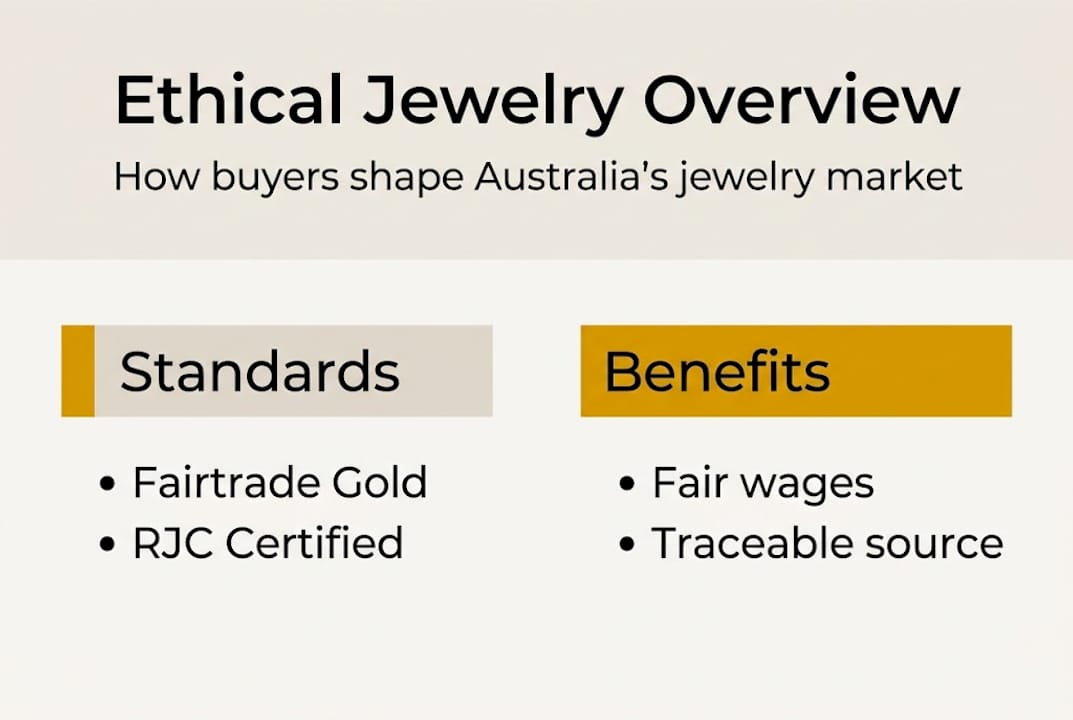
- RJC Code of Practices (COP): Requires member businesses to meet standards on human rights, labor, environmental impact, and business ethics across the full supply chain.
- Chain-of-Custody Certification: Tracks responsible materials from source to finished product, ensuring that traceable metals like gold and platinum meet verified standards at every stage.
- Fairtrade Gold: Guarantees fair wages for artisan miners and prohibits harmful practices like mercury use.
- The Kimberley Process: A joint government, industry, and civil society initiative focused on preventing conflict diamonds from entering the market.
These key certifications set standards that go well beyond a logo on a tag. They require audits, documentation, and ongoing compliance.
It is also worth distinguishing between terms that are often used interchangeably but carry different meanings:
| Term | What it means |
|---|---|
| Ethical | Focuses on fair labor and human rights |
| Sustainable | Emphasizes environmental impact and longevity |
| Conflict-free | Specifically addresses funding of armed conflict |
| Eco-friendly | Prioritizes reduced environmental harm |
For a deeper look at the overlap between these concepts, sustainable jewelry explained offers a useful breakdown of how each term applies in practice.
“Ethical sourcing is not a destination. It is a continuous commitment to doing better at every link in the chain.”
Pro Tip: If a brand uses vague phrases like “responsibly made” or “eco-conscious” without linking to a specific certification or audit, treat that as a signal to ask more questions. Genuine ethical credentials are always verifiable.
How ethical sourcing works in Australia
Knowing the standards is important, but how does ethical sourcing play out specifically here in Australia? The answer involves a blend of federal regulation, state-level mining law, and voluntary industry frameworks that together create a relatively robust system for accountability.
Australia’s opal mining regions, including Lightning Ridge in New South Wales, Coober Pedy in South Australia, and the Queensland boulder opal fields, operate under state mining legislation that governs environmental rehabilitation, occupational health, and land access. These rules provide a baseline that many other producing countries simply do not have.
For metals like gold and platinum, the picture is more nuanced. Gold mining is one of the most environmentally sensitive extraction processes in the world, requiring careful management of water, tailings, and land disturbance. The ethical jewelry industry benchmarks set by organizations like SCS Global Services highlight that responsible gold sourcing demands third-party verification, not just self-reporting.
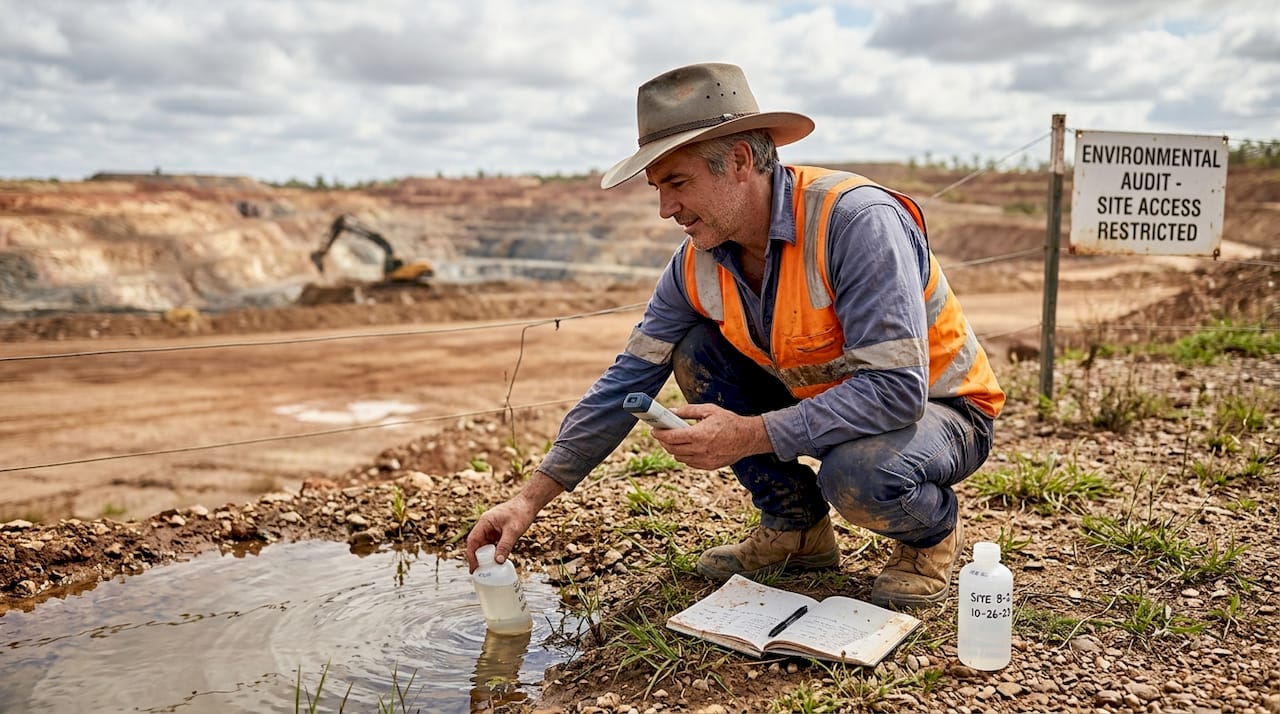
Here is how Australian sourcing practices compare across key dimensions:
| Dimension | Australian standard | Global benchmark |
|---|---|---|
| Labor rights | Fair Work Act compliance | RJC COP audit |
| Environmental | State mining rehabilitation laws | ISO 14001 certification |
| Traceability | Mine-of-origin disclosure | Chain-of-Custody certification |
| Community benefit | Local employment requirements | Fairtrade Gold premium |
For opals specifically, the Australian opal supply chain is relatively transparent compared to many gemstone categories. Direct-miner relationships, where a retailer sources stones without passing through multiple intermediaries, are a meaningful indicator of ethical practice. Each additional hand a stone passes through adds opacity and risk.
Key questions to ask any Australian opal seller:
- Which mine or region did this stone come from?
- Can you confirm direct miner relationships?
- What environmental rehabilitation commitments does the mine hold?
- Is the metal setting sourced with Chain-of-Custody certification?
For a thorough overview of how these principles apply to opal purchases, the ethical opal sourcing guide covers origin verification and what authentic provenance documentation looks like.
Recognizing ethical Australian opals and jewelry
Now that you know the system, here is how to recognize truly ethical jewelry in the real world. The markers are not always obvious, but once you know what to look for, they become second nature.
A practical verification checklist:
- Certification documentation: Ask for RJC membership proof, Fairtrade Gold certificates, or Chain-of-Custody records. Reputable sellers keep these on file.
- Mine-of-origin disclosure: For opals, the specific region matters. Lightning Ridge black opals, Coober Pedy white opals, and Queensland boulder opals each have distinct characteristics that experienced sellers can describe in detail.
- Artisan or direct sourcing: Pieces made by skilled craftspeople with documented relationships to miners carry a story that mass-produced alternatives cannot replicate.
- Material transparency: The metal, the setting style, and any secondary stones should all be disclosed with sourcing context.
- Return and warranty policies: Brands confident in their ethical claims stand behind their products. A 90-day warranty and clear return policy signal accountability.
The role of artisan craftsmanship deserves special attention. When a jeweler shapes a piece by hand, they bring intentionality to every curve and setting. This care is not merely aesthetic. It reflects a relationship with the material that factory production cannot honor. The artisan-crafted jewelry guide explores why handmade pieces carry both ethical and intrinsic value that mass production simply cannot match.
Fairtrade Gold ensures fair wages, eliminates mercury use, and channels a premium back to mining communities, making it one of the most meaningful certifications a metal setting can carry.
Pro Tip: Lab-grown gemstones and vintage or antique pieces are both strong ethical alternatives when natural stone provenance is difficult to verify. Vintage jewelry recycles existing materials, while lab-grown stones offer full origin transparency. For those committed to natural Australian opals, the handmade opal ethics perspective explains why earth-mined stones from verified sources remain a compelling and responsible choice.
Consumer choices and the impact on the jewelry industry
Your choices shape what is possible in ethical jewelry. The market does not lead consumers. Consumers lead the market.
Over 80% of Australians choose responsible products, and this preference is actively reshaping what retailers stock, how miners operate, and what certifications brands pursue. That is not a small shift. It is a structural transformation driven by individual decisions made at the point of purchase.
The surge in lab-grown gemstones is one of the clearest expressions of this trend. Buyers who once defaulted to mined diamonds are now choosing lab-grown alternatives specifically because the origin is transparent and the environmental footprint is lower. This shift has pushed traditional miners and retailers to improve their own traceability practices to remain competitive.
What buyers can do to accelerate ethical adoption:
- Ask direct questions: Contact sellers before purchasing and request sourcing documentation.
- Prioritize certified brands: Choose retailers with verifiable RJC or Fairtrade credentials over those with vague claims.
- Share your experience: Reviews and social media posts that highlight ethical sourcing reward responsible brands with visibility.
- Choose provenance over price: A slightly higher price for a traceable piece is an investment in a better industry standard.
- Explore Australian-origin stones: Opals from Lightning Ridge or Coober Pedy carry a provenance story that few gemstones in the world can match.
“Every purchase is a vote for the kind of jewelry industry you want to exist.”
The advantages of Australian opals extend beyond their extraordinary play-of-color. Their regulated origin, direct miner relationships, and cultural significance make them among the most ethically traceable gemstones available anywhere. For those exploring where to find verified pieces, premium Australian opals online outlines what to look for when shopping digitally.
Why ethical jewelry is more than a trend: What most brands won’t tell you
Beneath the facts and figures, there is something rarely discussed about ethical jewelry: the hardest part is not achieving a certification. It is maintaining one.
Certifications require ongoing audits, updated documentation, and a willingness to be held accountable when standards slip. Many brands earn a label and then coast on it for years without meaningful review. Real ethical commitment means treating every new collection, every new supplier relationship, and every new stone as a fresh opportunity to verify and improve.
Australian opals occupy a genuinely rare position in this conversation. Because they are sourced from a country with enforceable labor laws, environmental rehabilitation requirements, and a culture of direct miner relationships, they sidestep many of the opacity problems that plague gemstones from less regulated regions. That is not marketing. That is structural advantage.
The deeper truth is that opal birthstone ethics are inseparable from the stone’s identity. An opal formed over millions of years in the ancient seabed of outback Australia carries a provenance that no synthetic process can replicate. Honoring that origin through ethical sourcing is not a trend. It is a form of respect for something genuinely irreplaceable.
Ready to experience ethical Australian jewelry?
If you are ready to take the next step toward ethical jewelry, here is where you can begin.
At Australian Opal Direct, every piece in the collection is sourced with transparency and care, drawing directly from Australia’s most celebrated opal regions. From Lightning Ridge black opals to Coober Pedy crystal stones, each gem arrives with a story you can trust and a provenance you can verify. The brand’s direct-miner relationships remove the opacity that plagues so much of the gemstone trade, delivering both authenticity and competitive value. Whether you are searching for a singular ring, a handcrafted pendant, or a custom piece that reflects your own vision, ethical luxury and genuine Australian craftsmanship are waiting for you.
Frequently asked questions
What certifications should I look for when buying ethical jewelry?
The top marks are RJC COP, Fairtrade Gold, Chain-of-Custody, and the Kimberley Process for diamonds. Each addresses a different dimension of ethical sourcing, from labor rights to environmental impact.
How can I tell if an opal is sourced ethically in Australia?
Look for seller transparency on mine location, proof of local regulations, and artisan or direct sourcing details. The Australian opal sourcing process is covered under local regulations and ethical standards that most reputable sellers are happy to document.
Why does ethical jewelry usually cost more?
Higher prices reflect fair wages, environmental restoration, and traceable, responsible processes. Ethical practices cost more due to fair pay and environmental recovery requirements built into certified supply chains.
What impact do my purchases really have on the jewelry industry?
When you choose ethical pieces, you push brands to improve standards and increase options for conscientious buyers. 80%+ of Australians choosing responsible products is already reshaping industry supply and retailer behavior.
Are lab-grown stones considered ethical?
Lab-grown gems are a popular ethical alternative, as their origin is transparent and they avoid destructive mining. Lab-grown stone demand is surging among ethical, eco-conscious buyers who prioritize full supply chain visibility.
Recommended
- Artisan-Crafted Jewelry: Authenticity & Ethics Guide - Australian Opal Direct
- Ethical opal sourcing: your guide to authentic Australian gems - Australian Opal Direct
- What is sustainable jewelry? Ethical, eco-friendly gems explained - Australian Opal Direct
- Handmade Opal Jewelry: Unique Value and Ethics - Australian Opal Direct