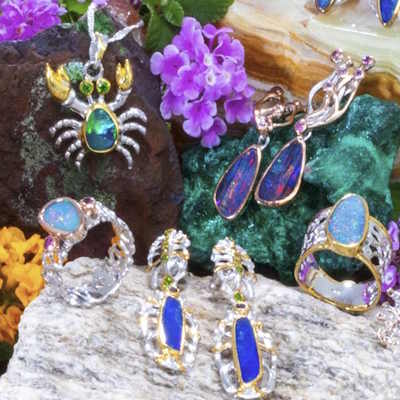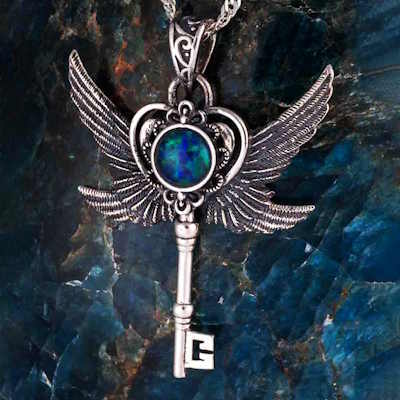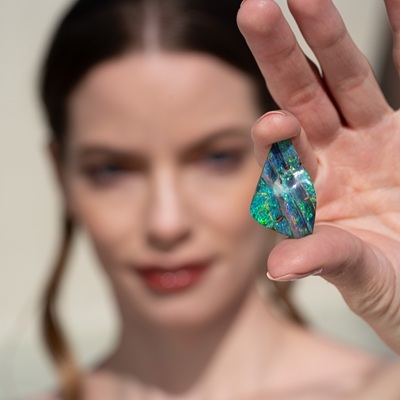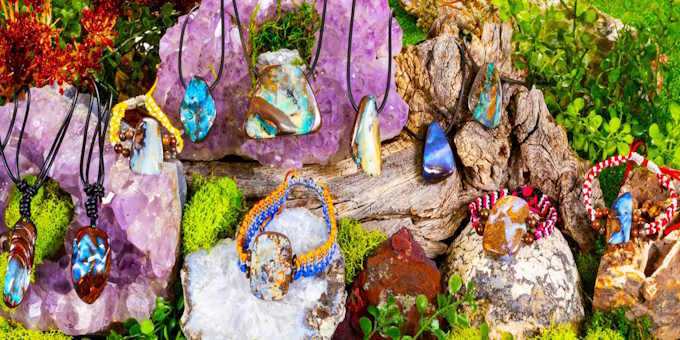
What is sustainable jewelry? Ethical, eco-friendly gems explained
Posted by AOD on 28th Mar 2026
What is sustainable jewelry? Ethical, eco-friendly gems explained

Luxury has always carried a story. But for a growing number of discerning collectors, the story behind a piece matters just as much as its brilliance. The jewelry industry is one of the world’s most resource-intensive sectors, and gold mining emits roughly one ton of CO2 per ounce produced. That single fact reframes what it means to own something truly precious. For opal lovers in particular, understanding sustainable jewelry is not just an ethical exercise. It is the foundation of collecting with integrity, confidence, and genuine reverence for the earth that yields these kaleidoscopic gems.
Table of Contents
- Sustainable jewelry defined: More than just a trend
- The environmental impact: Mined vs recycled materials
- Transparency and certification: How to verify sustainability claims
- Pros and cons: Sustainable jewelry vs traditional approaches
- How to choose and care for sustainable opal jewelry
- Explore sustainable Australian opal jewelry
- Frequently asked questions
Key Takeaways
| Point | Details |
|---|---|
| Sustainable jewelry basics | It centers on recycled or ethically sourced materials, transparency, and certified best practices. |
| Environmental impact matters | Choosing recycled or lab-grown gems can reduce your jewelry’s carbon footprint by up to 99%. |
| Certification is key | Always check for credible reports, mine documentation, and RJC or Fairmined certifications before buying. |
| Australian opals stand out | Small-scale opal mines offer traceability but require extra diligence around regulation and rehabilitation proof. |
| Care for a lifetime | Sustainably crafted opal jewelry, when cared for properly, remains beautiful and meaningful for generations. |
Sustainable jewelry defined: More than just a trend
Sustainability in jewelry is not a marketing label. It is a philosophy built on measurable commitments across the entire supply chain, from the moment a gemstone leaves the earth to the day it rests in your hands. At its core, sustainable jewelry seeks to reduce environmental harm, uphold ethical labor standards, and ensure full transparency from mine to market.
What does that look like in practice? Key features include:
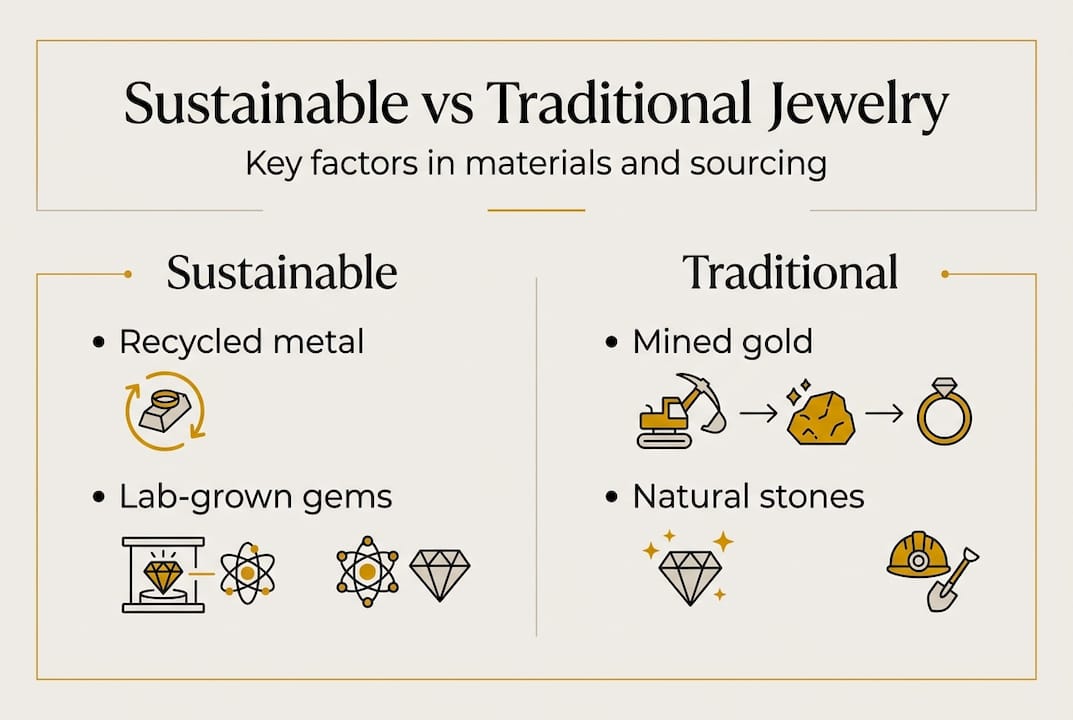
- Recycled metals: Using reclaimed gold and silver instead of newly mined material
- Responsibly sourced gemstones: Verified origins with documentation of land rehabilitation
- Fair labor practices: Workers paid fairly, operating in safe conditions
- Third-party certification: Independent audits that confirm a brand’s claims
The Responsible Jewellery Council Code of Practices sets measurable criteria covering human rights, labor, and environmental stewardship. Brands that earn RJC certification have undergone rigorous independent assessment, not simply self-declared their values.
“Sustainability in jewelry is not a destination. It is a continuous commitment to doing less harm and more good at every stage of a gem’s journey.”
For opal collectors, Australia’s small-scale mining operations offer a uniquely traceable supply chain. Unlike large industrial mines, many Australian opal fields are worked by individual miners or small family operations, which makes provenance verification far more achievable. Our guide to ethical opal sourcing explores this in greater depth.
The environmental impact: Mined vs recycled materials
Material choices shape a piece’s environmental footprint more than almost any other factor. The contrast between conventional and sustainable approaches is striking.
| Material | Environmental impact | Sustainable alternative |
|---|---|---|
| Newly mined gold | ~1 ton CO2 per ounce | Recycled gold (99% lower emissions) |
| Mined diamonds | High GHG, land disruption | Lab-grown (3x fewer emissions) |
| Industrial opal mining | Land clearing, water use | Small-scale, rehabilitated Australian mines |
| Sterling silver (new) | Energy-intensive smelting | Recycled silver |
The numbers are sobering. Recycled gold lowers carbon footprint by 99% compared to newly mined gold. That is not a marginal improvement. It is a near-complete transformation of the material’s environmental story. Similarly, lab-grown diamonds produce three times fewer greenhouse gas emissions than their mined counterparts.

Australian opals occupy a fascinating middle ground. Small-scale opal mining, particularly in regions like Lightning Ridge and Coober Pedy, tends to have a far lower industrial footprint than large-scale diamond or gold operations. When miners follow verified land rehabilitation protocols, the ecological impact can be genuinely modest. Understanding the full Australian opal supply chain helps collectors appreciate exactly where their gem has traveled.
Pro Tip: When evaluating a piece’s environmental credentials, ask specifically about the metal setting, not just the gemstone. A responsibly sourced opal set in newly mined gold still carries a significant carbon burden.
Transparency and certification: How to verify sustainability claims
Knowing what sustainability means is one thing. Confirming that a brand actually practices it is another challenge entirely. The jewelry industry has historically struggled with greenwashing, where vague language substitutes for genuine accountability.
Here are the most credible verification tools available to collectors today:
- Responsible Jewellery Council (RJC) certification: The RJC Code of Practices covers human rights, labor conditions, environmental management, and business ethics. Certification requires independent third-party audits.
- Fairmined certification: Specifically for gold, this standard verifies that artisanal miners receive fair wages and operate under safe, environmentally responsible conditions.
- Mine registration and rehabilitation records: For Australian opals, request documentation showing the mine is legally registered and that land rehabilitation commitments are in place.
- Third-party audit reports: Ask brands to share audit summaries or compliance certificates, not just policy statements.
| Certification | Covers | Best for |
|---|---|---|
| RJC Code of Practices | Metals, gems, labor, environment | Broad supply chain verification |
| Fairmined | Artisanal gold mining | Gold settings |
| Mine registration (AU) | Legal compliance, land use | Australian opal sourcing |
Recent regulatory reviews have pushed for stricter traceability standards in the Australian opal sector, making due diligence more important than ever. Understanding provenance and authenticity for opals and following a clear authentication process for opal jewelry are practical steps every serious collector should take.
Pro Tip: Do not accept a brand’s sustainability claims at face value. Ask for the specific certification body, the audit date, and whether the certificate is publicly verifiable. Reputable brands welcome this scrutiny.
Pros and cons: Sustainable jewelry vs traditional approaches
No approach is without complexity. A balanced view helps collectors make genuinely informed decisions rather than simply following trends.
Advantages of sustainable jewelry:
- Reduced environmental harm through recycled materials and responsible sourcing
- Greater supply chain transparency and traceability
- Support for fair labor conditions and community wellbeing
- Stronger long-term value as ethical provenance becomes a collector’s premium
- Deeper personal connection to the story behind each piece
Ongoing challenges:
- Certification programs vary in rigor and scope
- Greenwashing remains a real risk in the broader market
- Verifying claims requires active effort from the buyer
- Land access disputes and environmental recovery timelines in opal regions need careful attention
“Sustainable proponents highlight traceability and low industrial impact, while critics point to ongoing land conflicts and the need for stronger regulation across the sector.”
For Australian opals specifically, the picture is nuanced. The small-scale nature of most opal mining offers genuine traceability advantages that large industrial operations simply cannot match. Yet distinguishing opal origins still requires careful verification, because not every gem labeled “Australian” carries the documentation to prove it.
How to choose and care for sustainable opal jewelry
Knowledge becomes meaningful only when it shapes action. Here is a practical framework for selecting and maintaining sustainable opal jewelry with confidence.
Selecting your piece:
- Choose certified sellers with documented supply chains and clear sustainability policies, not just aspirational language on a website.
- Request provenance documentation specific to Australian opals, including mine registration, region of origin, and rehabilitation records.
- Examine the metal setting and confirm whether it uses recycled gold or silver, as this significantly affects the piece’s overall environmental footprint.
- Consider bespoke and custom pieces, which allow for even greater traceability and ethical control over every material used.
- Cross-reference certifications with the issuing body to confirm they are current and independently verified.
Our guide to selecting sustainable opal jewelry walks through each of these steps in detail, and our custom opal jewelry design tips show how bespoke commissions can offer the highest level of ethical assurance.
Caring for your opal jewelry:
Sustainability extends beyond the point of purchase. Extending a piece’s lifecycle is itself an ethical act, reducing the demand for new materials and preserving the craftsmanship invested in each gem.
- Clean opals gently with a soft, damp cloth. Avoid ultrasonic cleaners and harsh chemical solutions, which can damage the silica structure that creates opal’s signature play-of-color.
- Store pieces individually in soft pouches to prevent surface scratching.
- Schedule professional checkups every one to two years to inspect settings and catch any wear before it becomes damage.
- Sustainable lifecycle management includes provenance research and certification checks at every stage of ownership.
Pro Tip: If you ever resell or pass on an opal piece, preserve all provenance documentation with it. Ethical traceability adds measurable value for future collectors and honors the gem’s full story.
Explore sustainable Australian opal jewelry
The principles explored throughout this guide are not abstract ideals. They are the standards that shape every piece in the Australian Opal Direct collection. Each opal is earth-mined from renowned Australian fields, sourced through direct-miner relationships that prioritize transparency, authenticity, and responsible land stewardship.

Whether you are drawn to the electric fire of a Lightning Ridge black opal or the soft, creamy luminescence of a Coober Pedy white opal, every piece comes with the provenance documentation and ethical sourcing story that discerning collectors deserve. For those curious about the deeper meaning behind these gems, our exploration of opal birthstones meaning and ethics offers a rich companion read. Collecting with confidence means knowing exactly where your gem has been, and trusting the hands that brought it to you.
Frequently asked questions
What are the main materials used in sustainable jewelry?
Sustainable jewelry uses recycled metals, lab-grown stones, or responsibly mined gemstones verified by standards like the RJC Code of Practices. These choices significantly reduce environmental harm compared to conventional mining.
How can I verify if my opal jewelry is ethically sourced?
Request mine registration records, land rehabilitation documentation, and any third-party certifications from the seller. Small-scale Australian opal mining offers strong traceability, but verification of rehabilitation documents remains essential for full confidence.
Are lab-grown gemstones better for the environment?
Generally, yes. Lab-grown diamonds generate three times fewer greenhouse gas emissions than mined diamonds, making them a lower-impact alternative for collectors prioritizing environmental responsibility.
What is the Responsible Jewellery Council (RJC)?
The RJC is a global standards organization whose Code of Practices covers human rights, labor conditions, environmental management, and business ethics across the jewelry supply chain. Certification requires independent third-party audits.
Recommended
- Ethical opal sourcing: your guide to authentic Australian gems - Australian Opal Direct
- Opal supply chain: Australian sourcing & ethics 2026 - Australian Opal Direct
- Custom Opal Jewelry Workflow: Create Bespoke Designs Easily - Australian Opal Direct
- Opal Jewelry Gifting Guide: Select, Customize, and Present - Australian Opal Direct
- Τι Είναι Fashion Sustainability: Πλήρης Οδηγός
- Can Hair Extensions Be Eco-Friendly?