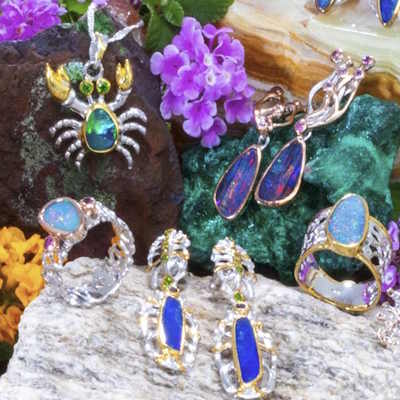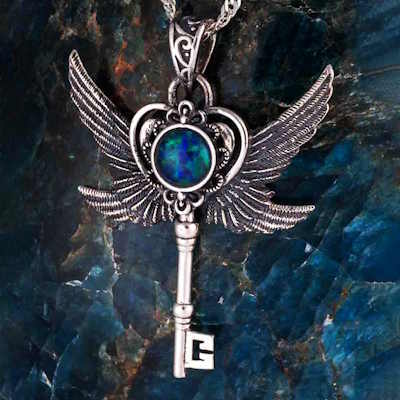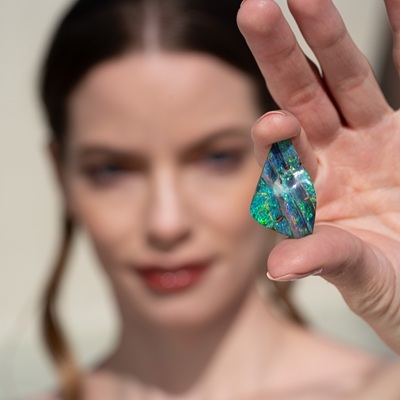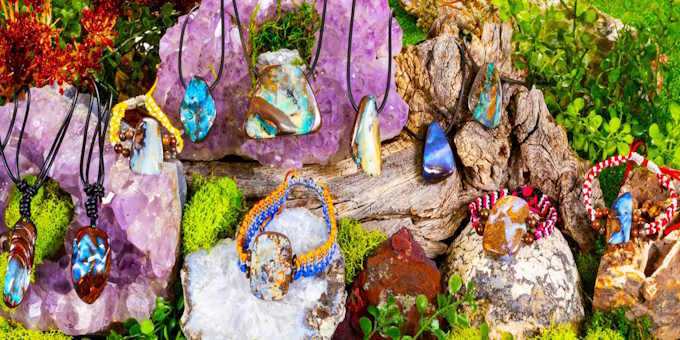
What Is an Earth-Mined Gemstone? Origins and Value
Posted by AOD on 24th Jun 2026
What Is an Earth-Mined Gemstone? Origins and Value

TL;DR:
- Earth-mined gemstones are natural minerals formed deep within the Earth’s crust over hundreds of millions to billions of years. They carry a geological record that no laboratory can replicate, making them valuable heirlooms and cultural artifacts.
An earth-mined gemstone is a naturally occurring mineral or organic material formed deep within the Earth’s crust over hundreds of millions to billions of years, without any human intervention in its creation. These stones, including diamonds, rubies, sapphires, emeralds, and opals, carry a geological record that no laboratory can replicate. Each one is a physical artifact of immense time, pressure, and planetary history. Understanding what separates a natural gemstone from its lab-created counterpart matters deeply for collectors, buyers, and anyone drawn to the quiet power of something genuinely ancient.
What is an earth-mined gemstone, and how does it form?
Earth-mined gemstones are defined by their origin: they form entirely through natural geological processes, shaped by forces that operated long before humans existed. Diamonds form roughly 100 miles beneath Earth’s surface over 1–3 billion years under extreme heat and pressure. That timescale is not a marketing claim. It is a geological fact that gives every natural diamond a weight of history no reactor can manufacture.
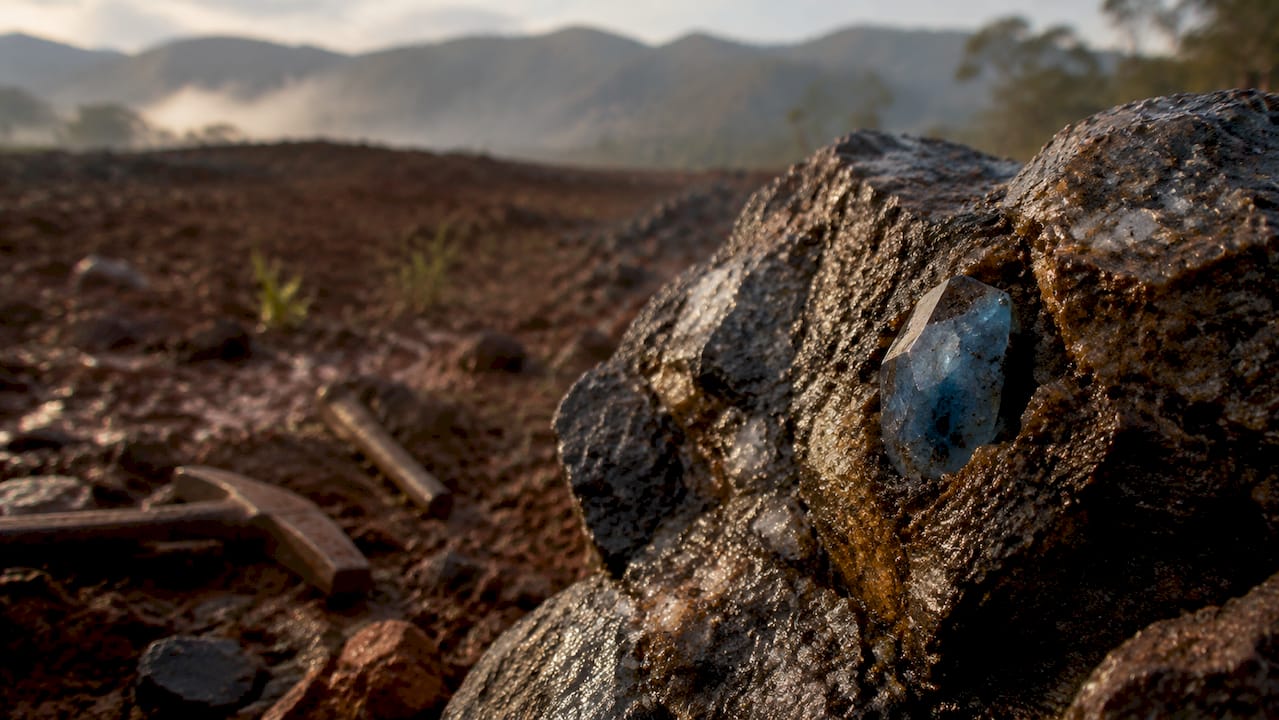
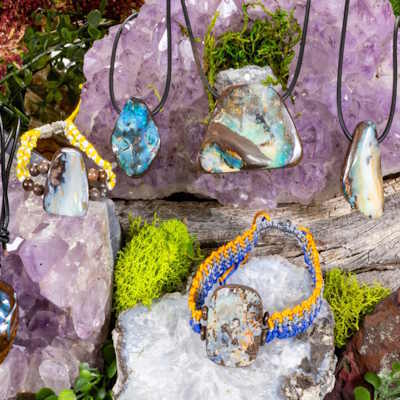
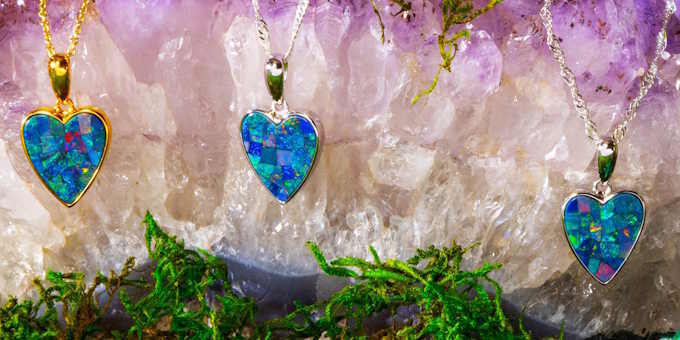
Rubies and sapphires, both varieties of the mineral corundum, crystallize over hundreds of millions of years within metamorphic or igneous rock. Emeralds form in hydrothermal veins where superheated water carries beryllium and chromium into fractures in the Earth’s crust. Australian opals take a different path entirely, forming when silica-rich water seeps into rock cavities and slowly solidifies into the kaleidoscopic structures that produce their famous play-of-color.
Volcanic and tectonic activity plays a critical role in making these gems accessible. Kimberlite pipes, for example, act as natural elevators that carry diamonds from deep mantle rock toward the surface. Without these violent geological events, most of the world’s finest gemstones would remain permanently buried.
How gemstones are extracted from the earth
The gemstone mining process ranges from small-scale artisanal operations to large industrial mines. Artisanal miners in regions like Mogok, Myanmar, often work by hand, sifting through riverbeds and shallow pits. Industrial operations in South Africa and Australia use heavy machinery to access deeper deposits.
- Surface mining removes overlying rock to expose gem-bearing gravel or ore near the surface.
- Underground mining follows ore veins deep into the earth through tunnels and shafts.
- Alluvial mining recovers gems from riverbeds and sediment deposits where erosion has concentrated them.
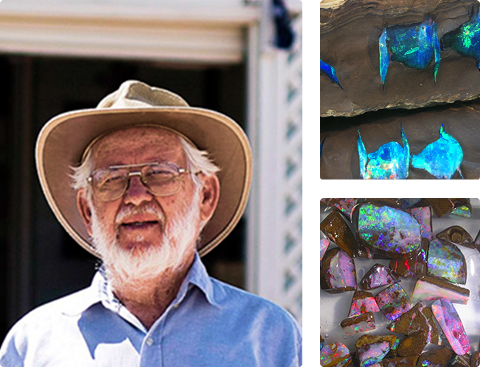
- Open-pit mining is common for large-scale diamond and opal extraction in Australia’s Coober Pedy and Lightning Ridge regions.
Pro Tip: When buying a natural gemstone, ask whether the stone comes from an artisanal or industrial mine. Artisanal operations often offer better traceability and support local communities directly.
How do earth-mined gemstones differ from lab-created stones?
Lab-created gemstones are chemically identical to their natural counterparts, but the process that creates them is fundamentally different. Lab-grown diamonds form in weeks using High Pressure High Temperature (HPHT) or Chemical Vapor Deposition (CVD) methods, compared to the billions of years required in nature. That compression of time changes everything about what the stone represents.
The most telling physical difference lies in inclusions. Each natural gemstone contains unique inclusions that act as a geological fingerprint, revealing its exact origin and the conditions under which it formed. No two natural stones are identical. Lab-grown stones, by contrast, tend to show uniform growth patterns that gemologists can identify under magnification.
The market reflects this distinction clearly. Lab-grown diamond wholesale prices have dropped by over 90% in a decade due to mass production. Natural stones retain value because their supply is finite and their origin is irreplaceable.
| Feature | Earth-mined gemstone | Lab-created gemstone |
|---|---|---|
| Formation time | Millions to billions of years | Weeks to months |
| Inclusions | Unique geological fingerprints | Uniform, controlled patterns |
| Supply | Finite, geologically limited | Continuous, production-dependent |
| Market value | Retains long-term value | Declining due to commoditization |
| Cultural significance | Heirloom quality, historical weight | Minimal heritage value |
Natural stones carry cultural weight as heirlooms, representing a chain of possession and meaning that lab-grown stones simply cannot replicate. For collectors and those purchasing jewelry meant to pass through generations, this distinction is not trivial.
What factors determine the value and rarity of natural gemstones?
The value of a natural gemstone rests on four core qualities: color, clarity, cut, and size. Beyond these, geological rarity and provenance add layers of worth that no grading report fully captures. Precious stones like diamond, ruby, sapphire, and emerald score 8–10 on the Mohs hardness scale, making them durable enough for everyday wear and long-term preservation.
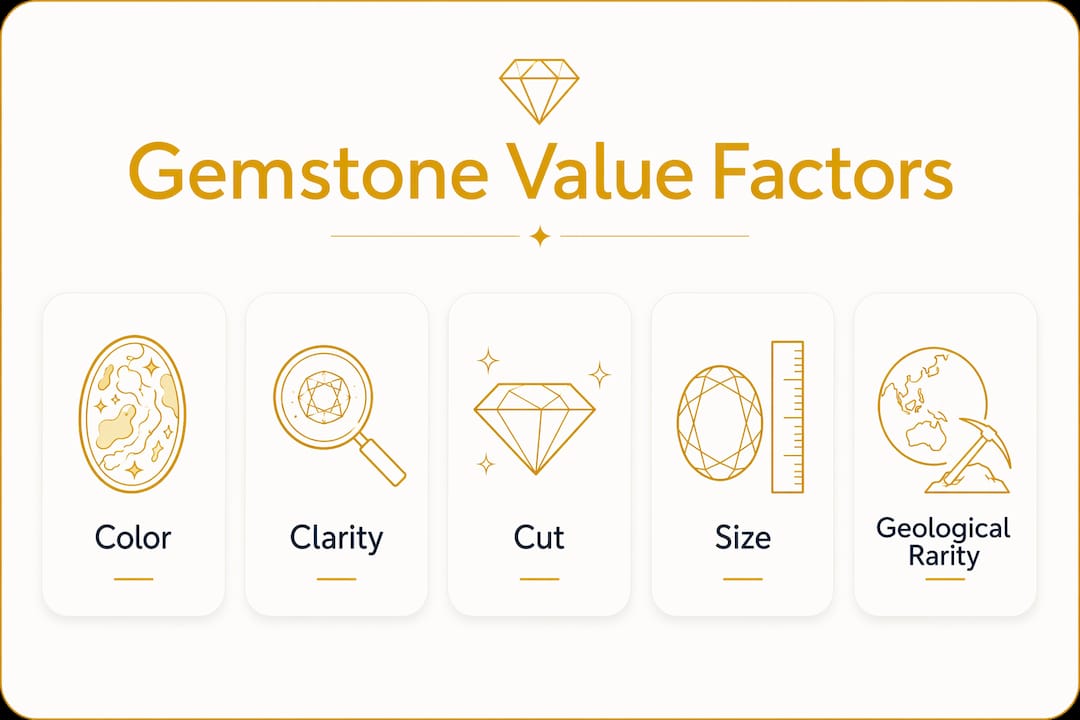
Geographic origin shapes value profoundly. Rubies from Mogok, Myanmar, command premiums over stones from other sources because of their legendary “pigeon blood” red color. Sapphires from Kashmir carry a velvety blue that no other deposit consistently produces. Australian opals from Lightning Ridge, with their black body tone and vivid play-of-color, are among the rarest gemstones on Earth. Provenance is not just a story. It is a measurable factor in price.
Rarity also stems from the sheer improbability of gem-quality formation. Most mineral deposits produce industrial-grade material. Only a fraction yields stones beautiful and durable enough to be called gemstones. That natural filtering process is what gemstone rarity ultimately means.
Key value factors for natural gemstones include:
- Color saturation and hue: The more vivid and pure the color, the higher the value.
- Clarity: Fewer inclusions generally mean higher prices, though some inclusions prove origin and add character.
- Provenance: Documented origin from a renowned deposit increases both monetary and cultural value.
- Certification: Reports from the Gemological Institute of America (GIA) or the American Gemological Laboratories (AGL) confirm quality and origin.
- Scarcity: Natural stones’ finite supply supports long-term value retention in ways that continuously produced lab stones cannot match.
Pro Tip: Always request a certificate from a recognized gemological laboratory like GIA or AGL when purchasing a high-value natural gemstone. Certification protects your investment and confirms the stone’s natural origin.
Why does ethical sourcing matter for earth-mined gemstones?
Ethical sourcing is the practice of verifying that a gemstone was mined without causing undue environmental harm or violating human rights. Provenance documentation and frameworks like the Kimberley Process help establish responsible mining origins, though critics note that some human rights concerns fall outside these frameworks’ scope. Buyers who care about where their stones come from need to look beyond a single certification.
The environmental conversation around natural versus lab-grown gems is more nuanced than it first appears. Responsibly sourced natural stones from traceable small-scale operations may carry a comparable or even lower carbon footprint than energy-intensive lab reactors, depending on the energy sources powering those facilities. Lab-grown does not automatically mean environmentally neutral.
Practical steps buyers can take to verify ethical sourcing:
- Ask for a full chain of custody document tracing the stone from mine to market.
- Look for jewelers with direct miner relationships, which reduce intermediary opacity.
- Request certifications that go beyond the Kimberley Process, such as the Responsible Jewellery Council (RJC) certification.
- Favor retailers who publish their sourcing practices openly, as Australianopaldirect does with its direct relationships to Australian opal miners.
- Read about ethical luxury practices before making a significant purchase.
Small-scale artisanal mining, when conducted transparently, often supports local economies in regions where few other livelihoods exist. Consumers benefit from verifying ethical sourcing claims and provenance documentation to confirm that their purchase supports responsible practices rather than undermining them.
Key Takeaways
Earth-mined gemstones are irreplaceable natural artifacts whose value, rarity, and cultural significance rest on billions of years of geological formation that no laboratory process can authentically duplicate.
| Point | Details |
|---|---|
| Natural formation | Diamonds form over 1–3 billion years; rubies, sapphires, and emeralds form over hundreds of millions of years. |
| Geological fingerprints | Unique inclusions in every natural stone confirm its origin and make it traceable and one-of-a-kind. |
| Value retention | Finite supply keeps natural stone values stable; lab-grown wholesale prices have dropped over 90% in a decade. |
| Ethical sourcing | Provenance documentation and direct miner relationships are the most reliable ways to verify responsible origins. |
| Heirloom significance | Natural stones carry cultural and historical weight that lab-created gems cannot replicate. |
Why I believe natural stones carry something no lab can bottle
I have spent years studying gemstones, and the question I hear most often is some version of: “Why pay more for a natural stone when a lab-grown one looks identical?” My honest answer is that they do not look identical to anyone who knows what to look for. The inclusions in a natural ruby from Mogok tell a story written in heat and pressure over 500 million years. A lab-grown stone tells the story of a reactor running on electricity for six weeks.
Buyers should view natural gemstones as finite heritage pieces rather than straightforward financial investments. That framing matters. A natural opal from Lightning Ridge or a Kashmir sapphire is not a stock certificate. It is an object with a geological biography, and that biography is part of what you are acquiring.
The ethical complexity is real, and I do not dismiss it. Some mining operations cause genuine harm. But the answer is not to abandon natural stones wholesale. It is to demand better traceability, support miners who operate responsibly, and recognize that sustainable jewelry practices are advancing rapidly. The collectors I respect most buy fewer stones and buy them better. They ask hard questions about provenance. They choose jewelers with direct miner relationships. That approach honors both the stone and the people who brought it to the surface.
— Renee
Authentic earth-mined gemstones, sourced with care
Australianopaldirect works directly with miners in Lightning Ridge, Coober Pedy, and Queensland to bring genuinely earth-mined opals to collectors and jewelry buyers worldwide. Every stone comes with transparent provenance, cutting out the intermediaries who obscure a gem’s true origin.

The collection includes ethically sourced opal jewelry spanning rings, pendants, earrings, and custom-designed pieces, each one carrying the geological story of Australia’s most celebrated gemstone regions. For buyers who want to understand the full picture before purchasing, the earth-mined vs lab opal guide on the Australianopaldirect blog offers a detailed comparison grounded in real gemological distinctions. Natural stones of this quality are finite. The ones available today will not be available forever.
FAQ
What is an earth-mined gemstone in simple terms?
An earth-mined gemstone is a natural stone formed entirely within the Earth over millions to billions of years, without any human involvement in its creation. Examples include diamonds, rubies, sapphires, emeralds, and opals.
How can you tell if a gemstone is natural or lab-created?
A gemologist can identify natural stones by examining their inclusions under magnification, since natural stones contain unique geological fingerprints that lab-grown stones do not replicate. Certification from GIA or AGL also confirms natural origin.
Do earth-mined gemstones hold their value better than lab-grown ones?
Natural gemstones retain value over time because their supply is geologically finite, while lab-grown stone wholesale prices have dropped by over 90% in a decade due to continuous mass production.
What makes Australian opals particularly rare among natural gemstones?
Australian opals from Lightning Ridge and Coober Pedy form through a unique silica-based process that produces a vivid play-of-color found nowhere else on Earth at the same quality or consistency. Black opals from Lightning Ridge are among the rarest gemstones in the world.
How do I verify that a natural gemstone was ethically sourced?
Ask your jeweler for a full chain of custody document and look for certifications beyond the Kimberley Process, such as Responsible Jewellery Council accreditation. Retailers with direct miner relationships, like Australianopaldirect, offer the clearest provenance transparency.
Recommended
- Earth-mined vs lab opal: Uncover real value and authenticity - Australian Opal Direct
- Why gemstone origins matter for Australian opal collectors - Australian Opal Direct
- Mine-to-Market Opal: How Authentic Australian Gems Reach You - Australian Opal Direct
- Gemstone rarity explained: What makes Australian opals valuable - Australian Opal Direct