Earth-mined vs lab opal: Uncover real value and authenticity
Posted by AOD on 16th Apr 2026
Earth-mined vs lab opal: Uncover real value and authenticity
TL;DR:
- Earth-mined opals are formed over millions of years with unique natural irregularities and provenance.
- Lab-created opals are synthesized rapidly with uniform structures, showing predictable patterns under magnification.
- Collectors value natural opals for rarity and geological history, while lab opals offer ethical, affordable alternatives.
Few gemstones ignite the imagination quite like an opal. Each stone carries a shifting, living fire within it, colors that dance and flicker as light moves across the surface. Yet today’s collectors face a genuine dilemma: earth-mined opals, formed over millions of years as silica-rich water seeped into ancient rock fissures, now share the marketplace with lab-created alternatives that mimic their kaleidoscopic brilliance. The visual similarities can be striking, even to experienced eyes. This guide cuts through the confusion, examining geological origins, structural differences, identification techniques, and the ethical and investment considerations that truly matter to serious collectors.
Table of Contents
- How earth-mined opals are formed
- Lab-created opals: Synthesis and structure
- Visual and physical identification techniques
- Ethics, value, and collector perspectives
- A collector’s perspective: What really matters
- Discover premium opal jewelry with AustralianOpalDirect
- Frequently asked questions
Key Takeaways
| Point | Details |
|---|---|
| Natural formation | Earth-mined opals form over millions of years, creating unique color patterns and rarity. |
| Lab opal structure | Lab-created opals show uniformity and predictable patterns, differing from natural inclusions. |
| Easy identification | Magnification reveals irregularities in natural opals and columnar layering in lab ones. |
| Collector value | Earth-mined opals are prized for authenticity, investment, and provenance. |
| Ethical choice | Lab opals offer ethical sourcing and affordability for conscientious collectors. |
How earth-mined opals are formed
Nature is a patient artist. The story of an earth-mined opal begins hundreds of millions of years ago, when silica-laden water trickled through cracks and voids in sedimentary rock. Over immense spans of geological time, that water evaporated, leaving behind microscopic spheres of silica dioxide arranged in orderly, three-dimensional grids. It is precisely this grid structure that produces the phenomenon collectors prize above all else: play-of-color, the optical effect where spectral hues seem to glow from within the stone.
“The formation of precious opal requires not just the right chemistry, but an extraordinary alignment of geological conditions sustained across timescales that dwarf human history.”
The play-of-color over millions of years emerges because silica spheres of uniform size diffract light, splitting it into its spectral components. Even a slight variation in sphere size shifts the dominant color from violet to red, which is why red-on-black opals from Lightning Ridge command such reverence and such premiums.
Key formation steps for earth-mined opals:
- Silica-rich groundwater percolates through weathered sandstone or volcanic rock
- Water evaporates slowly within rock voids, depositing silica spheres layer by layer
- Spheres self-organize into a regular lattice structure over thousands to millions of years
- Overlying rock pressure and chemistry determine the host matrix and body tone
- The finished opal retains natural inclusions, matrix veining, and irregular boundaries
These natural irregularities are not flaws. They are the fingerprints of geological time, evidence that no two earth-mined opals can ever be identical. The advantages of earth-mined opals extend beyond aesthetics into rarity and provenance, qualities that resonate deeply with collectors who understand what patience nature invested in each piece.
| Characteristic | Earth-mined opal | Synthetic opal |
|---|---|---|
| Formation time | Millions of years | Weeks to months |
| Silica structure | Irregular, natural lattice | Uniform, engineered lattice |
| Inclusions | Common, natural matrix | Rare or absent |
| Play-of-color | Complex, variable | Consistent, often vivid |
| Provenance | Traceable to mine region | Laboratory origin |
| Investment value | High, rarity-driven | Lower, reproducible |
Pro Tip: When examining an earth-mined opal, tilt it slowly under a single light source. The play-of-color should shift and roll in an organic, unpredictable way. If the color pattern feels static or perfectly repeating, that uniformity warrants closer inspection.
Now that you’ve learned how opals form in nature, let’s explore lab-created alternatives and how they compare.
Lab-created opals: Synthesis and structure
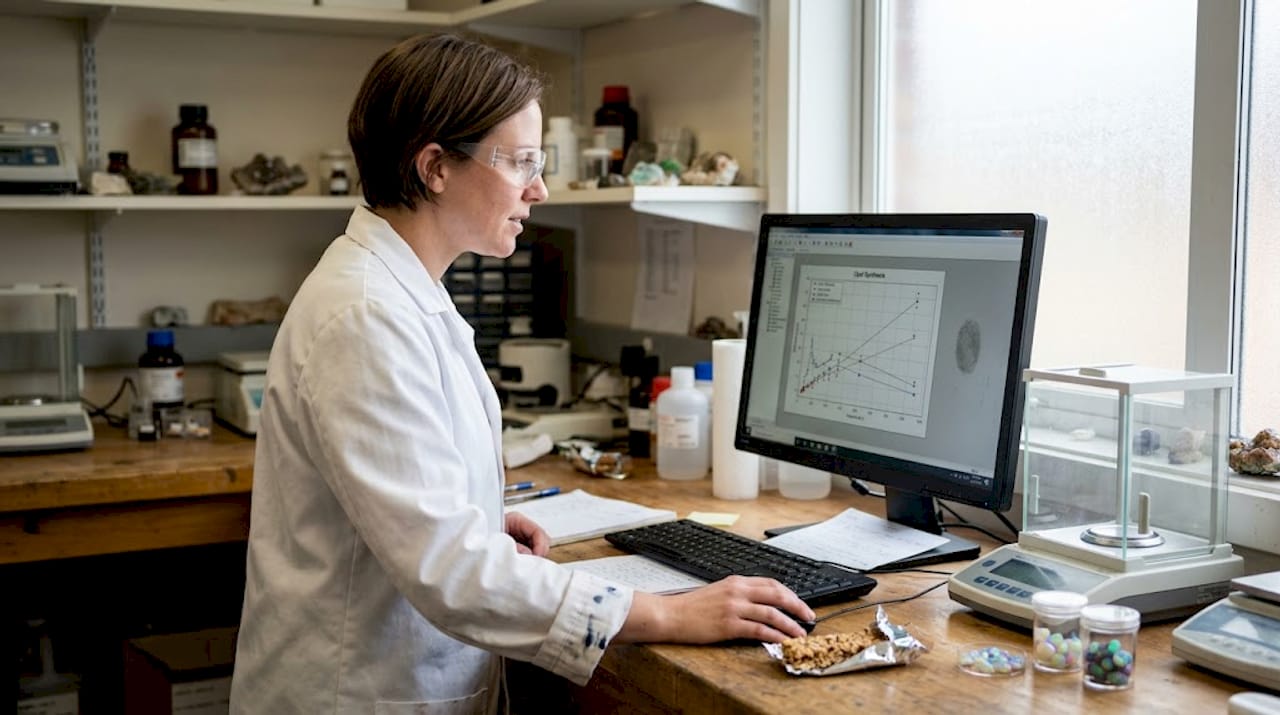
Lab-created opals are genuine opals in a chemical sense. They share the same silicon dioxide composition as their earth-mined counterparts, but the process that creates them is measured in weeks rather than millennia. Scientists developed synthesis methods in the 1970s, and modern techniques have grown impressively sophisticated, producing stones with vivid, consistent play-of-color that can genuinely surprise first-time observers.
How lab opals are synthesized:
- Monodisperse silica spheres (uniform in size) are suspended in a liquid solution
- Spheres are allowed to sediment slowly under controlled temperature and gravity
- The settled lattice is consolidated using a binder, often a silica-based polymer
- The resulting material is cut, shaped, and polished like any gemstone
- Optional treatments enhance color saturation or surface stability
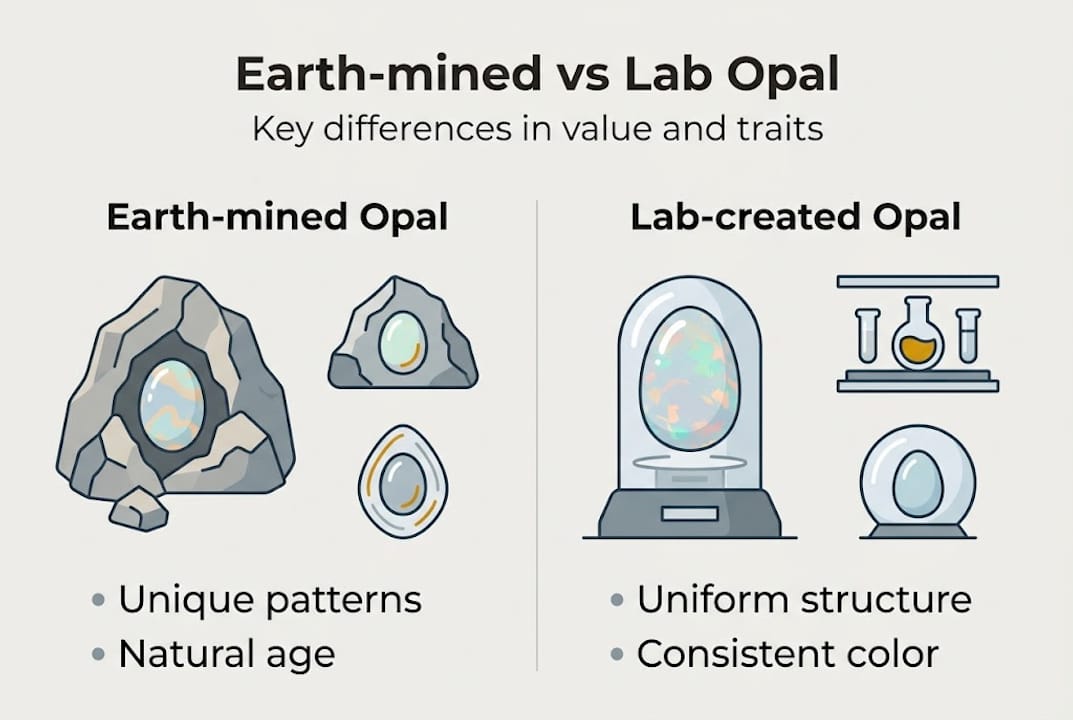
The critical distinction lies in what the controlled environment cannot replicate: geological chaos. Lab opals show columnar layering and uniform patterns under magnification, a telltale sign of their engineered origins. In earth-mined stones, the silica lattice grows in response to shifting pressures, mineral impurities, and irregular void shapes, producing the organic complexity that collectors find so compelling.
| Feature under magnification | Earth-mined opal | Lab-created opal |
|---|---|---|
| Silica pattern | Irregular, flowing | Columnar, regimented |
| Color distribution | Patchy, natural variation | Even, predictable |
| Surface texture | Matrix inclusions visible | Clean, homogeneous |
| Internal boundaries | Diffuse, gradual | Sharp, layered |
Pro Tip: Use a 10x loupe and look for what gemologists call “columnar layering,” a stacked, almost reptilian-scale pattern running in parallel columns. This structure is virtually absent in earth-mined opals and is one of the most reliable indicators of laboratory synthesis.
For collectors who want a deeper understanding of identifying real opal in the marketplace, studying these structural differences under magnification is an invaluable skill that pays dividends at every auction and estate sale.
Understanding lab-created opals leads naturally to a deeper comparison with earth-mined options, especially in practical jewelry settings.
Visual and physical identification techniques
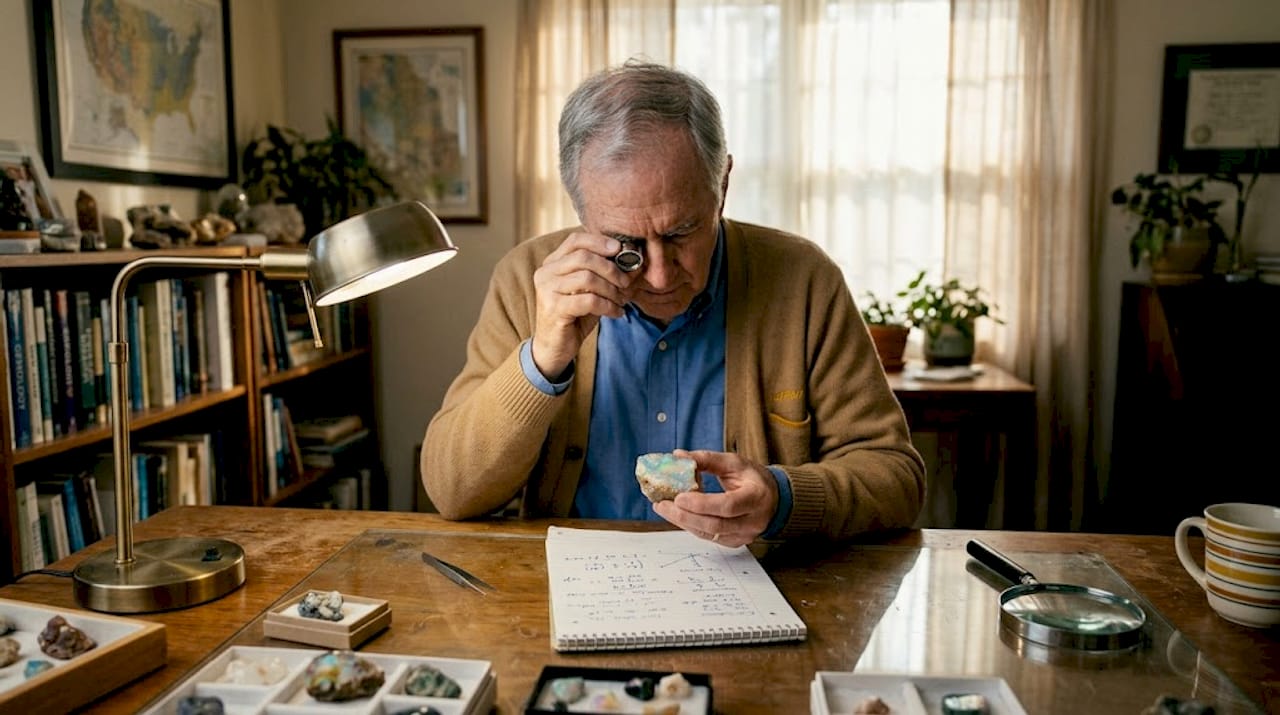
Identifying opal origin does not require a laboratory. With the right tools and a trained eye, collectors can make confident assessments in the field. The most important instrument is a quality 10x loupe, preferably a triplet loupe that corrects for color distortion at the edges.
“Gemological identification of opal origin relies on recognizing the structural signatures that geology leaves behind, patterns that human synthesis has not yet learned to fully erase.”
The columnar layering and uniform patterns found in lab opals stand in clear contrast to the flowing, irregular silica structures of natural stones. Beyond magnification, several visual and physical markers help distinguish origin.
Common identification features:
- Natural inclusions: Sandy matrix, iron oxide staining, or potch (colorless opal) veining indicate earth-mined origin
- Play-of-color character: Natural opals display rolling, directional color shifts; lab opals often show a more static, “flashy” pattern
- Body tone consistency: Earth-mined opals vary in transparency and body tone across the stone; lab stones tend toward uniformity
- Surface irregularities: Tiny pits, natural undulations, and uneven polish edges suggest geological origin
- Refractive index: Both types share similar values (1.37 to 1.47), so this test alone is inconclusive
- Weight: Lab opals with polymer binders may feel slightly lighter than comparable earth-mined stones
Lighting technique matters enormously. Hold the opal under a fiber-optic light source and rotate it through 360 degrees. Earth-mined stones reveal color that seems to originate from within, shifting in character as the angle changes. Lab stones often display color that sits closer to the surface, appearing more like a coating than an internal fire.
Pro Tip: Examine the opal’s profile (the side edge) under magnification. Natural opals often show the host rock matrix or a gradual transition from color to potch. A perfectly clean, uniform edge with no matrix is a strong indicator of laboratory origin.
Understanding opal origin identification is one of the most rewarding skills a collector can develop. It transforms every viewing into a geological detective exercise, deepening the appreciation for what nature actually achieved.
With identification techniques in hand, it’s time to weigh the practical and ethical implications of choosing earth-mined or lab-created opals.
Ethics, value, and collector perspectives
The choice between earth-mined and lab-created opals is rarely purely aesthetic. For many collectors, it is a values-driven decision that touches on environmental responsibility, investment philosophy, and the meaning of authenticity itself.
Earth-mined opals carry a provenance story that no laboratory can manufacture. A black opal from Lightning Ridge or a crystal opal from Coober Pedy represents a specific place, a specific geological event, and a specific moment when a miner’s hands first brought it into light. That narrative has real financial weight. Natural structures formed over millions of years display true rarity, and rarity drives the premium pricing that makes fine opals compelling as long-term investments.
Ethics and investment: Key considerations
- Earth-mined pros: Irreplaceable rarity, provenance value, strong investment appreciation, unique play-of-color
- Earth-mined cons: Higher price point, environmental footprint of mining, supply variability
- Lab-created pros: Consistent quality, lower cost, minimal environmental impact, accessible entry point
- Lab-created cons: No provenance, limited investment upside, reproducibility undermines rarity value
For collectors focused on luxury opal investment tips, the calculus consistently favors earth-mined stones, particularly those from documented Australian sources. The authenticity of natural structures is genuinely difficult to replicate, and that difficulty is precisely what sustains collector demand across generations.
Pro Tip: Always request provenance documentation when purchasing earth-mined opals. Reputable sellers can provide mine-of-origin certificates, and some Australian miners offer direct traceability to specific claims. This documentation can significantly enhance resale value.
For those still weighing their options, a thoughtful opal jewelry selection guide can help align personal values with the right gemstone choice, whether that means embracing the geological wonder of a natural stone or the accessible beauty of a lab-created alternative.
Having weighed the key considerations, let’s reflect on what truly matters when choosing opals for your collection.
A collector’s perspective: What really matters
Conventional wisdom in gemstone collecting places rarity and geological age at the top of every value hierarchy. And while that framework holds real merit, seasoned collectors know that the most meaningful pieces in any collection are not always the rarest or the most expensive.
The advantages of Australian opals go beyond investment metrics. They include the irreplaceable experience of holding a stone that formed before the first dinosaur walked the earth, a stone that carries within it the memory of ancient seas and volcanic upheaval. That experience cannot be synthesized.
Yet there is genuine joy in lab-created opals too, particularly for collectors who prioritize wearability, affordability, or ethical sourcing. The wisest collectors we know treat both categories with respect, choosing earth-mined stones for their crown jewels and lab-created pieces for everyday wear.
“The opal that moves you most deeply is the right opal, regardless of where it was born.”
Prioritize gems with meaningful provenance and tangible beauty. Investment potential is real, but personal resonance is what transforms a gemstone into an heirloom.
Discover premium opal jewelry with AustralianOpalDirect
For collectors who have done the research and are ready to experience the genuine article, Australian Opal Direct offers a curated collection of ethically sourced, earth-mined opals from Lightning Ridge, Coober Pedy, and Queensland, each piece accompanied by provenance assurance and expert gemological guidance.

Whether you are drawn to the deep fire of a black opal ring or the delicate translucence of a crystal pendant, the AustralianOpalDirect jewelry collection brings you directly to the source. Direct-miner relationships mean authentic stones at competitive prices, backed by free shipping, complimentary insurance, and a 90-day warranty. Your opal journey deserves a partner who understands both the science and the soul of these extraordinary gemstones.
Frequently asked questions
What makes earth-mined opals more valuable than lab opals?
Earth-mined opals are rarer, formed over millions of years, and display a complexity of play-of-color that lab synthesis has not yet matched, making them irreplaceable as collector and investment pieces.
How can I tell if my opal is earth-mined or lab-created?
Examine the stone under 10x magnification: lab opals show columnar layering and uniform patterns, while natural opals display irregular silica structures, inclusions, and natural matrix veining.
Are lab opals suitable for collectors looking for ethical gemstones?
Yes, lab opals offer consistent quality and a minimal environmental footprint, making them a thoughtful choice for collectors who prioritize ethical sourcing over geological provenance.
Do earth-mined opals always cost more than lab-created opals?
In most cases, yes. Earth-mined opals fetch premiums because their rarity and formation timescales cannot be replicated, though exceptional lab stones can still carry meaningful price tags.
Can lab opals show the same play-of-color as natural opals?
Lab opals can produce vivid play-of-color, but lab synthesis struggles to match the organic complexity, directional variation, and spectral depth found in the finest earth-mined specimens.
Recommended
- How to Authenticate Australian Opals for Genuine Value - Australian Opal Direct
- Opal Provenance: Ensuring Authenticity and Ethical Value - Australian Opal Direct
- 7 advantages of natural earth-mined opals: beauty, rarity, value - Australian Opal Direct
- How to Distinguish Opal Origins for Authentic Jewelry - Australian Opal Direct