The Role of Provenance in Luxury Jewelry: 2026 Guide
Posted by AOD on 5th Jul 2026
The Role of Provenance in Luxury Jewelry: 2026 Guide
TL;DR:
- Provenance in luxury jewelry means a verifiable history of origin and ownership, which supports authenticity and value. Modern technologies like blockchain and DNA tracers enhance provenance verification, but traditional expert authentication remains vital for vintage pieces. Documented provenance significantly increases market liquidity, authenticity confidence, and resale value for collectors.
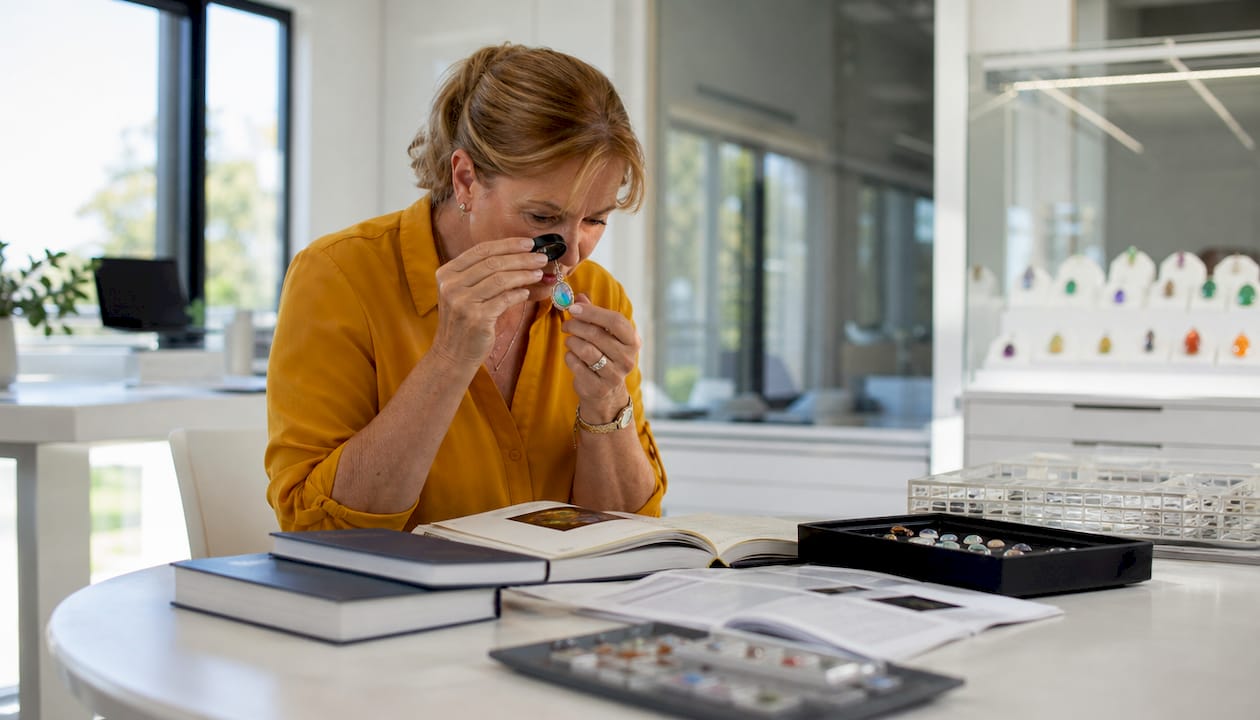
Provenance in luxury jewelry is defined as the documented and verifiable history of a piece, encompassing its origin, ownership chain, and ethical sourcing record. The role of provenance in luxury jewelry extends far beyond a paper trail. It establishes authenticity, protects investment value, and tells the story of where a gem was born. For collectors acquiring pieces from regions like Lightning Ridge or Coober Pedy, jewelry provenance shapes both the monetary and emotional weight of every acquisition. As blockchain-enabled digital product passports and DNA nanoparticle tracers enter the market, the standards for provenance verification are rising sharply across the entire luxury sector.
How does provenance affect value in luxury jewelry?
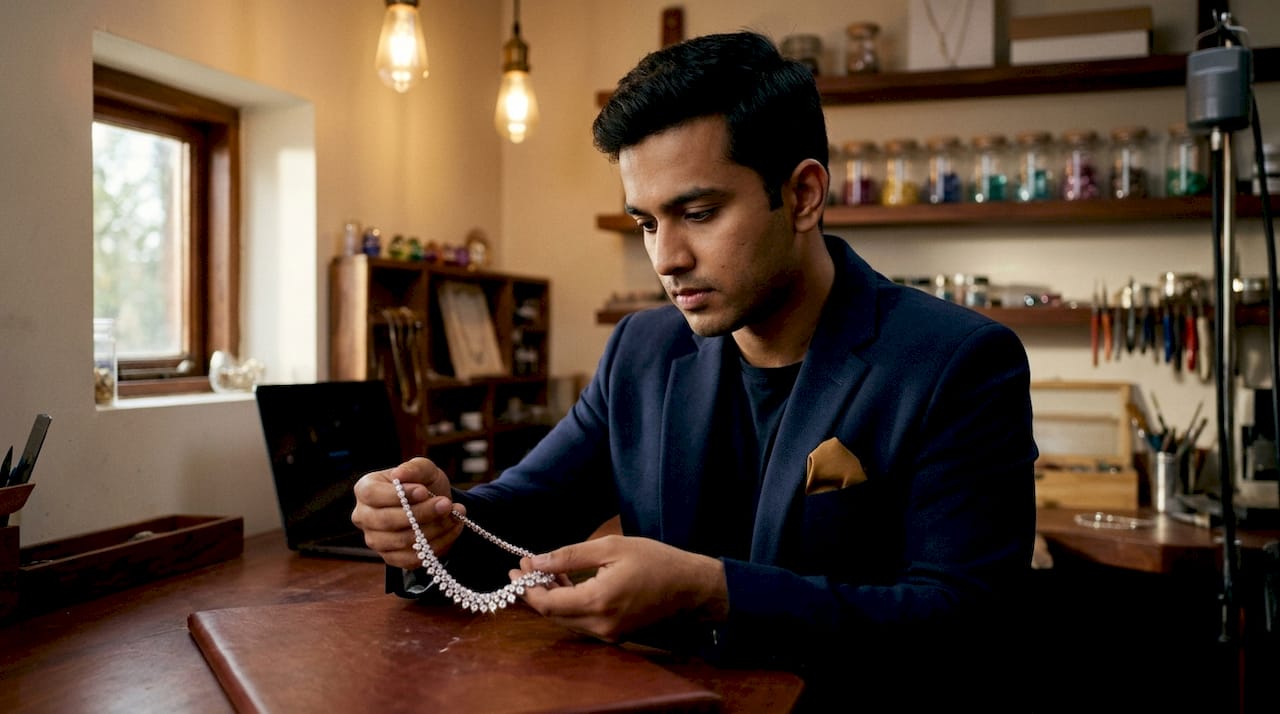
Provenance directly determines how much a piece is worth and how quickly it sells. Provenance presence can add a 20–40% premium to significant pieces and eliminates authenticity concerns for buyers. That premium is not arbitrary. It reflects the reduced risk a buyer accepts when a piece carries a verified history.
Auction specialists treat provenance as a liquidity enhancer. A piece with a clean, documented chain of custody moves faster and commands stronger bids than an equivalent piece with no recorded history. Absence of provenance is normal for most jewelry, but when provenance exists, it critically reduces buyer contingency and elevates market liquidity. The implication is clear: provenance converts a beautiful object into a defensible investment.
Documented origin also reduces the risk of counterfeits entering a collection. Luxury sector counterfeiting losses exceed $30 billion annually, a figure that underscores why authentication confidence has become non-negotiable for serious collectors. Every link in the ownership chain, from the mine to the jeweler to the auction house, adds a layer of protection that no amount of visual inspection alone can replicate.
Key factors that provenance protects:
- Authentication confidence: Documented origin removes doubt about a gem’s identity and source region.
- Resale liquidity: Verified pieces attract more bidders and command faster sales at auction.
- Insurance eligibility: Insurers require provenance documentation to underwrite high-value jewelry accurately.
- Counterfeit defense: A verified chain of custody makes fraudulent substitution far harder to execute.
Pro Tip: Request a written chain-of-custody statement from every seller before purchase. Even a single gap in the ownership record can reduce a piece’s auction estimate significantly.
What technologies now verify jewelry provenance?
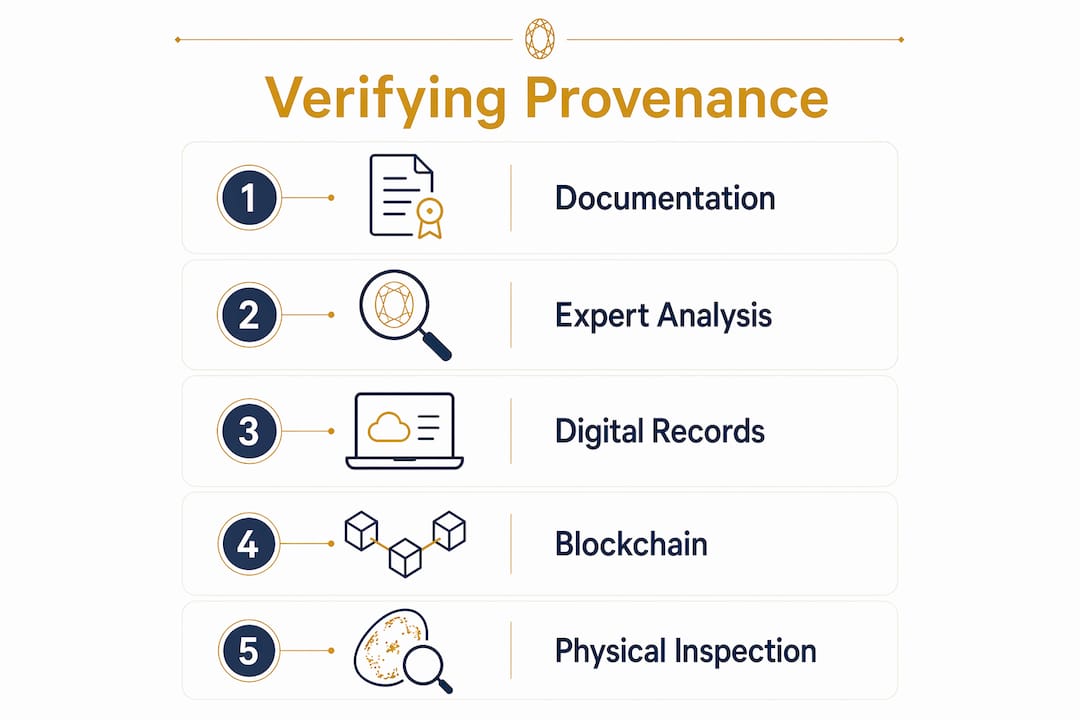
Modern provenance verification has moved well beyond paper certificates. Blockchain-enabled digital product passports now serve as the standard for complete provenance claims, requiring specific origin data and an independently verified chain of custody. These passports act as a living record, updated at each transfer of ownership and accessible to buyers, insurers, and auction houses in real time.
NFC chips embedded in jewelry settings allow collectors to verify authenticity with a smartphone scan. Digital Product Passports function as a “single source of truth,” maintaining provenance and governing a luxury product’s value throughout its entire lifecycle. That continuous relationship between object, owner, and record is what makes these tools genuinely powerful rather than merely decorative.
Physical tracers add another layer of certainty. DNA nanoparticles can be embedded directly into gemstone settings or mounting materials, creating a tamper-proof biological signature that ties a specific stone to its documented origin. These tracers survive cleaning, polishing, and resetting, making them particularly valuable for high-value colored gemstones like Australian opals, where distinguishing opal origins from different mining regions carries real monetary weight.
The four leading verification technologies in 2026:
- Blockchain digital passports: Immutable, timestamped ownership records accessible across the supply chain.
- NFC chip integration: Instant consumer verification via smartphone, protecting insurability and resale value.
- DNA nanoparticle tracers: Biological markers embedded in settings for tamper-proof gem identification.
- Gemological laboratory reports: Traditional certificates from bodies like the GIA that document physical characteristics and origin.
One critical limitation applies to all digital tools. Provenance technologies cannot reconstruct missing historic records for vintage pieces. This creates an authenticity ceiling on older jewelry, where traditional expert authentication remains the only viable path to establishing credibility.
Pro Tip: When buying vintage pieces, ask specifically whether a gemological expert has physically examined the stone and reviewed any surviving contemporaneous documents. Digital tools cannot fill gaps that paper never created.
Romantic vs. forensic provenance: what is the real difference?
Not all provenance carries equal weight, and collectors who miss this distinction pay for it at resale. Romantic provenance refers to intriguing ownership stories or famous associations that lack rigorous documentation. Forensic provenance is supported by contemporaneous receipts, insurance appraisals, photographs, legal documents, and auction catalog entries.
Collectors frequently overvalue romantic provenance stories, but valuation premiums depend on forensic provenance backed by physical documents. Absent solid documentation, even a high-quality piece is treated as unattributed by auction houses and insurers. The story of a ring once worn by a celebrated figure means very little without a photograph, an estate record, or a period receipt to anchor it.
| Feature | Romantic provenance | Forensic provenance |
|---|---|---|
| Documentation basis | Oral history, family stories, anecdote | Receipts, appraisals, legal records, photographs |
| Auction house treatment | Noted but unverified, limited premium | Accepted as verified, supports full premium |
| Insurance impact | Minimal to none | Directly supports accurate underwriting |
| Resale speed | Slower, subject to buyer skepticism | Faster, higher buyer confidence |
| Risk to buyer | High if story cannot be confirmed | Low when documents are contemporaneous |
The practical lesson for collectors is straightforward. A piece with romantic provenance deserves admiration. It does not deserve a premium price unless the story is anchored by documents that a third party can independently verify. Buyers who pay a romantic premium without forensic backing are essentially paying for a narrative, not a fact.
- Always ask whether ownership claims are supported by dated, third-party documents.
- Treat unverified famous-ownership stories as interesting context, not as valuation evidence.
- Request that sellers separate documented facts from family tradition or dealer lore.
How should buyers verify and organize provenance documentation?
Provenance documentation requires active management, not passive collection. Properly organized provenance files before appraisal reduce appraisal time and cost, resulting in faster and more accurate valuations. A curated folder with a clear timeline, verified copies of invoices, and historical records is what appraisers and auction specialists prioritize above all else.
The documents that carry the most weight are specific and dated. Original purchase receipts are considered the “holy grail” of provenance, showing exact purchase details and contributing substantially to value. Decades-old receipts maintain significant value precisely because they are contemporaneous. They cannot be fabricated after the fact without detection.
A complete provenance file for a collector-grade piece should include:
- Original purchase receipt or invoice: Dated, itemized, and issued by the original seller.
- Insurance appraisals: Periodic valuations from a certified gemologist, updated every three to five years.
- Auction catalog entries: Printed or digital records from any prior sale, including lot descriptions and hammer prices.
- Photographs: Period images showing the piece being worn or displayed, ideally with identifiable context.
- Estate or legal records: Wills, probate documents, or transfer records that confirm ownership transitions.
- Gemological laboratory certificates: Reports from recognized bodies documenting origin, treatment history, and physical characteristics.
Vetting the seller is equally critical. Asking the right questions before buying from any gemstone retailer reveals whether their sourcing claims are supported by documentation or simply asserted. Ethical retailers who maintain direct-miner relationships, as Australianopaldirect does with its Lightning Ridge and Coober Pedy suppliers, can provide origin documentation that traces a stone from the earth to the setting.
Provenance files also serve collectors beyond the point of sale. They support insurance claims, simplify estate planning, and protect the sentimental meaning of heirloom pieces across generations. In collector-grade jewelry, provenance includes material, origin, maker, and ownership history, all backed by documentation that shapes value, trust, and insurability.
Key Takeaways
Provenance is the single most powerful factor separating a luxury jewelry investment from an expensive purchase, and forensic documentation is the only form that auction houses, insurers, and serious collectors accept as proof.
| Point | Details |
|---|---|
| Provenance adds measurable value | Documented origin can add a 20–40% premium to significant pieces at auction. |
| Forensic beats romantic | Physical documents like receipts and appraisals drive premiums; unverified stories do not. |
| Technology strengthens new pieces | Blockchain passports and NFC chips create tamper-proof records for modern acquisitions. |
| Vintage pieces need expert eyes | Digital tools cannot reconstruct missing historic records; traditional authentication remains essential. |
| Organized files accelerate sales | A curated provenance folder reduces appraisal time and improves pricing accuracy before any sale. |
Provenance as the quiet foundation of lasting value
I have spent years watching collectors make the same mistake: they fall in love with a story and forget to ask for the documents. Romantic provenance is seductive. A ring said to have graced the hand of a celebrated artist, a pendant passed through three generations of a noble family. These narratives add warmth and meaning to a piece. They do not add verifiable market value unless a dated receipt or a period photograph can anchor the claim.
What I find genuinely encouraging in 2026 is the growing awareness among collectors that ethical sourcing and forensic documentation are not separate concerns. They are the same concern expressed at different points in a gem’s life. When Australianopaldirect traces an opal from a Lightning Ridge mine to a finished pendant, that chain of custody is both an ethical statement and a financial one. It tells the buyer exactly where the stone came from and gives them something to show an insurer, an appraiser, or an heir.
The technologies arriving now, blockchain passports, DNA tracers, NFC chips, are genuinely useful for pieces acquired today. They will not solve the authentication challenges that vintage collectors face. For those buyers, the enduring advice remains the same: prioritize contemporaneous documentation, work with expert authenticators, and treat any gap in the record as a risk to be priced, not a story to be celebrated.
Provenance is not paperwork. It is the memory of an object, preserved in a form that the market can trust.
— Renee
Australianopaldirect: verified provenance for opal collectors
Australianopaldirect builds provenance into every piece it offers, from the moment an opal leaves the earth in Lightning Ridge or Coober Pedy to the day it arrives with a collector. That direct-miner relationship means origin documentation is not an afterthought. It is the foundation of every sale.
Collectors who want to understand exactly how Australianopaldirect authenticates its stones can read the opal authentication guide on the site, which details the verification steps applied to every piece in the collection. For those ready to acquire a piece with full provenance confidence, the ethically sourced opal collection at Australianopaldirect offers rings, pendants, earrings, and custom designs, each carrying the documented origin that serious collectors require.
FAQ
What is jewelry provenance?
Jewelry provenance is the documented and verifiable history of a piece, including its origin, maker, and chain of ownership. It establishes authenticity, supports insurance and resale value, and confirms ethical sourcing.
How does provenance affect the price of luxury jewelry?
Provenance can add a 20–40% premium to significant pieces by eliminating authenticity concerns and reducing buyer risk. Auction houses treat documented provenance as a direct liquidity enhancer.
What documents make up a strong provenance file?
The strongest provenance files include original purchase receipts, insurance appraisals, auction catalog entries, period photographs, estate records, and gemological laboratory certificates from recognized bodies.
Can blockchain replace traditional provenance authentication?
Blockchain digital passports create strong records for new acquisitions but cannot reconstruct missing historic records for vintage pieces. Traditional expert authentication remains essential for older jewelry.
Why does forensic provenance matter more than a famous ownership story?
Forensic provenance is supported by dated, third-party documents that auction houses and insurers can independently verify. Romantic ownership stories without documentation are treated as unverified and do not support valuation premiums.
Recommended
- What defines high jewelry? The key elements of true luxury - Australian Opal Direct
- Luxury gemstone standards explained: Expert guide for collectors - Australian Opal Direct
- The Role of Heritage in Gemstones: A Collector’s Guide - Australian Opal Direct
- Responsible Jewelry Explained: Choosing Ethical Luxury - Australian Opal Direct