What defines high jewelry? The key elements of true luxury
Posted by AOD on 15th Apr 2026
What defines high jewelry? The key elements of true luxury
TL;DR:
- True high jewelry combines rare gemstones, exceptional craftsmanship, artistic design, and verified authenticity.
- Australian opals are highly valued in high jewelry for their unique play-of-color, rarity, and documented origin.
- Authentic high jewelry requires transparent provenance, maker’s marks, and ethical sourcing, setting it apart from mass-produced pieces.
Many collectors assume that a five-figure price tag or a storied brand name is enough to earn the title of high jewelry. That assumption, while understandable, misses the deeper story. True high jewelry is defined by a rare convergence of extraordinary gemstones, masterful artistry, and verifiable authenticity — standards so demanding that only a fraction of pieces produced each year genuinely qualify. For those who seek ethically sourced opals and the finest expressions of the jeweler’s craft, understanding what truly separates high jewelry from its imitators is not just enlightening — it is essential to making acquisitions that hold meaning and lasting value.
Table of Contents
- What is high jewelry? Defining the essentials
- The role of gemstones: Rarity, value, and the opal factor
- Craftsmanship and artistry: Hallmarks of authentic high jewelry
- Authenticity, provenance, and the collector’s perspective
- The uncomfortable truth: Not all ‘luxury’ jewelry is truly high jewelry
- Discover authentic high jewelry opals
- Frequently asked questions
Key Takeaways
| Point | Details |
|---|---|
| Elite standards required | High jewelry demands rarity, artistry, and authenticity far beyond fine jewelry. |
| Opals embody true luxury | Top-quality, ethically sourced opals exemplify what makes high jewelry collectible and unique. |
| Craftsmanship makes the difference | Masterful design and hours of artisan work separate high jewelry from the merely expensive. |
| Certification is critical | Always seek certificates and provenance documentation before investing in high jewelry. |
What is high jewelry? Defining the essentials
High jewelry, sometimes called haute joaillerie in the French tradition, represents the absolute pinnacle of the gemstone arts. It is not simply expensive jewelry, nor is it defined by a recognizable logo. Instead, it is a category governed by strict, interconnected standards that touch every stage of a piece’s creation, from the selection of raw materials to the final polish applied by a master’s hand.
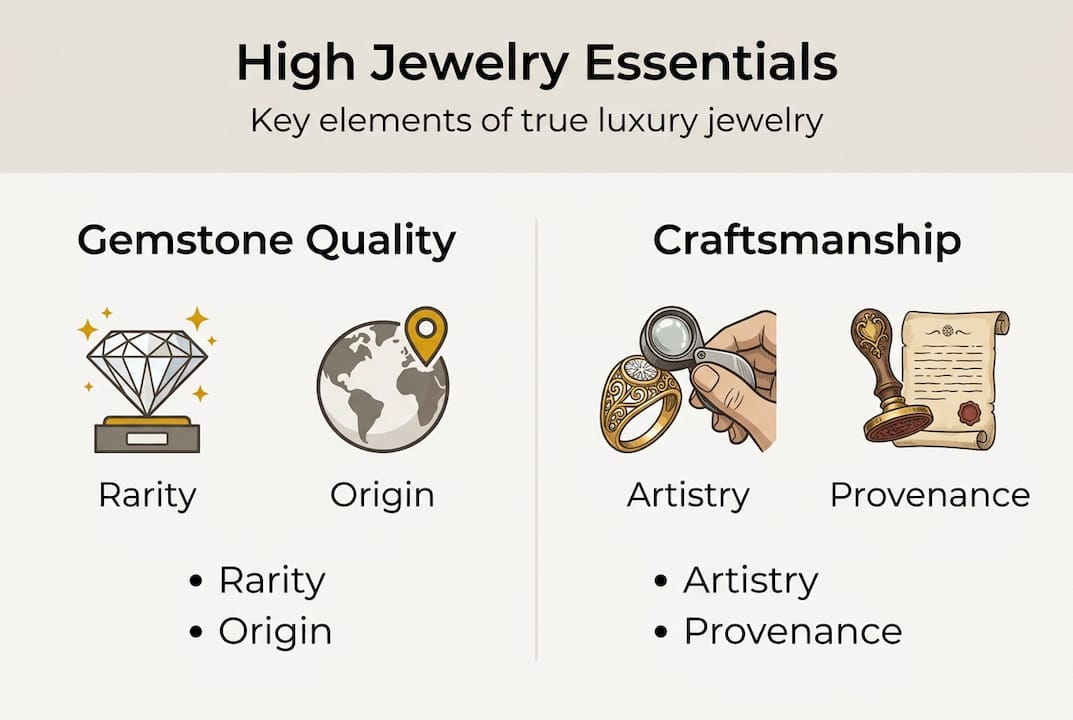
To understand what truly qualifies, consider the four pillars that gemologists and serious collectors use to evaluate any claim to high jewelry status:
- Rarity: The gemstones at the heart of the piece must be genuinely scarce, whether by nature of their origin, their color, their pattern, or their size. Common stones, however beautifully set, do not meet this threshold.
- Craftsmanship: Every element of the piece must reflect exceptional skill. Settings, metalwork, and surface finishing should demonstrate techniques that take decades to master.
- Artistic value: High jewelry is wearable art. Each piece carries a distinct creative vision, often conceived by a named designer or atelier, and executed with singular intention.
- Authenticity: Provenance matters deeply. The origin of each stone, the identity of the maker, and the documentation supporting both must be traceable and transparent.
“High jewelry is the apex of jewelry craftsmanship, marked by the use of the rarest gemstones and exceptional design.” — Australian Opal Direct
In the modern luxury market, ethical sourcing has become a fifth pillar in its own right. Collectors increasingly demand to know not just what a stone is, but where it came from and how it was extracted. This shift reflects a broader understanding that the beauty of a gemstone is inseparable from the integrity of its origins. Understanding opal rarity in luxury pieces reveals just how few stones on earth can genuinely claim a place in high jewelry’s inner circle.
The role of gemstones: Rarity, value, and the opal factor
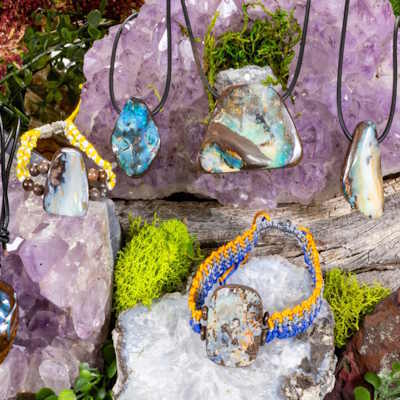
At the center of every high jewelry piece is a gemstone that earns its place through scarcity, beauty, and origin. Diamonds, rubies, and sapphires have long anchored this conversation, but a growing number of collectors and designers have turned their attention to a stone that arguably surpasses them all in visual complexity: the Australian opal.
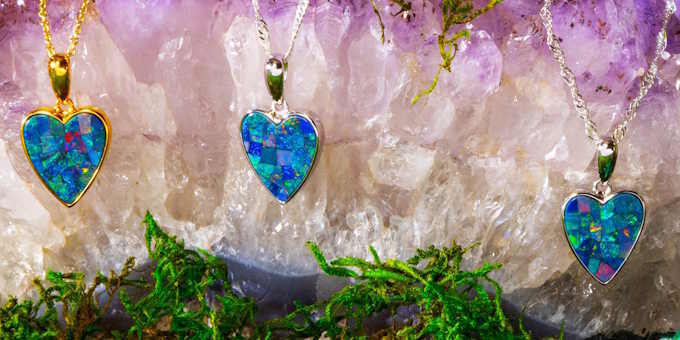
Benefits of Australian opals are well documented among gemologists. Their play-of-color, the phenomenon by which light diffracts through microscopic silica spheres to produce shifting spectral hues, is wholly unique in the mineral world. No two opals are alike, which means each stone is, by definition, a one-of-a-kind creation. As rare gemstones reserved for the highest level of jewelry design, opals are prized precisely because their characteristics cannot be replicated or standardized.
The table below compares key attributes relevant to high jewelry selection:
| Attribute | Black Opal | Diamond | Blue Sapphire |
|---|---|---|---|
| Rarity | Extremely rare | Rare (top grades) | Rare (unheated) |
| Play-of-color | Exceptional, unique | None | None |
| Ethical sourcing availability | High (Australian mines) | Variable | Variable |
| Each stone unique? | Yes | No | No |
| Primary source | Lightning Ridge, Australia | Global | Sri Lanka, Myanmar |
When evaluating an opal for true luxury quality, color saturation, pattern complexity, and the brightness of the play-of-color are the primary indicators. Stones displaying rolling fire, harlequin patterns, or broad flash across the full face of the gem command the highest regard among collector-loved opal styles.
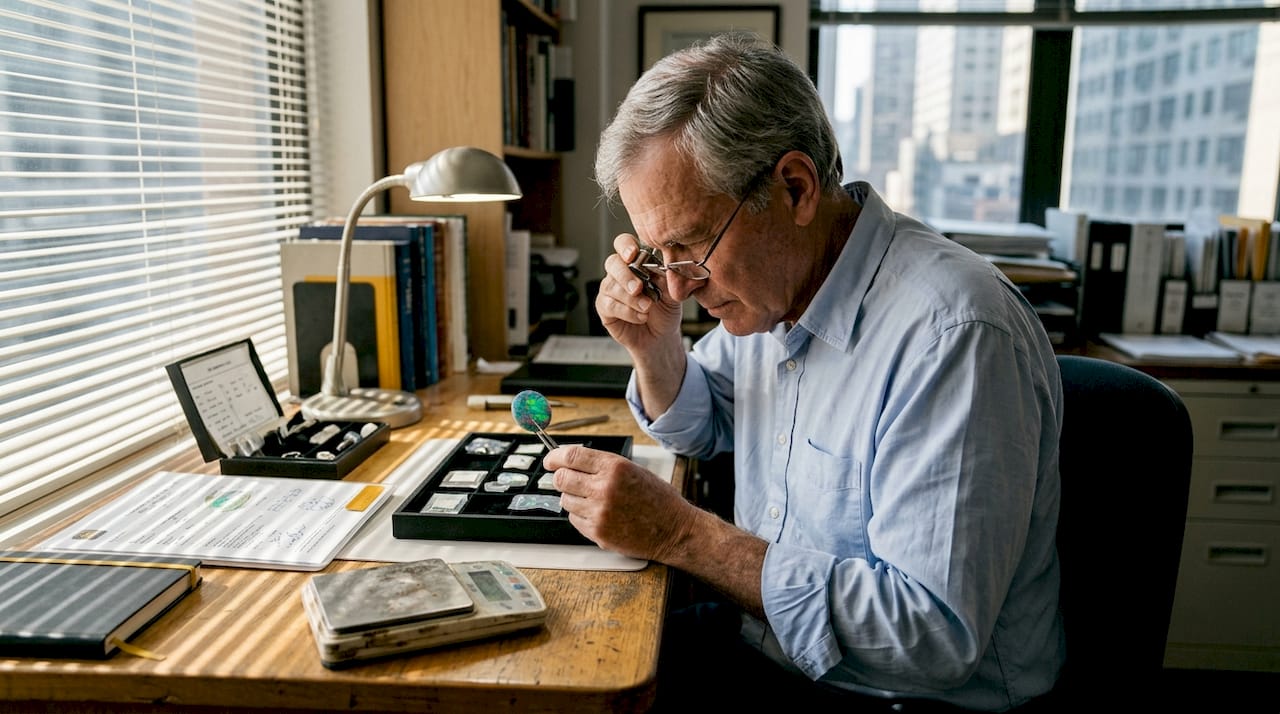
Pro Tip: Always request a gemological report and ask specifically about the stone’s origin region. A Lightning Ridge black opal with documented provenance carries significantly greater value than an opal of unknown origin, even if the two appear visually similar.
Craftsmanship and artistry: Hallmarks of authentic high jewelry
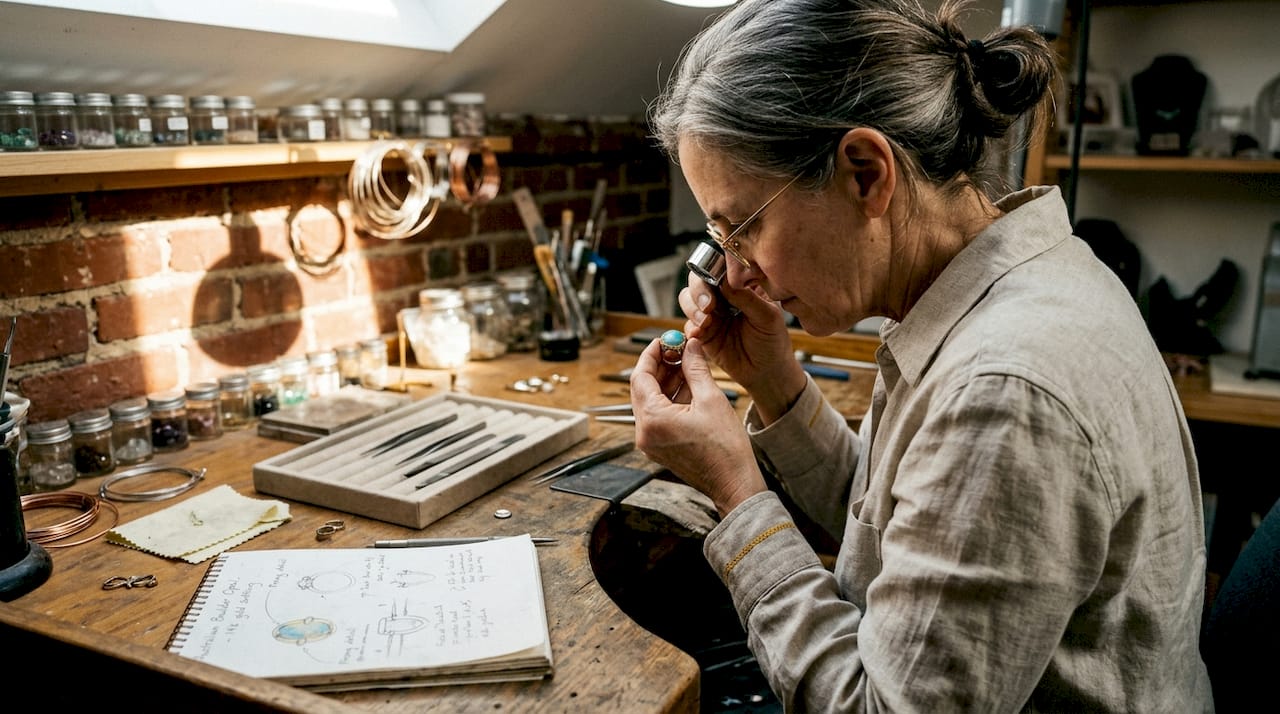
A magnificent gemstone alone does not make a piece high jewelry. The setting, the metalwork, and the creative vision surrounding that stone must rise to an equally extraordinary standard. This is where the artisan’s role becomes irreplaceable.
True high jewelry is often made by master artisans, sometimes requiring hundreds of hours for a single piece. The creation process is deliberate, layered, and deeply human. It typically unfolds through these key stages:
- Concept and design: A designer or master jeweler develops the creative vision, often producing detailed sketches and wax models before a single gram of metal is shaped.
- Gemstone selection: Stones are hand-selected for compatibility of color, cut, and proportion. In opal pieces, the stone’s unique pattern often dictates the design itself.
- Metal fabrication: Precious metals are worked by hand or in small batches. Gold alloys are chosen for both their aesthetic quality and their structural suitability.
- Stone setting: This is among the most technically demanding stages. Bezel, pavé, and prong settings each require precise calibration to secure the stone without obscuring its beauty.
- Finishing and quality review: Surfaces are polished, inspected under magnification, and reviewed against the original design intent before the piece is signed or hallmarked.
The investment of time and skill is reflected in the cost structure of authentic high jewelry:
| Element | Proportion of total value |
|---|---|
| Gemstone(s) | 40–70% |
| Master artisan labor | 20–35% |
| Precious metal | 10–20% |
| Design and atelier overhead | 5–15% |
Collectors particularly value pieces that are signed, limited in edition, or custom-crafted to a specific commission. These qualities ensure that the piece exists in a category entirely its own, guided by the artisan-crafted jewelry guide principles that define genuine luxury.
Authenticity, provenance, and the collector’s perspective
For a serious collector, the story behind a piece is as important as its visual splendor. Authenticity and provenance are not bureaucratic formalities — they are the foundation of a piece’s long-term value and its claim to high jewelry status.
The signals that verify genuine high jewelry include:
- Gemological certificates: Independent laboratory reports from recognized institutions confirming stone identity, origin, and quality characteristics.
- Maker’s marks and hallmarks: Stamps identifying the metal purity and, in many cases, the specific atelier or artisan responsible for the work.
- Provenance documentation: Written records tracing the stone from its mine of origin through cutting, setting, and sale.
- Ethical sourcing credentials: Statements or certifications confirming that the stone was extracted under fair labor conditions and without environmental harm.
As transparent sourcing and documentation of origin set high jewelry apart in the luxury market, buyers who skip this verification step risk acquiring pieces that carry the language of luxury without its substance.
Value drivers for collectors extend beyond the gemstone itself. Rare opals with documented Lightning Ridge or Coober Pedy origins, unique design stories tied to a named maker, and ethical credentials all contribute to a piece’s desirability and resale strength. Understanding pricing high-end opal jewelry helps collectors recognize fair market value and avoid overpaying for pieces that do not meet the true standard.
Pro Tip: Before acquiring any piece presented as high jewelry, ask three questions: Who made it? Where did the stone come from? What documentation exists to support both answers? If the seller cannot answer all three clearly, treat that as a significant red flag. Reviewing gemstone authenticity tips before any major acquisition is time well spent.
The uncomfortable truth: Not all ‘luxury’ jewelry is truly high jewelry
The word luxury has been stretched so thin in modern marketing that it has nearly lost its meaning. Mass-produced rings sold in glossy packaging, machine-set stones with no documented origin, and brand-name pieces assembled at scale — all of these are routinely presented under the luxury banner. The truth is that genuine high jewelry remains vanishingly rare, and the gap between what is marketed as luxury and what actually qualifies is wider than most buyers realize.
Opals offer a clarifying lens here. An Australian black opal from Lightning Ridge, set by a named artisan with full provenance documentation, represents everything high jewelry should be: singular, traceable, and irreplaceable. A mass-produced opal doublet in a machine-stamped setting does not, regardless of how it is priced or described. The difference is not always visible to the untrained eye, which is precisely why education matters.
We believe that collectors who understand these distinctions make better acquisitions, build more meaningful collections, and ultimately derive far greater satisfaction from each piece. Knowing how to display opal jewelry with the reverence it deserves begins with knowing that what you hold is genuinely extraordinary.
Discover authentic high jewelry opals
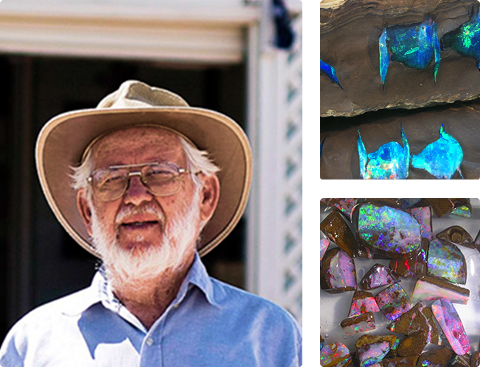
With a clear understanding of what defines true high jewelry, the next step is finding pieces that actually meet the standard. At Australian Opal Direct, every piece in our collection is built on a foundation of ethical sourcing, direct-miner relationships, and master craftsmanship. Our stones come from the legendary fields of Lightning Ridge, Coober Pedy, and Queensland, each selected for its play-of-color, rarity, and documented origin.
When you choose authentic opal jewelry from Australian Opal Direct, you receive full provenance documentation, a 90-day warranty, and complimentary insurance — because pieces of this caliber deserve protection that matches their value. Explore our curated collections and discover what genuine high jewelry feels like.
Frequently asked questions
What makes high jewelry different from fine jewelry?
High jewelry uses exceptionally rare gemstones and masterful, artisan-level craftsmanship that set it apart from standard fine jewelry. As noted by Australian Opal Direct, it represents the apex of the craft, defined by rarity and exceptional design.
How can I verify if a piece is truly high jewelry?
Request certificates of authenticity, maker’s marks, and full documentation of gemstone provenance to ensure legitimacy. Transparent sourcing and documented origin are the clearest signals that separate genuine high jewelry from imitations.
Why are opals considered valuable in high jewelry?
Top-grade opals are visually dynamic, wholly unique gemstones sourced primarily from ethical mines in Australia, prized for their one-of-a-kind play-of-color and scarcity. Rare gemstones like opals are reserved for the highest level of jewelry design precisely because no two are ever the same.
Does ethical sourcing matter for high jewelry?
Yes, ethical sourcing is a growing requirement for collectors and luxury buyers, directly affecting both value and long-term desirability. The artisan-crafted jewelry guide from Australian Opal Direct outlines why provenance and ethical credentials have become non-negotiable in the modern high jewelry market.
Recommended
- Role of Opals in Luxury Jewelry: Rarity & Value - Australian Opal Direct
- Luxury gemstone gifting: authenticity, opal value, tips - Australian Opal Direct
- How to Price Opal Jewelry for Authentic Luxury Buyers - Australian Opal Direct
- How to Design Custom Opal Rings for Luxury Jewelry Lovers - Australian Opal Direct
- What is Quiet Luxury? Understanding the New Elegance - Guestly Homes