90 Day Provenance: Store Opal Jewelry and Buy Australian Opals Direct
Posted by AOD on 4th Oct 2026
90 Day Provenance: Store Opal Jewelry and Buy Australian Opals Direct
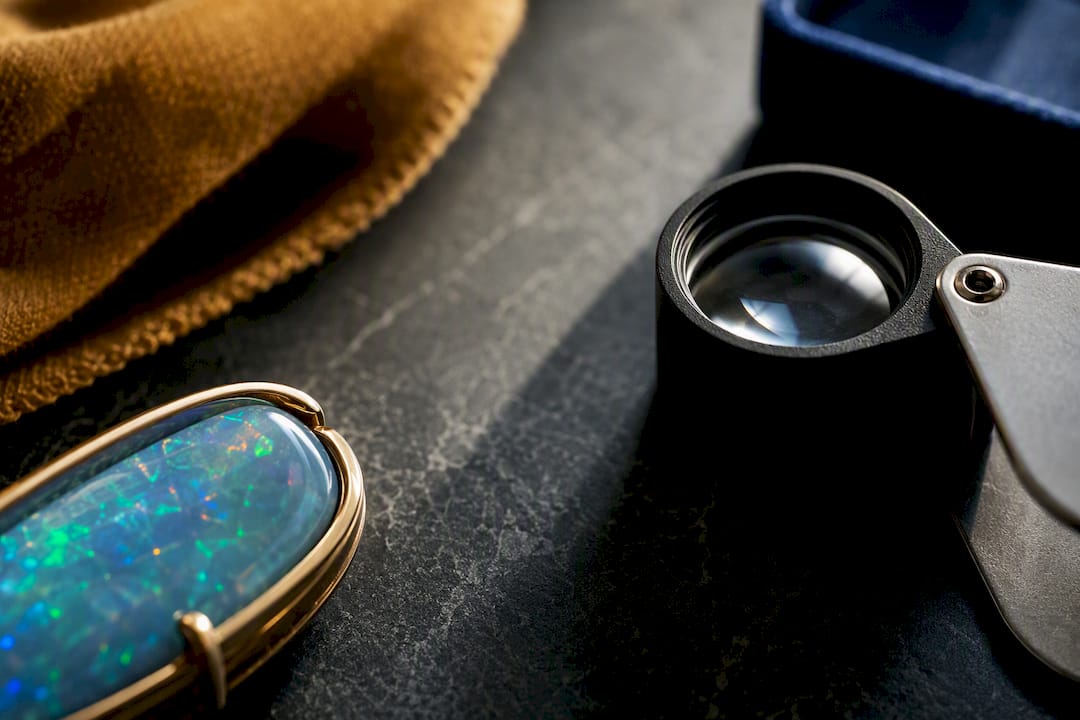
Yes, you can buy authentic opal jewelry online, and you can store opal jewelry safely for a lifetime, provided you choose sellers who publish real provenance, clear photography, and genuine buyer protections. The safest first move is simple: check for named origin details, high-resolution close-up photos, and a written return or warranty policy before you spend a single dollar. One option built around exactly those standards is a seller claiming to source gems directly from key opal mining regions.
TL;DR:
- Reputable online opal sellers publish high-resolution photos from multiple angles, disclose provenance details, and offer clear return and warranty policies.
- Black opal commands the highest prices, with construction as solid, doublet, or triplet significantly affecting durability and value.
- Confirm the seller provides detailed origin information, photos of rough stones, and, for high-value pieces, independent certification or videos.
- Insured and trackable shipping is essential, especially for international orders, to safeguard against loss or damage.
- Avoid sellers lacking clear provenance, transparency, and contact information, as these are common signs of scams or fake listings.
Table of Contents
- What to Check Before You Store Opal Jewelry From an Online Seller
- What Opal Types and Settings Mean for Durability and Price
- How Do You Verify an Opal Seller’s Origin Claims?
- How Much Does Opal Jewelry Cost, and What Should Shipping Include?
- How Should You Wear, Clean, and Store Opal Jewelry?
- Browsing Opal Collections: Rings, Pendants, Earrings, and Bracelets
- How Do You Spot a Reputable Opal Jewelry Store?
- Comparing Price Ranges Across Opal Qualities and Jewelry Types
- How Do You Judge Opal Quality From Photos and Descriptions Alone?
- What Scams and Counterfeit Tactics Should You Watch For?
- Why Direct-Miner Sourcing Changes What You Can Trust
- Ready to Browse a Collection Backed by Real Provenance?
- Further Reading on Opal Sourcing and Shipping
What to Check Before You Store Opal Jewelry From an Online Seller
Before a single opal reaches your jewelry box, the seller’s product page and policies tell you almost everything you need to know. Treat this as your pre-purchase inspection, the same way you’d check a car’s service history before buying it.
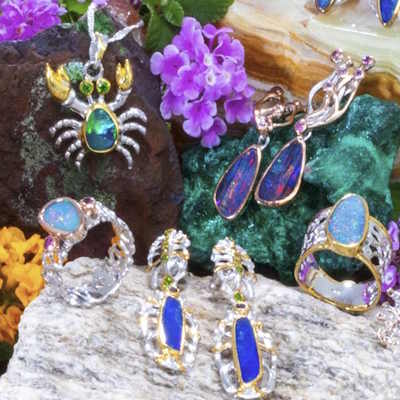
Start with transparency. A reputable opal gemstone store shows multiple high-resolution images from different angles, including close-ups of the setting and the stone’s natural pattern. Vague, single-angle photography is the first sign a listing deserves skepticism. Fine jewelry brands that specialize in opal typically publish extensive image sets alongside measurements and carat weight, and that level of detail materially reduces the odds of a disappointing delivery.
Provenance disclosure matters just as much as the pictures. Look for named field origins (Lightning Ridge, Coober Pedy, Queensland, or Ethiopian fields, for instance), and confirm whether the stone is solid, a doublet, or a triplet. Any seller worth your money discloses this without you having to ask twice.
Buyer protections round out the checklist:
- A clearly stated returns window
- Shipping insurance and tracking included or offered as an add-on
- A written warranty covering craftsmanship and setting integrity may be provided
- Secure checkout and visible contact information, not just a contact form
- Metal hallmarks (9k, 18k, sterling 925) stamped and stated in the description
- Customer reviews that include photos of the actual piece received
Pro Tip: Open the product photos on your phone and zoom in on the bezel edge. Sloppy soldering or gaps around the stone often show up in a close-up long before they show up in the item description.
If a store’s collection pages let you filter by metal type, opal type, color, and price range, that’s a good sign the business runs a genuinely organized inventory rather than a thin drop-shipped catalog. Our buyer’s guide to authentic gems walks through these signals in more depth if you want a second pass before you check out.
What Opal Types and Settings Mean for Durability and Price
Opal is not one gemstone, it’s a family of them, and knowing the difference changes what you should expect to pay and how carefully you need to protect the piece.
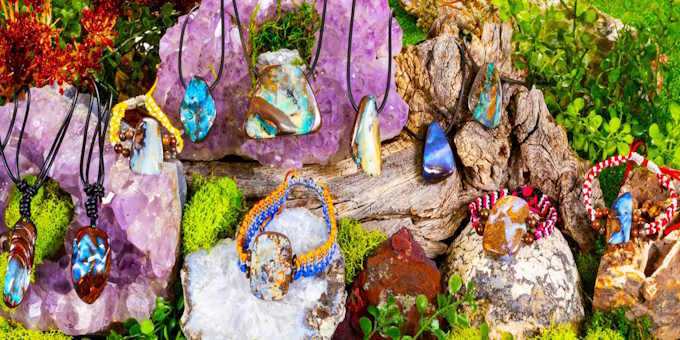
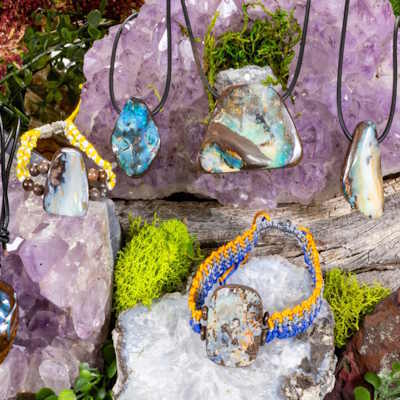
Black opal, mined almost exclusively at Lightning Ridge, carries a dark body tone that makes its color play look like a fire lit from within. It commands the highest prices in the category. Crystal opal is translucent to semi-translucent with color floating across a clear or lightly tinted base. White opal, generally from Coober Pedy, has a milkier body tone and softer, gentler color play. Boulder opal, associated with Queensland, forms as a thin seam attached to ironstone host rock, giving each piece a naturally irregular, one-of-a-kind shape.
Construction matters as much as origin:
- Solid opal: a single piece of natural stone, the most durable and valuable form
- Doublet: a thin opal slice glued to a dark backing to enhance color
- Triplet: an opal slice sandwiched between a backing and a protective clear cap
Any seller should disclose this construction plainly, because it directly affects both price and how the stone should be worn and cleaned.
Color play, body tone, and pattern (think pinfire, harlequin, or broad flash) drive value more than raw carat weight does. As for settings, bezel mounts wrap a rim of metal around the stone’s edge, absorbing shocks that would otherwise hit the opal directly, which makes bezel settings the safer long-term choice for a stone this soft. Prong settings show more of the stone, but offer less protection against knocks. Our guide to opal play-of-color breaks down how pattern and brightness are actually judged.
How Do You Verify an Opal Seller’s Origin Claims?
Confirming provenance takes a few direct questions and a little patience, and any legitimate seller will welcome both.
- Ask for origin details in writing. A serious opal gemstone store can name the field, and often the mine or region, where the rough stone was cut.
- Look for miner or field names. Direct relationships with cutters at Lightning Ridge or Coober Pedy are a stronger provenance signal than a generic “ethically sourced” tagline.
- Request photos of the rough or cutting stage if the listing doesn’t already include them. Sellers with real supply chains usually have this material on hand.
- Ask about certification for higher-value pieces. Independent gem lab reports aren’t universal in the opal trade, but a seller offering one for a significant purchase is showing real confidence in the stone.
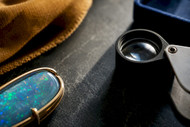
- Escalate for anything above a few hundred dollars. Request a short video of the piece in natural light, which reveals color play and surface condition far better than a static photo.
Watch for these red flags: missing treatment disclosure, prices that sit far below the going rate for the stated opal type, no visible contact page or return policy, and listings built entirely around one flattering photo with no measurements. The Opal Association of Australia offers useful background on how provenance statements should read, which is worth a skim if you’re buying your first piece. Our origin identification guide covers the visual cues that separate one field’s opal from another.
How Much Does Opal Jewelry Cost, and What Should Shipping Include?
Price in this category is driven by a short list of factors: opal type, the intensity and rarity of the color play, pattern quality, carat size, metal choice, and the skill behind the setting. Two stones of identical carat weight can differ in price by a wide margin depending on brightness and pattern alone.
Roughly speaking, entry-level pieces tend to feature smaller crystal or white opals in sterling silver settings. Mid-range pieces step up to larger stones with stronger color play, often set in 9k or 18k gold. Premium pieces feature rare black opal or exceptional boulder opal with vivid, uncommon patterns, set with careful bezel work designed to last generations.
- Confirm the shipping method includes tracking and insurance options
- For international orders, insured and trackable delivery is strongly recommended to reduce the risk of loss or damage
- Ask about estimated transit time before you order, especially around holidays
Insured, trackable shipping isn’t standard everywhere in this market, and buyers should confirm it rather than assume every seller includes it by default. Australia Post’s own guidance on international parcels backs this up directly for cross-border orders. Our piece on how opal jewelry is priced walks through value factors stone by stone if you want to sanity-check a specific listing.
How Should You Wear, Clean, and Store Opal Jewelry?
Opal sits at around 5.5 to 6.5 on the Mohs hardness scale, softer than diamond or sapphire, so day-to-day habits matter more with this stone than with most others.
- Remove opal jewelry for manual work, gardening, dishwashing, or gym sessions, since sharp knocks and chemical exposure are the two biggest causes of damage.
- Avoid sudden heat and cold, including hot showers, saunas, and leaving jewelry in a car on a summer day, which can stress the stone’s structure.
- Clean with mild soap, warm water, and a soft cloth. Skip ultrasonic and steam cleaners entirely. Doublets and triplets are especially vulnerable to moisture creeping behind the glued layers.
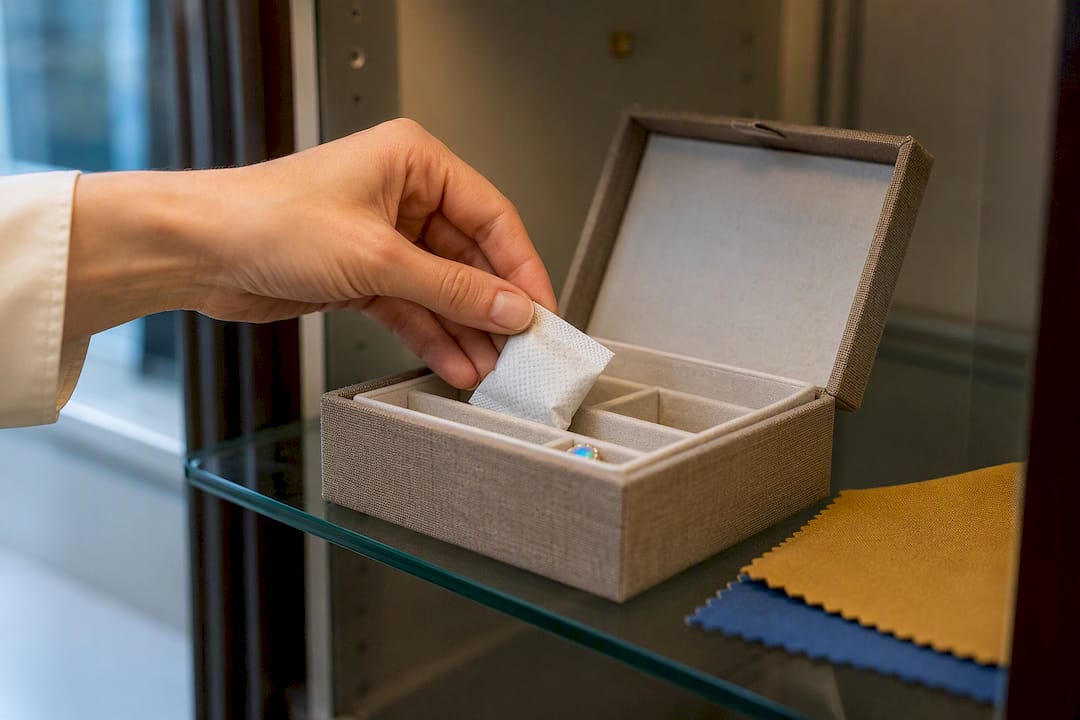
- Store opal jewelry in a soft-lined box, separated from harder gems that could scratch its surface, away from extreme heat or dryness.
Now, the myths. Storing opal in water is unnecessary for most stones and can actually be harmful for doublets and triplets, since trapped moisture behind the backing can cloud the piece over time. Oiling opal is an old habit with no real basis for stones cut and sold today. And wearing opal continuously won’t hurt a solid stone, but a few careful pauses during rough physical work will protect it far more than any myth-based ritual ever could.
Pro Tip: Keep a small silica gel packet in your opal storage box if you live somewhere humid, and swap it every few months, rather than relying on humidity to somehow “hydrate” the stone.
Browsing Opal Collections: Rings, Pendants, Earrings, and Bracelets
Every opal jewelry collection tends to organize around a handful of core categories, and each one asks something different of the stone.
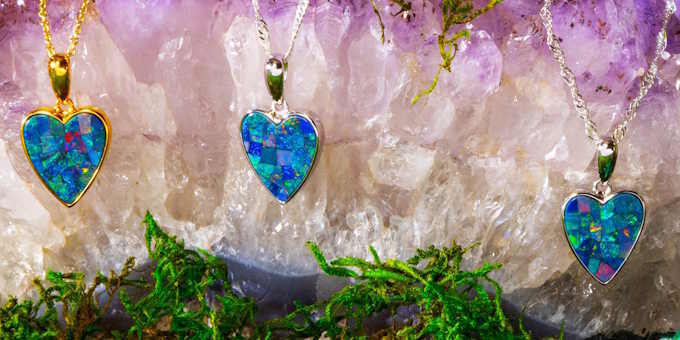
Rings take the most physical abuse of any jewelry type, so a protective bezel setting and a slightly harder body opal are worth prioritizing here. Pendants and necklaces put the stone on display without the daily knocks a ring endures, making them a natural home for a more delicate crystal or boulder opal with dramatic pattern. Earrings, especially studs, work well with smaller stones and let you wear vivid color play without the size or cost of a large centerpiece. Bracelets sit closer to rings in exposure risk, brushing against desks, doorframes, and car doors all day, so bezel or half-bezel settings again earn their keep.
Beyond the basics, look for curated or limited-edition collections built around a theme, unusual pattern, or rare field find. These pieces tend to carry one-of-a-kind boulder opals or standout black opals that a store can only offer once. A well-organized opal jewelry collection lets you filter by category, metal, and stone type, which turns browsing from guesswork into an actual shopping experience. Our selection guide is a useful next stop if you’re deciding between a ring and a pendant as a first purchase.
How Do You Spot a Reputable Opal Jewelry Store?
Reputation shows up in details that are easy to overlook and hard to fake all at once. A trustworthy opal gemstone store publishes a real return address and phone number, not just a contact form buried in the footer. It shows customer reviews that include photos of the actual delivered piece, not just star ratings with no context.
Red flags cluster in predictable places. Be wary of a store with no “About” page describing where its stones come from, one that can’t answer a direct question about treatment or construction, or one whose reviews all read like they were written in the same afternoon. A seller with a genuine sourcing story, whether that’s direct-miner relationships or a documented supply chain, will usually volunteer that information without being asked twice.
Third-party signals help too. A business that discloses recycling or buy-back programs, offers written warranties, or maintains an active presence answering customer questions in public reviews is showing you it expects to still be around next year. That matters more in opal than in most jewelry categories, since warranty claims and repairs often surface months or years after purchase, when a stone loosens in its setting or needs a professional check. If a store disappears from search results between your first visit and your second, that’s a signal worth taking seriously.
Comparing Price Ranges Across Opal Qualities and Jewelry Types
Setting realistic expectations before you shop saves you from both overpaying and undervaluing a genuinely rare stone.
At the lower end, small crystal or white opal studs and simple silver pendants sit in the entry-level range, ideal as a first purchase or a gift. Step up to mid-range pieces, typically larger stones with brighter color play set in gold, and you’re paying for both material and more skilled setting work. Premium pieces, especially black opal rings or boulder opal statement pendants with rare pattern and exceptional brightness, sit at the top of the market, and pricing here can vary enormously between two seemingly similar stones.
Jewelry type shifts the equation too. A ring generally costs more than a pendant of comparable stone size because of the metal volume and setting complexity involved. Earrings, sold as pairs, require two well-matched stones, which is its own pricing challenge since perfectly matched color play across two pieces is genuinely hard to source. Bracelets with multiple smaller opals can cost more in total than a single-stone ring, simply because of how many stones need to be sourced and matched. Understanding these variables before you shop keeps sticker shock, in either direction, from catching you off guard.
How Do You Judge Opal Quality From Photos and Descriptions Alone?
Buying a gemstone you can’t touch means learning to read a listing the way a jeweler reads a stone in hand.
Start with the photos themselves. Multiple angles under natural or daylight-balanced light reveal true color far better than a single studio shot under warm lighting, which can flatter a dull stone. Look for a close-up that shows the stone’s surface, checking for visible pitting, crazing (fine surface cracks), or dullness that a hero shot might hide.
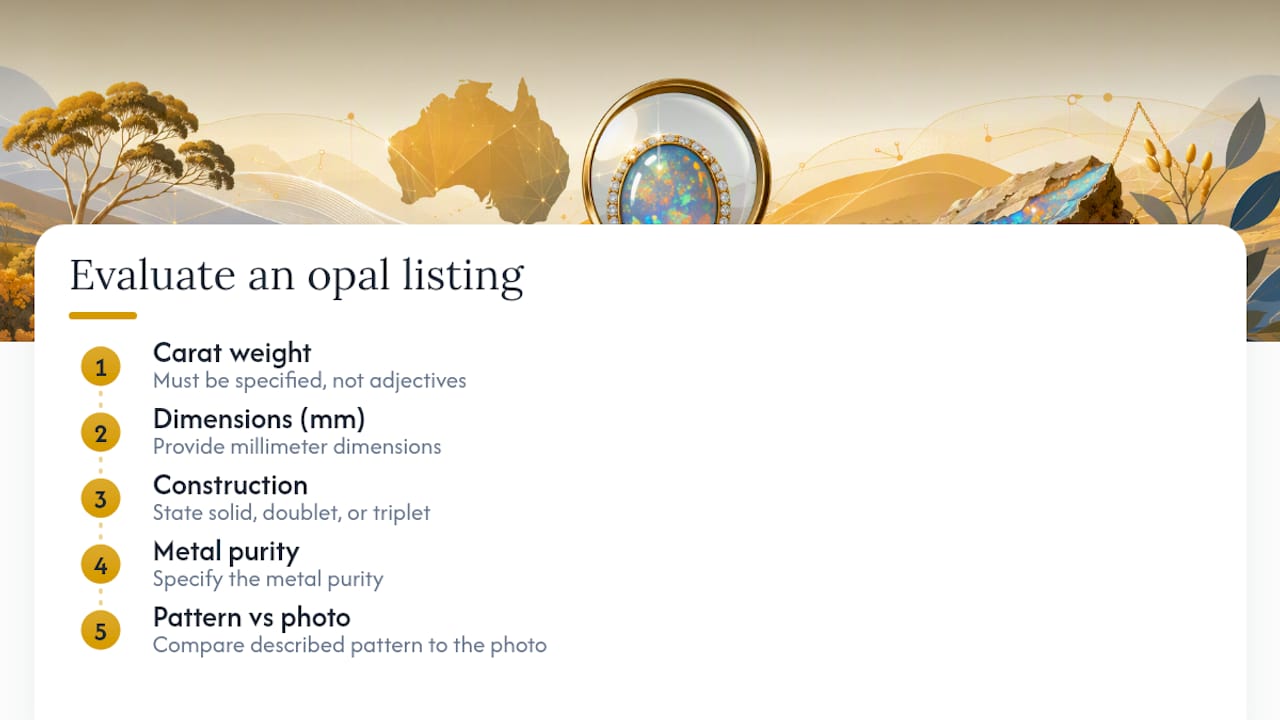
Descriptions should specify carat weight, dimensions in millimeters, construction (solid, doublet, or triplet), and metal purity. A listing that skips carat weight entirely, or describes a stone only in adjectives like “stunning” or “rare” without a single measurement, is asking you to trust marketing instead of facts. Compare the described pattern type (harlequin, pinfire, flash) against what the photo actually shows. If the words promise vivid multicolor play but the image looks flat or one-toned, trust the image.
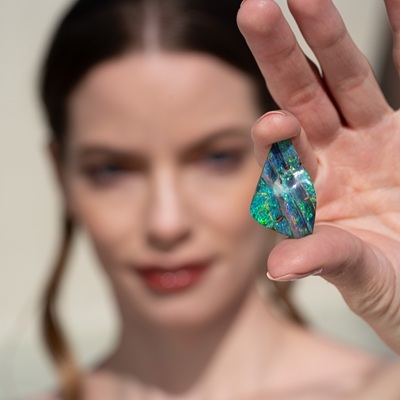
Video, where offered, is the single best tool for judging opal online, since color play only reveals itself as the stone moves under light. A store willing to send a short video on request is telling you it has nothing to hide.
What Scams and Counterfeit Tactics Should You Watch For?
Most opal jewelry scams follow a small set of recognizable patterns, and knowing them in advance is the cheapest insurance you’ll ever buy.
Undisclosed synthetic or lab-created opal sold as natural is the most common issue, often at prices that seem too good for the stated size and quality. Doublets and triplets sold without disclosure as “solid opal” are a close second, since the difference is invisible to an untrained eye in a photo. Watch for stock photography reused across multiple unrelated listings, a sign the seller may not actually hold the inventory shown. Pressure tactics like countdown timers, “only one left” banners, and prices that swing dramatically during a single visit to the page are classic urgency manipulation, not genuine scarcity.
Payment methods matter too. A legitimate opal gemstone store accepts secure, traceable payment and never insists on wire transfers or untraceable payment apps for a first purchase. And if a seller refuses to answer a direct question about origin, construction, or return policy, or gives a different answer each time you ask, treat that as your signal to walk away. Our seven-point authenticity checklist covers these tactics in more detail if you want a printable reference before your next purchase.
Why Direct-Miner Sourcing Changes What You Can Trust
Every checklist in this guide comes down to one question: does the seller actually control its supply chain, or is it several steps removed from the person who pulled the rough stone out of the ground? That distance is where provenance claims start to blur.
Some sellers claim to source stones through direct relationships with miners working opal fields, cutting out layers of middlemen. Such sellers support protections like named field origins, curated collections built around rare stones, and product storytelling tracing pieces back to where they were found.
Some sellers offer policies including free shipping, insurance options, warranty periods, and custom jewelry commissioning for buyers seeking specific stones set in particular ways. None of that replaces your own judgment as a buyer, but it does mean the provenance, protection, and contactability boxes on your checklist are already checked before you start browsing.
— Renee
Ready to Browse a Collection Backed by Real Provenance?
Everything covered above, from origin transparency to insured shipping to written warranties, can be part of how some opal sellers source and sell their stones. Rather than piecing together provenance from vague listings across multiple sites, you’re working with a seller that names its fields, shows its stones in detail, and stands behind them for 90 days after delivery.

If you’re ready to look further, the curated Nature’s Light and Limited Edition collections showcase individually selected black, crystal, boulder, and white opals across rings, pendants, earrings, and bracelets. Not sure which stone or setting fits your taste yet? Our opal purchasing workflow guide walks through the whole decision step by step, and our team is available to answer provenance questions directly or discuss a custom commission built around a specific stone.
Further Reading on Opal Sourcing and Shipping
For background on Australian field provenance, the Opal Association of Australia publishes industry guidance on best-practice sourcing. For cross-border orders, Australia Post’s international shipping guidance explains insured and tracked delivery options for valuable items.