Rare Opal Types Every Collector Should Know
Posted by AOD on 11th Aug 2026
Rare Opal Types Every Collector Should Know
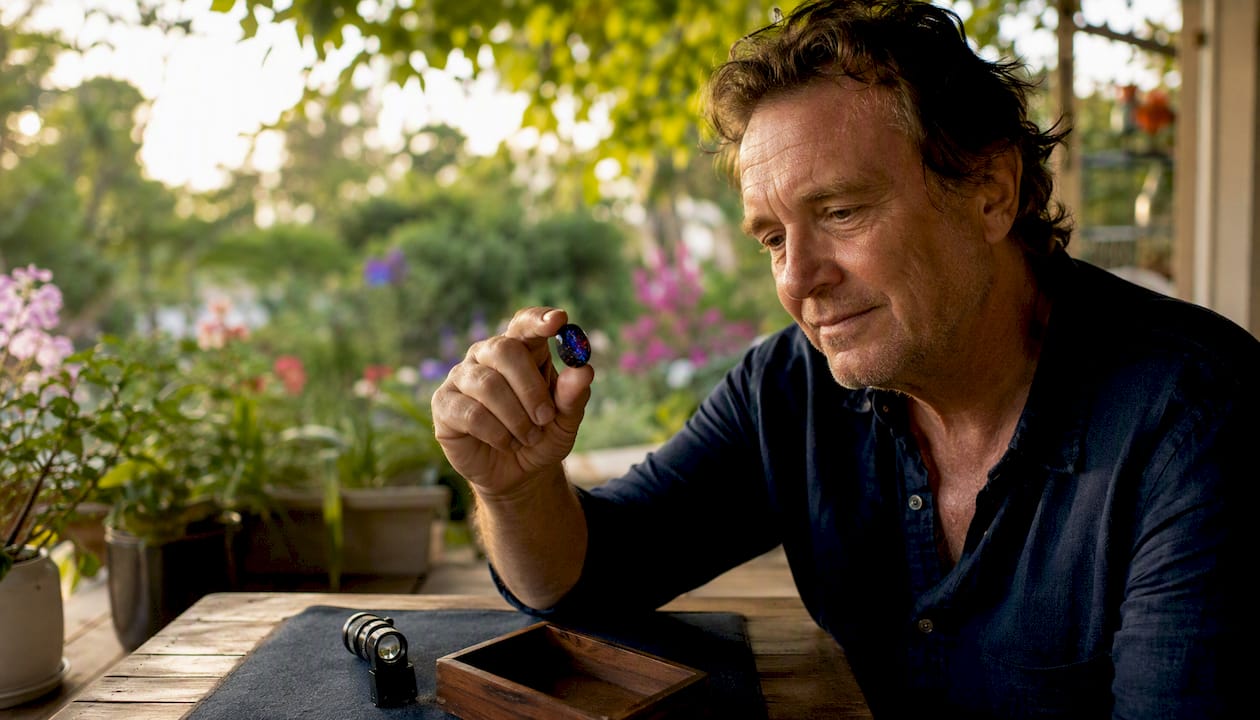
The rarest opal types, by collector consensus, are solid black opal from Lightning Ridge, high-grade boulder opal from Queensland’s Yowah, Koroit, and Quilpie fields, exceptional crystal and water opal showing full-spectrum play-of-color, and museum-grade named specimens such as the Aurora Australis and Flame Queen. Australia produces the overwhelming majority of the world’s finest examples across every one of these categories.
- Solid black opal (Lightning Ridge, NSW): Dark body tone creates extraordinary color contrast; high-brightness specimens with rare patterns like harlequin are geologically scarce and command the highest collector premiums.
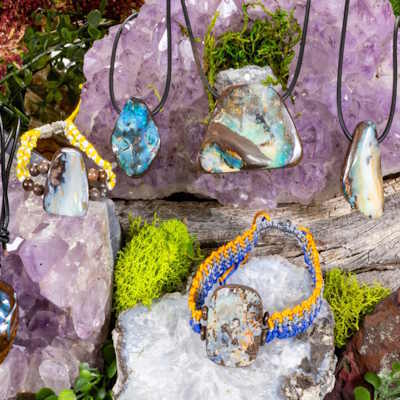
- Boulder opal (Queensland fields): Opal intergrown with ironstone host rock; each piece is structurally unique, and top-grade Koroit and Yowah matrix specimens are effectively one-of-a-kind.
- Yowah nut / matrix opal: Formed inside ironstone concretions in a localized geological process; quality specimens are geographically restricted and, when exceptional, move directly into museum collections.
- Crystal / water opal: Transparent to semi-transparent body with vivid, full-spectrum play-of-color; rarity rises sharply when brightness is extreme rather than faint.
- Named / museum-grade specimens: Provenance, documented history, and exceptional visual character multiply rarity beyond any carat-based measure.
Australia’s dominance here is not incidental. The continent’s unique silica-rich geology, ancient inland seas, and specific weathering conditions created the conditions for precious opal formation at a scale and quality no other source has matched.
Key Takeaways
Australia’s rarest opals, solid black opal from Lightning Ridge, high-grade boulder opal from Queensland, and exceptional crystal specimens, are defined by the combination of play-of-color brightness, body tone, pattern rarity, size, and verified provenance.
| Point | Details |
|---|---|
| Rarest types to prioritize | Solid black opal (Lightning Ridge), boulder opal (Yowah, Koroit, Quilpie), Yowah nuts, and vivid crystal opal are the collector benchmarks. |
| Brightness outranks color count | An opal showing intense red on black with fewer colors outranks a softer stone showing more colors at lower brightness. |
| Provenance adds measurable value | Documented field of origin, miner name, and lab certification increase resale value and collector confidence beyond visual grade alone. |
| Assembled stones are not rare | Doublets and triplets mimic solid opal appearance; always confirm solid status in writing and check for seam lines before purchasing. |
| Australianopaldirect for certified sourcing | Direct miner relationships and provenance documentation make Australianopaldirect a reliable source for collectors seeking verified rare Australian opals. |
Table of Contents
- What makes an opal genuinely rare?
- A quick guide to rare opal types at a glance
- Detailed profiles of the rarest opal varieties
- How to tell assembled and synthetic opals apart
- How rarity translates to market value
- Where Australia’s rarest opals come from
- A practical buying checklist for collectors
- How Australianopaldirect sources and verifies rare opals
- Why Australian rare opals remain irreplaceable for serious collectors
- Certified rare Australian opals, sourced directly for collectors
- Useful sources and further reading
What makes an opal genuinely rare?
Collectors and the gem trade use a consistent set of criteria to separate a truly rare opal from a merely attractive one. Play-of-color brightness and range sit at the top of that hierarchy. A stone that blazes with intense red, violet, and green fire across a dark ground outranks a softer stone showing more colors at lower intensity. Brightness is the single strongest rarity signal.
The full evaluation framework works like this:
- Type (precious vs. common): Precious opal diffracts light through internally stacked silica spheres, producing play-of-color. Common opal does not. Only precious opal qualifies as rare in the collector sense.
- Play-of-color brightness and range: Intensity matters more than color count. Red on black is the most prized combination because red has the longest wavelength and is the hardest to produce. Full-spectrum play (red through violet) in a single stone is exceptional.
- Body tone: Dark body tones (N1–N4 on the standard scale) amplify color contrast. Black opal’s dark ground is why Lightning Ridge stones command such premiums. Light or white body tones reduce contrast and, with it, perceived rarity.
- Pattern: Harlequin (large, angular, mosaic-like color patches) is the rarest and most sought-after pattern. Peacock (blue-green dominance with broad color play), flame (sweeping red-orange streaks), and rolling flash patterns follow. Pinfire (tiny, scattered color points) is common and carries the lowest premium among pattern types. A detailed breakdown of rare opal patterns shows how dramatically pattern affects value.
- Clarity and transparency: In black and boulder opal, a clean face free of sand inclusions or potch interruptions is preferred. In crystal opal, transparency itself is a feature, but cloudiness or milkiness reduces value.
- Size and weight: Large, high-quality specimens are disproportionately rare. A 10-carat black opal with top-grade play-of-color is exponentially scarcer than a 2-carat equivalent.
- Documented provenance: Field of origin, miner name, and chain of custody add a non-visual premium. Stones with verified Lightning Ridge or Yowah provenance carry higher collector confidence and resale value.
Pro Tip: Ask any seller for a GIA-style grading report or an independent gemological lab certificate before purchasing a stone above a few hundred dollars. A credible report should confirm type, body tone, play-of-color grade, transparency, cut quality, and whether the stone is solid, assembled, or treated.
Assembled stones, doublets and triplets, are constructed by bonding a thin opal slice to a dark backing (doublet) or adding a clear dome cap on top (triplet). They mimic the appearance of solid black opal at a fraction of the price, but they are not rare. A full section below covers how to tell them apart.
A quick guide to rare opal types at a glance
Before going deeper into each variety, here is a collector-oriented shortlist of the types that genuinely merit attention:
- Solid black opal: The benchmark for rarity. Lightning Ridge, NSW, is the world’s primary source. Dark body tone, vivid play-of-color, and stable silica structure.
- Boulder opal: Queensland’s signature contribution. Opal forms in veins and pockets within ironstone boulders; the host rock becomes part of the finished stone. Yowah, Koroit, and Quilpie are the key fields.
- Yowah nut / matrix opal: Ironstone concretions from Yowah, Queensland, containing opal centers or opal-permeated matrix. A recently discovered specimen, the Yowah Moon, was selected for display at Geoscience Australia, illustrating how exceptional these pieces can be.
- Crystal / water opal: Transparent to semi-transparent precious opal. Rare when it shows full-spectrum, high-brightness play-of-color rather than faint flashes. Coober Pedy and Lightning Ridge both produce fine examples.
- Fire opal with play-of-color: Most fire opal (predominantly from Mexico) shows warm body color without play-of-color. The rare examples that combine a vivid orange or red body with genuine play-of-color are prized by collectors.
- Named / museum-grade specimens: The Aurora Australis, Flame Queen, and Halley’s Comet are among the most celebrated Australian finds. Their documented histories and extraordinary visual character place them in a category beyond standard gem grading.
Australia produces the rarest examples of every type above except fire opal, which remains primarily a Mexican specialty. For collectors focused on the advantages of Australian opals, the continent’s geological monopoly on top-grade black and boulder opal is the defining fact.
| Type | Rarity level | Typical appearance | Primary Australian source | Key value drivers | Stability |
|---|---|---|---|---|---|
| Solid black opal | Highest | Dark body, vivid full-spectrum fire | Lightning Ridge, NSW | Brightness, pattern, body tone N1–N4 | Good when solid; avoid thermal shock |
| Boulder opal | Very high | Opal in ironstone matrix, unique per piece | Yowah, Koroit, Quilpie, QLD | Pattern uniqueness, color saturation, ironstone character | Excellent; ironstone backing adds stability |
| Yowah nut / matrix | Very high | Opal center or matrix inside concretion | Yowah, QLD | Formation rarity, intact form, museum character | Good; matrix structure supports opal |
| Crystal / water opal | High (when vivid) | Transparent, colorless to faint body, bright fire | Coober Pedy, Lightning Ridge | Brightness, full-spectrum color, clarity | Moderate; can craze if dehydrated |
| White / light opal | Moderate | Pale body, softer color play | Coober Pedy, Andamooka | Color range, brightness, size | Good |
| Fire opal (with play) | High (rare variant) | Orange/red body, flashes of color | Non-Australian; Mexico primary | Body color intensity, play-of-color presence | Moderate |
Collector note: The rarest specimens in any category are those combining multiple top-grade factors simultaneously: maximum brightness, a rare pattern, a dark body tone, large size, and verified provenance. Each additional top-grade factor multiplies scarcity rather than simply adding to it.
Detailed profiles of the rarest opal varieties
Solid black opal
Black opal’s dark body tone, ranging from near-opaque black to deep charcoal gray, acts as a canvas that makes every color in its play-of-color appear more vivid and saturated. The contrast between a dark N1 or N2 body and a blazing red harlequin pattern is the visual combination collectors prize above all others. Lightning Ridge in New South Wales is the world’s preeminent source, and the field’s geological conditions, ancient opal dirt seams running through sedimentary rock, have not been replicated at comparable quality anywhere else on earth.
Quick identifiers for black opal:
- Body tone N1–N4 (very dark gray to black) when viewed face-up
- Play-of-color visible from multiple angles, not just one narrow flash
- No visible backing layer or seam when viewed from the side
- Weight consistent with solid stone (doublets feel lighter for their size)
Named specimens from Lightning Ridge illustrate the ceiling of what this variety can achieve. The Aurora Australis, a 180-carat black opal discovered at Lightning Ridge in 1938, displays a harlequin pattern in red, green, and blue against a jet-black ground. Its documented history and extraordinary pattern have made it one of the most recognized opals in the world. The Flame Queen, another Lightning Ridge find, shows a fiery red center surrounded by a dark potch border, a natural framing effect that no lapidary could replicate. For a thorough buyer-focused breakdown, the black opal guide covers rarity indicators and purchase considerations in depth.
Boulder opal (Yowah, Koroit, Quilpie)
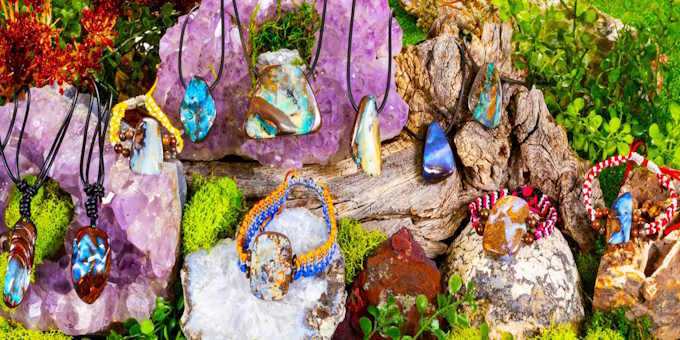
Boulder opal forms when silica solution seeps into cracks and voids within ironstone boulders, creating veins, patches, and pockets of precious opal intergrown with the host rock. Because the ironstone becomes part of the finished stone, no two boulder opals are alike. The Queensland fields of Yowah, Koroit, and Quilpie each produce distinctive goods.
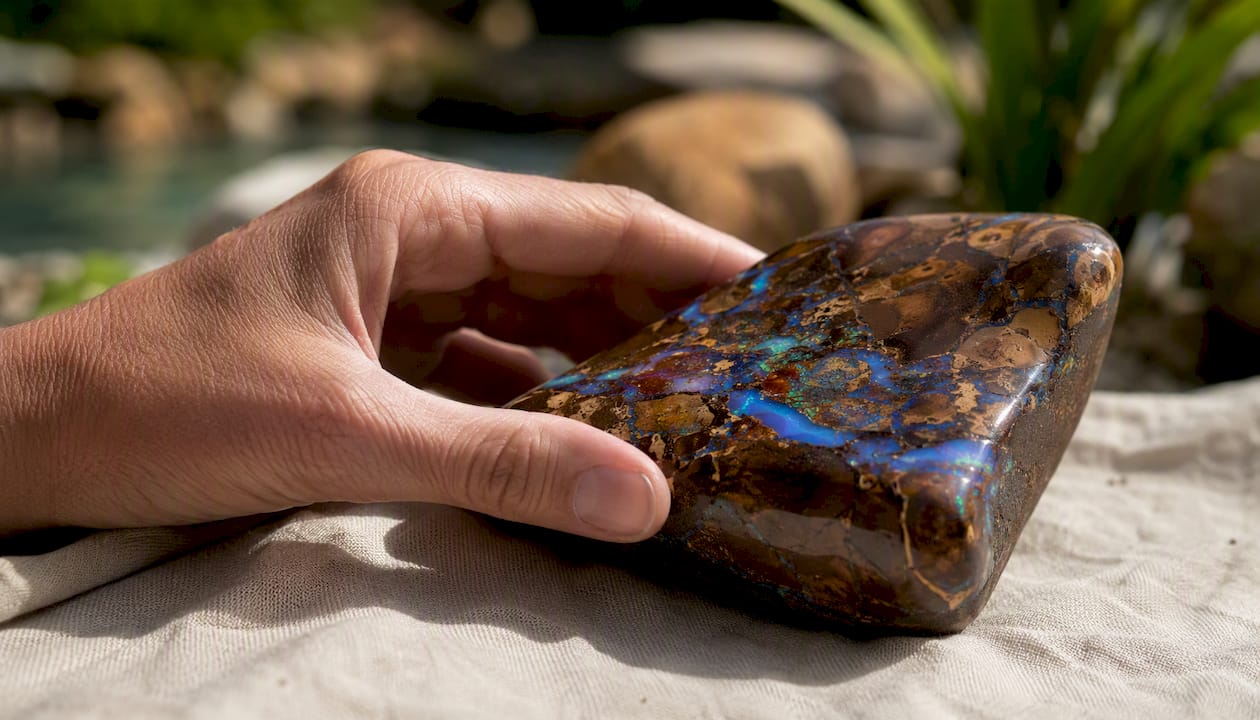
Koroit is known for intricate, web-like patterns where opal fills the cracks of weathered ironstone, creating organic, almost topographic surfaces. Yowah produces both conventional boulder opal and the famous Yowah nuts. Quilpie (and the broader Winton and Jundah areas) yields large boulders with broad opal faces, sometimes showing rolling flash patterns across wide ironstone slabs.
Quick identifiers for boulder opal:
- Ironstone backing is natural, not applied; the transition from opal to rock is gradual and irregular
- Opal face may be thin but shows genuine play-of-color
- Side profile reveals the ironstone host, not a flat adhesive seam
- Each piece has a unique silhouette shaped by the original boulder
Yowah nut and matrix opal
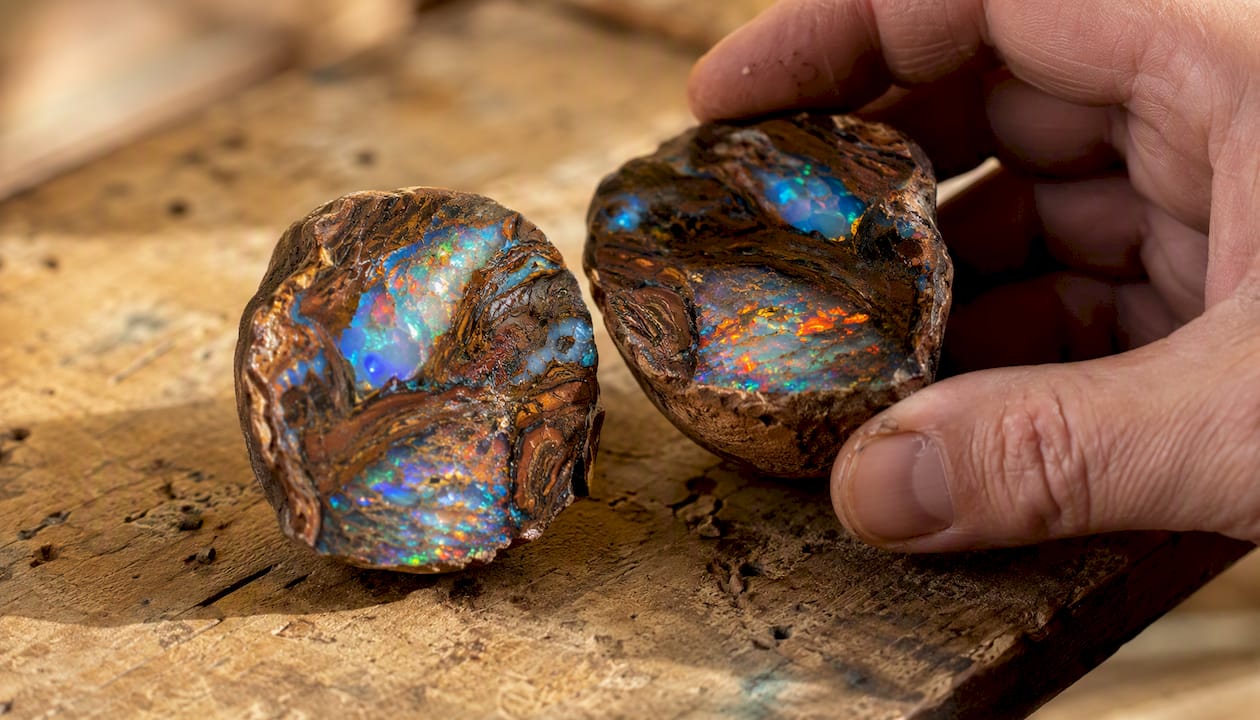
Yowah nuts are ironstone concretions, roughly egg-shaped, formed in the Yowah field of southwest Queensland. When cracked open, some contain a center of precious opal; others are permeated throughout with opal matrix, where the silica has replaced portions of the host rock in a mosaic of color and stone. The formation process is highly localized, making quality specimens geographically restricted. When a Yowah nut shows vivid play-of-color across an intact, well-formed concretion, it crosses from gem material into museum territory. The Yowah Moon, a recently discovered specimen of exceptional quality, was selected for display at Geoscience Australia precisely because of this combination of geological rarity and visual drama.
Crystal and water opal
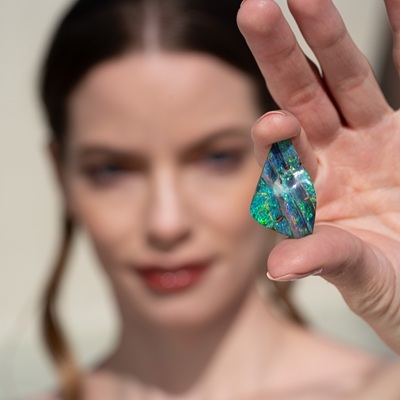
Crystal opal is transparent to semi-transparent, with a body so clear that light passes through it rather than reflecting off a surface. When that clarity is paired with full-spectrum, high-brightness play-of-color, the result is a stone that seems to hold fire suspended in glass. Water opal is the most transparent variant, sometimes showing only faint color play, but rare examples with vivid, rolling color across a water-clear body are among the most ethereal gems in any collection.
Quick identifiers for crystal opal:
- Body is visibly transparent or semi-transparent when held to light
- Play-of-color appears to float inside the stone rather than on its surface
- No dark backing; color is generated by the opal itself
- Cloudiness or milkiness reduces value significantly
Pro Tip: When evaluating crystal opal in photos, ask the seller for images taken under natural daylight, not just studio lighting. Studio setups can artificially enhance apparent brightness and mask milkiness that would be obvious in natural light.
Named and museum-grade specimens
The Flame Queen, Aurora Australis, and Halley’s Comet are not simply large opals. They are documented finds with known discovery dates, weights, and ownership histories, and that documentation is itself a form of rarity. Named and museum-grade specimens command auction interest that goes well beyond what carat weight and color grade alone would predict. Provenance storytelling, who found it, where, and when, is a premium collectors pay willingly. For a curated look at examples of rare opals with documented provenance, the range of what qualifies as museum-worthy becomes clear quickly.
How to tell assembled and synthetic opals apart
Assembled and synthetic stones are far less rare and usually far less valuable than solid natural opal. A doublet bonds a thin slice of natural opal to a dark backing material, typically black potch or plastic, to simulate a black opal’s appearance. A triplet adds a clear dome of glass or quartz on top of that assembly. Both can look convincing in photographs, which is why physical inspection and documentation matter so much.
Checklist for identifying assembled and synthetic stones:
- Side profile: A doublet or triplet shows a visible horizontal seam between the opal layer and the backing. A solid opal has no such line.
- Weight: Assembled stones often feel lighter than a solid opal of the same apparent size because the backing material is less dense than solid silica.
- Magnification: Under 10x loupe, the opal layer in a doublet appears thin and flat. In a triplet, the dome cap creates a curved, lens-like surface above the color layer.
- Flash pattern: Assembled stones sometimes show a grid-like or columnar flash pattern caused by the way the thin opal layer diffracts light differently than a solid stone.
- Water test: Doublets and triplets should never be submerged; water can penetrate the seam and cloud the stone permanently. A seller who discourages water contact on a supposedly solid opal is a warning sign.
- Lab-created opals: Synthetic opals (such as Gilson opal) show a distinctive “lizard skin” or “snakeskin” pattern under magnification, a regular, repeating microstructure absent in natural stones.
For a practical identification checklist you can apply to seller listings and photographs, the guide on how to spot rare opals covers the most common traps in detail.
How rarity translates to market value
The brightest, full-spectrum play-of-color in a dark-bodied, stable solid opal with a rare pattern and verified provenance typically commands the highest prices in the collector market. That sentence contains five separate value drivers, and each one compounds the others rather than simply adding to them.
- Brightness: The most critical single factor. Collectors prize extreme brightness over color quantity; a stone showing intense red and green on black outranks a softer stone showing six colors at low intensity.
- Pattern rarity: Harlequin commands the highest premium of any pattern type. Broad flash and peacock patterns follow. Pinfire is common and priced accordingly.
- Body tone: Dark body tones (N1–N4) amplify color contrast and are associated with Lightning Ridge black opal. Each step toward a lighter body tone generally reduces the premium.
- Size: Large, high-quality stones are disproportionately scarce. The jump from a 5-carat to a 10-carat top-grade black opal represents a dramatic increase in rarity, not a linear one.
- Provenance: Documented field of origin, miner name, and chain of custody add collector confidence and resale value. Named specimens like the Aurora Australis carry auction premiums that no carat-based formula can fully explain.
- Lab certification: A GIA-style report or independent gemological certificate confirms type, body tone, play-of-color grade, and treatment status. For high-value purchases, certification is not optional.
Historic auction results for named specimens illustrate the ceiling. The Aurora Australis has been valued at over AU$1 million, a figure that reflects not just its visual qualities but its documented 1938 discovery at Lightning Ridge and its unbroken provenance chain. The Halley’s Comet opal, a 1,982-carat black opal from Lightning Ridge, and the Flame Queen have similarly attracted significant collector and museum interest. These figures are context, not a pricing guide, but they show how the rarity multiplier works when multiple top-grade factors align with documented history.
Pro Tip: When assessing value for resale or insurance, commission an independent appraisal from a gemologist who specializes in opals, not a general jeweler. Opal valuation requires familiarity with body tone grading, pattern nomenclature, and field-specific provenance, skills that generalist appraisers rarely have.
For a step-by-step appraisal framework, the guide on how to appraise black opals is the most practical starting point for collectors preparing for auction or insurance documentation.
Where Australia’s rarest opals come from
Lightning Ridge is the preeminent source for black opal, the variety collectors rank highest for rarity and value. Every other major Australian field has its own signature output, and knowing which field produces which type is foundational knowledge for any serious collector.
- Lightning Ridge (NSW): Black opal, crystal opal, and some white opal. The dark opal dirt seams here produce the world’s finest black opal. Harlequin patterns, while rare everywhere, appear here more often than anywhere else.
- Coober Pedy (SA): White and crystal opal, the world’s largest producing field by volume. Top-grade crystal opal with vivid play-of-color from Coober Pedy rivals anything from other fields in its category.
- Andamooka (SA): White, crystal, and matrix opal. Andamooka matrix opal, treated with sugar-acid to darken the host rock, is a distinctive regional product, though treatment must be disclosed.
- Mintabie (SA): Crystal and semi-black opal with strong play-of-color. Mintabie has produced some exceptional semi-black stones that approach Lightning Ridge quality in body tone.
- Yowah (QLD): Yowah nuts, matrix opal, and boulder opal. The localized geology here produces formation types found nowhere else on earth.
- Koroit (QLD): Boulder opal with intricate ironstone patterning. Koroit goods are prized for their complex, web-like surfaces and the way the ironstone matrix frames the opal color.
- Quilpie / Winton / Jundah (QLD): Broader Queensland boulder fields producing large ironstone boulders with wide opal faces. Quilpie is the commercial center of the Queensland boulder opal trade.
Geographic groupings at a glance:
| Field | State | Signature opal type | Rarity notes | Key value drivers |
|---|---|---|---|---|
| Lightning Ridge | NSW | Solid black opal | World’s primary source; harlequin patterns scarce | Brightness, body tone N1–N4, pattern |
| Coober Pedy | SA | White and crystal opal | Highest volume field; top crystal grades are rare | Color range, brightness, clarity |
| Andamooka | SA | White and matrix opal | Matrix requires treatment disclosure | Pattern, body color after treatment |
| Mintabie | SA | Crystal and semi-black opal | Semi-black grades approach Lightning Ridge quality | Body tone, play-of-color intensity |
| Yowah | QLD | Yowah nut and matrix opal | Localized geology; museum-grade nuts are rare | Intact form, opal center quality |
| Koroit | QLD | Boulder opal (web pattern) | Intricate ironstone patterning; each piece unique | Pattern complexity, color saturation |
| Quilpie / Winton / Jundah | QLD | Boulder opal (broad face) | Large boulders; commercial and collector grades | Face size, color coverage, brightness |
The United States has produced notable precious opals, particularly from Virgin Valley in Nevada, including large black opals. For the rarest high-grade black and boulder opal, however, collectors consistently return to Australian fields. The geological conditions that created Lightning Ridge and Queensland’s boulder country have not been replicated at comparable quality elsewhere.
A practical buying checklist for collectors
Before committing to any significant opal purchase, a structured approach protects both your investment and your confidence in what you are acquiring.
Ask the seller these questions before purchase:
- Is the stone solid, a doublet, or a triplet? Request a written confirmation.
- What is the field of origin? Can you provide documentation (miner name, field, approximate discovery date)?
- Is there an independent gemological lab report? If not, will the seller allow third-party testing before final sale?
- What is the return policy if the stone does not match its description upon in-person inspection?
- Are there photos under natural daylight, angled light, and direct overhead light? Each lighting condition reveals different aspects of play-of-color and clarity.
Inspection checklist (photos and in-person):
- Check the side profile for seam lines indicating assembly.
- View the stone under multiple light angles; genuine play-of-color shifts and rolls as the angle changes.
- Look for potch (colorless opal) interrupting the color face; extensive potch reduces value.
- Under magnification, check for the regular “lizard skin” microstructure that indicates synthetic opal.
- Confirm the stone’s weight feels consistent with solid opal for its size.
Care to protect rarity and value:
- Store opals away from heat sources and direct sunlight; dehydration can cause crazing (fine surface cracks) in some specimens.
- Avoid ultrasonic cleaners and steam cleaning; gentle wiping with a damp cloth is sufficient.
- Keep opals away from household chemicals, perfumes, and oils.
- Store loose stones in a padded, sealed container with a small damp cloth nearby if the stone is prone to drying.
Pro Tip: Photograph your opal collection under consistent lighting conditions and document each stone’s weight, measurements, field of origin, and any lab report reference numbers. This documentation is the foundation of an insurance claim and dramatically increases resale value at auction.
How Australianopaldirect sources and verifies rare opals
Australianopaldirect sources directly from miners operating in Lightning Ridge, Coober Pedy, and Queensland’s boulder fields, cutting out the intermediary layers that obscure provenance and inflate prices in the conventional gem trade. Direct miner relationships mean that field of origin, miner name, and discovery context travel with the stone from the moment it leaves the ground.
For high-value pieces, in-person inspection and independent lab confirmation are part of the sourcing workflow, not an afterthought. The curated collections, including Limited Edition Opals and the Nature’s Light series, represent stones that have passed this process. Every piece in those collections carries provenance documentation that a collector can present at auction or to an insurer.
Sourcing proof points collectors can verify:
- Direct miner relationships in Lightning Ridge, Coober Pedy, and Queensland
- In-person inspection of high-value specimens before acquisition
- Lab confirmation available on request for significant purchases
- Provenance documentation including field, mine, and miner name where available
- Ethical sourcing from earth-mined Australian fields only; no lab-created substitutes in the gemstone inventory
- Private membership program offering exclusive access to limited releases before public availability
Provenance disclosure template to request from any seller:
Ask for a document stating: field of origin, approximate mine location, miner or supplier name, discovery date or season, lab report reference number (if applicable), and photographs of the rough stone before cutting. Any reputable seller of high-value Australian opal should be able to provide most of these details.
Ethical sourcing affects long-term value in a practical way. Stones with clean, documented supply chains are easier to insure, easier to sell at auction, and more attractive to institutional collectors and museums. The premium for verified provenance is not sentimental; it is structural.
Pro Tip: Request a provenance letter on the seller’s letterhead for any purchase above AU$1,000. A letter stating field, miner, and approximate date of discovery costs the seller nothing to provide and adds measurable resale value to your collection.
Why Australian rare opals remain irreplaceable for serious collectors
There is a tendency in the gem world to treat rarity as a purely geological fact, as if scarcity alone explains why collectors pay extraordinary premiums for certain stones. Australian rare opals complicate that view in the most interesting way.
The geological scarcity is real. Lightning Ridge’s black opal seams are finite, and the harlequin pattern, that large-scale, angular mosaic of color that collectors prize above all others, appears in perhaps a fraction of a percent of all stones mined. But the premiums collectors pay for named specimens like the Aurora Australis go well beyond what geology alone would justify. They are paying for a story, a documented moment in the earth’s history that happened once and cannot be repeated.
What strikes me most about the collector market for Australian opals is how honestly it prices that combination. A top-grade black opal with no provenance documentation sells for less than a comparable stone with a verified Lightning Ridge origin and a miner’s name attached. The market is not being irrational; it is correctly pricing the difference between a rare gem and a rare gem with a biography. For collectors who understand this, the practical implication is clear: provenance documentation is not paperwork. It is part of the stone’s value, as real as its body tone or its play-of-color.
The named specimens, the Flame Queen, the Aurora Australis, the Yowah Moon, are not just beautiful objects. They are proof that the earth occasionally produces something so singular that it earns a name. That is the ceiling this category reaches, and it is why serious collectors keep returning to Australian fields above all others.
Certified rare Australian opals, sourced directly for collectors
Australianopaldirect offers collectors direct access to certified Australian opals from Lightning Ridge, Coober Pedy, and Queensland’s boulder fields, with provenance documentation and lab reports available on request for high-value pieces.
Where most retailers source through intermediaries, Australianopaldirect’s direct miner relationships mean you receive the stone’s full story alongside the stone itself. For collectors who understand that provenance is part of the value, that difference is concrete and measurable.
What Australianopaldirect offers collectors:
- Certified loose gemstones with field-of-origin documentation
- Bespoke opal jewelry in gold and silver, designed around your chosen stone
- Limited edition and private membership releases for exclusive access to exceptional pieces
- Provenance letters and lab reports on request for significant purchases
- Ethical, earth-mined Australian opals only; no synthetics in the gemstone inventory
Whether you are building a collection around Lightning Ridge black opal or seeking a one-of-a-kind Koroit boulder piece, the next step is straightforward: browse the collection or contact the team directly to discuss certified sourcing for a specific variety.
Useful sources and further reading
- GIA Opal Quality Factors: — The trade standard for evaluating opal type, play-of-color, body tone, transparency, and cut. The foundational reference for any collector learning to grade specimens.
- ABC News: Yowah Moon opal story: — Reports on the discovery and museum selection of an exceptional Yowah nut opal, illustrating the cultural and scientific significance of Queensland matrix specimens.
- JewelersTouch: Top 7 Most Valuable Opals in the World: — Documents auction histories, weights, and provenance stories for named specimens including the Aurora Australis, Flame Queen, and Halley’s Comet. Essential context for understanding how provenance multiplies value.
- Galerie Magazine: The Rarest Opals in the World: — Profiles historic and impressive Australian specimens, contextualizing Lightning Ridge as the primary source for the world’s most celebrated black opals.
- Australianopaldirect blog: Practical collector guides covering black opal rarity and value, pattern identification, appraisal methodology, and field-by-field sourcing notes.
Recommended
- 7 Types of Australian Opals Every Collector Should Know - Australian Opal Direct
- 7 Exquisite Examples of Rare Opals for Collectors - Australian Opal Direct
- 7 Most Famous Australian Opals Every Collector Should Know - Australian Opal Direct
- Opal Varieties: A Complete Guide for Collectors - Australian Opal Direct