How to appraise black opals for accurate valuation
Posted by AOD on 16th Mar 2026
How to appraise black opals for accurate valuation
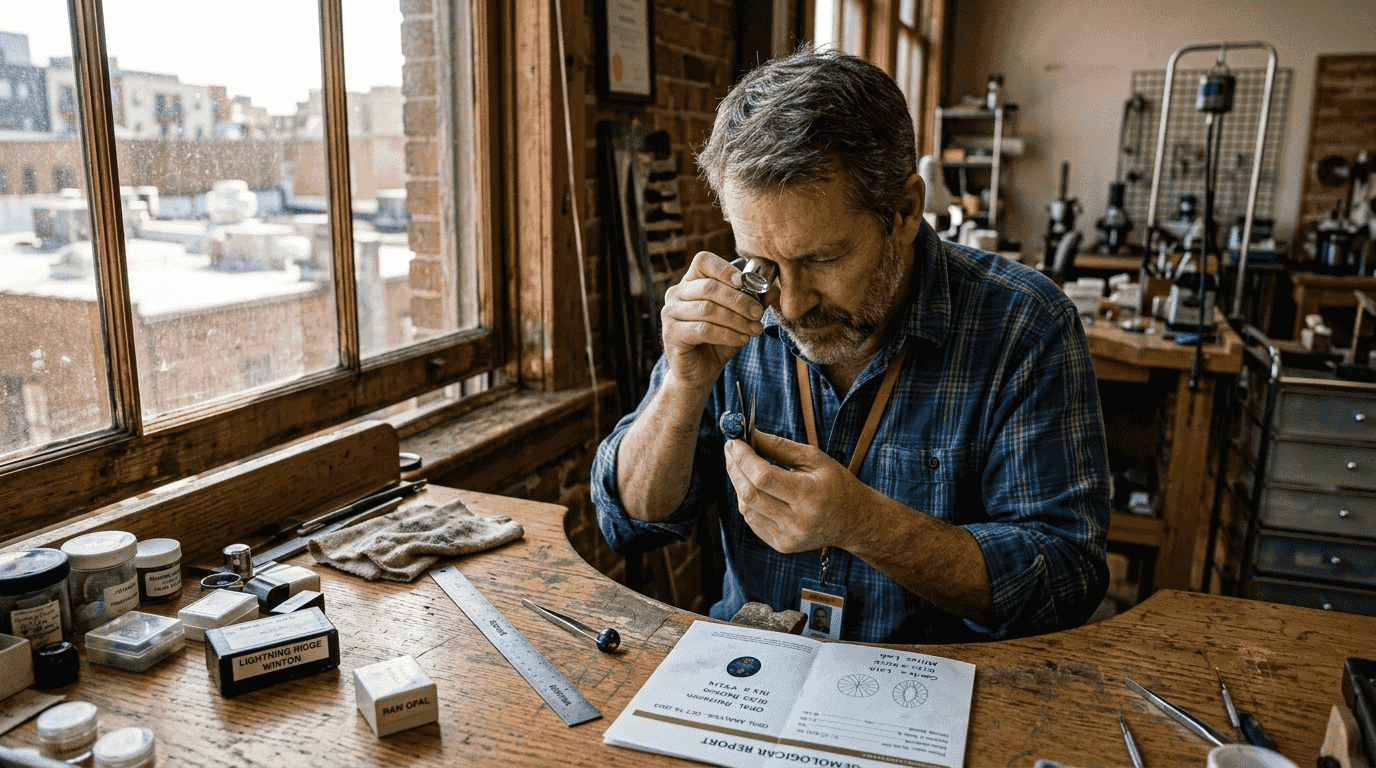
Appraising black opals presents unique challenges that separate novice evaluators from seasoned experts. These gemstones command premium prices in the luxury market, yet their complex interplay of body tone, color play, and pattern rarity makes accurate valuation difficult. Misreading even one quality factor can lead to significant pricing errors that affect both buyer confidence and seller returns. This comprehensive guide equips gemstone appraisers and collectors with expert methods to assess black opals precisely in 2026, covering everything from body tone grading to pattern identification and authenticity verification.
Table of Contents
- Understanding Black Opal Quality Factors
- Assessing Origin And Authenticity In Appraisal
- Step-By-Step Black Opal Appraisal Process
- Common Pitfalls And Quality Verification Tips
- Explore Exceptional Black Opals At Australian Opal Direct
- FAQ
Key takeaways
| Point | Details |
|---|---|
| Body tone foundation | Black opals rated N1-N4 on the tone scale provide the dark background that maximizes color contrast and value. |
| Play-of-color dominance | Brightness and color range of the spectral display determine the majority of a black opal’s market value. |
| Pattern rarity premium | Harlequin and other rare patterns can multiply value significantly compared to common flash patterns. |
| Origin verification | Australian black opals from Lightning Ridge command premium prices and require authentication to avoid treatment confusion. |
| Common pitfalls | Overlooking treatments, misreading body tone, and ignoring clarity issues lead to the most frequent appraisal errors. |
Understanding black opal quality factors
Accurate black opal appraisal starts with mastering the five core quality factors that determine value. Black opals are valued based on a combination of factors including body tone, play-of-color, pattern, brightness, and clarity. Each element contributes differently to the final assessment, and understanding their interactions separates competent appraisers from exceptional ones.
Body tone forms the foundation of black opal classification. The body tone scale ranges from N1 to N4 for true black opals, with N1 representing the darkest stones. This dark background creates the contrast necessary for vibrant color display. Stones lighter than N4 fall into crystal or light opal categories, which command lower prices despite potentially strong color play. You should examine body tone under neutral lighting conditions, as artificial light can distort your perception of the base color.
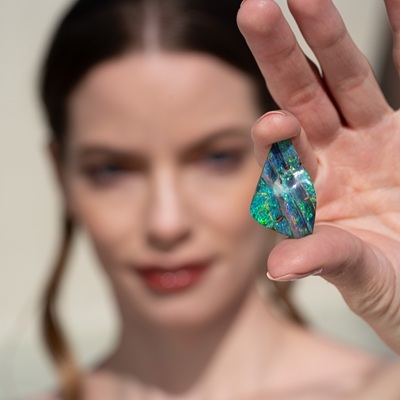
Play-of-color occurs when microscopic silica spheres diffract light into spectral colors. The size and arrangement of these spheres determine which colors appear and how intensely they flash. Red and orange hues indicate larger spheres and typically command higher prices than blue and green. A full spectral range showing all colors represents the most valuable color play. The directional quality of these flashes matters too, with colors visible from multiple angles worth more than those appearing only at specific viewing positions.
Pattern classification identifies the arrangement of color patches across the stone’s surface. Harlequin patterns feature distinct angular patches resembling a checkerboard and rank as the most valuable. Pinfire displays tiny, densely packed color points throughout the stone. Broad flash shows large sweeping color areas that change as you rotate the gem. Rolling flash creates a moving band of color across the surface. Chinese writing resembles calligraphic strokes. Each pattern type carries different value implications, with rarity driving premium pricing.
Brightness ratings from 1 to 5 measure color intensity and visibility. A rating of 5 indicates brilliant, easily visible colors that dominate the stone’s appearance. Ratings of 3 or 4 show moderate to good brightness suitable for quality jewelry. Stones rating 1 or 2 display subdued colors that may disappoint in finished pieces. Brightness directly correlates with market value, as collectors seek stones with commanding visual presence.
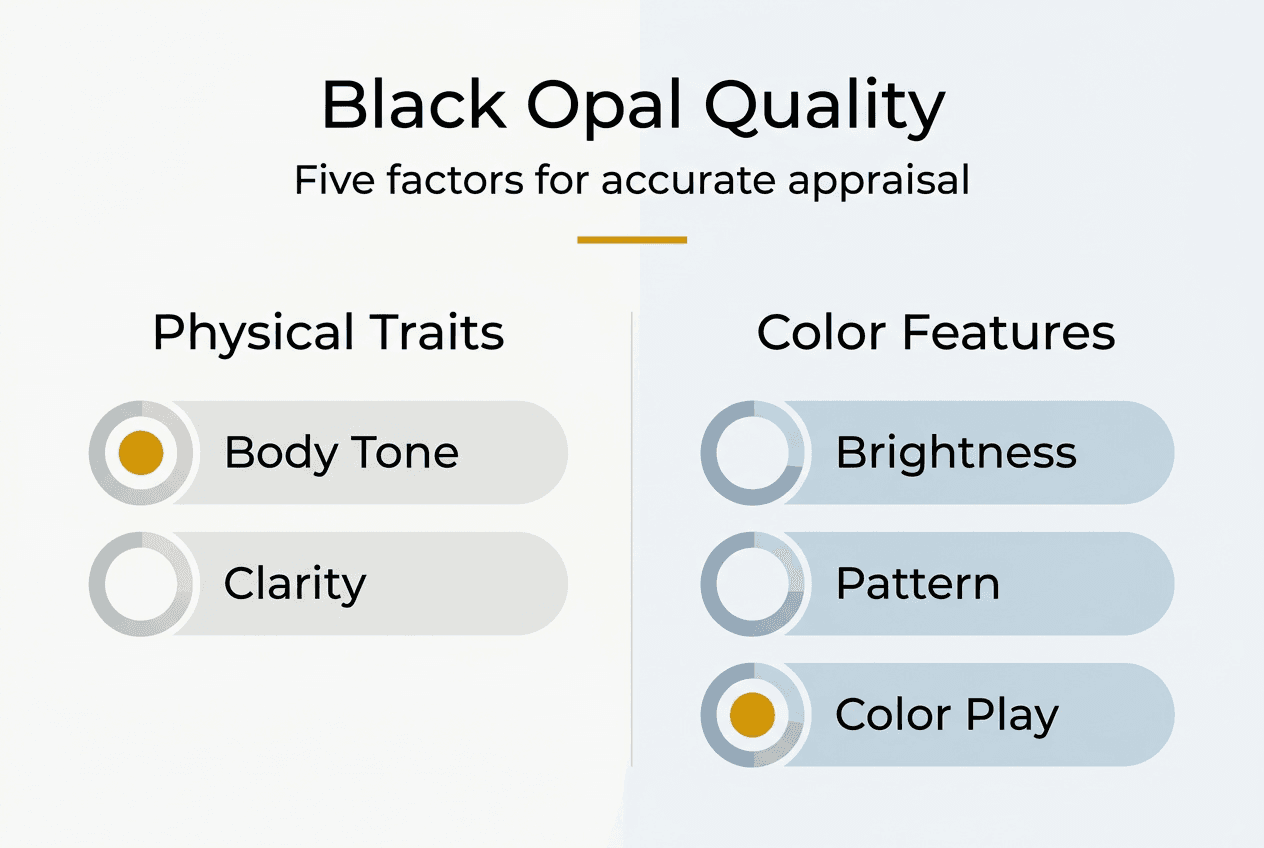
Clarity assessment examines the stone for inclusions, cloudiness, or transparency issues that diminish value factors of opal appeal. Clean stones without visible inclusions command premium prices. Minor inclusions that don’t interfere with color play receive mid-range valuations. Significant cloudiness or cracks that disrupt the visual experience reduce value substantially. You must examine clarity under magnification to spot subtle issues that affect durability and appearance.
Pro Tip: Evaluate play-of-color under multiple light sources including daylight, LED, and incandescent to understand how the stone performs in various settings. Colors that appear only under specific lighting conditions may disappoint buyers and should factor into your valuation accordingly.
Assessing origin and authenticity in appraisal
Origin significantly impacts black opal value, with Australian stones from Lightning Ridge setting global price benchmarks. The value of a black opal varies significantly based on origin, with Australian black opals being the most recognized and valuable in the market. Understanding geographic differences helps you assign accurate valuations and spot potential authenticity issues.
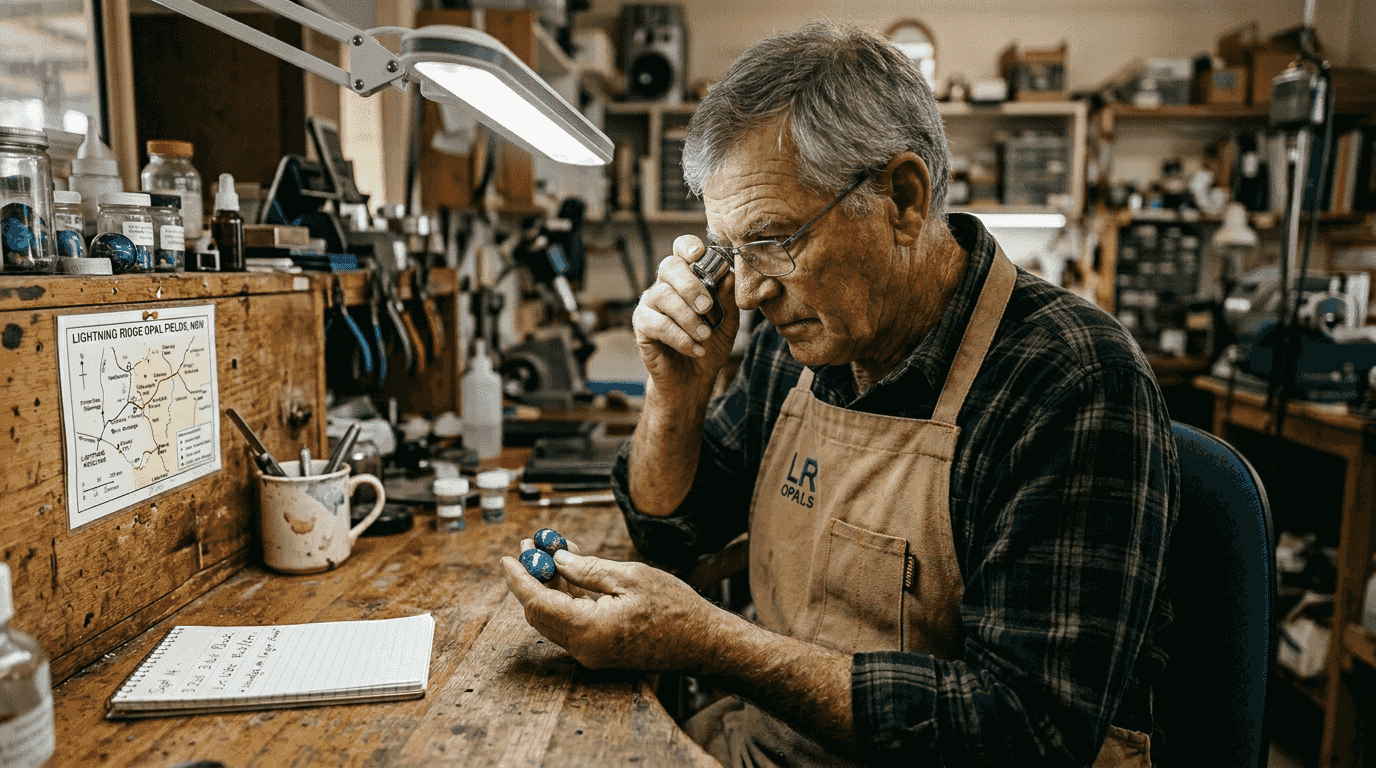
Australian black opals, particularly from Lightning Ridge in New South Wales, represent the gold standard. These stones typically display superior brightness, diverse pattern types, and the darkest body tones. Lightning Ridge produces the majority of the world’s premium black opals, and provenance from this region adds measurable value. Other Australian sources include Mintabie and Coober Pedy, though these areas primarily yield white and crystal opals rather than true blacks.
Ethiopian opals entered the market more recently and display different characteristics. These stones often show excellent play-of-color but typically have lighter body tones and higher water content. The hydrophane nature of many Ethiopian opals means they absorb water, temporarily changing appearance and potentially cracking with moisture fluctuation. This instability makes them less suitable for heirloom jewelry and reduces their appraised value compared to stable Australian material.
Mexican fire opals occasionally show dark body tones but differ structurally from Australian black opals. These stones emphasize body color over play-of-color and serve different market segments. Synthetic opals created in laboratories display too-perfect regularity in their color patterns, lacking the organic randomness of natural stones. Composite opals like doublets and triplets incorporate thin opal layers backed by darker materials to simulate black opal appearance at lower cost.
Authentication requires systematic verification. Visual inspection under magnification reveals natural growth patterns and inclusions consistent with genuine formation. How to authenticate Australian opals involves checking for treatment indicators like unnaturally uniform coloring or suspicious surface characteristics. Laboratory testing using spectroscopy and microscopy provides definitive identification when visual assessment proves insufficient.
| Origin | Brightness Range | Pattern Diversity | Body Tone Average | Market Position |
|---|---|---|---|---|
| Lightning Ridge | 3-5 | High | N1-N3 | Premium |
| Ethiopian | 2-4 | Moderate | N5-N7 | Mid-range |
| Mexican | 2-3 | Low | N4-N6 | Specialty |
| Synthetic | 3-4 | Uniform | N1-N2 | Budget |
Treatment detection protects you from overvaluing enhanced stones. Sugar and acid treatments artificially darken body tone by introducing carbon into the stone’s porous structure. These treatments create unnaturally dark, often grayish backgrounds that differ from natural black opal’s deep, rich tones. Smoke treatment produces similar darkening effects. You can identify treated stones by examining their backs under magnification for carbon deposits or by checking for unnatural color concentration in porous areas.
Pro Tip: Compare opals from australia to international sources by examining the stone’s back and edges for treatment signs. Natural Australian black opals show consistent body tone throughout, while treated stones often display darker concentrations in porous sections or along fractures.
Step-by-step black opal appraisal process
Systematic evaluation ensures you capture all value determinants accurately. Following a structured process reduces oversight risk and produces consistent, defensible valuations. Each step builds on previous assessments to create a comprehensive quality profile.
-
Begin by examining body tone under controlled lighting. Use a standardized tone scale to assign the N-value rating. Document whether the stone falls within the N1-N4 black opal range or if it belongs to a different classification. Natural daylight or daylight-equivalent LED lighting provides the most accurate tone assessment. Avoid fluorescent lighting that can shift color perception.
-
Evaluate play-of-color brightness and spectral range next. Rotate the stone through multiple angles to observe color behavior. Note which colors appear, their intensity, and their directional qualities. Record the brightness rating from 1 to 5 based on color visibility and impact. Strong reds and oranges warrant premium consideration in your assessment.
-
Identify the pattern type and assess its rarity. Harlequin patterns command the highest premiums due to extreme scarcity. Pinfire and broad flash patterns represent mid-tier valuations. Random or weak patterns reduce value significantly. Document pattern coverage percentage, as partial patterns affect value differently than full-face displays.
-
Assess clarity by examining the stone under 10x magnification. Look for inclusions, fractures, or cloudiness that impact transparency or durability. Clean stones without visible flaws receive top clarity grades. Minor inclusions that don’t interfere with color play receive moderate ratings. Significant clarity issues that threaten stone integrity or visual appeal reduce value substantially.
-
Evaluate cut quality and how it enhances or diminishes the stone’s natural beauty. Well-proportioned cuts maximize color display and brightness. Poor cutting that creates dead spots or fails to showcase the best color angles reduces value. Calibrated sizes suitable for standard jewelry settings add practical value for commercial applications.
Opals are graded from below commercial to extra fine based on these combined factors. Below commercial grade stones show weak color play, poor brightness, or significant clarity issues. Commercial grade displays acceptable but unexceptional characteristics suitable for budget jewelry. Good grade stones show solid color play with moderate brightness and clean clarity. Very good grade features strong color display, good brightness, and minimal clarity issues. Extra fine grade represents the top tier with brilliant color play, excellent brightness, rare patterns, and flawless clarity.
| Grade Level | Color Play | Brightness | Pattern Quality | Clarity |
|---|---|---|---|---|
| Extra Fine | Full spectrum, vivid | 5 | Rare patterns | Eye clean |
| Very Good | Multi-color, strong | 4 | Desirable patterns | Minor inclusions |
| Good | Multi-color, moderate | 3 | Common patterns | Visible inclusions |
| Commercial | Limited color, subdued | 2 | Weak patterns | Noticeable flaws |
| Below Commercial | Minimal color | 1 | Poor definition | Significant issues |
Black opal appraisal involves assessing color play as the most significant factor, followed by body tone, pattern, and clarity in descending order of value impact. Weight the color play element most heavily in your final valuation, as even stones with perfect body tone and clarity command limited prices without strong color display.
Pro Tip: Use varied light sources and viewing angles during your evaluation to spot color flashes that appear only under specific conditions. Rotate the stone slowly through 360 degrees while noting which angles produce the strongest color response, as this information helps buyers understand the stone’s optimal display orientation.
Common pitfalls and quality verification tips
Even experienced appraisers encounter challenges that can skew valuations. Recognizing frequent errors and implementing verification strategies improves accuracy and builds professional credibility. Common pitfalls include misidentifying treated opals or overlooking subtle clarity issues that impact value.
Ignoring treatment indicators represents the most costly mistake. Sugar and acid treatments can fool visual inspection if you don’t examine the stone’s back and edges carefully. Treated stones often show unnaturally uniform darkening or carbon concentration in porous areas. Always inspect under magnification and consider UV light examination when treatment is suspected. Laboratory verification provides definitive answers for high-value stones where treatment concerns exist.
Misreading body tone occurs when appraisers evaluate stones under improper lighting. Warm incandescent light can make stones appear darker than their true tone, while cool fluorescent light can lighten appearance. Use standardized daylight-equivalent lighting and compare against reference stones with known tone ratings. A single tone grade difference can significantly impact value, making accurate assessment critical.
Neglecting pattern distribution leads to overvaluation of stones with impressive but limited color displays. A stone showing spectacular harlequin pattern across 30% of its face differs dramatically in value from one displaying the same pattern across 90% coverage. Document pattern coverage percentage and factor this into your final assessment. Partial patterns command proportionally lower prices than full-face displays.
Overlooking clarity issues that become apparent under magnification causes frequent disputes. Inclusions invisible to the naked eye may still affect durability or become visible when the stone is set in jewelry. Always examine stones under 10x magnification as part of your standard procedure. Document any inclusions, fractures, or cloudiness in your appraisal report to avoid future disagreements.
Verification best practices include:
- Using multiple light sources to reveal treatment indicators and assess true color play
- Comparing the stone against reference samples with known characteristics
- Employing microscopy to examine internal structure and identify treatments
- Checking value in opals against recent market sales of comparable stones
- Consulting laboratory reports for high-value stones when available
- Documenting all observations with photographs under standardized lighting
- Seeking second opinions on exceptional or questionable stones
After implementing thorough verification, you should feel confident in your assessment’s accuracy. Your documentation should support your conclusions with specific observations about body tone, color play, pattern type, brightness rating, and clarity grade. This detailed record protects both you and your clients by providing transparent justification for the assigned value.
Explore exceptional black opals at Australian Opal Direct
Now that you understand the complexities of black opal appraisal, you need access to genuine, high-quality specimens to refine your expertise. Australian Opal Direct offers a curated collection of premium Australian black opals sourced directly from renowned mining regions. Each piece comes with detailed provenance information and quality documentation that supports accurate assessment.
The collection features stones across the full spectrum of quality grades, from commercial pieces suitable for learning to extra fine specimens that showcase the pinnacle of black opal beauty. Direct relationships with Australian miners ensure authenticity and eliminate treatment concerns that complicate appraisals. Whether you’re building reference collections, seeking investment-grade stones, or studying black opal types and rarity, Australian Opal Direct provides the quality and transparency serious appraisers demand.
FAQ
How can I distinguish a genuine black opal from treated or synthetic stones?
Examine the stone’s back and edges under magnification for carbon deposits or unnatural darkening that indicates sugar and acid treatments. Appraisers must be aware of treatments like sugar and acid treatments used to enhance play-of-color. Natural stones show consistent body tone throughout, while treated specimens display darker concentrations in porous areas. UV light inspection can reveal treatment indicators, and laboratory testing provides definitive identification. Reference authenticating australian opals guides for detailed visual cues and testing protocols.
What is the most valuable pattern in black opals?
Harlequin patterns featuring distinct angular color patches in a checkerboard arrangement represent the rarest and most valuable pattern type. Harlequin patterns are the most coveted pattern in opals due to their extreme scarcity and striking visual impact. Other valuable patterns include pinfire with densely packed color points and broad flash showing large color areas. Pattern rarity can multiply a stone’s value several times compared to common flash patterns, especially when combined with excellent brightness and full-face coverage.
How does the body tone rating affect black opal value?
Darker body tones rated N1 through N4 create the contrast necessary for vivid color display, directly increasing value. Body tones from N1 to N4 define true black opals and provide the dark background that makes spectral colors appear more brilliant. Stones with N1 or N2 ratings command premium prices compared to N3 or N4 specimens, assuming similar color play quality. Body tone serves as the foundational classification that separates black opals from crystal and light opals, which occupy lower value tiers despite potentially strong color displays.
What brightness rating should I look for in investment-grade black opals?
Investment-grade stones typically display brightness ratings of 4 or 5, indicating strong to brilliant color visibility. These ratings ensure the stone commands attention and maintains visual impact across various lighting conditions. Stones rating 3 may suit commercial jewelry but lack the exceptional presence collectors seek. Brightness below 3 significantly limits market appeal and resale potential, making such stones unsuitable for investment purposes regardless of other quality factors.
How do I verify the origin of a black opal during appraisal?
Request documentation from the seller including mine location and extraction details when available. Examine the stone’s physical characteristics against known traits of Australian black opals, including body tone depth, color play quality, and structural stability. Ethiopian opals often show hydrophane properties and lighter body tones, while Mexican material emphasizes body color over play-of-color. Laboratory testing provides definitive origin identification for high-value stones where provenance significantly impacts valuation. Visual comparison against authenticated reference stones from known origins helps develop recognition skills over time.
Recommended
- Black Opal Explained: Value, Types, and Rarity - Australian Opal Direct
- How to Authenticate Australian Opals for Genuine Value - Australian Opal Direct
- What Makes Black Opal Rare: Origins and Value Revealed - Australian Opal Direct
- How to Distinguish Opal Origins for Authentic Jewelry - Australian Opal Direct