Black Opal Guide for Buyers and Collectors
Posted by AOD on 10th Aug 2026
Black Opal Guide for Buyers and Collectors
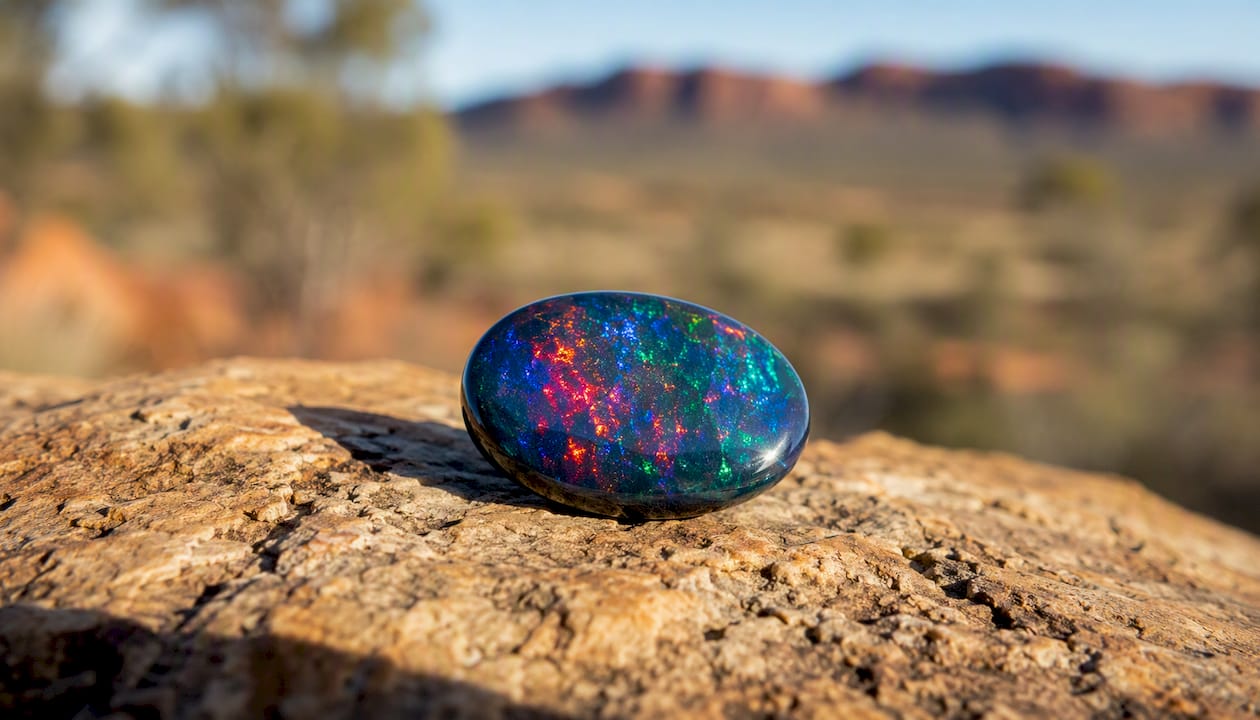
Black opal is the rarest and most coveted variety of precious opal, defined by a dark body tone that makes its kaleidoscopic play-of-color blaze with extraordinary intensity. Under the Gemmological Association of Australia (GAA) convention, black opal carries a body tone of N1 through N4 on a scale where N1 is the deepest, most dramatic background and N9 is near-white. That dark canvas is what separates a $200 stone from a $20,000 one of identical carat weight.
Before you spend a dollar, three things must be clear:
- Body tone: Confirm the stone is N1–N4 on the GAA scale. Darker tone amplifies every flash of color.
- Brightness and pattern: A vivid, rolling play-of-color across a broad face-up area drives value far more than carat weight alone.
- Documentation: Demand written provenance, ideally confirming Lightning Ridge, New South Wales, as the origin. Without it, you are buying on faith.
This black opal guide walks you through every grading factor, pricing tier, and buyer safeguard you need to collect or purchase with confidence.
Key Takeaways
| Point | Details |
|---|---|
| Body tone is the foundation | Confirm N1–N4 on the GAA scale; darker tone amplifies play-of-color and drives premium pricing. |
| Brightness multiplies value | A high brightness rating (B1–B2) on a dark body tone places a stone in the top pricing tier regardless of pattern. |
| Provenance carries a real premium | Documented Lightning Ridge origin typically adds 20–40% over equivalent stones without verified source. |
| Assembled stones require disclosure | Always confirm natural solid status; doublets and triplets must be disclosed and are priced accordingly. |
| Australianopaldirect offers verified sourcing | Direct-miner relationships, written provenance, 90-day warranty, and independent appraisal options are standard. |
Table of Contents
- What is black opal, and where does it come from?
- How to evaluate a black opal: the gemmologist’s checklist
- How the GAA body-tone and brightness scales work
- Opal patterns explained: what they look like and how rare they are
- How to spot treatments, assembled opals, and fakes
- What drives black opal price, and what should you expect to pay?
- Your practical buyer checklist: questions to ask and red flags to watch for
- How to care for and insure a black opal
- When does a black opal make sense for a collection or an engagement ring?
- Australianopaldirect: vetted Lightning Ridge opals with full buyer support
- Useful sources and standards referenced
What is black opal, and where does it come from?
Opal forms when silica-rich water seeps into cracks in sedimentary rock and slowly evaporates over millions of years, leaving behind a lattice of microscopic silica spheres. When those spheres are uniform in size and stacked in orderly layers, they diffract light into the spectral fire collectors prize. What makes black opal distinct is the geological environment in which it forms: the presence of ironstone, carbon, or manganese compounds creates the dark background, technically called potch, that underlies the gem layer.
A jet-black stone with no play-of-color is pure potch and has no gem value. Natural potch backing, however, is not a flaw. In Lightning Ridge material, a thin seam of brilliant color sitting atop a natural potch base is exactly what cutters seek, because the dark backing intensifies every hue visible from the face-up position.
The main opal types and where black opal fits:
- Black opal (N1–N4): Dark body tone with play-of-color; the rarest and most valuable category.
- Dark opal (N5–N6): Semi-dark background; strong color but less contrast than true black.
- Crystal opal: Transparent to semi-transparent body; no dark tone but often brilliant color.
- Boulder opal: Natural ironstone host rock forms the backing; Queensland is the primary source.
- Fire opal: Orange to red body color, often from Mexico; may or may not show play-of-color.
Lightning Ridge in New South Wales is the world’s principal commercial source for black opal. Geoscience Australia identifies Australia as the dominant opal-producing nation, and Lightning Ridge is the region that defines the category. Minor deposits exist in Ethiopia and Honduras, but stones from those origins carry different structural characteristics and typically trade at a discount to equivalent Lightning Ridge material. Provenance is not merely a story; it is a market signal with measurable price consequences.
Pro Tip: When reviewing photos of a black opal, tilt your screen or ask the seller to photograph the stone at a 45-degree angle to the light source. That angle reveals whether the play-of-color is a surface shimmer or a deep, rolling fire that moves through the stone.
How to evaluate a black opal: the gemmologist’s checklist
GIA identifies play-of-color as the single most important quality factor for opal, and its practical evaluation guidance centers on how a stone performs under varied conditions rather than on a single static measurement. Apply the following eight dimensions in sequence, whether you are holding the stone in hand or reviewing a seller’s listing.
The eight core evaluation dimensions:
- Body tone (N1–N9): Darker is rarer. Confirm N1–N4 for true black classification.
- Brightness/intensity: How vivid and self-luminous does the play-of-color appear? A dull stone in direct sunlight is a warning sign.
- Pattern type and coverage: Harlequin and broadflash patterns covering the full face-up area command premiums over pinfire or sparse patches.
- Hue and color range: Red and orange are the rarest spectral colors in opal; their presence typically lifts value. Full-spectrum stones showing red, green, and blue are exceptional.
- Clarity and inclusions: Potch lines, sand inclusions, and crazing (fine surface cracks) reduce value. A clean, crack-free face is the standard.
- Cut and dome profile: A well-proportioned cabochon with a gently domed top concentrates color and protects the gem layer. Flat or overly thin cuts scatter light poorly.
- Carat weight vs. face-up area: A 3-carat stone cut wide and flat may show less color than a 2-carat stone cut with a proper dome. Face-up area matters, but dome height matters equally.
- Provenance and treatment status: Is the stone a natural solid, a doublet, a triplet, or treated? Written disclosure is non-negotiable.
| Dimension | What to look for | Effect on price |
|---|---|---|
| Body tone | N1–N4 confirmed; no gray or milky cast | Darker tone = higher premium |
| Brightness | Vivid color visible in dim indoor light | Top brightness multiplies value significantly |
| Pattern | Full-face coverage; harlequin or broadflash | Rare patterns add collector premium |
| Dominant hue | Red or full-spectrum presence | Red-dominant stones typically command the highest per-carat prices |
| Clarity | No crazing, no sand inclusions, no potch intrusions on face | Clean stones grade and sell higher |
| Cut/dome | Symmetrical oval or round; dome height proportional | Poor cut reduces brightness regardless of tone |
| Face-up area | Larger face relative to carat weight | Wider face increases perceived value |
| Provenance | Written Lightning Ridge origin with mine-area detail | Documented origin adds a meaningful market premium |
GIA’s practical evaluation steps translate directly to how you should handle or photograph any stone under consideration: view it under incandescent light, then diffuse daylight, then fluorescent. Rotate it slowly through 360 degrees. Observe whether the color brightens, dims, or rolls across the surface. Examine the dome from the side to assess thickness and profile. Finally, look for inclusions with a loupe or macro photo.
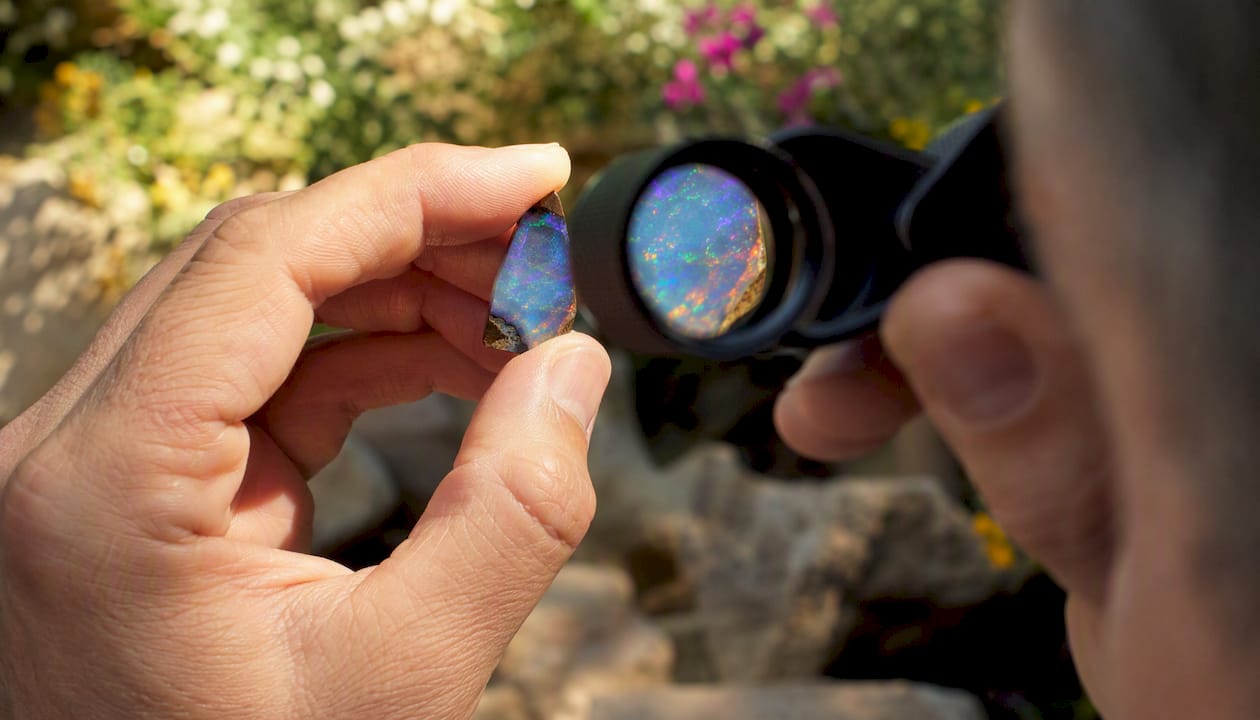
For any stone priced above $1,000, request a written condition report from the seller. Above $3,000–$5,000, an independent appraisal from a GIA-trained gemologist or a recognized gem lab adds meaningful protection. GIA and other major gem labs can identify opal characteristics and confirm natural vs. treated or assembled status, though they do not grade opal on a single standardized scale the way diamonds are graded. Documented provenance and clear seller disclosure remain your primary safeguards.
How the GAA body-tone and brightness scales work
The GAA body-tone scale runs from N1 to N9, where N1 is the deepest black and N9 is colorless or white. Black opal occupies N1 through N4. Dark opal spans N5 and N6. Crystal and white opal fill the lighter end of the range. The classification is assessed face-down against a white background: the darker the stone appears, the lower its N number and the more coveted its category.
Why tone matters so profoundly:
- An N1 stone provides maximum contrast for play-of-color, making even moderate brightness appear vivid.
- An N3 or N4 stone still qualifies as black opal but may show slightly less contrast, particularly for cooler blue-green hues.
- The same play-of-color pattern on an N6 body tone will appear noticeably less dramatic than on an N2 background.
Brightness is evaluated separately, typically on a scale from B1 (brilliant) down to B7 (dull), though different grading guides use slightly different descriptors. The critical insight is that brightness and body tone are independent variables that multiply each other’s effect on value. A stone graded N1 with B1 brightness sits at the apex of the market. An N3 stone with B3 brightness is still a fine gem. An N2 stone with B6 brightness, despite its dark tone, will disappoint in person because the color lacks the self-luminous quality that makes black opal so arresting.
Insight: Stones in the N1–N2 range with brightness ratings of B1–B2 consistently occupy the top pricing tier in the Lightning Ridge market. Body tone alone does not guarantee value; brightness is the multiplier that separates a premium stone from a merely dark one.
When reading a listing or grading statement, look for both numbers. A seller who quotes only body tone without addressing brightness is giving you half the picture. The GAA grading framework is the standard reference for interpreting these scales in practice.
Opal patterns explained: what they look like and how rare they are
Pattern is the architecture of a black opal’s play-of-color. Two stones can share identical body tone and brightness yet differ enormously in collector value because of how their color is arranged across the face. The major pattern families, from rarest to most common, are:
- Harlequin: Large, angular, mosaic-like patches of color arranged in a near-geometric grid. The rarest and most sought-after pattern; a true harlequin with red presence is among the most valuable configurations in the gem world.
- Broadflash: Wide, sweeping sheets of color that roll across the face as the stone is rotated. Highly prized, especially when the flash includes red or orange.
- Rolling flash: Similar to broadflash but with a more dynamic, wave-like movement. Strong collector appeal.
- Flame: Streaks of color radiating from a central point, resembling tongues of fire. Dramatic and visually striking.
- Ribbon: Parallel bands of color running across the stone. Less common than pinfire; value depends on color intensity.
- Mackerel: A fine, parallel striped pattern resembling fish scales. Relatively rare; collector interest varies by color.
- Pinfire: Tiny, closely spaced dots of color. The most common pattern; attractive but generally commands lower prices than broadflash or harlequin.
- Mosaic/Chunky: Irregular patches larger than pinfire but less geometric than harlequin. Mid-range in rarity and value.
The Smithsonian National Museum of Natural History’s opal specimens offer an exceptional visual reference for understanding how these patterns appear in museum-quality stones. Viewing large, documented examples in person or through high-resolution institutional photography calibrates your eye before you evaluate stones in the market.
Red presence within any pattern category lifts value. A pinfire stone with red flashes will outprice a broadflash stone showing only blue and green, all else being equal.
Pro Tip: When photographing a black opal for a listing or insurance record, shoot three frames: one in direct sunlight, one under a single incandescent bulb, and one in diffuse shade. The pattern reads differently in each, and the combination gives the most honest representation of what the stone actually does.
How to spot treatments, assembled opals, and fakes
Not every stone sold as “black opal” is a natural solid gem. The market contains assembled stones, treated material, and outright simulants, and the price difference between a natural solid and an assembled stone of similar appearance can be enormous.
Assembled opals defined:
- Doublet: A thin slice of natural opal cemented to a dark backing (often potch, ironstone, or black plastic). The dark backing mimics the body tone of black opal. Doublets have legitimate uses in jewelry but must be disclosed and priced accordingly.
- Triplet: A doublet with an additional clear dome of quartz or glass cemented on top to magnify color and protect the thin opal layer. Triplets are the most common assembled type and the least valuable per unit of apparent color.
Smoked and dyed opals: Some light-bodied opals are smoked over a flame or treated with carbon-based compounds to darken the body tone artificially. The treatment can be difficult to detect without magnification or UV testing.
Practical checks you can apply:
- View the stone from the side. A natural solid opal shows consistent material throughout. A doublet or triplet reveals a visible join line between layers.
- Examine the back. A flat, uniformly black backing that looks too perfect is a strong indicator of an assembled stone. Natural potch backs show irregular texture.
- Check weight relative to size. Triplets with glass domes feel heavier than a natural opal of the same face-up dimensions.
- Ask for cross-section photos. A reputable seller will provide an image of the stone’s profile, which makes assembled construction immediately visible.
- UV light testing can reveal certain adhesives used in doublets and triplets, though this requires equipment and experience to interpret reliably.
Red flags that warrant extra scrutiny: no treatment disclosure in the listing, a price dramatically below market for the stated grade, photos taken only from directly above with no side view, and sellers who cannot or will not provide provenance documentation. The authentication techniques used by experienced buyers include all of the above checks, and applying them consistently protects you from the most common purchasing mistakes.
For stones above $2,000, request a written statement confirming natural solid status. Above $5,000, an independent lab report from GIA or a recognized Australian gem laboratory is worth the modest cost relative to the purchase price.
What drives black opal price, and what should you expect to pay?
Black opal prices span an extraordinary range, from under $100 per carat for commercial-grade material to well above $10,000 per carat for top-grade collector stones with documented Lightning Ridge provenance. Understanding what moves a stone between those tiers is the most practical skill a buyer can develop.
The primary price drivers:
- Body tone: N1–N2 stones command the highest premiums. Each step toward N4 typically reduces per-carat value at equivalent brightness.
- Brightness: B1–B2 stones are self-luminous even in dim light. This quality is rare and priced accordingly.
- Dominant red presence: Red is the longest wavelength color that opal can produce, requiring the most precise silica sphere arrangement. Red-dominant stones typically command the highest per-carat prices in any pattern category.
- Pattern rarity: Harlequin and broadflash patterns with full-face coverage add a collector premium that can be substantial.
- Face-up area: A well-cut stone that maximizes the visible color surface relative to its carat weight is more desirable than a deep, narrow stone of the same weight.
- Documented Lightning Ridge provenance: Lightning Ridge origin with mine-area specifics typically adds a 20–40% premium over stones of equivalent visual grade without documented origin.
- Market demand: Investment-grade stones with exceptional pattern and provenance have appreciated over time, though the opal market is less liquid than diamond or sapphire markets.
Realistic pricing tiers:
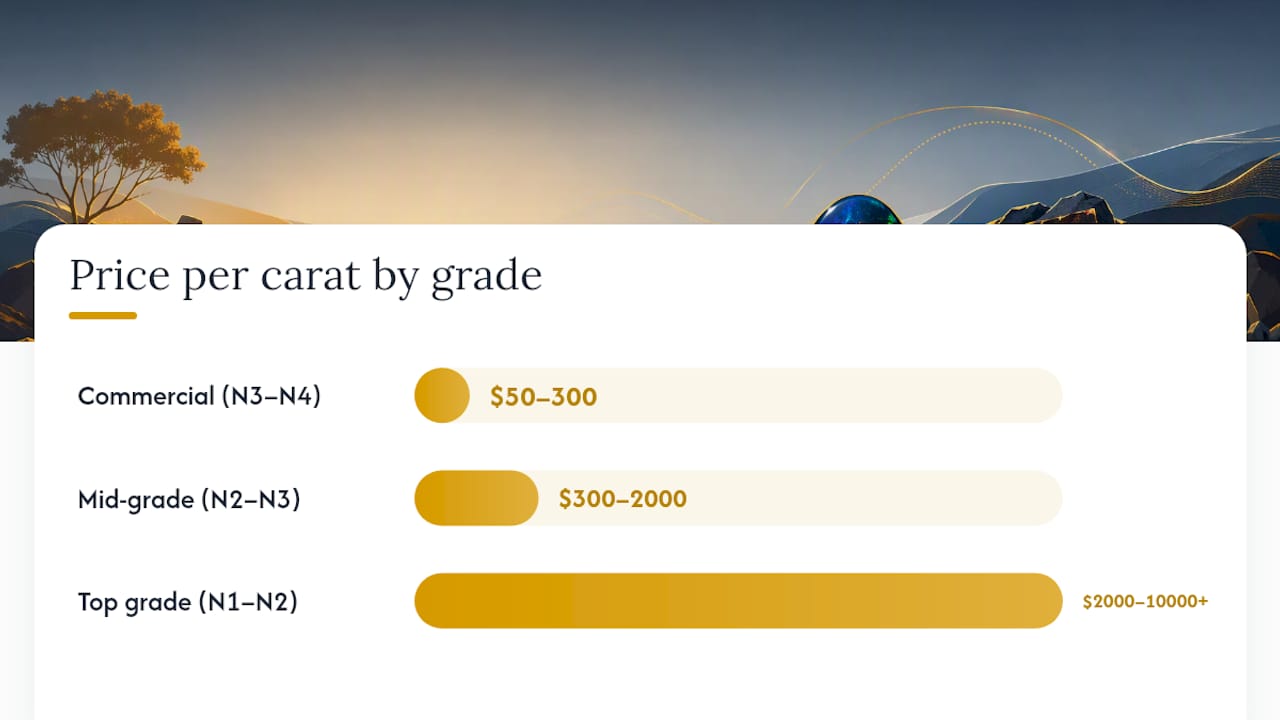
- Commercial grade (N3–N4, moderate brightness, common pattern): roughly $50–$300 per carat. Attractive for jewelry use but not collector investment.
- Mid-grade (N2–N3, good brightness, broadflash or rolling flash): roughly $300–$2,000 per carat. The sweet spot for serious jewelry buyers and entry-level collectors.
- Top grade (N1–N2, B1–B2 brightness, harlequin or full-spectrum broadflash, documented Lightning Ridge origin): $2,000–$10,000+ per carat. Collector and auction territory.
For a deeper look at how appraisers assign dollar values to specific quality combinations, the black opal appraisal process follows a structured methodology that maps directly to these tiers.
Carat weight is a starting point, not the final answer. A 5-carat stone cut flat with a thin profile may show less color than a 3-carat stone with a proper dome. Always evaluate face-up area and dome height alongside the carat figure.
Your practical buyer checklist: questions to ask and red flags to watch for
Buying a black opal, whether online or in person, is an exercise in disciplined inquiry. The stones are beautiful enough to inspire impulse decisions, and that is precisely when buyers make costly mistakes.
Request before any purchase:
- Written statement of origin, including country, region, and mine area where available.
- GAA body-tone classification (N1–N9) and brightness description.
- Pattern description with multiple-angle photos or a short rotating video.
- Explicit treatment disclosure: natural solid, doublet, triplet, smoked, or dyed.
- Clear side-profile photo showing stone thickness and dome height.
- Return policy in writing, including the window and condition requirements.
- For stones above $1,000: a written condition report from the seller.
- For stones above $3,000–$5,000: an independent appraisal or lab report.
Red flags that should give you pause:
- No provenance documentation or vague “Australian opal” claims without regional specifics.
- Photos taken only from directly above, with no side view or rotating video.
- Price dramatically below market for the stated grade (N1, B1, harlequin, Lightning Ridge).
- No return policy or a policy with conditions that make returns practically impossible.
- Seller who cannot explain the difference between a solid, doublet, and triplet.
Pro Tip: For any stone priced above $3,000, insist on an independent appraisal from a GIA-trained gemologist before finalizing the purchase. The appraisal fee is a small fraction of the purchase price and provides both a value confirmation and a written record for insurance purposes.
Reputable sellers provide written provenance, transparent return policies, warranty coverage, and independent lab reports for investment-grade stones. Ethical sourcing documentation from a seller who maintains direct miner relationships is one of the clearest signals that you are dealing with a trustworthy source. Understanding what quality jewelry documentation looks like across fine gemstone categories also helps calibrate your expectations before you engage any seller.
How to care for and insure a black opal
Black opal rates 5.5–6.5 on the Mohs hardness scale, which means it scratches more easily than sapphire, ruby, or diamond.
Daily wear guidance:
- Choose a protective setting: bezel or halo settings shield the stone’s edges far better than prong settings, which leave the girdle exposed.
- Remove the piece before gardening, sports, heavy cleaning, or any task involving impact or abrasive surfaces.
- Keep the stone away from prolonged heat, including direct sunlight through glass, hair dryers, and steam.
- Avoid contact with household chemicals, perfumes, and hand sanitizers.
Cleaning and storage:
- Clean with warm water and a mild soap using a soft cloth. Rinse thoroughly and pat dry.
- Never use ultrasonic cleaners or steam cleaners. The vibration and heat can cause crazing or loosen settings.
- Store in a padded box or soft pouch, away from harder gemstones that can scratch the surface.
- In very dry climates, some collectors place a small damp cloth near stored opals to maintain ambient humidity, though this is a precaution rather than a strict requirement for solid stones.
Insurance:
- Photograph the stone from multiple angles before wearing it, and keep those images with your purchase receipt and any lab reports.
- A standard homeowner’s or renter’s policy often provides limited jewelry coverage. For stones above $1,000, a jewelry floater or personal property endorsement provides broader, more specific protection.
- Update your appraisal every three to five years, as market values shift and an outdated appraisal can leave you underinsured.
When does a black opal make sense for a collection or an engagement ring?
The question of whether to wear a black opal daily or preserve it as a collector piece is one worth thinking through carefully, because the answer shapes every decision that follows, from setting choice to insurance level to how much you spend.
For an engagement ring, black opal is a genuinely beautiful choice, but it demands a protective setting and a wearer who understands the stone’s softness. A bezel-set black opal in 18-karat gold, worn with awareness and removed for physical work, can last decades without damage. The same stone in a high prong setting worn through daily tasks will show wear within years. The emotional resonance of black opal, with its ancient associations with creativity, protection, and the full spectrum of human experience, makes it a deeply meaningful choice for a ring. The practical requirement is simply that the setting and the wearer’s habits must match.
For a collection, the calculus shifts. Documented Lightning Ridge provenance and pattern rarity matter more than setting or wearability. A collector building long-term value should prioritize N1–N2 body tone, B1–B2 brightness, harlequin or broadflash patterns with red presence, and written chain-of-custody documentation. Those factors, not trend-driven aesthetics, are what hold and appreciate in value over time.
The most common collecting mistake is buying on visual impact alone without confirming provenance. A spectacular-looking stone without documentation is worth less on resale than a slightly less dramatic stone with a clear mine-area record and a lab report confirming natural solid status. Informed buying, grounded in the rarity factors that actually drive long-term value, is what separates a collection from an accumulation of beautiful objects.
Australianopaldirect: vetted Lightning Ridge opals with full buyer support

Australianopaldirect sources directly from Lightning Ridge miners, which means every stone in its inventory carries documented origin rather than a vague regional claim. The difference for buyers is concrete: written provenance, mine-area specifics, and a chain of custody that supports both resale value and insurance documentation. Each piece comes with a 90-day warranty, complimentary insurance on shipping, and a transparent return policy, so the protections this guide recommends are built into every transaction rather than something you have to negotiate for.
For investment-grade stones, Australianopaldirect offers independent appraisal options and can provide video of any stone rotating under multiple light sources before purchase. Custom jewelry design is also available for buyers who want a specific setting to protect their stone for daily wear. Browse the full collection and request documentation for any stone at Australianopaldirect.
Useful sources and standards referenced
The following authoritative sources informed this guide and are worth consulting directly for grading standards, geological context, and independent research:
- GIA (Gemological Institute of America): — The GIA’s opal quality-factor pages explain play-of-color, body tone, clarity, and cut in practical terms. GIA-trained gemologists provide independent appraisals and identification reports for natural vs. assembled or treated stones.
- Gemmological Association of Australia (GAA): — The GAA’s body-tone scale (N1–N9) and brightness conventions are the recognized industry standard for grading Australian opal. Their published guides are the reference point for any grading statement you encounter in a listing.
- Smithsonian National Museum of Natural History: — The Smithsonian’s gem and mineral gallery holds opal specimens that provide visual reference for rare patterns and large-format stones, useful for calibrating your eye before evaluating market material.
- Gem Society: — Provides historical and cultural context for opal, including the legends and symbolism that have surrounded the stone across civilizations, from ancient Rome to Aboriginal Australian tradition.
- Gemstones.com and comparable buyer-education resources: — Consumer-oriented guides that translate technical grading concepts into practical buying advice, useful as a cross-reference when evaluating seller claims.
Recommended
- Expert Guide to Buying Australian Opals for Collectors - Australian Opal Direct
- Opal Sourcing Tips: Your 2026 Ethical Buying Guide - Australian Opal Direct
- Opal Varieties: A Complete Guide for Collectors - Australian Opal Direct
- Master must-know opal terminology for confident collecting - Australian Opal Direct