Queensland Boulder Opal: A Collector's Guide to Buying Right
Posted by AOD on 20th Aug 2026
Queensland Boulder Opal: A Collector’s Guide to Buying Right
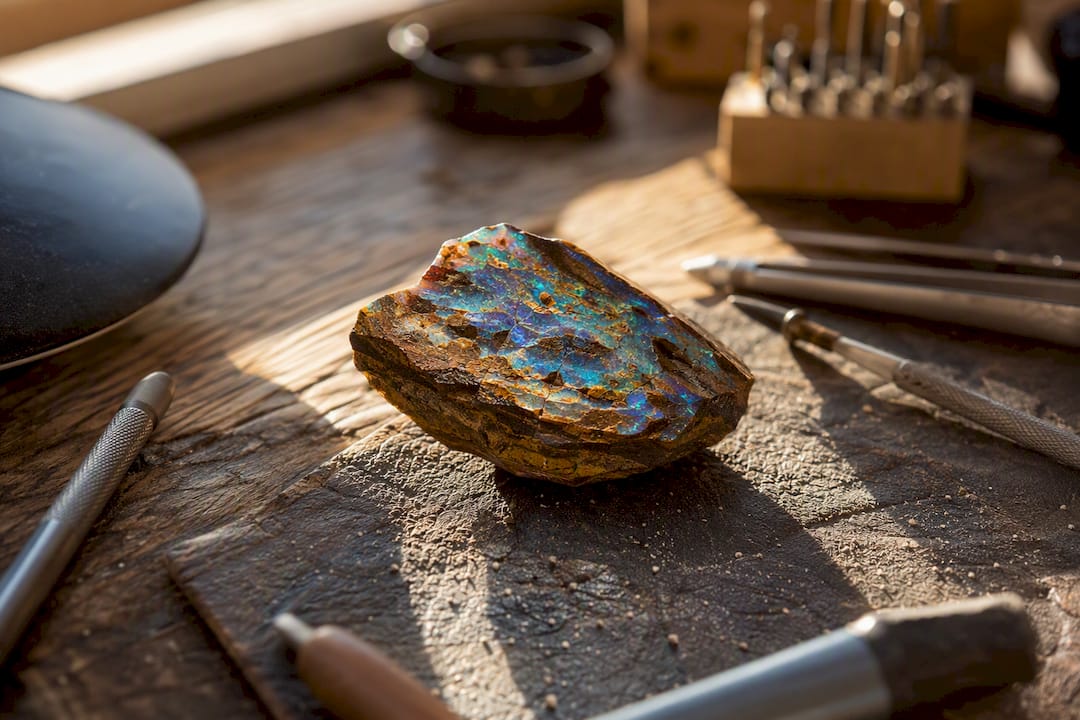
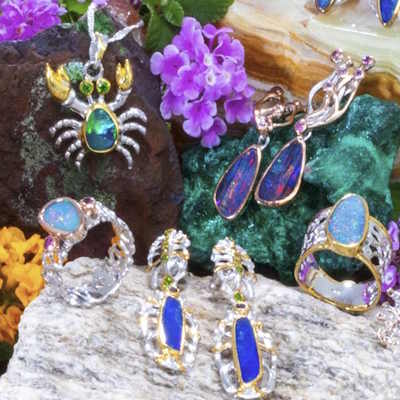
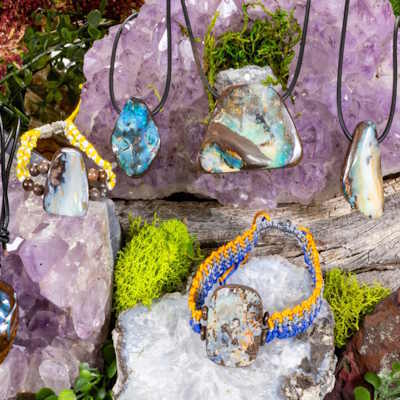
Queensland boulder opal is precious opal that forms within ironstone and sandstone boulders, typically left attached to its host rock rather than cut free. That ironstone backing is exactly why collectors chase it: it delivers a durable natural setting, dramatic play-of-color, and patterns so individual that no two specimens ever match. Trace it back far enough and you land in the Winton Formation, with grading standards shaped by bodies like GIA and Gem-A. At Australianopaldirect, we source it directly because nothing else in the opal world tells quite this story.
Key Takeaways
Genuine Queensland boulder opal combines a natural ironstone backing with red-to-purple play-of-color, and value rises with clean color faces, strong pattern, and verified direct-miner provenance.
| Point | Details |
|---|---|
| Confirm the backing | Genuine boulder opal shows visible ironstone matrix on the back and edges, not a smooth manufactured surface. |
| Prioritize color hierarchy | Red and orange play-of-color rank highest in value, followed by green, blue, and purple. |
| Check for assembly | Request edge photos and loupe inspection to rule out doublets or triplets before buying. |
| Ask about provenance | Confirm the exact field (Winton, Quilpie, Yowah, or Koroit) and whether the seller sources directly from miners. |
| Buy from a transparent source | Australianopaldirect authenticates each stone with direct-miner sourcing, lab-grade photography, and a 90-day warranty. |
Table of Contents
- What Makes Queensland Boulder Opal Different?
- How Do You Identify Genuine Boulder Opal?
- What Determines the Value of Boulder Opal?
- How Can You Tell If a Boulder Opal Is Real?
- What Should You Ask Before Buying?
- How Do You Care for Boulder Opal Jewelry?
- Why Do Collectors Prize Boulder Opal’s Matrix?
- A Note From Our Sourcing Desk
- Ready to Add a Queensland Boulder Opal to Your Collection?
- Further Reading on Boulder Opal Origins
What Makes Queensland Boulder Opal Different?
Queensland boulder opal owes its character to the Winton Formation, a belt of Cretaceous-age sedimentary rock running through central Queensland where opal silica crept into cracks and cavities in ironstone over millions of years. Unlike opal that forms in open seams within softer host rock, boulder opal stays fused to that ironstone matrix, which is why cutters usually leave the backing intact rather than slicing it away.
Four fields do most of the producing, and each has its own reputation:
- Winton — the broadest producing region, known for large boulder formations and strong pattern variety.
- Quilpie — prized for vivid color bars and a long history of family-run cutting operations.
- Yowah — famous for “Yowah Nuts,” small ironstone nodules that split open to reveal opal cores.
- Koroit — recognized for pipe opal and richly patterned matrix work.
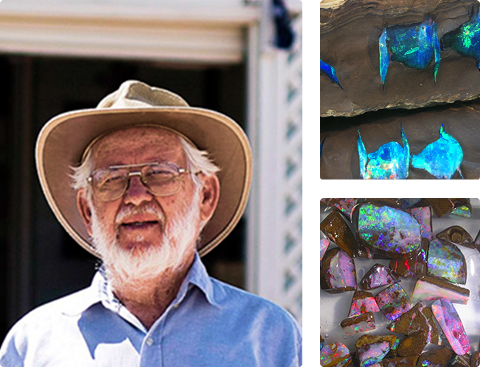
Mining runs the gamut from open-cut extraction to underground tunneling, and miners often crack ironstone boulders by hand to expose the seam inside. That process explains why rough boulder opal arrives in such unpredictable shapes.
Pro Tip: Ask any seller for front, back, and side photos of a piece. The back view confirms genuine ironstone backing, and the side profile shows whether the seam runs naturally through the stone or looks suspiciously engineered.
How Do You Identify Genuine Boulder Opal?
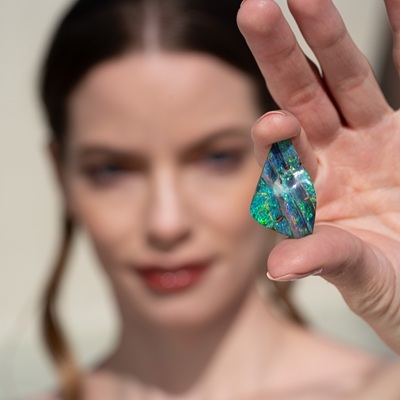
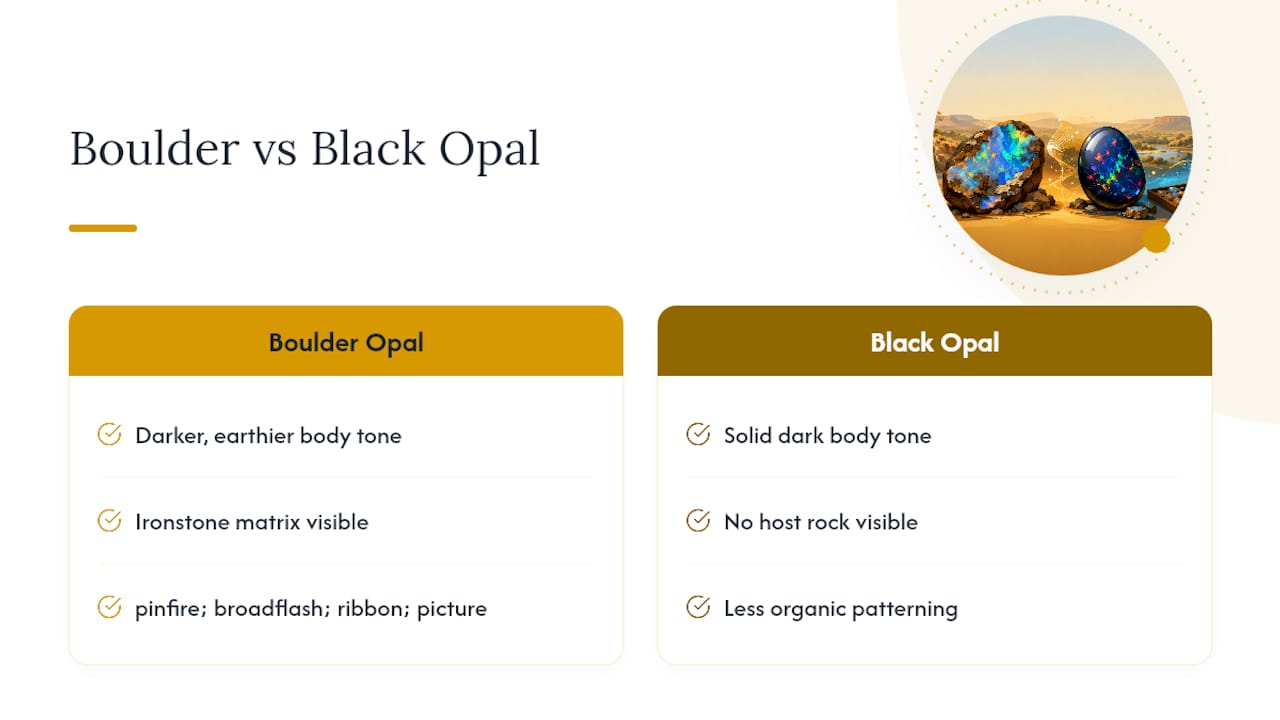
Real Queensland boulder opal shows a visible ironstone matrix on the back or edges, with the “face” opal sitting as a thin seam across the surface. Body tone tends to run darker because of that ironstone base, which pushes play-of-color into sharp relief against brown or gray stone. Patterns vary widely: pinfire (tight speckled color), broadflash (broad sheets of color), ribbon patterns, and picture opal, where natural inclusions form scenes reminiscent of landscape art.
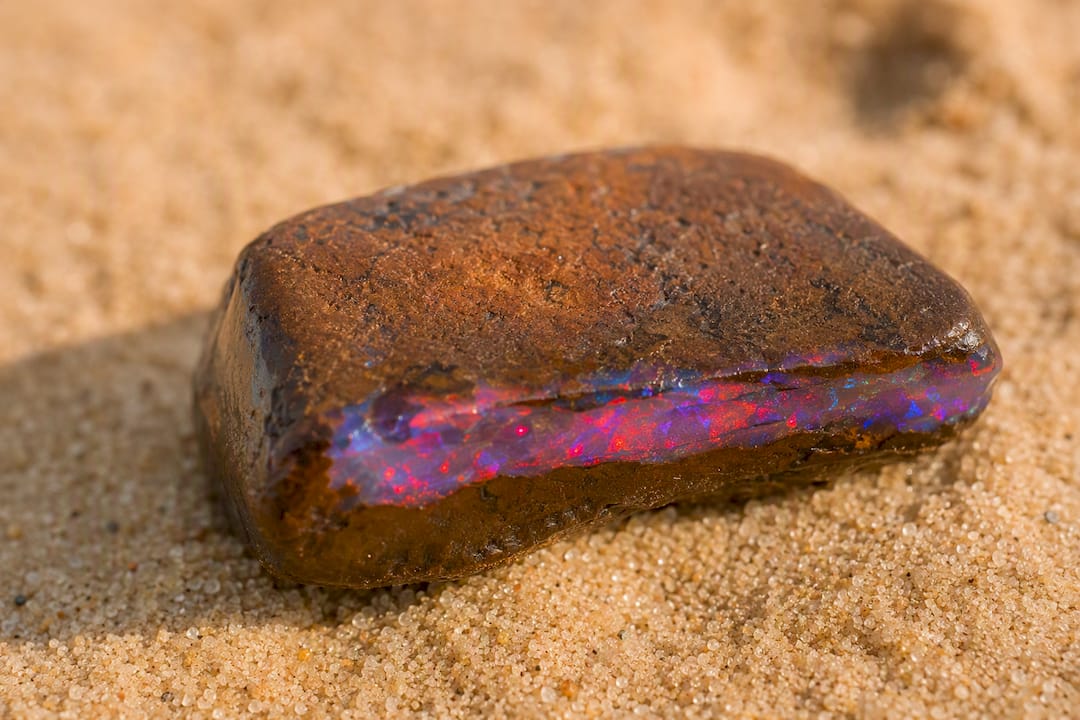
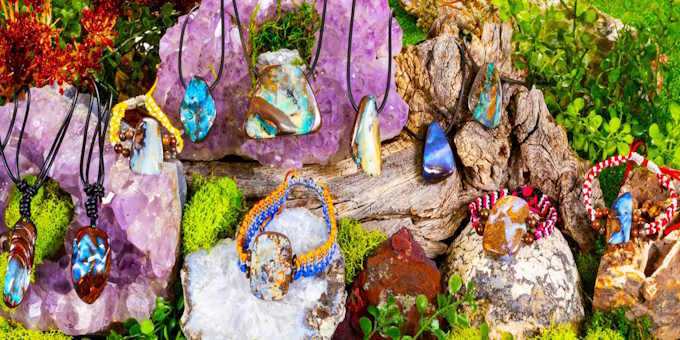
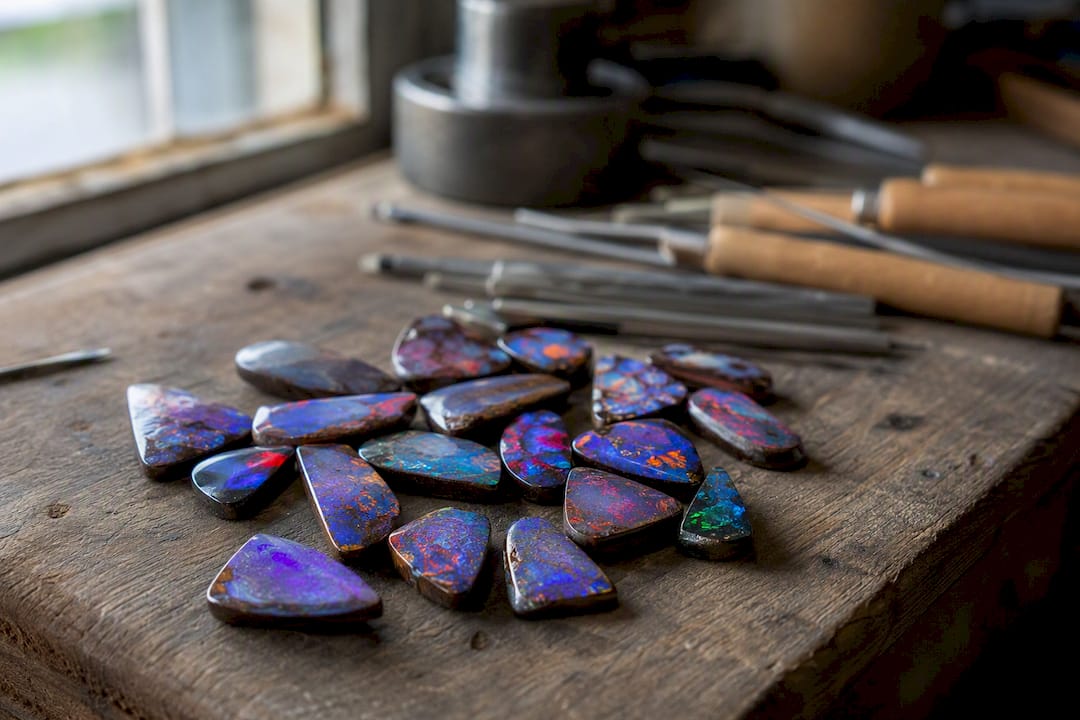
Cut shapes rarely come uniform. Because cutters follow the seam rather than force a shape, freeform cabochons dominate, and most pieces need custom setting work rather than off-the-shelf mounts.
Pro Tip: Request an edge-on photo or short video before buying online. A genuine boulder opal shows a natural, slightly irregular boundary between opal and ironstone. A perfectly smooth, machine-uniform edge often signals an assembled doublet or triplet.
Compared to black opal, boulder opal carries visible matrix and earthier, more organic patterning, while black opal typically shows a solid dark body tone with no host rock at all.
What Determines the Value of Boulder Opal?
Grading comes down to a handful of interacting factors, and understanding them helps you judge whether an asking price makes sense:
- Color hue and saturation — red and orange play-of-color rank highest, followed by green, then blue and purple.
- Pattern — broadflash and picture patterns typically command more than scattered pinfire.
- Face cleanliness — a clean, unbroken color face outperforms a motley or heavily included one.
- Size and carat weight — larger clean stones are rarer and priced accordingly.
- Matrix contrast — sharp contrast between opal and ironstone amplifies visual impact.
Boulder opal ranks as the second most valuable opal type after black opal, and that value hierarchy runs almost entirely through color. A small, clean-faced red boulder opal can outprice a larger green or blue stone of similar size. Grading frameworks from GIA and Gem-A both treat red as the benchmark color, which is worth knowing before you compare listings across sellers. Our own breakdown of Queensland opal value and types walks through pricing tiers in more detail.
How Can You Tell If a Boulder Opal Is Real?
Run through this sequence before committing to any purchase:
- Request high-resolution side and edge photographs, or a short video under natural light.
- Examine the stone under a loupe or microscope for layering lines that suggest an assembled doublet or triplet.
- Tilt the piece under a light source and watch how the color shifts. Natural boulder opal shows color that moves fluidly across the face.
- Check weight and feel against the stated size. Assembled stones often feel lighter or oddly balanced.
Watch for these warning signs:
- A perfectly domed, machine-smooth cabochon with no natural irregularity.
- Visible glue lines or a glassy cap layer under magnification.
- Ironstone edges that look too uniform or symmetrical to be natural.
- A price that seems low for the stated color and size combination.
Always ask the seller directly about treatment disclosure, provenance, and whether any lab report accompanies the piece. Doublets and triplets aren’t inherently dishonest products, but they need to be sold as exactly what they are, and their care requirements and resale value differ substantially from solid boulder opal.
What Should You Ask Before Buying?
Serious buyers ask pointed questions, not vague ones. Before you pay, find out:
- Which specific field the stone came from, and whether the seller has a direct relationship with the miner.
- What chain of custody exists between the mine and the listing.
- Whether any certification or seller guarantee backs the authenticity claim.
Credible sourcing tends to look consistent: direct-miner relationships, local cutting and polishing in towns like Quilpie or Yowah, and transparency about how the stone moved from ground to market. For high-value purchases, confirm what warranty, return policy, and insurance coverage apply before checkout. Our ethical opal sourcing guide breaks down exactly what to look for.
Pro Tip: If a seller can’t tell you which field a stone came from, that’s a bigger red flag than an unfamiliar price. Provenance and pricing usually track together.
How Do You Care for Boulder Opal Jewelry?
Boulder opal’s ironstone backing gives it more structural stability than many solid opals, but it’s still a gemstone that deserves respect:
- Avoid sharp knocks against hard surfaces, especially on ring settings.
- Remove jewelry before manual labor, gardening, or heavy cleaning tasks.
- Clean with mild soap, warm water, and a soft cloth. Skip ultrasonic cleaners.
- Store away from extreme dryness, which can occasionally affect thinner opal seams over time.
Bezel or partial-bezel settings protect the stone’s edges best, and freeform pieces usually call for custom setting work rather than a mass-produced mount. For anyone building a serious collection, a proper jewelry safe is worth the investment alongside insurance coverage.
Why Do Collectors Prize Boulder Opal’s Matrix?
Field researchers who study Queensland’s opal country consistently point to one thing: the ironstone matrix isn’t a flaw to work around, it’s part of the appeal.
The ironstone backing enhances color contrast and stability, meaning thin seams of face opal mounted on their natural matrix can outperform a similarly thin free-standing stone in visual impact.
That’s precisely why boulder opal attracts collectors drawn to sculptural, one-of-a-kind pieces rather than uniform gem cuts. Picture opal and pattern stones function almost like miniature landscapes, which is why they show up in museum collections and serious gemstone portfolios as often as they do in jewelry boxes.
A Note From Our Sourcing Desk
I’ve spent enough time around Quilpie and Yowah cutters to know that provenance isn’t a marketing line, it’s the whole point. Every boulder opal we list at Australianopaldirect traces back to a direct miner relationship, with cutting and polishing standards that reject anything stabilized without disclosure. We back every piece with certification, a 90-day warranty, and custom jewelry support because collectors deserve to know exactly what they’re buying and from whom.
Ready to Add a Queensland Boulder Opal to Your Collection?
Australianopaldirect exists because most opal buyers never get to ask a miner a direct question, let alone verify where a stone actually came from. We cut out that gap. Every piece in our collection comes with direct-miner sourcing, lab-grade photography showing true color and matrix detail, and a 90-day warranty that most online sellers simply don’t offer.
Custom settings are available for freeform boulder opal pieces, shipping includes insurance, and returns are straightforward if a stone doesn’t match its listing. If you’re ready to compare authenticated pieces side by side, browse our curated Queensland boulder opal collection or reach out to a gemstone specialist with questions about a specific field, pattern, or setting before you buy.
Further Reading on Boulder Opal Origins
For deeper geological context and grading standards beyond this guide, these resources are worth your time:
- GIA’s field report on Queensland’s opal fields, covering mine descriptions and Yowah Nut formation.
- Our own step-by-step guide to buying Australian opals for a broader authentication framework.
Recommended
- What Is Queensland Boulder Opal and Why Collect It - Australian Opal Direct
- Queensland Opal: Value, Types, and Collector Appeal - Australian Opal Direct
- Expert Guide to Buying Australian Opals for Collectors - Australian Opal Direct
- Buying Australian Opals Step by Step: Expert Guide for Collectors - Australian Opal Direct