Crystal Opal Guide: What to Know Before You Buy
Posted by AOD on 23rd Aug 2026
Crystal Opal Guide: What to Know Before You Buy
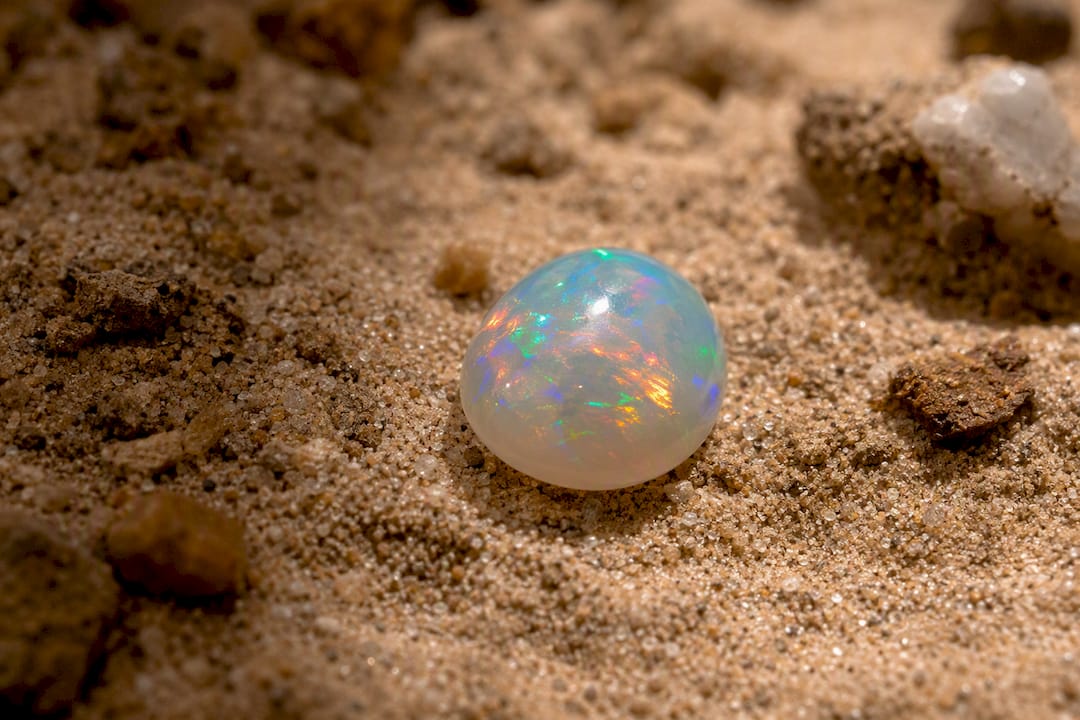
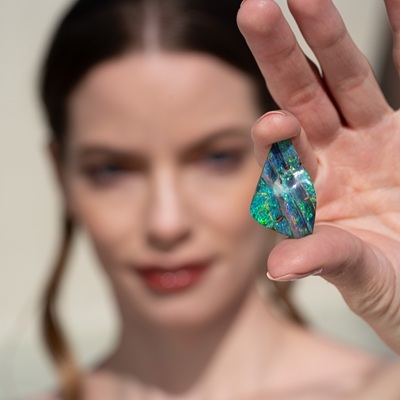
A crystal opal is a transparent to semi-transparent precious opal whose clarity lets its play-of-color glow with a three-dimensional depth other opals cannot match. That transparency is exactly why the finest crystal opals command premium prices: light passes through the stone rather than bouncing off a shallow surface, so the color seems to hover inside the gem like flame trapped in glass. The verdict for buyers is straightforward. A bright, stable crystal opal with even color and no cloudiness is one of the most collectible gems in the opal family, but it also demands a more careful eye and gentler handling than its opaque cousins.
Before you spend a dollar, run two quick checks:
- Hold the stone to a light source and look for vivid, moving play-of-color, not just a flash from one angle.
- Check the background for cloudiness or milkiness; the clearer the “canvas,” the more valuable the stone.
Key Takeaways
Crystal opal earns its premium through transparency and brightness working together, and a buyer who checks clarity, pattern, and provenance before purchase avoids the most common costly mistakes.
| Point | Details |
|---|---|
| Transparency drives value | A clear “canvas” lets play-of-color read as three-dimensional, which is why cloudy stones lose value fast. |
| Grade in the right light | View stones in white light and against a dark background to judge true brightness and coverage. |
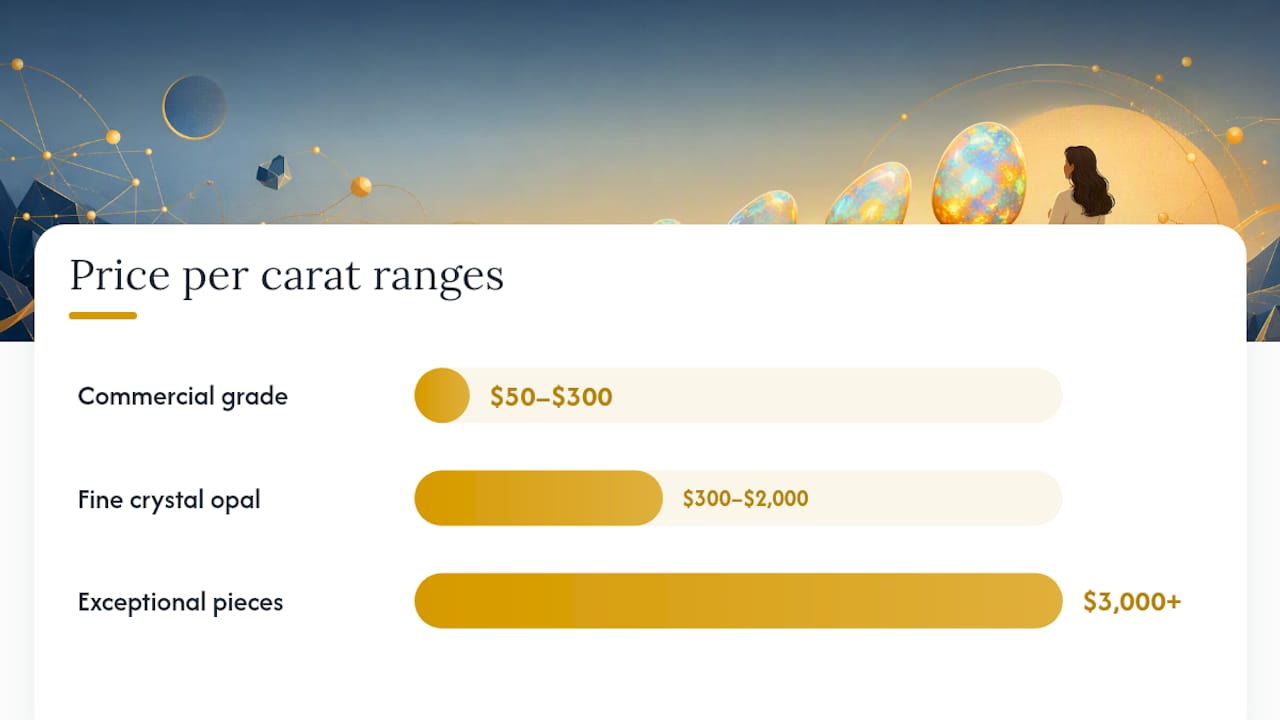
| Price varies by quality tier | Commercial stones run roughly $50 to $300 per carat; fine stones can reach $2,000 or more per carat. |
| Disclosure matters | Doublets, triplets, and treatments must be stated plainly; ask for a lab report on higher-value pieces. |
| Care is about stability | Clean with warm soapy water, avoid ultrasonic cleaners, and protect stones from sudden temperature swings. |
Table of Contents
- What Is Crystal Opal and How Does It Differ From Other Opals?
- How Do You Identify and Grade a Crystal Opal?
- What Determines Crystal Opal Value and Price Per Carat?
- What Should You Ask Before Buying a Crystal Opal?
- How Do You Care for and Wear Crystal Opal Jewelry?
- Why Trust This Crystal Opal Guide?
- How Do Crystal Opals Form, and Where Are They Mined?
- How Can You Tell Synthetic or Treated Crystal Opal From Natural Stone?
- Authoritative Sources and Further Reading
- An Editorial Take on Buying Crystal Opal With Confidence
- Frequently Asked Questions
What Is Crystal Opal and How Does It Differ From Other Opals?
Transparency is the defining trait. Because light travels through the body of the stone rather than stopping at an opaque surface, crystal opal creates what gemologists sometimes call the “canvas effect,” where flashes of color seem to float at different depths inside the gem rather than sitting flat on top.
That sets it apart from its relatives. Black opal carries a dark body tone that makes color pop against near-black backgrounds, while white opal has a milky, opaque base that mutes contrast. Boulder opal keeps a thin seam of color fused to its ironstone host rock, giving it natural dark backing without the transparency crystal opal offers. Cutters usually shape crystal opal as a high-domed cabochon to maximize light travel through the stone, though exceptional pieces are occasionally faceted to show off their clarity like a colored diamond. You can read more about how transparency drives collector demand in a deeper breakdown of the effect.
How Do You Identify and Grade a Crystal Opal?
Grading a crystal opal is part science, part detective work. Follow this sequence every time you examine a stone, whether in a shop or from a photo listing:
- View it in white light first. Natural daylight or a daylight-balanced bulb shows true color without warming or cooling the hues artificially.
- Switch to a dark background. Play-of-color reads far more accurately against black velvet or a dark tray than on a white countertop.
- Tilt the stone through multiple angles. A great crystal opal holds its brightness across a wide viewing range; a weak one only flashes color from a narrow “sweet spot.”
- Use a loupe or magnification. Look for internal fractures, sand inclusions, or potch (colorless opal) intruding into the color bar.
GIA defines clarity for opal as the degree of transparency combined with freedom from inclusions. For crystal opal specifically, high transparency is prized precisely because it lets color read as three-dimensional rather than flat. A cloudy or milky background, sometimes called “low water,” is one of the fastest ways to lose value even if the surface color looks decent.
Grading then comes down to five attributes working together: brightness (how intensely the color flashes), coverage (what percentage of the face shows color), color range (reds are rarest and most valuable, followed by orange, green, and blue), pattern (harlequin, pinfire, and broad flash patterns command different premiums), and transparency and clarity of the body itself.
Pro Tip: When shopping online, ask the seller for a photo taken against a plain dark background under neutral light, not a jeweler’s spotlight that can exaggerate brightness and hide a cloudy base.
For pattern types and how they influence desirability, this guide on opal play-of-color walks through the mechanics in more depth.
What Determines Crystal Opal Value and Price Per Carat?
Crystal opal value comes down to a hierarchy of factors, and none of them work in isolation. A stone can have gorgeous color and still sell cheaply if coverage is patchy or the body tone is dull.
- Brightness: the single biggest price driver; a dim stone with perfect pattern still underperforms a brilliant one with an average pattern.
- Coverage: color across the full face beats color confined to one corner.
- Pattern: harlequin (a mosaic of angular color blocks) typically commands the highest premiums, followed by broad flash and pinfire.
- Clarity and transparency: the clearer the canvas, the more the color seems to glow from within.
- Body tone and backing: even within crystal opal, a slightly darker undertone can intensify perceived color.
- Carat weight and cut quality: larger, well-proportioned stones without wasted material bring more per carat, not just more overall.
Retail price ranges for crystal opal span an enormous spread. Commercial-grade stones with modest brightness and coverage often sell for around $50 to $300 per carat. Fine crystal opals with strong color and good pattern typically run from $300 up to $2,000 or more per carat, and exceptional pieces with intense reds, full coverage, and harlequin patterning can climb into the thousands per carat and beyond. That range exists because carat weight alone tells you almost nothing about quality; a two-carat stone with weak color can be worth less than a half-carat gem with electric brightness.
One structural factor changes both appearance and price: doublets and triplets. A doublet bonds a thin slice of crystal opal to a dark backing (often black common opal or ironstone) to intensify contrast, while a triplet adds a protective quartz or glass cap on top. Both cost significantly less than a comparable solid stone and should always be disclosed as assembled, not solid.
What Should You Ask Before Buying a Crystal Opal?
A confident purchase starts with the right questions, whether you’re buying from a gallery counter or a listing photo online.
- Where was the stone mined? Reputable sellers name a specific field or region rather than a vague “Australian opal” label.
- Is it natural, treated, or assembled? Ask directly whether the stone is solid, a doublet, or a triplet, and whether any treatment was applied.
- Is there a lab report available? For higher-value purchases, an independent identification report describing natural versus treated material adds real confidence, and GIA offers colored stone reports for exactly this purpose.
- What’s the return policy and warranty? A seller confident in their stock offers a genuine return window and a written guarantee.
- Has the stone been repaired or reset? Prior repairs can affect both structural integrity and resale value.
Watch for red flags: no stated provenance, listing photos shot only under harsh spotlighting, descriptions that shift between “natural” and “genuine” without clarity, or a seller unwilling to offer any return period. For a stone above a few hundred dollars, insist on a lab report before finalizing the sale. The opal quality checklist covers additional screening questions worth running through at the counter.
How Do You Care for and Wear Crystal Opal Jewelry?
Opal sits at a Mohs hardness of roughly 5.5 to 6.5, softer than sapphire or diamond, so daily wear requires a plan rather than an afterthought. That doesn’t make crystal opal fragile in the way people assume, but it does mean the setting and habits around it matter more than with harder gems.
- Choose protective settings. Bezel settings, closed-back mountings, and halo designs shield the stone’s edges from knocks far better than open prong settings.
- Skip it for rough daily wear. Crystal opal rings worn during manual labor, gardening, or gym sessions face far higher fracture risk than pendants or earrings.
- Clean with warm soapy water only. A soft cloth or brush with mild soap removes buildup safely; ultrasonic cleaners and steam cleaners can crack the stone or loosen its setting.
- Store away from temperature swings. Rapid heating or cooling, and extremely dry air, can cause the fine surface fractures known as crazing.
Pro Tip: Contrary to old advice, solid Australian crystal opal does not need to be stored submerged in water. What it actually needs is stable humidity and protection from sudden temperature change, not a glass of water on your nightstand.
For a home storage solution that also protects against theft, a dedicated jewelry safe built for real security needs does more than a jewelry box ever will. For step-by-step cleaning instructions, see this guide to cleaning opal jewelry safely.
Why Trust This Crystal Opal Guide?
This guide draws on GIA’s published clarity and quality standards alongside hands-on sourcing experience from Australianopaldirect, where every opal is bought through direct miner relationships rather than intermediaries. Every piece ships with a 90-day warranty and complimentary insurance, and buyers can request additional photos or documentation before committing to a purchase. That combination of graded criteria and provenance guarantees is what separates an informed buy from a guess.
How Do Crystal Opals Form, and Where Are They Mined?
Opal forms when silica-rich water seeps through sedimentary rock, typically sandstone, and deposits microscopic silica spheres into cracks, voids, and fossil cavities over vast stretches of geologic time. When those spheres stack in a regular, uniform pattern, they diffract light into the spectrum of colors known as play-of-color. Crystal opal forms under conditions that leave the surrounding silica gel largely free of the mineral or clay impurities that would otherwise cloud the stone, which is why transparency and play-of-color so often appear together in the same specimen.
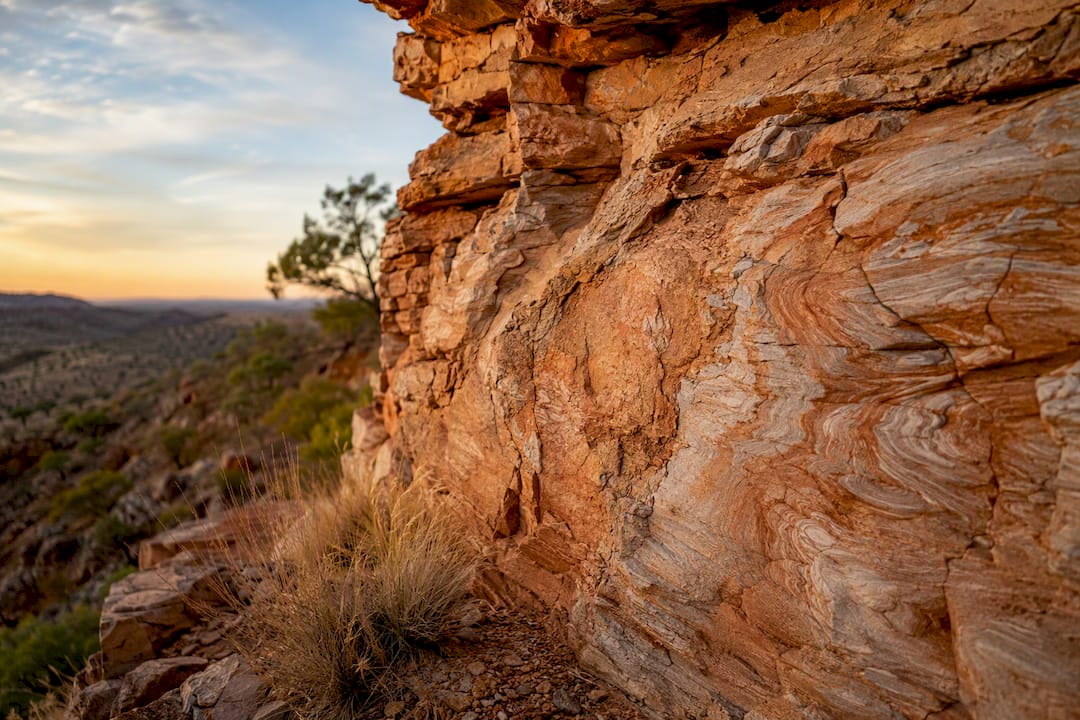
Australia holds some of the most significant commercial opal deposits on Earth, and Geoscience Australia notes the wide variety of opal types the country produces across its major fields. Lightning Ridge in New South Wales is best known for black opal but also yields crystal material, Coober Pedy in South Australia produces both white and crystal opal from its ancient seabed sediments, and fields across Queensland are known for boulder opal along with crystal seams running through ironstone. Each region’s specific geology, including groundwater chemistry and the age of the host rock, shapes the body tone and clarity typical of stones found there.
Because formation depends on such a narrow set of conditions persisting undisturbed for millions of years, genuine crystal opal remains geologically rare even though opal deposits themselves are widespread.
How Can You Tell Synthetic or Treated Crystal Opal From Natural Stone?
Lab-created opal, often marketed under names referencing its manufacturing process, mimics natural play-of-color using a similarly ordered silica structure, but it forms in weeks under controlled conditions rather than over geologic time. Under magnification, synthetic opal frequently shows a columnar or “chicken wire” pattern in its color patches, a telltale sign of the manufacturing process that natural crystal opal does not display. Natural stones instead show more random, organic-looking color patches with irregular pinfire or flash patterns that vary unpredictably across the surface.
Treatments add another layer buyers need to watch for. Smoke treatment and sugar acid treatment are applied to certain porous opal varieties to darken the body tone and boost color contrast, though these treatments are more common in other opal types than in crystal opal specifically, since crystal opal’s transparency already reveals color without artificial darkening. Assembled stones, meaning doublets and triplets, are not treatments in the traditional sense but must be disclosed as constructed rather than solid, since they behave differently if the layers ever separate.
The most reliable way to separate natural from synthetic or treated material is still an independent lab report. A reputable identification report will state plainly whether a stone is natural, synthetic, or treated, removing the guesswork that a loupe and good lighting can only partially resolve.
Authoritative Sources and Further Reading
GIA’s opal quality guidance defines clarity and grading standards referenced throughout this guide. Geoscience Australia provides background on domestic opal deposits and mineral facts. For deeper reading on transparency and clarity, see the opal clarity guide.
An Editorial Take on Buying Crystal Opal With Confidence
The conventional advice on buying opal tends to fixate on carat weight and origin story, as if a bigger stone from a famous field automatically means a better one. It doesn’t. The research behind this guide points to a simpler, less romantic truth: brightness and coverage do more to determine a crystal opal’s worth than size or pedigree ever will. A modest half-carat stone with electric color beats a dull two-carat stone from a prestigious field every time it reaches a real buyer’s hand.
Where most buying guides fall short is treating grading and paperwork as separate concerns. They aren’t. A lab report means little if you can’t independently judge brightness and pattern yourself, and a sharp eye means little if you skip verification on a stone worth real money. Prioritize both together: learn to read a stone in proper light, then confirm what you see with documentation on anything above a modest price point. That combination, not brand names or carat counts, is what actually protects a buyer.
Frequently Asked Questions
What is crystal opal exactly? Crystal opal is a transparent to semi-transparent variety of precious opal in which the clear or near-clear body allows internal play-of-color to appear vivid and three-dimensional, unlike opaque opal varieties.
How is crystal opal different from white opal? White opal has a milky, opaque body tone that mutes color contrast, while crystal opal’s transparency lets light travel through the stone, producing brighter, deeper-looking color flashes.
What is crystal opal worth per carat? Commercial-grade crystal opal typically sells at a variety of price points depending on quality; fine stones can command substantially higher prices, and exceptional pieces with strong red hues and full coverage are valued the most.
Are crystal opals a good choice for everyday rings? They can be, provided they sit in a protective bezel or closed-back setting and the wearer avoids manual labor or activities that risk sharp impacts.
How do I clean a crystal opal safely? Use warm water with a mild soap and a soft cloth or brush. Avoid ultrasonic cleaners, steam cleaners, and harsh chemicals, which can crack the stone or damage its setting.
Do crystal opals need to be stored in water? No. Solid Australian crystal opal is generally stable without water storage; the real priorities are avoiding sudden temperature changes and extreme dryness, which can cause crazing.
Recommended
- Opal Gemstone Selection Process: A Step-by-Step Guide - Australian Opal Direct
- What Is Crystal Opal? Complete Expert Overview - Australian Opal Direct
- Opal Sourcing Tips: Your 2026 Ethical Buying Guide - Australian Opal Direct
- Opal Opacity Explained: Guide for Gemstone Buyers - Australian Opal Direct