A Boulder Opal Guide for Collectors and Buyers
Posted by AOD on 19th Aug 2026
A Boulder Opal Guide for Collectors and Buyers
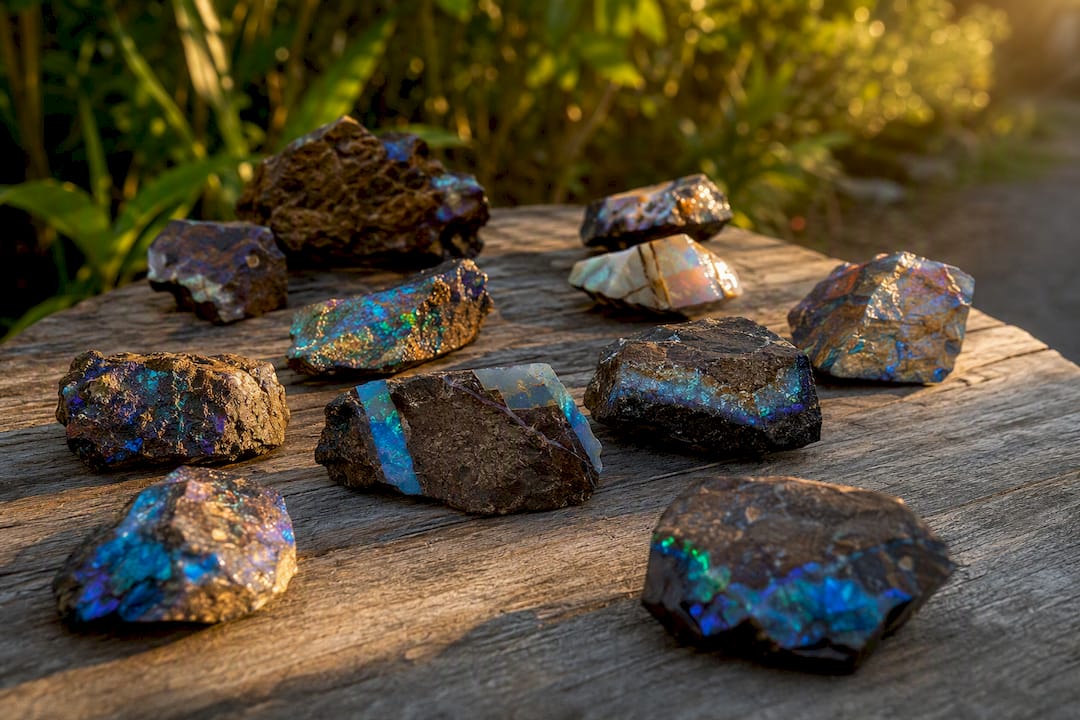
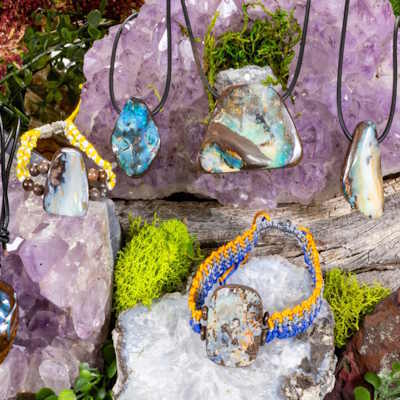
Boulder opal is precious opal that stays fused to its natural ironstone host rock, and for most buyers, it’s a genuinely rewarding stone to own or collect. The ironstone backing does more than anchor the opal in place; it throws the color into deeper, darker contrast and gives the stone a structural resilience that thin opal slices simply can’t match. Collectors return to boulder opal again and again for a handful of reasons:
- Every piece carries a one-of-a-kind pattern shaped by the rock it grew inside, so no two stones repeat.
- The dark ironstone backing intensifies play-of-color without needing an artificial black backing.
- The attached host rock adds real durability, making boulder opal more forgiving in daily-wear jewelry.
- Because it forms in seams rather than broad sheets, boulder opal often shows abstract, almost painterly patterns that solid crystal or white opal rarely produces.
Key Takeaways
Boulder opal’s value comes down to play-of-color intensity, pattern rarity, and host-rock contrast, and verifying solid versus assembled construction protects buyers from costly mistakes.
| Point | Details |
|---|---|
| Definition matters | Boulder opal is precious opal fused naturally to ironstone host rock, not a cut-free gem. |
| Origin shapes character | Koroit, Yowah, and Quilpie each produce recognizably different patterns and contrast levels. |
| Carat weight includes rock | Compare stones by face-up millimeter dimensions, not carat weight alone. |
| Verify before buying | Side-view photos and a straight glue seam check reveal solid versus doublet or triplet construction. |
| Care is simple but real | Boulder opal tolerates water well but can chip if struck, so remove rings before manual work. |
| Buy from a transparent source | Australianopaldirect provides provenance, side-view imagery, and a 90-day warranty on verified pieces. |
Table of Contents
- What Does Boulder Opal Look Like?
- Where Does Boulder Opal Come From?
- How Does Boulder Opal Form?
- Boulder Opal vs Black Opal and Assembled Stones
- How Experts Judge Boulder Opal Quality and Value
- A Practical Checklist for Buying Boulder Opal
- How to Tell If a Boulder Opal Is Real
- Caring for Boulder Opal Jewelry
- Which Type of Buyer Are You?
- What the Gemological Authorities Say
- Is Boulder Opal Worth Buying?
- Why Boulder Opal Rewards Patient Buyers
- Get Verified Boulder Opal Direct From the Source
- Sources for Further Reading
- Frequently Asked Questions
What Does Boulder Opal Look Like?
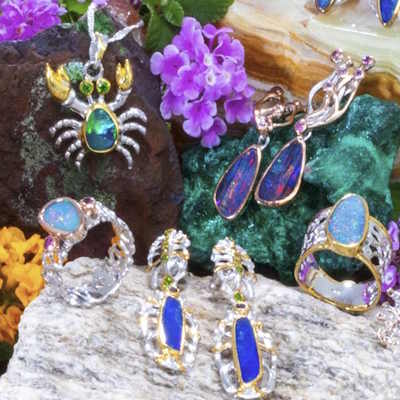
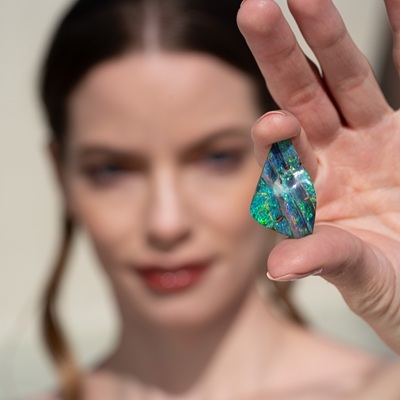
The play-of-color in boulder opal ranges from tight flashes of green and blue to full spectrum reds and golds that shift dramatically as you tilt the stone. That movement, gemologists call it play-of-color, happens because microscopic silica spheres inside the opal diffract light at different wavelengths depending on viewing angle.
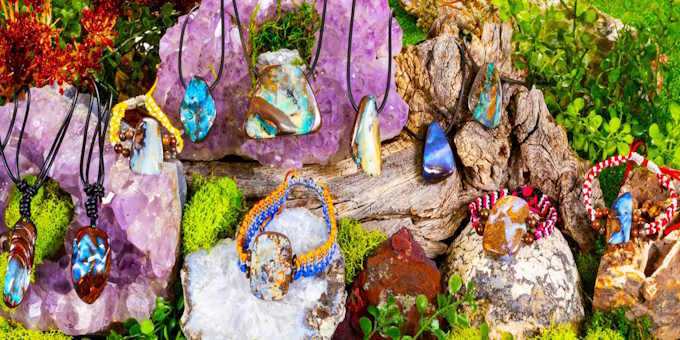
The ironstone backing is what separates boulder opal from every other opal type visually. Because the host rock is naturally dark brown to black, it acts like a built-in dark backdrop, deepening body tone and making even modest color pop harder than it would in a lighter-toned stone. You’ll encounter a handful of recurring pattern types in the market:
- Broad flash patterns show large, sweeping bands of color and tend to photograph beautifully.
- Pinfire patterns pack tiny dots of color densely across the surface, often reading as a shimmering field.
- Harlequin, the rarest, shows patches of color arranged in a mosaic-like grid.
- Rolling fire describes color that seems to roll or wave across the stone as it moves.
Pro Tip: Always ask a seller for a front-facing photo under direct light, a side-profile shot showing the ironstone thickness, and a back view. Play-of-color is directional, so a single static photo can hide a stone’s best angles entirely.
Where Does Boulder Opal Come From?
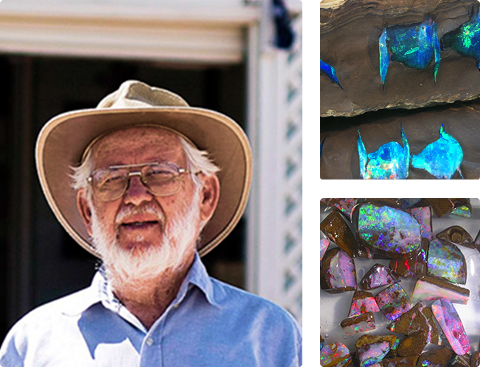
Almost all commercially significant boulder opal comes from a narrow belt of country in outback Queensland, and the region’s field names carry real meaning for buyers. Koroit is known for dark, tightly patterned material with strong ironstone contrast. Yowah produces the famous “Yowah nuts,” rounded ironstone nodules with opal cores that get sliced to reveal patterns unique to each nodule. Quilpie country yields some of the broader, more vivid flash patterns prized by collectors, while Winton and Jundah round out the traditional producing fields with their own subtle variations in matrix texture and color saturation.
Field reports on Queensland’s opal country describe Koroit, Yowah, and Quilpie as the three fields with the most distinct and recognizable material characteristics in the trade. A small amount of boulder-style opal turns up in Honduras and parts of Mexico, but it behaves differently in the market and isn’t typically classified alongside Australian boulder opal by gemological labs. If provenance matters to you as a collector, understanding how to distinguish opal origins is worth the extra ten minutes before you buy.
How Does Boulder Opal Form?
Boulder opal grows where groundwater carrying dissolved silica seeps into cracks, cavities, and concretions inside sandstone and ironstone. Over long geological timescales, that silica-rich solution settles into thin seams and gradually hardens into opal, following whatever fracture or void the rock offered. Because the opal fills existing gaps rather than forming in broad open deposits, the resulting layers are frequently just a few millimeters thick, sometimes thinner than a coin.
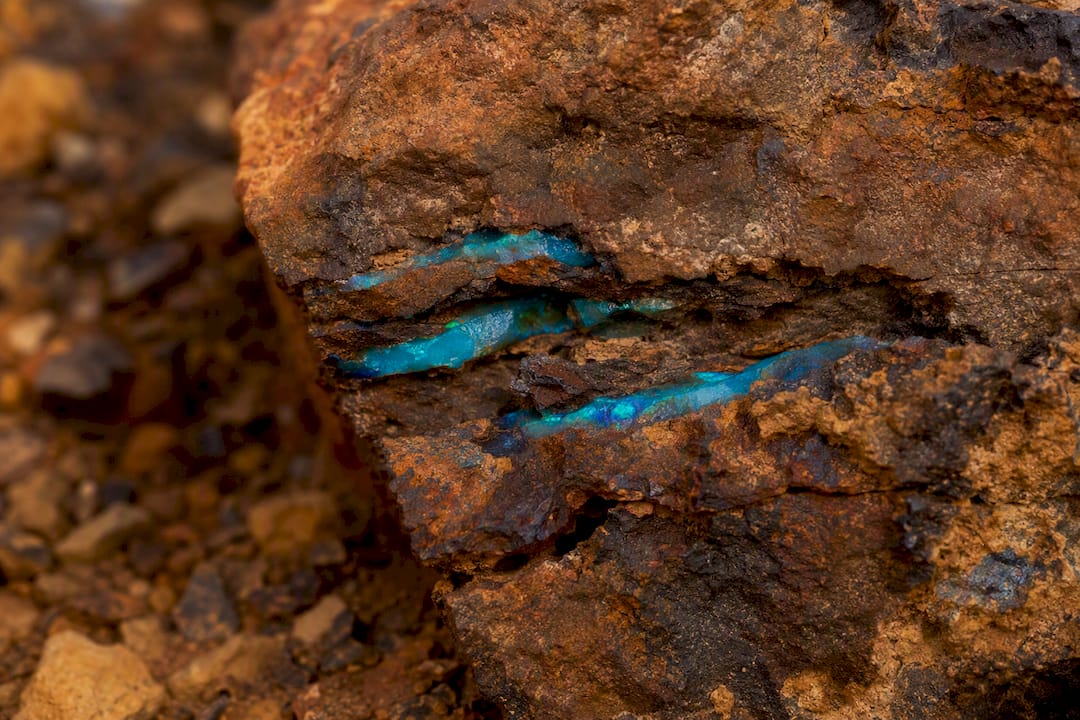
That thinness is exactly why cutters leave the host rock attached rather than slicing it away. The ironstone gives the fragile opal seam structural backing it wouldn’t otherwise have, and it supplies that naturally dark backdrop that deepens color. Picture a seam of opal running through ironstone like a thin vein of color trapped inside stone. Cutting around that seam, rather than through it, is what defines the entire boulder opal cutting tradition.
Boulder Opal vs Black Opal and Assembled Stones
Boulder opal, black opal, and crystal or white opal are often confused, but the differences come down to backing and body tone. Black opal, mined almost exclusively at Lightning Ridge, gets its dark body tone from trace elements within the opal itself, not from an attached rock. Crystal and white opal show little to no dark backing at all, which is why their colors read lighter and more translucent. Boulder opal earns its dark contrast honestly, through the ironstone it grew inside.
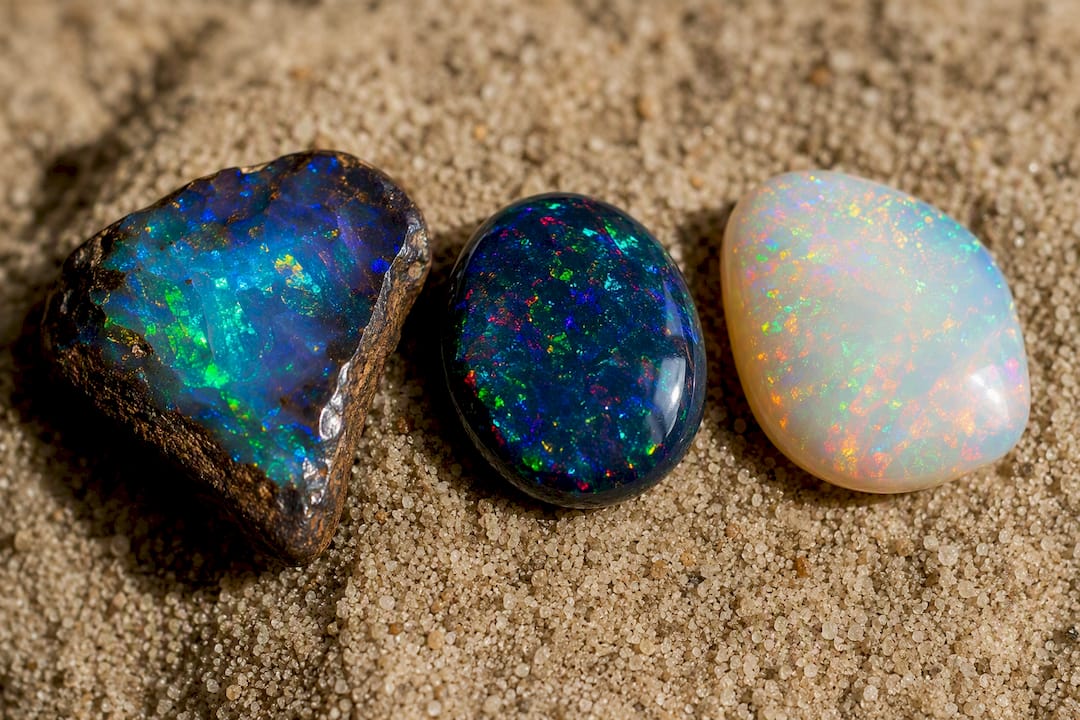
The comparison that trips up more buyers is boulder opal versus assembled stones. A doublet glues a thin slice of natural opal to a dark backing (sometimes ironstone, sometimes plastic or glass) to mimic boulder opal’s look. A triplet adds a clear cap on top for protection, which often gives the surface an artificial, overly glassy dome. A genuine solid boulder opal has no glue line at all; the opal and ironstone formed together as one piece.
A few diagnostic checks help separate the two:
- Look at the stone from the side. A solid boulder opal shows an irregular, undulating natural boundary between opal and rock; a doublet shows a flat, straight glue seam.
- Check for a domed, glassy cap. That’s a strong indicator of a triplet.
- Ask directly whether the piece is solid, a doublet, or a triplet. Reputable sellers disclose this without hesitation.
How Experts Judge Boulder Opal Quality and Value
Gemological valuation guides consistently point to the same handful of factors when grading opal, and boulder opal is no exception. Here’s the order most experienced buyers work through:
- Play-of-color hue and rarity. Reds and multicolor “flame” patterns command more than dominant blues and greens, simply because red-firing opal is rarer in nature.
- Brightness. A vivid, high-contrast flash beats a dull or washed-out one at every price point.
- Pattern rarity. Harlequin and broad flash patterns sit above pinfire in most collector hierarchies, though pinfire pieces with exceptional brightness can still command strong prices.
- Face-up coverage. This measures how much of the visible top surface shows opal versus bare ironstone. Higher coverage generally means higher value.
- Host-rock contrast. A darker, cleaner ironstone backing intensifies perceived color.
- Transparency and body type, ranging from opaque to semi-translucent.
- Stability, meaning freedom from visible crazing, cracks, or inclusions that could worsen over time.
- Cut and overall size.
One quirk trips up almost every new buyer: carat weight for boulder opal includes the host rock, not just the opal layer. A three-carat boulder opal might show a smaller visible opal face than a one-carat solid crystal opal, so comparing stones by carat weight alone is misleading. Face-up dimensions in millimeters give you a far fairer sense of actual size.
Pricing follows a rough shape rather than a fixed scale: modest pinfire pieces with moderate coverage sit at the accessible end, strong broad-flash stones with good coverage occupy the middle range, and rare harlequin or gem-grade red-on-black material reaches premium territory. Every stone is unique, so treat any price guide as a starting point for negotiation, not a fixed rulebook.
Pro Tip: Don’t automatically chase full face-up coverage. A small but exceptional harlequin patch can outvalue a larger stone with duller, more common color. Weigh pattern rarity against coverage rather than treating either factor alone as the final word.
A Practical Checklist for Buying Boulder Opal
Buying boulder opal online carries more risk than buying in a shop, mostly because photos can flatter a stone in ways an in-hand inspection never would. Work through this checklist before you commit to any purchase:
- Request side-view photos or, better, a short video that rotates the stone under a single light source.
- Get exact millimeter dimensions for the face-up view, not just an overall carat weight.
- Confirm the carat weight includes host rock, and ask what portion of that weight is opal versus ironstone.
- Ask directly whether any treatment, dye, or enhancement was applied.
- Request provenance information: which field the stone came from, and whether it was cut by the seller or purchased already cut.
- Confirm the return policy in writing before paying, especially for pieces over a few hundred dollars.
- Ask whether an independent gemological report exists, particularly for high-value pieces.
Red flags worth walking away from include a seller who refuses to provide a side-view image, vague or rounded dimensions (“about 15mm” instead of an exact measurement), no clear statement on whether the stone is solid or assembled, and pricing that sits well below comparable stones with no explanation. If you’re negotiating on an unusual or specimen-grade pattern, remember that rarity cuts both ways: a stone with a genuinely uncommon pattern is worth holding firm on price, but a seller who won’t answer basic disclosure questions isn’t worth negotiating with at all. Our own opal quality checklist walks through these evaluation points in more depth if you want a printable reference.
How to Tell If a Boulder Opal Is Real
A handful of low-tech checks will tell you most of what you need to know before you buy. Start with the side profile. A genuine solid boulder opal shows a natural, uneven interface where opal meets ironstone, following the organic shape of the original seam. A doublet shows a suspiciously flat, straight line, often with a faint visible glue layer under magnification.
Next, watch how the color behaves under different light angles. Natural play-of-color shifts unpredictably and unevenly as you rotate the stone; a glued or resin-backed fake often shows a static, uniform sparkle that doesn’t shift the way genuine silica structure does.
Pro Tip: Ask the seller for a close-up video with a millimeter ruler placed directly against the stone. It confirms exact thickness and lets you examine the seam edge at the same time, something a still photo often can’t reveal.
Caring for Boulder Opal Jewelry
Boulder opal is more forgiving than people expect, largely thanks to the ironstone backing, but it isn’t indestructible. Gem-A’s guidance notes that boulder opal is relatively stable and safe around water, which sets it apart from some other gemstones, but it can still chip if struck against a hard surface.
Keep these habits in mind:
- Do remove opal rings before gardening, cleaning, or any manual work.
- Do clean gently with a soft, slightly damp cloth.
- Don’t use ultrasonic cleaners or harsh chemical jewelry solutions.
- Don’t expose the stone to rapid temperature swings or prolonged extreme dryness.
Pro Tip: Store loose boulder opal in a soft pouch rather than a sealed, bone-dry safe for years at a time; a little ambient moisture helps some opal types stay stable. For a full routine, our guide on caring for opal jewelry covers cleaning, storage, and everyday wear in more detail, and this outside resource on caring for handmade gemstone jewelry offers useful general practices for any set stone.
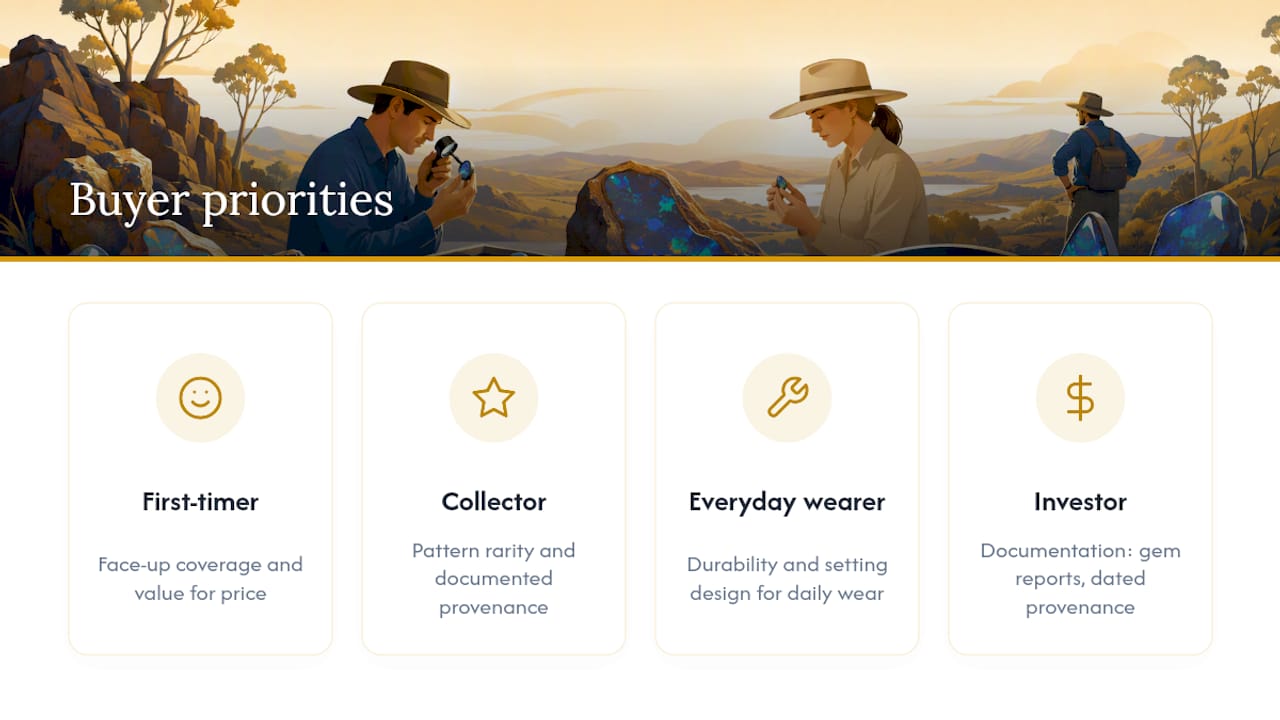
Which Type of Buyer Are You?
Different buyers should weight the same information differently. First-time buyers usually get the most satisfaction focusing on face-up coverage and overall value for the price, since a bright, well-covered stone reads well even to an untrained eye. Collectors should prioritize pattern rarity and documented provenance, chasing the field name and pattern type that fills a gap in an existing collection. Everyday jewelry wearers need to weigh durability and setting design, since a stone worn daily faces more risk than one kept in a display case. Investors should prioritize documentation above all else, meaning gemological reports, dated provenance, and clear disclosure that will hold up if the piece is resold years later.
What the Gemological Authorities Say
Both the Gemological Institute of America and Gem-A treat boulder opal as its own recognized category, defined specifically by opal remaining attached to its natural host rock rather than being cut free of it. That single distinction shapes how appraisers value a stone and how they separate a genuine solid from an assembled doublet or triplet.
Pro Tip: When a seller offers an independent gemological report alongside clear photos and full disclosure, that combination is one of the strongest confidence signals available to a buyer who can’t inspect a stone in person.
Is Boulder Opal Worth Buying?
For most collectors and jewelry buyers, boulder opal is a worthwhile purchase, provided you buy with eyes open and verify what you’re getting. The trade-offs are real, but they’re manageable with the checklist above.
- Prices vary enormously between comparable-looking stones, so uniqueness cuts both ways: it drives desirability and makes direct comparison harder.
- Solid stones and assembled doublets or triplets can look nearly identical in a flattering photo, so disclosure and a side-view check matter more than they seem to at first glance.
- Care requirements are modest, but the chip risk around hard impact is real and worth respecting even though boulder opal handles water and daily wear better than many gems.
Why Boulder Opal Rewards Patient Buyers
Boulder opal doesn’t reward impulse purchases the way a lot of other gemstones do, and that’s the part conventional buying guides tend to gloss over. A stone photographed under a ring light at one angle can look completely different in daylight or under a jeweler’s loupe, and the market’s obsession with full face-up coverage sometimes pushes buyers toward larger, blander stones when a smaller, rarer pattern would have served them better.
What actually separates a satisfying purchase from a regretted one usually isn’t luck. It’s whether the buyer asked for the side-view photo, confirmed the carat weight included host rock, and understood that a Koroit stone and a Yowah nut aren’t interchangeable just because both carry the word “boulder.” Queensland’s opal fields have built a genuine, decades-long trade reputation on direct relationships between miners and cutters, and that provenance chain is worth asking about every time.
Get Verified Boulder Opal Direct From the Source
Australianopaldirect works directly with Queensland and Lightning Ridge miners, which means every boulder opal piece comes with clear provenance instead of a vague “ethically sourced” label and nothing to back it up.
Every piece ships with the disclosure details this guide walks through: solid versus assembled status, exact dimensions, and any treatment history, so you’re never guessing what you’re buying. Our practical services include:
- Certified, provenance-documented boulder opal pieces from named Queensland fields
- Side-view and detail photography provided before purchase, not after you ask
- A 90-day warranty plus complimentary insurance and free shipping on qualifying orders
- Assistance connecting buyers with independent gemological reports on request
If you’re ready to see verified boulder opal pieces with full disclosure and provenance behind them, browse the current collection at Australianopaldirect and request side-view images on any piece that catches your eye.
Sources for Further Reading
- GIA field reporting on Queensland opal fields — best for understanding regional characteristics and mining context.
- Gem Society valuation overview — best for the standard play-of-color and pattern grading framework.
- Gem-A guidance on boulder opal stability — best for care and durability questions.
- Geology.com’s boulder opal explainer — best for cutting methods and formation basics.
Frequently Asked Questions
Is boulder opal a good investment? Rare patterns like harlequin or broad flash with strong coverage tend to hold and grow value well, but boulder opal isn’t a liquid investment. Buy documented pieces from transparent sellers if resale value matters to you.
Who should avoid wearing boulder opal rings? Anyone doing regular manual labor, heavy gardening, or manual trades should remove boulder opal rings beforehand, since the stone can chip under a direct hard impact despite its overall durability.
How can I tell if a boulder opal is real without a lab report? Check the side profile for a natural, uneven opal-to-ironstone boundary, examine the play-of-color under different angles, and ask for a close-up video with a millimeter ruler in frame.
What’s the difference between boulder opal and Koroit opal? Koroit is a specific field within Queensland’s boulder opal country, known for dark, tightly patterned material. All Koroit opal is boulder opal, but not all boulder opal comes from Koroit.
Does boulder opal include the host rock in its carat weight? Yes. Carat weight for boulder opal always includes the attached ironstone, which is why comparing pieces by millimeter face-up size gives a more accurate sense of visible opal than carat weight alone.