Boulder Opal: What It Is, Its Value and Care
Posted by AOD on 20th May 2026
Boulder Opal: What It Is, Its Value and Care
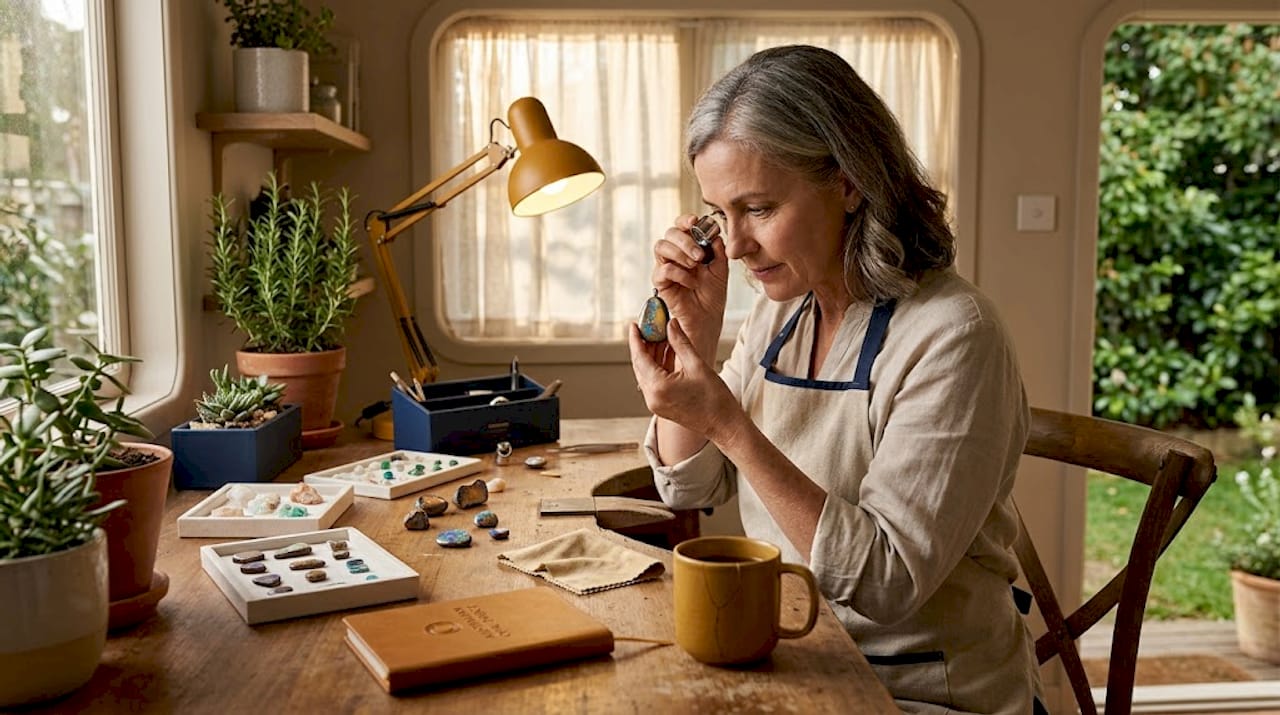
TL;DR:
- Boulder opal is a genuine Australian gemstone where opal forms within ironstone, showcasing its geological origins. Its value depends on color brightness, pattern, coverage, and authenticity, with careful identification essential. Proper care involves gentle cleaning, controlled humidity, and protective settings to preserve its unique natural beauty.
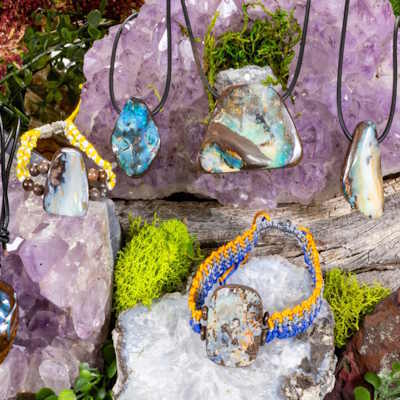
Few gemstones carry the raw drama of a boulder opal. Where most gems are polished away from their origins, boulder opal arrives wearing its geology proudly, a luminous vein of color blazing against ancient Queensland ironstone. It is not simply opal with a rough backing. It is a gemstone whose identity is inseparable from the very rock that formed it, and understanding that distinction changes everything about how you evaluate, buy, and care for one.
Table of Contents
- Key Takeaways
- What boulder opal is and how it forms
- How to identify genuine boulder opal
- Key quality factors that affect value
- How to care for boulder opal jewelry
- Practical buying advice for boulder opal collectors
- My take on what makes boulder opal genuinely special
- Discover authentic boulder opal at Australianopaldirect
- FAQ
Key Takeaways
| Point | Details |
|---|---|
| Defined by its host rock | Boulder opal is a natural solid gemstone where precious opal forms within ironstone, making the matrix part of the gem itself. |
| Authenticity requires scrutiny | Natural boulder opal has an irregular, organic opal-to-rock junction; doublets show a flat, uniform, epoxy-filled seam under magnification. |
| Value follows color and coverage | Play-of-color brightness, pattern rarity, and face-up opal coverage are the dominant factors driving boulder opal’s price. |
| Care is gentle and deliberate | Avoid heat, harsh chemicals, and water soaking; store with ambient humidity and clean only with mild soap and lukewarm water. |
| Source matters enormously | Genuine Australian boulder opal from verified retailers with authenticity guarantees protects both your investment and your peace of mind. |
What boulder opal is and how it forms
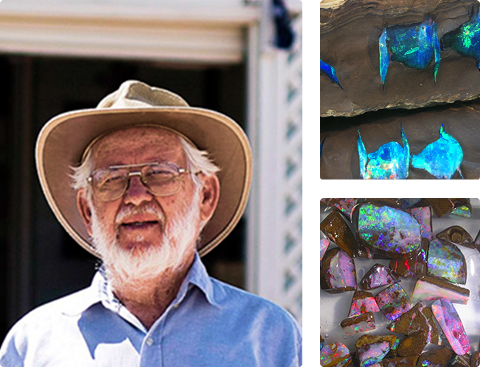
Most people encounter opal as a pale, milky stone set in silver. Boulder opal is something altogether different. To understand it, you need to picture the vast semi-arid plains of western Queensland, where ironstone boulders lie scattered across ancient seabeds. Over millions of years, silica-rich water seeped into cracks and voids within these ironstone rocks and slowly solidified into precious opal. The result is a stone where opal and host rock are fused by geology itself, not by craft.
Boulder opal is classified by the GIA as natural opal type 2, meaning it is a genuine, untreated precious opal attached to its natural ironstone matrix. That classification matters. It places boulder opal in the same category of authenticity as black opal and white opal, while distinguishing it from assembled stones that merely mimic the look.
The key characteristics that define this gem include:
- Formation location: Nearly all commercial boulder opal originates from Queensland, Australia, within the Winton Formation geological deposits.
- Ironstone matrix: The host rock is not a flaw or a byproduct. It is what gives many boulder opals their dramatic dark backing, which intensifies the play-of-color the same way a dark velvet cloth makes diamonds appear more brilliant.
- Ironstone’s optical role: Because the ironstone is naturally dark and opaque, it acts as a built-in contrast layer, drawing out colors that might appear washed out against a lighter background.
- Geological deposits: Notable mining regions include Winton, Koroit, Yowah, and Quilpie, each producing stones with distinct matrix patterns and color personalities.
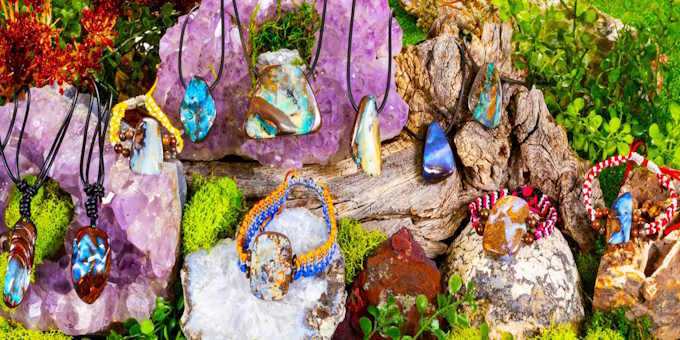
Boulder opal rough is often found as slabs or irregular nodules, with opal appearing as thin veins, patches, or thick seams threading through the ironstone. A skilled cutter reads the rough the way a sculptor reads marble, revealing the opal’s strongest color window while preserving the structural integrity of the stone.
How to identify genuine boulder opal
The market holds a lot of beautiful assembled stones that can look strikingly similar to natural boulder opal. Doublets consist of a thin slice of opal glued to a dark backing material. Triplets add a clear dome of resin or quartz on top. Both are legitimate products when disclosed, but they are not natural boulder opals, and they should never be priced as such.
The most reliable way to distinguish natural boulder opal from assembled stones comes down to examining the junction between the opal layer and its backing. Natural boulder opal features an irregular, organic interface between opal and ironstone, where the opal penetrates the rock in tongue-like projections. An assembled doublet, by contrast, shows a perfectly flat, uniform seam, often with visible epoxy or tiny air bubbles along the join.
Practical identification steps to follow:
- Use magnification: A 10x loupe or jeweler’s magnifier is your first tool. Examine the junction where opal meets backing from multiple angles, looking for the organic, irregular boundary that signals natural formation.
- Apply fiber-optic lighting: Hold a concentrated light source at the stone’s edge. In natural boulder opal, light travels through the opal layer and diffuses into rock. In a doublet, you may see a reflective glue line or uniform dark layer.
- Check the profile: Look at the stone from the side. Natural boulder opal has a profile that varies in thickness as the opal seam follows its geological path. Doublets typically show two distinct, flat, parallel layers.
- Request seller documentation: Any reputable seller of natural boulder opal should be able to tell you whether the stone is solid, a doublet, or a triplet. Certified gemological documentation removes all doubt.
Pro Tip: If you are shopping online, ask specifically for side-profile photos under magnification. The junction view tells you more about authenticity than any face-up photo ever will.
Understanding how to identify boulder opal patterns also plays a role here. Genuine stones often display rolling flash, harlequin, or pinfire patterns, each the result of natural silica diffraction rather than manufactured symmetry.
Key quality factors that affect value
Not all boulder opals are created equal. Within this gem category, value can range from modest to extraordinary, and the price difference between two stones of similar size can be tenfold. Knowing what drives that difference makes you a far more confident buyer.
| Quality Factor | What to Look For | Impact on Value |
|---|---|---|
| Play-of-color brightness | Vivid, saturated colors visible in daylight and artificial light | Highest impact; red and violet flashes command premium prices |
| Color range | Number of distinct colors visible in the stone | Broader spectrum increases rarity and desirability |
| Pattern type | Harlequin, rolling flash, or broad flash patterns | Harlequin is rarest and most valuable |
| Face-up opal coverage | Percentage of the stone’s face showing opal vs. ironstone | Higher coverage generally increases price |
| Cut quality | Smooth dome, correct proportioning, no windowing | Poor cut wastes color; excellent cut maximizes display |
| Source origin | Koroit and Yowah stones have collector prestige | High-value Koroit and Yowah stones are highly prized |
One nuance that surprises many buyers: a stone with significant ironstone visible on its face is not necessarily lower quality. When the ironstone creates graphic, organic patterns around the opal, it can actually enhance the stone’s visual drama and uniqueness. Collectors who appreciate natural character often seek out these matrix-rich specimens.
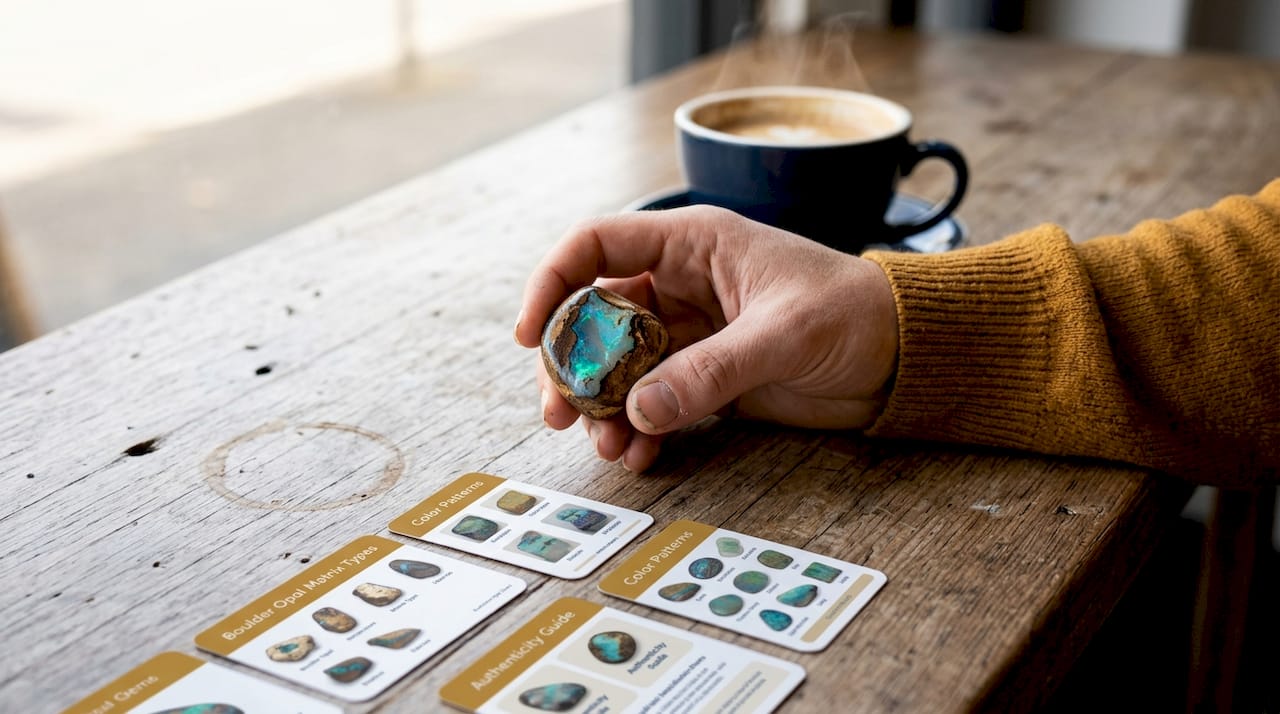
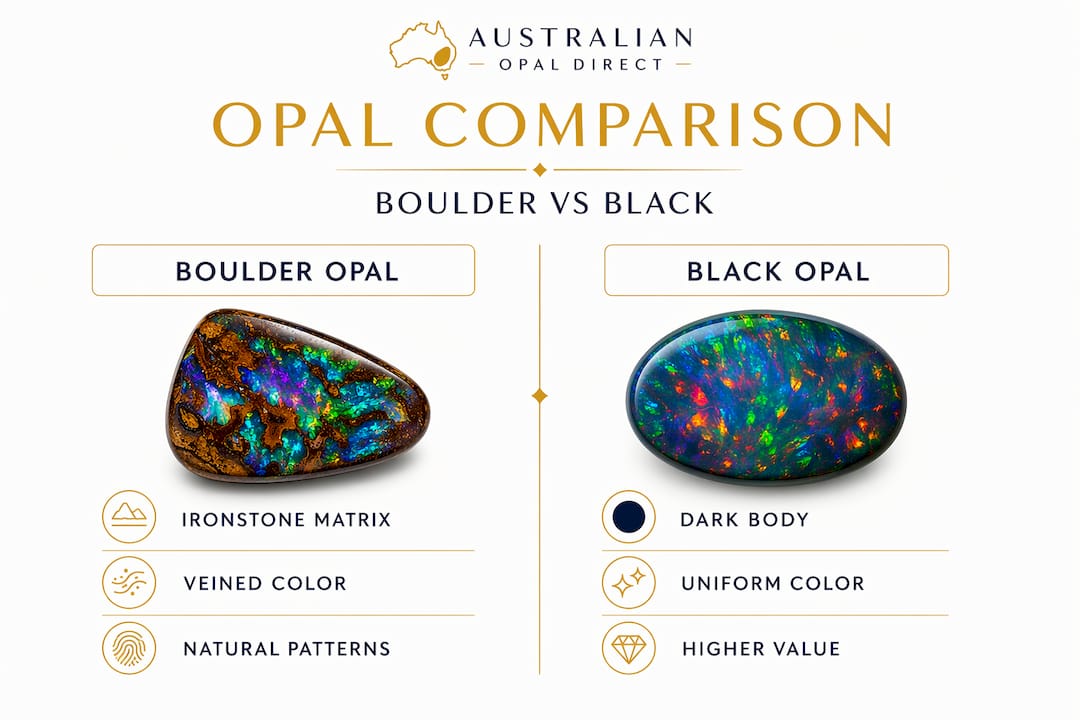
The comparison between boulder opal vs black opal is worth addressing here. Black opal from Lightning Ridge typically commands higher prices per carat because the opal layer is thicker and the body tone is uniformly dark. But exceptional boulder opals from Koroit, with their wild matrix patterns and intense color play, can rival black opal in value and surpass it in visual complexity. Solid boulder opal stones always command higher prices than assembled doublets or triplets of similar appearance.
How to care for boulder opal jewelry
Boulder opal’s ironstone matrix makes it more structurally resilient than most opal types. The backing provides genuine support. But the opal itself still requires thoughtful care, because at 5.5 to 6.5 on the Mohs hardness scale, opal is softer than sapphire and topaz, and its beauty depends on preserving both its surface and its internal moisture balance.
Follow these steps to keep your boulder opal jewelry vibrant for generations:
- Clean gently and selectively. Use only mild soap and lukewarm water applied with a soft cloth or brush. Rinse briefly and dry at room temperature. Never use ultrasonic cleaners, steamers, or chemical jewelry dips, as these can damage the opal’s surface and cause micro-fractures.
- Store with ambient humidity in mind. Keep your boulder opal pieces in a soft-lined box away from direct sunlight and heat sources. A small, open container of water placed nearby, without touching the stone, helps maintain moderate humidity and prevents the opal from drying and developing crazing. Storing opal with a nearby moisture source prevents dehydration, but direct contact with wet cotton damages the stone.
- Avoid prolonged water exposure. Unlike Ethiopian hydrophane opals, natural Australian boulder opals are non-hydrophane and more dimensionally stable, but extended soaking can still dull the surface and loosen settings.
- Choose protective jewelry settings. For boulder opal rings, bezel settings wrap the stone’s edges in metal, shielding the opal from lateral impacts. Prong settings expose more of the stone but leave edges vulnerable.
- Remove before high-risk activities. Take off boulder opal rings and bracelets before gardening, gym sessions, or household cleaning. Exposure to harsh chemicals dulls the gem’s fire and risks cracks. Perfume and hairspray should be applied before putting on opal jewelry, not after.
Pro Tip: If your boulder opal ever looks temporarily dull after moisture exposure, allow it to dry gradually at room temperature with moderate humidity. Gradual drying typically restores the stone’s play-of-color over days without any permanent damage.
A complete opal jewelry care routine is well worth developing if you plan to wear your piece regularly.
Practical buying advice for boulder opal collectors
Buying boulder opal with confidence starts with asking the right questions before any money changes hands. The market spans a wide quality range, and the difference between a stunning collector’s stone and a disappointing purchase often comes down to transparency and verification.
Key considerations when sourcing genuine natural boulder opal:
- Always clarify solid vs. assembled. Ask directly whether the stone is a natural solid boulder opal, a doublet, or a triplet. A trustworthy seller answers without hesitation. Hesitation itself is information.
- Interpret price in context. A very low price for what appears to be a vivid, large boulder opal should prompt scrutiny, not celebration. Exceptional play-of-color in a solid stone commands fair market value.
- Prioritize ethical Australian sourcing. Genuine boulder opal comes from Queensland, Australia. Retailers with ethical sourcing practices and direct-miner relationships can trace stones to specific regions, which matters both for authenticity and for the broader value of supporting responsible mining.
- Look for authenticity guarantees. Reputable retailers offer certifications, return policies, and detailed stone descriptions. These are not just consumer protections. They are signals of a seller who stands behind the product.
- Explore the range of Australian opal types. Understanding types of Australian opals gives you a broader context for what makes boulder opal distinct and helps you compare value across the spectrum.
My take on what makes boulder opal genuinely special
By Renee
I’ve spent years working with Australian opals, and I’ll say this plainly: boulder opal is the gem that most consistently surprises people who think they already understand opals. Clients come in expecting the delicate, milky shimmer of white opal or the inky drama of black opal. Then they see a Koroit boulder opal with its wild ironstone matrix framing a river of green-to-violet fire, and something shifts in them.
What I’ve learned is that boulder opal rewards a different kind of appreciation. It asks you to accept the whole stone, rock and all, as the art. That ironstone is not a concession to geology. It is the context that makes the color meaningful. I’ve seen buyers initially resistant to visible matrix fall completely in love with their piece six months later, once they stopped comparing it to a “cleaner” gem type.
In my experience, the buyers who are happiest with their boulder opal purchases are the ones who took time to understand what they were buying before they bought it. They looked at the junction. They asked about the source. They chose a setting that protected the stone rather than just showcasing it. That diligence is not just about value. It is about forming a genuine relationship with a gemstone that carries millions of years of earth history in its colors.
Boulder opal’s natural character, its irregularity, its organic junction, its dependence on careful handling, is precisely what makes it irreplaceable. No two stones are alike. That is not a marketing claim. It is simple geology.
— Renee
Discover authentic boulder opal at Australianopaldirect

Australianopaldirect curates a collection of genuine Australian boulder opal jewelry sourced directly from Queensland miners, with complete transparency on stone type, origin, and quality. Every piece in the collection reflects a commitment to authenticity that goes beyond certification: it represents a direct relationship between the stone’s origin and the hands that will wear it.
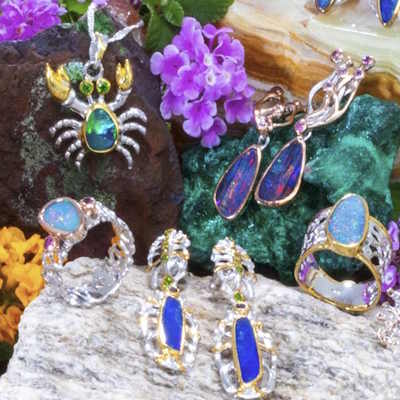
Whether you are searching for a Koroit matrix ring that reads like abstract art, a pendant that catches every room’s light, or earrings that carry the geological story of ancient Australia, Australianopaldirect’s opal collection offers pieces verified for authenticity and backed by a 90-day warranty. Free shipping, complimentary insurance, and expert guidance on boulder opal care tips make each purchase an informed one. If you have questions about stone identification, setting choices, or care routines, the team is equipped to walk you through every detail before you commit.
FAQ
What is a boulder opal?
Boulder opal is a natural solid gemstone where precious opal forms within cracks and voids of ironstone host rock, classified by the GIA as natural opal type 2. The ironstone matrix remains attached to the opal as an integral part of the finished stone, not a backing added by a cutter.
How do you identify genuine boulder opal?
Examine the junction between opal and backing under 10x magnification. Natural boulder opal shows an irregular, organic interface with opal projecting into the host rock, while doublets display a perfectly flat, uniform, epoxy-filled seam.
How does boulder opal compare to black opal?
Black opal from Lightning Ridge generally commands higher prices per carat due to its thicker opal layer and uniform dark body tone, but premium Koroit and Yowah boulder opals can match black opal in brilliance and surpass it in pattern complexity and visual character.
What are the best boulder opal care tips?
Clean with mild soap and lukewarm water only, store away from heat with moderate ambient humidity, avoid prolonged water soaking and harsh chemicals, and choose bezel settings for rings to protect the stone’s edges from impact.
Where does genuine boulder opal come from?
Virtually all commercial boulder opal originates from Queensland, Australia, with notable deposits in the Winton, Koroit, Yowah, and Quilpie regions, each producing stones with distinct matrix patterns and color characteristics tied to their local geology.