Black Opal vs Boulder Opal: What Sets Them Apart
Posted by AOD on 21st Aug 2026
Black Opal vs Boulder Opal: What Sets Them Apart
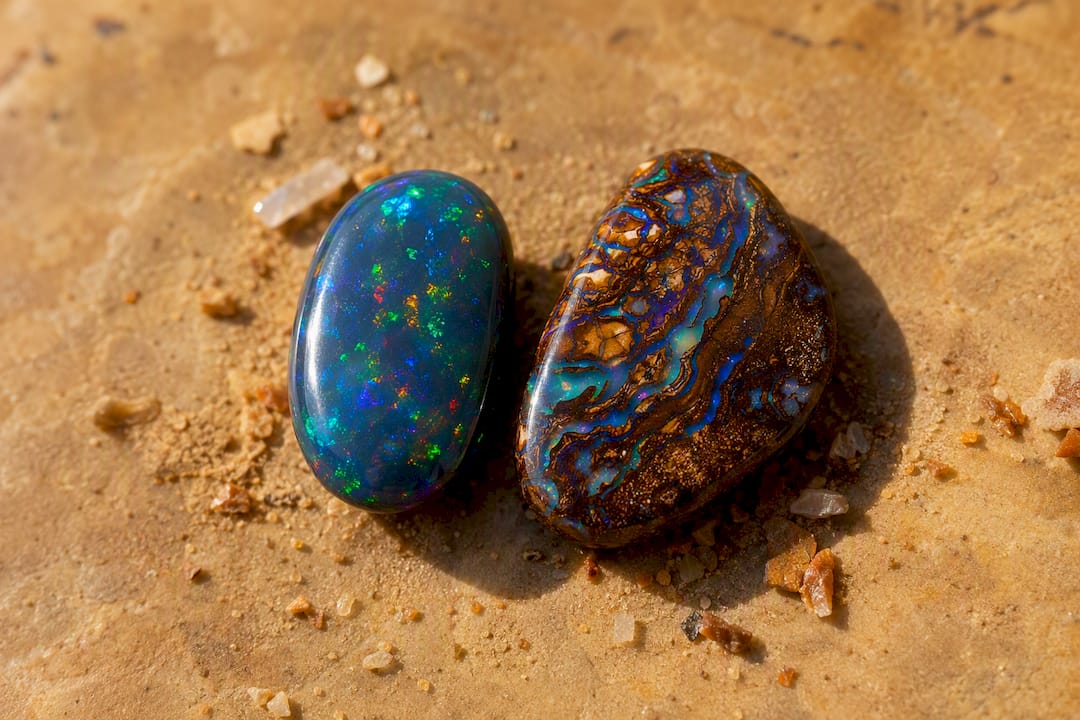
If your priority is rarity and the deepest, most theatrical color contrast, black opal is the stone to chase. If you want vivid, one-of-a-kind imagery and better durability for your dollar, boulder opal deserves a serious look. Both stones can dazzle a room, but they earn their beauty through entirely different paths, and that difference shapes everything from price to how you should set and wear them.
Black opal traces its reputation to Lightning Ridge in New South Wales, a name that has become nearly synonymous with the darkest, most electric opal on Earth. Boulder opal comes almost exclusively from Queensland’s western fields, places like Koroit, Yowah, Quilpie, and Winton, where opal grows fused to ironstone rather than as a standalone gem.
Here’s what shapes that verdict:
- Black opal’s dark body tone (N1 to N4) creates a natural stage for color, driving up rarity and per-carat price.
- Boulder opal keeps its ironstone backing, adding strength and letting cutters preserve thin, spectacular color seams that would otherwise be lost.
- Neither stone is “better” in absolute terms. They serve different goals, budgets, and wearing styles, which the sections below unpack one factor at a time.
Key Takeaways
Black opal earns its premium through rarity and dark body tone, while boulder opal delivers vivid, durable color through its ironstone backing at a broader range of price points.
| Point | Details |
|---|---|
| Body tone defines black opal | GIA grades black opal at N1 to N4 on the body tone scale, the darkest range available. |
| Matrix creates boulder’s contrast | Ironstone backing darkens the background behind thin opal seams, mimicking black opal’s visual punch. |
| Pattern drives collector value | Harlequin and broadflash patterns command the steepest premiums in both opal types. |
| Boulder opal wears tougher | The attached ironstone matrix adds impact resistance that solid black opal lacks. |
| Choose based on goals, not hype | Australianopaldirect sources certified black and boulder opal directly from miners, with provenance disclosed on every piece. |
Sources Behind This Comparison
This comparison draws on GIA’s opal quality factors and body tone scale, GIA’s field reporting on Queensland boulder opal formation, and Queensland government resources documenting the state’s western opal fields. These sources anchor the technical claims on grading, formation, and provenance made throughout this guide.
Table of Contents
- Black Opal vs Boulder Opal: Why Body Tone Changes Everything
- How Play-of-Color and Pattern Set Black and Boulder Opal Apart
- Why Boulder Opal Looks Freeform and Black Opal Looks Uniform
- Which Opal Holds Up Better to Daily Wear?
- What Makes Black Opal Rarer Than Boulder Opal
- Valuation Drivers and Realistic Price Expectations
- How to Choose Between Black Opal and Boulder Opal
- The Bottom Line on Choosing Your Opal
- An Editorial Take on Buying Opal With Confidence
- Ready to Find Your Opal at Australian Opal Direct
- Frequently Asked Questions
Black Opal vs Boulder Opal: Why Body Tone Changes Everything
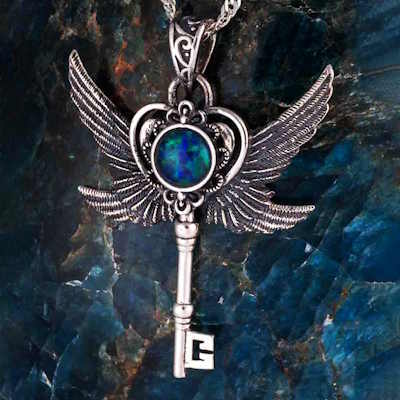
The single biggest driver of black opal’s identity is body tone, the background darkness against which play-of-color performs. The Gemological Institute of America places black opal at the darkest end of a nine-point body tone scale, specifically N1 through N4. That dark canvas doesn’t just look moody. It physically intensifies how the eye perceives color, making reds, greens, and blues appear to leap off the stone rather than fade into it.
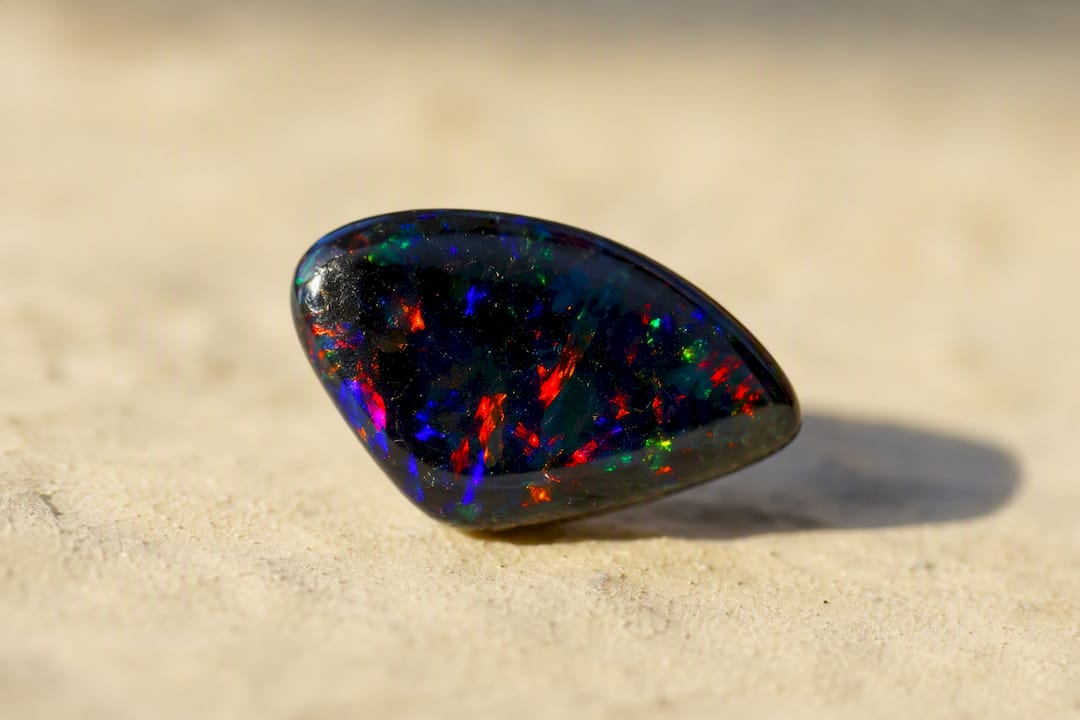
Body tone by the numbers: GIA’s scale runs N1 (blackest) to N9 (whitest), and only stones grading N1 to N4 earn the “black opal” designation. Everything lighter falls into gray or white/crystal opal categories, regardless of how colorful the play-of-color might be.
Boulder opal doesn’t get measured on this same body tone scale, because it isn’t a solid piece of opal in the way black opal is. Instead, it achieves a similar visual trick through its ironstone matrix. That dark brown or black host rock sits directly behind a thin layer of precious opal, and it does the same job a dark body tone does: it swallows light instead of reflecting it, so the color floating above appears saturated and bright by contrast.
A few quick distinctions worth remembering:
- Black opal’s darkness comes from within the stone itself, an intrinsic mineral property.
- Boulder opal’s darkness comes from the ironstone backing behind a thinner opal layer.
- Both effects raise contrast, but only black opal is officially graded on the N1 to N9 scale.
If you’re comparing two stones side by side and one looks inexplicably darker despite similar color intensity, you’re likely seeing the difference between a solid black opal and a matrix-backed boulder piece.
How Play-of-Color and Pattern Set Black and Boulder Opal Apart
Pattern is where opal stops being a gemstone and starts being genuinely personal, almost like a fingerprint. Collectors chase specific pattern types, and the differences between black opal and boulder opal show up clearly once you know what to look for.
Common patterns worth learning include:
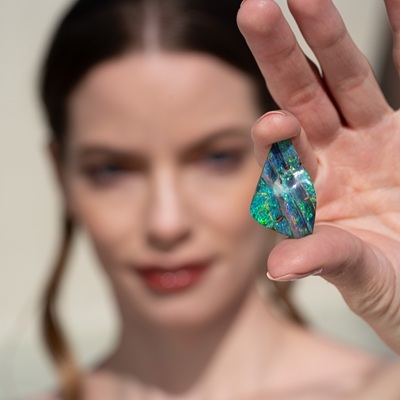
- Harlequin, angular, mosaic-like patches of color that are exceptionally rare and command steep premiums.
- Broadflash, wide sweeps of color that shift dramatically as the stone moves.
- Ribbon, flowing bands of color running across the stone in parallel lines.
- Flame, streaking, fire-like bursts that seem to move independently of the viewing angle.
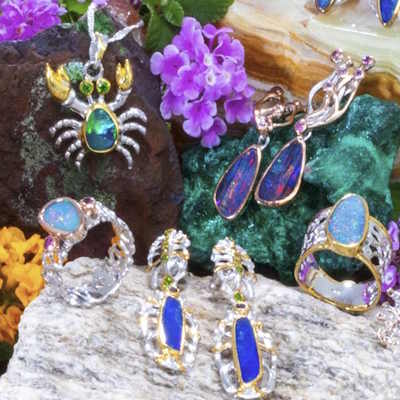
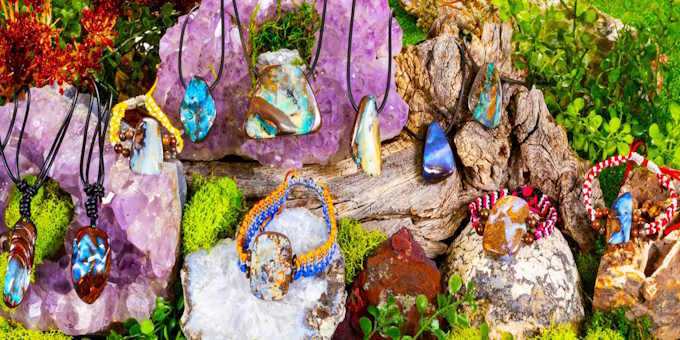
Black opal tends to display broader, bolder flashes of color because its color bars, the actual layer of precious opal, run thicker through the stone. Boulder opal often shows something different: delicate, almost painterly imagery, thanks to the thin seams of opal that form within the ironstone. Some boulder pieces resemble tiny abstract landscapes, a quality that has earned them dedicated collector interest independent of price. It isn’t just a budget alternative to black opal; it’s a distinct aesthetic category people seek out on its own merits.
Pro Tip: When judging a stone from photos, look for consistent lighting across every angle shown. A single dramatic photo under raking light can make a modest stone look extraordinary, while natural or diffused light reveals the color’s true honesty.
For buyers examining stones in person, tilt the piece slowly under a single light source rather than moving the light around it. True broadflash and harlequin patterns will shift smoothly and predictably, while a poorly cut or treated stone often shows patchy, inconsistent color response.
Why Boulder Opal Looks Freeform and Black Opal Looks Uniform
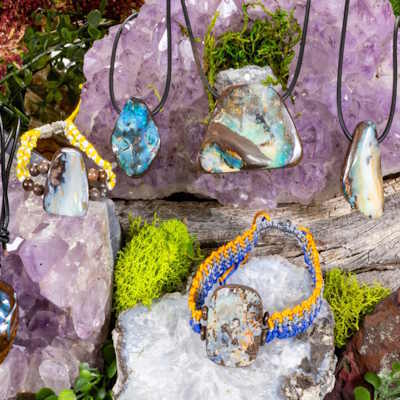
The shapes you see on a jewelry counter aren’t a stylistic choice. They’re dictated by how each stone actually forms underground. Black opal develops as solid seams or pockets within sedimentary rock, which gives cutters room to shape it into traditional, symmetrical cabochons. Boulder opal forms as precious opal veins running through ironstone host rock, and it’s typically cut with that matrix still attached, since removing it would destroy the thin color layer entirely.
That formation difference cascades into real practical consequences:
- Black opal is usually cut into classic oval or round cabochons because the material allows consistent shaping.
- Boulder opal is frequently left in freeform shapes that follow the natural boundary of the ironstone, meaning no two pieces are ever quite alike.
- Leaving the matrix attached adds weight and thickness, which changes how a boulder stone sits in a ring or pendant setting.
- Jewelry designers often build custom settings around boulder opal’s irregular outline rather than forcing it into a standard bezel.
For collectors, this means boulder opal pieces are inherently more individual. For anyone wanting matched pairs, say earrings, black opal’s more predictable shaping tends to make that job easier.
Which Opal Holds Up Better to Daily Wear?
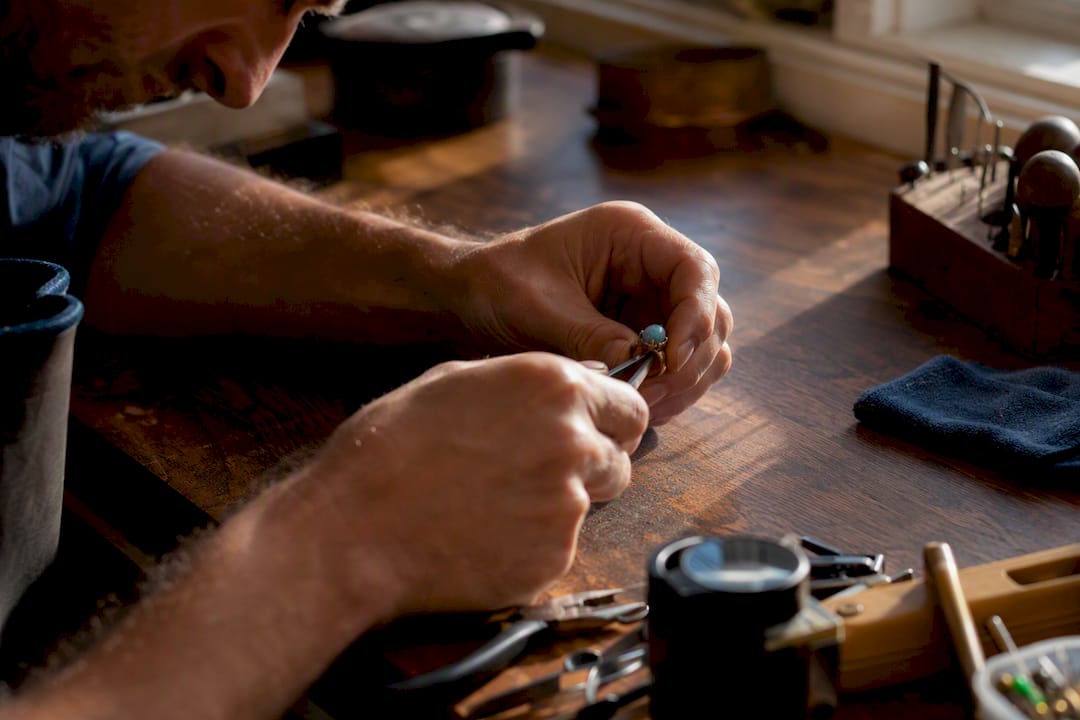
Opal in general sits at 5.5 to 6.5 on the Mohs hardness scale, softer than sapphire or diamond, which means both black opal and boulder opal need thoughtful handling regardless of type. Where they differ is structural support. Boulder opal’s ironstone backing acts like built-in armor, absorbing impact that might otherwise crack a thinner, unsupported piece of solid opal.
Follow these care basics for either type:
- Choose a protective bezel setting for black opal rings, since the stone’s edges are otherwise exposed to knocks.
- Have boulder opal freeforms professionally set with prongs or bezels contoured to the natural shape, ensuring the stone can’t shift or pop loose.
- Avoid ultrasonic cleaners, steam cleaners, and sudden temperature changes for both opal types, since rapid heat or drying can cause fine surface cracks called crazing.
- Store pieces separately in soft pouches to prevent scratching from harder gems or metal clasps.
- Insure high-value stones individually rather than relying on a blanket homeowner’s policy, especially for rare black opal pieces.
Pro Tip: Clean opal jewelry with a soft, slightly damp cloth only. Skip jewelry cleaning solutions entirely. Their chemicals can dull an opal’s surface polish over time.
What Makes Black Opal Rarer Than Boulder Opal
Black opal’s scarcity isn’t marketing language. The Gemological Institute of America identifies it among the rarest opal varieties, and its production is tightly linked to a small number of deposits, most famously around Lightning Ridge. That narrow geographic concentration, combined with the specific mineral conditions needed to produce N1 to N4 body tone, keeps supply genuinely limited.
Field distribution matters here. Queensland’s boulder opal comes from a much broader geographic spread, mapped across western fields including Winton, Quilpie, Yowah, and Opalton. That wider distribution means more active mining ground and, historically, steadier supply than black opal’s more concentrated deposits.
A few provenance points worth remembering:
- Lightning Ridge remains the name most associated with premium black opal, though smaller deposits exist elsewhere in New South Wales.
- Queensland’s western fields each carry their own reputation, with certain localities known for particular pattern styles or matrix colors.
- Rarity alone doesn’t set price. It’s the combination of scarcity and that classic dark, high-contrast aesthetic that drives collector premiums for black opal specifically.
If you’re deciding where to focus a serious collection, understanding these origin stories helps you read provenance claims with a more critical eye. Our black opal guide for buyers and collectors breaks down origin-specific value factors in more depth.
Valuation Drivers and Realistic Price Expectations
Price on any opal, black or boulder, comes down to a handful of measurable factors working together rather than any single trait. GIA’s opal quality framework points to body tone, color brightness, pattern, size, clarity, and the presence of treatments or assembly as the core valuation drivers.
Keep these in mind when comparing quotes:
- Body tone and brightness: darker, more vivid stones command higher prices within their category.
- Pattern rarity: harlequin and broadflash patterns sell for substantially more than common pinfire patterns.
- Size and clarity: larger stones free of visible cracks or sand inclusions carry premiums.
- Treatments and assembly: doublets and triplets, where a thin opal layer is glued to a backing or capped with quartz, sell for markedly less than solid natural stones, and honest sellers disclose this upfront.
- Provenance: documented origin, whether Lightning Ridge or a specific Queensland field, adds buyer confidence and resale value.
As a general pattern, top-grade black opal commands higher per-carat prices than boulder opal of comparable visual quality, largely because of that rarity gap. That said, exceptional boulder specimens with rare harlequin patterning can still reach serious price points, sometimes surprising buyers who assume boulder opal is automatically the budget option.
Before any high-value purchase, ask for a certificate, request photos under consistent lighting, and consider an independent appraisal. Our guide on how to appraise black opals for accurate valuation walks through exactly what a proper appraisal should include.
How to Choose Between Black Opal and Boulder Opal
Turn everything you’ve read into a decision by working through priorities in order.
- Set your budget first. Black opal generally costs more per carat for comparable quality, so know your ceiling before falling for a stone outside it.
- Decide your primary use. A daily-wear ring favors boulder opal’s added durability; an investment or heirloom piece often favors black opal’s rarity.
- Pick your aesthetic. Bold, sweeping color favors black opal; delicate, painterly imagery favors boulder opal.
- Ask the right questions. Request provenance, confirm whether the stone is solid or assembled, ask about backing thickness, and get a setting recommendation suited to the stone’s shape.
Pro Tip: Walk away from any seller who won’t disclose whether a stone is solid, doublet, or triplet, or who only shows images under one dramatic light source. Those are the two most common red flags in opal sales.
The Bottom Line on Choosing Your Opal
Choose black opal when rarity, investment potential, and that unmistakable dark, high-contrast glow matter most to you. Choose boulder opal when you want striking, individual color patterns, added everyday durability, and strong value per dollar spent. Neither choice is a compromise; they’re simply built for different priorities.
Before you commit, view any candidate stone under consistent natural light, request a certificate or documented provenance, and talk through setting options with whoever will be mounting it.
- View the stone in daylight and indoor light before deciding.
- Ask for written provenance and disclosure of any treatments.
- Discuss protective setting styles suited to the stone’s shape and hardness.
An Editorial Take on Buying Opal With Confidence
Most comparison guides treat boulder opal as the consolation prize for buyers who can’t afford black opal. That framing undersells it. Boulder opal’s appeal, that ironstone backing preserving color seams too thin to survive on their own, is a genuine engineering advantage, not a discount workaround. Collectors who dismiss it outright are missing some of the most individually striking stones the opal world produces.
Where Australianopaldirect’s sourcing philosophy comes in is provenance discipline: working directly with miners across Lightning Ridge and Queensland’s western fields, backing every stone with clear documentation, and refusing to blur the line between solid and assembled opal. That transparency is what lets a buyer trust a price tag instead of guessing at it.
Ready to Find Your Opal at Australian Opal Direct
Whichever direction this comparison points you, the harder part is finding a stone you can trust without guesswork. Australianopaldirect works directly with miners across Lightning Ridge, Coober Pedy, and Queensland’s boulder opal fields, which means every piece in the collection comes with documented provenance instead of a vague backstory.

Every purchase includes a 90-day warranty, complimentary insurance, and free shipping, protections that matter enormously once you understand how much value rides on disclosure and honest grading. If a ready-made piece doesn’t match what you’re picturing, the custom design service lets you build a setting around a specific black opal or boulder opal stone chosen for your exact criteria. Browse the current collections at Australian Opal Direct or reach out to a specialist to talk through which opal type fits your budget and wearing style before you buy.
Frequently Asked Questions
Is black opal always more valuable than boulder opal? Not always. Black opal typically commands higher per-carat prices due to its rarity, but exceptional boulder opal with rare patterning can still reach high price points that rival lower-grade black opal.
Can boulder opal be graded on the same body tone scale as black opal? No. The N1 to N9 body tone scale applies to solid opal. Boulder opal’s dark appearance comes from its ironstone backing rather than an intrinsic body tone measurement.
Which opal type is better for everyday jewelry? Boulder opal’s ironstone matrix generally offers more impact resistance, making it a practical choice for rings or bracelets worn daily, provided it’s set securely.
What should I ask a seller before buying either opal type? Request documented provenance, ask whether the stone is solid or assembled, confirm any treatments, and ask for photos under consistent, natural lighting.
Why do some boulder opals look freeform instead of oval like black opal? Boulder opal is typically cut following the natural boundary of its ironstone host rock, since removing that matrix would destroy the thin color-bearing seam underneath.
Recommended
- What Makes Black Opal Rare: Origins and Value Revealed - Australian Opal Direct
- Boulder Opal: What It Is, Its Value and Care - Australian Opal Direct
- What Is Queensland Boulder Opal and Why Collect It - Australian Opal Direct
- Australian Opal vs. Ethiopian Opal: Which Should You Buy? - Australian Opal Direct