Why Natural Gems Matter: A Gemologist's Guide
Posted by AOD on 19th Jun 2026
Why Natural Gems Matter: A Gemologist’s Guide
TL;DR:
- Natural gemstones are formed by Earth’s geological processes over hundreds of millions to billions of years, carrying irreplaceable scientific and cultural significance. Their unique inclusions and formation history ensure they retain value and authenticity, unlike lab-grown stones that lack geological narrative and have declined in market worth. These stones also serve as symbols of history, sustainability, and mindfulness, making untreated natural gems the most genuine choices for collectors and jewelry buyers.
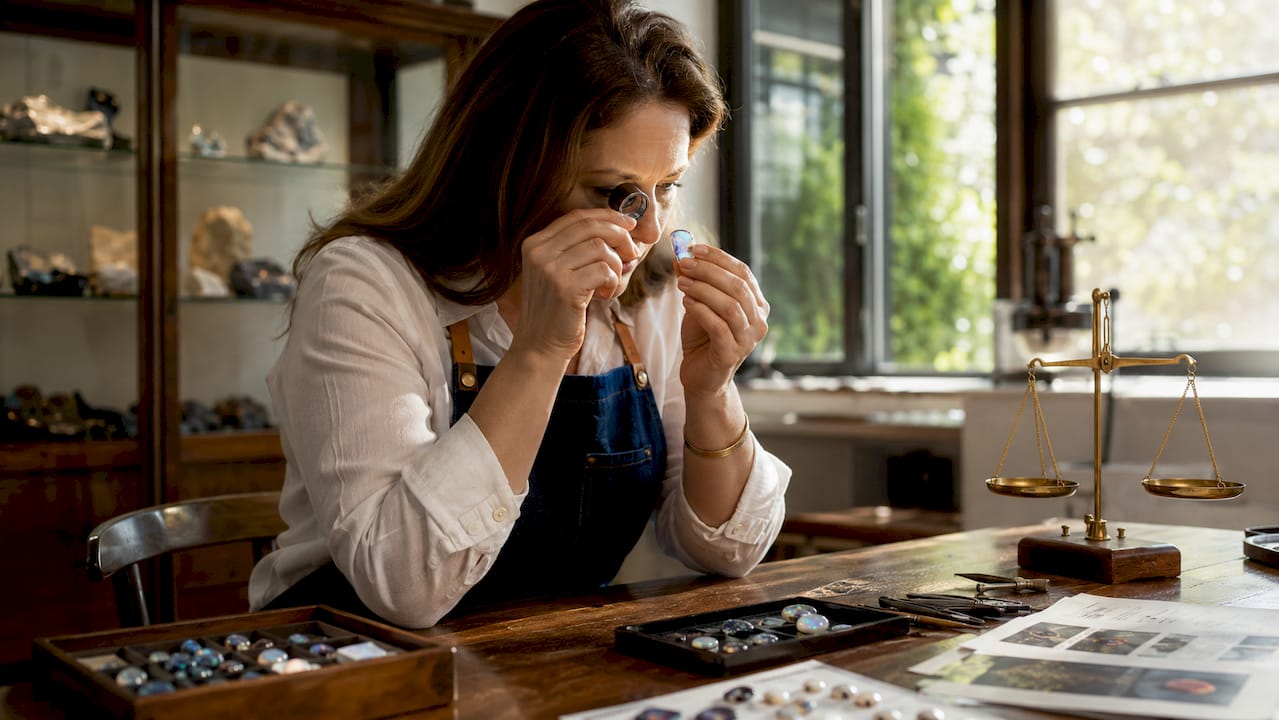
Natural gemstones are defined as minerals or organic materials formed entirely by Earth’s geological processes, without human intervention, over timescales stretching from 100 million to 3 billion years. Understanding why natural gems matter goes far beyond admiring their beauty. These stones carry irreplaceable scientific, cultural, and economic significance that lab-created alternatives simply cannot replicate. For collectors, ecologists, and sustainability-minded buyers alike, the distinction between a natural gem and a synthetic one is the difference between holding a piece of Earth’s living history and holding a manufactured product.
Why natural gems matter: geological rarity and formation science
Natural gemstones form under conditions so extreme and specific that no two stones are ever identical. Diamonds require 1–3 billion years of heat and pressure deep within Earth’s mantle. Rubies and sapphires take hundreds of millions of years to crystallize within metamorphic rock. These timescales are not just impressive numbers. They represent geological events that cannot be reproduced on demand.
Lab-grown stones, by contrast, are produced in weeks or months using methods like Chemical Vapor Deposition or the Verneuil flame fusion process. The resulting crystals may share a chemical composition with their natural counterparts, but they lack the geological narrative. A lab-grown ruby has no inclusions that record ancient tectonic shifts. A synthetic opal carries no silica sphere patterns shaped by Australian desert conditions over millions of years.
What makes natural gems scientifically irreplaceable is their inclusions: microscopic features like rutile needles in sapphires, fingerprint-shaped fluid pockets in emeralds, and the distinctive silica particle arrangements in Australian opals. These inclusions are not flaws. They are geological fingerprints, unique to each stone and impossible to replicate artificially.
Key formation factors that distinguish natural gems:
- Geological timescale: Formation spanning 100 million to 3 billion years under natural heat and pressure
- Unique inclusions: Microscopic features that record specific geological events and locations
- Irreproducible conditions: Natural chemical environments, tectonic forces, and mineral interactions that no laboratory can fully simulate
- Provenance traceability: Natural stones can often be traced to specific mines, regions, or geological formations
Pro Tip: When evaluating a natural gemstone, ask for a certificate from the Gemological Institute of America (GIA) or the American Gem Trade Association (AGTA). These organizations confirm natural origin and document inclusions that prove a stone’s geological authenticity.
Do natural gems hold their value better than lab-grown stones?
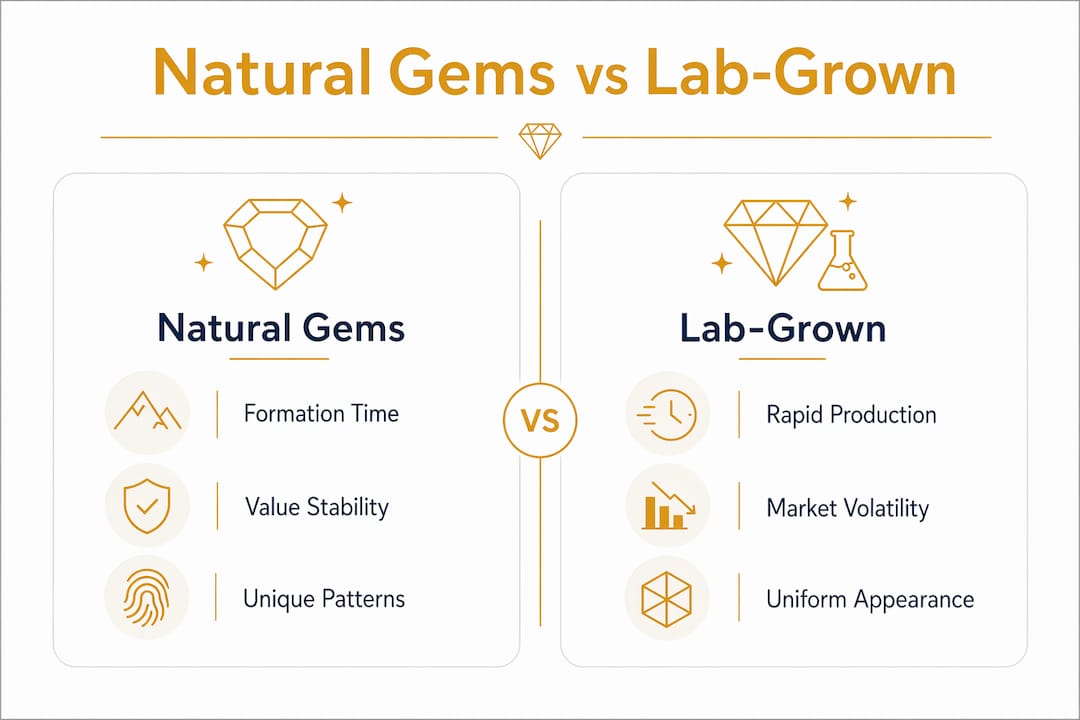
The economic case for natural gemstones is one of the most compelling and least discussed aspects of the importance of natural gems. Lab-grown stones have lost over 90% of their wholesale value over the past decade. That collapse reflects simple economics: as production capacity grows, synthetic stones become commodities. Natural gems operate under entirely different market rules.
Natural stones retain or appreciate in value because their supply is finite and their formation is unrepeatable. A certified natural Kashmir sapphire or a Lightning Ridge black opal does not become less rare as time passes. It becomes rarer. Collectors and auction houses like Christie’s and Sotheby’s consistently demonstrate this reality, with record prices for natural, untreated stones setting new benchmarks each year.
“Natural gemstones hold a permanent place in fine jewelry due to authenticity, rarity, and historical legacy unattainable by lab-made stones.” — Sultan Jewels
Certification and provenance documentation amplify value further. A stone with a traceable origin, a GIA or AGTA report, and a record of previous ownership commands a premium that no synthetic stone can approach.
| Factor | Natural Gemstones | Lab-Grown Stones |
|---|---|---|
| Formation time | 100 million to 3 billion years | Weeks to months |
| Wholesale value trend | Stable or appreciating | Lost over 90% in 10 years |
| Provenance traceability | Yes, often to specific mines | No geological origin |
| Collector appeal | High, especially untreated stones | Low and declining |
| Certification value | Significantly increases price | Minimal market impact |
Market volatility affects lab-grown stones heavily due to production capacity growth, while natural gem valuation remains stable. For anyone considering gemstones as long-term investments or heirlooms, this distinction is decisive.
What physical qualities make natural gems so desirable?
The benefits of natural gemstones extend into their physical properties in ways that directly affect durability, wearability, and long-term appeal. Stones with a Mohs hardness above 7 are favored by collectors for their resistance to scratching and lasting structural integrity. Diamonds score 10, sapphires and rubies score 9, and Australian opals, while softer at 5.5–6.5, compensate with a play-of-color that no other gem on Earth can match.
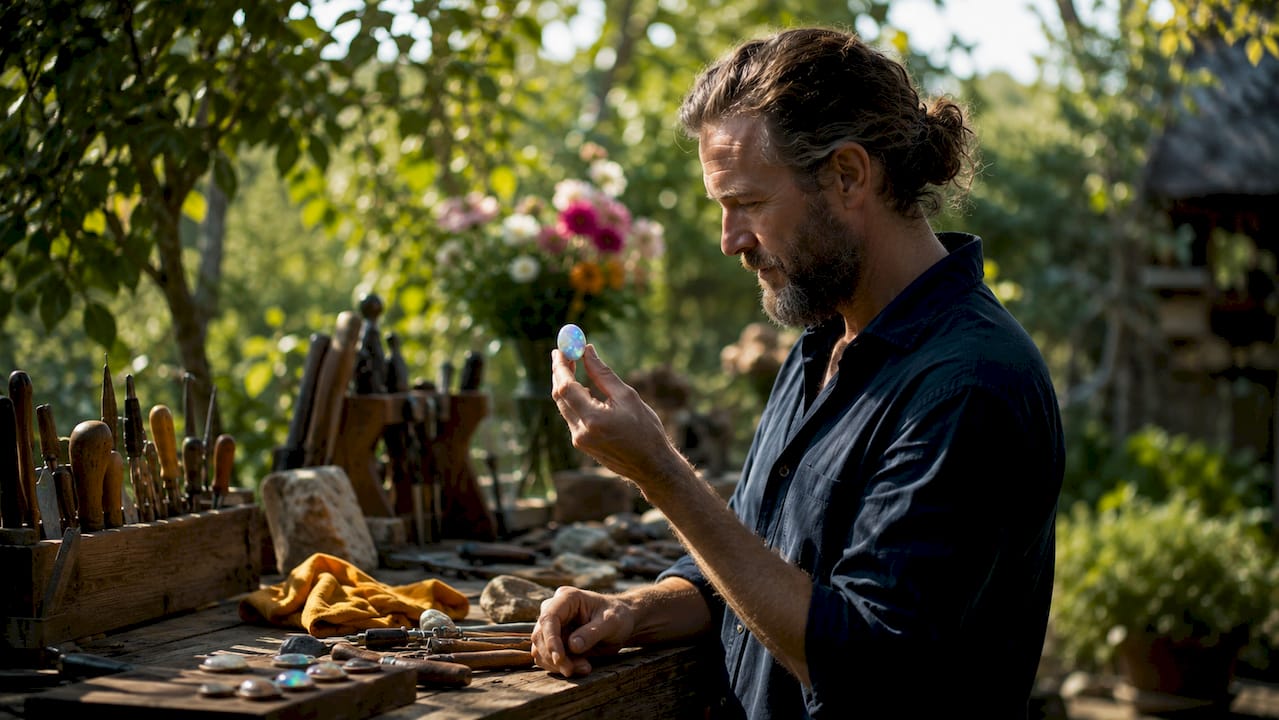
Each natural stone’s color and inclusion pattern is genuinely unique. No two Lightning Ridge black opals display the same spectral fire. No two Colombian emeralds carry identical jardin, the term gemologists use for the internal garden of inclusions that identifies each stone. This individuality is not a marketing claim. It is a verifiable geological fact.
| Property | Natural Gem | Lab-Grown Equivalent |
|---|---|---|
| Mohs hardness | Identical to natural standard | Identical to natural standard |
| Inclusions | Unique geological fingerprints | Uniform, often absent |
| Color zoning | Natural, irregular, authentic | Artificially uniform |
| Untreated rarity | Rare and highly valued | Not applicable |
The question of treatment is equally significant. Untreated gemstones are rare and valued for retaining their original geological formation without enhancements. The majority of gems on the market undergo heat treatment, fracture filling, or irradiation to improve color or clarity. An untreated natural stone represents the highest degree of authenticity available in fine jewelry.
Pro Tip: Ask specifically for “no indications of heating” or “no clarity enhancement” language on any GIA or AGL certificate before purchasing a colored stone. That single phrase can double or triple a stone’s collector value.
Why do cultural heritage and sustainability shape gemstone value?
The value of authentic gems is inseparable from the human stories they carry. Cultural and historical provenance can increase a gemstone’s market value by 300–500%. That figure reflects something profound: buyers are not just purchasing a mineral. They are purchasing a connection to a specific place, time, and tradition.
Australian opals from Coober Pedy, for example, carry the heritage of a mining community that has shaped South Australian identity for over a century. Burmese rubies from the Mogok Valley carry centuries of royal and religious significance. Kashmir sapphires, mined in a narrow geological window between 1881 and the early 20th century, are now so rare that even modest specimens command extraordinary prices at auction.
Sustainability adds another layer to the importance of natural gems in 2026. Ethical sourcing practices, mine-to-market transparency, and fair labor standards are now central concerns for collectors and buyers who care about ecological impact. Organizations like the Responsible Jewellery Council (RJC) certify mining operations that meet environmental and social standards. Australianopaldirect sources directly from Australian miners, maintaining full traceability from Lightning Ridge and Queensland to the finished piece.
Key reasons cultural and ecological factors amplify gemstone significance:
- Historical provenance connects stones to specific royal, religious, or cultural traditions, adding layers of meaning that increase both emotional and monetary value
- Sustainable mining practices reduce habitat disruption and support local communities, making each purchase an ethical choice as well as an aesthetic one
- Mine-to-market traceability allows buyers to verify that their stone was extracted responsibly, a standard that natural gems with traceable origins meet far more reliably than lab-grown alternatives
- Gemstone significance and symbolism vary by culture but consistently reflect themes of protection, prosperity, and connection to the natural world
How do natural gems support healing and personal symbolism?
Natural gemstones for healing represent one of the oldest and most widespread human practices, documented across ancient Egyptian, Greek, Vedic, and Indigenous Australian traditions. The mechanisms behind these practices are worth understanding clearly. Healing properties attributed to natural gems largely result from placebo effect, intention, and ritual rather than direct physical effects. That finding does not diminish their value. It clarifies it.
Gemstones function as powerful mindfulness anchors. Holding a piece of labradorite during meditation or wearing an opal as a daily talisman creates a consistent ritual object that focuses attention and intention. Psychological research on ritual behavior confirms that physical objects used consistently in mindfulness practices genuinely reduce anxiety and improve emotional regulation.
The most meaningful ways people engage with natural gems for personal symbolism and wellness:
- Birthstone traditions: Stones like sapphire for September or opal for October connect wearers to personal identity and life milestones
- Intention setting: Selecting a stone based on its cultural associations, such as amethyst for clarity or rose quartz for compassion, creates a daily mindfulness prompt
- Heirloom ritual: Passing a natural gem across generations transforms it into a living symbol of family legacy and continuity
- Meditation anchoring: The tactile weight and color of a natural stone provides a sensory focus point during mindfulness practice
The gemstone significance and symbolism embedded in natural stones carries weight precisely because the stones themselves are ancient. Holding a gem formed 500 million years ago during a meditation practice is an act that connects the personal to the geological in a way no synthetic object can replicate.
Key Takeaways
Natural gemstones matter because they are irreplaceable records of Earth’s geological history, offering authenticity, economic stability, and cultural depth that no lab-created stone can provide.
| Point | Details |
|---|---|
| Geological authenticity | Natural gems form over 100 million to 3 billion years, creating unique inclusions no lab can replicate. |
| Economic value retention | Lab-grown stones lost over 90% of wholesale value in a decade; natural gems hold or appreciate. |
| Physical uniqueness | Untreated natural stones with Mohs hardness above 7 offer durability and irreproducible color patterns. |
| Cultural and provenance value | Historical provenance increases gemstone market value by 300–500%, rewarding ethical and traceable sourcing. |
| Healing and symbolism | Natural gems serve as mindfulness anchors and heirloom symbols, connecting wearers to ancient traditions. |
Why I believe untreated natural stones are the only honest choice
I have spent years studying gemstones across auction catalogs, mine reports, and collector conversations, and one truth keeps surfacing: the market consistently rewards authenticity and punishes imitation over time. The collectors who built the most meaningful and financially resilient collections are those who prioritized untreated, certified natural stones from traceable origins.
What strikes me most is how the sustainability conversation has matured. Five years ago, buyers asked whether a stone was “ethical” as an afterthought. Today, the most sophisticated buyers I encounter treat provenance documentation as a non-negotiable starting point. They want to know the mine, the miner, and the chain of custody. That shift reflects a deeper understanding of why choosing natural gems is not just an aesthetic preference. It is a values statement.
The one thing I would push back on in mainstream gem coverage is the framing of lab-grown stones as the “sustainable” choice. Lab production consumes significant energy, often from non-renewable sources, and the stones carry no geological or cultural legacy. A responsibly mined natural opal from Lightning Ridge, sourced through a direct-miner relationship, is arguably the more sustainable and certainly the more meaningful choice.
Untreated stones represent the highest degree of natural rarity available. If you are building a collection or selecting a piece to pass down, start there and do not compromise.
— Renee
Discover ethically sourced natural opals at Australianopaldirect

Australianopaldirect sources every opal directly from Australian miners in Lightning Ridge, Coober Pedy, and Queensland, maintaining full provenance documentation from earth to finished piece. Each stone in the collection reflects the geological authenticity and cultural heritage that define why natural gems matter to serious collectors and mindful buyers. Australianopaldirect offers certification with every purchase, ensuring you receive a genuine, traceable natural gem. Explore the full collection of ethically sourced Australian opals and find a piece that carries both the fire of the earth and the integrity of responsible sourcing. Custom jewelry options and a 90-day warranty make every purchase a confident one.
FAQ
What are natural gems, exactly?
Natural gems are minerals or organic materials formed entirely by Earth’s geological processes, without human intervention, over timescales ranging from 100 million to 3 billion years. They differ from lab-grown stones in origin, geological narrative, and market value.
Why do natural gems hold their value better than lab-grown stones?
Natural stones retain or appreciate in value because their supply is finite and their formation is unrepeatable, while lab-grown stones have lost over 90% of their wholesale value in a decade due to production oversupply.
What does “untreated” mean in gemology?
An untreated gemstone retains its original geological formation without heat treatment, fracture filling, or irradiation. Untreated stones are the rarest and most sought-after category among serious collectors.
How does cultural provenance affect a gemstone’s value?
Cultural and historical provenance, such as royal ownership or sacred regional traditions, can increase a gemstone’s market value by 300–500%. Documentation of a stone’s origin and history is a significant driver of price at auction.
Are natural gemstones genuinely better for healing than lab-grown stones?
The healing benefits attributed to natural gems are primarily psychological, rooted in intention, ritual, and mindfulness rather than direct physical effects. Natural stones carry ancient cultural symbolism and geological history that amplify their role as meaningful personal objects in ways synthetic stones cannot.
Recommended
- Luxury gemstone standards explained: Expert guide for collectors - Australian Opal Direct
- Build a Gemstone Collection: The Expert Guide to Australian Opals - Australian Opal Direct
- Genuine Australian opals: authenticity guide for collectors - Australian Opal Direct
- Master opal collector terminology: 5 essential terms - Australian Opal Direct