What Is Gem Cutting? A Beginner's Guide to Lapidary
Posted by AOD on 7th Jun 2026
What Is Gem Cutting? A Beginner’s Guide to Lapidary
TL;DR:
- Gem cutting transforms rough stones into finished gemstones by shaping and polishing to optimize light and color. The process involves precise evaluation, preforming, cutting, and polishing, with skillful decisions affecting brilliance and clarity. Cutting styles and quality factors depend on gemstone properties, demanding patience, artistry, and technical knowledge from the lapidary.
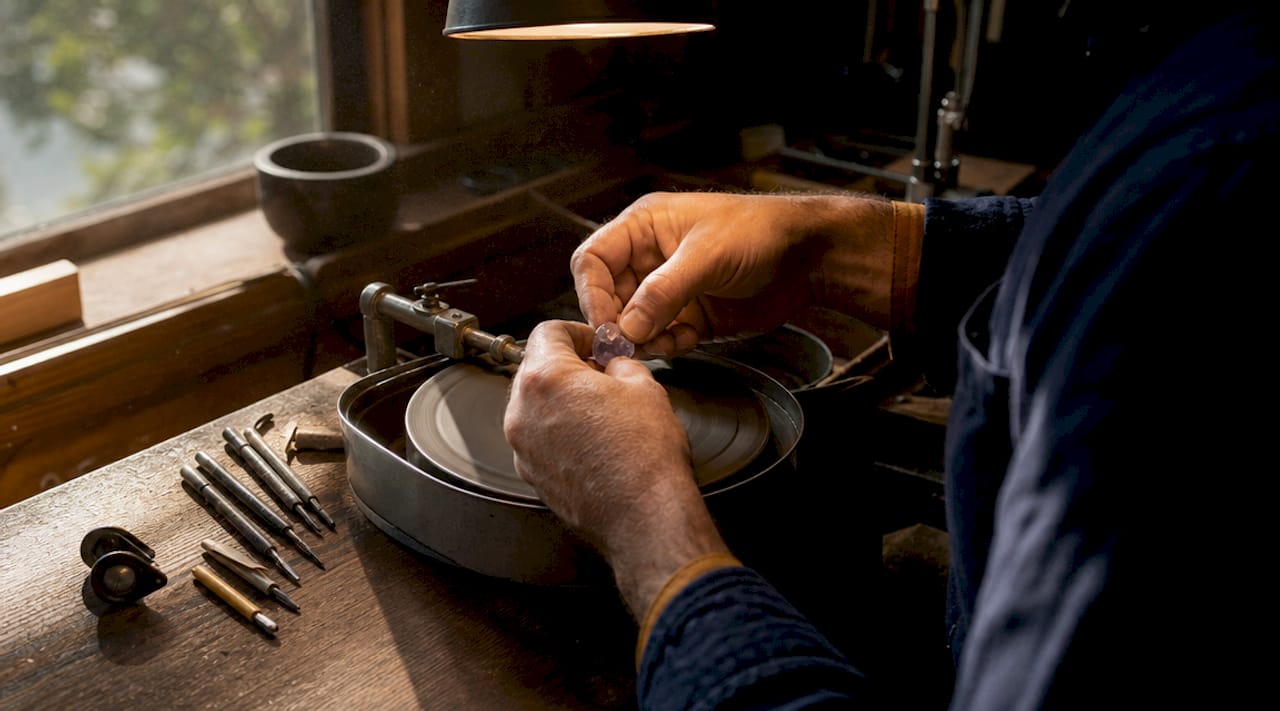
Gem cutting is defined as the art and science of transforming rough mineral crystals into polished, finished gemstones through cutting, shaping, and polishing to reveal their optimal color, brilliance, and clarity. Known formally as lapidary, this craft sits at the intersection of engineering precision and artistic vision. Whether you are drawn to the kaleidoscopic fire of a faceted sapphire or the smooth, luminous dome of a cabochon opal, what you are admiring is the direct result of a skilled cutter’s decisions. Rough stones are cut, carved, or shaped into beads), and the process typically reduces the stone’s original mass by around 50%. That loss is not waste. It is the price of beauty.
What is gem cutting and how does lapidary work?
Lapidary is the broader discipline that encompasses every method of working with gemstones, from faceting a diamond to carving a cameo from shell. Gem cutting, as a subset of lapidary, refers specifically to the process of reshaping a rough stone into a finished form with defined geometry, surface quality, and optical performance. Faceting is the only controllable aspect of gemstone quality that humans can directly influence, making it the most consequential step between a raw crystal and a finished jewel.
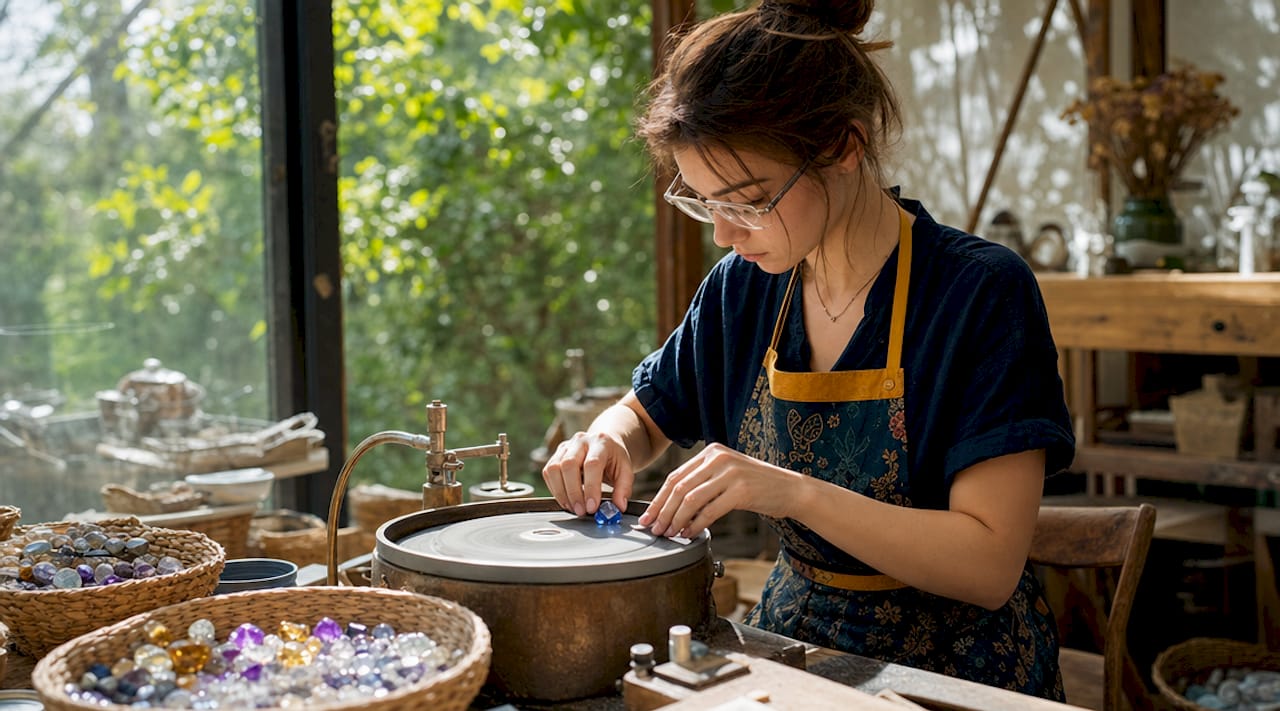
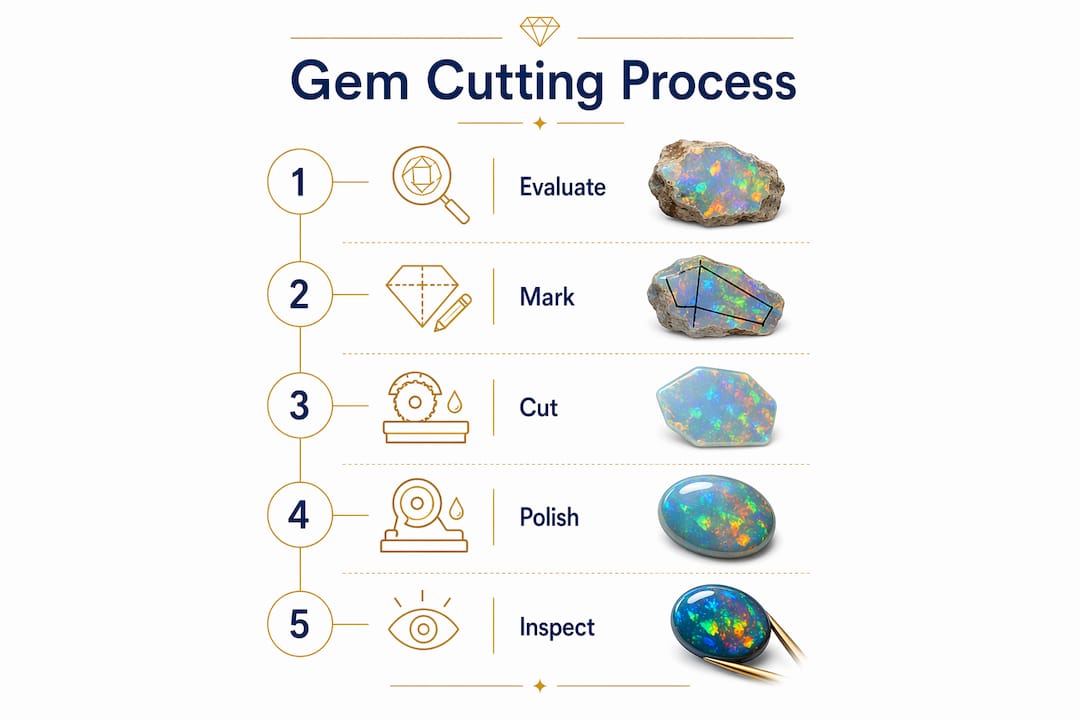
The gemstone cutting process moves through four distinct stages: evaluation, preforming, precise cutting, and polishing. Each stage demands a different set of skills and tools, and each decision compounds on the last. A cutter who rushes the evaluation stage will pay for it in every stage that follows.
The four core gem cutting techniques are:
- Faceting — The creation of precise, flat geometric surfaces on a stone to maximize brilliance, fire, and scintillation. Faceting is performed on a motorized faceting machine using a series of grinding and polishing laps.
- Cabochon cutting — Shaping a stone into a smooth, rounded dome without facets. This technique suits opaque or special-effect stones like Australian opals, star sapphires, and moonstones.
- Carving — Sculpting a stone into three-dimensional forms or relief designs. Opal carving, for example, transforms a rough piece into a wearable work of art with contoured surfaces that interact with the stone’s natural play-of-color.
- Tumbling — Placing rough stones in a rotating barrel with abrasive grit to produce smooth, polished surfaces. Tumbling is the most accessible entry point for beginners and produces attractive, organic shapes.
Within faceting, the workflow follows a precise sequence. The cutter first evaluates the rough stone for inclusions, color zones, and natural crystal shape. Preforming then grinds the stone into a rough outline of its final shape. Stones are mounted on dop sticks with wax to hold them securely at controlled angles during cutting. The pavilion (the lower half of the stone) is cut first, then the crown (the upper half), with polishing progressing from coarser to finer abrasives until a true mirror finish emerges.
Pro Tip: Every degree of angle you cut into the pavilion directly affects how light exits the stone. Changing the pavilion angle by even two degrees can shift a brilliant gem into one that leaks light from the bottom. Study your target angles before you touch the lap.
How do brilliant, step, and mixed cuts differ?
The style of cut chosen for a gemstone is not purely aesthetic. It is a calculated decision based on the stone’s optical properties, its clarity, and the effect the cutter wants to achieve. Common gem cutting styles include brilliant, step, mixed, and cabochon, each producing a distinct visual signature.
Brilliant cuts use triangular and kite-shaped facets arranged to maximize the return of white light (brilliance) and spectral color (fire). The round brilliant, with its 57 or 58 facets, is the most mathematically optimized cut in gemology. Diamonds, white sapphires, and zircons perform best in brilliant styles because their high refractive indices amplify the light-scattering effect.
Step cuts use parallel, rectangular facets arranged in steps down the pavilion and crown. The result is a hall-of-mirrors effect: deep, reflective flashes of light rather than sparkle. The emerald cut and Asscher cut are the most recognized step styles. Step cuts reward stones with exceptional clarity because the open facets make inclusions more visible.
Mixed cuts combine brilliant facets on the pavilion with step facets on the crown, or vice versa. The oval mixed cut and the princess cut are popular examples. This approach balances brilliance with the elegant geometry of step cutting.
Beyond these three, two additional styles deserve attention:
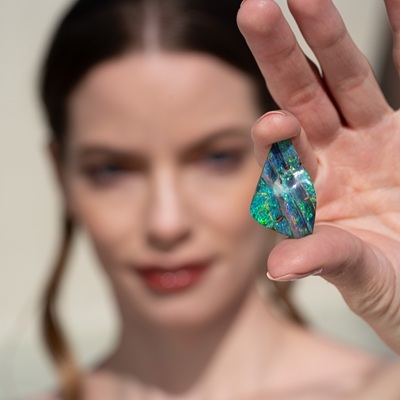
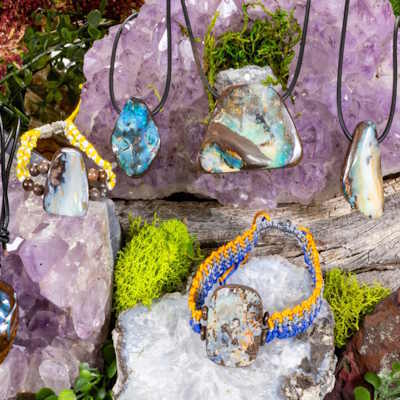
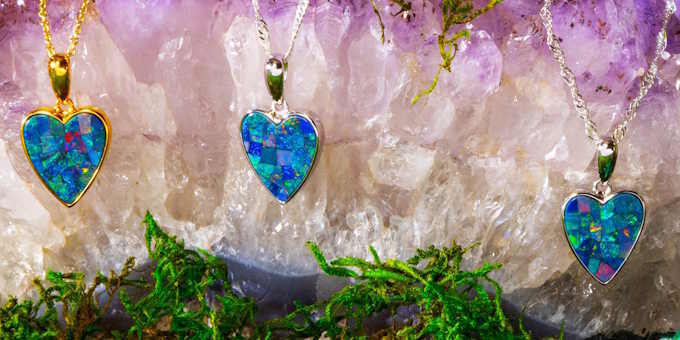
- Cabochons produce smooth, rounded stones with no facets. They are the preferred cut for opaque gems and stones with optical phenomena such as asterism (star effect) or adularescence. Australian opals, with their rolling play-of-color, are among the most celebrated cabochon stones in the world.
- Fantasy and concave cuts push the boundaries of traditional lapidary. Concave cuts, patented in the 1990s, add inward-curving facets that bend light in unusual ways, producing a depth and brilliance impossible with flat facets.
| Cut style | Optical goal | Typical gems used |
|---|---|---|
| Brilliant | Maximum sparkle and fire | Diamond, sapphire, zircon |
| Step | Hall-of-mirrors depth | Emerald, aquamarine, tourmaline |
| Mixed | Balance of brilliance and geometry | Tanzanite, amethyst, citrine |
| Cabochon | Color saturation and optical phenomena | Opal, star sapphire, moonstone |
| Fantasy/concave | Sculptural depth and unusual light effects | Quartz, topaz, labradorite |
Cutting style selection depends on the rough stone’s unique characteristics and intended use, blending science with aesthetics in every decision.
What factors determine the quality of a gem cut?
Cut quality is the single most human-controlled variable in a finished gemstone’s value and visual appeal. Three factors govern it: proportions, symmetry, and polish. Understanding how these interact explains why two stones of identical color and clarity can look dramatically different once cut.
Proportions control the angles at which light enters and exits the stone. A pavilion cut too deep causes light to leak out the sides. A pavilion cut too shallow creates a “fish-eye” effect, where you see a reflection of the girdle rather than a burst of brilliance. Proportions affect light angles, and even small deviations from ideal measurements produce visible consequences in the finished gem.
Symmetry determines whether the light pattern inside the stone is balanced and centered. A stone with poor symmetry will show uneven brightness, with some facets blazing and others appearing dark. Symmetry is evaluated by examining the alignment of facets, the centering of the table, and the evenness of the girdle outline.
Polish is the final stage, and it is more consequential than most beginners expect. Scratches and surface irregularities left by coarser abrasives scatter light rather than reflecting it cleanly. A true mirror finish requires progressive polishing through increasingly fine grits, often finishing with cerium oxide or diamond powder on a specialized polishing lap.
- Poor proportions create light leakage, dead centers, or the fish-eye effect
- Poor symmetry produces uneven brightness and an unbalanced face-up appearance
- Poor polish scatters light at the surface, dulling sparkle regardless of how well the facets are cut
- Meetpoints, the exact locations where facets intersect, are critical for superior sparkle and require significant experience to perfect
Pro Tip: Do not rush to the polishing lap to fix a problem that originated in the cutting stage. Beginner errors often lead to light leakage that polishing alone cannot correct. If the angles are wrong, go back and recut.
What tools and practical steps do beginners need for gem cutting?
Starting in lapidary does not require a professional workshop, but it does require the right equipment and a clear understanding of the workflow. The gemstone cutting process rewards patience and preparation far more than raw talent.
The core tools for faceting include:
- Faceting machine — The central piece of equipment. It holds the dop stick at a precise angle and rotates the lap. Entry-level machines from brands like Graves, Ultra Tec, and Facetron are widely used by hobbyists.
- Grinding laps — Metal discs coated with diamond abrasive in various grits (typically 260, 600, 1200, and 3000) for progressive material removal.
- Polishing laps — Softer laps charged with cerium oxide, alumina, or diamond powder for the final mirror finish.
- Dop sticks — Brass or aluminum rods onto which the stone is mounted with dop wax. Dop sticks enable precise indexing and angle control throughout the cutting process.
- Transfer jig — Used to flip the stone from pavilion to crown while maintaining precise alignment.
Before cutting begins, evaluate the rough stone carefully. Look for fractures, inclusions, and color zoning. Plan your orientation to place inclusions outside the finished stone’s outline if possible, and to align color zones where they will be most visible through the table. Experienced cutters take 3 to 4 hours per gem, and that time investment reflects the care required at every stage.
For opal specifically, the cabochon process requires grinding the stone to shape on a silicon carbide wheel, then sanding through progressively finer grits before polishing with cerium oxide on a leather or felt lap. The significance of opal in jewelry is inseparable from the quality of its cut. A poorly shaped opal cabochon suppresses the play-of-color that makes the stone extraordinary.
Tradeoffs arise between maximizing beauty and retaining carat weight), with roughly 50% of mass lost during cutting. For valuable rough, this tension is real. A cutter who chases carat weight may sacrifice the proportions that make a stone sing.
Key takeaways
Gem cutting merges artistry with engineering, and the quality of every finished stone reflects the precision, patience, and knowledge invested in each stage of the process.
| Point | Details |
|---|---|
| Lapidary defined | Gem cutting transforms rough mineral crystals into finished stones through faceting, cabochon shaping, carving, or tumbling. |
| Four-stage workflow | Quality cuts follow evaluation, preforming, precise cutting, and progressive polishing in sequence. |
| Cut style matters | Brilliant, step, mixed, and cabochon cuts each produce distinct optical effects suited to specific gem types. |
| Three quality pillars | Proportions, symmetry, and polish together determine how light behaves inside a finished gemstone. |
| Opal requires cabochon | Australian opals are cut as cabochons to preserve and amplify their play-of-color, not faceted. |
Why gem cutting is more demanding than most people realize
I have spent years studying how light moves through gemstones, and the single most common misconception I encounter is that cutting is mostly mechanical. People assume a faceting machine does the hard work. It does not. The machine holds the angle you set. Every decision about which angle to set, which facet to cut next, and how much pressure to apply belongs entirely to the cutter.
What surprises most newcomers is how unforgiving the process is. A facet cut at the wrong angle cannot be polished away. The error is locked into the geometry of the stone, and the only remedy is to recut. This is why experienced lapidaries spend as much time planning a cut as executing it. They study the rough, visualize the finished stone, and map every facet sequence before the first grind.
The other thing I want to emphasize is the particular challenge of cutting opals. Unlike quartz or corundum, opal is relatively soft and contains water within its silica structure. Aggressive grinding generates heat that can crack the stone. The opal carving tradition developed partly because opal rewards a slower, more sculptural approach. Rushing an opal through a standard cabochon sequence is one of the fastest ways to destroy a beautiful piece of rough.
For anyone starting out, my honest advice is to practice on inexpensive quartz before touching anything valuable. Learn to read the meetpoints. Develop a feel for lap pressure. The craft rewards patience in a way that few hobbies do, and the moment a finished stone catches the light for the first time makes every careful hour worthwhile.
— Renee
Explore genuine Australian opals at Australianopaldirect
Australianopaldirect sources its opals directly from the legendary fields of Lightning Ridge, Coober Pedy, and Queensland, where earth-mined stones carry the full depth of Australian geological history. Every piece in the collection has been shaped and polished to honor the natural play-of-color that makes Australian opal unlike any other gem on earth. Whether you are searching for a finished opal ring, a loose stone to study, or a custom-designed pendant, Australianopaldirect offers ethically sourced opal jewelry with free shipping, complimentary insurance, and a 90-day warranty. Browse the collection and see what skilled lapidary craftsmanship looks like when it meets one of nature’s most extraordinary canvases.
FAQ
What is gem cutting in simple terms?
Gem cutting, or lapidary, is the process of shaping and polishing rough stones into finished gemstones through faceting, cabochon shaping, carving, or tumbling to enhance their color and light performance.
How long does it take to cut a gemstone?
Experienced cutters spend 3 to 4 hours on a single faceted gem, carefully controlling angles, facet placement, and polishing stages to achieve a precise, high-quality result.
Why are opals cut as cabochons instead of faceted?
Opals are cut as cabochons because their play-of-color, produced by diffraction of light through silica particle arrays, is best displayed through a smooth, domed surface rather than flat facets that would interrupt the optical effect.
What is the most important factor in gem cut quality?
Proportions, symmetry, and polish all contribute, but proportions are the foundation. Incorrect pavilion angles cause light to leak from the stone rather than return to the viewer’s eye, and no amount of polishing can correct a geometry error.
What tools do beginners need to start cutting gems?
A beginner needs a faceting machine, a set of diamond grinding laps in multiple grits, polishing laps, dop sticks, and dop wax. Brands like Graves and Ultra Tec offer entry-level faceting machines suited to hobbyists starting their lapidary practice.
Recommended
- 7 Essential Types of Opal Cuts Every Collector Should Know - Australian Opal Direct
- Build a Gemstone Collection: The Expert Guide to Australian Opals - Australian Opal Direct
- Opal Gemstone Selection Process: A Step-by-Step Guide - Australian Opal Direct
- Master opal collector terminology: 5 essential terms - Australian Opal Direct