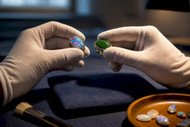
Buyers and Collectors: Opal or Jade, Artful Color vs Tough Daily Wear
Posted by AOD on 28th Sep 2026
Buyers and Collectors: Opal or Jade, Artful Color vs Tough Daily Wear

If you want a stone that carries daily wear without hesitation, jade is the sound choice; if you crave color that seems to shift with your mood and the light, opal is the one that captivates. Choose jade for bangles, everyday rings, and heirloom pieces meant to be handled without worry. Choose opal for pendants, earrings, and showpieces where its kaleidoscopic color play can shine in a protected setting. For either stone, once you are spending real money, ask for an independent lab report or a seller guarantee before you commit.
TL;DR:
- Jade is the more durable option for daily wear, especially for rings and bangles, due to its higher toughness and resistance to chipping or cracking.
- Opal’s value heavily depends on the pattern, color intensity, and body tone, with black and crystal opals commanding the highest prices because of their striking effects.
- Both stones are often treated or assembled into doublets or triplets, so buyers should demand independent lab reports or guarantees, especially for high-value pieces.
- Proper handling advises including careful storage, avoiding heat and chemicals, and selecting protective settings for opal jewelry to prevent crazing and surface damage.
- When choosing, assess the intended use, inspect key attributes, clarify treatment status, and prioritize purchase from reputable sellers offering clear policies and certification.
Table of Contents
- Quick reference: comparing opal and jade at a glance
- Opal: how play-of-color, types, and patterns determine look and value
- Jade: jadeite vs nephrite — color, transparency, texture, and cultural value
- Durability and care: Mohs, toughness, and real-world handling advice
- Treatments and authentication: what to look for and when to get an independent report
- How to choose: a step-by-step buyer and collector checklist
- Publisher expertise: how Australian Opal Direct sources and verifies its opals
- Author perspective: practical closing advice for buyers and collectors
- If you decide on opal: how Australian Opal Direct helps you buy with confidence
- Sources
- FAQ
Quick reference: comparing opal and jade at a glance
Opal and jade differ significantly in durability, which shapes most buying decisions. Opal offers a softer hardness and striking optical effects which require careful handling, while jade provides greater resilience, making it suitable for long-term wear and heirloom quality.
A few points are worth carrying forward as you read the rest of this comparison.
- Durability decides placement: jade tolerates a ring worn every day; opal generally does not.
- Value logic differs by stone: jade is priced on transparency, color, and texture; opal is priced on pattern, color intensity, and the sheer rarity of its play-of-color.
- Verification matters for both: jade’s A/B/C treatment classification and opal’s doublet or triplet construction both change what you are actually paying for.
Opal: how play-of-color, types, and patterns determine look and value
Opal’s signature effect, play-of-color, comes from a structure so small you would need a microscope to see it. According to gemological research, opal is built from tiny silica spheres stacked in orderly rows, and when light passes through those rows, it diffracts and splits into the spectrum of color you see shifting as the stone moves. No two stones stack their spheres in quite the same pattern, which is part of why collectors treat a fine opal purchase the way they might treat buying a piece of art: each one is genuinely singular, and taste drives the price as much as any measurable trait.
That individuality shows up across several recognized opal categories, each with its own visual signature.
- Black opal: a dark body tone, often from Lightning Ridge-style material, that makes play-of-color pop with unusual intensity.
- Crystal opal: transparent to semi-transparent material that lets light travel through the stone, often producing a luminous, glowing effect.
- Boulder opal: thin seams of opal fused to their ironstone host rock, frequently left partly intact in the cut to preserve the color layer.
- White or light opal: a pale body tone that shows softer, more pastel play-of-color than black opal.
- Fire opal: valued for its warm orange to red body color, sometimes without pronounced play-of-color at all.
Three factors decide where any given stone lands on the price scale: pattern, color intensity, and body tone. A tight, evenly distributed pattern (sometimes called a harlequin or pinfire pattern, depending on its shape) commands more than a scattered or flashy one. Strong, saturated color across the full spectrum outranks a stone that only flashes green or blue in narrow bands. Darker body tones tend to intensify the visible color play, which is part of why black opal often sits at the top of the value ladder.
A meaningful share of what makes an opal valuable cannot be measured on a scale or chart: two stones with near-identical technical specifications can sell for wildly different prices because one pattern simply moves a buyer and the other does not.
If you want to go deeper on how pattern rarity translates into price, our opal pattern guide breaks down the named patterns collectors look for.
Jade: jadeite vs nephrite — color, transparency, texture, and cultural value
The word “jade” actually covers two distinct minerals with different chemistry and different looks: jadeite and nephrite. Jadeite tends to occur in a wider color range, including the vivid, saturated greens that command the highest prices in the trade, along with lavender, white, and other shades. Nephrite runs in a narrower band of green and cream tones and is generally more common, with an interlocking fibrous structure that makes it exceptionally resistant to breaking, historically prized enough to be carved into tools before it was ever carved into jewelry.

Within jadeite, the benchmark for top quality is often called “imperial green,” a saturated, slightly bluish green with fine, even texture and high transparency. As color saturation rises and transparency improves, price climbs sharply, sometimes outpacing far larger but duller stones. Coarse texture or visible internal graininess drags value down even when the color looks appealing at first glance.
Because jade’s appeal rests on subtle, consistent qualities rather than a flashy optical effect, buyers typically weigh three things when judging a piece.
- Color saturation: even, vivid green (or lavender, in jadeite) without patchy or washed-out zones.
- Transparency: the degree to which light passes through the stone, from opaque to semi-translucent.
- Texture: how fine and smooth the material looks, since a grainy texture reads as lower quality even in good color.
Jade also carries centuries of cultural weight that shapes demand independent of its physical qualities. Carved jade objects and jade bangles have long been treated as heirlooms rather than fashion pieces, which keeps demand for well-cut, high-quality material strong regardless of trend cycles. That heritage factor is one reason jade jewelry, especially bangles and rings, tends to hold value differently than trend-driven gemstone jewelry.
Durability and care: Mohs, toughness, and real-world handling advice
Hardness numbers tell only part of the durability story, and the gap between opal and jade illustrates why toughness matters just as much. Opal measures roughly 5 to 6.5 on the Mohs scale with poor to fair toughness, while jade, whether jadeite or nephrite, runs harder at roughly 6 to 7 and is notably tougher, meaning it resists chipping and fracturing under everyday knocks far better than opal does. Hardness measures resistance to scratching; toughness measures resistance to breaking, and opal loses on both counts.
That difference should guide where each stone ends up in your jewelry box.
- Reserve jade for pieces that see daily contact, such as rings and bangles, since its toughness handles the bumps that ordinary life delivers.
- Set opal in pendants and earrings first, where the stone faces less direct impact than a ring worn at a desk or in the kitchen.
- If you do want an opal ring, ask about a protective setting, such as a bezel that surrounds the stone’s edge, rather than an open-claw mount that leaves it exposed.
- Clean both stones with a soft, damp cloth rather than ultrasonic cleaners or steam, which can stress opal’s structure and damage treated jade.
- Store opal and jade separately from harder gems like diamonds or sapphires, which can scratch either surface in a crowded jewelry box.
- Keep opal away from prolonged heat, direct sun, and sudden temperature swings, all of which can trigger crazing, the fine surface fracture lines that reduce clarity and value.
- Avoid exposing either stone to household chemicals, perfumes, or strong acids and caustic solutions, and remove opal jewelry before cleaning, gardening, or exercise.
Pro Tip: Take off opal jewelry before showering, swimming, or using hand sanitizer; the combination of moisture loss and chemical exposure is one of the more common, and most preventable, causes of crazing.
For a fuller walkthrough of day-to-day maintenance, our guide on caring for opal jewelry covers cleaning, storage, and travel tips in more detail. Jade, by contrast, asks relatively little of its owner beyond routine common sense, a fact that helps explain why it remains the default choice for jewelry meant to be worn without a second thought.
Treatments and authentication: what to look for and when to get an independent report
Both stones are commonly enhanced or constructed in ways that change their durability and their price, and knowing the vocabulary protects you from paying solid-stone prices for something less. Opal often reaches the market as a doublet, a thin slice of natural opal glued to a dark backing to intensify color, or a triplet, which adds a clear cap (often quartz or plastic) over the same construction for added protection. These assemled stones can look striking and cost far less than solid opal, but they depend entirely on the quality of the resin and backing, and they are considerably less durable than a solid stone cut from a single piece of rough.
Jade treatment follows its own classification system, one every buyer of green jewelry should recognize.
- Type A jade: natural color and texture, with at most a surface wax applied, and no chemical alteration to the material’s structure.
- Type B jade: bleached to remove undesirable color, then impregnated with polymer resin to restore transparency, a process that can leave the material more brittle and more absorbent than untreated jade.
- Type C jade: dyed to enhance or change its color, a treatment that can fade over time and often signals lower-grade starting material.
Type B jade, once bleached and polymer-impregnated, behaves differently under stress than untreated Type A material, and that difference affects both how long a piece lasts and what it should reasonably cost. Trade terminology adds another wrinkle: plenty of green stones sold casually as “jade” are neither jadeite nor nephrite at all, which makes confirming material identity, not just treatment, part of due diligence.
For any purchase where the price reflects genuine, untreated material, ask for a laboratory identification report, such as a GIA Colored Stone Identification Report, which can confirm whether an opal is natural or lab-grown and flag detectable treatments, or an equivalent jade report that states the A/B/C classification plainly. If you want a closer look at how to spot construction and treatment clues yourself before you ever reach that stage, our guide on how to tell if an opal is real walks through the visual signs.
How to choose: a step-by-step buyer and collector checklist
Deciding between opal and jade gets easier once you work through the decision in order rather than falling for the first stone that catches your eye.
- Define how the piece will be worn. A ring worn daily calls for jade’s resilience; a pendant or earring worn occasionally leaves room for opal’s more delicate nature.
- Inspect the attributes that matter for each stone. For opal, look at pattern tightness, color intensity across the spectrum, and body tone; for jade, look at color saturation, transparency, and how fine the texture appears under light.
- Ask directly about treatments and construction. Confirm whether an opal is solid or a doublet or triplet, and ask a jade seller which A, B, or C classification applies to the piece.
- Request a lab report for anything expensive. An independent identification report removes the guesswork on natural versus treated material for either stone.
- Compare seller policies before you buy. Warranty terms, return windows, and insurance or shipping guarantees tell you how much the seller stands behind the piece after the sale.
- Trust your own reaction to the stone, within reason. Opal in particular rewards buying what genuinely moves you, since so much of its value is inseparable from personal taste.
A quick checklist you can keep on hand while browsing in person or online lives in our opal quality checklist, which walks through the same inspection points in more depth.
Publisher expertise: how Australian Opal Direct sources and verifies its opals
Australian Opal Direct works directly with miners rather than through layers of middlemen, which keeps sourcing traceable back to the stone’s origin and keeps pricing more competitive than it would otherwise be. Every piece in its curated collections comes with protections that matter most for exactly the kind of considered opal purchase this article has walked through. Readers who decide opal is their stone can also draw on the site’s own educational resources, including guides on pattern types and care routines, to keep building knowledge after the sale rather than stopping at checkout.
Author perspective: practical closing advice for buyers and collectors
The honest answer is that opal and jade are not really competing for the same job. Jade earns its place through sheer reliability: it survives the life you actually live. Opal earns its place through beauty that rewards a bit of care, the way any striking, delicate object does. My practical advice is to match the stone to the role you need filled, inspect closely before you buy, and never skip a lab report on a purchase that matters. When in doubt, ask the seller more questions than feels comfortable; a good one will welcome them.
— Renee
If you decide on opal: how Australian Opal Direct helps you buy with confidence

If this comparison has tipped you toward opal, the next question is simple: how do you buy one you can trust? Australian Opal Direct sources every stone through direct relationships with miners, which means you are buying closer to the source rather than through several unnamed hands, and every piece ships with a 90-day warranty and complimentary insurance built in.
- Browse curated pieces across opal rings, pendants and necklaces, and earrings suited to the settings discussed above.
- Ask about provenance or construction details on any specific stone before you buy, including whether it is solid, doublet, or triplet.
- Consider custom hand-crafted opal jewelry if you want a setting designed specifically to protect and showcase your chosen stone.
Start browsing the current collection at Australian Opal Direct to find a piece worth building a story around.
FAQ
Who should not wear opal?
Anyone whose daily routine involves frequent hand washing, manual labor, sports, or regular chemical exposure should think twice about wearing opal rings, since its softer structure and fair toughness make it prone to scratching and cracking under those conditions. Opal suits people who can reserve it for lower-impact settings like pendants and earrings or who are willing to remove rings before demanding activities.
Who should not wear jade?
Jade suits nearly everyone because of its resilience, but buyers should be cautious if a piece is Type B or Type C treated, since bleached and polymer-impregnated jade can be more brittle and absorbent than natural Type A material. Anyone seeking a truly untreated stone for daily wear should confirm the classification before buying.
What stone is mistaken for jade?
Trade terminology around jade is inconsistent, and many green stones marketed casually as “jade” turn out to be other minerals entirely rather than true jadeite or nephrite. Verifying material identity through a knowledgeable seller or an independent lab report is the only reliable way to confirm you are buying genuine jade.
Can a jeweler tell if an opal is real?
A jeweler can often spot visual clues that distinguish natural opal from a doublet, triplet, or imitation, but a definitive answer for a valuable stone comes from an independent laboratory report, such as a GIA Colored Stone Identification Report. That kind of report can confirm whether the opal is natural or lab-grown and identify detectable treatments or backing.








