Opal types explained: The collector's complete guide
Posted by AOD on 17th May 2026
Opal types explained: The collector’s complete guide
TL;DR:
- Opals are highly diverse gemstones, with six main types distinguished by body tone and play-of-color, making identification essential for collectors. The value of opals depends on brightness, pattern, transparency, and color, with natural origins confirmed through careful examination; synthetic stones often exhibit repetitive, uniform patterns. Proper care, including avoiding extreme temperatures and chemical exposure, is vital to preserve opals’ beauty and longevity, enhancing long-term collection value.
Few gemstones confuse collectors quite like the opal. A single stone can look milky white in morning light and explode into crimson and violet fire by afternoon. Ask a jeweler for “an opal” without specifying further, and you might receive anything from a translucent crystal stone shimmering with rainbows to a rusty boulder slab embedded in ironstone. That range is not a flaw in the gemstone world’s classification system. It is a reflection of how genuinely, remarkably diverse opals are. This guide offers opal types explained in the depth that serious collectors and jewelry enthusiasts deserve, covering identification, valuation, natural versus synthetic distinctions, and care.
Table of Contents
- Understanding the main types of opal
- Distinctive features and sources of popular opal varieties
- How to identify and value different opal types
- Natural versus synthetic opals: what collectors should know
- Care tips and common pitfalls when collecting opals
- Why understanding opal varieties transforms your gemstone collecting
- Explore high-quality opals and expert guidance at Australian Opal Direct
- Frequently asked questions
Understanding the main types of opal
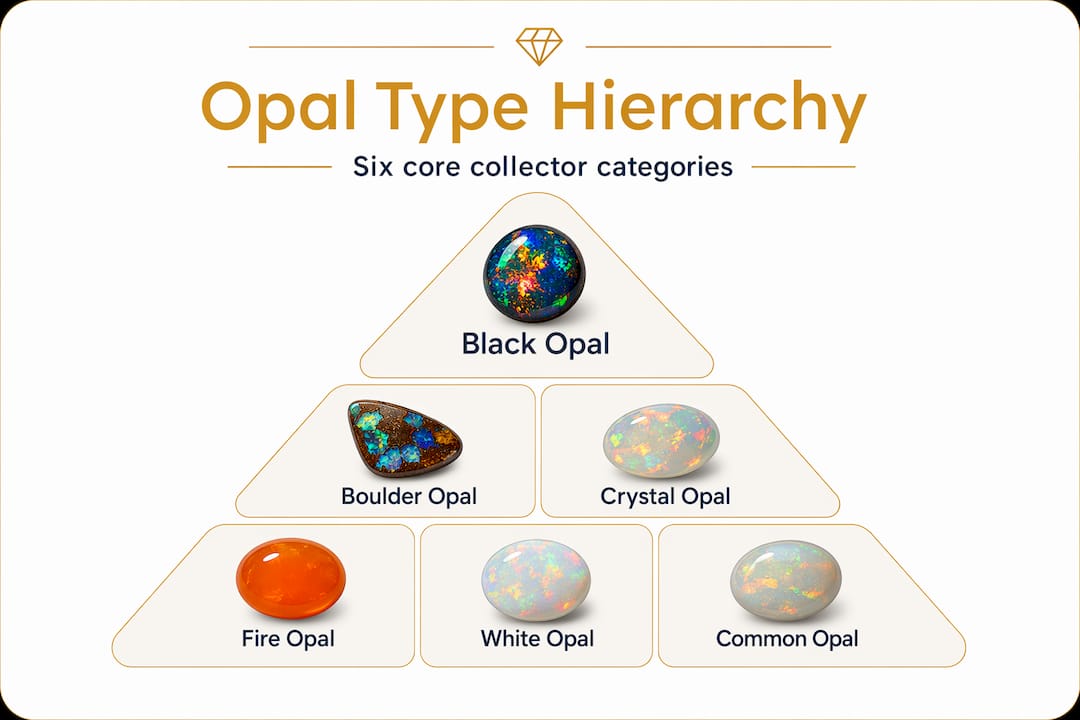
Before a collector can assess quality or compare prices meaningfully, the foundational opal classification guide must be firmly in place. Opal can be divided into several main types based on appearance and formation, with six categories forming the backbone of any serious collector’s vocabulary.
| Opal type | Body tone | Play-of-color | Typical source |
|---|---|---|---|
| Black opal | Dark (N1–N4) | Vivid, high contrast | Lightning Ridge, NSW |
| White opal | Milky, pale | Soft, diffused | Coober Pedy, SA |
| Fire opal | Orange to red | Rare or absent | Mexico |
| Boulder opal | Brown ironstone matrix | Variable, natural patterning | Queensland |
| Crystal opal | Transparent to semi-transparent | Brilliant, floating | Coober Pedy, Lightning Ridge |
| Common opal | Variable | None | Worldwide |
Here is what distinguishes each category at a glance:
- Black opal carries a dark body tone, typically rated N1 to N4 on the gemological scale, which creates extraordinary contrast for any color that dances across its surface.
- White opal has a milky, almost porcelain background. The color play is real but gentler, making these stones more accessible without being less beautiful.
- Fire opal earns its name from its warm orange, yellow, or red body color, which can be stunning even when play-of-color is entirely absent.
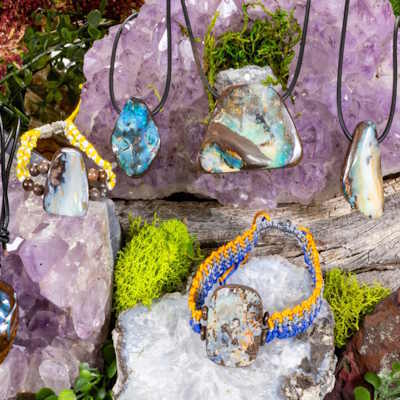
- Boulder opal forms naturally within veins of ironstone host rock. The rock becomes part of the finished gem, not something to remove.
- Crystal opal is prized for its glass-like transparency, which allows color to appear to float inside the stone as if lit from within.
- Common opal, sometimes called “potch,” lacks play-of-color entirely but includes well-known varieties like Peruvian pink opal and moss opal.
Understanding these six categories is the first step toward selecting opal types for jewelry with real confidence, rather than relying purely on instinct or surface appeal.
Distinctive features and sources of popular opal varieties
Once the categories are clear, the real education begins. The finest different opal varieties each carry geological fingerprints and visual characteristics that distinguish them from every other gem on the market.
Black opal is the undisputed prestige stone among collectors. Its darkness is not a deficiency but an amplifier: every flash of red, green, or blue burns brighter against that shadowed background. The finest gem opals come from South Australia, Queensland, and New South Wales, with Lightning Ridge celebrated worldwide for its superb black stones. A red-flash black opal from Lightning Ridge is, for many collectors, the pinnacle of what this gemstone can be.
Fire opal tells a different story. Rather than spectral flashes, it draws the eye with pure, sustained warmth. Mexico’s Querétaro state produces the most prized specimens, ranging from golden yellow to a deep amber-red. Some Mexican fire opals do display play-of-color, and those command considerable premiums.
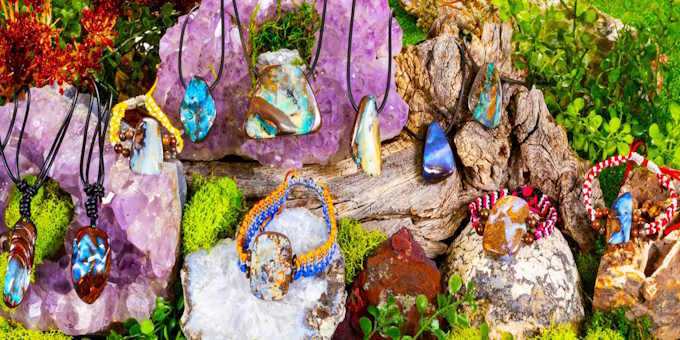
Boulder opal is perhaps the most misunderstood of the popular varieties. Some buyers initially see the brown ironstone matrix as a flaw. Experienced collectors know better. The matrix is geological context made visible, and the natural veining creates patterns no cutter could replicate. Queensland’s Winton and Quilpie regions are the heartland of boulder opal production.
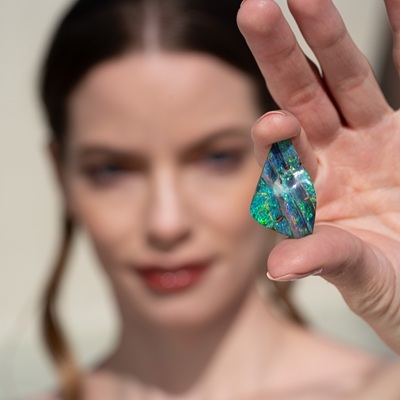
Crystal opal carries high value for exceptional transparency, rated N7 to N9 on the tone scale. The color appears to float in three dimensions, creating an almost supernatural depth. Both Coober Pedy and Lightning Ridge produce fine crystal opals, though each region imparts its own character. A Coober Pedy opal tends toward cooler, more muted tones, while Lightning Ridge opals frequently show stronger color saturation. The crystal opal guide is a useful resource for collectors who want to go deeper into this specific variety’s characteristics and pricing.
Pro Tip: When examining crystal opals, hold the stone against a dark background to reveal the full intensity of internal color. This simple technique lets you assess the stone much closer to how it will actually appear in finished jewelry.
Provenance matters enormously in this market. An opal’s source region does not just affect visual characteristics; it affects liquidity, collector interest, and long-term investment value.
How to identify and value different opal types
Knowing how to identify opals accurately separates a knowledgeable collector from a buyer who relies solely on a seller’s word. The process is methodical and entirely learnable.
Play-of-color, the shifting spectral display that defines precious opals, is caused by light interference within a grid of silica spheres inside the stone. The price depends mostly on the direction and quality of light emanating from those silica structures. When spheres are uniform in size, they produce organized, brilliant color. When they vary, the display becomes diffused.
The four primary value factors, in order of importance, are:
- Brightness of play-of-color: A stone visible and vivid in full daylight rates higher than one that only performs under focused artificial light.
- Pattern uniqueness: Harlequin, rolling flash, and pinfire are established pattern types. Harlequin is extraordinarily rare and commands significant premiums.
- Transparency and body tone: Key value factors include body tone as a core driver of price, especially for black and crystal opals.
- Dominant color: Red and orange flashes are rarest and most valued. Blue and green are more common, and while beautiful, they sit lower on the value hierarchy.
“The shifting, spectral fire inside a fine opal is not decoration. It is the physical record of millions of years of geological precision, made visible as color.”
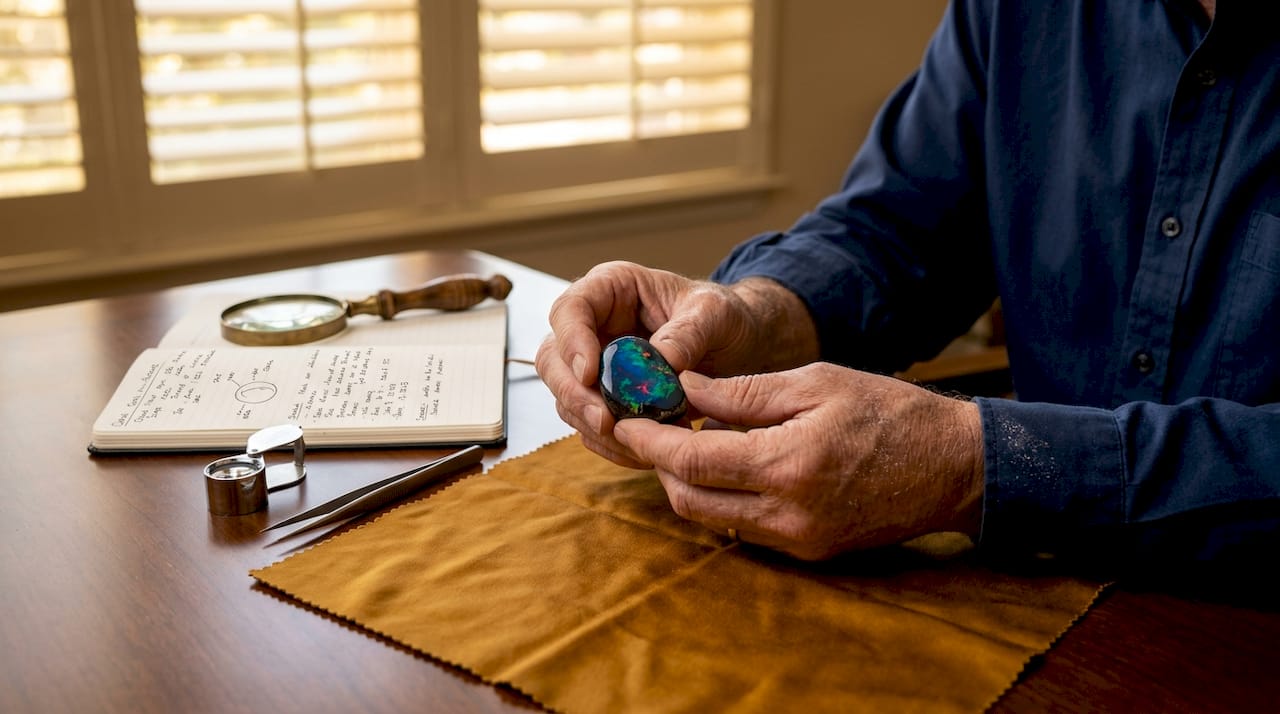
When inspecting stones, use 10x magnification to look for the irregularities that confirm natural origin: tiny inclusions, irregular silica sphere arrangements, and the subtle craze lines that develop over geological time. Artificial light sources at varying angles reveal color range that a single position never will. For practical guidance on the full assessment process, the picking opal jewelry guide offers step-by-step direction. Collectors also benefit from reviewing opal jewelry selection tips before committing to any significant purchase.
Natural versus synthetic opals: what collectors should know
The opal market contains a full spectrum of natural, treated, and entirely man-made stones, and distinguishing between them is non-negotiable for any serious collector. Natural opal forms over millions of years with unique, irregular patterns; synthetic opal is lab-created and typically shows telltale uniformity that nature never produces.
What to watch for when assessing authenticity:
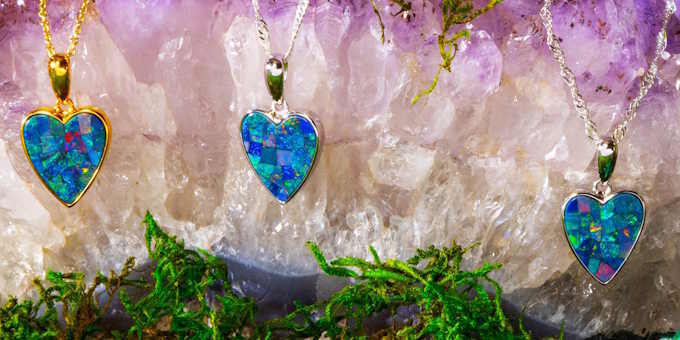
- Pattern regularity: Natural stones show variation across the surface. If the color pattern repeats in a grid-like or mosaic-tiled arrangement, that is a major synthetic red flag.
- Composite stones: Doublets and triplets are real opal slices bonded to a backing (and sometimes capped with clear quartz). They are not fakes, but they must be disclosed and priced accordingly.
- Plastic imitations: Completely artificial, these lack any genuine silica structure. Under magnification, plastic shows no depth and reflects light flatly.
- Certificates of authenticity: For stones above a certain value, always request independent gemological certification. Selecting natural opals from vendors with established miner relationships removes much of this uncertainty at the source.
- Weight test: Natural opal is denser than most plastic imitations. Holding stones of similar size reveals differences experienced collectors notice immediately.
The opal selection process guide outlines a structured approach to this verification process, which is particularly useful when buying outside established retail channels.
Care tips and common pitfalls when collecting opals
Opal’s vulnerability is real, though often overstated in ways that discourage collectors unnecessarily. The key is understanding what actually causes damage. Opal may crack or lose its color if it dries out, as many stones carry residual water within their silica structure, and that hydration is part of their stability.
Practical care guidelines every collector should follow:
- Avoid temperature extremes: Rapid shifts from hot to cold, such as leaving a ring near a stove then plunging hands into ice water, create internal stress that causes crazing.
- Store with moisture: Wrap stones in a lightly damp cloth or store them in a sealed container with a small amount of water if you live in a very dry climate.
- Protect from chemicals: Household cleaners, perfumes, and even some hand lotions degrade opal surfaces over time. Remove opal jewelry before any chemical exposure.
- Mind the hardness: At Mohs 5.5 to 6.5, opal scratches more easily than sapphire or diamond. Store pieces separately to avoid contact with harder stones.
- Inspect regularly: Check settings and stone condition every few months, looking for early signs of drying (a whitish haze) or loose prongs on opal jewelry.
- Avoid prolonged sunlight: UV exposure and heat accelerate moisture loss, particularly in thin-cut stones or doublets.
Pro Tip: If a stone begins to look slightly milky or loses brightness, try placing it in a glass of room-temperature water for 24 hours. This occasionally restores clarity in naturally hydrated opals, particularly white and crystal varieties that have dried mildly.
Why understanding opal varieties transforms your gemstone collecting
The typical opal purchase is driven almost entirely by visual impact. A stone catches the light, colors flare, and the buyer reaches for their wallet. There is nothing wrong with that response, but it is also the mode that leaves collectors repeatedly surprised, disappointed, or simply uninformed about what they actually own.
Knowing opal types and uses at a deeper level changes the entire collecting experience. A collector who recognizes a rolling-flash pattern in a black opal from Lightning Ridge is not just looking at a pretty stone. They are reading geological history, understanding why that particular interplay of color took the form it did, and recognizing why it may be worth three times the price of a similar-looking stone from a less significant source. The significance of opal in jewelry extends far beyond aesthetics into cultural heritage and provenance that directly affects value.
What separates knowledgeable collectors is not just the ability to spot a rare red-flash black opal. It is the discipline to ask where a stone formed, how it was cut, whether it has been treated, and how it should be maintained. Most casual buyers never ask those questions. They also tend to be the buyers who overpay for composites, misidentify common opal as crystal, or let a fine stone degrade through improper storage.
The opal classification guide framework offered here is not a set of trivia points. It is a lens through which every stone becomes more interesting, every purchase becomes more deliberate, and every piece in your collection becomes richer for the context surrounding it.
Explore high-quality opals and expert guidance at Australian Opal Direct
The knowledge you have built here deserves to meet stones worthy of it. At Australian Opal Direct, every opal in the collection is ethically sourced and earth-mined from the regions covered in this guide: Lightning Ridge, Coober Pedy, and Queensland. Direct relationships with miners mean authentic provenance, no intermediary markups, and detailed stone descriptions that speak to the characteristics serious collectors actually care about.

Whether you are searching for a vivid black opal, a luminous crystal stone, or a boulder opal with its remarkable ironstone character, the collection spans Australia’s finest varieties. Expert guidance on selection and care is part of the experience, and for those interested in how Australian gemstones fit into the broader tradition of regional artistry, regional Australian gifts offer fascinating context for understanding the cultural value embedded in stones sourced from this landscape. Free shipping, complimentary insurance, and a 90-day warranty back every purchase.
Frequently asked questions
What is the rarest type of opal?
The rarest opal type is black opal displaying a strong red play-of-color, valued for its vivid contrast and extreme scarcity, particularly when sourced from Lightning Ridge.
How can I tell if an opal is synthetic or natural?
Natural opals show irregular, varied patterns and inclusions under magnification, while synthetic opals typically display overly uniform, repeating color grids that nature does not produce.
What factors most affect an opal’s value?
Play-of-color brightness, pattern uniqueness, transparency, and body tone are the primary drivers of value, with red-dominant color patterns and dark body tones commanding the highest prices.
How should I care for my opal jewelry?
Avoid sudden temperature shifts and chemical exposure, store opals with light moisture in dry climates, and handle them gently given their relative softness. Stones that dry out can crack or lose brilliance, so consistent care preserves both beauty and value.
Recommended
- Complete Guide to Differences in Opal Types - Australian Opal Direct
- Master must-know opal terminology for confident collecting - Australian Opal Direct
- Master opal collector terminology: 5 essential terms - Australian Opal Direct
- Choosing the Perfect Opal: A Collector’s Guide to Value - Australian Opal Direct