Laser Welding vs Unset and Reset: Australian Opal Ring Resizing
Posted by AOD on 6th Sep 2026
Laser Welding vs Unset and Reset: Australian Opal Ring Resizing
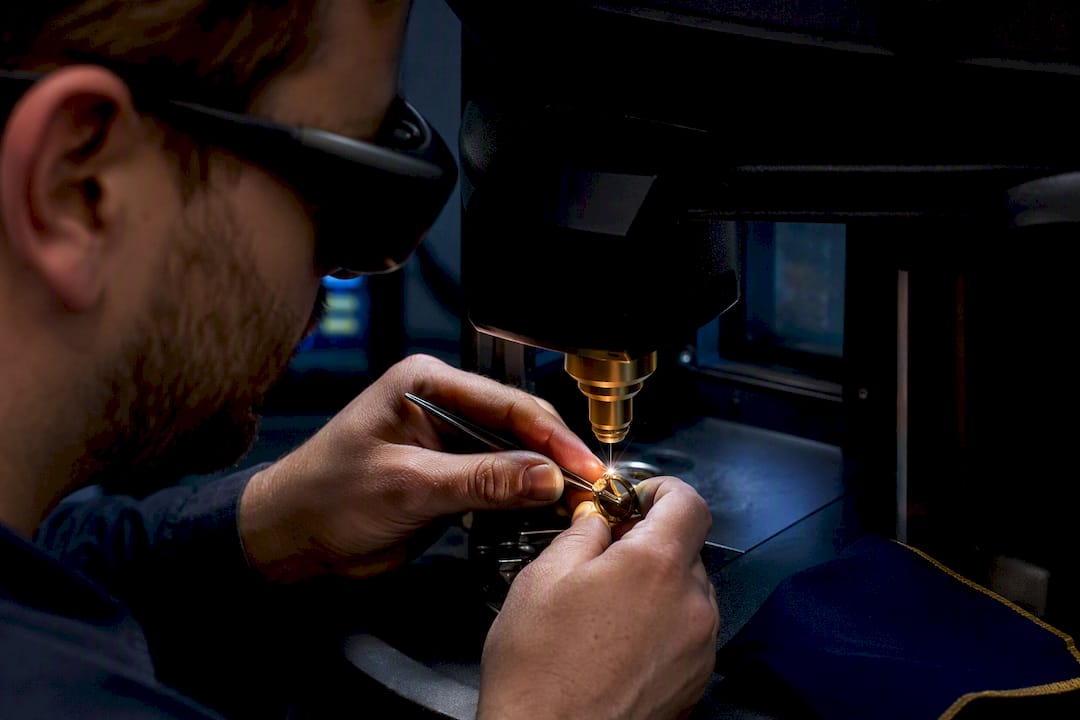
Yes, an opal ring can be resized, but rarely the way a diamond band can. A jeweler must weigh heat, pressure, and the stone’s construction before touching the shank. Minor adjustments often work with careful heat control or laser welding; larger changes usually mean unsetting the opal first. Expect specialist bench work and a higher price than a plain gold band would cost.
TL;DR:
- Small resizing adjustments can often be done with laser welding, but larger changes typically require removing and resetting the opal to avoid damage.
- The safety of resizing depends on the opal’s construction type and setting style, with solid opals and prong settings being the lowest risk.
- Resizing costs vary from under a couple of hundred dollars for minor tweaks to several hundred dollars for full resets or shank replacements, with turnaround times from days to weeks.
- Asking about the jeweler’s experience with laser welding and requesting itemized quotes help prevent unexpected damage or charges.
- If the risk seems too high, non-invasive options like ring guards or sizing beads can provide a reversible fit adjustment.
Table of Contents
- When Opal Ring Resizing Is Possible (And When It Isn’t)
- What Are the Main Methods for Resizing an Opal Ring?
- How Do Opal Type and Setting Style Change the Risk?
- What Are the Biggest Risks, and How Do Jewelers Prevent Them?
- How Much Does Opal Ring Resizing Cost, and How Long Does It Take?
- What Should You Ask a Jeweler Before Resizing an Opal Ring?
- Are There Safer Alternatives to Resizing an Opal Ring?
- How a Bench Jeweler Actually Assesses an Opal Ring
- Preservation Versus Wearability: A Publisher’s View
- How Australian Opal Direct Approaches Opal Ring Resizing
- Further Reading on Opal Care and Setting
When Opal Ring Resizing Is Possible (And When It Isn’t)
Whether resizing works depends on three things: what the opal is made of, how it’s set, and how far the size needs to move.
A solid opal, cut from a single piece of natural stone, tolerates careful bench work reasonably well because there’s no glue layer or backing to destabilize. A doublet (opal sliced thin and glued to a backing) or a triplet (that same thin slice capped with a protective quartz dome) behaves differently. The adhesive layer softens under heat and can shift or discolor, so jewelers treat these constructions with extra caution.
Setting style matters just as much:
- Prong and open-crown settings allow the most flexibility because the stone isn’t locked against surrounding metal.
- Bezel settings wrap metal directly around the stone’s edge, so any shank alteration risks changing that pressure.
- Channel and inlay settings often need the piece rebuilt rather than adjusted.
- Halo designs complicate things further since resizing the base can throw off the alignment of surrounding accent stones.
As a rule, a small size change is generally the safe ceiling for most opal rings. Jump beyond that and the stone typically has to come out.
What Are the Main Methods for Resizing an Opal Ring?
Jewelers reach for different tools depending on the stone and the size change required.
- Laser welding. A concentrated beam joins metal at the shank with minimal heat transfer to the gem, which makes it the preferred method for opal ring size adjustment on fragile or heat-sensitive stones. Shops without this equipment tend to unset the stone instead, since a traditional torch heats the whole band.
- Unset and reset. The opal comes out entirely, the shank gets resized with standard torch soldering, and the stone goes back in. This is the safest route for delicate or antique opals, but it adds labor hours and cost because the setting itself often needs rebuilding.
- Cutting and adding metal. For larger size increases, a jeweler cuts the shank and inserts a matching metal section. Viable on plain bands; riskier near a bezel because it can shift the stone’s seating.
- Re-shanking. The entire band is rebuilt around the existing setting. Common for vintage or heavily worn rings where the metal itself is too thin or fatigued to alter safely.
Pro Tip: Ask specifically whether the shop has laser welding on-site. A “yes” usually signals a bench that handles opal work regularly, not just occasionally.
How Do Opal Type and Setting Style Change the Risk?
Not every opal ring carries the same risk profile, and knowing which category yours falls into helps you ask the right questions before handing it over.
- Solid opal in a prong setting is the lowest-risk combination. The stone is naturally more stable, and prongs give a jeweler room to work without disturbing the gem.
- Solid opal in a bezel raises the stakes. Bezel and inlay settings often require removing the stone or rebuilding the bezel entirely, since shifting metal pressure during resizing can fracture the opal.
- Doublets and triplets introduce a second variable: the glue bond. These composite stones are frequently adhered into their settings, which complicates removal and raises the chance of damage during any bench work.
- Signs you’re dealing with a composite stone: a visible seam line around the stone’s edge, a flat back rather than a domed natural cut, or a slightly plastic-looking dome on top (that’s the quartz cap on a triplet).
If you’re unsure which type you own, a jeweler can usually tell under a loupe in seconds. It’s worth knowing before you ask for a quote, since the answer changes the entire approach.
What Are the Biggest Risks, and How Do Jewelers Prevent Them?
Opals rank around 5.5 to 6.5 on the Mohs hardness scale, noticeably softer than quartz or diamond. That softness is the root of nearly every resizing risk.
- Thermal shock: rapid heating or cooling can crack an opal outright. Laser welding limits this because it directs heat to the metal joint rather than the whole ring.
- Pressure changes: bezel settings that flex even slightly during resizing can put stress on the stone’s edges, sometimes producing hairline fractures that show up weeks later.
- Mechanical chipping: because opal is soft, filing, buffing, or clamping too aggressively near the stone can chip it.
A competent bench addresses this by removing the stone whenever there’s real doubt, packing it securely during the work, and assigning the job to a technician experienced specifically with opal, not just general jewelry repair. Ask to see examples of previous laser-welded opal setting work before you commit, along with before-and-after photos from a similar job. If a shop can’t produce either, that’s worth noting. For more on how fractures develop over time, see why opals crack.
How Much Does Opal Ring Resizing Cost, and How Long Does It Take?
Opal ring resizing cost typically runs higher than a plain band because of the extra caution and, often, extra labor involved. Sample job pricing from practitioner records shows small resizes typically costing under a couple hundred dollars, while complex restorations involving a full reset or re-shank can cost noticeably more.
- Minor resize (laser weld, stone stays in place): the least expensive option, when it’s viable.
- Unset and reset: mid-range pricing, reflecting the extra time to remove, protect, and reseat the stone.
- Re-shank or full rebuild: the highest cost tier, especially on vintage pieces where matching the original metalwork takes skill.
Turnaround time varies with complexity. A straightforward laser weld might take a few days; a re-shank or a job requiring a matching opal for a damaged stone can stretch to several weeks. If your ring carries insurance or a warranty, check the terms before work begins. Some coverage requires the original jeweler or an approved specialist to perform the resize, or the warranty voids.
What Should You Ask a Jeweler Before Resizing an Opal Ring?
- Do you use laser welding, and can I see examples of past opal work? This tells you whether the shop routinely handles heat-sensitive stones.
- Will the stone be removed, and how will it be protected during that process? A vague answer here is a warning sign.
- Can I get an itemized quote separating stone removal, resetting, and shank labor? Bench-level best practice keeps these costs distinct, which also protects you if something is disputed later.
- Do you have references or reviews specific to opal or colored-stone resizing, not just general ring sizing?
Be wary of blanket guarantees with no specifics, and be skeptical of a suspiciously low fixed price quoted for a complex vintage or triplet-set piece before the jeweler has even examined it in person.
Are There Safer Alternatives to Resizing an Opal Ring?
When the risk of bench work feels too high, or the stone is simply too fragile to touch, reversible options exist.
- Ring guards: small metal clips or coils that snug up a loose band without any alteration to the ring itself.
- Sizing beads: tiny metal balls soldered inside the band to reduce the interior diameter slightly. These work well for small adjustments but do involve some heat near the shank, so they’re not entirely risk-free on delicate settings.
- Removable inserts: silicone or metal strips that adjust fit without touching the metal at all.
Pro Tip: If a ring is a family heirloom you rarely wear, a guard or insert is often the smarter choice; you preserve the original piece exactly as it is rather than risking bench work on a stone that can’t be replaced.
When the fit problem is permanent, rather than seasonal swelling or a hand-me-down mismatch, replacing the shank through custom remounting tends to serve you better long term than repeated temporary fixes.
How a Bench Jeweler Actually Assesses an Opal Ring
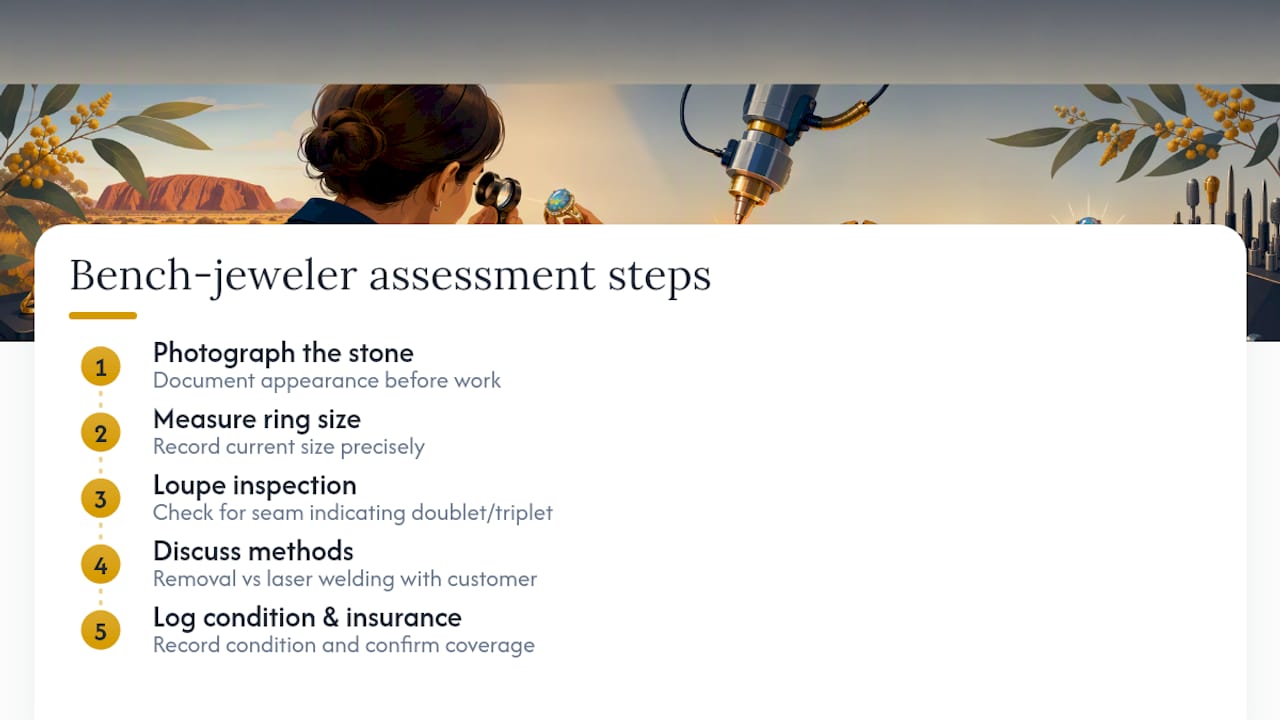
A sound workflow starts before any tool touches the ring: photograph the stone, measure the current size, and check under a loupe for a seam line that signals a doublet or triplet. From there, the jeweler and customer discuss whether removal or laser welding fits the specific setting, log the ring’s condition, confirm insurance coverage, and only then proceed with the agreed method. This sequence, drawn from established opal ring sizing workflows, keeps both the stone and the customer protected at every step.
Preservation Versus Wearability: A Publisher’s View
Some opal rings deserve to be worn every day; others deserve to be left exactly as they are. An heirloom with a fragile, irreplaceable triplet might be better preserved than resized. But most rings people actually want to wear can be reset or remounted in a way that keeps the original stone’s character intact while giving it a sturdier, better-fitting foundation.
— Renee
How Australian Opal Direct Approaches Opal Ring Resizing
Opal resizing should be handled with an assessment first, not a guess. Sending photos of the ring, current size and target size, and stone type information helps determine the appropriate resizing method and timeline.

Custom remounting is also worth considering if your existing setting is limiting your options. Rebuilding around a beloved opal in a new bezel or prong design can solve fit problems permanently while giving the stone a setting built for its specific shape. If you’re ready to move forward, request a resizing assessment and get a quote broken down by stone handling and shank labor, so you know exactly what you’re paying for before any bench work begins.
Further Reading on Opal Care and Setting
For more on protecting an opal’s surface after resizing, see cleaning opal jewelry safely and how opals are set in gold.








