Opal Ring Sizing Workflow for Perfect Custom Fit
Posted by AOD on 31st Jan 2026
Opal Ring Sizing Workflow for Perfect Custom Fit
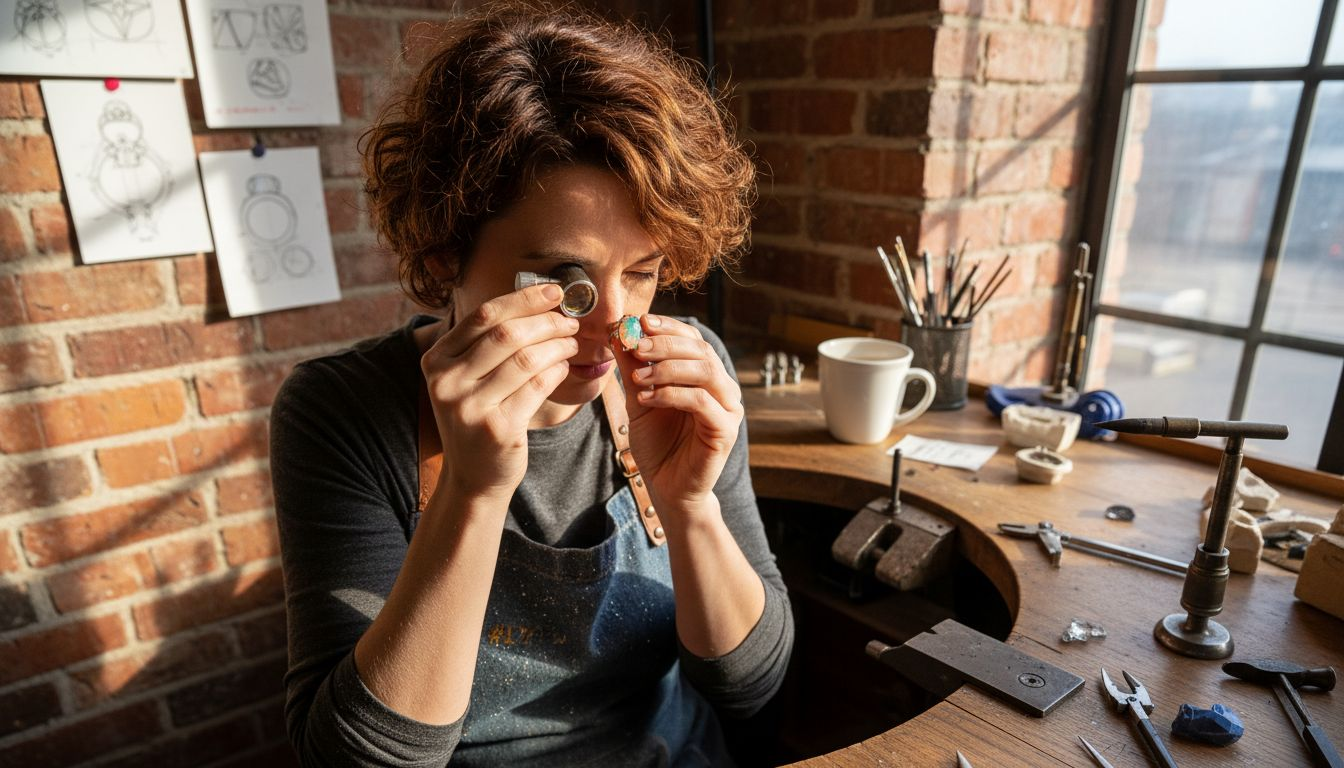
Sizing a custom opal ring is more complex than it first appears. Jewelry designers and ethical gemstone buyers in Australia understand that a flawless fit depends on precision, comfort, and respect for the opal’s unique characteristics. Professional ring sizing tools calibrated to industry standards help achieve accuracy, while choosing the right setting and metal ensures both authenticity and lasting craftsmanship for your bespoke piece.
Table of Contents
- Step 1: Gather Precise Finger And Design Measurements
- Step 2: Select Suitable Setting For Your Opal Gemstone
- Step 3: Customize Ring Dimensions To Match Chosen Opal
- Step 4: Verify Fit And Comfort With Test Sizing Tools
- Step 5: Finalize And Check Craftsmanship For Quality Assurance
Quick Summary
| Key Insight | Explanation |
|---|---|
| 1. Accurate Ring Measurements Matter | Ensure precise finger and ring size measurements for comfort and security. Use professional tools or consult a jeweler for best results. |
| 2. Select the Right Setting for Opal | Choose a setting that enhances your opal’s beauty and provides protection, considering both aesthetics and lifestyle. |
| 3. Customize Dimensions Based on Opal | Tailor your ring’s dimensions according to your opal’s size and shape for optimal support and stunning presentation. |
| 4. Verify Fit with Testing Tools | Use various professional sizing tools and techniques to ensure your ring fits comfortably and securely in all situations. |
| 5. Quality Assurance is Crucial | Conduct detailed inspections to guarantee craftsmanship, ensuring lasting beauty and durability for your custom opal ring. |
Step 1: Gather precise finger and design measurements
Accurately capturing your ring measurements is the foundation for creating a perfectly fitted custom opal ring. This crucial first step ensures your final piece will be comfortable, secure, and beautifully tailored to your unique specifications.
To get started, you’ll need several tools and techniques to capture precise measurements. Here are the recommended methods for determining your ideal ring size:
- Use a professional ring sizer tool from a local jeweler
- Measure an existing ring that fits comfortably using a ring diameter gauge
- Wrap a thin string or paper strip around your finger and mark the overlapping point
- Visit a professional jeweler for a precise, calibrated measurement
When measuring, consider these critical factors that can impact your ring size:
- Measure your finger at room temperature
- Measure multiple times throughout the day
- Account for knuckle width and potential finger swelling
- Consider the specific design of your intended opal ring
Professional jewelers recommend measuring your finger at different times to account for natural size variations.
Beyond sizing, you’ll want to document specific design preferences for your custom opal ring. Sketch or photograph inspiration pieces, note your preferred metal type (gold, silver, platinum), and consider the opal’s desired cut and setting style.
Pro tip: Always measure your finger at the end of the day when it’s slightly larger to ensure the most comfortable and consistent ring fit.
Step 2: Select suitable setting for your opal gemstone
Choosing the right setting is critical for showcasing your opal’s unique beauty while ensuring its long-term protection. Your selection will dramatically impact how the gemstone appears and performs in daily wear.
Different opal types require specific setting considerations. Black opals, white opals, and boulder opals each have distinctive characteristics that influence their ideal mounting style. Consider these key factors when selecting your opal’s setting:
- Match the metal tone to the opal’s color palette
- Protect the opal’s delicate surface with secure prong or bezel settings
- Select a setting that complements the opal’s natural pattern
- Consider your lifestyle and potential wear and tear
Metal choices play a significant role in highlighting your opal’s unique qualities. Opal Jewelry Selection Guide suggests that warm-toned opals like yellow or orange pair beautifully with rose gold, while cooler blue and green opals shine in white gold or platinum settings.
Below is a quick reference matrix to help match opal types with the optimal metal and setting styles:
| Opal Type | Best Metal Choice | Ideal Setting Style |
|---|---|---|
| Black Opal | White gold, platinum | Secure bezel for protection |
| White Opal | Yellow gold, silver | Prong for color enhancement |
| Boulder Opal | Rose gold, platinum | Bezel-prong for durability |
This comparison table outlines how each choice can maximize both style and security for your custom ring.
Selecting the right setting is more than aesthetics – it’s about creating a harmonious balance between protection and visual appeal.
Your setting should not only showcase the opal’s natural beauty but also provide robust protection against daily impacts. Bezel settings offer maximum protection by surrounding the stone’s entire perimeter, while prong settings allow more light to interact with the opal, enhancing its play of color.
Pro tip: For opals with high value or delicate structures, consider consulting a professional jeweler who specializes in custom opal settings to ensure optimal protection and presentation.
Step 3: Customize ring dimensions to match chosen opal
Customizing your ring’s dimensions is a delicate art that requires careful consideration of your specific opal’s unique characteristics. The goal is to create a setting that not only showcases your gemstone’s natural beauty but also provides optimal support and protection.
To achieve the perfect fit, you’ll need to carefully evaluate several critical dimensions:
- Opal width and length for precise setting design
- Stone height and depth to determine prong or bezel clearance
- Weight distribution to ensure balanced ring structure
- Curvature of the opal for seamless metal integration
How to Design Custom Opal Rings emphasizes the importance of matching your ring’s geometry to the specific contours of your chosen opal, ensuring a harmonious and secure final design.
The perfect ring setting transforms a beautiful opal from a loose stone into a wearable work of art.
Professional jewelers typically use advanced measurement techniques to create precise ring dimensions. This involves using digital calipers, 3D modeling software, and detailed sketches to map out every millimeter of your custom design. The process requires considering not just the opal’s physical dimensions, but also its optical properties and potential vulnerability to damage.
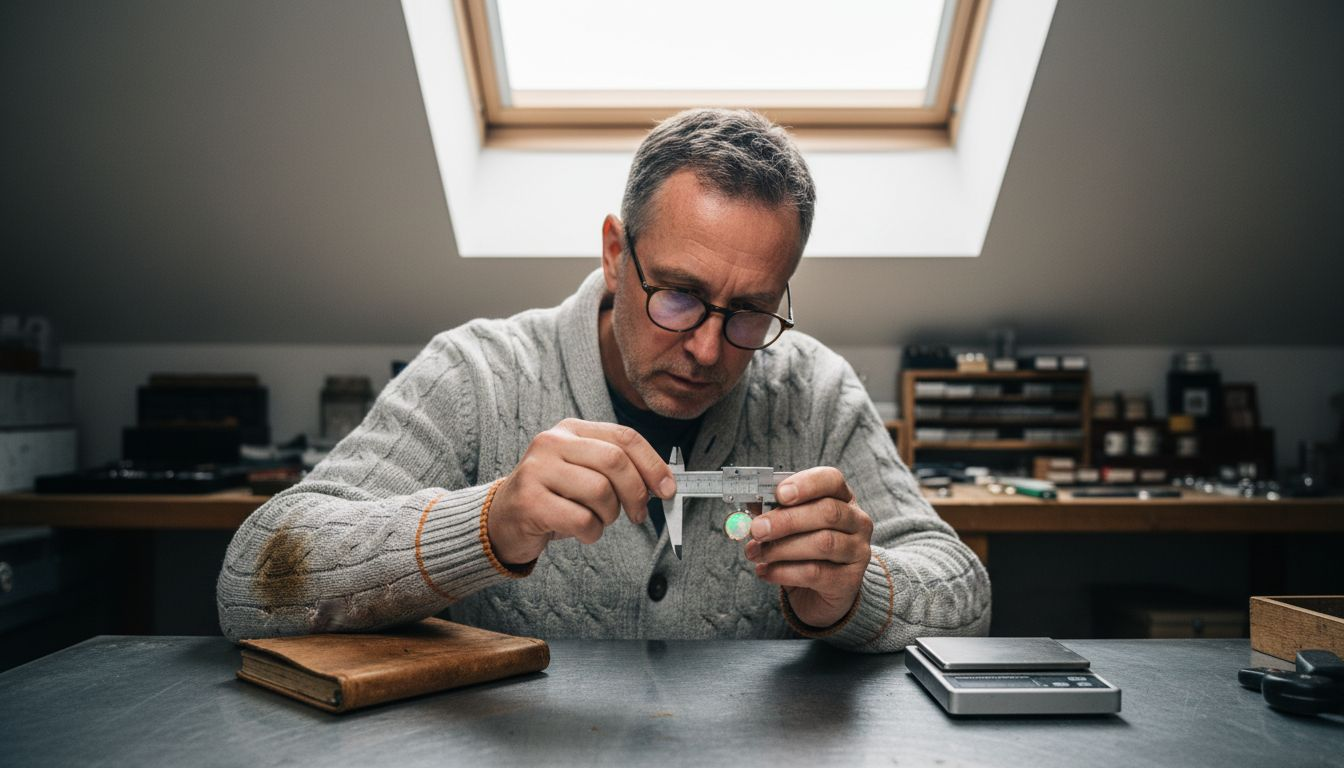
Your ring’s final dimensions should account for practical wear considerations, such as how the ring will interact with daily activities and potential environmental stresses. This means creating slight tolerances in the setting to accommodate natural variations in stone and metal.
Pro tip: Always request a digital or physical prototype of your ring design to verify dimensional accuracy before final production.
Step 4: Verify fit and comfort with test sizing tools
Validating your opal ring’s fit is a crucial final step that ensures both aesthetic perfection and long-term wearing comfort. The right sizing goes beyond simple measurements, requiring nuanced testing and careful evaluation of how the ring interacts with your unique finger shape.
To thoroughly test your ring’s fit, you’ll want to employ multiple professional sizing techniques:
- Use metal ring sizers calibrated to professional standards
- Test ring movement over your knuckle
- Check for slight resistance during sliding
- Evaluate comfort during different hand positions
- Assess ring stability without excessive looseness
How to Measure Ring Size at Home recommends measuring your finger at different times of day, recognizing that finger size can fluctuate with temperature and activity levels.
A perfectly sized ring should feel like a natural extension of your hand – noticeable when you want it to be, but never restrictive or uncomfortable.
Professional jewelers typically use precision tools with calibration accuracy within ±0.01mm to ensure exact sizing. These tools account for subtle variations in finger shape, accounting for knuckle size, potential swelling, and individual hand characteristics.
Consider testing your ring’s fit under various conditions: during physical activity, after exercise, in different temperatures, and at various times of day. This comprehensive approach helps ensure your custom opal ring remains comfortable in any situation.
Pro tip: Request a temporary sizing band or adjustable prototype to road-test your ring’s comfort before final production.
Step 5: Finalize and check craftsmanship for quality assurance
The final stage of creating your custom opal ring is a meticulous process of quality verification that transforms your design from concept to exceptional piece of jewelry. This critical review ensures every detail meets the highest standards of craftsmanship and aesthetic precision.
Your quality assurance checklist should encompass multiple essential inspection points:
- Opal stone positioning for optimal light interaction
- Metal setting integrity and secure stone placement
- Surface finish and polish quality
- Structural symmetry of the ring design
- Metal purity and hallmarking
How to Design Custom Opal Rings emphasizes the importance of professional-level scrutiny during the final crafting stages, ensuring your unique piece meets exacting standards.
A truly exceptional ring is not just created, but meticulously refined through expert attention to every minute detail.
Professional jewelers employ specialized tools like precision loupes, digital microscopes, and calibrated measuring instruments to examine your ring from multiple perspectives. They’ll assess not just the visible elements, but also the subtle structural nuances that distinguish high-quality craftsmanship.
For clarity, here’s a summary of essential quality checks for custom opal rings and their impact on ring longevity:
| Inspection Aspect | Why It Matters | Impact on Longevity |
|---|---|---|
| Stone positioning | Ensures optimal light play | Prevents uneven wear |
| Metal finish quality | Maintains aesthetic value | Reduces corrosion risk |
| Structural symmetry | Confirms balanced fit | Avoids structural failure |
| Metal purity | Confirms authenticity | Ensures durability |
These checkpoints help ensure your finished ring is both beautiful and built to last.
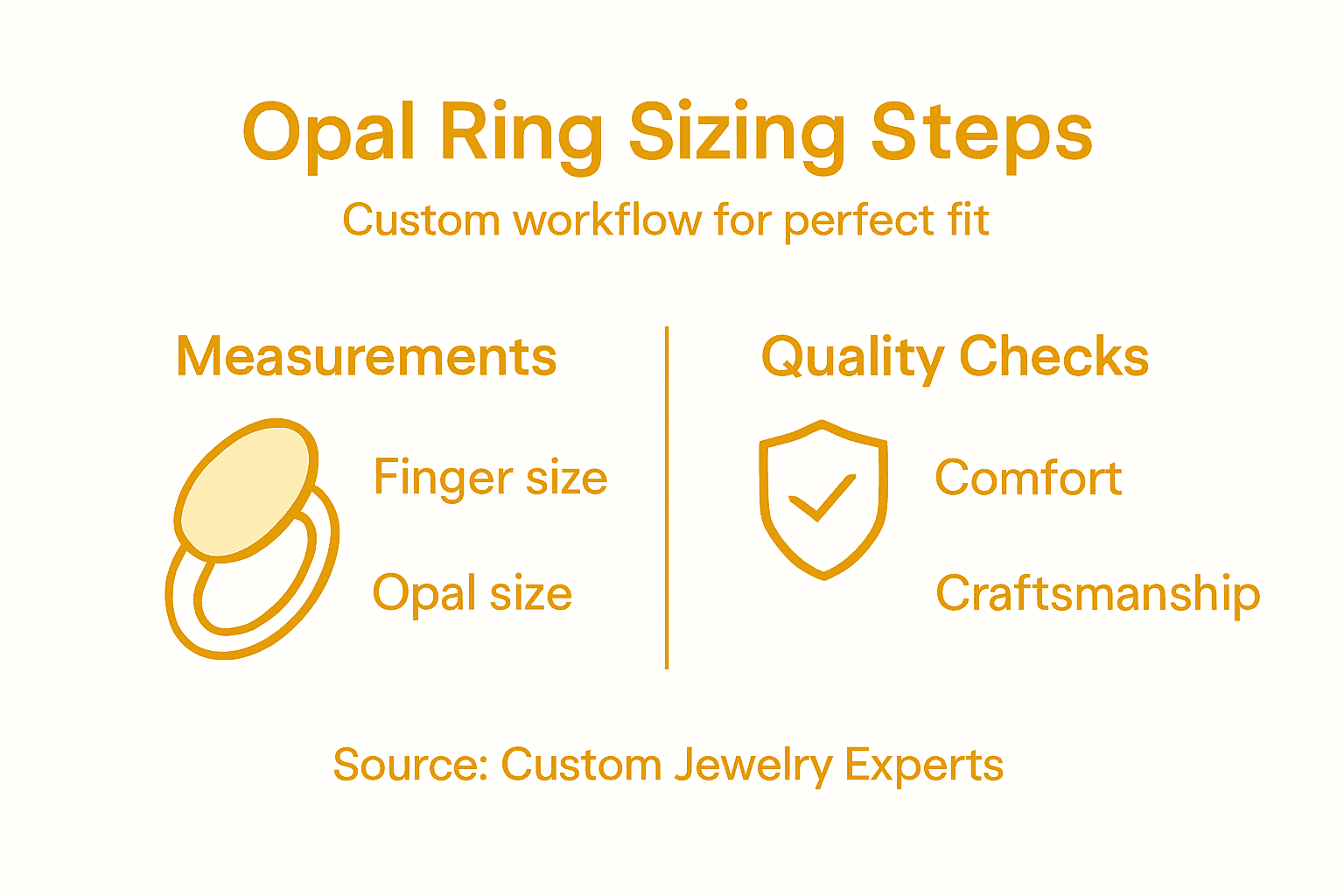
Beyond technical inspection, the final review involves evaluating the emotional and artistic resonance of the piece. This means confirming that the ring not only meets technical specifications but also captures the intended design vision and personal significance.
Pro tip: Request a comprehensive digital and physical inspection report that documents each aspect of your custom opal ring’s craftsmanship.
Achieve the Perfect Custom Opal Ring Fit with Expert Guidance
Ensuring your custom opal ring fits flawlessly and balances beauty with comfort can be a challenging journey. This article highlights key steps like gathering precise measurements, selecting the ideal setting, customizing ring dimensions, verifying fit with professional sizing tools, and finalizing craftsmanship for quality assurance. You want your unique Australian opal ring to reflect your style while guaranteeing durability and comfort in every wear.
Australian Opal Direct specializes in authentic Australian opals sourced ethically from iconic regions such as Lightning Ridge and Coober Pedy. We offer expertly crafted, custom-designed opal rings made with genuine materials like gold and silver to match your exact specifications. Our commitment to quality is backed by direct relationships with miners, providing you exceptional craftsmanship and competitive pricing without middlemen.

Discover our curated collection or create your own custom design to perfectly fit your finger and lifestyle. Visit Australian Opal Direct to explore your options and experience the rare beauty of earth-mined opals combined with expert craftsmanship. Don’t settle for less when it comes to comfort and style. Start your journey to a flawlessly fitted custom opal ring today by learning more at How to Design Custom Opal Rings and Measure Ring Size at Home.
Frequently Asked Questions
How can I accurately measure my finger for an opal ring?
Start by using a professional ring sizer or measuring an existing ring that fits comfortably. You can also wrap a thin string around your finger, marking where it overlaps, then measure that length.
What factors should I consider when choosing the setting for my opal ring?
Consider the color of your opal and match it with the appropriate metal tone to enhance its beauty. Additionally, think about your lifestyle to select a setting that offers both aesthetics and durability, such as a secure bezel setting for delicate opals.
Why is it important to document my design preferences for a custom opal ring?
Documenting your design preferences, including metal type and opal cut, helps ensure the final piece aligns with your vision. Create sketches or gather images of inspiration to guide the customization process.
How do I verify the fit and comfort of my opal ring design?
To verify the fit, test the ring’s movement over your knuckle and check for slight resistance while sliding it on. Ensure it feels comfortable in various hand positions and maintains stability without excessive looseness.
What should I include in my quality assurance checklist for a custom opal ring?
Your checklist should include checking the opal’s positioning, the integrity of the metal setting, finish quality, structural symmetry, and metal purity. Conduct these inspections to ensure both the aesthetic and longevity of the ring.
When is the best time to measure my finger for the ring size?
Measure your finger at the end of the day when your fingers are slightly larger due to natural swelling. Consider taking measurements at various times to account for any fluctuations throughout the day.