Opal Ring Durability: Solid and Boulder Opals in Bezels Last
Posted by AOD on 14th Sep 2026
Opal Ring Durability: Solid and Boulder Opals in Bezels Last
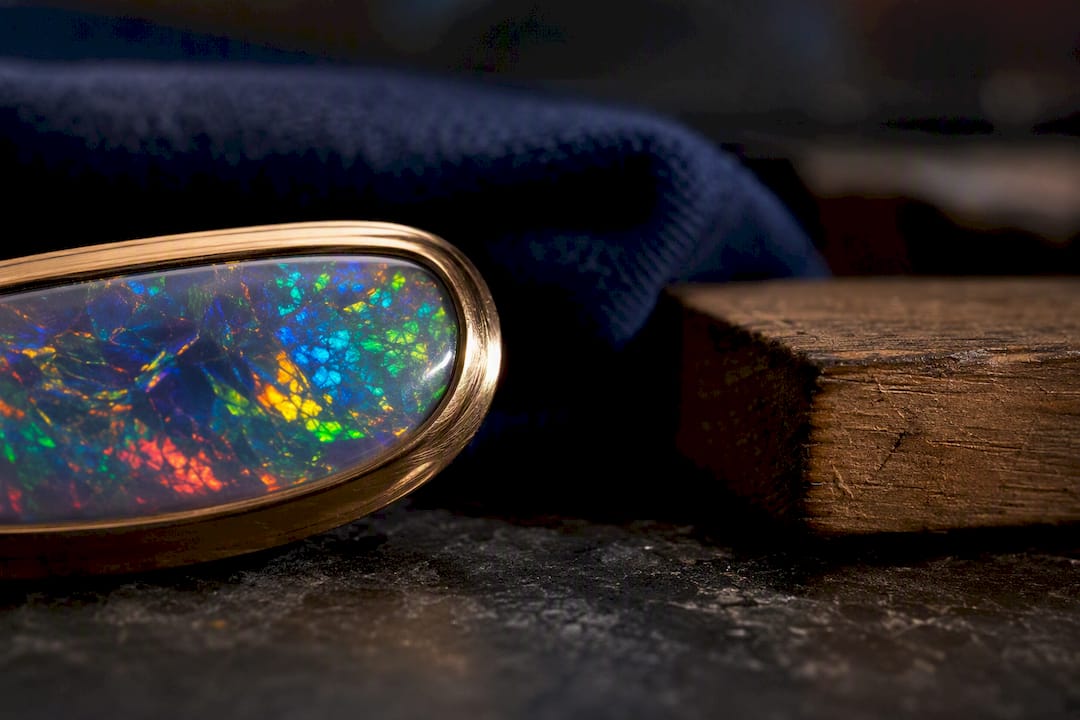
An opal ring can absolutely stand up to daily wear or serve as an engagement ring, but only under specific conditions. Solid or boulder opal in a full or low-profile bezel setting, cared for with warm soapy water and kept away from heat and knocks, will outlast decades of regular wear. A thin doublet in an exposed prong setting, worn while gardening or washing dishes, will not. The GIA’s own guidance treats opal’s durability as a question of type, setting, and habit, not a fixed verdict on the gem itself.
TL;DR:
- Solid and boulder opals in full or low-profile bezel settings are the most durable options for daily or long-term wear.
- The resilience of an opal depends heavily on construction, setting, and care habits, rather than just its mineral type or hardness.
- Assembled opal types like doublets and triplets are more vulnerable to water, impacts, and crazing, limiting their suitability for everyday or engagement use.
- Protecting opal jewelry with protective settings such as full bezels and deep seats significantly reduces the risk of damage.
- Proper cleaning with warm soapy water, avoiding ultrasonic or chemical cleaners, and cautious storage can extend an opal ring’s lifespan.
Table of Contents
- What Determines Opal Ring Durability?
- Which Opal Types Hold Up Best in a Ring?
- Which Settings Protect Opal Rings Best?
- How Should You Clean and Care for an Opal Ring?
- Is an Opal Ring Right for Daily or Engagement Wear?
- What Should You Ask Before Buying an Opal Ring?
- Who Wrote This Guide?
- What Actually Matters Most for Opal Ring Longevity
- Find Protected-Setting Opal Rings Built for Real Life
- Sources for Further Reading
- FAQ
What Determines Opal Ring Durability?
Opal’s Mohs hardness runs from about 5 to 6.5, softer than sapphire (9) or even quartz (7). That puts it below the hardness of household dust and grit, which often sits around 7 on the same scale. Every time an opal ring brushes against a countertop or slides into a pocket with keys, it is being lightly sanded by material harder than itself.
Hardness only tells part of the story. The GIA describes opal’s toughness, its resistance to chipping and cracking under impact, as “very poor to fair.” That distinction matters more than most buyers realize: a gem can resist scratching reasonably well and still shatter from a single sharp knock against a doorframe.
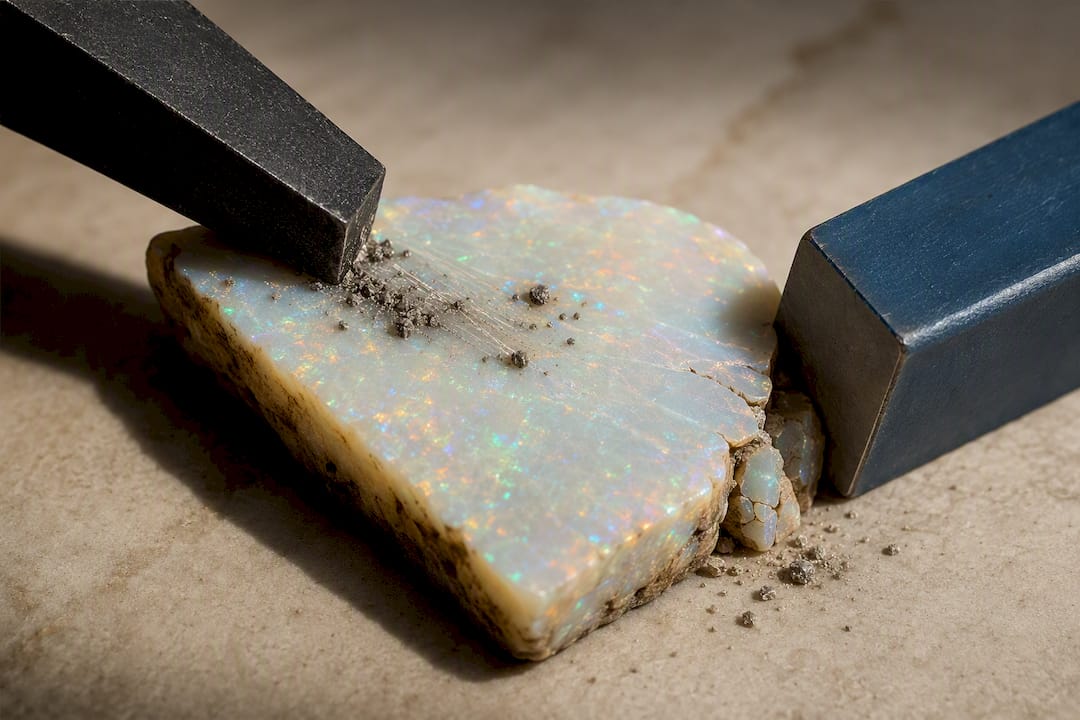
Then there’s water. Gem-quality opal typically holds somewhere between 6% and 10% water locked inside its silica structure. That moisture is part of what creates opal’s shifting color, but it also makes the stone sensitive to heat and rapid temperature swings. When an opal loses water too quickly, tiny internal fracture lines called crazing can form.
Statistic Callout: Opal’s Mohs hardness sits at 5 to 6.5, and gem-quality stones commonly contain 6% to 10% water by weight. Both figures explain why opal behaves so differently from harder, drier gemstones under everyday conditions.
Crazing is not something you fix with a trip to the jeweler. Once those fracture lines form, the damage to the stone’s structure and its play-of-color is generally permanent. That’s the core reason prevention dominates every piece of opal care advice you’ll read:
- Hardness of 5 to 6.5 leaves opal vulnerable to scratching from dust and grit.
- Toughness rated “very poor to fair” means impacts are riskier than scratches.
- Water content of roughly 6 to 10 percent makes the stone heat sensitive.
- Crazing from rapid drying or heat exposure cannot be reversed at home.
Which Opal Types Hold Up Best in a Ring?
Not all opal is built the same, and construction affects durability as much as the raw material does. Understanding the difference is the single most useful thing a buyer can do before choosing a ring.
- Solid opal is cut entirely from natural material with nothing bonded to it. It’s the most durable option and the easiest to repair or reset over a lifetime.
- Boulder opal keeps a thin layer of opal attached to its natural ironstone backing. That backing adds real strength, often rivaling solid opal for daily wear.
- Doublets pair a thin opal slice with a dark backing, usually black onyx or glass, held together with adhesive. They look striking and cost less, but the glue layer is a weak point.
- Triplets add a clear cap, usually quartz or glass, over a doublet for extra protection against scratching. That cap helps with surface durability but does nothing for the glue bond underneath.
- Hydrophane opal, common in Ethiopian material, absorbs liquid readily and can change transparency or even craze if it dries out unevenly after getting wet.
For everyday or engagement wear, solid and boulder opal are the safer choices. Doublets and triplets can work for occasional wear, pendants, or earrings, where moisture and impact exposure are lower. If you’re evaluating a stone, ask directly whether it’s assembled. A thin, perfectly uniform color layer sitting atop a dark base with a visible seam line is usually your tell.
Which Settings Protect Opal Rings Best?
Setting choice can matter more than the opal itself. A GIA buyer’s guide makes this point directly: durability depends on type, origin, and care, not hardness alone, and protective settings are a recommended standard for opal rings.
A full bezel, where metal wraps completely around the stone’s edge, is the gold standard. It shields the girdle from side impacts and spreads pressure evenly across the setting. A low-profile bezel sits the stone closer to the finger, reducing how far it protrudes and how much leverage a knock can generate against it. Solid metal backing behind the stone blocks moisture and adds rigidity. Halo settings with a raised protective rim and cage-style designs offer similar shielding while allowing more light to reach the stone.
Prongs are not automatically wrong, but they concentrate pressure on a few narrow points rather than distributing it. Prongs work reasonably well on opals with thicker material and higher domes, and accent stones set close to the opal’s edge can add a partial buffer. Thin, flat-cut opals in tall, exposed prong settings are the combination to avoid.
Quick checklist for discussing a setting with your jeweler:
- Ask for a full or low-profile bezel rather than open prongs.
- Request the metal gauge or weight used around the stone’s edge.
- Confirm whether the design includes solid backing or an open back.
- Ask to see a photo or mock-up of the finished ring worn low on the finger.
- Discuss whether accent stones or a halo rim will shield the opal’s edges.
Pro Tip: Ask your jeweler for the bezel’s metal weight and seat depth before the ring is made. A slightly thicker bezel wall and a deeper seat dramatically improve resistance to side knocks, and it costs very little extra at the design stage.
How Should You Clean and Care for an Opal Ring?
The GIA recommends exactly one universally safe cleaning method for opal: warm, soapy water and a soft cloth, followed by gentle drying. That’s it. No exotic products, no special solutions, nothing complicated. Our own caring for opal jewelry guide walks through this routine step by step if you want the fuller version.
What you avoid matters just as much as what you do. Ultrasonic cleaners and steam cleaners are unsafe for opal because rapid vibration or heat can trigger crazing or loosen assembled layers. Harsh chemicals are worse: the GIA specifically warns that opal can be attacked by hydrofluoric acid and caustic alkaline solutions, the kind found in some jewelry dips and industrial cleaners. Bleach and ammonia belong on that same avoid list.
- Never use ultrasonic or steam cleaners on any opal, solid or assembled.
- Skip jewelry dips, bleach, and ammonia based household cleaners entirely.
- Avoid soaking doublets and triplets, since moisture can weaken the glue bond.
- Dry hydrophane opals promptly after any water contact rather than letting them air dry slowly.
- Store rings away from direct sunlight and away from heating vents or car dashboards.
Doublets, triplets, and hydrophane stones need extra caution. Moisture, heat, and ultrasonic exposure are the three most common causes of delamination in assembled opals, so a quick rinse should never turn into a soak. The Australian Opal Association echoes this with simpler language: treat opal jewelry with the same respect you’d give any fine mounted gemstone, avoid rough conditions, and wipe it clean with a damp cloth rather than immersing it. Check your stone periodically under good light for fine surface lines. Catching early crazing lets you adjust storage habits before it spreads. For a broader routine you can build into your month, see our opal jewelry care routine.
Is an Opal Ring Right for Daily or Engagement Wear?
Whether an opal ring belongs on your hand every day comes down to a simple equation: activity level, opal type, and setting protection have to line up.
- High activity, hands-on work (manual labor, frequent gardening, gym sessions): choose solid or boulder opal in a full bezel, or consider a pendant instead.
- Moderate daily wear, office or home life: solid or boulder opal in a low-profile bezel with solid backing handles this comfortably.
- Occasional or evening wear: doublets and triplets become reasonable here, since exposure to moisture and impact is limited.
- Engagement ring consideration: solid or boulder opal, full or low bezel, paired with insurance and a written warranty, is the combination most buyers land on for long-term wear. Our engagement opal selection guide walks through this in more depth.
For an engagement ring specifically, insurance isn’t optional caution, it’s part of the decision itself. A gem with “very poor to fair” toughness sitting on your hand for decades deserves the same financial protection you’d give any irreplaceable piece.
What Should You Ask Before Buying an Opal Ring?
A little diligence before checkout saves a lot of disappointment later. Before you commit to any opal ring, confirm the following with the seller:
- Whether the stone is solid, boulder, doublet, or triplet, stated plainly, not left ambiguous.
- The claimed origin, since region affects both value and typical durability characteristics.
- A clear description of the setting type, bezel depth, and metal gauge.
- A lab report for higher-value stones, particularly anything marketed as rare or investment grade.
- The return and resizing policy, since opal rings often need adjustment after purchase.
Warranties vary widely. A reasonable one covers setting defects, like a prong that loosens or a bezel that separates, but most exclude accidental stone damage from drops or impacts. Insure any opal ring you intend to wear regularly, and value it based on current appraisal rather than the original receipt, since opal pricing shifts with rarity and market demand over time.
Who Wrote This Guide?
This guide was written by Renee for Australian Opal Direct, drawing on GIA and International Gem Society care standards alongside practical buying guidance. For sizing questions that come up alongside durability, her companion piece on ring sizing rounds out the buying process. Australian Opal Direct backs its pieces with sourcing transparency, protective-setting options, and warranty coverage, aligning directly with the daily and engagement wear recommendations covered above.
What Actually Matters Most for Opal Ring Longevity
The conventional wisdom on opal, that it’s simply too fragile for a ring you wear daily, oversimplifies a more useful truth. Hardness alone predicts almost nothing about how long an opal ring will last. Toughness and setting design predict far more, and those two factors are entirely within a buyer’s control.
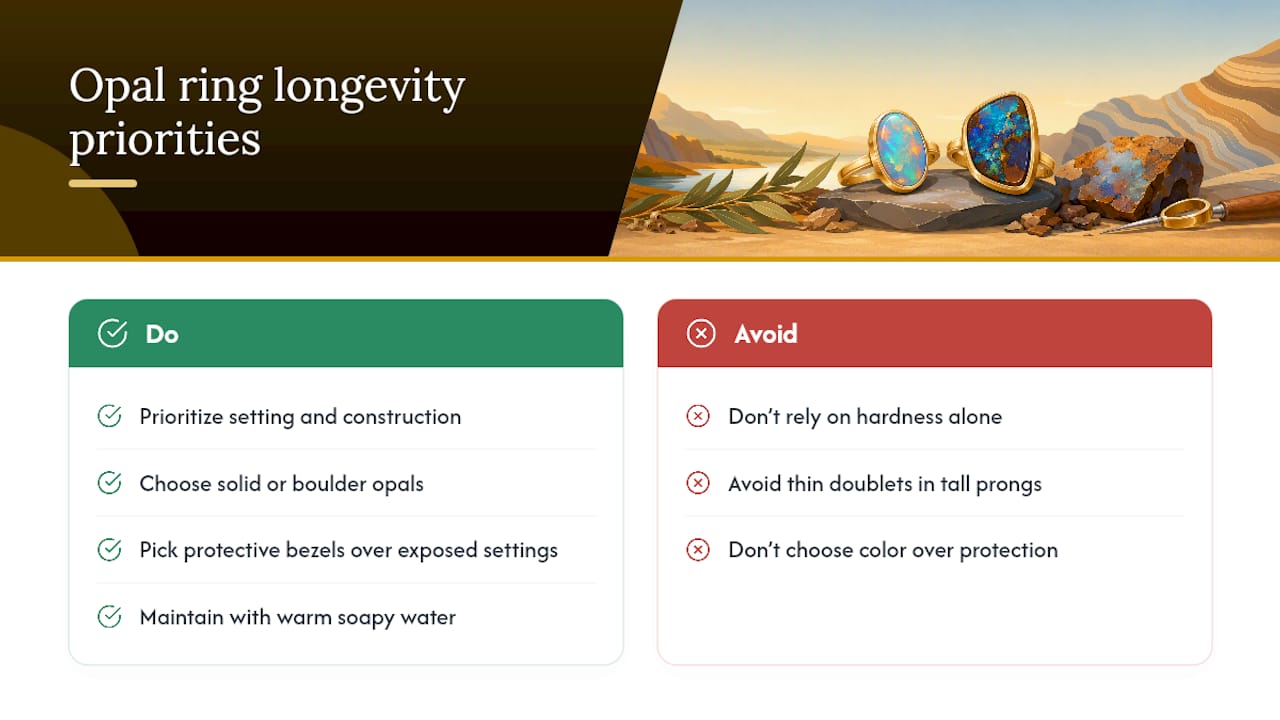
Where most buying guides fall short is treating opal as a single category. A boulder opal in a well-built bezel and a paper-thin doublet in tall prongs are not the same purchase wearing the same risk. Lumping them together does readers a disservice.
If you take one thing from this guide, prioritize construction and setting before you fall for color. A moderately colorful solid opal in a protective bezel will serve you better over ten years than a spectacular doublet in an exposed setting. Care habits matter too, but they’re the easier part. Get the stone and setting right first, and warm soapy water will do the rest.
— Renee
Find Protected-Setting Opal Rings Built for Real Life
Australian Opal Direct is the place to skip the guesswork on construction and setting that this guide just walked through. Every solid and boulder opal ring in the collection is available with full or low-profile bezel options, and the custom design service lets you specify exact metal weight and seat depth before anything is made, the same details this article recommends discussing with any jeweler.

Pieces come with insurance and a warranty, so the engagement-ring and daily-wear protections covered above may be included with the purchase. If you’re weighing a specific stone type against a setting style, browse the current solid and boulder opal ring collection or request a custom bezel consultation to get a mock-up before committing to a design.
Sources for Further Reading
Technical claims above draw on GIA’s opal care and buying guides, International Gem Society wearability grading, and the Australian Opal Association’s care standards.
FAQ
Can an Opal Ring Be Worn Every Day?
Yes, if it’s solid or boulder opal in a protective bezel setting. Thin doublets, triplets, or exposed prong settings are riskier for daily wear.
What Are the Downsides of Wearing Opal Rings?
Opal scratches more easily than harder gems like sapphire, and sudden heat or dehydration can cause permanent crazing. Assembled stones also risk glue failure from moisture and impact.
Are Opals Easy to Break?
Opal’s toughness is rated “very poor to fair” by the GIA, meaning it chips more easily than many gems under sharp impact, even though its hardness resists everyday scratching reasonably well.
Can I Shower With Opal Jewelry?
It’s best to remove opal rings before showering, especially doublets, triplets, and hydrophane stones, since rapid heat and moisture changes can trigger crazing or weaken adhesive layers.








