Opal Ring Styles: A Visual Guide to Choosing Yours
Posted by AOD on 17th Aug 2026
Opal Ring Styles: A Visual Guide to Choosing Yours
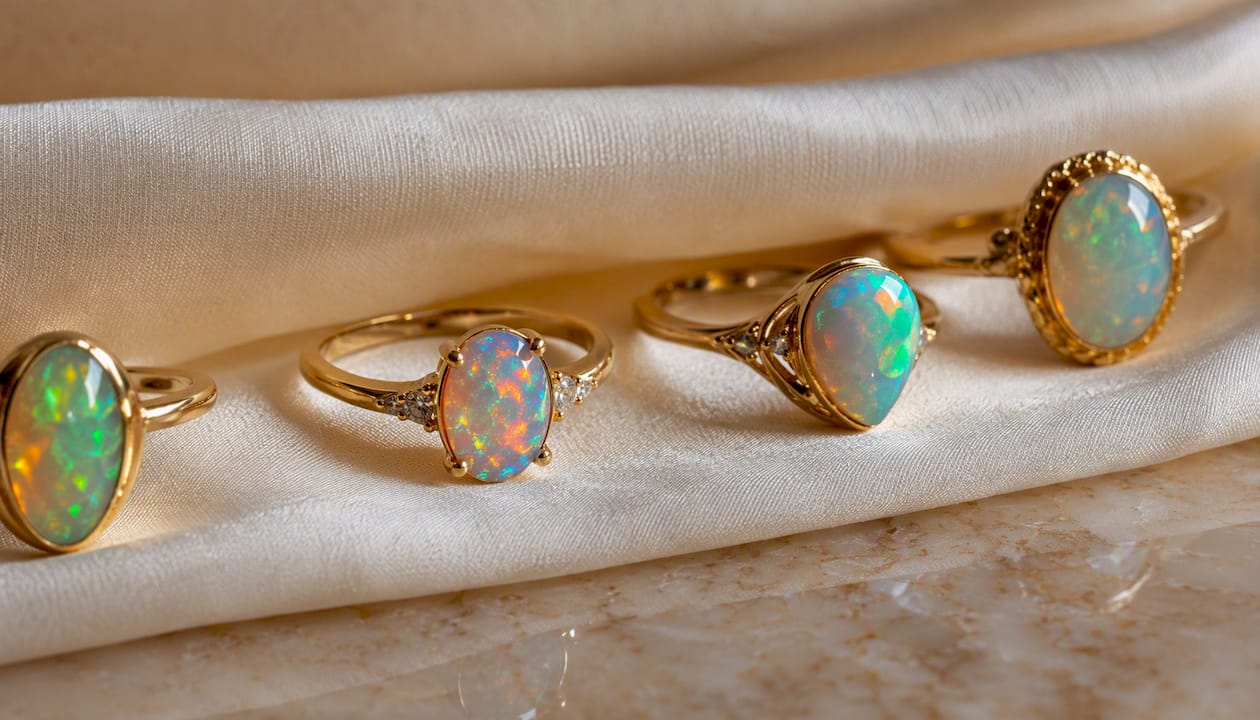
Opal ring styles fall into a handful of recognizable families: solitaire, halo, bezel, cocktail, vintage or filigree, east–west, cluster, and three-stone. Each frames the stone’s play-of-color differently, and each suits a different rhythm of life. If you want maximum shimmer with minimal fuss, a solitaire or halo does the job. If you’re chasing drama or heirloom character, cocktail and vintage settings deliver it.
- Solitaire — one stone, clean lines, lets the opal’s fire speak alone.
- Halo — a ring of diamonds or pavé that amplifies contrast and perceived size.
- Bezel — a metal rim wraps the stone’s edge for protection.
- Cocktail/statement — large, bold, made to be noticed.
- Vintage/filigree — intricate metalwork evoking Edwardian or Art Deco romance.
- East–west — the stone set sideways for an unexpected silhouette.
- Cluster — several smaller opals grouped for texture and depth.
- Three-stone — a central opal flanked by accents, often symbolic of past, present, future.
Pro Tip: If the ring will see daily wear, prioritize a bezel or protective halo. Save open-prong solitaires for occasional pieces.
Table of Contents
- Which Opal Ring Styles Are Most Popular Right Now?
- Which Opal Types Suit Which Ring Styles?
- How Do Settings and Metal Choices Change an Opal’s Look?
- How Do You Choose the Right Opal Ring?
- How Do You Care for and Clean an Opal Ring?
- How Do You Style and Wear an Opal Ring?
- What Do Different Opal Ring Styles Typically Cost?
- How Long Does It Take to Commission a Custom Opal Ring?
- Further Reading and Visual Inspiration
- What Opal Ring Styles Actually Deserve Your Attention
- Find Your Opal Ring at Australian Opal Direct
- Frequently Asked Questions
Which Opal Ring Styles Are Most Popular Right Now?
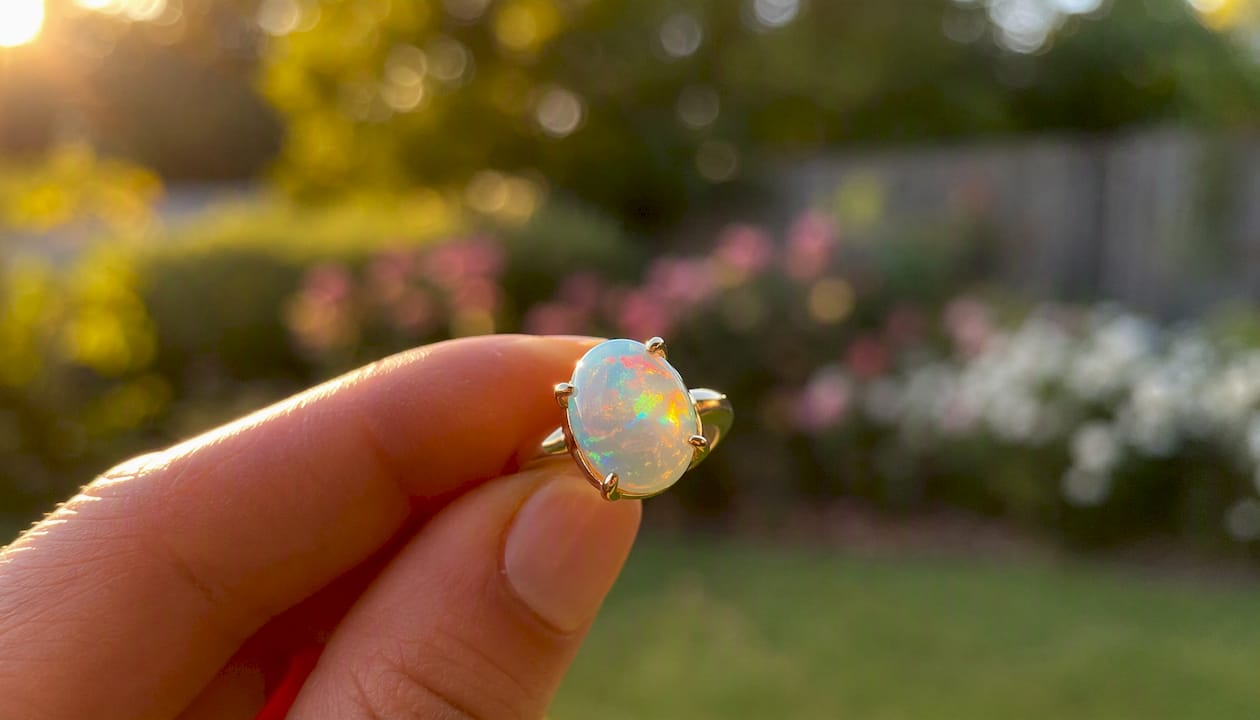
The solitaire remains the reference point against which every other opal ring style is measured. A single cabochon opal, usually held by four or six prongs, puts the stone’s kaleidoscopic play-of-color on full display with nothing competing for attention. Cabochon cuts dominate this category because their domed surface acts like a lens, concentrating light and pulling color across the stone as it moves. Choose a solitaire when the opal itself is the whole story.
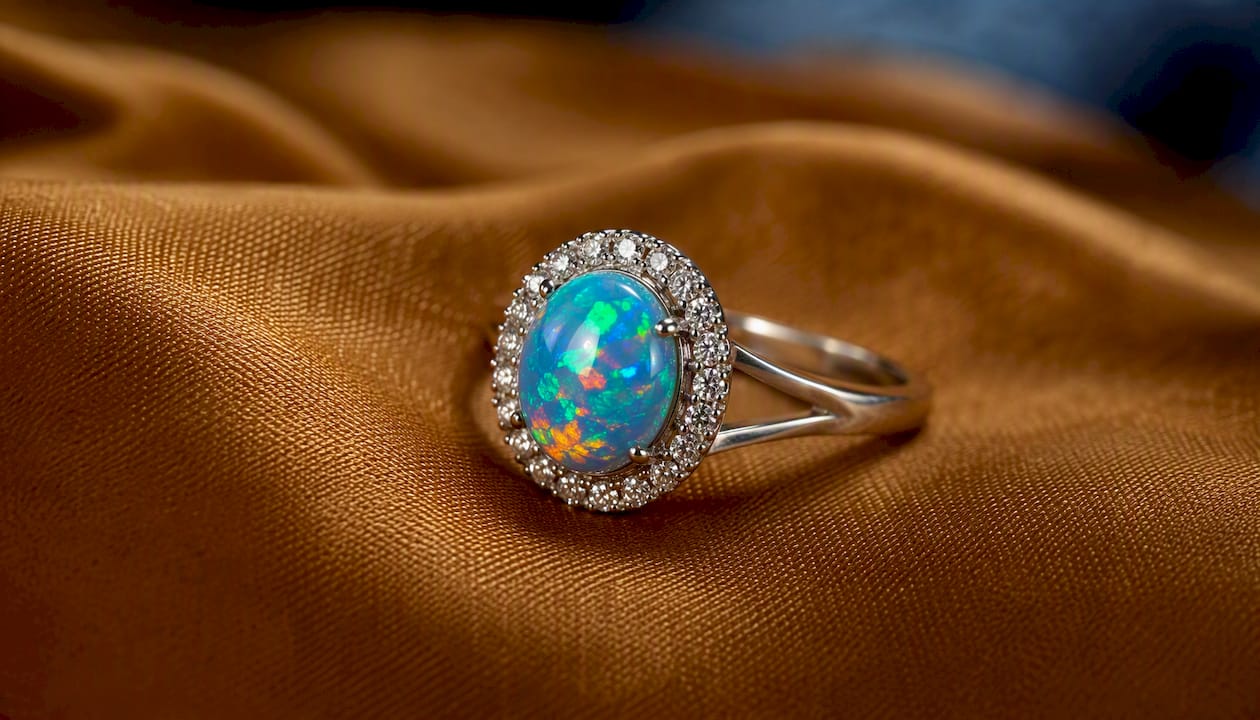
The halo setting surrounds the central opal with a ring of small diamonds or pavé stones, and the effect is almost theatrical: the opal reads larger, and the cool sparkle of the diamonds sets off the warmth of the play-of-color underneath. Designers frequently pair opals with diamond or pavé accents specifically for this reason, since the added brilliance doesn’t compete with the opal’s color, it frames it.
Bezel settings wrap a thin band of metal entirely around the stone’s girdle. You lose a little visibility from extreme side angles, but you gain real protection, which matters because opal sits at roughly 5.5 to 6.5 on the Mohs hardness scale and chips more easily than diamond or sapphire.
Cocktail or statement rings go big: oversized stones, sculptural metalwork, sometimes multiple opals in one piece. These are occasion rings, not office rings.
Vintage and filigree styles borrow lacework metal patterns from Edwardian and Art Deco design, often framing a white or crystal opal in milgrain detail. East–west settings turn the stone on its side, a small change that gives an otherwise familiar oval or pear shape an entirely different rhythm on the hand. Cluster rings group several smaller opals, trading one dramatic stone for a mosaic effect. Three-stone designs flank a center opal with two accent gems, a format long associated with milestone anniversaries and engagements.
Pear-cut opals in prong or halo settings show up constantly across bridal inspiration boards, largely because the teardrop shape elongates the finger and reads as instantly romantic.
Pro Tip: When browsing images, zoom in on the setting’s edge, not just the stone. That’s where you’ll see whether prongs sit low enough to prevent snagging.
Which Opal Types Suit Which Ring Styles?
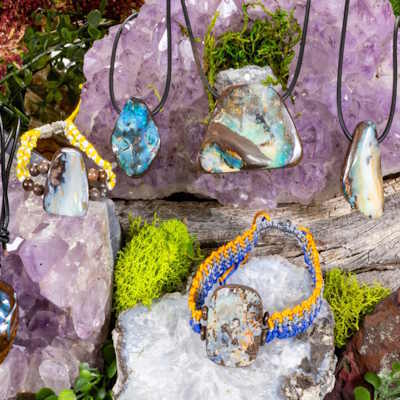
Opal isn’t one material. Black opal, mined almost exclusively at Lightning Ridge, carries a dark body tone that makes its color flashes look electric, and it rewards simple settings, solitaire or halo, in white gold or platinum, where nothing distracts from the contrast. White or light opal has a milky, pastel base and reads softer, making it a natural fit for vintage filigree or bezel work in rose gold. Boulder opal, cut with a slice of its natural ironstone backing left intact, has a raw, earthy character suited to rustic or vintage settings that echo its organic edge. Crystal opal, transparent to semi-transparent, throws color from within and looks striking in open settings like east–west or prong solitaires that let light pass through.
| Opal type | Best-suited styles | Best metal pairing |
|---|---|---|
| Black opal | Solitaire, halo | White gold, platinum |
| White/light opal | Vintage, bezel | Rose gold, yellow gold |
| Boulder opal | Vintage, rustic bezel | Yellow gold |
| Crystal opal | East–west, solitaire | Platinum, white gold |
How Do Settings and Metal Choices Change an Opal’s Look?
Prong settings expose the most surface area and maximize brilliance, but they leave the girdle vulnerable to knocks. Bezel settings sacrifice a sliver of visibility for real edge protection. Halo settings boost visual size and contrast without much added risk. Pavé accents add sparkle along the shank without stealing focus from the center stone. Flush settings sink the opal slightly below the metal’s surface, a smart option for anyone hard on their jewelry.
Metal color matters more with opal than almost any other gem. White metals, platinum and white gold, cool the palette and make blue and green flashes pop. Yellow and rose gold warm the stone, flattering paler or fire-toned opals but sometimes muting icy blues.
A quick durability checklist:
- Avoid ultrasonic cleaners and sudden temperature swings.
- Choose bezel or protective halo settings for rings worn daily.
- Save fully exposed prong solitaires for special-occasion pieces.
- Ask about resizing before buying, since some bezel designs resize less easily.
Pro Tip: If your opal leans warm and fiery, yellow gold intensifies that glow. If it leans cool and blue-green, white gold or platinum sharpens the contrast.
How Do You Choose the Right Opal Ring?
Work through it in order:
- Decide the occasion: engagement, everyday, or special-event piece.
- Estimate how often you’ll wear it, since that determines how protective the setting needs to be.
- Set a budget range before you start browsing.
- Pick a preferred opal type based on the color mood you want.
- Match setting protection to your lifestyle.
- Confirm certification and provenance.
- Review the seller’s return, resizing, and warranty policies.
Before buying, ask the seller about the opal’s origin, whether it’s been treated in any way, what the setting metal actually is, the resizing policy, and whether shipping includes insurance. Reputable sellers answer all of this without hesitation.
Watch for red flags: no clear origin or provenance, only one or two photos with no alternate angles, or vague, evasive answers about treatments and returns. Those signs usually mean it’s time to look elsewhere.
How Do You Care for and Clean an Opal Ring?
Clean an opal ring with lukewarm water, mild soap, and a soft cloth, nothing harsher. Skip ultrasonic cleaners and steam cleaners entirely; the heat and vibration can crack the stone or accelerate dehydration in porous opal. Avoid sudden temperature shifts, like going from a hot shower straight into cold air.
Store the ring in a soft, padded pouch away from direct sunlight and away from harder gems that could scratch it in a jewelry box. When traveling, keep it in its own compartment rather than loose in a bag.
Resizing is safest on plain prong or bezel bands; heavily filigreed vintage styles sometimes need a jeweler experienced with antique metalwork to avoid damaging the pattern.
Pro Tip: Wipe the stone with a barely damp cloth after wear to clear oils and dust, a thirty-second habit that keeps the play-of-color looking its best between professional cleanings.
How Do You Style and Wear an Opal Ring?
Opal pairs beautifully with both warm and cool metals, so stacking rules bend more than they would with a single-tone gem. A few practical guidelines:
- Mix metals confidently: a white-gold opal solitaire sits fine next to a yellow-gold band.
- Scale down accent rings so they don’t compete with a statement opal piece.
- For everyday wear, pair a bezel opal ring with simple stud earrings.
- For formal occasions, let a cocktail-style opal ring stand alone on the hand.
- For bridal looks, an east–west or three-stone opal ring photographs well alongside a plain metal wedding band.
When photographing or shopping images, look for close-ups from at least two angles and a shot in natural light, since opal’s color shifts dramatically depending on the light source.
What Do Different Opal Ring Styles Typically Cost?
Price depends far more on the opal itself than on the setting style, but setting complexity still moves the number. A simple silver bezel ring with a small crystal or white opal often sits at the accessible end of the market. Step up to a solitaire or halo in gold or platinum with a larger, higher-grade stone, and the price climbs accordingly, since gemstone quality (brightness, pattern, body tone) drives most of the cost.
Black opal commands the highest prices of any opal type because of its rarity and the intensity of contrast it produces, so a black opal solitaire in platinum will cost noticeably more than a comparable white opal piece. Boulder opal often lands in a more moderate range since the ironstone backing is left in place, reducing cutting and material loss. Cluster and three-stone designs can cost more than a single-stone piece of similar size simply because they require multiple well-matched stones.
Vintage and filigree styles carry an added labor cost for the metalwork itself, independent of the stone. Custom commissions typically cost more than off-the-shelf pieces, but they let you control exactly which opal type, cut, and setting protection you get for your budget rather than compromising on a finished piece. Anyone budgeting for an opal ring should treat the stone quality and the setting labor as two separate line items, not one combined guess.
How Long Does It Take to Commission a Custom Opal Ring?
Custom opal ring timelines vary based on complexity. A simple remount, dropping an existing opal into a new prong or bezel setting, can often be finished in a few weeks. A fully bespoke design, one that starts with sourcing a specific opal (say, a particular black opal from Lightning Ridge with a chosen pattern), moves through cutting or shaping, and ends with a hand-built setting, typically runs six to ten weeks.
The process generally moves through four stages. First comes stone selection, where you choose the opal type, body tone, and pattern that match the style you’ve settled on. Second is design consultation, translating that stone into a sketch or CAD rendering of the setting, whether that’s a protective bezel, a diamond halo, or vintage filigree. Third is fabrication, casting the metal, setting the stone, and adding any accent gems. Fourth is quality review and final polish before shipping.
Weeks can stretch longer if you’re requesting a rare stone, like a high-grade black opal with a specific color pattern, since sourcing the right piece sometimes takes longer than making the ring itself. Build in buffer time if you’re commissioning for a specific date like an anniversary or proposal. Asking your jeweler for a written timeline estimate up front, with milestones for design approval and stone sourcing, keeps a custom project on track and avoids last-minute surprises.
Further Reading and Visual Inspiration
For deeper guidance, see how to select engagement opals for sourcing and treatment questions, the opal jewelry selection guide for fit and durability, and how custom opal rings are crafted for a closer look at the design process.
What Opal Ring Styles Actually Deserve Your Attention
Most buying guides treat opal ring styles as a beauty pageant: pick whichever setting photographs best. That misses the point. The setting you choose is really a decision about how much risk you’re willing to take with a comparatively soft, layered gemstone that reacts to heat, chemicals, and impact differently than a diamond does.
The conventional advice, “choose what you love,” isn’t wrong, but it’s incomplete. What you love has to survive contact with your actual life. A stunning open-prong crystal opal solitaire looks incredible on a ring finger that spends the day at a desk. It looks tragic after a week of gardening or dishwashing.
If I had to prioritize one thing, it’s matching setting protection to wear frequency before matching metal to skin tone or opal type to aesthetic preference. Everything else is reversible. A chipped opal is not. Start there, then let yourself fall in love with the pattern and the color.
Find Your Opal Ring at Australian Opal Direct
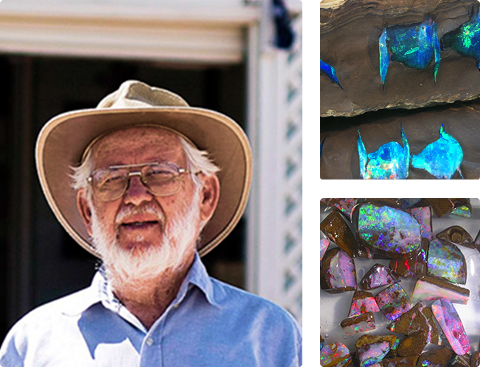
Every style discussed here, solitaire, halo, bezel, vintage filigree, comes down to one thing: the quality and character of the opal itself. Australianopaldirect works directly with miners across Lightning Ridge, Coober Pedy, and Queensland, which means every stone arrives with a certificate of authenticity and none of the markup that comes from middlemen.

Whether you’re drawn to a black opal solitaire, a boulder opal in a rustic vintage setting, or a fully custom commission built around a stone you fall in love with, the collection spans gold and silver settings with the protective options this guide covers, plus free shipping, complimentary insurance, and a 90-day warranty on finished pieces. Browse the current opal ring collection to see available stones and setting styles, or start a custom design inquiry if you already know the look you want built around your own chosen opal.
Frequently Asked Questions
What is the most popular opal ring style? Solitaire and halo settings are the most commonly chosen opal ring styles because they showcase play-of-color with minimal visual competition.
Which opal ring style is most durable for everyday wear? Bezel settings offer the best everyday protection since the metal rim shields the stone’s vulnerable edges from knocks and scratches.
Does metal color change how an opal looks? Yes. White gold and platinum sharpen cool blue and green flashes, while yellow and rose gold warm fiery or pastel tones.
Are black opals more expensive than white opals? Generally yes. Black opal’s dark body tone produces more dramatic contrast and is rarer, which typically pushes prices higher than comparable white or crystal opal pieces.
How long does a custom opal ring take to make? A simple remount can take a few weeks, while a fully bespoke design, from sourcing the stone to final setting, often takes six to ten weeks.
Recommended
- How to Select Engagement Opals for Unique Rings - Australian Opal Direct
- 7 Examples of Opal Jewelry Styles Collectors Love - Australian Opal Direct
- 7 Unique Opal Jewelry Style Ideas for Gemstone Collectors - Australian Opal Direct
- Opal Shape Guide: Cuts, Styles, and Meanings - Australian Opal Direct