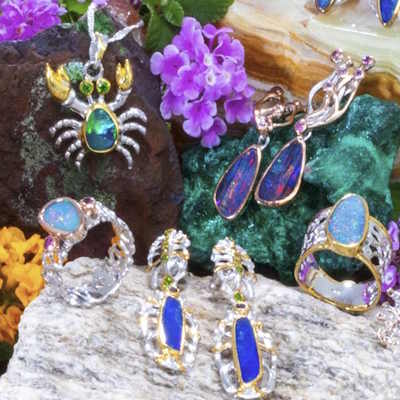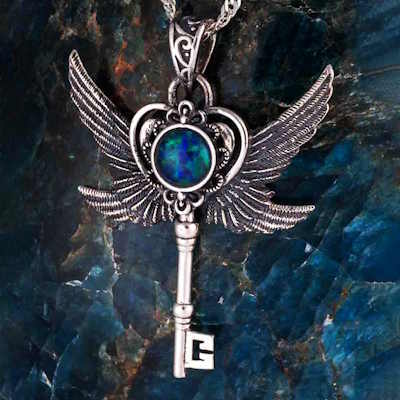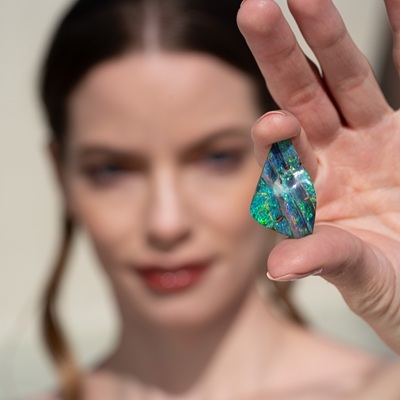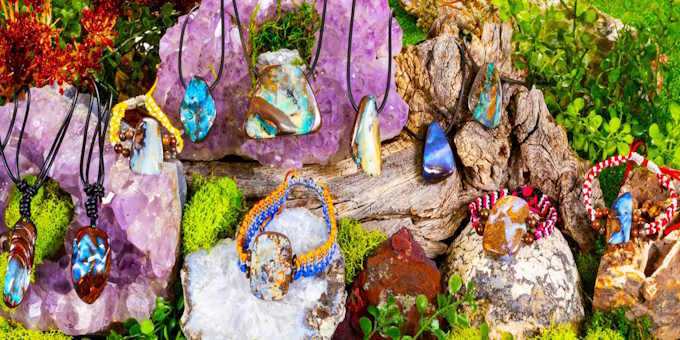
How to mix opals with diamonds for luxury jewelry
Posted by AOD on 27th Apr 2026
How to mix opals with diamonds for luxury jewelry
TL;DR:
- Combining opals and diamonds creates luxurious jewelry with visual contrast and technical complexity.
- Proper settings and handling are essential to protect the delicate opal while enhancing its beauty.
- Thoughtful design prioritizes harmony, protecting, and showcasing each stone’s unique qualities for lasting value.
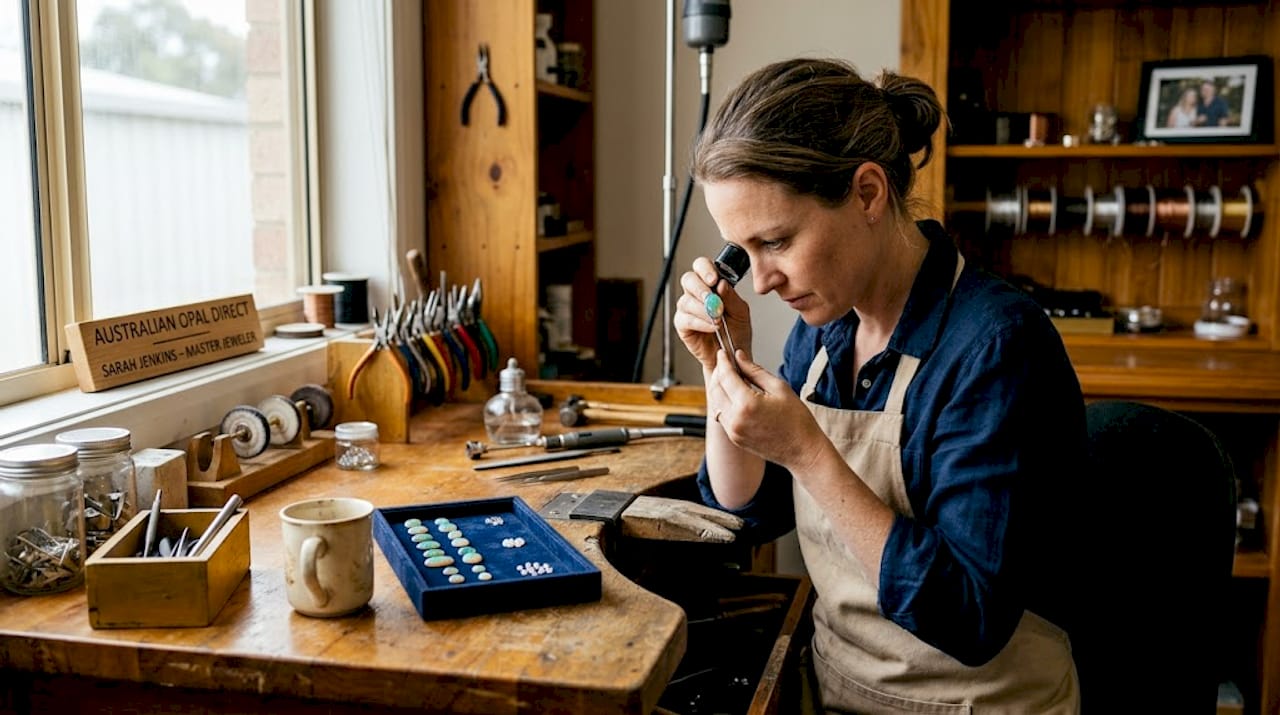
Few challenges in jewelry design are as rewarding as uniting two of the gemstone world’s most visually striking opposites. Opals pulse with kaleidoscopic fire, shifting color with every turn of the light, while diamonds hold their brilliance with an almost architectural certainty. Combining them creates something neither stone could achieve alone: a piece that is simultaneously alive and eternal. Yet the contrast that makes this pairing so compelling also makes it technically demanding. Opals are soft and sensitive; diamonds are the hardest natural material on earth. Getting this union right requires preparation, restraint, and a genuine understanding of what each stone brings to the composition.
Table of Contents
- Understanding opals and diamonds: Features, risks, and potential
- Essential materials and tools for mixing opals with diamonds
- Step-by-step: How to design and assemble opal-diamond jewelry
- Maintenance, longevity, and display: Ensuring beauty endures
- Why thoughtful pairing, not just flash, defines true luxury opal-diamond jewelry
- Discover fine opal-diamond jewelry or start your custom piece
- Frequently asked questions
Key Takeaways
| Point | Details |
|---|---|
| Contrast enhances beauty | Pairing opals with diamonds highlights the best qualities of both gemstones for striking designs. |
| Protection is essential | Choose settings that guard opals to maximize the jewelry’s longevity and wearability. |
| Choose quality materials | Only use materials and tools that are compatible to ensure lasting results when mixing these gems. |
| Care influences value | Ongoing cleaning and gentle handling keep opal-diamond jewelry radiant for years. |
Understanding opals and diamonds: Features, risks, and potential
Before a single stone is set, a designer must understand the fundamental nature of each gem. Opals and diamonds are not merely different in appearance. They are different in almost every measurable physical property, and those differences shape every decision that follows.
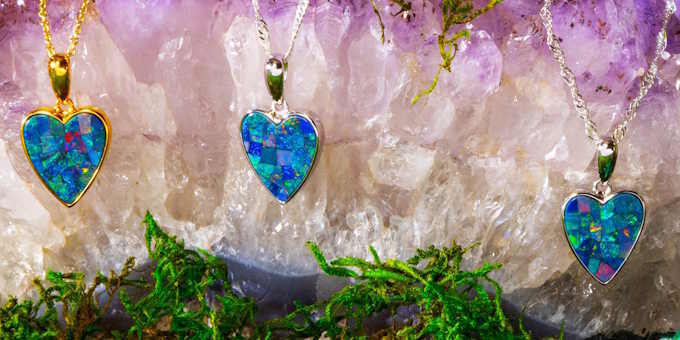
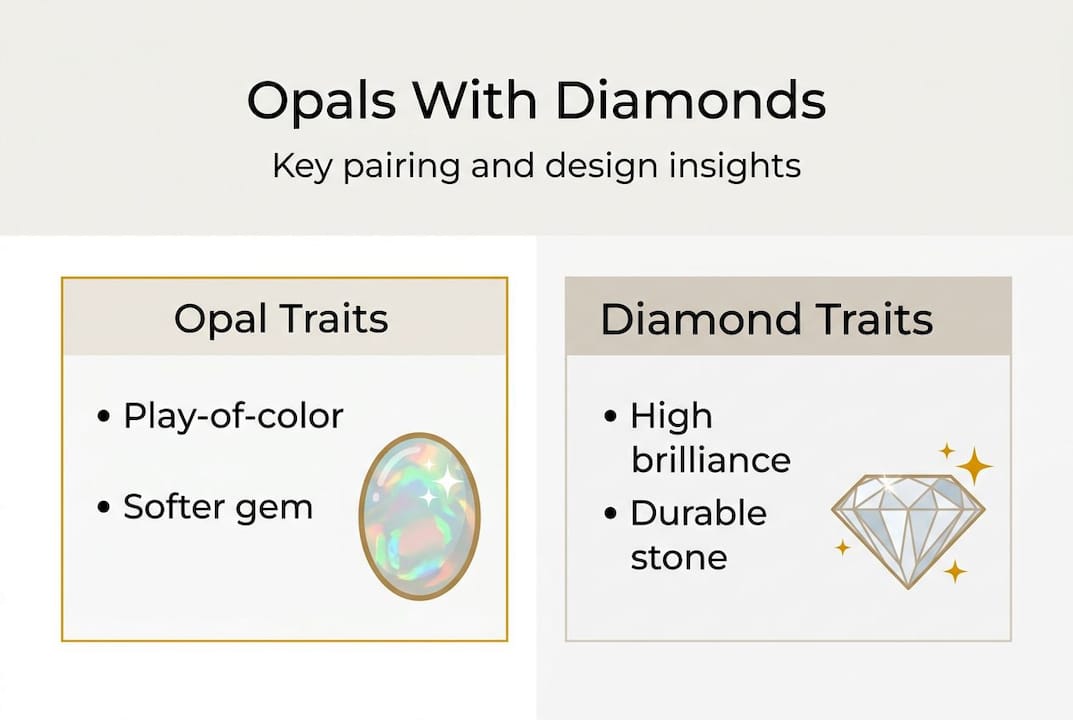
Australian opals are celebrated for their extraordinary play-of-color, a phenomenon produced by the diffraction of light through microscopic silica spheres arranged in a precise internal lattice. The result is a living spectrum: crimson, violet, emerald, and gold flickering across the stone’s surface as viewing angles shift. However, this beauty comes with vulnerability. Opals register between 5.5 and 6.5 on the Mohs hardness scale, making them susceptible to scratches from everyday contact. They also contain trace moisture, which means they can crack under sudden temperature changes or prolonged exposure to dry conditions.
Diamonds, by contrast, score a perfect 10 on the Mohs scale. Their brilliance is fixed and fierce, born from precise faceting that refracts white light into its spectral components. As noted in research on luxury gem pairings, diamonds elevate opal’s ethereal play-of-color through contrast in brilliance and hardness, creating a visual tension that reads as pure luxury.
Key characteristics at a glance:
| Property | Opal | Diamond |
|---|---|---|
| Mohs hardness | 5.5 to 6.5 | 10 |
| Primary visual quality | Play-of-color | Brilliance and fire |
| Sensitivity | Heat, impact, chemicals | Extremely durable |
| Origin (premium) | Lightning Ridge, Coober Pedy | Various global sources |
| Best setting role | Centerpiece or focal accent | Frame, halo, or accent |
The risks are real but manageable. Diamonds can act as protective sentinels around an opal, physically shielding it while amplifying its visual presence. Understanding this dynamic is the first step toward selecting opal types that will genuinely shine within a diamond-enriched composition.
- Lightning Ridge black opals offer the darkest body tone, making their color play pop dramatically against white diamonds.
- Crystal opals from Coober Pedy carry a translucent body that pairs beautifully with yellow or rose gold settings accented by warm-toned diamonds.
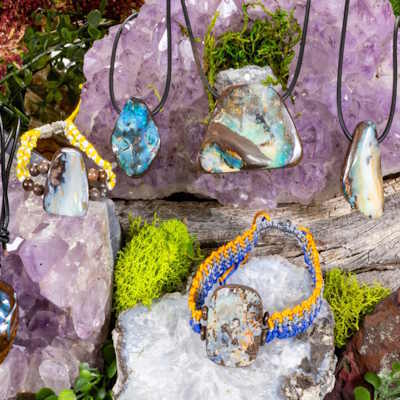
- Boulder opals from Queensland bring an organic, ironstone matrix that grounds more rustic or nature-inspired diamond designs.
The potential of this pairing is not accidental. It is the product of deliberate contrast: one stone’s softness and spectral movement against another’s rigid, geometric brilliance.
Essential materials and tools for mixing opals with diamonds
With knowledge of both gemstones’ traits, you’re ready to gather the right materials and tools for your design. The choices made at this stage determine not only the piece’s beauty but also its structural integrity over decades of wear.
Metal selection is foundational. Platinum and 18-karat gold (white, yellow, or rose) are the preferred choices for opal-diamond jewelry. Platinum’s density and resistance to deformation make it ideal for settings where opals need firm, stable support. Rose gold adds warmth that flatters the orange and red tones found in many Queensland boulder opals. White gold or platinum creates a neutral backdrop that lets a black opal’s color play dominate.
Setting styles are equally critical. As design experts emphasize, protection over exposure is the guiding principle for opal longevity in mixed-gem pieces. The three most effective settings for opal-diamond combinations are:
- Bezel setting: A continuous metal collar wraps the opal’s girdle, offering maximum protection from lateral impact. Diamonds can be channel-set or pavé-set into the surrounding band.
- Halo setting: A ring of diamonds encircles the opal, creating both visual amplification and a physical barrier. This is the most popular choice for engagement rings and pendants.
- Partial bezel with prong-set diamonds: Offers a balance between opal protection and light exposure, allowing the opal’s play-of-color to be seen from multiple angles while diamonds anchor the design.
Essential tools and supplies for the workshop:
| Tool or material | Purpose |
|---|---|
| Jeweler’s loupe (10x magnification) | Inspecting opal clarity and diamond placement |
| Flex shaft or rotary tool | Shaping and finishing metal settings |
| Prong pusher and burnisher | Securing stones without pressure damage |
| Epoxy or gem adhesive | Cabochon opal setting in bezel designs |
| Soft lint-free cloths | Cleaning and handling finished pieces |
| Digital calipers | Precise measurement of stone dimensions |
Pro Tip: Always measure your opal’s dimensions twice before ordering a custom bezel. Opals are rarely perfectly round or oval, and even a 0.2mm discrepancy can result in a loose setting that risks stone loss.
Consulting a thorough opal selection guide before sourcing your stones will help you match the right opal body tone and cut to your intended diamond configuration. A well-matched pair of stones, chosen with intention, will always outperform a random combination of individually beautiful gems.
Step-by-step: How to design and assemble opal-diamond jewelry
Once you’re prepared with everything in place, it’s time to bring your vision to life. The assembly process rewards patience and precision above all else.
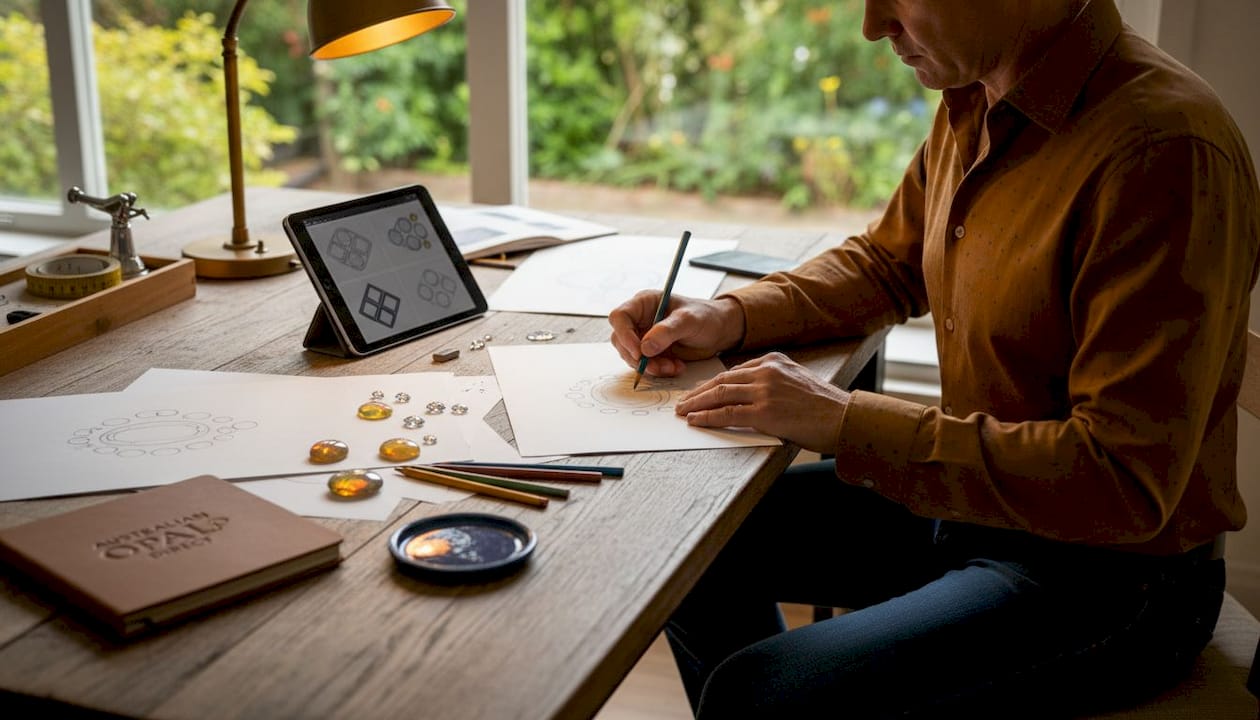
1. Sketch and plan the layout. Begin with a scaled drawing or digital rendering. Decide whether the opal will serve as the centerpiece, surrounded by a diamond halo, or whether diamonds and opals will alternate along a band or necklace. Consider how the play-of-color will read from the wearer’s perspective, not just from directly above.
2. Select and grade your stones together. Place your chosen opal and diamonds side by side under a daylight-equivalent lamp. Assess how the diamond’s brilliance interacts with the opal’s dominant color. A vivid red-and-green play-of-color opal, for example, pairs magnificently with round brilliant diamonds that scatter white light without competing for chromatic attention.
3. Fabricate or source the metal setting. If fabricating by hand, construct the bezel or halo frame first, ensuring the inner dimensions match your opal’s exact measurements. If using a pre-made setting, verify that the prong height and spacing are appropriate for your specific stone thickness.
4. Set the diamonds first. This is a critical sequence. Setting diamonds before the opal protects the opal from the vibration and pressure involved in stone setting. Use a prong pusher and burnisher with controlled, even pressure. Inspect each diamond under magnification before proceeding.
5. Place and secure the opal. Lower the opal into its seat gently. For bezel settings, use a bezel roller to fold the metal collar over the opal’s girdle in gradual, even passes. Never apply sudden or concentrated pressure. For prong settings, use a prong pusher with a soft-tipped end to minimize surface contact.
6. Inspect for symmetry and security. Check that the opal sits level, that no prongs pierce or press the stone’s surface, and that all diamonds are secure. A stone that rocks under light finger pressure must be re-set before the piece leaves the bench.
“Diamonds elevate opal’s ethereal play-of-color via contrast in brilliance and hardness, creating luxury pieces that feel both ancient and contemporary.” This is the design philosophy that separates fine jewelry from mere ornamentation.
As you explore pairing opals and diamonds in different configurations, you’ll discover that the most compelling designs often use restraint rather than excess. A single magnificent Lightning Ridge black opal, framed by a precise diamond halo, speaks more eloquently than a piece crowded with competing elements.
Pro Tip: For alternating opal-and-diamond bands, use calibrated opals cut to match the diamond dimensions exactly. This creates visual rhythm and simplifies the setting process considerably.
For collectors seeking inspiration beyond the ring format, opal jewelry style ideas spanning pendants, earrings, and bracelets demonstrate how this pairing translates across every jewelry category.
Maintenance, longevity, and display: Ensuring beauty endures
With your piece complete, ongoing care and presentation will preserve its allure for generations. Opal-diamond jewelry is not fragile if treated with appropriate respect, but it does demand a more attentive care routine than an all-diamond piece.
Cleaning guidelines:
- Use a soft, damp cloth to wipe both stones gently after each wear.
- Avoid ultrasonic cleaners entirely. The vibration that effectively removes grime from diamonds can fracture an opal’s internal structure.
- Never use steam cleaners, harsh detergents, or bleach-based solutions near opals.
- A very mild solution of dish soap diluted in lukewarm water, applied with a soft brush, is safe for occasional deeper cleaning of the diamond elements, provided the opal is not submerged.
Environmental risks to monitor:
- Heat: Avoid leaving opal-diamond jewelry near radiators, in direct sunlight, or in hot cars. Rapid temperature changes can cause crazing, a network of fine surface cracks that permanently damages the stone.
- Impact: Even within a protective diamond halo, a sharp blow to a hard surface can chip an opal. Remove jewelry before physical activity or household work.
- Chemicals: Perfumes, hairsprays, and cleaning products should never contact opals. Apply cosmetics and fragrances before putting on jewelry, not after.
As design authorities consistently note, protection over exposure remains the guiding principle not just in setting design but in daily care decisions as well. A diamond-reinforced setting provides meaningful physical protection, but it cannot substitute for thoughtful handling.
“The opal, unlike any other gem, carries its environment within it. Treat it as you would a living thing, and it will reward you with a lifetime of color.”
Storage and display recommendations:
- Store opal-diamond pieces individually in soft-lined pouches or compartmentalized jewelry boxes to prevent contact with harder materials.
- For display, avoid cases positioned in direct sunlight or near heating vents.
- A lightly moistened cotton ball placed inside a sealed display case can help maintain ambient humidity for opals in very dry climates.
Establishing a consistent opal care routine is as important as the initial design choices. Collectors who study collector-loved opal styles understand that the most enduring pieces are those whose owners treat care as an extension of appreciation. For those who also wish to present their collection beautifully, guidance on displaying opal jewelry can transform a private collection into a curated visual experience.
Why thoughtful pairing, not just flash, defines true luxury opal-diamond jewelry
There is a temptation in luxury jewelry design to equate brilliance with value, to pile diamonds around an opal until the piece blazes from across a room. This impulse is understandable. Both stones are individually spectacular. But the most enduring opal-diamond pieces are not the loudest ones.
True luxury in this context is defined by harmony. An opal is not a supporting actor. It is a living canvas, and every design decision should serve its expression rather than compete with it. When diamonds are used to frame rather than overwhelm, they create a visual conversation: the opal’s shifting color speaks, and the diamonds provide the silence that makes that speech audible.
The restraint required to achieve this balance is, paradoxically, the most sophisticated skill a designer can develop. Anyone can add more stones. It takes genuine expertise to know when to stop. The pieces that collectors return to again and again, the ones that appreciate in sentimental and monetary value, are those where every element serves a purpose.
There is also a practical dimension to this philosophy. A design that prioritizes protection, using diamonds as structural guardians rather than mere decoration, produces a piece that will survive decades of wear without compromising the opal’s integrity. This is not a compromise between beauty and function. It is the recognition that lasting beauty requires structural intelligence.
Exploring collector-favored opal styles reveals a consistent pattern: the pieces that endure in collections are those where the opal is honored as the primary voice, with diamonds providing the architectural framework that allows that voice to carry.
Discover fine opal-diamond jewelry or start your custom piece
Ready to turn your ideas into stunning reality?
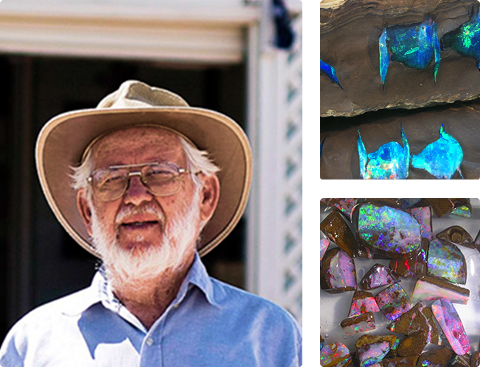
Australian Opal Direct offers a curated collection of opal-diamond jewelry sourced directly from Australia’s most celebrated mining regions, including Lightning Ridge, Coober Pedy, and Queensland. Every piece reflects the philosophy explored in this guide: thoughtful design, protective settings, and an unwavering commitment to honoring the opal as a centerpiece rather than an afterthought.

Whether you are searching for a finished piece that captures the kaleidoscopic brilliance of a black opal surrounded by diamonds, or you have a specific vision that calls for a fully custom design, Australian Opal Direct’s team of specialists is ready to guide you. From stone selection to setting style, their direct-miner relationships ensure authenticity, quality, and pricing that reflects genuine value. Custom design consultations are available for collectors and designers who want something truly singular.
Frequently asked questions
What is the best setting style to protect opals when combined with diamonds?
A bezel or halo setting using diamonds around the opal offers the most protection while enhancing its visual appeal, as protection over exposure is the guiding principle for lasting opal-diamond designs.
Can opal jewelry be worn every day if mixed with diamonds?
Yes, but even within diamond settings, opals require gentle handling, and pieces are best suited to occasional or careful daily wear given that opal jewelry requires extra care to preserve its condition.
How do you clean opal and diamond jewelry safely?
Use a soft, damp cloth and avoid ultrasonic cleaners or harsh chemicals entirely, as gentle cleaning is recommended to protect the opal’s sensitive internal structure.
Do opals and diamonds fit together stylistically or only in modern designs?
They complement each other across both vintage and contemporary jewelry styles, and mixing opals and diamonds suits a wide range of aesthetic traditions due to their timeless visual contrast.
Can I customize a piece with both opals and diamonds?
Yes, custom design services allow you to tailor settings, gem choices, and overall style to your exact vision, ensuring the finished piece reflects both your aesthetic and practical preferences.
Recommended
- How to Design Custom Opal Rings for Luxury Jewelry Lovers - Australian Opal Direct
- How to Craft Opal Rings: Create Luxury Gemstone Jewelry - Australian Opal Direct
- Expert luxury jewelry investment tips: Sourcing Australian opals - Australian Opal Direct
- How to Price Opal Jewelry for Authentic Luxury Buyers - Australian Opal Direct