Essential questions to ask opal sellers for authentic jewelry
Posted by AOD on 8th May 2026
Essential questions to ask opal sellers for authentic jewelry

TL;DR:
- Buying Australian opals requires asking detailed questions to assess quality, authenticity, and provenance. Brightness, pattern, body tone, and cut determine value, and verifying certifications and ethical sourcing ensures reliability. Long-term care, transparent seller practices, and provenance history are essential for making a secure, meaningful purchase.
Purchasing an Australian opal is not like buying most gemstones. The range of quality, authenticity, and origin can vary so dramatically that two stones sitting side by side may carry wildly different values, yet look deceptively similar to the untrained eye. The right questions, asked at the right moment, act as your compass through this kaleidoscopic landscape. They reveal the true character of a stone, the integrity of its seller, and whether the colors dancing within that gem are matched by transparency behind the counter. This guide arms you with exactly those questions.
Table of Contents
- Key opal quality factors: Questions for evaluating value
- Authenticity and certification: Verifying genuine Australian opals
- Ethical sourcing: Ensuring responsible opal purchases
- Care, after-sales support, and return policies: What else to ask
- Our perspective: The one question most buyers overlook
- Discover authentic Australian opals with confidence
- Frequently asked questions
Key Takeaways
| Point | Details |
|---|---|
| Focus on value factors | Ask sellers directly about brightness, pattern, body tone, and cut for every opal. |
| Demand proof of authenticity | Request independent grading certificates and clarify origin to ensure you buy genuine stones. |
| Prioritize ethical sourcing | Choose sellers who can demonstrate fair mining and responsible trade practices. |
| Check after-sales support | Know the warranty, care routines, and return policies before finalizing any purchase. |
| Ask about ownership history | Knowing who handled an opal can reveal added trustworthiness and collector value. |
Key opal quality factors: Questions for evaluating value
Now that we’ve established why good questions matter, let’s start with the basics: how to judge an opal’s value before you buy.
Opals earn their place among the world’s most captivating gemstones through a phenomenon called play-of-color, the way spectral light diffracts through microscopic silica spheres arranged in precise lattice patterns. But beauty alone does not determine worth. Experienced collectors rely on four principal opal value factors to anchor every purchase decision: brightness, pattern, body tone, and cut.
Brightness is the most important value factor for opals, followed by pattern, body tone, and cut. Understanding how opal value is determined before you engage a seller puts you firmly in control of the conversation.
The four factors at a glance
| Factor | What it means | Question to ask the seller |
|---|---|---|
| Brightness | The intensity and vividness of the play-of-color | “On a scale of 1 to 5, how would you rate this stone’s brightness, and why?” |
| Pattern | The arrangement and type of color display (harlequin, rolling flash, pinfire) | “What pattern type is this, and is it consistent across the stone’s face?” |
| Body tone | The base color ranging from crystal clear to jet black | “Is this a black, dark, light, or crystal opal, and how does that affect its value?” |
| Cut | The shape, dome height, and symmetry of the finished stone | “Was this opal cut to maximize its play-of-color, or was yield the priority?” |
Each of these factors interacts with the others in nuanced ways. A stone with an extraordinary harlequin pattern (large, angular, mosaic-like color blocks, considered among the rarest patterns of all) may command premium pricing even with a moderately dark body tone. Conversely, a brilliantly bright pinfire pattern on a pale crystal body may be priced more accessibly, yet still dazzle the eye with its micro-sparkle effect.
Sample questions to ask about quality
- “Does this stone display its best color face-up, and does the play-of-color hold from multiple viewing angles?”
- “Is the play-of-color visible in all lighting conditions, including natural daylight and incandescent light?”
- “Are there any windows (areas where the stone appears clear and colorless) that reduce value?”
- “Is the cut symmetrical and well-proportioned for the setting you recommend?”
- “Can you describe what makes this particular stone unique in your current inventory?”
Pro Tip: Ask sellers to show opals under several different light sources, including a bright LED penlight, natural window light, and soft incandescent light. The way colors dance and flicker under each reveals a stone’s true character and helps you avoid stones that perform beautifully under flattering showroom lighting but appear lifeless elsewhere.
Authenticity and certification: Verifying genuine Australian opals
Understanding what makes an opal valuable is essential, but so is making sure it’s truly what the seller claims. The next questions should focus on authenticity and certification.
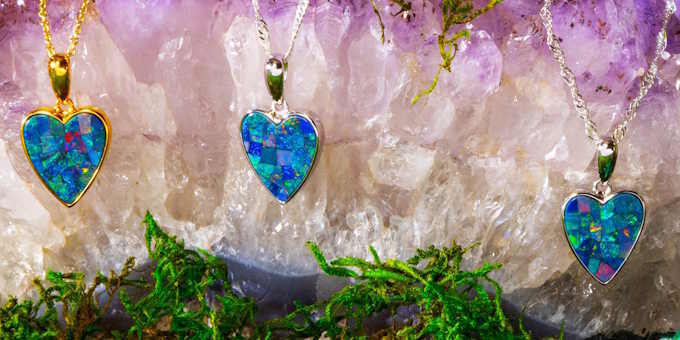
The market for opals includes a surprising range of materials that can masquerade as the real thing. Doublets and triplets (thin slices of natural opal bonded to dark backing materials and sometimes capped with clear quartz or glass) can visually imitate solid black opals at a fraction of the cost. Synthetic opals, created in laboratories through controlled silica sphere arrangement, replicate the play-of-color with impressive fidelity but carry none of the geological story or rarity of earth-mined stones.
Sellers you can trust will be happy to authenticate Australian opals through clear documentation and transparent communication. Understanding opal certification meaning helps you interpret what a certificate actually confirms, and what it does not.

When buyers ask sellers about independent grading certificates and how they guarantee authenticity, they receive critical information that separates confident purchases from costly mistakes.
Four essential authenticity questions
-
“Is this a solid opal, or is it a doublet, triplet, or synthetic stone?” A reputable seller will answer this instantly and without hesitation. Any pause or vague response is itself informative.
-
“Does this opal come with an independent grading certificate from a recognized gemological laboratory, such as the GIA, AGL, or a respected Australian gem lab?” Independent verification removes the conflict of interest inherent in a seller grading their own merchandise.
-
“Has this stone been treated in any way, including fracture filling, coating, or impregnation with polymers or resins?” Treatment disclosure is not just courteous; in most professional gemological contexts, it is expected as an ethical standard.
-
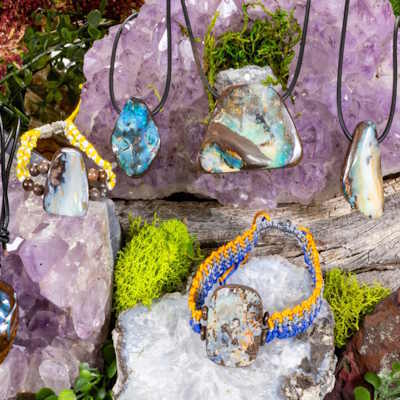
“What region of Australia did this opal come from, and do you have documentation of its provenance?” The answer matters deeply. A Lightning Ridge black opal, a Coober Pedy white crystal, or a Queensland boulder opal each carry distinct characteristics and cultural significance that documentation should support.
Pro Tip: Always ask for paperwork, whether a certificate, a receipt, or a written description, and compare what it states to the opal’s physical listing or in-store display. Discrepancies between a label reading “solid black opal” and a certificate noting “doublet construction” reveal misrepresentation before money changes hands.
Ethical sourcing: Ensuring responsible opal purchases
After verification, collectors should explore deeper questions about where and how opals are sourced. Ethical questions matter more than ever in today’s gem market.
The story of an opal does not begin on a jeweler’s bench. It begins thousands of feet below the Australian desert floor, shaped over tens of millions of years by silica-rich groundwater slowly permeating sedimentary rock. The people who extract these stones work in demanding conditions, and responsible collectors acknowledge that the beauty of a finished gem should not come at the expense of worker safety, fair compensation, or environmental stewardship.
“Knowing the provenance of a premium gemstone is not merely a formality. It is a declaration that beauty and ethics can coexist, and that the value of a stone is measured not only in its play-of-color but in the integrity of every hand that touched it along its journey.”
Buyers who want to distinguish opal origins are making a choice that extends far beyond aesthetics. They are affirming that the gem world can, and should, operate with accountability. Knowing the source of opals and whether mining and trade practices meet ethical standards is a responsibility that rests with both sellers and buyers alike.
Questions to ask sellers about ethical sourcing
- “Are your opals sourced directly from Australian miners, and can you name the specific mining region or operation?”
- “Do you have documentation, such as miner certificates or export records, verifying that your stones were legally mined and exported from Australia?”
- “Does your supply chain include any middlemen, and if so, how do you verify their compliance with fair labor and environmental standards?”
- “Has your operation been audited or reviewed by any third-party organization for ethical practices?”
- “What steps does your business take to minimize environmental disturbance at the mining sites you source from?”
Documentation matters enormously here. A seller who genuinely maintains direct-miner relationships should be able to produce, or at least describe in specific detail, the chain of custody from mine to market. Broad assurances like “our opals are ethically sourced” carry far less weight than a named mine, a region, and records that can be cross-referenced. Legitimate sellers welcome these questions as an opportunity to demonstrate pride in their sourcing practices, not as an inconvenient interrogation.
Care, after-sales support, and return policies: What else to ask
Once the stone’s value, authenticity, and sourcing are covered, a wise buyer also considers how the opal will be supported in the long run.
Opals are unique among precious gemstones in their structural sensitivity. With a Mohs hardness of 5.5 to 6.5 and a water content that can shift with humidity and temperature changes, they demand a different care philosophy than sapphires or diamonds. A seller who cannot speak knowledgeably about proper opal jewelry care routine should prompt caution. Understanding how to care for opals and what support or return options a seller provides protects your investment and preserves the stone’s luminous beauty for years to come.
Critical aftercare and support questions to ask
- “What cleaning methods do you recommend, and are there substances I should absolutely avoid, such as ultrasonic cleaners, chemical solvents, or prolonged water immersion?”
- “Does this opal require any special storage considerations to prevent crazing (the fine cracks that can develop when opals dry out rapidly)?”
- “What warranty do you offer on this piece, and does it cover both the setting and the stone?”
- “If I experience a problem with the setting, stone, or mounting after purchase, what is your repair or replacement process?”
- “What is your return or exchange policy if the opal arrives differently than described?”
Seller policy comparison
| Policy area | Strong seller practice | Weak seller practice |
|---|---|---|
| Return policy | 30 to 90 days with no-questions return for undamaged items | Final sale only, no exceptions |
| Warranty | 90-day warranty covering craftsmanship and stone integrity | No stated warranty |
| Shipping and insurance | Free insured shipping with tracking | Buyer covers all shipping risk |
| Repair support | Dedicated after-sales team with clear repair process | No post-sale support offered |
| Care guidance | Written care instructions provided with every purchase | Verbal-only or no care advice |
Sellers who invest in these policies are signaling something important: they expect their customers to remain customers for years, not just for a single transaction. That long-term orientation is itself a form of quality assurance.
Our perspective: The one question most buyers overlook
Beyond standard checklists, advanced buyers take their questioning one step further. And yet, in our experience working with collectors ranging from first-time buyers to seasoned connoisseurs, one question almost never gets asked.
Most guides, including excellent ones, focus on brightness ratings, grading certificates, and care regimes. These are genuinely important. But they are also knowable from a document. What no certificate can reveal is the stone’s history of handling, the seller’s relationship to its origin, and whether it has passed through multiple hands before reaching you.
Asking “How long have you had this particular opal, and has it been recut or resold before reaching your inventory?” opens a conversation that is quietly transformative. A seller who sources directly from miners and has held a stone for a short time before setting it is offering something categorically different from a dealer who purchased a parcel at auction, had it recut to remove a surface crack, and then relabeled it under a premium grade.
Recutting, in particular, is worth understanding. A stone may lose significant weight during recutting, altering its proportions and potentially reducing its brightness. This physical history is not always disclosed, and it can meaningfully affect both value and long-term integrity. A detailed authenticity guide for collectors explores how to investigate this kind of provenance in greater depth.
Pro Tip: Ask sellers directly, “How long have you had this opal, and has it been recut or previously owned by another retailer?” Pay close attention to whether the answer is specific and immediate or evasive and general. The quality of a seller’s answer to this question often tells you more about their trustworthiness than any document they could hand you.
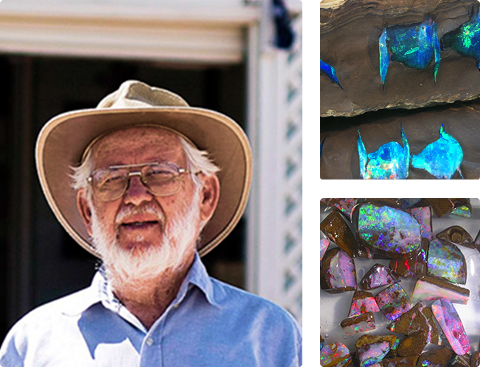
The chain of custody question is also a window into a seller’s actual relationship with the mining community. Sellers who work directly with Australian miners tend to speak about their stones with a specificity and affection that cannot be faked. They remember the person who pulled a stone from the ground. They know which pocket in which mine produced it. That intimacy with origin is, ultimately, what transforms a purchase from a transaction into a story you will tell for decades.
Discover authentic Australian opals with confidence
If you’re ready to put this knowledge into practice, connecting with reputable sellers ensures a rewarding opal journey.
At Australian Opal Direct, every stone is earth-mined, ethically sourced from storied regions including Lightning Ridge, Coober Pedy, and Queensland, and offered through direct-miner relationships that eliminate unnecessary intermediaries. You can explore curated collections, read each stone’s individual story, and purchase with confidence knowing that free shipping, complimentary insurance, and 90-day warranties are part of every transaction.
Whether you are seeking a vivid black opal pendant, a glowing crystal opal ring, or a custom-designed piece that captures your vision, the team at Australian Opal Direct is ready to guide you, answer your questions candidly, and connect you with gems whose beauty is matched only by the integrity of their provenance. Authentic Australian opals are not just jewelry. They are luminous fragments of geological history, and you deserve to own yours with complete confidence.
Frequently asked questions
What is the most important factor in assessing opal value?
Brightness is the top factor for evaluating opals, as it determines the stone’s visual impact, rarity, and overall desirability among collectors.
How do I know if an opal is authentic and not synthetic?
Request certification from a reputable independent gem lab and ask the seller specific questions about the opal’s origin, construction (solid, doublet, or triplet), and any treatments it may have received. Sellers who offer independent grading certificates and guarantee authenticity through documentation are your most reliable partners.
Why does ethical sourcing matter for opals?
Ethical sourcing ensures that miners are treated fairly, environmental standards are respected, and the gemstone’s provenance is transparent. Knowing the source of opals and whether mining practices are responsible gives collectors peace of mind and adds genuine integrity to their collection.
What should I ask about opal care and maintenance?
Ask about appropriate cleaning methods, storage conditions to prevent crazing, and whether the seller provides written care guidance. Knowing how to care for opals and what warranty or post-sale support a seller offers are essential protections for any significant opal investment.
Recommended
- How to Price Opal Jewelry for Authentic Luxury Buyers - Australian Opal Direct
- How to Distinguish Opal Origins for Authentic Jewelry - Australian Opal Direct
- Artisan-Crafted Jewelry: Authenticity & Ethics Guide - Australian Opal Direct
- How to Authenticate Australian Opals for Genuine Value - Australian Opal Direct