Coober Pedy Opal: What Buyers and Visitors Need to Know
Posted by AOD on 16th Aug 2026
Coober Pedy Opal: What Buyers and Visitors Need to Know
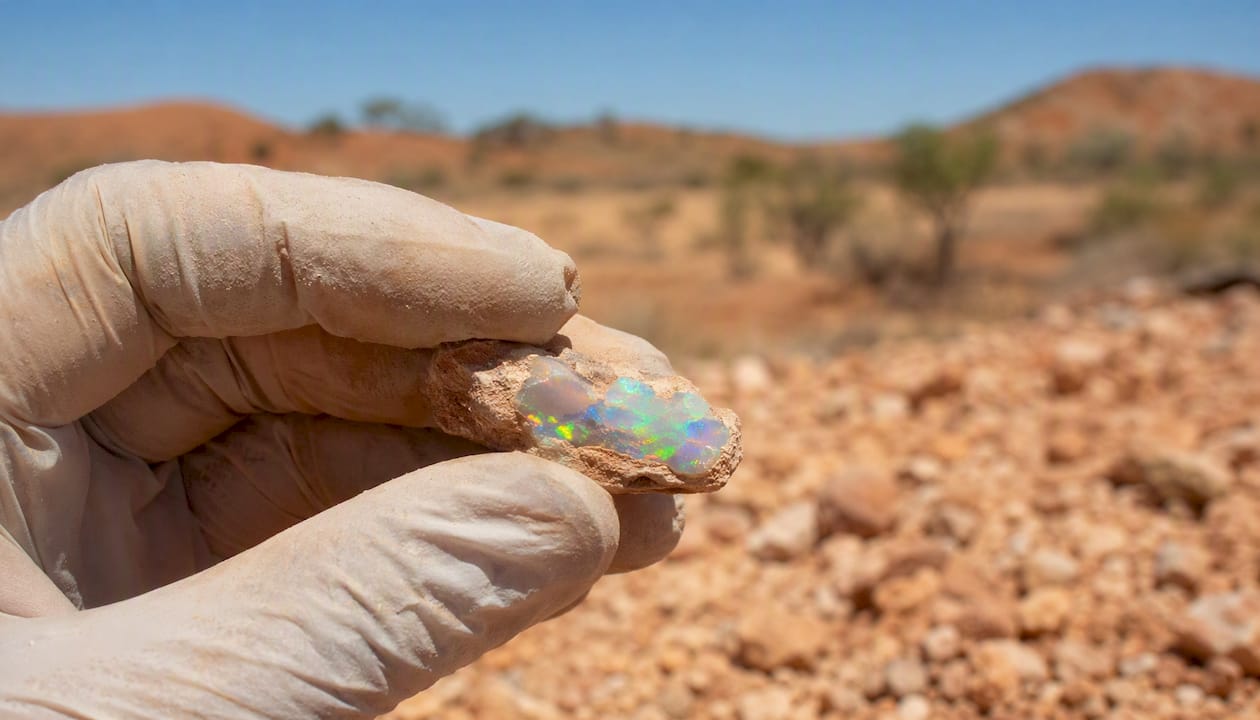
A Coober Pedy opal is hydrated amorphous silica, an opal composed of microscopic silica spheres and water, mined from the ancient seabed fields surrounding the South Australian outback town that has supplied opal since 1915. Coober Pedy is still an active source of Australian opal today, and the single most important thing a buyer or visitor should do before spending a dollar is confirm provenance: ask for a certificate of authenticity and understand exactly which field the stone came from. Genuine precious opal is scarce even within this legendary ground.
- Only a small portion of the opal pulled from the earth here shows true play-of-color; the rest is potch, opal without significant fire.
- White and crystal opal dominate local production, though matrix and nobby stones turn up often enough to matter.
- The Umoona Opal Mine & Museum remains the town’s essential stop for anyone who wants to see mining, cutting, and genuine stock in one place.
Key Takeaways
Coober Pedy opal remains one of the world’s most significant precious opal sources, but only about 10% of what’s mined shows true play-of-color, making provenance and certification the deciding factors in a confident purchase.
| Point | Details |
|---|---|
| Understand the scarcity | Roughly 10% of mined opal is precious; the rest is potch, so vivid color play commands a real premium. |
| Demand documentation | Insist on a certificate stating opal type, weight, and origin field before paying for any stone. |
| Check for doublets/triplets | Ask directly whether a stone is solid, a doublet, or a triplet, since pricing should differ sharply. |
| Visit the source | Prioritize the Umoona Opal Mine & Museum for tours, museum displays, and certified on-site purchases. |
| Store and wear carefully | Clean with mild water only, avoid ultrasonic cleaners, and choose bezel settings for daily wear. |
| Buy from provenance-backed sellers | Australianopaldirect documents miner relationships and backs every piece with a 90-day warranty. |
Table of Contents
- What Is a Coober Pedy Opal Made Of?
- How Did Coober Pedy’s Opal Fields Form?
- When Was Opal Discovered in Coober Pedy, and How Is It Mined Today?
- Where Can You See and Buy Genuine Opal in Coober Pedy?
- What Makes One Coober Pedy Opal More Valuable Than Another?
- How Do You Buy a Genuine Coober Pedy Opal Safely?
- How Should You Care for a Coober Pedy Opal?
- What Do Reputable Sellers Do to Prove an Opal Is Genuine?
- Why Coober Pedy Opal Still Captivates Collectors and First-Time Buyers Alike
- Ready to Buy a Coober Pedy Opal With Documented Provenance?
- Sources and Further Reading
- Frequently Asked Questions
What Is a Coober Pedy Opal Made Of?
Opal forms when silica gel, essentially dissolved quartz suspended in water, hardens without ever crystallizing into a rigid lattice. That lack of crystal structure is exactly why light behaves so strangely inside it. Microscopic silica spheres stack in a near-orderly pattern, and when light passes through the gaps between them, it diffracts into the spectrum of colors collectors chase. You can read a fuller technical breakdown of that science and rarity if the physics interests you, but the practical takeaway is simpler: the more regular the sphere packing, the more vivid the color play, and the rarer the stone.
Coober Pedy is known primarily for a handful of recognizable types, and learning to tell them apart on sight will save you from disappointment or overpayment.
White opal (sometimes called light opal) has a milky to translucent body tone, and its color play sits against a pale background. It is the most common commercially cut opal from the district and the type most buyers encounter first.
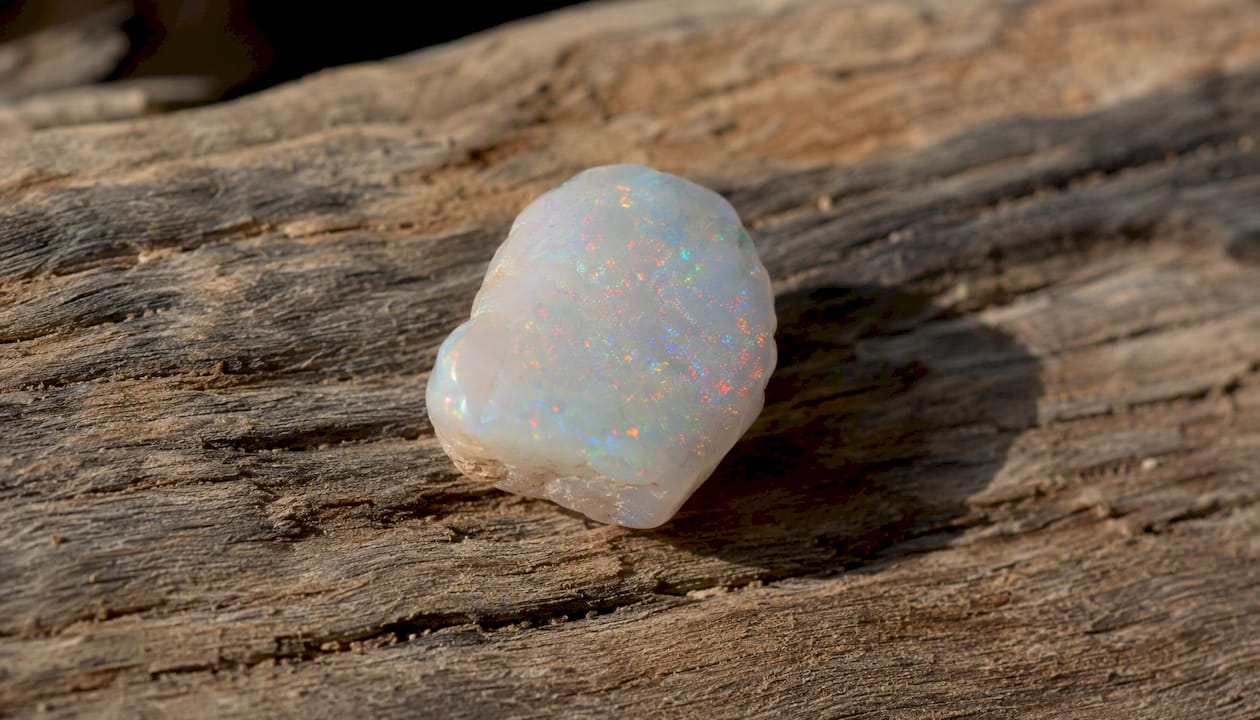
Crystal opal is transparent to semi-transparent, letting light travel deep into the stone before scattering into color. When crystal opal has strong, saturated fire, it commands prices well above ordinary white opal.
Matrix opal forms as fine veins or patches within ironstone or sandstone host rock rather than as a solid nodule. Buyers sometimes underestimate matrix stones because the color appears in fragments, but a well-patterned matrix piece can be genuinely striking once polished.
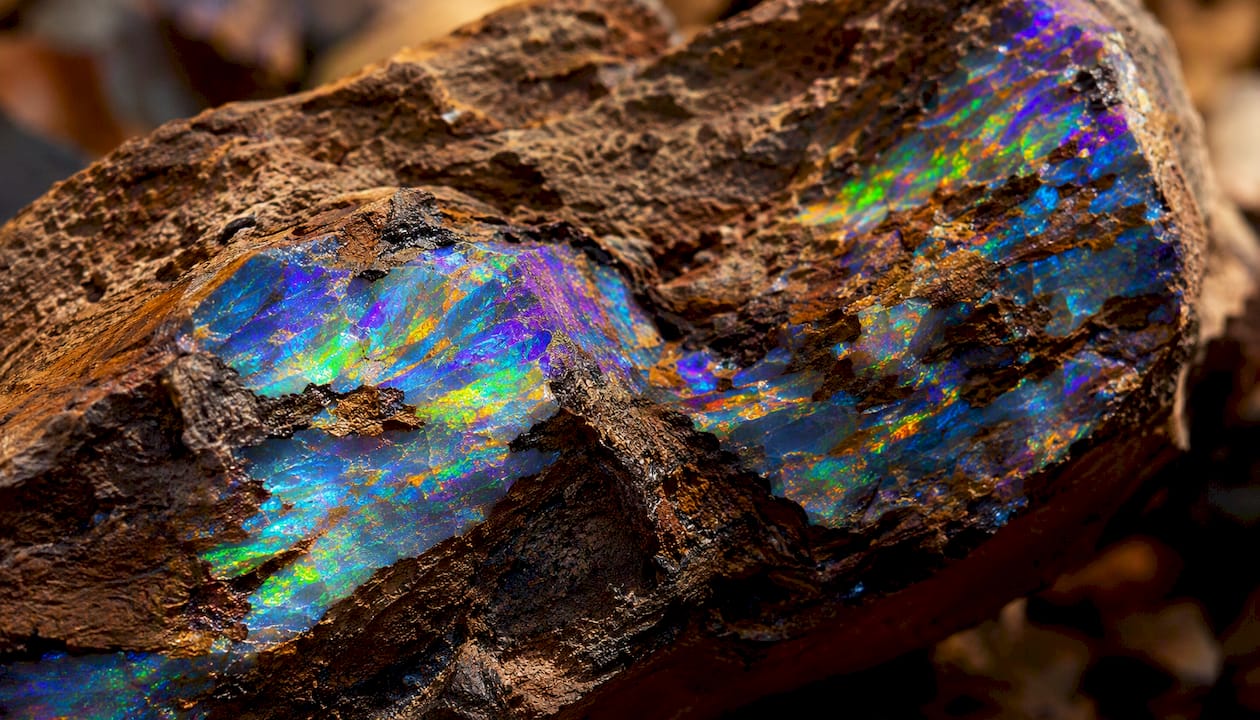
Nobby opal refers to nodules with a rounded, knobby form, often precious opal encased in a potch or matrix shell that has to be worked away carefully during cutting.
Potch is opal with no useful play-of-color at all, essentially the raw material minus the magic. It still has commercial uses in jewelry as a backing or in doublets, and understanding potch’s role in the trade helps explain why so much mined material never reaches a jewelry case.
What buyers actually care about boils down to three things: body tone (how light or dark the background is), transparency (how far light travels before scattering), and the strength of play-of-color itself. A dark body tone with strong fire reads as far more valuable than a washed-out pale stone, even at the same carat weight.
Pro Tip: Never judge a rough or small opal under a single fluorescent shop light. Ask to view it under a small flashlight or near natural daylight too. Weak stones look flashy under a spotlight and go flat elsewhere; genuine, well-colored opal holds its fire across different light sources.
How Did Coober Pedy’s Opal Fields Form?
Coober Pedy’s opal formed over millions of years as silica-rich groundwater seeped through cracks and voids in an ancient inland seabed, slowly depositing hardened silica gel as the water evaporated. The region once sat beneath a shallow sea during the Cretaceous period, and when that sea retreated, it left behind sedimentary rock riddled with fractures, fossil cavities, and porous zones perfect for capturing mineral-laden water.
That slow, patient chemistry explains why the district produces such a range of opal types. Where silica solutions filled narrow seams in claystone, you get the thin veins that become crystal and white opal. Where mineral-rich water infiltrated porous ironstone or sandstone, the silica deposited directly into the host rock, producing matrix opal. Nodule cavities, sometimes former burrows or shell casts left by ancient marine creatures, became the rounded nobbies miners still prize.
Anyone walking a working field or an old opal patch will notice a handful of telltale signs:
- Thin, wandering seams cutting through pale claystone, often the first hint of a potential opal line.
- Rounded nodules embedded in weathered rock, sometimes showing a dull, waxy sheen before they are cracked open.
- Reddish or rusty ironstone matrix, a common host material for matrix opal.
- Mullock heaps, the piles of excavated waste rock left beside every mine shaft, which noodlers comb through for overlooked fragments.
When Was Opal Discovered in Coober Pedy, and How Is It Mined Today?
Opal was discovered near what became Coober Pedy in 1915, when a young prospector working with a gold-seeking expedition stumbled onto colorful stone, and the find triggered one of the most enduring mining rushes in Australian history. The town’s name itself, adapted from an Aboriginal phrase often translated as “white man in a hole,” nods to the underground existence that mining and the brutal desert climate forced upon early settlers.
- Opal was first found near the Stuart Range in the early 20th century; early claims were quickly staked thereafter.
- 1920s to 1930s: Small-scale hand mining expands, though the Great Depression slows investment and population growth considerably.
- Postwar decades: Migrant miners, many arriving from Europe after World War II, drive a major population and production boom.
- Later 20th century onward: Mechanized mining, including blowers and tunneling machinery, replaces much hand-digging, while noodling and hand-processing remain common for smaller operators.
Mining methods today range from small hand-worked claims to larger operations using mechanical excavators, but the basic principle hasn’t changed: miners follow opal-bearing seams underground, then process what they bring up. Rough opal typically gets tumbled first to knock off most of the surrounding dirt and clay, then hand-trimmed to remove remaining matrix and sandstone before sorting by color and grade. Anyone can try “noodling,” sifting through the mullock heaps left outside old claims in hopes of finding a piece the original miner missed, and it remains a genuinely popular activity for visitors with time and patience.
The underground lifestyle that grew out of necessity became one of the town’s defining features. Residents dug homes directly into the hillsides to escape surface temperatures that regularly climb past 100°F in summer, and many of those dugouts are still lived in or have been converted into guesthouses and museums. Staying a night underground gives visitors a visceral sense of why the entire local culture, opal industry included, developed the way it did.
Where Can You See and Buy Genuine Opal in Coober Pedy?
The most reliable way to experience authentic Coober Pedy opal in person combines a working mine tour, a proper museum visit, and a walk through reputable shop displays, ideally in that order so you understand the material before you’re asked to buy it. The Umoona Opal Mine & Museum stands out as the town’s anchor attraction: it runs daily underground mine tours, houses a free museum covering geology and mining history, and sells opal on-site with a certificate of authenticity attached to every stone. Several other working mines around town offer similar underground tours paired with retail displays, giving visitors a chance to compare rough, cut, and finished pieces in the same afternoon.
A few practical notes make the visit smoother:
- Underground temperatures stay comfortable year-round, but the surface heat is severe; bring water and sun protection for the walk between sites.
- Wear closed shoes for mine tours and fossicking; mullock heaps hide sharp rock and old tools.
- Ask any shop directly whether the opals on display are locally mined, and whether they can provide a certificate or written provenance at the point of sale.
- Watch for shops that let you observe cutting and polishing demonstrations; watching rough stone become a finished gem is one of the best ways to understand why prices vary so much.
Fossicking on public noodling patches is a beloved local pastime, but it comes with etiquette and rules worth respecting: stick to designated noodling areas, never enter an active claim or open shaft without permission, and check current regional guidelines before bringing digging tools, since some areas require permits or restrict equipment. Treat it as a fun bonus activity rather than a guaranteed source of valuable stone; most finds are potch fragments, and that’s part of the charm.
What Makes One Coober Pedy Opal More Valuable Than Another?
Opal value comes down to a combination of body tone, brightness and pattern of play-of-color, hue range, size, clarity, and the quality of the cutting, with brightness and color range usually carrying the most weight in a buyer’s eye. A small stone with intense, multicolor fire against a dark body tone will often outsell a much larger pale stone with only faint color flashes.
Coober Pedy’s specialties slot into fairly predictable value tiers. White opal, being the most abundant type, generally sits at the accessible end of the market unless the color play is unusually strong. Crystal opal commands a premium when its transparency lets color glow from deep within the stone. Matrix opal often prices lower per carat than solid crystal or white opal of similar visual impact, since buyers sometimes undervalue the host rock component, even though a striking matrix piece can rival a solid stone in beauty.
| Category | Approximate Share / Note |
|---|---|
| Precious opal (shows play-of-color) | About 10% of opal mined |
| Potch (no significant color play) | About 85% of opal mined |
| Australia’s share of global commercial opal | The vast majority of the world’s supply |
| Coober Pedy’s role among Australian fields | One of the country’s major producing regions |
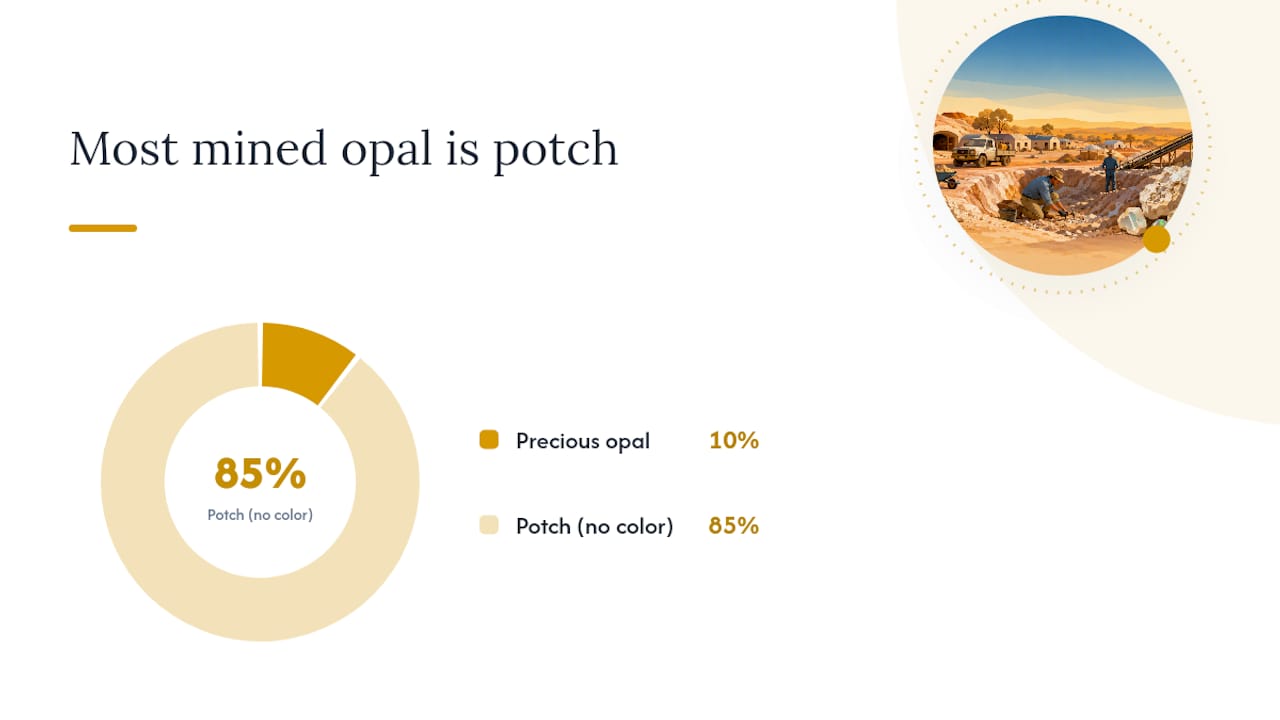
That first row is the number every buyer should sit with for a moment: nine out of ten opals pulled from the ground never become a jewelry-grade gem. It’s why a genuinely vivid stone earns its price, and why sellers who can document exactly where a stone came from deserve your attention.
Pro Tip: A doublet pairs a thin slice of precious opal with a dark backing (often potch or black glass) to boost contrast and color, while a triplet adds a clear cap on top for protection. Neither is fraudulent when disclosed honestly, but a doublet or triplet should sell for a fraction of a solid stone’s price. Always ask the seller directly whether a piece is solid, a doublet, or a triplet before you agree on a price.
How Do You Buy a Genuine Coober Pedy Opal Safely?
Before you hand over any money, demand three things: clear provenance, a written certificate of authenticity, and a stated guarantee policy from the seller. Reputable dealers treat this as standard practice, not a favor, and hesitation on any of these fronts is itself a warning sign.
A solid certificate should specify the opal type (white, crystal, matrix, and so on), approximate weight, and origin field or region, ideally naming Coober Pedy specifically rather than a vague “Australian opal” label. For guidance on the exact checks worth running, from magnification tests to spotting the telltale flat seam of a doublet, a dedicated authentication guide walks through the process step by step, and a companion resource on how to tell real opal from fakes covers synthetic and imitation stones specifically.
When shopping online, photographs matter enormously, and so does what they don’t show you.
- Ask for photos taken in multiple lighting conditions, not just one flattering angle under a bright spotlight.
- Request a short video; color play that shifts naturally as the stone tilts is very hard to fake convincingly on video.
- Be wary of sellers who can’t or won’t explain which field a stone came from.
- Treat suspiciously uniform, saturated color across an entire large stone as a reason to ask more questions, not less; nature is rarely that tidy.
Pricing follows predictable logic once you understand the type and quality factors above: dark-toned crystal opal with strong multicolor play sits at the top, followed by lighter crystal and strong white opal, then matrix and lower-grade white opal. Respectful negotiation is normal on higher-value pieces or bulk purchases, but haggling hard over a modest-priced stone tends to sour the transaction without meaningfully moving the price.
Pro Tip: If a seller’s online photos all look suspiciously identical in lighting and angle, ask directly for a live video call or a fresh photo taken that same day with a handwritten note beside the stone. A seller confident in their stock will happily oblige.
How Should You Care for a Coober Pedy Opal?
Opal needs gentler handling than most gemstones because it contains bound water and sits at a relatively soft 5.5 to 6.5 on the Mohs scale, making it vulnerable to scratching, drying out, and thermal shock.
Basic care isn’t complicated once you know the rules:
- Clean with a soft cloth and lukewarm water only; avoid soaking the stone for extended periods.
- Store opal jewelry separately from harder gems like diamonds or sapphires, which can scratch it in a crowded jewelry box.
- Keep opal away from prolonged direct sunlight and very dry environments, since excessive dehydration can eventually lead to fine surface cracks called crazing.
- Choose settings, like bezels, that protect the stone’s edges during daily wear.
A short do-not list matters just as much as the care steps:
- Never clean opal in an ultrasonic or steam cleaner; the vibration and heat can crack it.
- Avoid harsh chemicals, including household cleaners, chlorine, and even some perfumes and hairsprays applied close to the stone.
- Don’t expose opal to sudden temperature swings, such as moving from a hot car straight into an air-conditioned room while wearing it.
- Skip prolonged, forceful pressure on the stone face, since opal doesn’t have the resilience of harder gems in a hard knock.
Pro Tip: For rings worn daily, a bezel setting that wraps the metal fully around the stone’s girdle offers far more protection than a prong setting, which leaves the edges exposed to knocks. Save prong settings for pendants and earrings that see gentler use.
What Do Reputable Sellers Do to Prove an Opal Is Genuine?
A trustworthy opal seller backs every stone with documented provenance, a written certificate of authenticity, a clear returns or warranty policy, and, ideally, a direct relationship with the miners who pulled the rough from the ground. Those four elements together separate a dealer worth your money from one you should walk away from.
Look for sellers who consistently offer:
- A certificate of authenticity stating opal type, weight, and origin, issued at the point of sale rather than upon request only.
- Documented or traceable relationships with miners, which cut out speculative middlemen and support honest origin claims.
- A written guarantee covering authenticity and, ideally, a defined return window.
- Transparency about cutting and polishing, including whether the seller handles that work in-house or sources finished stones.
- Independent lab verification for higher-value pieces, when available, adding a second layer of confirmation beyond the seller’s own certificate.
Australianopaldirect builds its own retail model around exactly these standards, sourcing gold and silver opal jewelry, loose gemstones, and custom pieces through direct relationships with miners across Coober Pedy, Lightning Ridge, and Queensland. Every piece ships with documented provenance and a 90-day warranty, alongside free shipping and complimentary insurance on orders, the kind of aftercare protection that matters when you’re trusting a stone you can’t inspect in person before it arrives.
Whatever seller you choose, know your rights as a buyer going in. Ask what the return window covers, whether warranty claims require original documentation, and whether the seller supports independent verification if you want a second opinion from an appraiser. A seller confident in their stock won’t flinch at any of those questions.
Why Coober Pedy Opal Still Captivates Collectors and First-Time Buyers Alike
What strikes me most about Coober Pedy opal is how democratic it is as a gemstone category. A tourist can walk away from a single afternoon with a modest, honestly priced white opal pendant, and a serious collector can spend years chasing a single crystal stone with the right depth of fire, and both of them are participating in the same tradition that started with a chance find in 1915. That range is rare in the gem world, where most categories sort buyers strictly by budget tier.
The mistake I see most often isn’t buying a fake outright, it’s buying a genuine but overpriced stone because nobody explained body tone, brightness, and pattern before the transaction. Understanding those three factors is worth more to a first-time buyer than any amount of general gemstone trivia.
Different buyers should approach this market differently:
- The casual souvenir buyer should prioritize a modest white opal piece with visible, if not dramatic, color play, purchased from a shop that offers even a basic certificate.
- The jewelry buyer shopping for a wearable piece should weigh setting durability as heavily as the stone itself, favoring protective bezel work for daily wear.
- The collector or investor should focus on crystal or high-grade matrix opal with exceptional brightness and pattern, and should insist on third-party verification for any significant purchase.
None of these buyer types needs to feel intimidated. Opal rewards curiosity, and the more time you spend looking at real stones under real light, the faster your eye develops.
Renee is an editorial contributor covering Australian gemstone origin, mining history, and buyer education for Australianopaldirect.
Ready to Buy a Coober Pedy Opal With Documented Provenance?
Australianopaldirect sources gold and silver opal jewelry, loose gemstones, and custom-made pieces directly through relationships with miners across Coober Pedy, Lightning Ridge, and Queensland, cutting out speculative middlemen so provenance stays traceable from ground to setting.

Every stone ships with documentation of its origin, backed by a 90-day warranty, free shipping, and complimentary insurance, the kind of protection that matters most when you’re buying a gemstone you can’t hold in your hand before it arrives. If you’d rather understand every type and value factor before shopping, the site’s complete Coober Pedy opal guide walks through the same fundamentals covered here in greater depth. For readers who want a broader framework on how collectors judge rarity across categories beyond gemstones, this collector’s value guide offers a useful outside perspective. When you’re ready to see current stock, browse the Australian Opal Direct collection and check availability on pieces sourced directly from Coober Pedy fields.
Sources and Further Reading
The sources behind this guide combine museum and geological references, regional tourism authorities, and a working local mine and museum, giving a rounded picture that spans science, history, and hands-on buyer experience.
- Coober Pedy SA (regional tourism and mining information), for mining fields context and processing methods
- Umoona Opal Mine & Museum, for on-site tour details, certification practices, and noodling context
Frequently Asked Questions
Is opal still mined in Coober Pedy today? Yes. Coober Pedy remains an active opal-producing region and one of Australia’s major fields, though production methods now blend small hand-worked claims with mechanized mining operations.
What percentage of Coober Pedy opal is actually valuable? Only about 10% of mined opal displays significant play-of-color; the remaining share is potch, opal without meaningful color play.
What is the difference between white opal and crystal opal from Coober Pedy? White opal has a milky, opaque to translucent body tone, while crystal opal is transparent to semi-transparent, letting color play glow from deeper within the stone.
How can I tell if a Coober Pedy opal is genuine before buying online? Request photos in multiple lighting conditions, ask for video showing natural color shift as the stone tilts, and insist on a certificate specifying type, weight, and origin field.
What should a certificate of authenticity include? It should state the opal type (white, crystal, matrix, and so on), approximate weight, and the specific origin field, ideally naming Coober Pedy rather than a generic Australian label.
Can visitors go fossicking for opal in Coober Pedy? Yes, noodling through designated mullock heaps is a popular visitor activity, though it requires respecting claim boundaries and checking current local rules before bringing equipment.
Recommended
- Coober Pedy Opal Guide: Everything You Need To Know - Australian Opal Direct
- Coober Pedy Opal: Complete Guide for Collectors - Australian Opal Direct
- 7 Essential Coober Pedy Opal Types for Collectors - Australian Opal Direct
- Opalized Fossils: The Collector’s Complete Buying Guide - Australian Opal Direct