2025 Opal Collecting Tips: Find and Evaluate Gems
Posted by AOD on 10th Jun 2026
2025 Opal Collecting Tips: Find and Evaluate Gems
TL;DR:
- Black opal from Lightning Ridge is the most valuable, with specimens selling for up to $30,000 per carat. Proper licensing, careful assessment of stone type, and multiple-light testing are essential for ethical and accurate opal collecting. Prioritizing boulder and black opal varieties, and practicing safety basics, help collectors build valuable, authentic collections for 2025 and beyond.
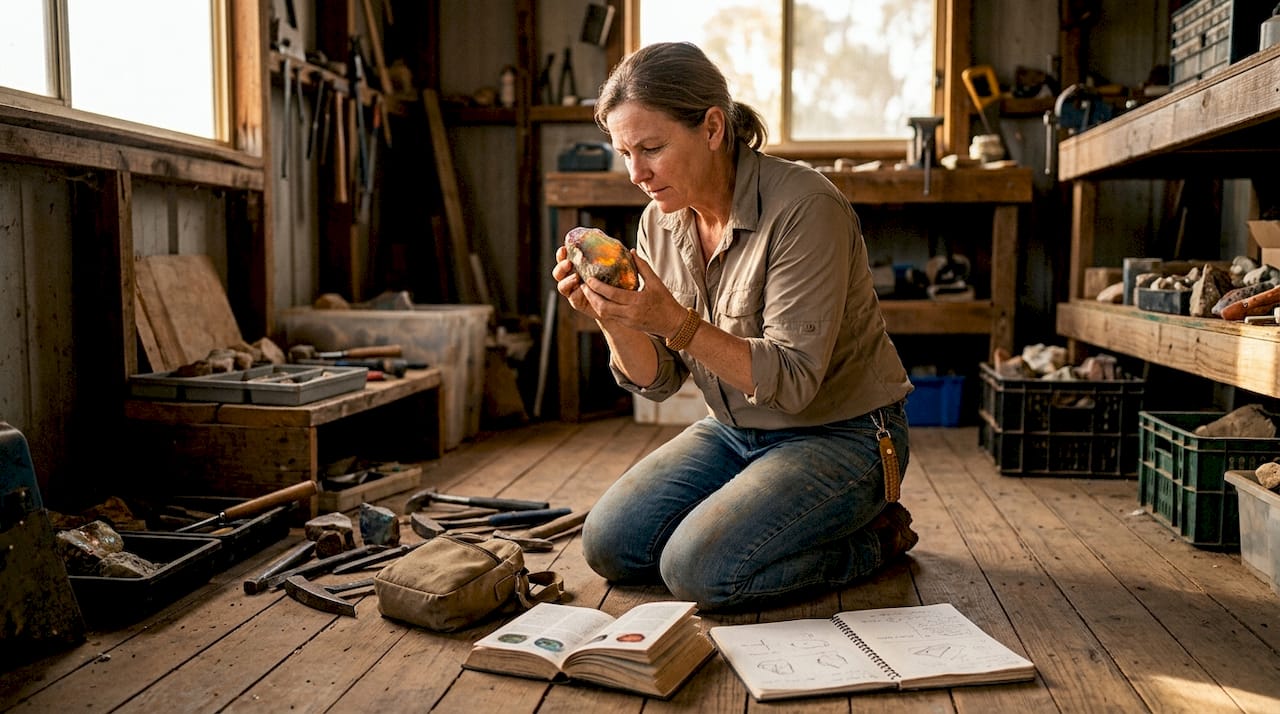
Opal collecting is the practice of sourcing, evaluating, and preserving precious silica-based gemstones from designated fossicking fields, auction markets, and specialist dealers. The best 2025 opal collecting tips center on three foundations: knowing which opal varieties command real value, understanding the legal and physical requirements of fossicking in Australia, and developing the eye to authenticate what you find. Whether you are searching spoil heaps at White Cliffs or sourcing Lightning Ridge black opals from a trusted dealer, the strategies below will sharpen every stage of your collection.
1. Start with the best opal types for 2025 collectors
Black opal from Lightning Ridge is the most valuable opal variety available to collectors, with top-tier specimens commanding between $5,000 and $30,000 per carat and record auction pieces exceeding $1 million AUD. That price range reflects genuine scarcity. Lightning Ridge sits above a narrow geological band in New South Wales where the silica concentration and ironstone chemistry produce the dark body tone that makes colors appear to ignite from within.
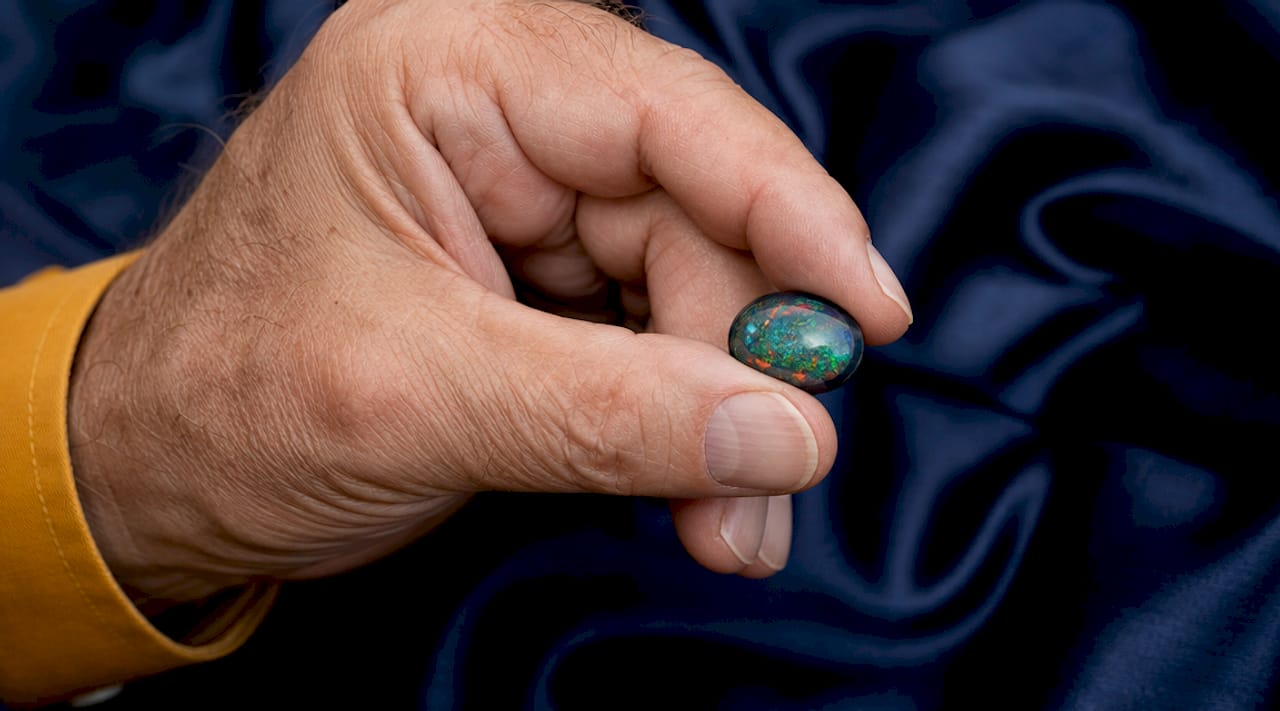
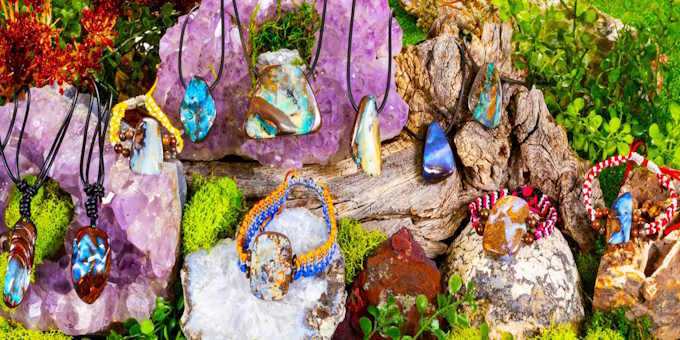
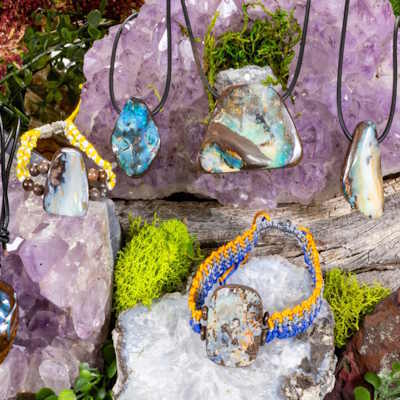
Boulder opal, sourced primarily from Queensland’s Winton and Quilpie regions, offers a compelling alternative. It forms within ironstone host rock, and the contrast between the vivid opal seam and the earthy matrix creates a visual drama that collectors prize. White opal from Coober Pedy trades between $5 and $30 per carat, making it accessible for newer collectors building their first serious holdings.
Ethiopian opal has grown in popularity due to its affordability, with prices ranging mostly between $15 and $800 per carat. The trade-off is stability. Ethiopian opal is prone to crazing, a network of fine internal fractures that develops when the stone loses moisture, which makes long-term collection riskier than Australian varieties. Fire opal from Mexico adds warm orange and red tones to any collection but rarely displays the full spectral play-of-color that defines precious opal.
| Opal Type | Origin | Price Range (per carat) | Collector Notes |
|---|---|---|---|
| Black opal | Lightning Ridge, NSW | $5,000–$30,000+ | Highest value; dark body tone amplifies color play |
| Boulder opal | Queensland | $50–$3,000+ | Judged by face-up area, not carat weight |
| White opal | Coober Pedy, SA | $5–$30 | Accessible entry point for new collectors |
| Ethiopian opal | Wollo Province | $15–$800 | Affordable but prone to crazing |
| Fire opal | Mexico | $10–$500 | Warm tones; limited play-of-color |
2. Understand the legal requirements before you fossick
Public fossicking in New South Wales requires an annual fossicking license for anyone aged 18 or over. The license authorizes hand-tool-only work in designated Crown Land areas and is straightforward to obtain through the NSW Department of Regional NSW. Without it, any opal you recover has no legal standing and you risk fines that far outweigh the value of a day’s finds.
The license defines the scope of what you can do. Power tools, explosives, and mechanical excavation are prohibited. You work with hand picks, brushes, and small containers. This restriction actually protects the fossicking fields from rapid depletion and keeps the activity accessible to individuals rather than commercial operators.
Different states carry different rules. South Australia governs Coober Pedy under its own mining regulations, and Queensland’s opal fields operate under separate fossicking legislation. Before traveling to any new location, check the current state government mining department website for updated permit requirements, as regulations are reviewed periodically.
3. Prepare for the physical realities of remote opal fields
Safety at sites like White Cliffs is not a formality. Temperatures exceed 45°C during summer months, and the nearest hospital with emergency services can be up to 290 kilometers away. That distance transforms a minor heat-related incident into a life-threatening situation if you are unprepared.
Carry at least 2 liters of water per person as a minimum, and plan for significantly more during peak heat. Electrolyte supplements are worth including. Fossicking is physical work, and dehydration sets in faster than most people expect when you are focused on scanning ground rather than monitoring your body.
Mine shaft hazards are the other major physical risk. Unmarked shafts at White Cliffs can reach 15 meters deep and are often concealed by vegetation or loose soil. Walk carefully, never run across unfamiliar ground, and avoid fossicking alone in remote areas. A personal locator beacon is a practical investment for any serious field collector.
Pro Tip: Register your trip details with a trusted contact before heading to remote opal fields. Share your planned location, expected return time, and the nearest town. This single step has saved lives in the Australian outback.
4. Assemble the right tools for field collecting
The essential tools for opal collecting in the field are deliberately simple: a hand pick or geologist’s hammer, a stiff-bristled brush, a small container or specimen bag, a magnifying loupe of at least 10x magnification, and a portable UV light. Each tool serves a specific purpose, and carrying all five adds negligible weight while dramatically improving your results.
- Hand pick or geologist’s hammer: Breaks apart soft sediment and potch-bearing rock without shattering delicate opal seams
- Stiff brush: Clears loose material from surfaces to reveal color play without scratching
- Specimen container: Protects finds from impact and prevents moisture loss during transport
- 10x loupe: Reveals play-of-color, surface cracks, and potch boundaries invisible to the naked eye
- UV light: Many opals fluoresce under ultraviolet light, particularly under shortwave UV (100–280nm), which can help distinguish opal from surrounding matrix in low-contrast situations
A portable LED light with a daylight-balanced color temperature is equally useful. Assessing color play under a single light source is one of the most common mistakes field collectors make. Carry both warm and cool light sources to test stones on-site before deciding what to keep.
5. Learn to read the ground before you dig
The most productive fossicking strategy is reading disturbed ground rather than digging randomly. Spoil heaps, the piles of discarded material left by earlier miners, are consistently the most rewarding targets for hand collectors. Earlier mining technology missed a significant percentage of smaller or lower-contrast specimens, and rain events redistribute material in ways that bring fresh surfaces to light.
Look for color flashes at oblique angles. Opal’s play-of-color is directional, meaning a stone that looks gray or white when viewed straight on may blaze with spectral fire when tilted. Scan spoil heaps by moving your head rather than moving the stones, and only pick up material that shows a response to changing light angles.
Potch, the colorless or milky form of opal without play-of-color, is a reliable indicator that you are in the right geological zone. Finding potch means the silica chemistry was present. Productive opal seams often run parallel to potch layers, so follow the geology rather than searching randomly across the surface.
6. Authenticate opals before you buy or trade
Solid opal, doublet opal, and triplet opal are three distinct products with very different values, and seller disclosure is the only reliable way to confirm which you are purchasing. A solid opal is a single natural stone. A doublet bonds a thin opal slice to a dark backing material to enhance color appearance. A triplet adds a clear dome cap on top. Both assembled forms are legitimate products, but they must be disclosed and priced accordingly.
Understanding the difference between opal triplets and solid stones protects you from overpaying by a factor of ten or more. Ask every seller directly: “Is this a solid opal, a doublet, or a triplet?” A reputable dealer answers without hesitation.
For boulder opal specifically, carat weight is a misleading metric because the ironstone host rock adds mass without adding gem value. Face-up surface area is the superior evaluation metric. A 15-carat boulder opal with a large, vivid face-up window is worth more than a 25-carat stone where the opal seam is narrow and partially obscured.
Pro Tip: Always ask sellers for side-view photos or videos of boulder opals. The side view reveals the thickness of the opal layer relative to the host rock and confirms whether the stone is solid or assembled.
7. Evaluate color play under multiple light sources
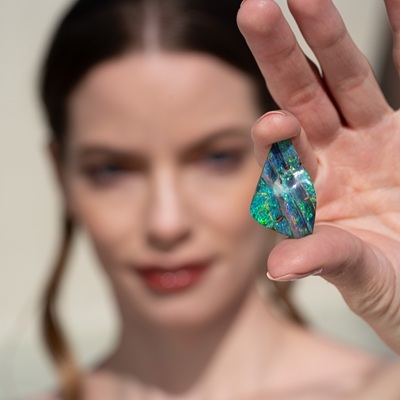
Viewing an opal under a single light source is the fastest way to misjudge its quality. Testing under daylight, incandescent, and LED lighting reveals the full range of a stone’s color play and prevents you from being misled by a flattering display environment. A stone that blazes under a jeweler’s halogen lamp but goes dark in natural light is a stone with limited real-world appeal.
The key quality factors to assess are brightness, pattern, color range, and face-up coverage. Brightness refers to how vividly the colors appear relative to the body tone. Pattern describes the arrangement of color, with rolling flash and harlequin patterns commanding premiums over pinfire or broad flash. Color range rewards stones that display red, which is the rarest spectral color in opal, alongside the more common greens and blues.
The play-of-color should cover as much of the stone’s face as possible. Partial coverage, where color is concentrated in one corner or along one edge, reduces value proportionally. A stone with full-face coverage at moderate brightness outperforms a stone with brilliant but localized color in most collector markets.
8. Care for your collection to protect its long-term value
Opals require more attentive care than most gemstones because their silica structure retains water, typically between 3% and 21% by weight, and responds to environmental changes. Avoid exposing opals to prolonged heat, direct sunlight, or very dry conditions. Storing opals in a sealed container with a small damp cloth or cotton wool maintains ambient humidity without direct contact with water.
Ultrasonic cleaners and harsh chemicals are not appropriate for opal care. The vibration from ultrasonic cleaning can propagate existing micro-fractures, and chemical cleaners strip the surface finish. Clean opals with lukewarm soapy water and a soft brush, then rinse and pat dry with a lint-free cloth.
Store opals separately from harder gemstones. Diamonds, sapphires, and rubies all rank higher on the Mohs hardness scale and will scratch opal surfaces during storage if they share the same compartment. Individual soft pouches or padded compartments in a jewelry box are the practical solution.
Key takeaways
Successful opal collecting in 2025 requires choosing the right variety, following legal fossicking requirements, and applying rigorous authentication before any purchase or trade.
| Point | Details |
|---|---|
| Prioritize opal type selection | Black opal from Lightning Ridge delivers the highest value; Ethiopian opal suits budget collectors but carries stability risks. |
| Obtain the correct license | NSW fossicking requires an annual license; operating without one invalidates your finds legally. |
| Evaluate boulder opal by face-up area | Carat weight misleads when ironstone host rock is included; always assess the visible opal surface. |
| Test under multiple light sources | Daylight, incandescent, and LED testing reveals true color play and prevents misjudgment at point of purchase. |
| Store and clean with care | Avoid ultrasonic cleaners, heat, and dry conditions; lukewarm soapy water and soft brushes are the correct tools. |
What I’ve learned from years of watching collectors get it wrong
I have seen experienced collectors make the same two mistakes repeatedly: they buy on impulse under flattering lighting, and they underestimate how much the opal type matters relative to individual stone quality. A mediocre black opal from Lightning Ridge will still outperform a spectacular white opal from Coober Pedy in most resale markets, simply because the market for black opal is deeper and more internationally recognized.
The patience question is real. The collectors who build genuinely valuable holdings spend more time learning than buying, especially in the first two years. They read about provenance, they ask sellers the questions outlined in guides like essential questions for opal sellers, and they handle as many stones as possible before committing significant funds. That tactile education is irreplaceable.
On the fossicking side, I think the safety conversation is still underdone. The Australian outback is genuinely unforgiving, and the romance of finding your own stone can override practical judgment. Carry more water than you think you need. Tell someone where you are going. The opal will still be there if you come back tomorrow.
My honest recommendation for 2025 is to start with boulder opal if you want to fossick yourself, and with black opal if you are buying. Boulder opal fields are more accessible, the stones are visually dramatic, and the evaluation skills you develop transfer directly to understanding every other opal variety.
— Renee
Explore authentic Australian opals with Australianopaldirect
For collectors who want to move beyond the field and invest in stones with verified provenance, Australianopaldirect offers a curated selection of earth-mined opals sourced directly from Lightning Ridge, Coober Pedy, and Queensland.

Every stone in the collection comes with full disclosure on type, origin, and treatment status, which means you apply the authentication standards from this article the moment you browse. The site’s direct-miner relationships remove intermediary markups, so the pricing reflects genuine market value rather than retail inflation. Whether you are building a serious opal gemstone collection or searching for a single exceptional piece, Australianopaldirect is the place to start with confidence.
FAQ
What is the most valuable opal type in 2025?
Black opal from Lightning Ridge remains the most valuable variety, with top specimens reaching $30,000 per carat and record auction pieces exceeding $1 million AUD.
Do I need a license to fossick for opals in Australia?
Yes. In New South Wales, anyone aged 18 or over requires an annual fossicking license to collect from designated Crown Land areas using hand tools only.
How do I tell a solid opal from a doublet or triplet?
Ask the seller directly for written disclosure, and request side-view images. A doublet shows a visible backing layer from the side, while a triplet has both a backing and a clear dome cap.
Does opal fluoresce under UV light?
Many opals fluoresce under shortwave UV light (100–280nm), though fewer respond to longwave UV (315–400nm). Fluorescence can help distinguish opal from surrounding matrix in the field but does not indicate gem quality.
How should I store opals to prevent crazing?
Store opals in a sealed container with a small damp cloth to maintain humidity, away from heat and direct sunlight. Avoid contact with harder gemstones and never use ultrasonic cleaners.
Recommended
- Build a Gemstone Collection: The Expert Guide to Australian Opals - Australian Opal Direct
- Opal Gemstone Selection Process: A Step-by-Step Guide - Australian Opal Direct
- Grading opal quality: expert guide for collectors 2026 - Australian Opal Direct
- 7 Best Opal Jewelry Tips Every Collector Should Know - Australian Opal Direct